




Abstract
The effects of salvianolic acid B (Sal B) decoction on antioxidative activities were evaluated. The 2,2-diphenyl-1-picrylhydrazyl (DPPH) radical–scavenging activity, Fe2+-chelating activity, reducing power, and total phenolic content of the Sal B–decocted solutions did not change significantly after decoction in an aqueous solution. However, the formation of cholesteryl ester hydroperoxide (CE-OOH) in rat blood plasma containing the Sal B–decocted solutions was more effectively inhibited than that of plasma containing the Sal B solution, regardless of the decoction time. In addition, the accumulation of CE-OOH in rat plasma after oral administration of the Sal B–decocted solutions was more effectively suppressed than when the Sal B solution was administered, considering the lag time. It is likely that the decoction was partly responsible for the increased antioxidant activity in blood plasma. Therefore, the Sal B–decocted solution may contribute more to antioxidant defense in blood than a Sal B solution that is not decocted.
Introduction
H
Herbal medicines are generally administered as extracts obtained by decoction in an aqueous solution. It was previously confirmed that the components contained in herbal medicines are chemically converted during decoction in an aqueous solution. 8 In a study on the effect of Perilla frutescens decoction, DNA synthesis of cultured mesangial cells induced by fetal calf serum was more significantly inhibited by the Perilla decoction than by the samples that were not decocted. 9 Numerous reactions between compounds may occur during the decoction process. Therefore, in a previous study, 10 we confirmed the chemical conversion by decoction in an aqueous solution using a single compound, salvianolic acid B (Sal B; also called lithospermic acid B). The results suggested that chemical conversion by decoction may affect the biological activity of a compound or herbal medicine.
Sal B is the most abundant phenolic compound in Salvia miltiorrhiza Bunge, which has been widely used for treating cardiovascular diseases such as coronary heart disease, hyperlipidemia, and cerebrovascular disease in Oriental medicine. 11,12 Sal B and its magnesium salt possess various biological activities such as strong free radical-scavenging activity, 13 –16 inhibition of angiotensin-converting enzyme, 17 inhibition of glucose-induced cell proliferation, 18 and hepatoprotection. 19 In addition, Sal B elicits endothelium-dependent vasodilation, 20 lowers blood pressure, 21 and inhibits replication of human immunodeficiency virus-1. 22 Some studies have examined the hydrolytic kinetics 8 and the mechanism of degradation 10 by decoction in an aqueous solution. The antioxidant properties of Sal B might have applications in the food and healthcare industries. 16 However, although Sal B is chemically converted by decoction in an aqueous solution, studies on the effect of decoction on Sal B biological activity have not been conducted.
Therefore, the aim of this study was to evaluate the biological activity of the Sal B and decocted Sal B solutions. The Sal B solutions were evaluated based on the 2,2-diphenyl-1-picrylhydrazyl (DPPH) radical–scavenging activity, Fe2+-chelating activity, reducing power, phenolic content, and their inhibitory effect against the formation of cholesteryl ester hydroperoxide (CE-OOH) in rat blood plasma.
Materials and Methods
Materials
Sal B (purity >99%) was isolated from S. miltiorrhiza Bunge according to the method described in our previous study. 23 Hydrogen chloride (HCl) was purchased from Samchun Pure Chemical (Pyeougtaek, Korea). The Folin–Ciocalteu phenol reagent and gallic acid (3,4,5-trihydroxybenzoic acid) were purchased from Nacalai Tesque, Inc. (Kyoto, Japan) and Acros Organics (Morristown, NJ, USA), respectively. Potassium persulfate and CuSO4 were purchased from Wako Pure Chemicals Industries Ltd. (Osaka, Japan). 2,6-Di-tert-butyl-4-methylphenol (BHT) was purchased from Sigma-Aldrich Co. (St. Louis, MO, USA).
Preparation of the decocted Sal B solution
Sal B (7 mg) was dissolved in H2O (7 mL), adjusted to pH 4.9 with HCl, and heated on a heating block under reflux at 100°C for 24 h. Aliquots (100 μL) were withdrawn at regular time intervals (1, 2, 4, 8, 12, 16, 20, and 24 h) and cooled, and MeOH (900 μL) was added. The biological activity of each decocted solution was evaluated.
Determination of DPPH radical–scavenging activity of Sal B and its decocted solutions
The free radical-scavenging activity of the Sal B and decocted Sal B solutions was evaluated according to the method described by Abe et al.,
24
with slight modifications. Briefly, the Sal B (30 μg) and decocted Sal B (30 μg–equivalent of Sal B) solutions (300 μL) were added to a DPPH radical ethanol solution (1700 μL; final concentration, 250 μM). The solution was mixed and allowed to stand for 30 min in the dark. The free radical–scavenging activity of each sample was quantified by decolorization of DPPH at 517 nm. The DPPH radical–scavenging activity of the solutions was determined as the percent decrease in the absorbance compared to that of a blank. The DPPH radical–scavenging activity was calculated as follows:
The experiments were conducted three times.
Determination of total phenolic contents of Sal B and its decocted solutions
The total phenolic contents of the Sal B and decocted Sal B solutions were determined using the Folin–Ciocalteu method. 25 Aliquots (50 μL, 0.5 μg–equivalent of Sal B) of the solutions were evaporated with nitrogen gas, and the concentrates dissolved in 0.5 mL 30% MeOH. The solutions were mixed with the Folin–Ciocalteu phenol reagent (0.5 mL) and a saturated Na2CO3 solution (0.5 mL). Each mixture was incubated at room temperature for 1 h, and then the absorbance was measured at a wavelength of 700 nm using a spectrophotometer (V-550; Jasco, Tokyo, Japan). The total phenolic contents of the solutions were quantified from a gallic acid calibration curve, which was used as the standard compound. The experiments were conducted three times.
Determination of the Fe2+-chelating activity of Sal B and its decocted solutions
The Fe2+-chelating activity of the Sal B and decocted Sal B solutions was estimated using the method described by Dinis et al.
26
Briefly, a portion (Sal B, 1 mg–equivalent/mL) of each solution was evaporated under nitrogen gas, and the concentrate was dissolved in 0.5 mL H2O. Deionized water (1.6 mL) and 2 mM FeCl2 (0.05 mL) were added to this solution, and then 5 mM ferrozine (0.1 mL) was added after 30 sec. The mixture was reacted at room temperature for 10 min, and the absorbance was measured at a wavelength of 562 nm. The chelating activity of the solutions was calculated as follows:
The experiments were conducted three times.
Determination of reducing power of Sal B and its decocted solutions
The Fe3+-reducing power of each Sal B and Sal B–decocted solution (Sal B 50 μg–equivalent/mL) was determined by the method of Oyaizu, 27 with slight modifications. Sal B and its decocted solutions containing 0.5 mL H2O were mixed with 0.5 mL sodium phosphate buffer (0.2 M, pH 6.6) and 0.5 mL potassium hexacyanoferrate [K3Fe(CN)6; 1%, w/w]. The samples were then incubated at 50°C in a water bath for 20 min. The reaction was stopped by adding 1.5 mL 10% trichloroacetic acid solution followed by centrifugation at 890 g for 10 min. Then, 0.5 mL of the supernatant was mixed with 0.5 mL distilled water and 0.1 mL ferric chloride solution (1%, w/w) for 10 min. The absorbance at 700 nm was recorded and used as a measure of reducing power. A higher absorbance of the reaction mixture indicated a greater reducing power.
Determination of the inhibitory effect of Sal B and its decocted solutions against copper ion-induced oxidation in rat blood plasma
The antioxidative activities of Sal B and decocted Sal B were evaluated by measuring their inhibitory effects against formation of CE-OOH in copper ion-induced oxidation in diluted rat blood plasma. 28 Ten Sprague-Dawley rats (males, 6 weeks of age, 180–200 g; Santako Bio Korea, Osan, Korea) were housed at 23°C under a 12-h dark/12-h light cycle and fasted for 12–15 h before blood collection. After anesthesia with diethyl ether, the abdominal wall was opened, and blood was collected from the abdominal aorta into heparinized tubes. Rat plasma was isolated by centrifugation (1500 g) at 4°C for 20 min and used immediately for experiments or stored at −40°C for no longer than 1 week. Plasma was diluted fourfold in phosphate-buffered saline (PBS; pH 7.4) and then mixed with the Sal B (0.5, 1.0, 2.0, 3.0, and 5.0 μg–equivalent) and decocted Sal B solutions (3.0 μg–equivalent) in an EtOH solution (final volume, 2%). The samples were then oxidized by adding 0.1 mL CuSO4 PBS solution (final concentration, 100 μM). Each mixture was incubated at 37°C for 8 h with continuous shaking. The CE-OOH concentration was determined according to the method described by Arai et al. 29 Briefly, aliquots (100 μL) were withdrawn from the incubation solutions and mixed with 3 mL MeOH containing 2.5 mM BHT. The mixture was sonicated (Power Sonic 4200; Hwashin, Ulsan, Korea) for 10 sec, and then neutral lipids were extracted with 3 mL n-hexane by vortexing vigorously for 10 sec. The upper layer (n-hexane) was collected, and the lower layer was extracted using 3 mL of n-hexane repeatedly. The combined n-hexane phases were evaporated in a rotary evaporator at room temperature. The remaining lipids were dissolved in 100 μL MeOH/CHCl3 (95:5, v/v), and the aliquots were subjected to CE-OOH analysis by reverse-phase high-performance liquid chromatography (HPLC) using a TSK-gel Octyl-80Ts column (Tosoh, Tokyo, Japan). The eluate was monitored by UV detection at 235 nm (Shimadzu SPD-10A, Kyoto, Japan). The mobile phase consisted of MeOH/H2O (97:3, v/v), and the flow rate was 1.0 mL/min. The CE-OOH concentration was calculated from a CE-OOH standard curve. Detailed procedures for the preparation of the CE-OOH standard have been published previously. 30
Determination of the inhibitory effect against copper ion-induced oxidation in rat plasma after oral administration of Sal B and its decocted solutions
Male Sprague-Dawley rats (6 weeks of age; body weight, 180–200 g) were purchased from Samtako Bio Korea. Twenty rats were divided into four groups and housed in plastic cages at a temperature of 22±2°C with a 12-h light/dark cycle. The rats were fed a standard laboratory diet (NIH no. 31M; Samtako Bio Korea) and water ad libitum for 1 day. The rats were fasted overnight (15 h), and then 1 mL H2O containing the Sal B or decocted Sal B solution (∼0.75 mg–equivalent) was administered orally. Four different samples were administered to the rats: (1) control (H2O, 1 mL); (2) Sal B; (3) 1-h decocted Sal B solution; and (4) 6-h decocted Sal B solution. Whole blood was withdrawn from the abdominal aorta after 2 h, and the plasma was obtained using the methods described above. The plasma was pooled using the same volume from five rats of each group and then diluted fourfold with PBS (pH 7.4) and reacted with 100 μM (final concentration) CuSO4 to induce CE-OOH formation. The reaction mixture was incubated at 37°C with continuous shaking. The amount of CE-OOH induced by copper ions was measured at 30-min intervals for 14 h. The extraction and octadesylsilane-HPLC analysis of CE-OOH were performed using the method described above.
Statistical analysis
Data on the DPPH radical–scavenging activity, Fe2+-chelating activity, reducing power, and phenolic content were measured by one-way analysis of variance, followed by Scheffe's test (P<.05) using the SPSS software package, version 18.0 (SPSS, Inc., Chicago, IL, USA).
Results and Discussion
Comparison of DPPH radical–scavenging activity of Sal B and its decocted solutions
The DPPH radical–scavenging activities of the Sal B and the decocted Sal B solutions were evaluated at equivalent concentrations (Sal B 30 μg–equivalent/300 μL), and a final DPPH concentration of 250 μM. The DPPH radical–scavenging activity of the decocted Sal B solution decreased gradually with the decoction time (Fig. 1). However, the magnitude of the decrease was very small (1.2%) when compared to the activity (58.3%) of the Sal B solution that was not decocted. Therefore, although it has already been shown that Sal B is chemically converted by decoction, 3,4 these results suggest that the radical-scavenging activity was not largely altered by decoction in an aqueous solution.
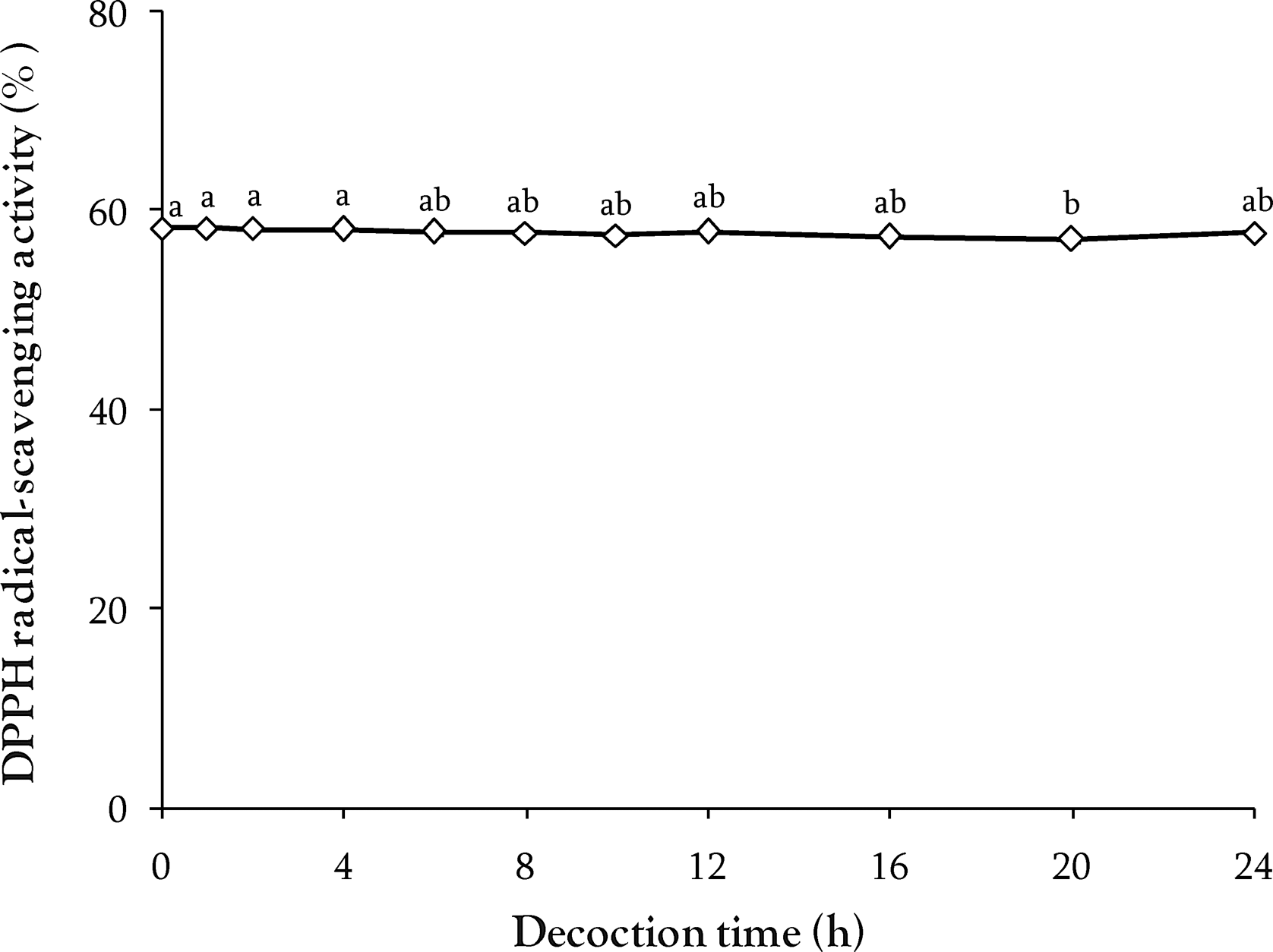
Changes in the 2,2-diphenyl-1-picrylhydrazyl (DPPH) radical–scavenging activity as a function of the salvianolic acid B (Sal B) decoction time. Each value represents mean±standard deviation (n=3). Different characters indicate a significant difference among samples at P<.05 (a>b).
Comparison of the total phenolic content of Sal B and its decocted solutions
The total phenolic content of the Sal B and its decocted solutions was compared using the Folin-Ciocalteu method at the same equivalent concentration (Sal B, 5 μg–equivalent). The total phenolic content of the decocted Sal B solution increased slowly, but not significantly, with the decoction time (Fig. 2). Although Sal B was chemically converted, these results suggest that the phenolic content was not significantly changed by decoction in an aqueous solution.

Total phenolic content of Sal B and its decocted solutions. Each value represents mean±standard deviation (n=3). No significant differences were observed among samples (P<.05).
Comparison of Fe2+-chelating activity of Sal B and its decocted solutions
The hydroxyl radicals generated from hydrogen peroxide through the Fenton reaction by transition metal ions can initiate lipid peroxidation. In addition, metal ions accelerate lipid peroxidation by decomposing lipid hydroperoxides into peroxyl and alkoxyl radicals, therefore propagating the lipid peroxidation chain reaction. The Fe2+-chelating activity of the Sal B and decocted Sal B solutions (Sal B, 1.0 mg–equivalent/mL) was compared by measuring the formation of the red-colored ferrozine and ferrous complex. The Sal B and its decocted solutions only slightly inhibited (8.3% ferrous ions at 1.0 mg–equivalent/mL Sal B) the formation of the red-colored complex. These results were similar to a previous study, which reported that Sal B only chelated 7.5% of ferrous ions at 1.0 mg/mL. 16 In addition, the chelating effect of the decocted Sal B solutions was similar to that of the decocted Sal B solution, regardless of the decoction time (data not shown). These findings suggest that the Sal B–chelating activity was not significantly changed by decoction in the aqueous solution.
Comparison of reducing power of Sal B and its decocted solutions
The reducing power of the Sal B and Sal B–decocted solutions was compared at a Sal B concentration of 50 μg–equivalent/mL. The reducing power of the Sal B–decocted solutions fluctuated with an increase in the decoction time (Fig. 3), and the reducing power decreased slightly with decoction time; however, the decrease was not significant.
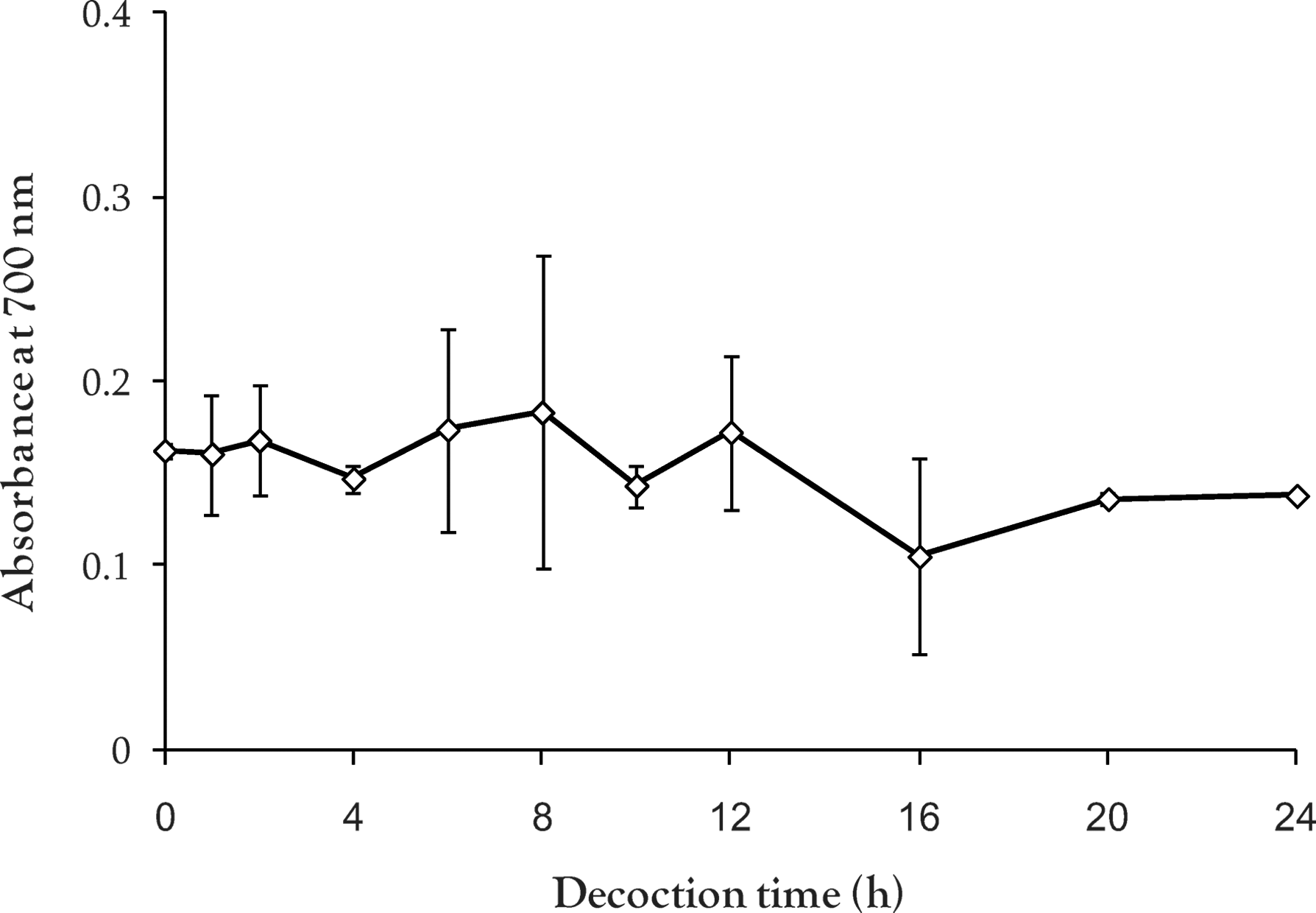
Reducing power of Sal B and its decocted solutions. Each value represents mean±standard deviation (n=3). No significant differences were observed among the samples.
Inhibitory effect of Sal B and its decocted solutions against copper ion-induced oxidation of rat plasma
Reactive oxygen species, free radicals, and transition metal ions induce lipid peroxidation in human plasma lipoprotein, and this event is an important aspect of the progress of various pathologic disorders such as atherosclerosis. 31,32 Various antioxidants are present in human blood plasma; therefore, antioxidants are important for maintaining normal physiological functions of the cardiovascular system, 33 –35 because the oxidative modification of plasma lipoproteins is believed to participate in the initial event of atherosclerosis, leading to coronary heart disease. 30 The predominant antioxidative activity of Sal B has been reported previously 16 and S. miltiorrhiza, which contains Sal B as a main constituent, has been used to treat atherosclerosis in Oriental medicine. Therefore, it was necessary to compare the inhibitory effect of Sal B and its decocted solutions against oxidation in rat plasma.
Sal B inhibited the formation of CE-OOH in a concentration-dependent manner (0.5–5.0 μg; data not shown). The 50% inhibitory concentration of Sal B against CE-OOH formation in rat plasma was determined to be 3.0 μg using a dose–response curve (data not shown). Therefore, the inhibitory effects of the Sal B–decocted solutions (equivalent to 3.0 μg Sal B) against CE-OOH formation in rat plasma were determined as a function of the decoction time. Interestingly, plasma containing the decocted Sal B solutions was more effective at inhibiting CE-OOH formation than the plasma containing the Sal B solution that was not decocted, regardless of the decoction time (Fig. 4). However, the inhibitory effects of the decocted Sal B solutions fluctuated with increasing decoction time. Plasma containing the Sal B solution of decocted for 1 h produced an inhibitory effect of ∼50% relative to that of the control plasma, although the inhibitory effect decreased inversely with decoction time up to 6 h. However, inhibition of CE-OOH formation in plasma containing the Sal B solution decocted for 8, 12, and 16 h increased with decoction time. In addition, the highest inhibition capacity was observed in plasma containing the Sal B solution that was decocted for 16 h; however, a decrease in activity was observed with decoction times >16 h. These results indicate that the composition of the converted compounds from Sal B changes with decoction time. In addition, the content and type of compounds affecting the antioxidative activity might also change with decoction time.

The inhibitory effect of Sal B and its decocted solutions against copper ion-induced oxidation in rat plasma. Data are representative of two experiments.
Inhibition of copper ion–induced oxidation in rat plasma after oral administration of Sal B and its decocted solutions
Blood plasma collected from five groups of rats (n=5) administered the Sal B and Sal B solutions (∼0.75 mg–equivalent) 11,23 decocted for 1 and 6 h was pooled using the same volumes from five rats in each group. Oxidation of the fourfold diluted plasma was initiated by adding copper ions (100 μM, final concentration), and the inhibition effect was evaluated by measuring the CE-OOH concentrations (Fig. 5). The accumulation of CE-OOH in all groups administered Sal B was suppressed relative to that in the control with regard to lag time: control (2 h)<Sal B (3 h)<Sal B solution decocted for 1 and 6 h (4 h). In this experiment, the antioxidative activity in the plasma from rats administered the Sal B–decocted solutions was slightly higher than that in the rats administered the Sal B solution that was not decocted, although the difference in the activity was small. This result suggests that the Sal B decoction may be responsible for the increased antioxidative activity in blood plasma, which may have been accelerated by the presence of compounds converted by decoction. Moreover, these results suggest that Sal B decocted in an aqueous solution may have more potent antioxidant activity in the blood circulation than Sal B solution that is not decocted.
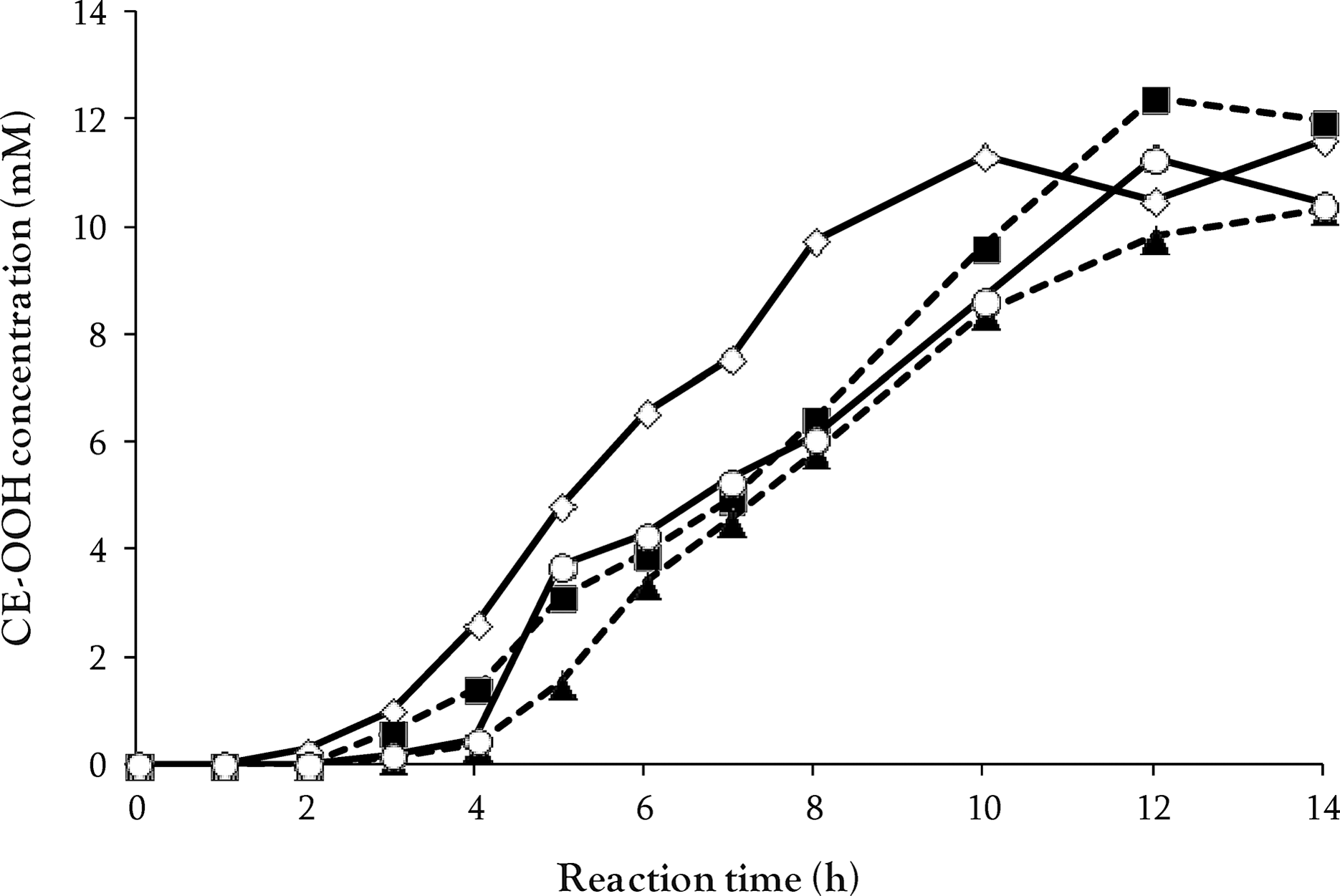
Inhibitory effect of Sal B against copper ion-induced oxidation in rat plasma after oral administration of Sal B and its decocted solutions. □, control; ■, Sal B; ▲, decoction for 1 h; ◯, decoction for 6 h. Data are representative of two experiments.
Previous studies have confirmed that the components contained in medicinal products are chemically converted during decoction. 10 This result clearly demonstrates that decoction is a very important determinant of the pharmaceutical effects of herbal medicines. That is, the decoction effect of an herbal medicine may be dependent on both the presence or absence of decoction and decoction time. Therefore, in a previous study, the structures and conversion mechanisms were examined on the single-compound level using Sal B. 10 However, very little work has been conducted to examine the effect of decoction on the biological activities of medicinal products. In addition, studies on the impact of the decoction effect at the single-compound level have not yet been performed. Therefore, we compared the effects of decoction on various biological activities of Sal B solutions before and after decoction.
The DPPH radical–scavenging activity of Sal B and its decocted solutions was not largely changed by decoction in the aqueous solution. In addition, the phenolic content, Fe2+-chelating activity, and reducing power of the decocted Sal B solution were also not significantly changed by decoction. In contrast, the formation of CE-OOH in all plasma samples containing the decocted Sal B solutions was more effectively inhibited than that in plasma containing Sal B solution that was not decocted, regardless of decoction time. The accumulation of CE-OOH in the plasma of rats administered the decocted Sal B solutions was more effectively suppressed than in the group administered Sal B solution that was not decocted. These results indicate that the composition and content of the converted compounds from Sal B that affect antioxidative activity might have changed with decoction time. It appears likely that decoction was partly responsible for the increased antioxidant activity in blood plasma. Therefore, decocted Sal B solution may contribute more to antioxidant defense in the blood than Sal B solution that was not decocted.
The decoction of herbal medicines is generally carried out using a mixture of several different compounds. Numerous reactions between the different compounds contained in the medicinal products may occur during decoction. Therefore, it is very important to better understand the conversion of compounds by decoction. Furthermore, this chemical conversion of compounds by decoction may yield novel bioactive compounds for the development of medicinally active compounds. Moreover, investigations on the decoction effect as it is related to biological activity may be important to better understand the pharmaceutical effects of Oriental medicines. Finally, a change in food biological activity may occur during the cooking process. Therefore, the present study may also be applied to investigating the changes in biological activity by cooking food.
Footnotes
Author Disclosure Statement
No competing financial interests exist.