




Abstract
This study was performed to examine the microorganisms responsible for the high tyramine content of Cheonggukjang, a traditional Korean fermented soy food, and to establish a technology for controlling the growth of these microorganisms. The tyramine content in 13 collected Cheonggukjang samples averaged 604.9 mg/kg. Since the tyramine content measured from most samples was sufficient to cause harm to the human body, it is necessary to control its production in food. Enterococci were confirmed to be the bacterial species producing most of the tyramine through the microbial examination and were present in high numbers from not detected (<101) to 7.0×10¹⁰ colony-forming units (CFU)/g. To control the growth of enterococci, various plant extracts with antimicrobial activity, common salts, and variable temperature conditions were tested. It was found that 4 samples among the 159 plant extracts had a strong antimicrobial activity in Cheonggukjang, especially against Enterococcus faecium, showing viable cell counts of <101–103 CFU/g after 24 h of ripening, which were significantly lower values compared to the control (109–1011 CFU/g). The Cheonggukjang with the addition of the four plant extracts showed ∼83%–95% lower concentrations of tyramine compared to the control. Cheonggukjang prepared with the Schizandra chinensis Baillon extract had the lowest tyramine content without sacrificing the sensory quality. Not only was the bacterial species of E. faecium reduced more remarkably, by up to 103 CFU/g compared to the 109–1011 CFU/g shown in the control, but it also decreased the tyramine content by up to 91%.
Introduction
C
However, Mah 11 reported that histamine (from not detected [ND] up to 23.4 mg/kg) and tyramine (2.54–1989.0 mg/kg) were detected in Cheonggukjang. There have also been reports that histamine (51–457 mg/kg) was detected in 39 natto 12 and tyramine was in 5 natto. 13 In general, the tyramine level in Cheonggukjang is higher than that of natto. Brink et al. 14 reported that 100–800 mg/kg of tyramine in foods is toxic. Tyramine is reported to be toxic to humans through food-borne intoxications. 15 Tyramine is mainly formed by microbial decarboxylation of amino acids in animals, plants, and microorganisms. 16 Tyramine is also present in foods such as fishery products, cheese, wine, beer, dry sausages, meat products, vegetables, and fermented soy bean products. 14,15
In a laboratory medium, tyramine can be produced by Enterococcus, Enterobacteriaceae, Lactococcus, Proteus, and Pseudomonas, but not by Bacillus, Acinetobacter, Escherichia, Hafnia, Salmonella arizonae, Serratia marcescens, Shigella, or Yersinia enterocolitica, nor by yeast species, except Candida krusei. 15,17,18 In miso, bacteria producing tyrosine decarboxylase have been identified as Enterococcus faecium and Lactobacillus bulgaricus. 19,20 A recent study suggested that Enterococcus is one of the microorganisms that produce high amounts of tyramine. 21 Enterococcus can be readily isolated from foods. There are many environmental factors that may affect amine formation by enterococci. 22 Yoon et al. reported that the cell count of enterococci in ripened Cheonggukjang was up to 106 colony-forming units (CFU)/g, with the predominant species identified as E. faecium. 23
Enterococcus, belonging to a group of gram-positive LAB, constitutes a large proportion of the autochthonous microflora associated with raw foods of animal origin. E. faecium is particularly dominant in various fermented foods, including sausage, cheese, fermented vegetables, and fermented milk. 24,25 The number of antibiotic-resistant strains of Enterococcus is on the rise, particularly vancomycin-resistant enterococci. Vancomycin resistance is of special interest as an acquired resistance, since the antibiotic is considered the last resort in the treatment of multiple drug-resistant enterococci infections. The virulence of Enterococcus relates to its adherence to host tissue, invasion, abscess formation, modulation of host inflammatory responses, and secretion of toxic products. 26 –28
There has been a report that biogenic amine contents in fermented food can be decreased by adding garlic and other spices; however, no literature is available on preventing tyramine formation in Cheonggukjang. 29 The objectives of this study were to analyze the tyramine contents, to evaluate correlations between Enterococcus spp. and tyramine in Cheonggukjang, and to develop strategies for controlling tyramine-producing Enterococcus spp., for the purpose of decreasing tyramine production in Cheonggukjang. Various plant extracts were tested for their antimicrobial activities and their capacity to decrease tyramine production in vitro for the purpose of controlling the tyramine-producing enterococci.
Materials and Methods
Cheonggukjang samples
A total of 13 Cheonggukjang products were purchased at general markets in Korea. The samples of Cheonggukjang were stored at −70°C.
Natural substances, medicinal herbs, and phytochemicals
About 99 medicinal herbs were purchased at Kyung Dong market in Seoul, Korea, while 41 plant substances were purchased at commercial markets, and 13 herbs were purchased from domestic (Korean) herb farms. Six commercial phytochemicals, including a commercial polyphenol from green tea (PGT), red ginseng, lycopene, polylysine (all from HyangRim), chitosan (Food Additives Bank) and grapefruit seed extract (GSE; YB Bio), were purchased from domestic companies.
Measurement of viable cell count
One gram of Cheonggukjang was added into 9 mL of dilution solution, and serial dilutions were prepared for bacterial counting. Then, 100 μL of each diluted sample was spread on plate count agar (PCA), Bacillus medium agar (BM), and Enterococcus agar (EA) and incubated at 37°C for 24 h, and CFU counted and calculated per gram of Cheonggukjang (CFU/g).
Determination of tyramine contents in Cheonggukjang and Cheonggukjang-containing plant extracts
Tyramine contents in Cheonggukjang samples and tyramine-producing levels of each strain were evaluated by HPLC, using the method developed by Ben-Gigirey, de Sousa, Villa, and Barros-Velazquez. 30 Waters 2996 photodiode array detector and workstation software were employed. Conditions for detection of tyramine were as follows: Nova-pak C18, 4 μm, 150 mm×3.9 mm column; solvent A, 0.1 M ammonium acetate; solvent B, acetonitrile. The mobile phases, solvent A and solvent B, were used under linear-gradient conditions starting with 50% solvent B to 75% solvent B over 19 min with a flow rate of 1 mL/min. The volume of the injected sample was 20 μL, and samples were observed at 254 nm.
Identification of tyramine-producing bacteria
Microorganisms were isolated from PCA, BM, and EA media. Then, nutrient broth, tryptic soy broth, and deMan Rogosa Sharp (MRS) broth media were used for cultivation of the isolated microorganisms. Isolated microorganisms were tested for tyramine-producing activity using Bover-cid's agar containing 0.5% tyrosine by the spotting method at 37°C for 48 h. All strains were investigated for their ability to produce tyramine. Strains were selected from commercially and traditionally manufactured products. Production of tyramine by selected strains that were pre-evaluated by Bover-cid's agar was determined by HPLC. Enterococcus spp. was identified using an API strep kit.
Growth characteristics of tyramine-producing bacteria
One milliliter of E. faecium culture was added to 50 mL of MRS broth, and the mixture was incubated at 37°C for 24 h. The cell growth was estimated through a turbid-metrical method at 600 nm using a spectrophotometer (Lambda 35; PerkinElmer). Experimental factors were pH ranging 2.0–12.0 (pH 2.0, 2.5, 3.0, 3.5, 4.0, 7.0, 8.0, 10.0, and 12.0), temperature ranging 4°C–65°C (4°C, 15°C, 20°C, 25°C, 30°C, 37°C, 45°C, 50°C, 51°C, 52°C, 53°C, 54°C, 55°C, 60°C, and 65°C), and salt ranging 0%–15% (0%, 5%, 6%, 7%, 8%, 9%, 10%, and 15%).
A hundred microliters of E. faecium was added to 5 mL of MRS broth, and the mixture was incubated at 37°C for 24 h. Then, the prepared E. faecium culture as described above was tested for the influence of high pressure using a high-pressure machine (Toyo Koatsu Co., Ltd.). Treatment time was adjusted in the range of 0–60 min (0, 15, 30, 45, and 60 min). One gram of treated culture was diluted in 9 mL and serial dilutions were prepared for bacterial counting. A hundred microliters of dilution was spread onto EA, and cultivated at 37°C for 24 h.
Sample extraction
Plants (30 g) were powdered, and then extracted with 70% ethanol for 3 h using a Soxhlet extractor. Extracts in 70% ethanol were filtered through Whatman No. 2 paper, and the solvents were vacuum-evaporated at 50°C in a rotary evaporator. After vacuum evaporation, concentrated extracts were dried in a freeze dryer (Pvtfv10r; Ilshinlab Co.).
Agar diffusion test
E. faecium was inoculated into the MRS broth and incubated at 37°C for 24 h in an incubator until the culture reached a turbidity of three McFarland units. The final inoculum was adjusted to 5×10⁸ CFU/mL. The agar diffusion test (ADT) method was applied to determine the antimicrobial activity of the 70% ethanol extracts. The 70% ethanol extracts were dissolved in 10% dimethyl sulfoxide (DMSO). The extracts were then prepared at concentrations of 10, 50, and 100 mg/mL. A suspension of microorganism (0.1 mL of 108 CFU/mL) was spread over the surface of the agar plate (Hard agar). Disc papers having a diameter of 8 mm soaked with 100 μL of each plant extract were placed on the agar plates. DMSO (10%) was used as a control. This concentration of DMSO did not inhibit microorganism growth. Before incubation, all media containing microorganisms were kept in a refrigerator (4°C) for 30 min. They were then incubated at 37°C for 24 h. The diameters of the inhibition zones were measured in millimeters.
Minimum inhibitory concentration
Extract samples selected by ADT were tested by the minimum inhibitory concentration (MIC) test. The MIC test was performed for the E. faecium to estimate the effective concentration of samples required for use in food. E. faecium was incubated in the MRS broth for 24 h at 37°C, and suspension was adjusted to 3 McFarland standard turbidity. Selected extracts were dissolved in a nutrient broth at concentrations of 5, 10, 15, 25, and 50 mg/mL for further testing. Subsequently, 200 μL of E. faecium were added into a medium containing extract samples and incubated at 37°C for 24 h, and 100 μL of the mixed cultures prepared above were spread onto EA and incubated at 37°C for 24 h.
In situ application test
White soybeans were purchased in South Korea in 2009. They were soaked in water at 15°C for 12 h and steamed for 60 min at 121°C. The steamed soybeans were cooled to 50°C, and then an inoculum suspension consisting of 108 CFU/mL B. subtilis (KTCT, 3014), 105 CFU/mL E. faecium, and 70% ethanol-extracted powders was added onto the soybeans. The mixture was then fermented at 45°C for 24 h in a fermentation room. After fermentation, 7% salt was added before fermentation at 4°C for 24 h. After the fermentation was finished, the samples of Cheonggukjang were stored at −70°C for further tests.
Control of E. faecium, a high producer of tyramine, by natural substances
Five grams of Cheonggukjang samples were added to 45 mL of dilution solution, and serial dilutions were prepared for bacterial counting. Next, 100 μL of each mixed culture above was spread onto PCA, BM, and EA, and incubated at 37°C for 24 h, and then colony counts were carried out.
Sensory test of Cheonggukjang
The quality of Cheonggukjang was scored by 15 panelists using a five-point scale, based on five organoleptic characteristics: smell, color, flavor, sweetness, and bitterness, as well as an evaluation of overall quality.
Statistical analysis
All values of experimental data were obtained in triplicate and analyzed using the SPSS version 12 software package (Statistical Package for Social Sciences; SPSS, Inc.). Multiple comparisons were also performed for all of the data using Duncan's multiple-range tests at P≤.05.
Results and Discussion
All microflora, Bacillus spp., and Enterococcus spp. were isolated from 13 samples of Cheonggukjang. Thirty colonies from each sample were randomly picked and maintained on PCA, BM, and EA for further identification. Total microflora, Bacillus spp., and Enterococcus spp. obtained from Cheonggukjang ranged 4.5×10⁸–2.54×10¹⁰ CFU/g, 2.9×10⁸–1.12×10¹⁰ CFU/g, and not detected (ND; <101)–7.0×10¹⁰ CFU/g, respectively, when the samples were purchased. The sample that showed the highest number of total microflora and Bacillus spp. was designated CD, a commercial product. The sample that showed the highest number of Enterococcus spp. was JB, a sample of traditionally made Cheonggukjang. There were a large number of Bacillus spp. and Enterococcus spp. in Cheonggukjang. It is noteworthy that lactic acid bacteria, including enterococci, have various health benefits (e.g., probiotics). 31 –34
Table 1 shows tyramine content in Cheonggukjang. Tyramine was detected at 117.6–2467.8 mg/kg (average 604.9 mg/kg). CQ sample, having the highest content of tyramine, was confirmed to have tyramine over 2467.8 mg/kg. The levels of tyramine in most Cheonggukjang samples were high enough to have the potential for toxicity, including mutagenicity and causing food-borne diseases.
PCA, plate count agar (all microflora); BM, Bacillus spp. medium agar; EA, Enterococcus spp. agar; TYR, tyramine content; CFU, colony-forming units.
Bacillus spp. and Enterococcus spp. were confirmed to have the ability to produce tyramine. It was found that Enterococcus spp. produce more tyramine than Bacillus spp. in Cheonggukjang (Tables 2 and 3). Therefore, we attempted to decrease tyramine content by controlling Enterococcus spp. Seventy-seven Enterococcus strains were found to be strong producers of tyramine; therefore, all Enterococcus strains were investigated for their tyramine production capacity. Among 77 strains isolated from Cheonggukjang, 6 Enterococcus strains were determined to be strong producers of tyramine. The JB24 and CQ22 strains were found to have the greatest tyramine production capacities. Tyramine contents in the cultures of isolated Enterococcus spp. were over 2500 mg/kg. The results of this test suggest that the main source of tyramine production in Cheonggukjang may be enterococci. The six strains were identified to be E. faecium. E. faecium is a strain that can exhibit antibiotic tolerance. In the case of isolated E. faecium, which highly produces tyramine, a test was performed to determine whether or not it has antibiotic resistance. It was found that E. faecium, a high tyramine producer, did not have antibiotic resistance.
Several tests for microbial characteristics were performed to characterize E. faecium, including growth at different pH, temperature and NaCl concentration, and under high pressure. As shown in Figures 1 and 2, the growth characteristics of tyramine-producing E. faecium showed different rates of growth depending on changes in pH, temperature, NaCl, and high pressure. E. faecium actively grew within the pH range of 4–10, and optimum fermentation pH of Cheonggukjang was pH 6.5–7.5. Also, E. faecium actively grew within the temperature range of 37°C–53°C, with an optimum fermentation temperature of Cheonggukjang was about 40°C–45°C. When E. faecium was treated at high pressure for over 15 min, the viable cell counts of E. faecium were decreased from 109 to 107 CFU/g. It was difficult to decrease E. faecium of Cheonggukjang by modulating pH, fermentation temperature, and high pressure. However, the growth of E. faecium was lower at 4°C, which is a refrigeration temperature. In addition, E. faecium was intolerant of salt concentrations above 7%. E. faecium grew in high salt concentrations (6.0%–7.0% NaCl). Therefore, decreasing temperature to under 4°C and adding over 7% salt could be effective strategies for preventing production of tyramine by delaying the growth of E. faecium during the postfermentation of Cheonggukjang.

Effect of temperature on the growth of E. faecium.
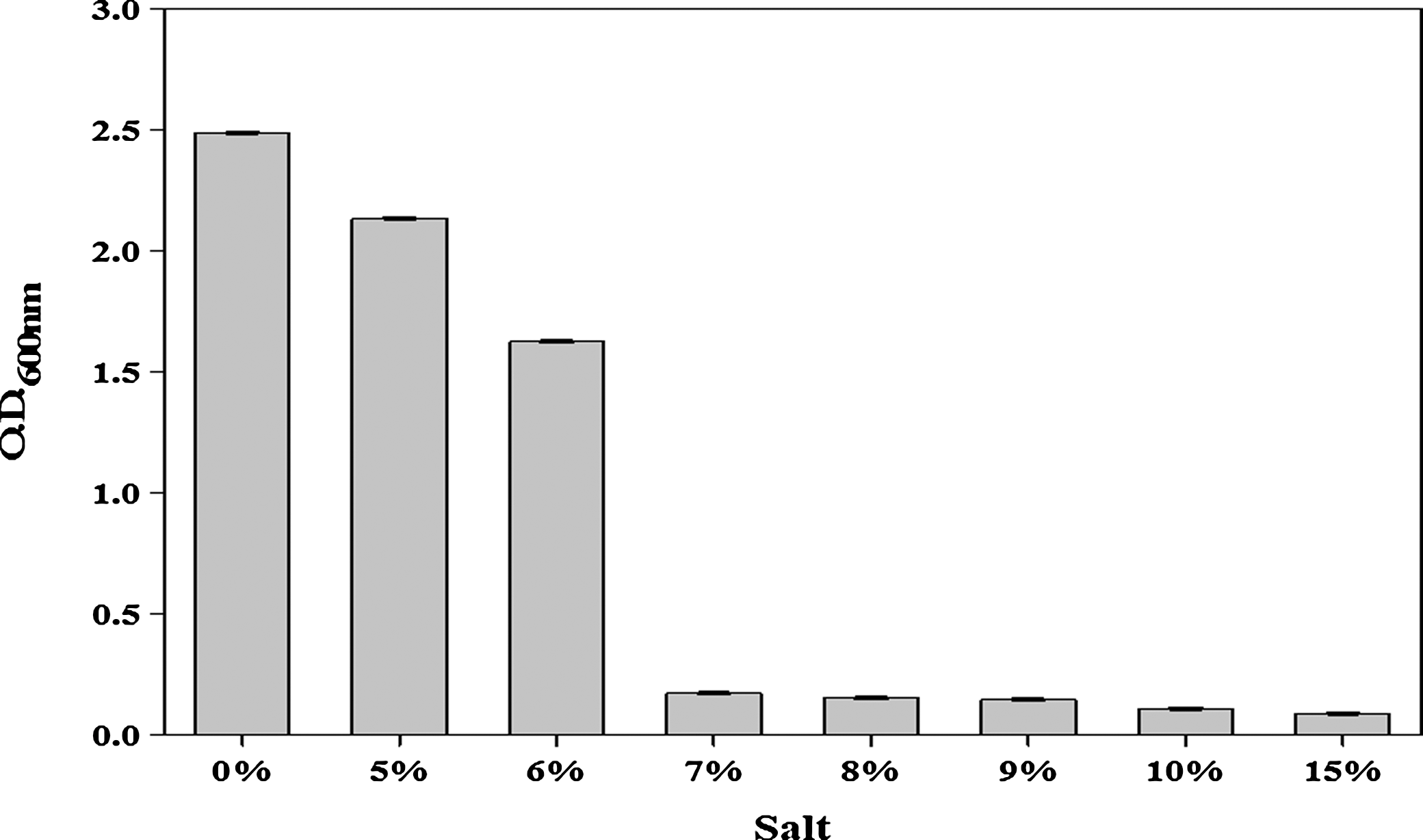
Effect of salt on the growth of E. faecium.
Next, an antimicrobial test was performed using plant extracts to control the growth of E. faecium. Ninety-nine medicinal herbs, 41 other plant substances, 13 herbs, PGT, chitosan, red ginseng, lycopene, polylysine, and GSE were tested. Antimicrobial activity was confirmed in 23 medicinal herbs, 4 plant substances, 7 herbs, and 3 phytochemicals. Through the ADT, Schizandra chinensis Baillon (SCB), Prunus mume Siebold et Zuccarini (ZUCCA), Glycyrrhiza uralensis (GU), Prunus mume Siebold & Zucc. (ZUCC), GSE, and PGT were confirmed as having strong antimicrobial activity against tyramine-producing isolates of E. faecium. SCB, ZUCCA, GU, ZUCC, GSE, and PGT were selected for further testing due to their stronger antimicrobial activities. MIC tests were performed to determine the minimal inhibitory concentration of samples showing antimicrobial activities. Ten samples showed relatively strong antimicrobial activities against E. faecium in the ADT and MIC test. While the extracts of SCB, ZUCC, Rosmarinus officinalis L. (RO), PGT, and GSE were more potent antimicrobial substances against E. faecium according to the MIC test (≤5 mg/mL), ZUCCA, GU, Thuja orientalis, Actinidia polygama, and Rosa had relatively low potential (≤10 mg/mL; Table 4). Based on the results of MIC, 10 samples were applied to reduce tyramine production of Cheonggukjang in situ. ZUCCA, a fumigated product of prunes, had the strongest antimicrobial activity against E. faecium. When treated with ZUCCA, E. faecium produced<10 CFU/mL during 24–48 h of ripening, which was significantly less than the number of E. faecium (109 to 1011 CFU/mL) in the control. SCB, ZUCCA, and RO also had antimicrobial activity against E. faecium. When treated with them, E. faecium was about 103 CFU/mL. There was no difference in the number of total microflora and B. subtilis (109 to 1011 CFU/mL) between the control group and treated sample groups; therefore, the treatments appeared to selectively inhibit tyramine-producing bacteria.
Results are expressed as diameter of inhibition zones (mm) and paper disc (Ø 8 mm).
Agar diffusion test.
MIC values were determined as the lowest antimicrobial concentration that did not allow growth.
MIC90 values were reduction 90%.
Commercial sample (n=4).
The extract is excluded from experimentation because of low extraction yield and expensive sample.
MIC, minimum inhibitory concentration; ND, not detected.
Based on the results of the MIC test, extracts of RO, ZUCC, ZUCCA, and SCB were applied to the fermentation of Cheonggukjang, because they had the strongest inhibitory effect on the growth of the tyramine-producing E. faecium. As expected, based on the inhibitory effect of four plant extracts on both the growth and tyramine-producing activity of the tyramine-producing E. faecium, the inhibitory effects of four plant extracts on the production of tyramine in Cheonggukjang were strong (Table 5). Each Cheonggukjang treated with extracts of RO, ZUCC, ZUCCA, and SCB showed a decreased tyramine-producing rate of 95%, 85%, 87%, and 91%, respectively, compared to the control (Table 6). Cheonggukjang treated with RO extract and SCB extract showed the greatest decrease of tyramine. Sensory evaluation revealed no differences in organoleptic qualities between the control and treated samples of Cheonggukjang, but RO was ineffective compared with other treated Cheonggukjang samples. The most acceptable sample was the Cheonggukjang treated with SCB in terms of antimicrobial activity against E. faecium, inhibition of tyramine production and sensory qualities (Table 7).
Results are expressed as mean numbers of viable cells (n=13).
Results are expressed as (n=13).
B, Cheonggukjang treated with B. subtilis; B+E, Cheonggukjang treated with B. subtilis and E. faecium; RO, Cheonggukjang treated with B. subtilis, E. faecium, and Rosmarinus officinalis L. extract; ZUCC, Cheonggukjang treated with B. subtilis, E. faecium, and Prunus mume Siebold & Zucc. extract; ZUCCA, Cheonggukjang treated with B. subtilis, E. faecium, and Prunus mume Siebold et Zuccarini extract; SCB, Cheonggukjang treated with B. subtilis, E. faecium, and Schizandra chinensis Baillon extract.
Sensory evaluations were scored on a five-point scale: 1, very bad; 2, bad; 3, standard; 4, good; 5, very good. Results are expressed as the means±SD (n=5).
Means with different letters within a row are significantly different at P≤.05 as determined by Duncan's multiple-range test.
The goal of this study was to investigate the correlation between Enterococcus spp. and tyramine production, and to develop technologies to decrease tyramine content of Cheonggukjang by controlling the growth of tyramine-producing E. faecium using plant extracts. Viable cell counts of Enterococcus spp. obtained from Cheonggukjang ranged ND (below 10)–7.0×10¹⁰ CFU/g, and the amounts of tyramine in most Cheonggukjang ranged 117.6–2467.8 mg/kg. One of the reasons for the high amounts of tyramine could be the presence of Enterococcus spp. It was found that Enterococcus spp. produce more tyramine than Bacillus spp. in Cheonggukjang, and E. faecium isolated from Cheonggukjang has a strong tyramine-producing activity.
Reducing temperature to under 4°C and adding salt to a 7% concentration could be one of the hurdle technologies for inhibiting the growth of E. faecium during postfermentation of Cheonggukjang. Plant extracts, including SCB, ZUCC, RO, and ZUCCA, inhibited tyramine-producing E. faecium. B. subtilis (KCTC 3014), tyramine-producing E. faecium, and four individual plant extracts were applied to the ripening of Cheonggukjang in situ. E. faecium counts were decreased during the ripening period, as were the concentrations of tyramine. This means that the viable cell counts of E. faecium are a very important factor affecting tyramine production. Also, plant extracts had antimicrobial activity against E. faecium, but did not have a major effect on B. subtilis. In particular, SCB was very effective in decreasing tyramine contents and viable cell counts of E. faecium. According to the Korean Food and Drug Administration (KFDA), SCB can be used as a food additive. The Cheonggukjang sample treated with SCB showed the best results in terms of the decreasing E. faecium growth and tyramine production while scoring well on sensory tests.
In conclusion, Cheonggukjang, an important food in the Korean diet, has the potential to contain toxic amounts of tyramine due to undesirable bacterial growth during fermentation. This study revealed that the addition of the natural herb, SCB, can selectively inhibit growth of tyramine-producing bacteria without inhibiting the growth of beneficial bacteria, while maintaining high-quality sensory properties of Cheonggukjang.
Footnotes
Acknowledgment
This work was supported by the Rural Development Administration through a Cooperative Research Program for the Agricultural Science & Technology Development.
Author Disclosure Statement
No competing financial interests exist.