




Abstract
Crude polysaccharides (PSs) were isolated from the fruit pulp of jackfruit, and their chemical composition determined and evaluated for an immune regulatory activity in mice. The PSs were isolated from water extracts of jackfruit pulp (JFP) using the ethanol precipitation method. The resulting precipitates were further purified by dialysis and protein depletion by the Sevage method. The phenol–sulfuric method was used to determine the content of the PSs. The composition of PSs was determined by the Sephadex-G200 column chromatography and high-performance liquid chromatography methods. The thymus index and macrophage phagocytic function methods in mice were used to evaluate the immune regulatory activity of JFP-PSs. The JFP-PSs content in jackfruit was about 21% (w/w) and the yield of crude PSs was 3.91%. The single molecular mass weight PS was the main constituent of JFP-PSs. The major monosaccharide residues were rhamnose, glucose, galactose, and arabinose. The JFP-PSs enhanced the thymus weight index and the phagocytic rate after 30 days of subchronic p.o. administration to mice at 4.5 mg/kg. The JFP contains single molecular PS and JFP-PS has immune-stimulating activities in mice. These data suggest that at least some of the traditional uses of JFP can be ascribed to its immunomodulatory effects.
P
Artocarpus heterophyllus Lam. (Moraceae), commonly known as jackfruit, is a medium-size evergreen tree that bears high yields of the largest known, succulent, aromatic, and flavorful fruit. Hainan Island, China, has a tropical moist monsoonal climate, which is suitable to the cultivation of these edible fruits. Aside from food, pharmacological investigations have confirmed that jackfruit pulp (JFP) exhibits a broad range of biological activities such as antioxidant capacity, 23,24 anti-inflammatory effect, 25 and antibacterial activity; 26 jackfruit leaf extracts exhibit antioxidative activity, 27,28 antibacterial activity, 27 hypoglycemic and hypolipidemic effects. 29 However, there are no data available demonstrating possible in vitro or in vivo effects of JFP or leaf extracts on the immune system function. JFP was documented in the Compendium of Materia Medica (Bencao Gangmu) and used as the replenishing Qi (YiQi) agent. It needs to be emphasized that the aforementioned PSs are mainly from the Fuzhen class (supporting the vital force) of Chinese herbal medicine. Based on these reports, we hypothesize that (1) there could be some bioactive PSs present in the JFP; (2) a causal link may exist between the dietary consumption of JFP and immune regulatory activity.
The purpose of the present study was to isolate the crude dietary PSs from the fruit pulp of the jackfruit and evaluate the chemical constituents of the resulting crude PSs. Furthermore, we also assessed the immune regulatory activity of JFP-PSs in mice using the thymus index (TI) and macrophage phagocytic function methods.
Reference standards of monosaccharides, including mannose, rhamnose, glucose, galactose, xylose, and arabinose with purity >99.5%, were obtained from the National Institutes for Food and Drug Control (Beijing, China). 1-Phenyl-3-methyl-5-pyrazolone (PMP), phenol, sulfuric acid (H2SO4), chloroform, butanol, acetone, and other chemical reagents of analytical grade were obtained from Hainan YiGao Instrument Co. Ltd. (Haikou, China). Giemsa stain was from Sigma-Aldrich Shanghai Trading Co Ltd. (Shanghai, China). Ganoderma lucidum mycelia powder was purchased from Hainan ShouNanShan ShenYe Co. Ltd. (Haikou, China). The jackfruits were collected in Haikou, China, in September 2008, and a herbarium voucher specimen under the number 200809-JFP was taxonomically certified by Associate Professor Jianping Tian, School of Pharmacy, Hainan Medical University. The specimen was deposited in the Hainan Provincial Key Laboratory of R&D of Tropical Herbs. The JFP was dried at room temperature and pulverized to fine powder by a mechanical grinder.
The dried JFP powder (1 kg) was mixed and steeped in 20 L of drinking water for 0.5 h at room temperature before a 1-h decocting extraction. The extract was separated by filtration, and the residue was re-extracted twice more with 20 L of water for 1 h. The pooled extract was concentrated in a water bath (100°C) under air pressure to some extent, and subsequently cooled, resulting in a solution with a relative density of 1.2 at 50°C. Ethanol (3×) was added and allowed to precipitate overnight at 4°C. The ethanol precipitation was repeated three times. The precipitated JFP-PSs were collected by centrifugation and washed twice with 95% ethanol, followed by dialysis and protein depletion using the Sevage method, and the resulting precipitates were dried at 60°C.
The PS content was measured by the phenol–sulfuric method using the JASCO V-650 UV-Vis spectrophotometer (JASCO, Tokyo, Japan). Assay conditions were 400–600 nm as its full-scan wavelength, and the maximum absorption wavelength used as the detection wavelength. A standard stock solution of glucose was prepared. The stock solution (1 mL) was also spiked with 5% phenol (1.6 mL) and H2SO4 (7 mL) for color reaction at room temperature for 30 min before analysis. The blank control was prepared in the same way. Stability tests of the color reaction were performed on both the standard solution and the sample solution, and then evaluated by the absorbance at four time points between 30 and 60 min after the initial reaction. The linearity and dynamic range of the assay procedure were determined by serial dilution of the standard stock solution. The calibration curves were constructed by the absorbance of serial standard solutions and their concentrations. The precision was also assessed by the analysis of the standard solution. The recovery assay was performed by adding accurate amounts of the standard glucose solution to the samples. Repeatability of the method was assessed by six duplicate samples treated with the same preparation and analyzed under the same condition.
The composition of JFP-PSs was assayed by column chromatography. Briefly, JFP-PSs were dissolved in distilled water, filtered through a Millipore filter (5 μm), and gel filtered on a Sephadex-G200 column (2.5 cm×64 cm) using distilled water as the mobile phase. The resulting fractions were identified based on their elution profiles as tested by the phenol H2SO4 method using a V-650 UV-Vis spectrophotometer at 486 nm as the detection wavelength. The monosaccharide composition of JFP-PSs was examined by high-performance liquid chromatography (HPLC) with precolumn derivatization with PMP. The PMP derivatization of monosaccharides was conducted using a modified method described previously. 30 In brief, six monosaccharide standards or the hydrolyzed samples of JFP-PSs were dissolved in 0.3 M aqueous NaOH (120 μL) and a 0.5 M methanol solution (120 μL) of PMP was added to each. Each mixture was allowed to react for 90 min at 70°C, then cooled to room temperature, and neutralized with 150 μL of 0.3 M HCl. The resulting solution was extracted with 2 mL of chloroform three times (2 mL). After vigorous shaking and centrifuging, the organic layer was carefully discarded to remove the excess reagents; then, the aqueous layer was filtered through a 0.45-μm membrane for HPLC analysis. The PMP-labeled monosaccharides were analyzed on a Shimadzu 2010A HPLC system (Shimadzu, Kyoto, Japan). The HPLC system consisted of a LC-10AD four-unit pump, a DGU-14AM degasser, a CTO-10Avp column oven, and a SIL-HTC autoinjector (Shimadzu, Japan). Data acquisition and system control were performed using CLACC-VP. Chromatographic separations were achieved using a Diamosil C18 column (250 mm×4.6 mm, i.d. 5 μm; Dikma Technologies Inc., Guangzhou, China) controlled at 30°C. The mobile phase consisted of 66.7 mM sodium phosphate (pH 7.2) with (A) 82% and (B) 18% acetonitrile with a flow rate at 1 mL/min. The wavelength for UV detection was 245 nm.
Animal studies were conducted according to protocols approved by the Review Committee of Animal Care and Use at the Pharmaceutical Institute of Hainan Province (Haikou, China). Young adult Kunming mice of both sexes (18–22 g) were purchased from the DongChuang Laboratory Animal Service Department (Changsha, China). The rodents were housed under controlled temperature of 22°C±2°C, relative humidity of 60%±10%, with a 12-h light/12-h dark cycle. Commercial mice chow and water were available ad libitum. The mice were acclimated to the facilities and environment for 2 weeks before the experiments.
Spleen index: Thirty mice were randomly divided into three groups (n=10, five per sex). The JFP-PS group was orally administered jackfruit PS powder at a daily dose of 4.5 g/kg (20 mL/kg). The negative group was orally administered an equal volume of saline and the positive group was treated with G. lucidum mycelia powder at 1.8 g/kg (20 mL/kg). After 30 days of treatment, all the animals were euthanized and the spleen and thymus glands of the mice were removed and weighed under sterile conditions. Spleen index (SI)=spleen weight (mg)/body weight (g). TI=thymus weight (mg)/body weight (g).
Phagocytosis by peritoneal macrophages: Preparation of washed chicken red blood cells (CRBCs): Chicken blood collected under aseptic conditions by the wing vein was put into a sterile flask containing a crystal ball and shaken to remove the fiber. The solution was rinsed three times with saline and centrifuged two times at 1000 g for 5 min. The supernatant and the buffy coat layer (including white blood cells and blood platelets) were discarded. The CRBCs were resuspended in saline to a final concentration of 20% (v/v). The animal treatment groups were the same as described in the spleen index and TI in the mice section. Thirty minutes after the last oral administration, 1 mL of CRBC suspension was injected intraperitoneally into each mouse. After 30 min, the mice were euthanized. Two milliliters of saline was injected into the abdominal cavity, massaged for 1 min, and 1 mL of abdominal fluid was then sampled to make a smear for each mouse. The smears were incubated at 37°C for 30 min in a wet box fixed with the acetone–methanol solution (1:1, v/v), and then stained with 4% (v/v) of the Giemsa phosphoric acid dye. The number of macrophages ingesting CRBCs out of a total of at least 100 cells was calculated by direct visual enumeration using a light microscope. The phagocytic rate (PR) was calculated using the following formula: PR (%)=(number of macrophages ingesting CRBCs/number of total macrophages)×100. The phagocytic index (PI) was calculated according to the formula as follows: PI=(number of phagocytized CRBCs/number of total macrophages)/2.
Data were analyzed by one-way analysis of variance (ANOVA), followed by the Dunnett's test. All results are expressed as mean±standard deviation (SD). Values of P<.05 or .01 were considered to be statistically significant, using PASW statistics 18 software (SPSS, Inc., Chicago, IL, USA).
An assay was developed and validated to determine the content of JFP-PSs in JFP. The maximum absorption wavelength was 486 and the calibration curves were constructed (Fig. 1). Calibration curves showed good linearity in the range 0.06–0.1 mg/mL for glucose in the water solution. A typical equation for the calibration curves was as follows: A=7.013C+0.051, r=0.9988. The color reaction remained stable from 30 to 60 min with an absorbance value of 0.73±0.00. The mean relative SD (RSD) value for the concentrations measured on the same day (n=6) for quality control standards was 0.25%, indicating good assay precision. The mean recovery of the tested glucose was 103%, whereas the mean RSD value was 3.34%. Assay results showed that the JFP contained 20.7% (w/w) PS. The yield and purity of the crude JFP-PSs was about 3.9% and 85%, respectively. As shown in Figure 2, the JFP-PSs were resolved by column chromatography on Sephadex-G200 and the elution volume-absorbance profile was a single peak. There were no peaks at wave lengths of 260 and 280 nm on the UV spectrum, indicating that this fraction did not contain nucleic acids or proteins. Analysis of the component sugars by HPLC showed that the JFP-PSs consisted of rhamnose, glucose, galactose, and arabinose with the percentage of the peak area being 4.1%, 88.9%, 5.1%, and 1.9%, respectively, indicating that glucose was the major monosaccharide.
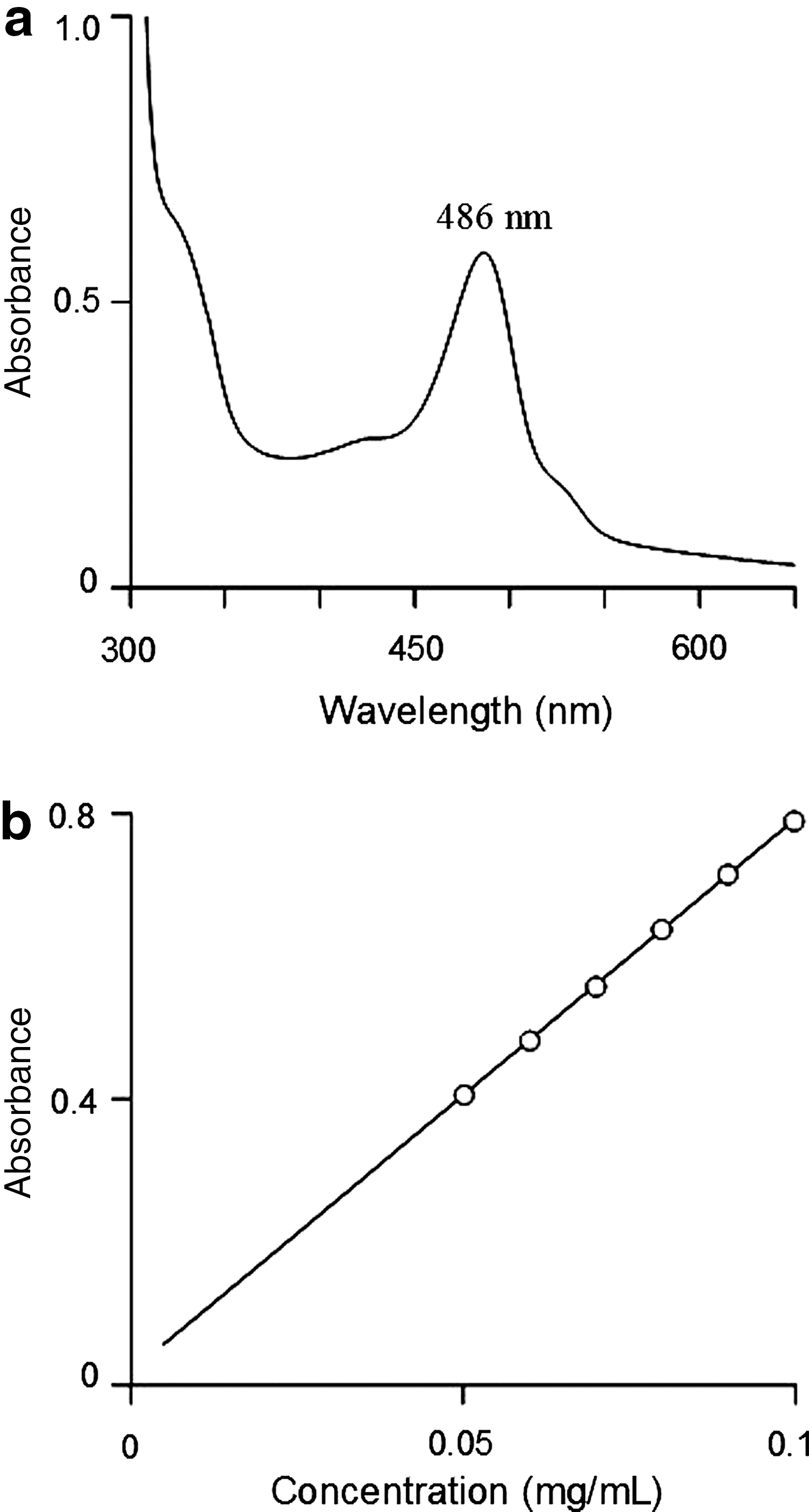
The absorption profile
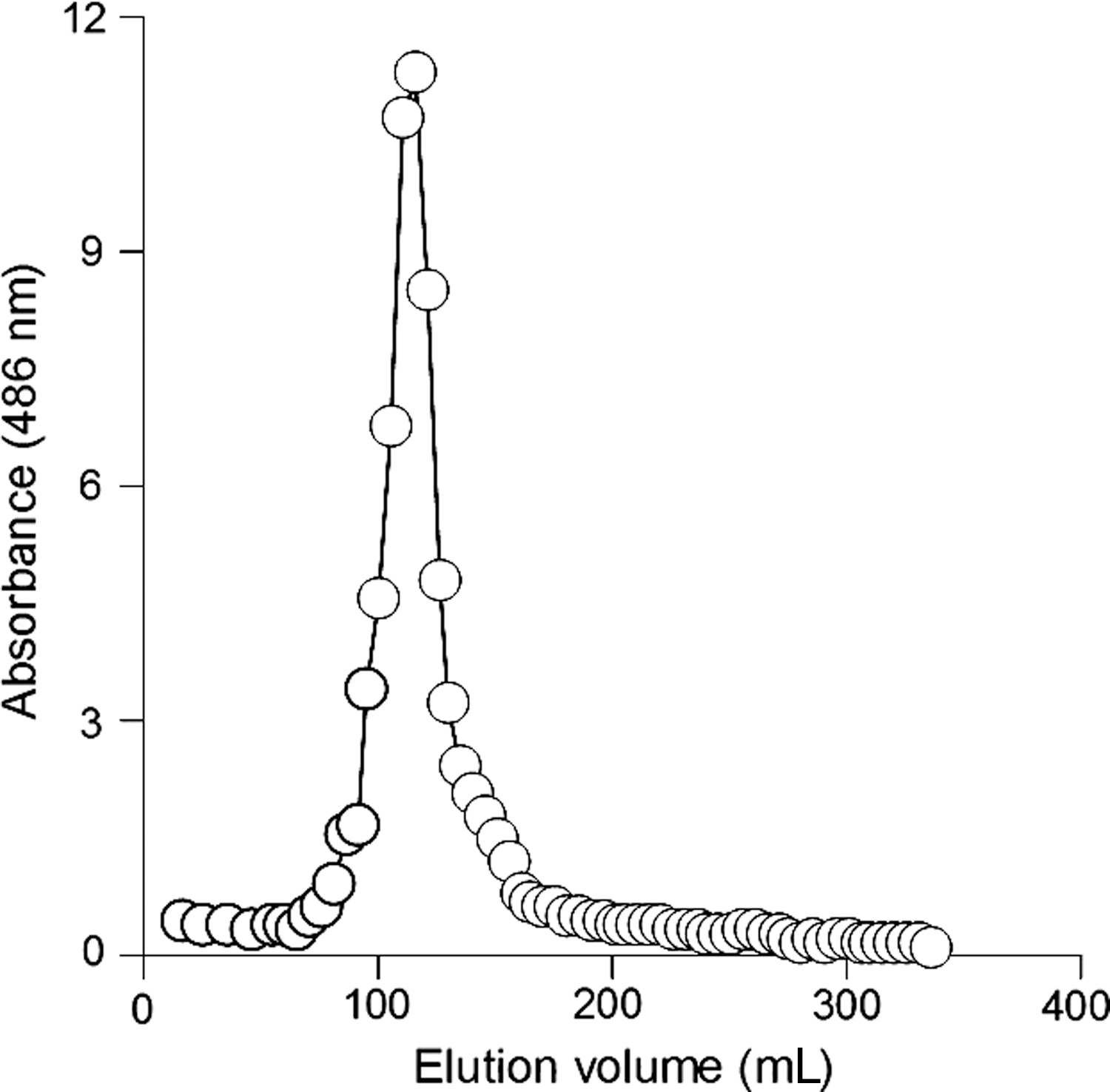
Elution profile of the crude polysaccharides (PSs) from fruit pulp of Artocarpus heterophyllus by column chromatography on Sephadex-G200. PSs were detected using the phenol–sulfuric acid method.
SI in JFP-PS or G. lucidum mycelia powder-treated mice did not change significantly compared with saline-treated mice (Table 1), demonstrating that there was no effect of JFP-PS on the weight of the spleen. However, both JFP-PS and G. lucidum mycelia powder treatments increased the TI significantly compared with the normal control group after 30 days of subchronic daily p.o. administration, with mean TI values being 2.07 and 2.12, respectively. The PR of the JFP-PS group showed a significant increase when compared with that of the vehicle group (Table 2), indicative of the mean PR value being 45.2% versus 38.4%. The mean PR value of G. lucidum mycelia powder was 1.4-fold greater compared with the saline group (Table 2, P<.01). Consistently, the PI values of both the JFP-PS group and the positive group were significantly greater compared with the saline group, demonstrating 0.60 and 0.70 versus 0.44, respectively (Table 2, P<.01 and P<.001).
The data are presented as means±SD (n=10) and evaluated by one-way ANOVA followed by the Dunnett's test to detect intergroup differences.
P<.05, compared with the saline group.
JFP-PS, jackfruit pulp polysaccharide; ANOVA, analysis of variance; SD, standard deviation.
The data are presented as means±SD (n=10) and evaluated by one-way ANOVA followed by the Dunnett's test to detect intergroup differences.
P<.05, ** P<.01, and *** P<.001, compared with the saline group.
Cancer is a major public health problem in the world and is the leading cause or the second leading cause of death in economically developed or developing countries. Newly developed drugs and tools have improved the diagnosis and treatment of cancer. However, many cancer therapies damage the immune system. It is therefore very important to screen for novel immune regulatory substances from traditional Chinese medicines (TCMs), especially the Fuzhen and Chi-Shei class TCM. In addition, epidemiological evidence indicates that a high intake of fruits leads to a decreased cancer incidence, and it is the fruit phytochemicals that are believed to be responsible for their protective effects. 31 Therefore, we need to collect more data about the immune regulatory roles and inherent mechanisms after ingestion of TCM containing beneficial compounds such as PSs.
Jackfruit, an edible tropical fruit, has been used as a replenishing Qi agent in TCM for centuries. Jackfruit has several pharmaceutical benefits as aforementioned; however, the chemical constituents and immune regulatory activity have not yet been fully assessed. In the present study, we first isolated crude PSs from JFP and the JFP-PS content in jackfruits was quantified using a spectrophotometric method after phenol-H2SO4 treatment. We found that the JFP-PS content in immature jackfruits was about sevenfold higher compared with the mature fruits (21% vs. 3%). Further studies on JFP-PS composition showed that a single molecular mass weight PS was the main chemical constituent (Fig. 2). The monosaccharide residues of JFP-PSs were found to be mainly glucose (Fig. 3). As shown in Figure 3, two chemicals (peak numbers

High-performance liquid chromatography chromatograms of 1-phenyl-3-methyl-5-pyrazolone (PMP) derivatization of six monosaccharides reference substances, derivatization reagent
As is well known, PSs have demonstrated beneficial activities in vitro; however, clinicians and scientists might be more interested in the immunologic effects after dietary intake. Accordingly, we utilized whole animal models, including the immune organ weight index of mice, as well as phagocytosis by peritoneal macrophages in mouse models, to evaluate the immune regulatory activity of this natural product. In this study, there was a significant increase in the TI after JFP-PS subchronic treatment compared with the saline group, indicating that JFP-PSs could enhance the development of the thymus. However, this enhancement was not duplicated in the spleen. The underlying mechanisms of this difference remain unknown. In addition, a considerable enhancement of both the rate and index of phagocytosis of CRBCs was observed in JFP-PS (4.5 mg/kg) as compared with the control group suggesting that JFP-PSs can enhance the phagocytic capability of macrophages. Therefore, JFP-PSs might improve the deficient phagocytosis of macrophages in patients with impaired immunity.
In conclusion, this study demonstrated that JFP contains bioactive PSs and that JFP-PSs have an immune-stimulating activity in a mouse model. The traditional uses of JFP on Qi deficiency diseases could be partly ascribed to the immunomodulatory effects.
Footnotes
Acknowledgments
This work was supported by the Medicinal Chemistry, Hainan Provincial Support for Key Disciplines (Education Department, Hainan Province). The authors would like to thank Fei Tang, senior researcher, Pharmaceutical Institute of Hainan Province, Haikou, China.
Author Disclosure Statement
No competing financial interests exist.