




Abstract
To find acetylcholinesterase (AChE) inhibitors for the prevention of neurological disorders, such as Alzheimer's disease, ethanol extracts of promising traditional edible Korean plants were tested. Among them, Rubus coreanus Miquel extract exhibited the most significant AChE inhibitory activity. The effect of R. coreanus extract on trimethyltin-induced memory impairment in mice was investigated using Y-maze and passive avoidance tests. Our results showed that administration of R. coreanus extract significantly improved alternation behavior and step-through latency. In addition, R. coreanus extract was sequentially fractionated, and the purified constituent was determined to be 3,4,5-trihydroxybenzoic acid.
Introduction
A
According to a recent study, various bioactive phytochemicals are effective in preventing diseases due to their antioxidant, anti-inflammatory, antiviral, and anti-carcinogenic properties. 7 Some phytochemicals, such as polyphenols, carotenoids, and flavonoids, are potential preventive agents against cognitive disorders, including numerous neurodegenerative disorders and AD. 8,9
The aim of the present study was to investigate the AChE inhibitory effect of Rubus coreanus Miquel (R. coreanus) in vitro and its cognition improving effects in vivo. In addition, the active compound from R. coreanus was isolated. After screening various natural plants, an ethanol extract of R. coreanus was finally selected due to its AChE inhibitory activity. R. coreanus, which belongs to the family Rosaceae, is cultivated in Southeast Asian countries. The fruit contains organic acids such as malic acid and tartaric acid, as well as astragalin, isoquercitrin, and citronene, and it has long been used in traditional Korean medicine. 10 Constituents of R. coreanus were previously reported to have medicinal actions such as antioxidant, antinociceptive, anti-inflammatory, and antiulcer effects. 11 –13
To clarify the memory-enhancing effect of R. coreanus extract, the behavioral tests, including Y-maze and passive avoidance tests, were conducted using trimethyltin (TMT)-intoxicated learning and memory deficits in mice. TMT is a neurotoxicant that induces a distinct pattern of neuronal death in the hippocampus and other components of the limbic system. The deterioration of hippocampal system caused by TMT could be responsible for cognitive impairments. Many studies have reported that administration of TMT in rodents causes neuropathological consequences and marked behavioral changes. 14 –16 These neurologic and behavioral toxicities have been shown to associate with an alternation in cholinergic parameters seen in patients with AD.
Finally, the ethanol extract of R. coreanus was partitioned using hexane, chloroform, and ethyl acetate to confirm the bioactive compound. It was then sequentially purified using separation techniques, including open-column chromatography, thin-layer chromatography (TLC), and high-performance liquid chromatography (HPLC). 17 –19 After each purification step, all fractions were tested for the AChE inhibitory effect using Ellman's method. 20 The chemical structure of the active compound was determined using electron ionization-mass spectrometry (EI-MS) and nuclear magnetic resonance (NMR) spectroscopy.
Materials and Methods
Materials
Roswell Park Memorial Institute (RPMI)-1640 medium, heat-inactivated horse serum (HS), fetal bovine serum (FBS), and antibiotic-antimycotic were purchased from GIBCO-Invitrogen (Grand Island, NY, USA). All chemicals used were of analytical-grade purity. Acetylthiocholine iodide, 5,5′-dithiobis-(2-nitro) benzoic acid (DTNB), 1,5-bis-(4-allydimethyllammoniumphenyl)-pentane-3-one dibromide (BW 284c51), tacrine (9-amino-1,2,3,4-tetrahydroacridine), dimethyl sulfoxide (DMSO), and TMT chloride were purchased from Sigma (St. Louis, MO, USA).
Cell culture
PC12 cells (rat pheochromocytoma cells) acquired from ATCC were cultured in RPMI-1640 medium supplemented with 10% HS (v/v), 5% FBS (v/v), and 1% antibiotic-antimycotic (v/v). Cultures were maintained at 37°C with 5% CO2 and water saturation. When the culture was 80–90% confluent, the cells were subcultured. The medium was replaced every 2 to 3 days.
AChE assay
AChE activity was determined using the modified spectrophotometric method of Ellman et al. 20 For the enzyme source, PC12 cells were homogenized in Tris-HCl buffer [20 mM Tris-HCl (pH 7.5) containing 150 mM NaCl, 10 mM MgCl, and 0.5% Triton X-100]; this solution was then centrifuged at 10,000 g for 15 min. The supernatant was then used as the enzyme source. Protein concentration of AChE was determined by Bradford method using bovine serum albumin as the protein standard. ACh iodide was used as the reaction substrate, and DTNB was used to measure AChE activity. Briefly, 10 μL of each sample was mixed with 10 μL of enzyme solution, added to 70 μL of reaction mixture (50 mM sodium phosphate buffer [pH 8.0] containing 0.5 mM ACh iodide and 1 mM DTNB), and incubated at 37°C for 15 min. ACh iodide reacted on by the enzyme was monitored at a wavelength of 405 nm using a 96-well microplate reader. The AChE inhibitory effects of each group was tested and compared with that of tacrine, known as the first AChEI.
Sample preparation
Natural dried plants (Korean origin) were purchased at Kyung-dong market, an oriental medicine store in Seoul, Korea. Samples were extracted in ethanol for 24 h, and the obtained ethanolic solution was filtered through Whatman no. 42 ashless filter paper (Whatman International Ltd., Maidstone, England). This procedure was repeated five times, and the solution was concentrated in a rotary evaporator. For sample screening, each sample was diluted to 1 mg/mL with distilled water containing 5% (v/v) DMSO.
Isolation of the AChE inhibitor from R. coreanus
Dried R. coreanus (3 kg) was extracted using the sample preparation strategy described above. The crude ethanol extract (240 g) was dissolved in distilled water (200 mL), and the solution was serially fractionated thrice with 600 mL of n-hexane, chloroform (CHCl3), and ethyl acetate in order of increasing polarity. The fraction that had the highest inhibitory activity among the nine fractions obtained was then separated into 33 fractions by extraction with various ratios of CHCl3:EtOH (100:0, 90:10, 80:20, 70:30, 60:40, 50:50, 40:60, 30:70, 20:80, 10:90, and 0:100; 3 times each) using gradient-elution silica-gel open-column chromatography. The most active fraction was used to isolate the potential compound by TLC and visualized using visible and UV light at 254 and 356 nm, respectively. For the in vitro assay, each band was scraped off and extracted with ethanol and/or chloroform. To purify the active compound from the active band from TLC, HPLC (Waters Co., Milford, MA, USA) was performed using a reverse-phase Waters HPLC instrument equipped with a 2690-pump, a 2996-photodiode array detector, and Empower2 software. The separation was performed on a μ-Bondapak™ C18 reverse-phase column (3.9 mm×300 mm; Waters Co.) using a gradient elution with two mobile phases of 0–100% HPLC-grade ethanol in water at a flow rate of 0.3 mL/min. The sample concentration was 50 mg/mL in ethanol, and the injection volume was 10 μL. The structure of the purified active compound was determined by EI-MS and 1 H/13C-NMR spectroscopic techniques.
Animals
Male ICR mice (5 weeks old, 25–30 g) were purchased from Daehan Biolink Co. (Chungnam, Korea) and caged in groups of eight. The animals were given free access to food and water and maintained under a 12-h light/dark cycle at a constant temperature of 23±1°C and 55% relative humidity. All experimental procedures were approved by the guidelines established by the Animal Care and Use Committee of Korea University. The R. coreanus extract was mixed with a commercial diet at 400, 800, and 1200 mg of R. coreanus/kg body weight per day.
TMT injection
TMT was dissolved in a sodium chloride solution (2.5 mg/kg body weight). After animals had been fed the diet for 3 weeks, mice in the negative sample groups were administered TMT solution via an intraperitoneal (IP) injection. The injection volume was 100 μL. The control group was injected with sodium chloride solution without TMT. The behavioral tests were conducted 2 days after the TMT injection.
Y-maze test
The maze was made of black plastic with three equal angled arms (33 cm long × 10 cm wide × 15 cm high) in a Y shape. Each mouse was allowed to explore the maze for 8 min. The sequence and number of arms visited were recorded. The percentage of spontaneous alternation behavior was calculated by dividing the possible alternation by the total number of arm entries minus 2, multiplied by 100. 15
Passive avoidance test
The passive avoidance test was carried out in a chamber with two compartments (dark/illuminated) with a stainless grid floor that has electrical conductibility. For the acquisition trial, mice were individually placed in the illuminated compartment. When a mouse entered the dark chamber, an electrical foot shock (0.5 mA, 1 sec) was provided through the grid floor. In the retention trial that was performed 24 h after training, the mouse was again placed in the illuminated compartment. The time required to enter the dark chamber was recorded, and maximum latency was set to 300 sec. 21
Statistics
Each value represents the mean±SD. Statistical analyses were performed using Duncan's multiple ranges using SAS software (Cary, NC, USA). Significant differences were calculated by one-way ANOVA.
Results
Screening for AChE inhibitors in natural plants
To select bioactive samples, ethanol extracts prepared from various natural plants were tested for AChE inhibitory effects using the Ellman's method as described earlier. The results are shown in Table 1. Among the extracts tested, R. coreanus extract had the most potent AChE inhibitory activity and was selected for further study, and the active compound was isolated.
The concentration of all plant samples was 1 mg/mL, and the concentration of tacrine was 300 nM. Each value represents the mean±SD of four independent experiments. Boldface highlights the result for Rubus coreanus Miquel.
Different superscripts indicate statistically significant differences between samples (P<.05).
The effects of R. coreanus extract on in vivo behavior tests
To determine the anti-amnesic effects of R. coreanus extract in vivo, a Y-maze spontaneous alternation test was performed using TMT-treated mice (Fig. 1). When compared with the control group, the TMT group exhibited significantly lower (by about 25%) spontaneous alternation behavior than the control group. However, this TMT-induced decrease was significantly improved by pretreatment with R. coreanus extract. Particularly, the spontaneous alternation behavior of the group pretreated with 1200 mg/kg R. coreanus extract was higher than that of the control group. No significant differences in the total number of arm entries were observed among the groups. This means that R. coreanus extract had a memory-ameliorating effect in TMT-treated mice without affecting motor function (data not shown).

The effect of the Rubus coreanus extract on trimethyltin (TMT)-induced memory deficit in mice as measured by a Y-maze test. Spontaneous alternation behavior was measured over 8 min. The control group was injected with a sodium chloride solution. The TMT group was injected with a sodium chloride solution containing TMT. RC groups were injected with TMT solution after pretreatment with R. coreanus ethanol extract (400 mg/kg, 800 mg/kg, and 1200 mg/kg per day). Each value represents the mean±SD of eight mice. *P<.01 vs. the control group; # P<.01 vs. the TMT group.
Learning and memory impairment of the mice was assessed by a passive avoidance test (Fig. 2). The step-through latency of TMT-treated mice was shorter than that of the control group. However, the R. coreanus extract-treated groups exhibited a gradual dose-dependent mitigative effect of TMT-induced impairment. The results of the behavioral tests (Y-maze and passive avoidance tests) indicated that R. coreanus extract could improve TMT-induced cognitive dysfunction by inhibiting AChE activity.
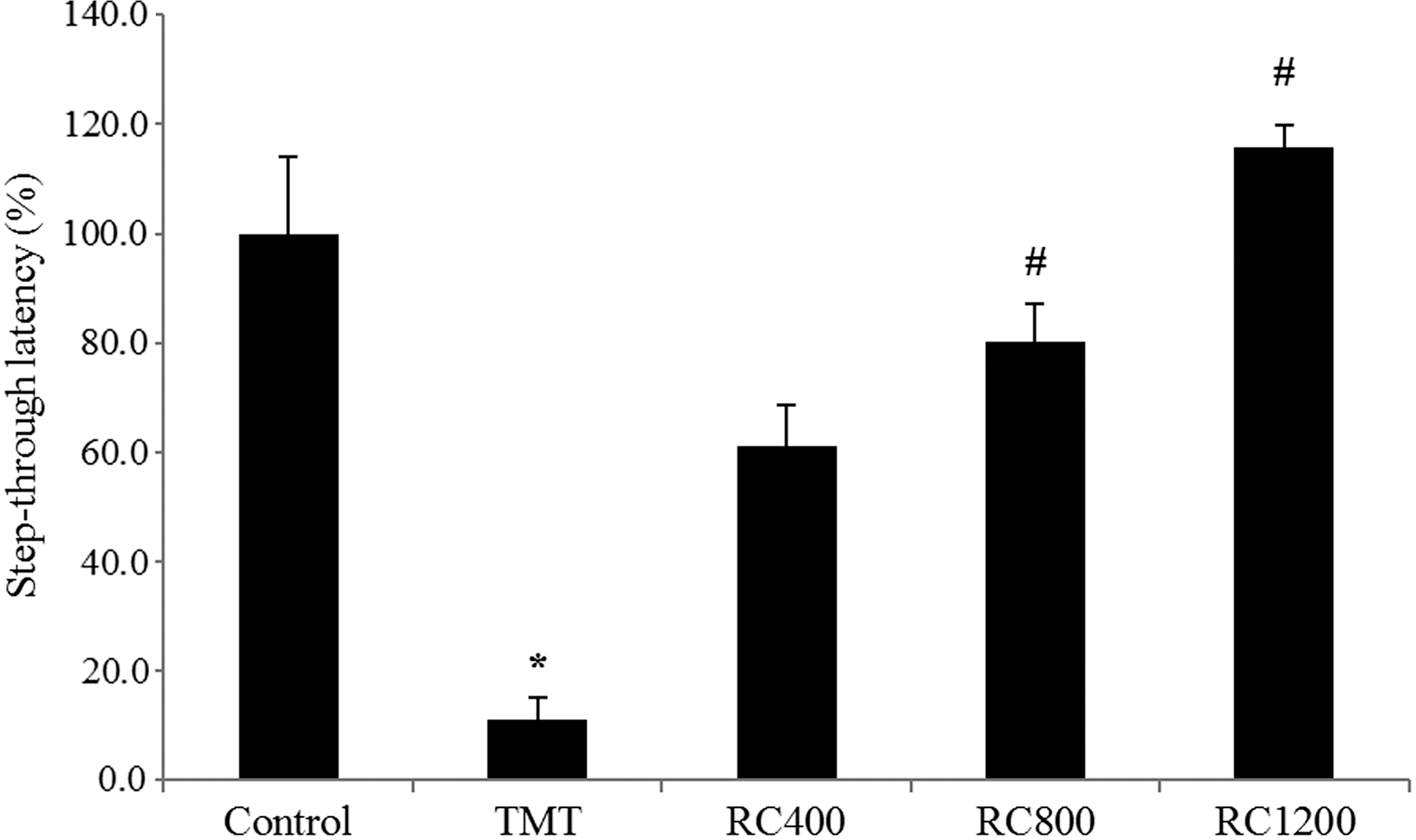
The effect of the R. coreanus extract on TMT-induced memory deficits in mice as assessed with a passive avoidance test. Step-through latency was measured over 5 min. The control group was injected with a sodium chloride solution. TMT group was injected with a sodium chloride solution containing TMT. The RC groups were injected with TMT solution after pretreatment with R. coreanus ethanol extract (400 mg/kg, 800 mg/kg, and 1200 mg/kg per day). Each value represents the mean±SD of eight mice. *P<.01 versus the control group; # P<.01 versus the TMT group.
After the behavioral tests, serum of mice was collected to evaluate acute toxicity of R. coreanus extract using the serum transaminase reagents kit. Serum aminotransferases were not significantly different among the experimental groups, indicating a lack of liver toxicity as a result (data not shown).
Isolation of a bioactive compound from R. coreanus extract
The R. coreanus ethanol extract (239 g) was subjected to liquid–liquid partition into nine fractions, which were then tested for AChE inhibitory activity. The second chloroform fraction (C2) was selected, as it had higher activity than the other fractions (Fig. 3). This chloroform extract (16.3 g) was then separated into 33 fractions by open-column chromatography, and these fractions were also tested for their AChE inhibitory effect. The fourth fraction of the CHCl3:EtOH gradient solvents (90:10) exhibited the highest activity (Fig. 4). This fraction (3.4 g) was subjected to TLC to separate the active compound. The results showed that well-defined bands clustered near the intermediate Rf value, that is, 0.08–0.94, and that the third band (with an Rf value of 0.22) showed the highest degree of AChE inhibition (Fig. 5). The extract (38 mg) of the band was then subjected to HPLC using C18 μ-bondapak™ column. As shown in Figure 6, the active component eluted as a single significant peak at 9.4 min. The final yield of the purified compound from dried R. coreanus (3 kg) was about 4 mg. The structure of the active compound was elucidated by EI-MS and 1 H/ 13 C-NMR, and it was identified as a 3,4,5-trihydroxybenzoic acid, also known as gallic acid (m/z=170); it is a natural polyphenol that has a phenolic structure (Fig. 7).
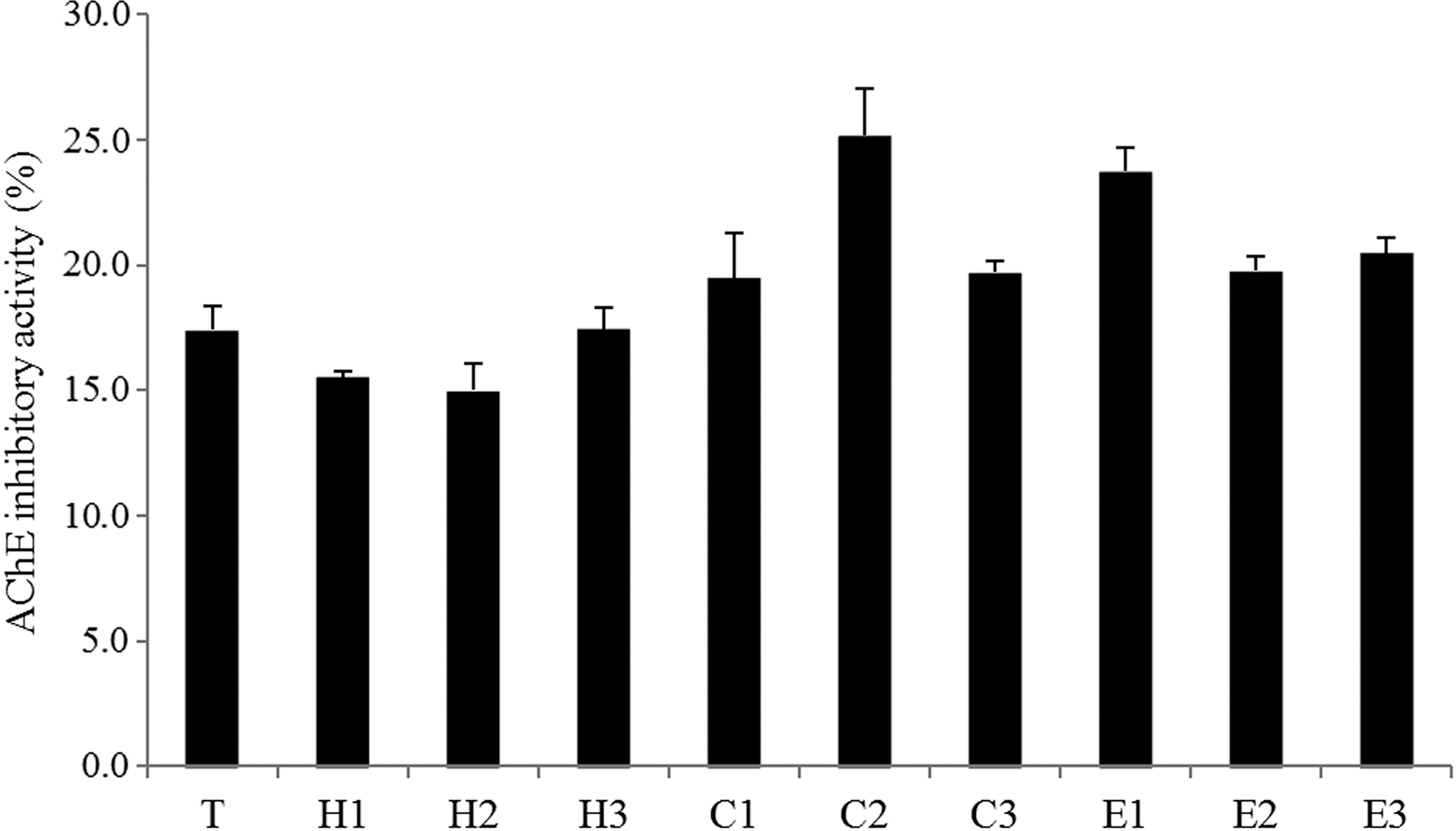
Acetylcholinesterase (AChE) inhibitory effect of fractions obtained from solvent partitioning of R. coreanus extract. The T group was the positive control, which was treated with 300 nM of tacrine, a specific AChE inhibitor. The sample groups were treated with samples that were, respectively, fractionated with hexane (H1, H2, and H3), chloroform (C1, C2, znd C3), and ethyl acetate (EA1, EA2, and EA3) thrice. The concentration of samples was 1 mg/mL. Each value represents the mean±SD of four independent experiments.
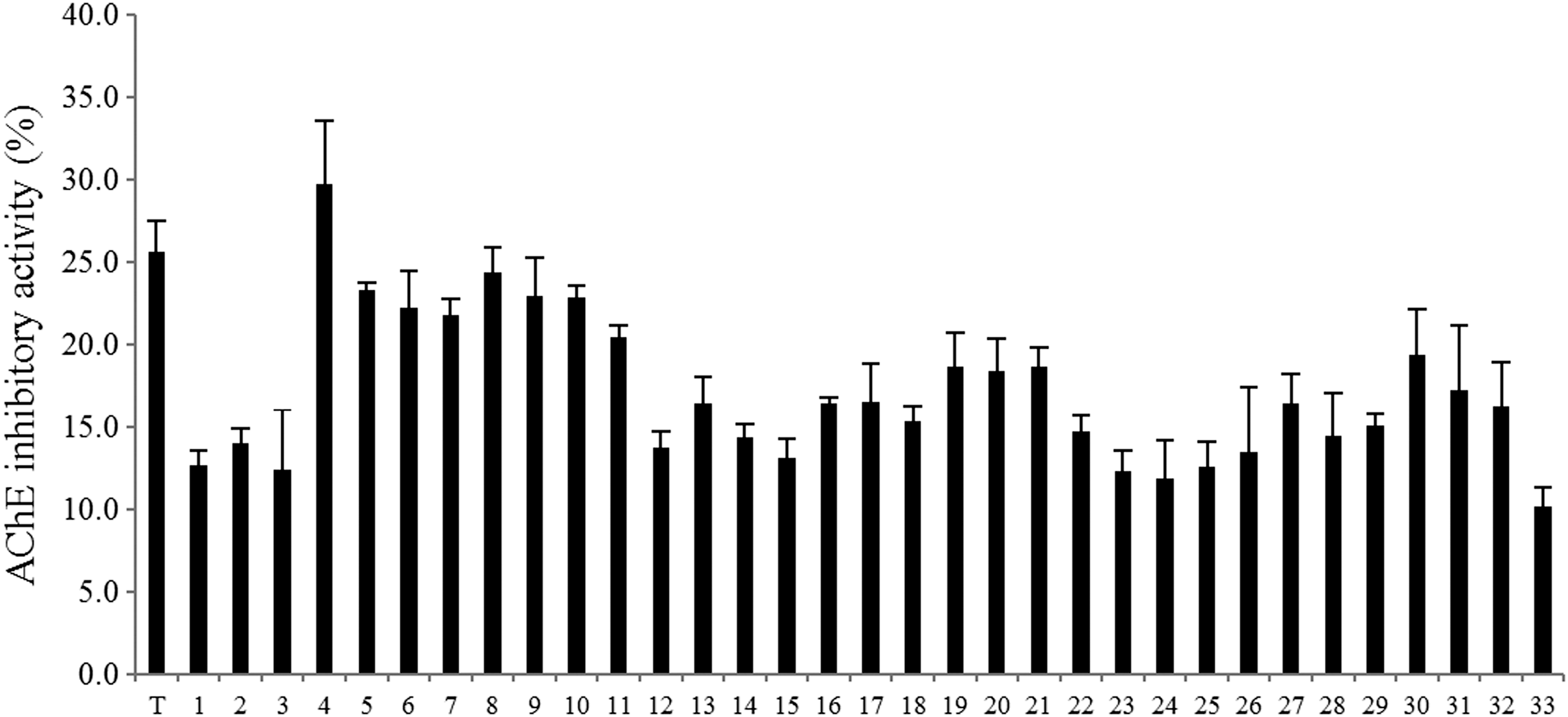
AChE inhibitory effect of 31 fractions separated by silica-gel open-column chromatography. The T group was the positive control, which was treated with 300 nM of tacrine, a specific AChE inhibitor. The sample groups were treated with samples eluted with mixtures of CHCl3 and EtOH (100:0, 90:10, 80:20, 70:30, 60:40, 50:50, 40:60, 30:70, 20:80, 10:90, 0:100; v/v; thrice each). The concentration of samples was 1 mg/mL. Each value represents the mean±SD of four independent experiments.
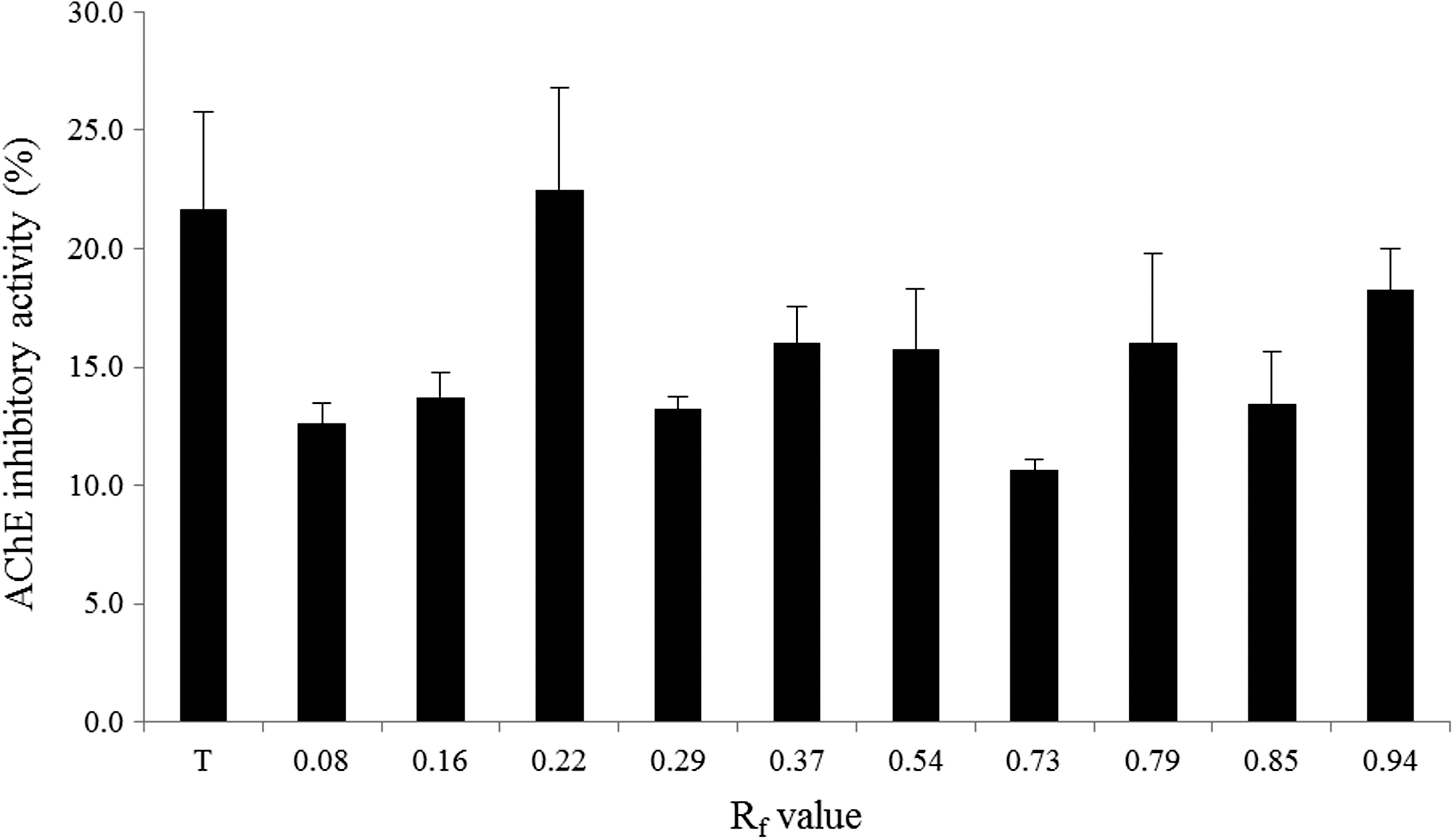
AChE inhibitory effect of R. coreanus extract fractions separated by thin-layer chromatography (TLC). The T group was the positive control, which was treated with 300 nM of tacrine, a specific AChE inhibitor. The sample groups were treated with samples of the well-defined bands clustered near the intermediate range of Rf value, that is, 0.08–0.94. The concentration of samples was 1 mg/mL. Each value represents the mean±SD of four independent experiments.
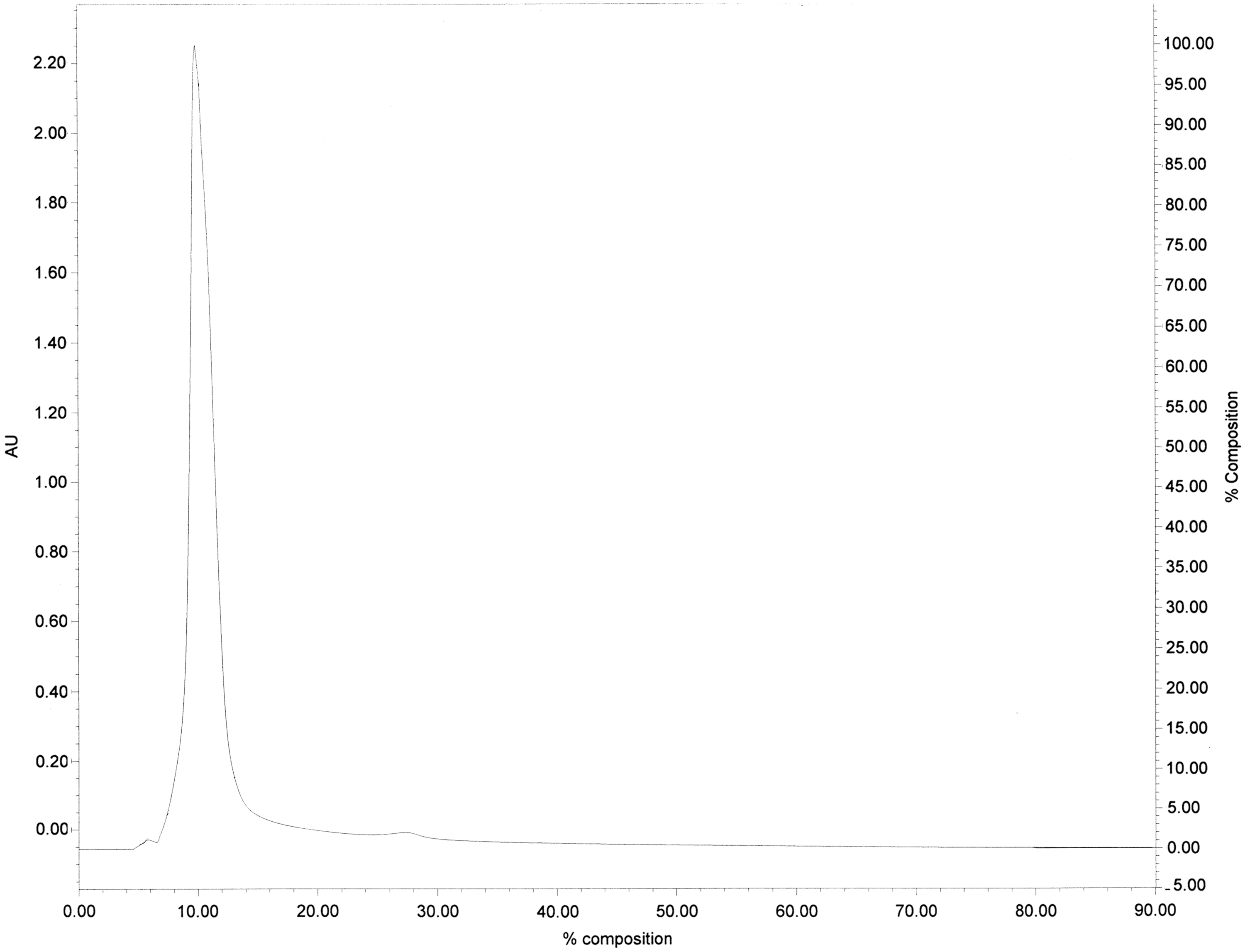
Purification of the target active component by HPLC. Sample was eluted from the μ-Bondapak™ C18 reverse-phase column (3.9 mm×300 mm; Waters Co.) at a flow rate of 0.3 mL/min using a linear gradient of 0–100% ethanol over 90 min. The detection was performed at 296 nm with a PDA detector, and a significant peak was monitored at 9.4 min.
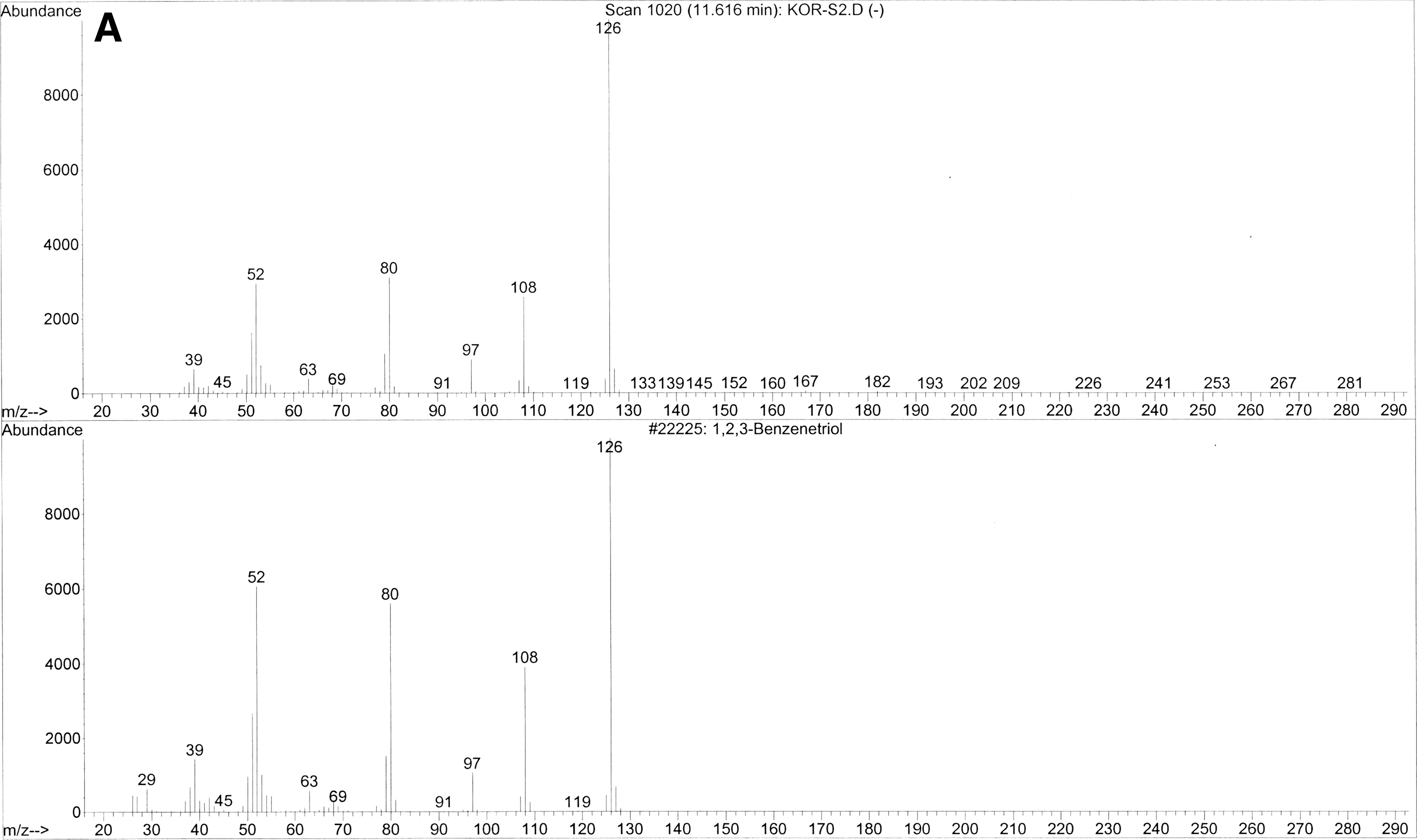
Characterization of the purified active component from R. coreanus extract.

Discussion
According to the cholinergic hypothesis of AD, ACh levels noticeably decreased in the brains of patients suffering from AD. The progressive loss of cholinergic synapses is influenced by cholinergic enzyme activity, including AChE-catalyzed hydrolysis of ACh and choline acetyltransferase-catalyzed synthesis of ACh. Currently, many studies have focused on AChEIs that are designed to reverse the activation of AChE. There are several drugs in the market that improve memory loss and cognitive deficits over a short period of time. However, while they have beneficial effects for treating the cognitive, behavioral, and functional symptoms of AD, they also have some side effects. It has been proposed that natural plants and phytochemicals could be developed as a source of AChEIs.
The effects of administering TMT to rodents have been reported to cause neuropathological and behavioral alterations. TMT is correlated with cholinergic degeneration of neurotransmitter systems, including cell loss, axonal degeneration, and changes in neurotransmitters and their receptors. The effects of TMT on AChE activity indicates that it causes a histochemical decrease in total muscarinic receptor binding in hippocampus as well as changes in the capacity of the brain to release ACh. Thus, learning and memory deficits induced by TMT treatment can be restored via enhancement of ACh levels by AChEIs. 22,23
Based on the evidence provided, among the various plant extracts tested in the in vitro assay, R. coreanus ethanol extract exhibited the greatest inhibitory effect on AChE. In this study, dietary supplementation with R. coreanus extract attenuated cognitive impairment in TMT-induced mice, as evidenced by the restoration of alteration behavior and step-through latency. Particularly, the group with 1200 mg of R. coreanus extract/kg of body weight showed significantly improved learning and memory compared with the TMT-treated control group (p<.01).
The purified active compound was identified as 3,4,5-trihydroxybenzoic acid (gallic acid) through structural analyses by EI-MS and 13C/ 1 H NMR. The phytochemical, a type of organic and phenolic acid, is abundant in tea gallnuts, grapes, tea leaves, hops, and oak bark. Experimental studies have shown that this polyphenol group is effective in preventing neurodegenerative diseases as well as cardiovascular disease, cancer, osteoporosis, and diabetes mellitus. Several bioactivities of gallic acid, such as antioxidant, anticancer, and antiviral effects, have been previously reported. 24 A recent report demonstrated an inhibitory effect on amyloid β-induced neurotoxicity in mice pretreated with gallic acid. 25 Since this study showed that gallic acid has an inhibitory effect on AChE, both R. coreanus and gallic acid are effective AChEIs against AD.
Further research is needed to determine whether gallic acid exerts a memory-ameliorating effect on TMT-induced cognitive impairment in vivo. Moreover, more detailed studies are required to determine the ability of gallic acid to penetrate the blood–brain barrier.
Footnotes
Acknowledgment
This work was supported by the National Research Foundation of Korea (NRF) grant funded by the Korean government (MEST; No. 2010-0005094).
Author Disclosure Statement
No competing financial interests exist.