




Abstract
In the present study, the pharmacological effects of 2,8-dihydroxy-1,6-dimethoxyxanthone from the bark of Haploclathra paniculata were investigated in mice using in vivo inflammation and nociception models. Acetic acid-induced writhing, paw licking induced by formalin, hot plate, and carrageenan-induced paw edema tests were used to investigate the anti-inflammatory and antinociceptive activities of the xanthone compound. Xanthone, at both doses, inhibited abdominal writhing and the formalin test. At a dose of 20 mg/kg, the time of reaction to the hot plate increased, and significant effects were observed after 30, 60 and 90 min of treatment. At doses of 10 and 20 mg/kg p.o., the 2,8-dihydroxy-1,6-dimethoxyxanthone significantly reduced paw edema at 3 h after the stimulus. The tests also showed no acute toxicity of the xanthone compound in mice. 2,2-diphenyl-1-picrylhydrazyl (DPPH) radical scavenging ability was also studied and confirmed the antioxidant activity of the xanthone. To propose the mechanism of action of anti-inflammatory activity of the xanthone, a molecular docking was performed using the isoenzymes cyclooxygenase 1 and 2 and the results indicate that the molecule is capable of inhibiting both the enzymes. Therefore, it can be concluded that 2,8-dihydroxy-1,6-dimethoxyxanthone from H. paniculata demonstrates analgesic, anti-inflammatory, and antioxidant activities.
Introduction
F
Haploclathra paniculata (Mart) Benth (Guttiferae), popularly known as Morapiranga or Muirapiranga, is a tree native to the Amazon region. It belongs to the family Clusiaceae (Guttiferae) according to the classification of Stevens 2 and is divided into three subfamilies: Kielmeyeroideae, Hypericoideae and Clusioideae. The genus Haploclathra possesses a diversity of metabolites, including oxygenated xanthones.
Xanthones closely related to the polyphenol family have a remarkable effect on the cardiovascular system and have antibiotic, antiviral, and anti-inflammatory properties; they also include some extremely powerful natural antioxidants. 3,4 Xanthones have been reported to have numerous biological properties, including the antithrombotic and anticancer effects, 5 protein kinase C inhibitor activity, 6 antihypertensive and vasodilatory effects, 7 endothelial cell protective effects, 8 anti-inflammatory, 3,5,9 –11 analgesic, 10 and antioxidant activities. 4,7
The 2,8-dihydroxy-1,6-dimethoxyxanthone has been isolated from the H. paniculata, 12 Triperospermum chinense, 13 Gentiana kochiana, 14 and Juglans mandshurica 15 genera. This xanthone has been described as an antimycobacterial agent 16 and elicits central inhibition of monoamine oxidase A. 14 In the present study, we investigated the analgesic and anti-inflammatory effects of the natural compound 2,8-dihydroxy-1,6-dimethoxyxanthone (Fig. 1) isolated from H. paniculata.
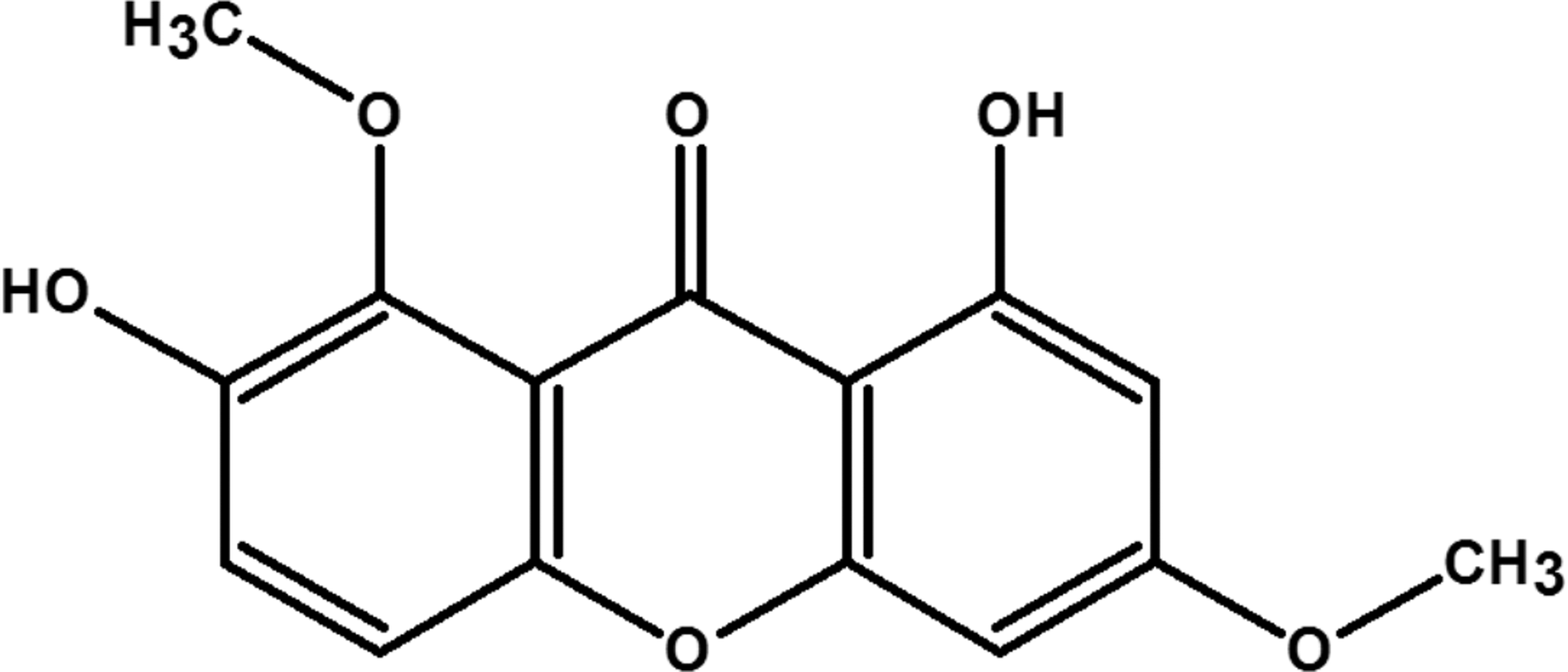
The chemical structure of 2,8-dihydroxy-1,6-dimethoxyxanthone.
Materials and Methods
Plant material and isolation of 2,8-dihydroxy-1,6-dimethoxyxanthone
The xanthone was obtained after the phytochemical investigation of wood from the trunk of H. paniculata (Clusiaceae). The molecular structure of xanthone was previously deduced by spectroscopic experiments 17 and X-ray analysis. 12 The purity of the xanthone was at least 97%, as determined by high-performance liquid chromatography.
Sample and reference drug preparation
The xanthone was dissolved in Tween 80 (5%), and the stock solution was diluted in 0.9% NaCl solution to a final dose of either 10 or 20 mg/kg for the experiments. The control group animals received the same experimental handling as the test group, except that the drug treatment was replaced with an appropriate volume of the vehicle. Indomethacin (10 mg/kg, p.o.), morphine sulfate (1 mg/kg, i.p.), or naloxone (0.4 mg/kg, i.p.) were used as reference drugs.
Reference standards, such as carrageenan, indomethacin (Indo), ascorbic acid (AA), butylated hydroxytoluene (BHT), 2,2-diphenyl-1-picrylhydrazyl (DPPH) radical, acetic acid, formaldehyde solution, naloxone (NLX), and morphine sulfate, were purchased from Sigma Chemical Co. (St. Louis, MO, USA).
Animals
Adult male Wistar rats (180–240 g) and Swiss mice (25–35 g) obtained from the Central Animal Facility of the Federal University of Alfenas (Ethics Committee number 290/2010) were housed in a temperature-controlled room with access to water and food ad libitum until use. At the end of experiment, rats were euthanized using an overdose of halothane anesthetic.
Evaluation of acute toxicity
The xanthone was orally administered (0.5, 1.0, 1.5, 2.0, and 3.0 g/kg) to a group of mice (n=10). The following behavioral parameters were monitored for 48 h after the administration: convulsion, hyperactivity, sedation, grooming, and increased or decreased respiration. 18 Food and water were provided ad libitum.
Evaluation of the analgesic activity
Acetic acid-induced writhing in mice
Acetic acid (0.6% v/v, 10 mL/kg) was injected into the peritoneal cavities of mice that were placed in a large glass cylinder. The intensity of the nociceptive behavior was quantified by counting the total number of writhing occurring between 0 and 20 min after the stimulus injection. 19 Oral treatments with the vehicle, indomethacin, or xanthone (10 or 20 mg/kg) were given 1 h before acetic acid injection (n=8 per group). The writhing response consists of a contraction of the abdominal muscle together with a stretching of the hind limbs.
Formalin-induced nociception
After treatment with the xanthone (10 or 20 mg/kg), the formalin solution (5% in 0.9% NaCl; 20 μL/paw) was applied subcutaneously in the plantar region of the left rear paw of mice (n=8). The time spent licking the injected paw was recorded and expressed as the total licking time in the early phase (0–5 min) and late phase (20–30 min) after the formalin injection. Oral treatments with vehicle, indomethacin, or xanthone were given 1 h before the formalin injection. Morphine was administered (i.p.) 30 min before the test. 20
Hot plate test
Mice used in this experiment were initially screened by placing each animal on a hot plate set at 55°C±1°C. Animals that failed to lick the hind paw or jump (nociceptive responses) within 15 sec were discarded. Eligible animals were divided into six groups (n=5) and pretreatment reaction time for each mouse was determined. Mice in the different groups were then treated with vehicle, xanthone (10 or 20 mg/kg), morphine (1 mg/kg, i.p.), naloxone and morphine (NLX+morphine; 0.4 and 1 mg/kg, respectively), or naloxone and xanthone (NLX+xanthone; 0.4 and 20 mg/kg, respectively). Sixty minutes after oral and 30 min after subcutaneous administration, the reaction time of the animals was again recorded. The reaction time (licking of paw, jumping, and shaking) was measured at 0, 30, 60, and 90 min after the administration of the drugs. A post-treatment cut-off time of 40 sec was used. 21
Anti-inflammatory activity
Carrageenan-induced paw edema
The rats were divided into four groups (n=8). The groups received vehicle, indomethacin, or xanthone (10 or 20 mg/kg). One hour after the oral administration of the different substances, carrageenan (1.0 mg/paw) was injected into the right hind paw of all the animals. The paw volume was measured up to the tibiotarsal articulation using a plethysmometer (model 7140; Ugo Basile, Comerio, Italy). The measurements were determined at 0 h (before carrageenan injection) and 1, 2, 3, and 4 h after the injection. 22
DPPH free radical-scavenging activity
One milliliter of ethanolic 0.02% DPPH was mixed in 4.0 mL of an ethanolic solution of the xanthone with different concentrations. After 30 min incubation in the dark at ambient temperature, the absorbance was measured at 517 nm. The controls contained all the reaction reagents except the xanthone or a positive control substance. The scavenging activity was estimated based on the percentage of DPPH radical scavenged using the following equation: Scavenging effect (%)=[(control absorbance−sample absorbance)/(control absorbance)]×100. The values are presented as the mean of triplicate analyses. The EC50 value is the effective concentration that could scavenge 50% of the DPPH radicals. AA and BHT standard were used as positive controls. 23
Molecular modeling
All calculations, simulations, and computer applications were run on Unix CentOS 5.0. Ligands were constructed using Maestro 9.2 (Maestro, Version 9.2; Schrödinger, LLC, New York, NY, USA). The software LigPrep 2.5 (LigPrep, Version 2.5; Schrödinger, LLC) was used for the construction and preparation of the ligands involved in this studies. The crystallographic structures of cyclooxygenase 1 (COX-1) (Protein Data Bank [PDB] ID: 3N8X) and cyclooxygenase 2 (COX-2) (PDB ID: 3NT1) were obtained from the database PDB. Subsequently, the software Prime 3.0 (Prime, Version 3.0; Schrödinger, LLC) was used for the preparation of these enzymes, and the OPLS 2005 force field in the MacroModel 9.9 (MacroModel, Version 9.9; Schrödinger, LLC) was used for optimization. Studies of molecular docking between COX-1 and COX-2 and the ligands were performed using the program Induced Fit Docking (Induced Fit Docking, Version 9.9; Schrödinger, LLC]. All computer programs belong to the Schrödinger suite. Additionally, a molecular docking between COX-1 and COX-2 and indomethacin, a standard drug used in pharmacological and experimental evaluations, was performed.
Statistical analysis
The data obtained were analyzed using GraphPad software version 5.0 and expressed as the mean±SEM. Statistically significant differences between the groups were calculated with an analysis of variance followed by the Newman–Keuls test. P-values less than.05 were considered significant.
Results
Acute toxicity
2,8-dihydroxy-1,6-dimethoxyxanthone at doses of 0.5, 1.0, 1.5, 2.0, and 3.0 g/kg, p.o., given to mice was not toxic during the 48-h observation period after the administration. No mortality was observed during the monitoring period. The median lethal dose (LD50) of the xanthone in mice was therefore estimated to be more than 3 g/kg, p.o.
Acid-induced writhing in mice
The xanthone, administered orally at doses of 10 and 20 mg/kg, caused a significant reduction of 25% and 32% (P<.001), respectively, in the number of writhing episodes induced by acetic acid compared with the control. Indomethacin produced a 71% (P<.001) reduction compared with the control (Fig. 2).
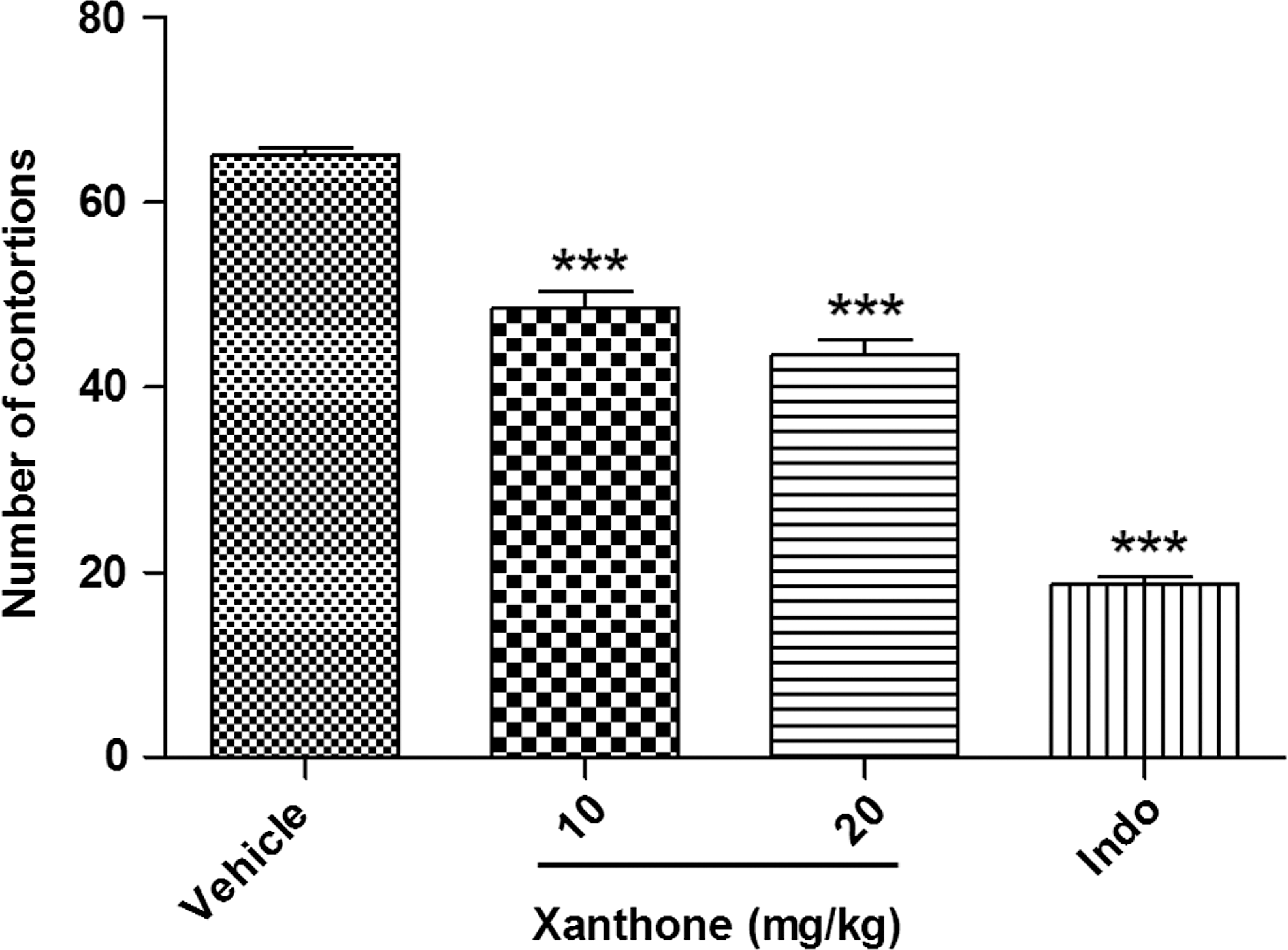
Effect of oral administration of the xanthone from H. paniculata on acetic acid-induced writhing movements in mice. Animals were pretreated with vehicle, xanthone (doses of 10 or 20 mg/kg), or indomethacin (Indo, 10 mg/kg) for 30 min before acetic acid application (0.6%, i.p.). Data are represented as the mean±SEM values for eight mice in each group. ***P<.001 compared with the control group (one-way analysis of variance followed by the Newman–Keuls test).
Formalin-induced nociception
The xanthone at doses of 10 and 20 mg/kg, p.o., had a significant antinociceptive activity (P<.01 and P<.001) compared with the control in both phases (Fig. 3). At a dose of 10 mg/kg, the xanthone produced significant reductions of licking time by 43% and 80% during the first and second phase, respectively. The dose of 20 mg/kg produced a significant reduction of licking time by 44% and 80% in the first and second phase, respectively.
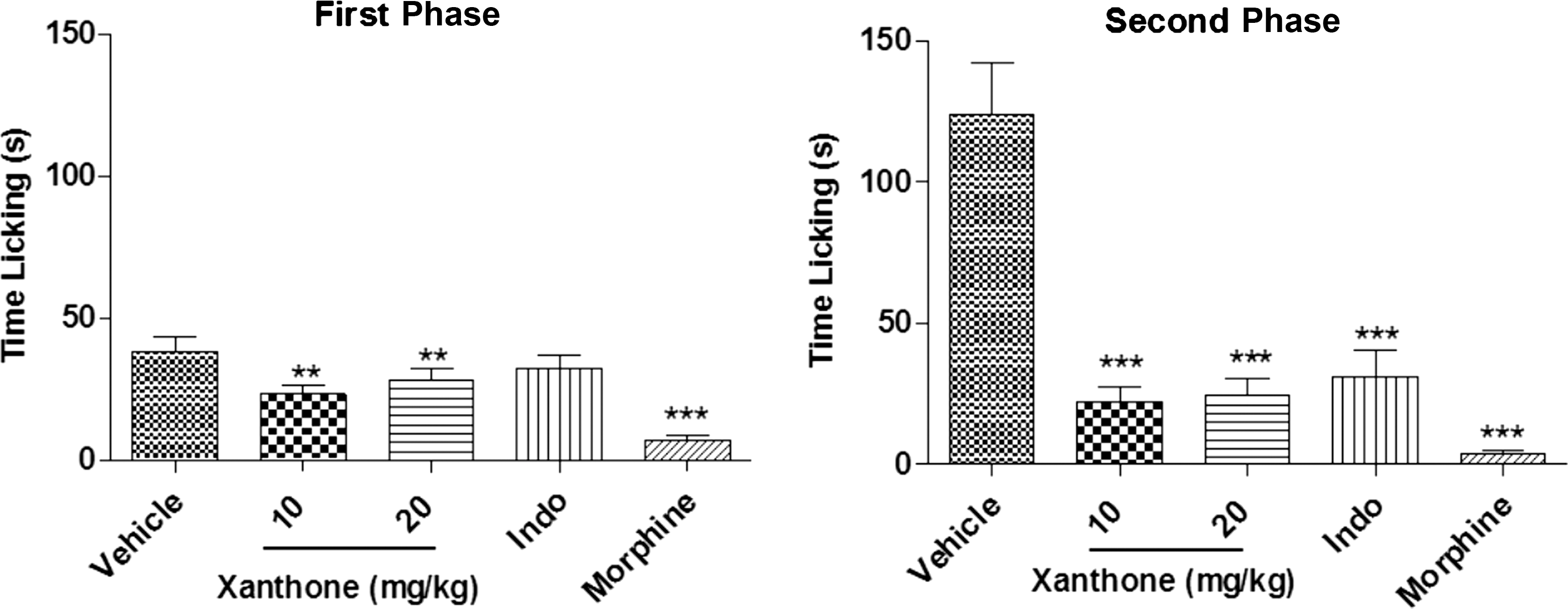
Effect of oral administration of xanthone on formalin-induced paw licking in mice. Animals were pretreated with vehicle, xanthone (doses from 10 to 20 mg/kg), indomethacin (Indo, 10 mg/kg), or morphine (1 mg/kg) for 30 min before formalin administration. The total time spent licking the hind paw was measured in the first and second phases after intraplantar injection of formalin. Data are represented as the mean±SEM values for eight mice in each group. **P<.01 and ***P<.001 compared with the control group (one-way analysis of variance followed by the Newman–Keuls test).
Hot plate test
The xanthone (20 mg/kg) caused a significantly increased latency time compared with the control group (P<.001) at 30, 60 and 90 min (Fig. 4). However, at a dose of 10 mg/kg, xanthone did not increase the latency time. Morphine significantly increased the latency time response in the test (P<.001). Naloxone, an opioid antagonist, reduced the analgesic effects of both morphine and xanthone.
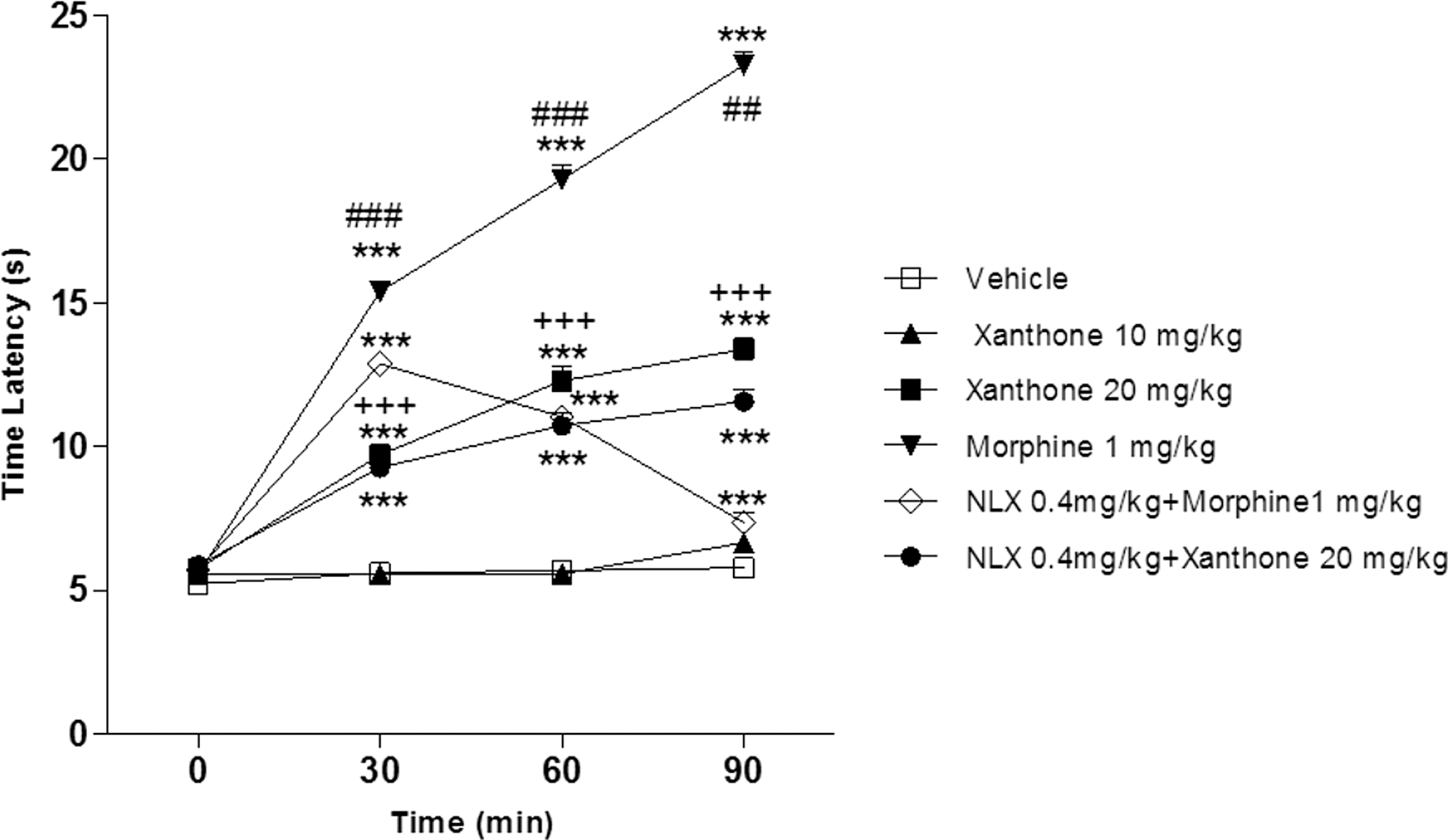
Effect of orally administered xanthone on mice in the hot plate test. Animals were pretreated with vehicle (10 mL/kg, p.o.), xanthone (10 or 20 mg/kg, p.o.), morphine (1 mg/kg, i.p.), naloxone+morphine (NLX+morphine; 0.4 and 1 mg/kg, respectively), or naloxone+xanthone (NLX+xanthone; 0.4 and 20 mg/kg, respectively) before the tests at 55°C±1°C. Data are represented as the mean±SEM values for eight mice in each group. The symbols denote the following significance levels: ***P<.001 compared with time zero; +++ P<.001 compared with the xanthone+vehicle group; ### P<.001; ## P<.01 compared with the morphine group.
Carrageenan-induced rat paw edema
Figure 5 shows that xanthone significantly inhibits carrageenan-induced rat paw edema (P<.01). The inhibitory values of edema at 2, 3, and 4 h post-carrageenan treatment were 48%, 21%, and 21% for 10 mg/kg and 53%, 22%, and 32% for 20 mg/kg of xanthone, respectively. Indomethacin (10 mg/kg) inhibited 47%, 43%, and 58% at 2, 3, and 4 h (P<.001).
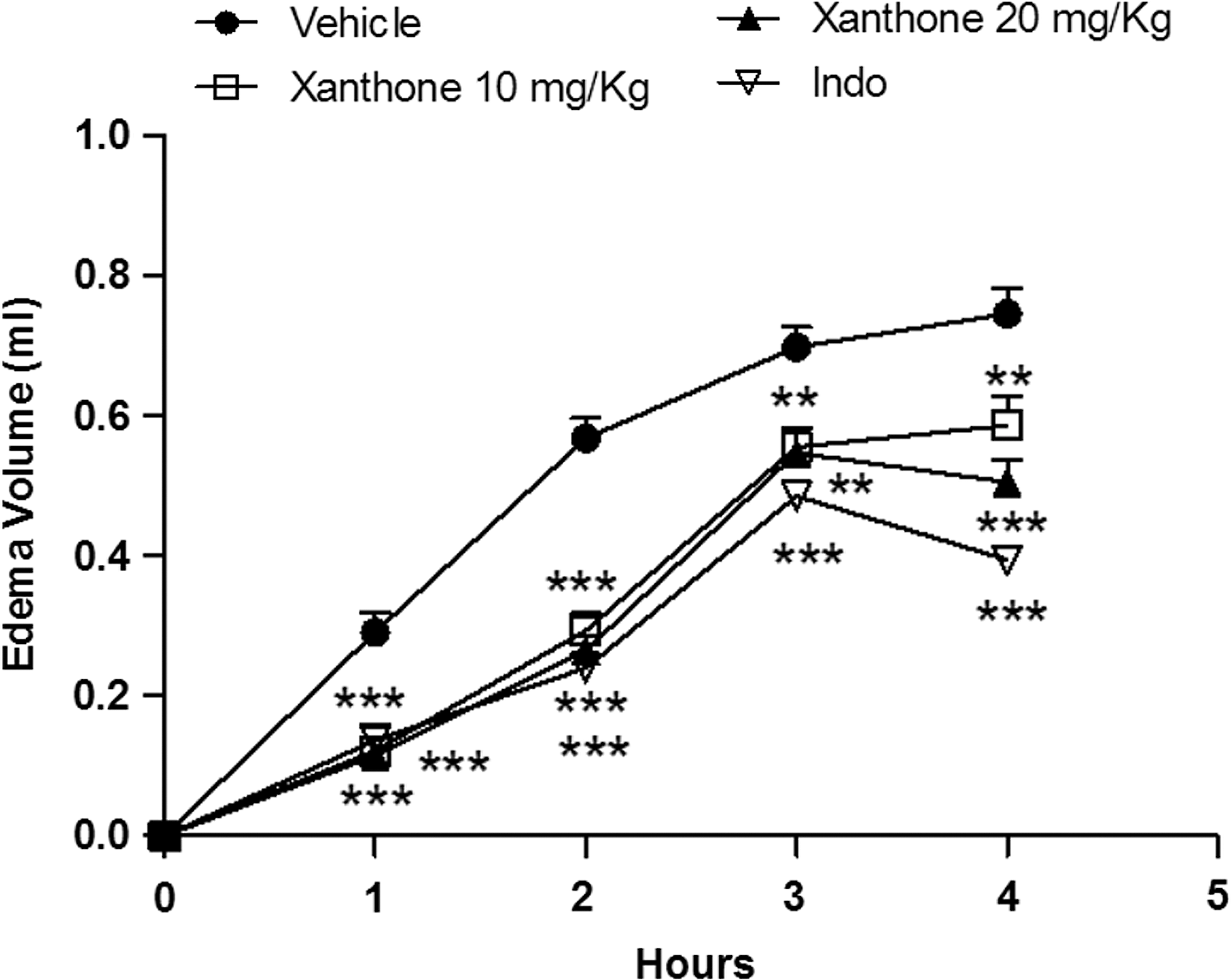
Effects of the administration of the 2,8-dihydroxy-1,6-dimethoxyxanthone (10 and 20 mg/kg, p.o.) or indomethacin (Indo, 10 mg/kg, p.o.) on rat paw edema induced by intraplantar carrageenan injection (1 mg/paw). Each point represents the mean±SEM of eight animals. The asterisks denote the significance levels compared with the vehicle group: ***P<.001, **P<.01.
DPPH free radical-scavenging activity
The xanthone exhibited good radical-scavenging activity (EC50=73.78±0.31 μg/mL) when compared with synthetic standard antioxidants BHT (EC50=37.2±0.47 μg/mL) and AA (EC50=6.9±0.25 μg/mL).
Molecular modeling
Molecular docking of the xanthone and the standard drug indomethacin with the enzymes COX-1 and COX-2 presents Glide score values between −14.508 and −7.550 kcal/mol (Tables 1 and 2), and the main interactions by hydrogen bonds are shown in Figures 6 and 7, demonstrating that the interaction can lead to the inhibition of enzymes.
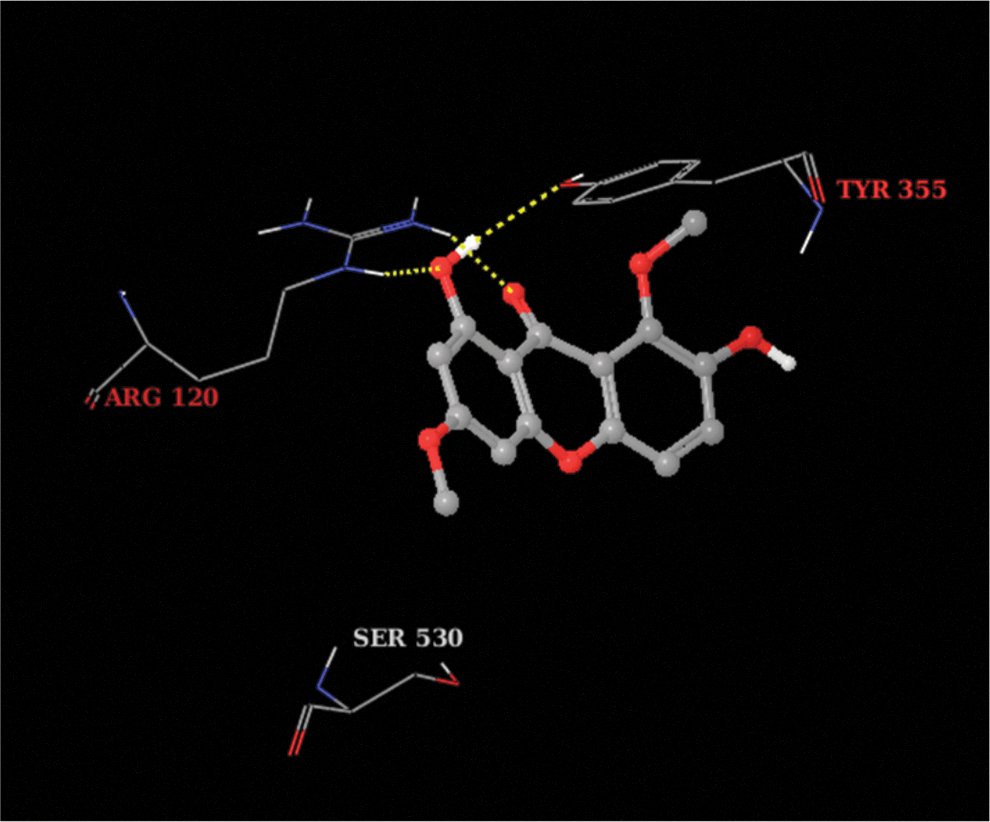
Xanthone complexed with the enzyme cyclooxygenase 1. Color images available online at
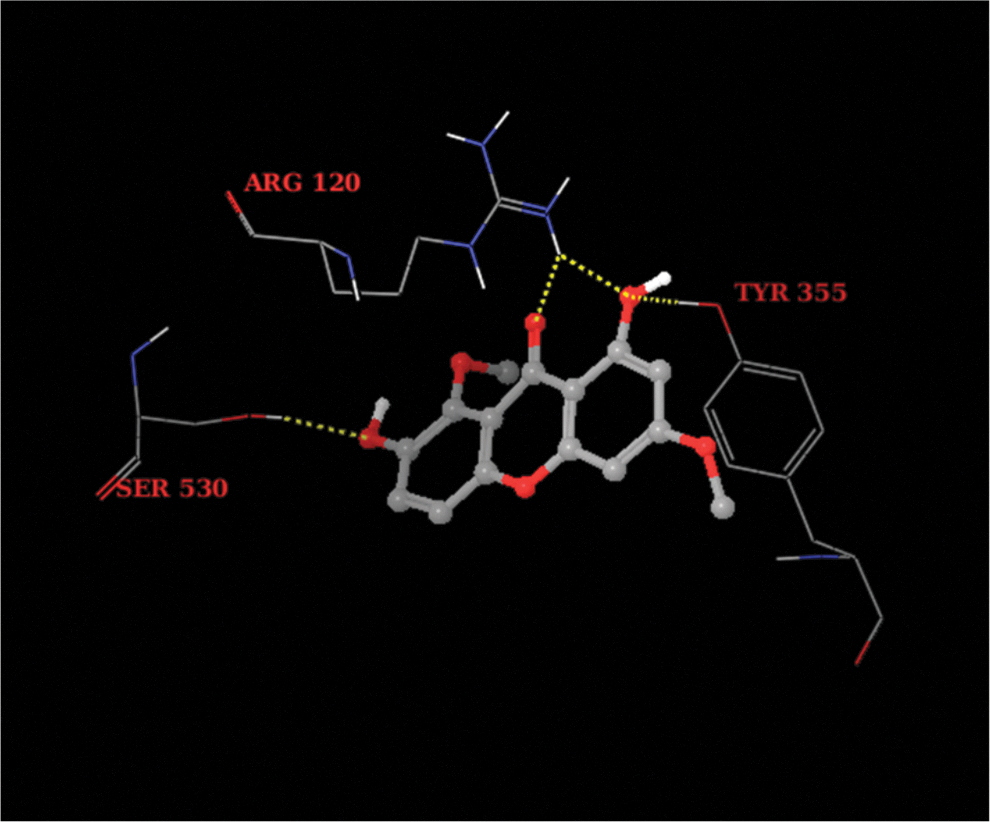
Xanthone complexed with the enzyme cyclooxygenase 2. Color images available online at
COX-1, cyclooxygenase 1.
COX-2, cyclooxygenase 2.
Discussion
The 2,8-dihydroxy-1,6-dimethoxyxanthone demonstrated analgesic, anti-inflammatory, and antioxidant activities. The literature contains many examples of natural or synthetic oxygenated xanthones with antioxidant, analgesic, and anti-inflammatory effects. 9,10,24 –26
The acetic acid-induced writhing test is a visceral pain model that is widely used to screen potential analgesic substances. Pretreatment of mice with xanthone reduced the acetic acid-induced writhing response, and this analgesic effect was similar to those of the reference drugs. This result suggests the potential of the xanthone to reduce the liberation of inflammatory mediators or to block their receptors, thereby resulting in peripheral antinociceptive effects. 27
The formalin test produced a distinct biphasic response, and different analgesics may act differently in this test. Drugs whose principal mode of action is central inhibit both phases of this test, whereas peripherally acting drugs only inhibit the second phase. 28 The decrease in formalin-induced paw licking time produced by the xanthone is most likely due to the inhibition of the biosynthesis of inflammatory mediators, for example, the inhibition of COX and, consequently, of prostaglandins. 29
This study indicates that 2,8-dihydroxy-1,6-dimethoxyxanthone has analgesic properties on the peripheral and central nervous systems (CNS). The peripheral analgesic activity was demonstrated by the inhibitory effect on abdominal writhing and paw licking times. Apart from the antinociceptive activity, the paw licking test also indicated a possible anti-inflammatory activity. The nociceptive models used here involve different mechanisms of pain that include the liberation of bioactive amines and arachidonic acid metabolites 30 and involve the opioid system. 27 Acetic acid induces the liberation of endogenous mediators that stimulate nociceptors that are sensitive to the nonsteroidal anti-inflammatory drugs and/or opioids. 27
Similar to other substances that act on the CNS, xanthone inhibited both phases of the formalin test in a manner similar to that of morphine. Moreover, the results of this test are in agreement with those obtained from the hot plate test at a dose of 20 mg/kg, confirming the central antinociceptive effect of the compound and demonstrating that the maximum effect is reached after 90 min. The results also suggest that the analgesic effect of the compound is not exclusively dependent on the opioid system because the treatment with naloxone, an opioid antagonist, did not completely reverse the effect.
Carrageenan induces inflammation by the release of prostaglandins leading to oedema formation. 22 After intraplantar injection of carrageenan into rat paws, there are two successive inflammatory phases, followed by a third, no characteristic, phase. Within the first hour after the carrageenan injection, vascular permeability increases, mediated by histamine and serotonin release; in the second hour, permeability increases as a result of the liberation of kinins; and finally, within the third hour, prostaglandins come into action. 31,32
Compounds similar to oxygenated xanthone were observed during the chemical investigation of Calophyllum membranaceum, a xanthone-containing herb commonly used for the treatment of inflammation in Chinese folk medicine. Two xanthones, 2,6-dihydroxy-1,7-dimethoxyxanthone and 3,4-dihydroxyxanthone, were found to exhibit selective inhibitory activity against COX-2 in vitro. 33 Their action involves several mechanisms, including the inhibition of mast cell and neutrophil activation, 5 activity against COX-2 and prostaglandin E2, 33,34 and renoprotective effects. 35 Alpha- and gamma-mangostin oxygenated prenylated xanthone isolated from Garcinia mangostana and Allanblackia monticola showed anti-inflammatory activity using the carrageenan-induced model 36 and inhibited nitric oxide and PGE2 production from lipopolysaccharide (LPS)-stimulated RAW 264.7 cells. 37 Bhatia et al. 38 have shown that mangiferin, a naturally occurring glucosylxanthone, is able to limit microglial activation by PGE2 production attenuation, free radical formation, and reduction in COX-2 synthesis induced by LPS. Dar et al. 39 have shown that mangiferin is more active than its acetyl and cinnamoyl derivatives. Moreover, using naloxone, it was revealed that mangiferin-induced analgesia is dependent on opioid receptor, demonstrating significant interaction with it at peripheral site with a slight contribution at the neuronal level.
In the a molecular docking study to propose a possible anti-inflammatory mechanism, the xanthone studied interacted mainly with the following amino acids members of the catalytic triad of COX: Arg120, Tyr355 (COX-1 and COX-2), and Ser530 (COX-2). Consequently, hydrogen bonds of the type NH-O between the hydroxyl oxygen of xanthone and the residue Arg120 NH were observed; hydrogen bonds of the type O-HO between the hydroxyl hydrogen and oxygen from the xanthone residue Tyr355, and hydrogen bonds of the type H-OH between the hydroxyl oxygen and hydrogen from the xanthone Ser530 residue. The standard drug indomethacin, in turn, exhibited hydrogen bonding to residues Arg120, Ser530, and Tyr355, as previously reported. 40 –42 The results indicate that the interaction of nonselective xanthone and indomethacin with COX isoforms may occur, confirming the experimental results performed in this work, where the xanthone showed anti-inflammatory activity by inhibiting the enzymes nonselectively COX-1 and COX-2.
The antioxidant effect of xanthone occurs due to the transference of hydrogen atom to the DPPH radical. The reduction of DPPH radicals can be monitored by the decrease in absorbance at 517 nm and is visually noticeable as a change in color from purple to yellow. 43 The xanthone exhibited good radical-scavenging activity when compared with the standard antioxidants BHT and AA similar to other oxygenated xanthones, for example the mangiferin. 38 According to the chemical standard of the above-mentioned structures, in this study, xanthone presents both free hydroxyl groups and methyl groups replacing hydroxyl groups, providing it with antioxidant and anti-inflammatory activities.
We have investigated the anti-inflammatory and analgesic activities of 2,8-dihydroxy-1,6-dimethoxyxanthone. It is well described in the literature that these compounds can be metabolized in vivo into derivatives glucuronidated, sulfated, and methylated conjugated after the first-pass metabolism. Moreover, previous studies show that the formed metabolites may affect early events in signaling pathways involved in the synthesis of pro-inflammatory mediators, such as the α-mangostin, described by Gutierrez-Orozco et al. 44 More analyses are required to further characterize xanthone metabolism and the bioactivities of the various metabolites. The observed results suggest that the xanthone isolated from H. paniculata, 2,8-dihydroxy-1,6-dimethoxyxanthone, has significant anti-inflammatory, analgesic, and antioxidant effects in different models. Moreover, no mortality was observed during the monitoring period, suggesting that xanthone is not toxic at the doses tested. These features make this compound class a potential target in the search for new natural or synthetic compounds that can be explored as alternatives to currently used drugs.
Footnotes
Acknowledgments
This work was supported by FAPEMIG, CAPES, CNPq, and FINEP.
Author Disclosure Statement
No competing financial interests exist.