




Abstract
The potential antioxidant and anti-inflammatory activities of Acanthopanax senticosus Harms were evaluated and its effect on the human Kv1.3 potassium channel was detected. The ethyl acetate fraction possessed the highest phenolic (289.19±7.43 mg tannic acid equivalents/g) and flavonoid (10.80±0.67 mg quercetin equivalents/g) contents and exhibited stronger antioxidant effects than other fractions in most of the antioxidant assays. On the other hand, the dichloromethane (CH2Cl2) fraction showed the strongest anti-inflammatory activity. The CH2Cl2 fraction inhibited the expression of inducible nitric oxide synthase, cyclooxygenase-2, tumor necrosis factor-α and interleukin 1β mRNAs, and the generation of reactive oxygen species in lipopolysaccharide-induced RAW 264.7 cells. Also, the peak current was inhibited 54.8%±17% by the CH2Cl2 fraction in voltage-clamp recording from Xenopus laevis oocytes. Our research demonstrated that fractions of A. senticosus have great potential to be a source of edible antioxidant and anti-inflammatory agents.
Introduction
I
The primary, upstream molecular signaling pathway, nuclear factor kappa B (NF-κB), causes inflammation by increasing the release of nitric oxide (NO) and cytokines such as tumor necrosis factor (TNF)-α and interleukin 1β (IL-1β). 4 An anti-inflammatory reaction is a form of autoregulation and is mediated through downregulating the proinflammatory cytokines and enhancing the levels of anti-inflammatory mediators. When macrophages are stimulated by lipopolysaccharide (LPS), the expression of nitric oxide synthases (NOSs) is induced, NO is synthetized, and proinflammatory cytokines are released. Inducible NOS (iNOS) is highly expressed in macrophages and is closely related to the production of NO. 5 Cyclooxygenase-2 (COX-2) also plays a vital enzymatic role in the mediation of inflammation.
Potassium ion (K+) channels play a pivotal role in diverse physiological processes such as the regulation of heart rate, neurotransmitter release, insulin secretion, epithelial electrolyte transport, cell volume regulation, and cell proliferation. Because of the pivotal role, K+ channels are perceived as potential targets for therapeutic drugs. 6 In particular, Kv1.3 plays a key role in the immune system. Kv1.3 controls proliferation of immune cells and IL-2 synthesis. The expression level of Kv1.3 is high in effector memory T cells, which are highly correlated with autoimmune disorders. 7
Acanthopanax senticosus Harms is widely distributed in East Asia and is a member of the Araliaceae family. 8 As a kind of herbal plant, commonly known as eluthero or Siberian Ginseng, A. senticosus has been reported as an important medicinal plant for treating various diseases, including inflammation, rheumatoid diseases, diabetes mellitus, chronic bronchitis, hypertension, and ischemic heart diseases. 9 Acanthopanax species contain diterpenoids and phenolic substances, which act as biologically active compounds. A. senticosus has been shown to possess therapeutic efficacy on blood pressure, mental problems, and emotional problems in China, Japan, and Russia. In Korea, the stems have also been used for allergy treatment. A. senticosus showed therapeutic benefits for inflammatory diseases and cancer, which are typically associated with oxidative damage. 10
Materials and Methods
Preparation of the fraction
A. senticosus was obtained from Chuncheon, Korea and air-dried in the shade at room temperature. The dried powder of A. senticosus was extracted thrice with 10 times their weight of boiling water. The crude extract was made into water suspension and fractionated thrice separately with dichloromethane (CH2Cl2), ethyl acetate (EtOAC), n-butanol (n-BuOH), and water. The obtained fractions were allowed to dry.
Chemicals
The RPMI medium 1640 and fetal bovine serum (FBS) were acquired from Gibco BRL. Other reagents were purchased from Sigma. All culture supplies were obtained from BD-Falcon.
Cell line and cell culture
The RAW 264.7 cell line was purchased from the Korean Cell Line Bank. RAW 264.7 cells were maintained in the RPMI 1640 medium supplemented with 10% FBS, 100 U/mL of penicillin, and 100 μg/mL of streptomycin. The cells were incubated at 37°C in a humidified atmosphere of 95% air and 5% CO2.
Determination of total phenolic and flavonoid contents
Total phenolic content was determined using the Folin–Ciocalteu reagent according to the method of Chun et al. 11 Total flavonoid content was expressed as mg quercetin equivalents/g.
1,1-Diphenyl-2-2-pricylhydrazyl radical scavenging activity
The activity of scavenging 1,1-diphenyl-2-2-pricylhydrazyl (DPPH) radical was assessed using the method of Yin et al. 12 Absorbance was measured at 515 nm against a blank, and the DPPH radical scavenging activity was calculated. Butylated hydroxyanisole (BHA) and ascorbic acid were used as positive controls.
Reducing power assay
The method of Nandita and Rajini 13 with some modifications was used. The reaction mixture consisted of 1 mL of sample, 2.5 mL of sodium phosphate buffer, and 2.5 mL of 1% potassium ferricyanide. Further, 2.5 mL of trichloroacetic acid solution was added and the reactants were centrifuged at 574 g for 10 min. Then, 2.5 mL of the supernatant was mixed with 0.5 mL of ferric chloride (FeCl3) solution. The absorbance was determined at 700 nm.
Superoxide radical scavenging assay
Superoxide radical scavenging activity was determined according to the method described by Ksouri et al. 14 with minor modifications. Hundred microliters of the sample solution and 1 mL of a 0.1 M phosphate buffer (pH 7.4) were mixed with 100 μL of nicotinamide adenine dinucleotide-reduced (NADH; 468 μM), 100 μL of nitro blue tetrazolium (150 μM), and 20 μL of phenazine methosulfate (PMS; 60 μM). After 5 min of incubation at room temperature, the absorbance was measured at 560 nm.
DNA damage protection assay
The DNA damage protective ability was measured using a method based on that of Liu et al. 15 Four microliters of DNA isolated from RAW 264.7 cells was added to 3 mL of 50 mM phosphate buffer (pH 7.4) and 10 μL of sample. Three microliters of 1 mM ferrous sulfate and 4 μL of 0.1 mM H2O2 were added and the mixture was incubated at 37°C for 30 min. DNA was analyzed by 1% agarose gel electrophoresis.
Protein damage protection assay
Protective ability against protein damage was measured using the method of Hu et al. 16 The reaction mixture consisted of 200 μL of sample, 200 μL of 1 mg/mL bovine serum albumin (BSA), 200 μL of ascorbic acid (100 μM), 200 μL of FeCl3 (50 μM), and 200 μL of H2O2 (1 mM). The mixture was incubated at 37°C for 3 h. Protein was analyzed by electrophoresis in 10% sodium dodecyl sulfate polyacrylamide gel.
Cell viability assay
Cells were seeded into 96-well plates and incubated with samples for 24 h. Then, the supernatant was removed and 100 μL of 1-(4,5-dimethylthiazol-2-yl)-3,5-diphenylformazan (MTT) solution was added followed by a 4-h incubation at 37°C. The supernatant was sucked out and 200 μL of dimethyl sulfoxide was added into each well. The amount of MTT was quantified by measuring absorbance at 490 nm.
Quantification of NO production in LPS-induced RAW 264.7 cells
Cells were stimulated with LPS and incubated with samples for 24 h. Aliquots of 100 μL of cell culture medium were mixed with 100 μL of the Griess reagent. The absorbance was determined at 550 nm using an enzyme-linked immunosorbent assay plate reader (ELx800TM).
Reverse transcription–polymerase chain reaction analysis
RAW 264.7 cells were incubated with the CH2Cl2 fraction in the presence of LPS. Then, total RNA of the cells was isolated with a Trizol RNA isolation kit (Invitrogen). The total RNA was reverse transcribed to cDNA and used as the template for polymerase chain reaction (PCR) amplification. COX-2, iNOS, TNF-α, and IL-1β primers (Table 1) were used. The amplified PCR products were separated on 1% agarose gel and the gel was stained with ethidium bromide.
F, forward; R, reverse; iNOS, inducible nitric oxide synthase; COX-2, cyclooxygenase-2; TNF-α, tumor necrosis factor-α; IL-1β, interleukin 1β.
Determination of intracellular ROS
RAW 264.7 cells were incubated with the CH2Cl2 fraction in the presence of LPS. Then, cells were treated with 2′,7′-dichlorofluorescin diacetate (DCFH-DA) for 30 min in the dark. Intracellular ROS were measured by flow cytometry (Becton–Dickinson) at an excitation wavelength of 485 nm and an emission wavelength of 535 nm.
Expression of Kv1.3 in oocytes
Message machine T7 kits (Ambion) were used to synthesize cRNA. The synthesized cRNA was injected into Stage V and VI oocytes, which were surgically isolated from female Xenopus laevis (Nasco). The X. laevis was anesthetized with 0.17% tricaine methanesulfonate before performing the operation. These procedures were conducted with the approval of the Institutional Animal Care and Use Committee and according to the research guidelines of Kangwon National University.
Solution and voltage-clamp recording from oocytes
Normal Ringer's solutions were applied to oocytes by continuous perfusion of the chamber and solution exchanges were completed within 3 min. Currents were measured using a two-microelectrode voltage-clamp amplifier (Warner Instruments). Electrodes were filled with 3 M potassium chloride and had a resistance of 2–4 MΩ and 1–2 MΩ for voltage-recording electrodes and current-passing electrodes, respectively. Stimulation and data acquisition were controlled with an analog to digital-digital to analog converter and pCLAMP software (v5.1; Axon Instruments).
Statistical analyses
Data are expressed as mean±standard deviation (SD). One-way analysis of variance was performed to determine the significant differences between the groups followed by Dunnett's t-test for multiple comparisons. Values of P<.05 were considered significant. All analyses were performed using SPSS for Windows XP, version 18.0 (SPSS, Inc.).
Results
Total phenolic and total flavonoid contents
The total phenolic contents in the CH2Cl2 fraction, EtOAC fraction, n-BuOH fraction, and water fraction were 194.91, 289.19, 78.83, and 56.45 mg tannic acid equivalents/g, respectively. The EtOAC fraction contained higher concentrations (10.80 mg quercetin equivalents/g) of flavonoids, followed by the n-BuOH fraction, water fraction, and CH2Cl2 fraction (Table 2).
Each value is expressed as the mean±SD (n=3); Different letters of upper index in the same column are significantly different by Duncan's multiple range test (P<.05). DPPH, 1,1-diphenyl-2-2-pricylhydrazyl; IC50, the concentration of samples required to scavenge 50% of the DPPH redical; CH2Cl2, dichloromethane; EtOAC, ethyl acetate; n-BuOH, n-butanol; BHA, butylated hydroxyanisole; SD, standard deviation.
DPPH radical scavenging activity
As shown in Table 2, among the samples, the EtOAC fraction had the lowest the concentration of samples required to scavenge 50% of the DPPH redical (IC50) value, followed by the CH2Cl2 fraction, n-BuOH fraction, and water fraction, which meant that the EtOAC fraction possessed the strongest DPPH free radical scavenging activity. BHA and ascorbic acid, well-known antioxidant compounds used as reference controls, had IC50 values of 2.86 and 3.00 μg/mL, respectively.
Reducing power activity
The reducing power gradually increased with increasing concentrations of the fraction (Fig. 1). At all the tested concentrations, the EtOAC fraction showed significantly stronger reducing power than the remaining fractions. However, reducing power of fractions was lower compared with ascorbic acid.

Reducing power ability of various fractions from A. senticosus. Each value is expressed as the mean±SD (n=3). Values at the same concentration are significantly different by Duncan's multiple range test (P<.05). SD, standard deviation.
Superoxide radical scavenging activity
The superoxide radical scavenging activity depended on the concentration of the fraction used. The EtOAC fraction showed the strongest superoxide radical scavenging capacity among all the fractions analyzed at various concentrations. n-BuOH and water fractions exhibited weak superoxide radical scavenging activity at low concentrations (Fig. 2).
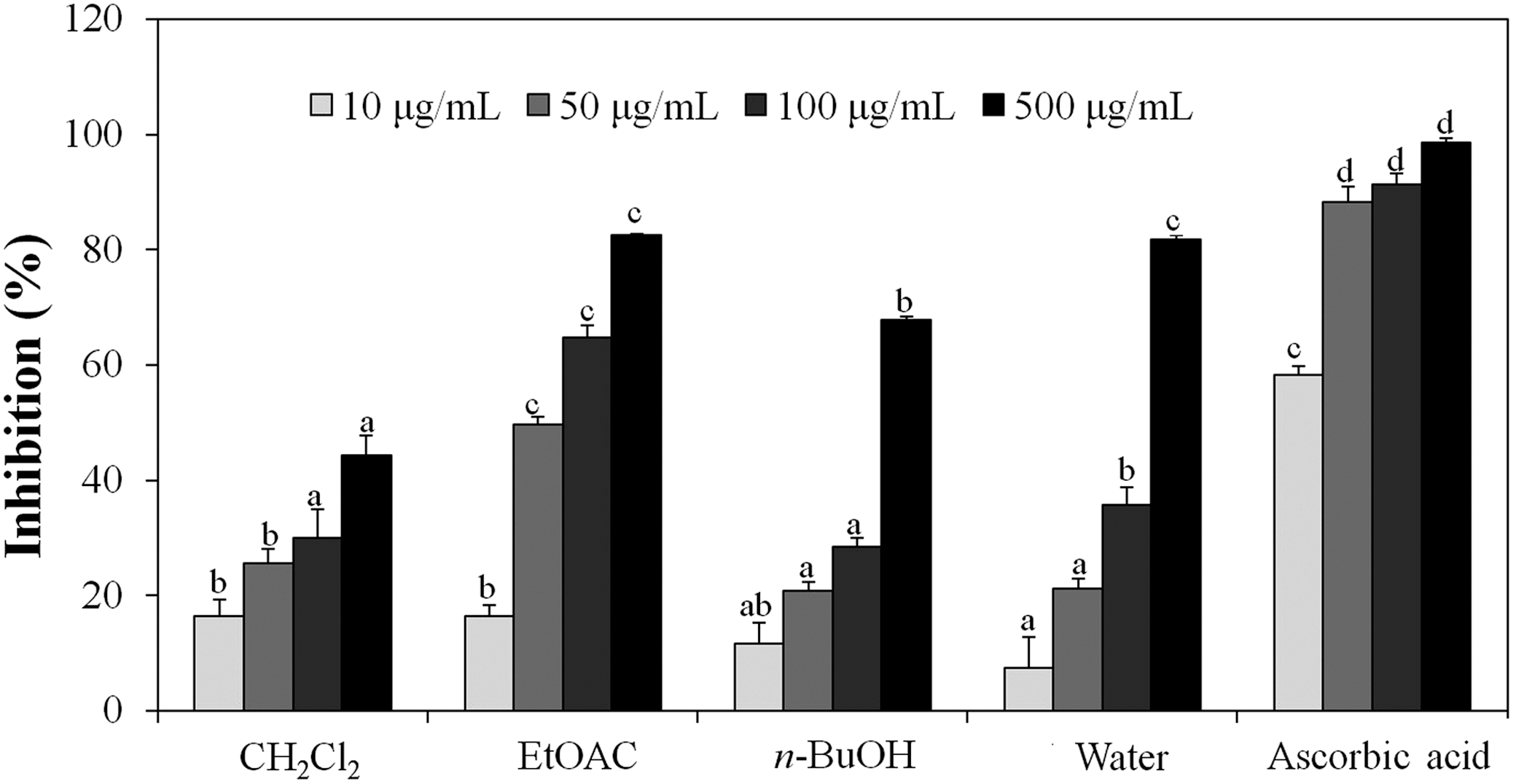
Superoxide radical scavenging activity of various fractions from A. senticosus. Each value is expressed as the mean±SD (n=3). Values at the same concentration are significantly different by Duncan's multiple range test (P<.05).
DNA damage protecting activity
CH2Cl2 and EtOAC fractions significantly neutralized the hydroxyl radicals and protected the cellular DNA from degradation and hence showed distinct DNA bands (lanes 3 and 4) similar to that of DNA isolated from control RAW 264.7 cells (lane 1) in agarose gel. Even though the CH2Cl2 and EtOAC fractions significantly mitigated the oxidative stress and provided protection for DNA from hydroxyl radicals, the EtOAC fraction seemed to exhibit the best effect on maintaining the DNA integrity (Fig. 3).
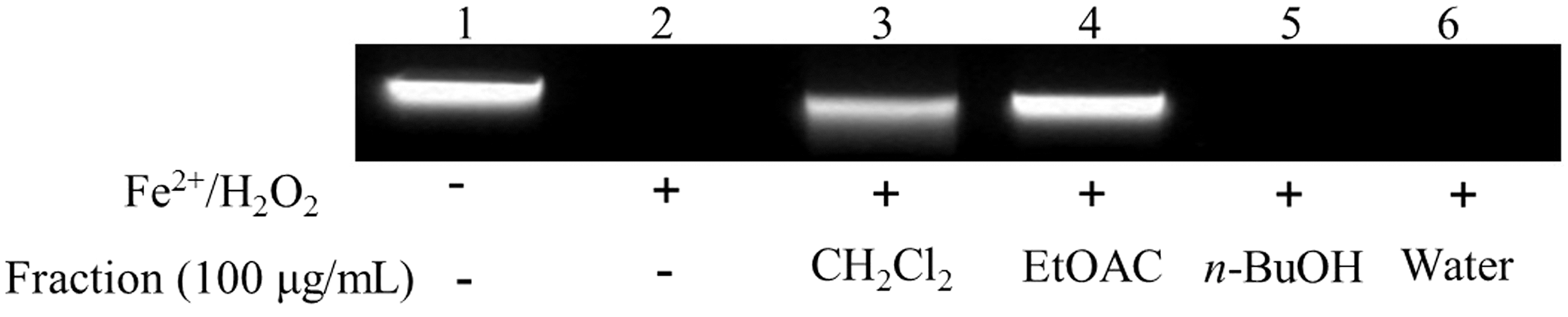
Visualization of the damage induced by hydroxyl radicals on genomic DNA in the presence and absence of various fractions from A. senticosus by agarose gel electrophoresis.
Protein damage protecting activity
Electrophoretic patterns and histogram of densitometric analysis are shown in Figure 4. The density of BSA without treatment with fractions was significantly low (55.68% of control) compared with the densities of BSA treated with four different fractions. The CH2Cl2 fraction exhibited the strongest protein damage protection activity (91.98% of control) among all the fractions, followed by EtOAC fraction (64.28% of control). However, the protective effect of n-BuOH and water fractions against protein damage was not significant.
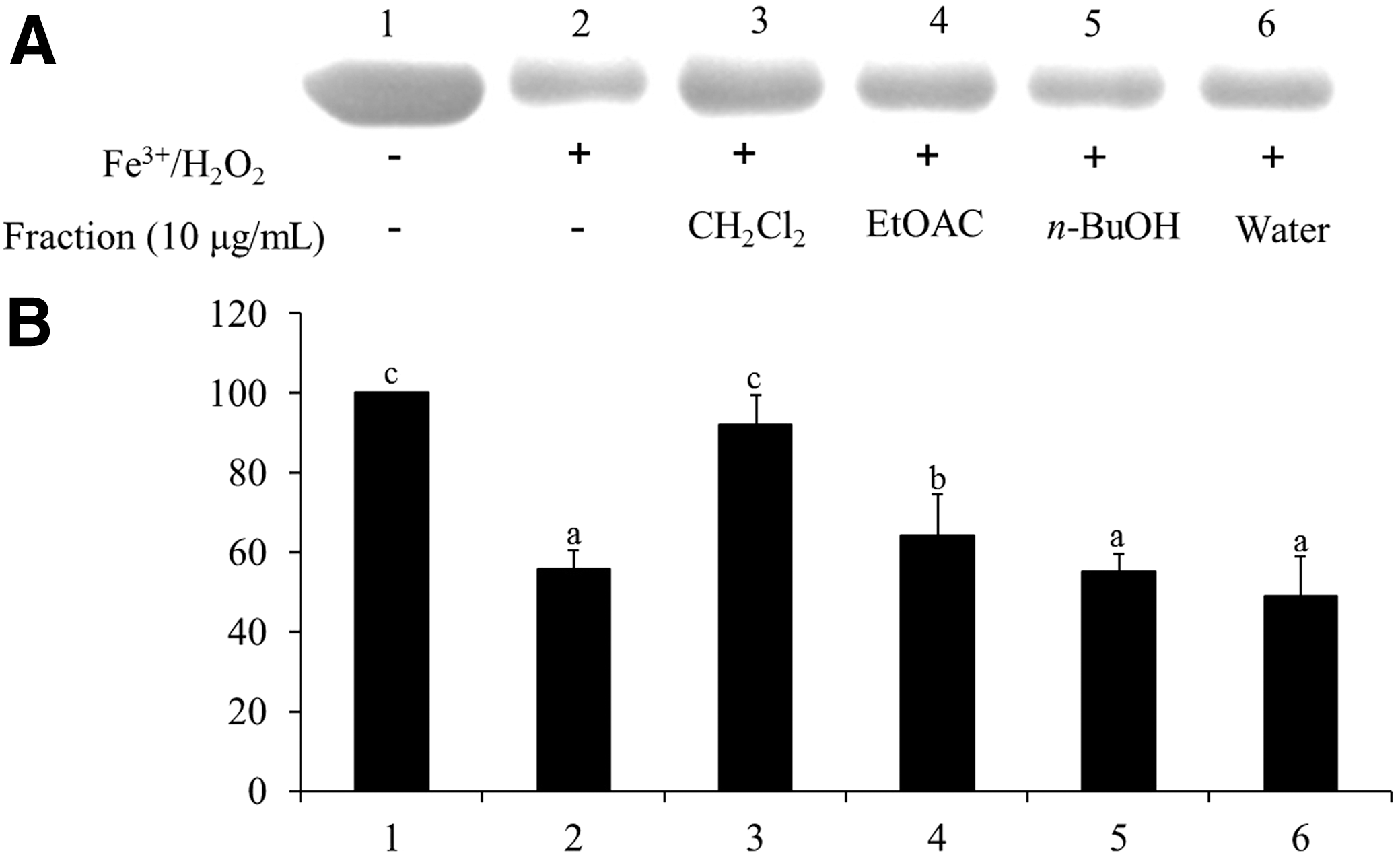
Visualization
Quantification of NO production in LPS-induced RAW 264.7 cells
The results presented in Figure 5A showed that the CH2Cl2 fraction, EtOAC fraction, or n-BuOH fraction was not significantly cytotoxic to RAW 264.7 cells. However, the viability of RAW 264.7 cells treated with 50 or 100 μg/mL water fraction was significantly lower than the control, but still the viability of the cells was more than 88%.
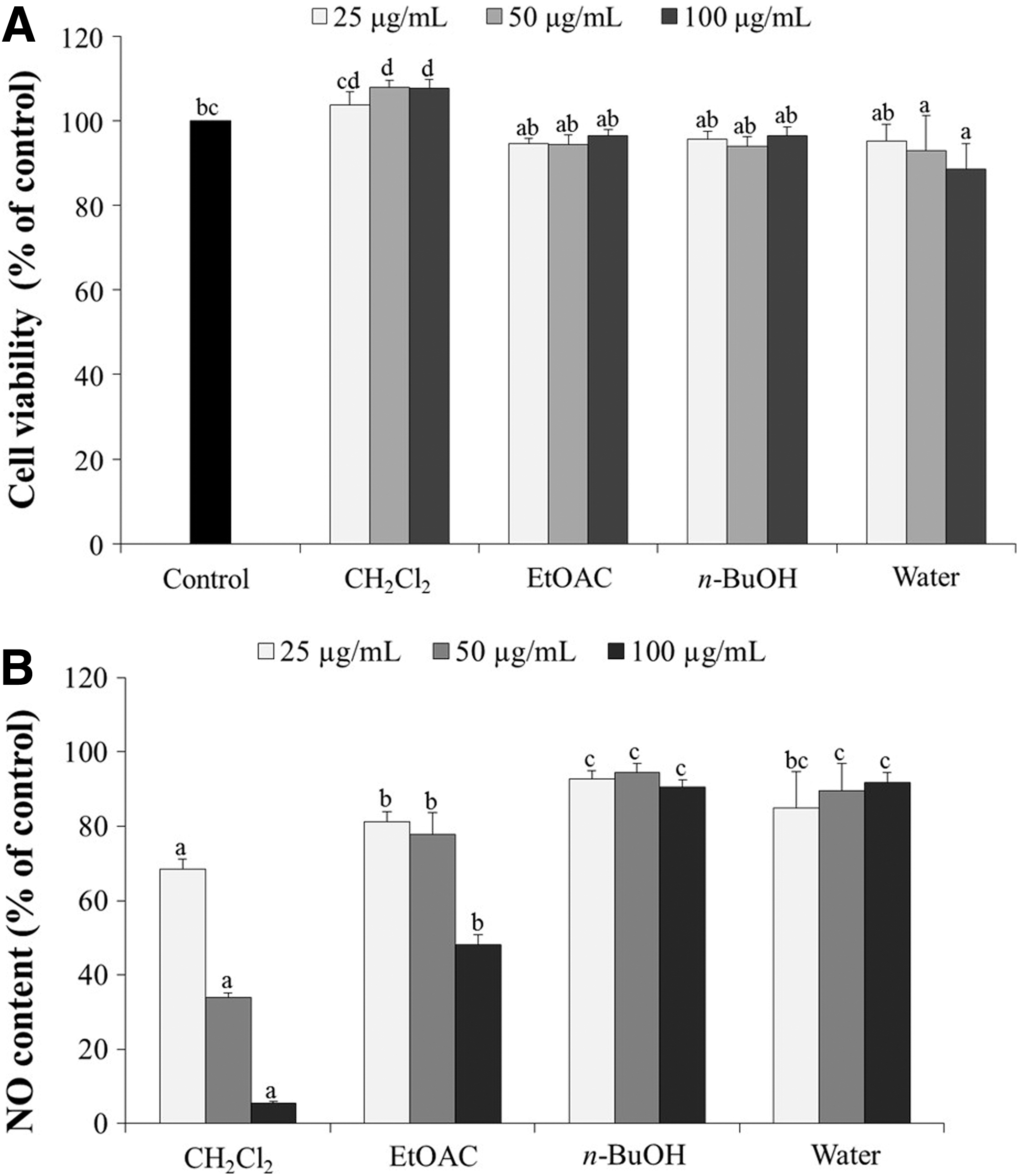
Effects of various fractions from A. senticosus on the cell viability.
NO production by RAW 264.7 cells was significantly and dose-dependently decreased by CH2Cl2 and EtOAC fractions (Fig. 5B). The CH2Cl2 fraction showed a significantly higher NO inhibitory effect than other fractions at all tested concentrations.
Suppression of iNOS, COX-2, TNF-α, and IL-1β mRNA expression in LPS-stimulated RAW 264.7
As shown in Figure 6, the CH2Cl2 fraction dampened the LPS-induced expression of iNOS and COX-2 in RAW 264.7 macrophage cells. The restraining effect on iNOS mRNA expression was significantly better compared with COX-2 mRNA expression. The CH2Cl2 fraction inhibited the expression of TNF-α mRNA at a concentration of 50 and 100 μg/mL. The obvious inhibition of IL-1β mRNA was observed when LPS-stimulated cells were incubated with 100 μg/mL of the CH2Cl2 fraction.

Effect of CH2Cl2 fraction from A. senticosus on inducible nitric oxide synthase (iNOS), cyclooxygenase-2 (COX-2), tumor necrosis factor-α (TNF-α), and interleukin 1β (IL-1β) expression in LPS-treated RAW 264.7 cells. RAW 264.7 cells (1×10⁶) were grown in six-well plates for 18 h and treated with various concentrations of sample for 30 min and LPS (2 μg/mL) was added. Then, cells were incubated for 24 h. The levels of iNOS, COX-2, TNF-α, IL-1β, and GAPDH mRNA were determined by semiquantitative polymerase chain reaction (PCR). Relative intensity (RI) was calculated by a ratio of GAPDH band intensity.
ROS inhibition activity in LPS-induced RAW 264.7 cells with DCFH-DA probe
It was found that LPS induced a significantly higher level of ROS compared with in controls (Fig. 7). The CH2Cl2 fraction exhibited an inhibitory effect on ROS generated in LPS-induced RAW 264.7 cells. Pretreatment with different concentrations of the CH2Cl2 fraction obviously reduced the ROS levels. The ROS level was dramatically decreased when cells were treated with 100 μg/mL of the CH2Cl2 fraction.
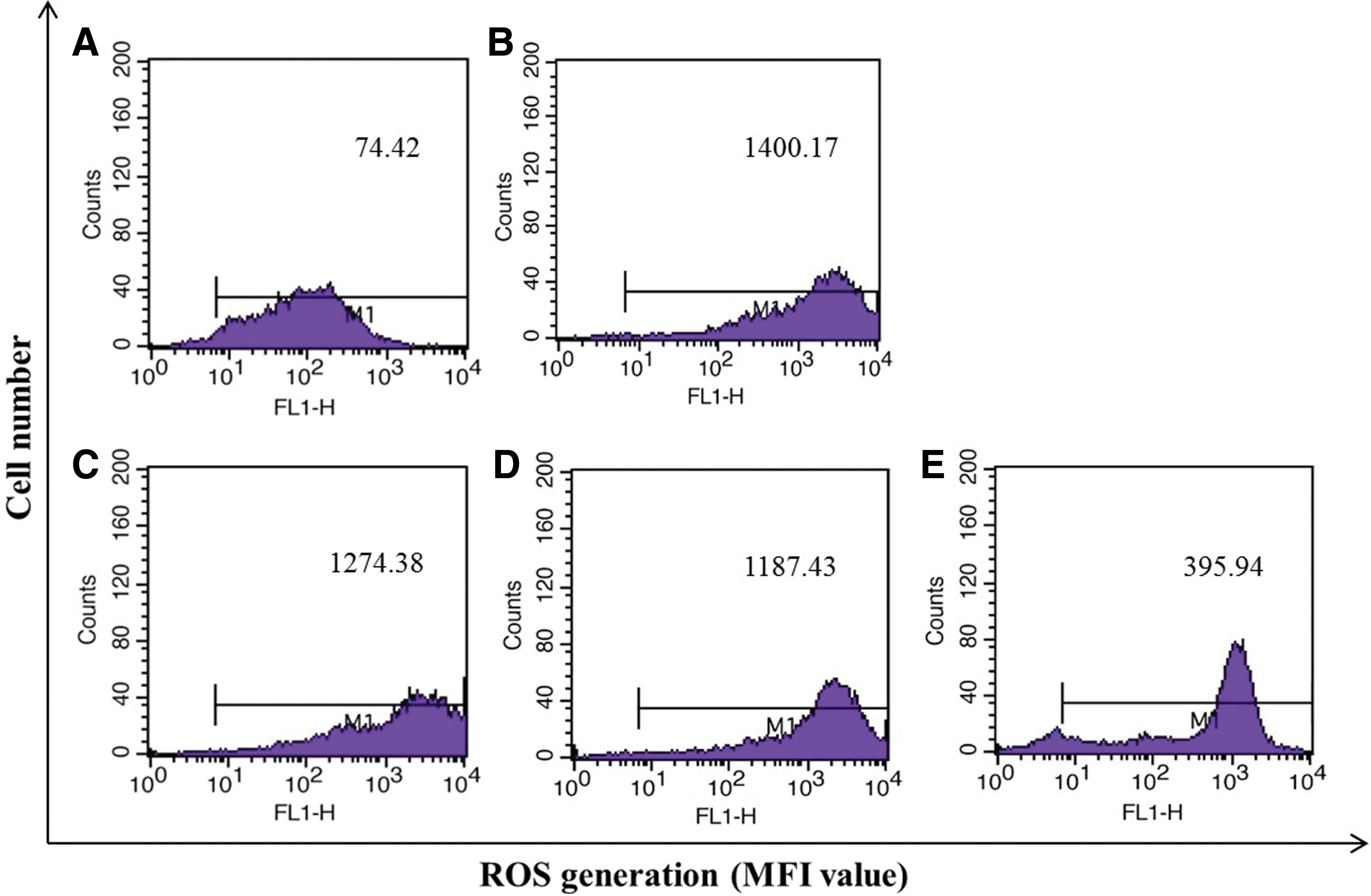
Suppression of LPS-induced reactive oxygen species (ROS) in RAW 264.7 cells in the presence of different concentrations of the CH2Cl2 fraction from A. senticosus. RAW 264.7 cells were grown in six-well plates at a density of 1×10⁶ cells/well for 18 h and treated with different concentrations of sample for 30 min before exposure to 1 μg/mL of LPS. Then, cells were incubated for 24 h.
Inhibition effect on human Kv1.3 channel
Figure 8 shows the inhibitory effect of the CH2Cl2 fraction on human Kv1.3 channel current. The Kv1.3 current traces were evoked by a 1-sec depolarization to +60 mV from a holding potential of −80 mV under control conditions and exposure to the CH2Cl2 fraction. In the presence of the CH2Cl2 fraction, the peak amplitude of the current was reduced. The peak value of the normalized current was reduced by the CH2Cl2 fraction in a dose-dependent manner (25, 50, and 100 μg/mL inhibited peak currents by 25.3%±9.8%, 40.6%±15.5%, and 54.8%±17%) (n=4, Fig. 8B), respectively.
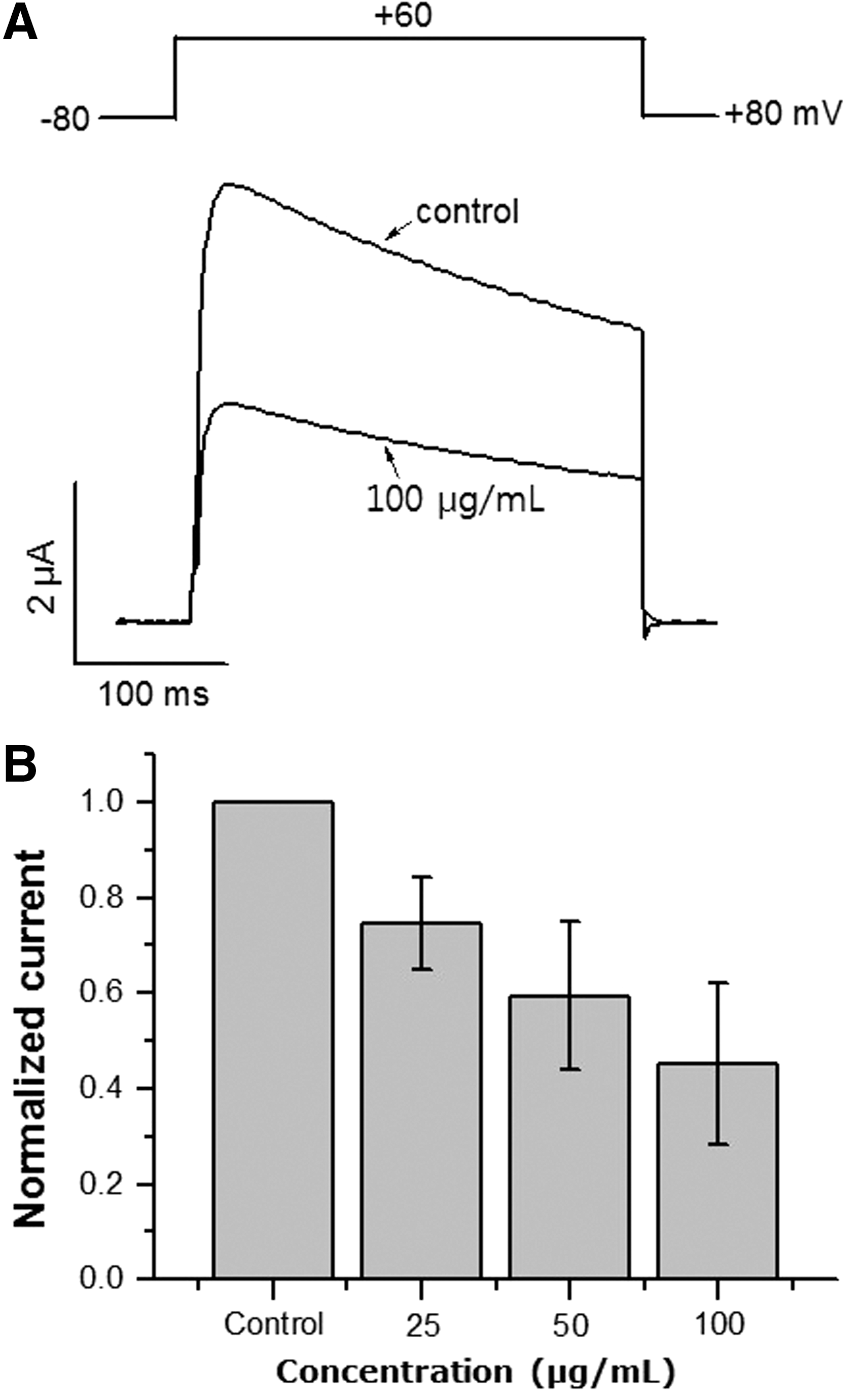
The inhibitory effect of CH2Cl2 fraction from A. senticosus on human Kv1.3 channel currents. Normal Ringer's solutions were applied to oocytes by continuous perfusion of the chamber. Then, solution exchanges were completed in 3 min and currents were measured at 10 min. 3 M potassium chloride was used to fill electrodes. A resistance of 2–4 MΩ and 1–2 MΩ was set for voltage-recording electrodes and current-passing electrodes, respectively.
Discussion
Phenolic and flavonoid compounds exert various health-promoting biological actions, including anti-inflammatory, anticarcinogenic, and antiatherosclerotic functions. 17 The EtOAC fraction had the greatest phenolic and total flavonoid content. DPPH is decreased significantly after exposure to proton radical scavengers and has been used extensively as a free radical to evaluate reducing substances in foods and biological systems. 18 The EtOAC fraction had the lowest IC50 value, which meant that the EtOAC fraction possessed the strongest DPPH free radical scavenging activity. Reducing power is a widely used indicator of the potential antioxidant activity of compounds. 19 The higher reducing ability of the EtOAC fraction may be due to the high phenolic content present in it, which is believed to play a role as a reductone by donating electrons to free radicals. Superoxide radical is harmful to cellular components and can produce many harmful species such as singlet oxygen and hydroxyl radicals that can damage tissue. 20 The PMS-NADH superoxide generating system was used to determine the scavenging effect of fractions against the superoxide radical, and the scavenging ability of fractions was compared with gallic acid. Free radicals are thought to break the DNA strand and cause DNA damage, which leads to carcinogenesis, mutagenesis, and cytotoxicity. 21 This assay was aimed to evaluate the protective effect of various fractions of A. senticosus against hydroxyl radical-mediated DNA damage. Even though the CH2Cl2 and EtOAC fractions significantly mitigated the oxidative stress and provided protection for DNA from hydroxyl radicals, the EtOAC fraction seemed to provide the greatest protection of DNA integrity. Protein oxidation is pervasive and used as an indicator of oxidative stress. 22 Results suggested that the CH2Cl2 fraction is highly protective against damage by H2O2.
Inflammation is a complex process characterized by the contributions of mediators, including NO, free radicals, and produced from the enzymatic conversion of L-arginine to citrulline. 23 Effects of the fractions on NO production in LPS-simulated RAW 264.7 cells were measured by the Griess reaction as a cellular response to inflammation. Due to its greatest inhibition of NO and lack of cytotoxicity, the CH2Cl2 fraction was selected for future studies. Blocking the expression and activity of COX-2 and iNOS restrains the production of high-output NO and prostaglandins. Therefore, inhibiting COX-2 and iNOS expression can be used as a functional criteria for developing anti-inflammatory medications. 24 In the present study, the CH2Cl2 fraction inhibited the production of NO induced by LPS in RAW 264.7 macrophages, which could be attributed to its inhibition of the expression of iNOS. TNF-α and IL-1β are two proinflammatory cytokines and increase the activity of iNOS. 25 Inhibition of ROS production is regarded as a popular therapeutic target to treat some inflammatory diseases because ROS are involved in the activation of NF-κB. 26 ROS levels were measured with the fluorescence probe DCFH-DA using flow cytometry. This result suggested that CH2Cl2 fraction might play a role in regulating the intracellular ROS level and could be used as a potential ROS scavenger to balance the ROS level. T-cell activation, proliferation, and cytokine secretion can be functionally inhibited by blocking the Kv1.3 channels, which produce anti-inflammatory effects and immunomodulation. 27 Therefore, Kv1.3 channel regulation was utilized to characterize anti-inflammatory efficacy in this study. In the present study, the CH2Cl2 fraction inhibited the Kv1.3 channels, which may be one of the mechanisms of action of the CH2Cl2 fraction as an anti-inflammatory agent. However, the correlation of Kv1.3 channels and the signaling pathways that cause inflammation need to be further researched.
In conclusion, fractions of A. senticosus showed excellent beneficial effects in various assays. The EtOAC fraction exhibited remarkable antioxidant activity and the CH2Cl2 fraction possessed the strongest protein protecting and NO production inhibitory activities. The CH2Cl2 fraction inhibited the expression of iNOS, COX-2, TNF-α, and IL-1β mRNAs. ROS generated in LPS-induced RAW 264.7 cells were significantly decreased by the CH2Cl2 fraction. In addition, the CH2Cl2 fraction showed an inhibitory effect on the human Kv1.3 channel. Our research suggested that the EtOAC fraction of A. senticosus has the potential to be a highly effective antioxidant, and the CH2Cl2 fraction may be utilized as an anti-inflammatory agent.
Footnotes
Acknowledgments
This study was supported by the Cooperative Research Program for Agriculture Science & Technology Development (Project No. C1009413-01-01) of the Rural Development Administration and was partly supported by the 2013 Research Grant from Kangwon National University (No. 120140274), Republic of Korea.
Author Disclosure Statement
No competing financial interests exist.