




Abstract
Chlorella
sp. is a green microalgae containing nutrients, vitamins, minerals, and chlorophyll. In some communities, Chlorella sp. is a traditional medicinal plant used for the management of inflammation-related diseases. In a rat model, ROQUETTE Chlorella sp. (RCs) benefits were investigated on visceral pain and associated inflammatory parameters related to cystitis both induced by cyclophosphamide (CYP). RCs was orally administered every day from day 1–16 (250 and 500 mg/kg body weight). Six hours after an intraperitoneal injection of 200 mg/kg body weight of CYP, body temperature, general behavior, food intake, and body weight were recorded. Twenty-four hours after CYP injection, rats were tested in two behavioral tests, an open field and the aversive light stimulus avoidance conditioning test, to evaluate the influence of pain on general activity and learning ability of rats. After euthanasia, bladders were weighed, their thickness was scored, and the urinary hemoglobin was measured. RCs orally administered at the two dosages significantly reduced visceral pain and associated inflammatory parameters related to cystitis both induced by CYP injection, and improved rat behavior.
To conclude, RCs demonstrated beneficial effects against visceral pain and cystitis.
Introduction
D
The aim of this study was to first investigate in rats the preventive effects of oral administration of RCs on visceral pain induced by intraperitoneal injection of cylophosphamide and second its effects on cystitis, the secondary effect observed in this model.
Material and Methods
Plant material
RCs is a Chlorella sorokiniana powder produced by ROQUETTE (Lestrem, France) in a closed-controlled environment. RCs contains 55% proteins, 9% carbohydrates, 9% lipids, 10% fibers, 3% pigments, 6% ash, and 8% moisture.
Chemicals
CYP (C7H15Cl2N2O2P.H2O, CAS Number 6055-19-2, >97% purity) was purchased from Sigma-Aldrich (Saint-Quentin Fallavier, France). Physiological sterile saline (NaCl, 0.9%) was purchased from Cordier's pharmacy in Nancy.
Animals
Thirty-two female Wistar rats weighing 225–250 g were purchased from Charles River France (Charles River Breeding Centre, L'Arbresle, France). After 1 week of acclimatization, the rats were housed at two per cage in an air-conditioned room under controlled conditions of temperature (22°C ± 2°C), relative humidity (50% ± 20%), with an inverted 12-h light:dark cycle (light off at 8:00 a.m.) and they had access to standard laboratory chow (2016 diet; Harlan Teklad US, Madison, WI, USA) and tap water ad libitum. On day 16, rats were euthanized by intraperitoneal injection of an overdose of Pentobarbital (Ceva Santé Animale, Libourne, France). The study received the approval of the Director's Office of Veterinary Services and the Local Animal Care Committee in Nancy, and was authorized by the French government (Governmental authorization no. A 54-547-1). The experimental procedures were conducted in accordance with the European Communities Council Directive of 22 September, 2010 on the approximation of laws, regulations, and administrative provisions of the Member States regarding the protection of animals used for scientific purposes, the NIH Guide for the Care and Use of Laboratory Animals, and the United Kingdom legislation of in vivo aspects in inflammation research. 18 –20 All efforts were made to minimize suffering of animals.
Treatments
Oral administrations of RCs or vehicle were performed daily from day 1–16 by intragastric gavage and CYP or vehicle was injected on day 15 by intraperitoneal (i.p.) route. The negative control group (V/V) received spring water (Source Cristaline Aurèle, France) by oral route and an i.p. injection of 0.9% NaCl. The positive control group (V/CYP) received spring water by oral route and CYP by i.p. injection. Two groups were orally treated with RCs at doses of 250 and 500 mg/kg body weight (RCs250/CYP and RCs500/CYP respectively), and received CYP injection. RCs was freshly dissolved each day in spring water before oral administration by intragastric gavage with an administration volume of 10 mL/kg.
Pain induction
On day 15, CYP was prepared with 0.9% NaCl, and was injected i.p. at the dose of 200 mg/kg in V/CYP, RCs250/CYP, and RCs500/CYP groups. Negative control group V/V received an i.p. injection of 0.9% NaCl alone.
Monitoring of rats
Rats were observed daily during the study. Food intake, water consumption, and bodyweight were monitored three times a week before induction of pain with CYP, and also the day of induction and 24 h after. Feces consistency was scored on day 15 before induction of pain and on day 16 (0 = hard feces, 1 = hard and soft feces, 2 = soft feces, and 3 = diarrhea).
Visceral pain evaluation
Global behavior score
Global behavior score (GBS) of rats was calculated on day 15, before pain induction and 24 h after induction. GBS corresponds to the sum of three scores: eyes (0 = opened; 1 = partially opened; 2 = almost closed, and 3 = completely closed); posture (0 = normal, 1 = partially arched, and 2 = completely arched); and fur (0 = normal; 1 = slight piloerection, and 2 = piloerection). Rats were observed individually and the maximal GBS possibly attributed was seven.
Behavioral tests
The two behavioral tests were performed 24 h after CYP injection, recorded, and results were analyzed by videotracking Anymaze Software (Version 4.95, Stoelting, Ireland).
Open field test
To estimate the general motor and exploratory activity after CYP injection, rats were tested on day 16 in a cylindrical open field (OF) (60 cm in diameter with 30 cm high walls). Each rat was placed in the center of the arena and tested for 5 min. Distance covered, rearings (standing on hind legs against the walls), and total duration in rearings were recorded. The floor was washed with a water-alcohol solution and dried before each individual subject to eliminate odor clues.
Aversive light stimulus avoidance conditioning test
The objective of this test was to evaluate the general locomotor activity and the efficiency of learning process of rats 24 h after CYP injection. It was performed immediately after OF by placing the animals in a highly illuminated (1200 lux) cage (50 × 40 × 37 cm) equipped with two levers for a 20-min period. By pressing the active lever the rats switched off the light for 30 sec, whereas the inactive lever had no effect on the environment. The total number of pressings on the two levers was recorded and the learning performance (discrimination between the two levers) was determined by comparing the numbers of active lever and inactive lever pressings recorded during the light period. 21
Inflammatory parameters related to cystitis induction
Body temperature
The body temperature of each rat was recorded with a rectal thermometer on day 1, before the first oral treatment with RCs, on day 15 before CYP or NaCl 0.9% injection, on day 15 6 h (day 15 + 6 h) after CYP or NaCl 0.9% injection and on day 16. Except on day 15 + 6 h, the body temperature was recorded each morning at 8:00 a.m.
Bladder structure
After euthanasia, bladders were collected, weighed, and their thickness was scored (0 = normal; 1 = slightly thick; 2 = moderately thick, and 3 = very thick).
Hemoglobin in urine
Urine was collected after euthanasia by gentle pressure of the abdomen above the bladder in a sterile tube and hemoglobin contained in urine was measured by using a modified spectrophotometric Drabkin method at 540 nm adapted in our laboratory to this model. 22 The maximal detection of hemoglobin was 25 μL/mL of urine.
Statistical analysis
All data are presented in figures and tables as median, first quartile (Q1), and third quartile (Q3). Nonparametric tests were applied: one-way ANOVA with Kruskal–Wallis test followed, when significant, by the Mann–Whitney U-test for inter-group comparisons. Wilcoxon test was used to compare the results obtained for discrimination in Aversive light stimulus avoidance conditioning test (ALSAT) and the body temperature evolution on day 15 + 6 h and day 16. Statistical difference was defined at P < .05 level for all comparisons. All statistical analyses were carried out using the StatView®5 statistical package (SAS`, Institute, Inc., Cary, NC, USA).
Results
Effect of RCs on physiological parameters
No death, no signs of suffering, and no toxicity due to treatments were observed in the four experimental groups of rats, throughout the whole experiment. Food intake, water consumption, and body weight were not statistically different between the four experimental groups from day 1–15 (data not shown). Between day 15 and 16 (after CYP injection), the mean body weight change of rats of V/V group was significantly higher than the ones of rats of V/CYP, RCs250/CYP, and RCs500/CYP groups (P = .01, P = .003, and P = .002, respectively) (Table.1). The rats of V/V group gained on average 0.9g, whereas the rats of V/CYP lost 7.9 g and the ones of RCs250/CYP and RCs500/CYP lost 8.0 and 8.4 g, respectively. The food intake of rats of V/V group was significantly higher than that of rats of V/CYP, RCs250/CYP, and RCs500/CYP groups (P = .02 for all comparisons) (Table.1). The score of consistency of the feces of the four groups was not statistically different (score = 0 for the four groups, data not shown).
P < .05 compared with V/V group (Mann–Whitney U-test).
P < .01 compared with V/V group (Mann–Whitney U-test).
MBWC, mean body weight change; NS, not significant; Q1, first quartile; Q3, third quartile; V, vehicle; CYP, cyclophosphamide; RCs, ROQUETTE Chlorella species; 250–500, doses of RCs in mg/kg BW/day.
Effect of RCs on visceral pain
On day 15, before injection of CYP, the GBS was not statistically different between all groups (Scores = 0, data not shown). On day 15 + 6 h and 16, the GBS of rats of V/V group was significantly lower than the ones of rats of V/CYP, RCs250/CYP, and RCs500/CYP groups and the GBS of rats of V/CYP group was significantly higher than that of rats of RCs
Mann–Whitney U-test:
T P < .10 Trend to significant with V/V group.
P < .05 compared with V/V group.
P < .01 compared with V/V group.
P < .001 compared with V/V group.
P < .05 compared with V/CYP group.
P < .01 compared with V/CYP group.
P < .001 compared with V/CYP group.
Wilcoxon test: ° P < .05 compared with results obtained on Day 15 + 6h.
ALSAT, aversive light stimulus avoidance conditioning test; GBS, global behavior score; 250–500: doses of RCs in mg/kg/day.
On day 16 in the OF, the distance covered by rats, the number of rearings, and the total duration in rearings during the 5 min of test for V/V group were significantly higher than the results obtained for rats of V/CYP, RCs250/CYP, and RCs500/CYP groups and the results obtained for rats of V/CYP group were significantly lower than that obtained for RCs-treated groups at both tested doses (Table.2).
In the ALSAT, on day 16, the total lever pressings of rats of V/V, RCs250/CYP, and RCs500/CYP groups were significantly higher than the one of rats of V/CYP group (P = .006, P = .016, and P = .004, respectively) (Table.2).
On day 16, the rats of V/V and RCs250/CYP groups showed a significant discrimination between the two levers of the ALSAT (P = .026 and P = .041, respectively) and rats of the RCs500/CYP group showed a trend to discriminate between the two levers (P = .075). There was no statistical difference for the discrimination between the two levers for rats of the V/CYP group (Fig. 1).
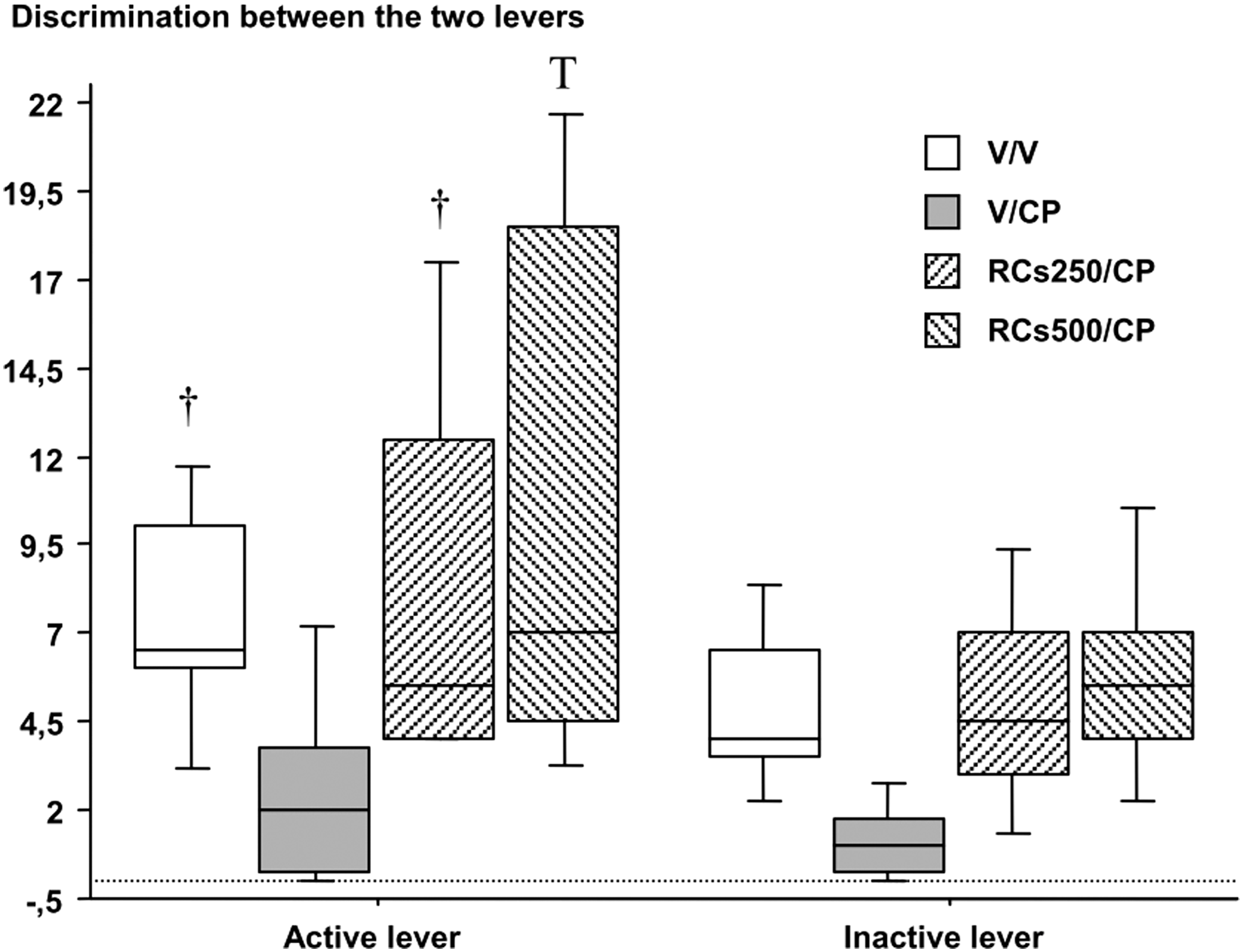
Discrimination between the two levers in the ALSAT on day 16 [Median (IQ; SQ)] Wilcoxon-test: T P < .10 compared with inactive lever of the same group of treatment. † P < .05 compared with inactive lever of the same group of treatment. ALSAT, aversive light stimulus avoidance conditioning test; IQ, inferior quartile; SQ, superior quartile; V, vehicle; CYP, cyclophosphamide; RCs, ROQUETTE Chlorella sp.; 250–500, doses of RCs in mg/kg BW/day.
Effect of RCs on inflammatory parameters related to cystitis induction
No statistical differences were observed between the body temperature of rats of the four treatment groups on day 1 and 15 (data not shown). On day 15 + 6 h and day 16, the body temperature of rats of V/V group was significantly higher than the one of rats of the three groups injected with CYP and body temperature of rats of V/CYP group was significantly lower than that of rats treated with RCs at both tested doses The body temperatures of rats of RCs250/CYP and RCs500/CYP groups were lower on day 15 + 6 than on day 16 (P = .01 in both cases; Fig. 2).
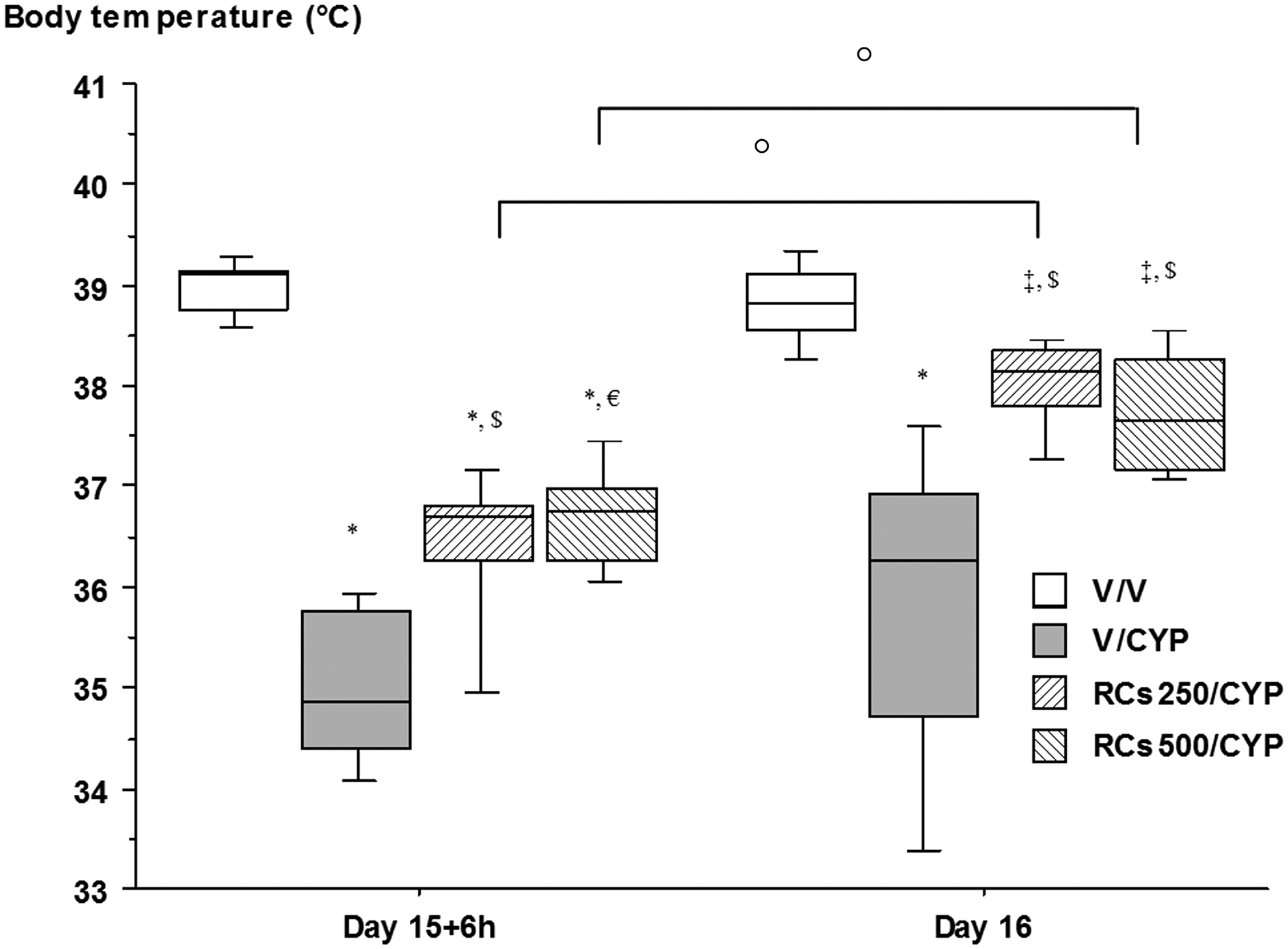
Body temperature of rats on day 15 + 6 h and on day 16 [Median (IQ; SQ)] 250–500, doses of RCs in mg/kg BW/day. Mann–Whitney U-test: ‡
P < .01 compared with V/V group. *P < .001 compared with V/V group. $
P < .01 compared with V/CYP group. €
P < .001 compared with V/CYP group. Wilcoxon test:
The bladder weight ratio and the thickness score of bladder of rats of V/V group were significantly lower than that of rats of the three groups injected with CYP. The bladder weight and the thickness score of bladder of rats of V/CYP group were significantly higher than that of rats of RCs-treated groups at both tested doses (Table.3). Figure 3 illustrates the aspect of representative bladders of the four groups of treatment. The concentration of hemoglobin in urine of rats of V/V and RCs250/CYP groups were significantly lower than that of rats of V/CYP group (Table. 3).
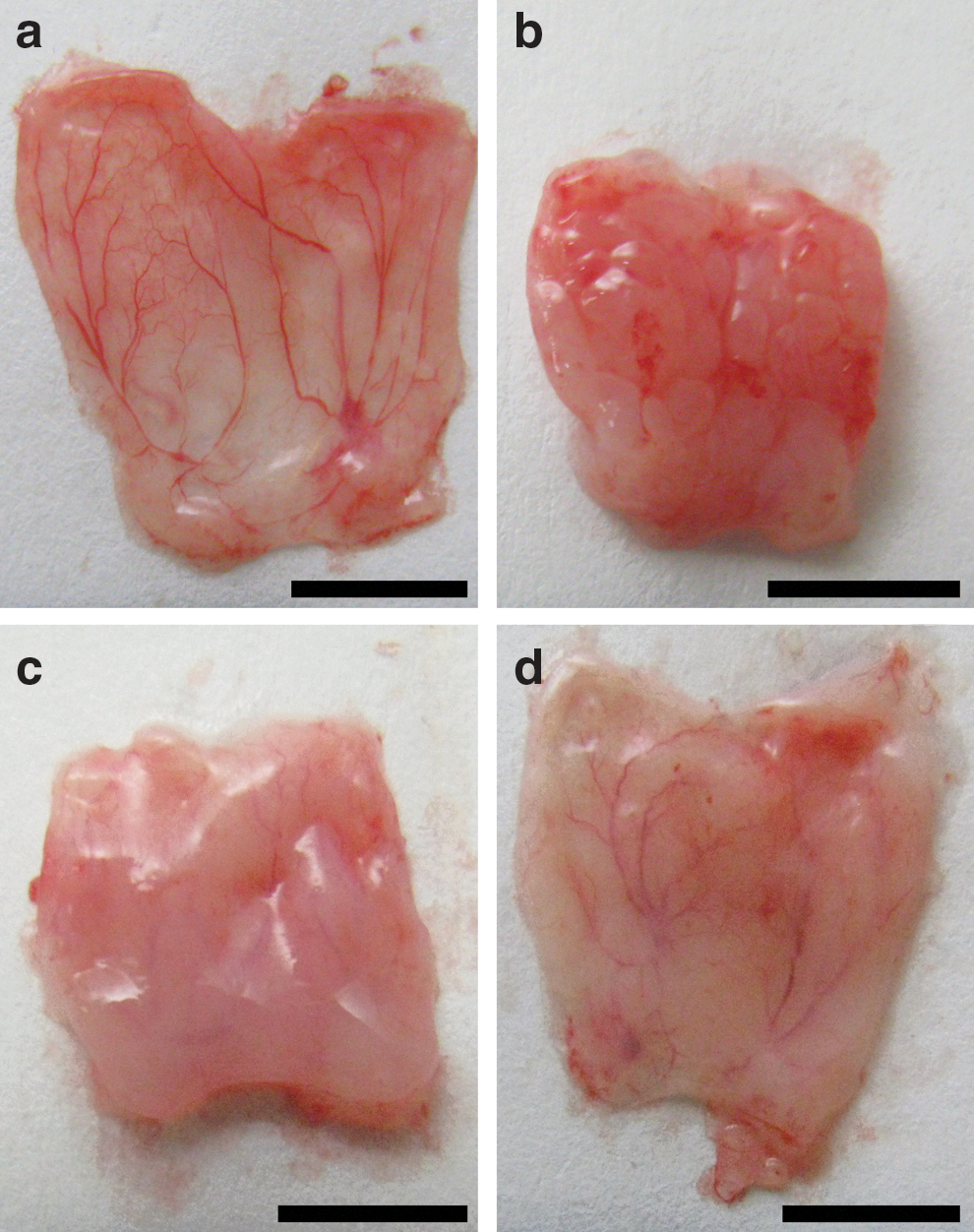
Representative photographs of bladder of rats of the noninduced group treated with vehicle
Bladder thickness score: 0 = normal; 1 = slightly thick; 2 = moderately thick and 3 = very thick.
Mann–Whitney U-test:
P < .01 compared with V/V treated group.
P < .001 compared with V/V group.
P < .05 compared with V/CYP group.
P < .01 compared with V/CYP group.
Discussion
There is a growing interest in studying and understanding how natural products can contribute to improve health and even treat diseases. Among those products, Chlorella sp., a green microalgae, is a popular food supplement in Asia considered as a traditional medicinal plant. 4 However, scientific studies supporting its effectiveness for the prevention or the treatment of human disorders remain scarce.
In this study, preventive administration of RCs did not prevent the immediate effects of CYP as observed with body weight loss and a significant decrease of food intake, principally due to prostration and visceral pain after CYP injection.
After CYP injection, RCs groups had a lower GBS than the V/CYP group from day 15 + 6 h and their behavior improved rapidly on day 16. Rats treated during 2 weeks with RCs recovered more rapidly after induction of pain with CYP as shown by their activity observed.
In the ALSAT, RCs completely prevented the negative effects induced by CYP injection and rats of RCs250/CYP group discriminated the two levers of the ALSAT expressing an improvement of the learning process under induction of pain and inflammation. In both behavioral tests, rats treated with RCs at both doses had a better locomotor activity than rats of the positive group. Few studies demonstrated the correlation between visceral pain and behavior. Authors have shown the correlation between cognitive impairments and visceral pain using the ALSAT. 21 This observation was confirmed by other authors who demonstrated that a 5% food dextrin diet administered for 2 weeks prevented alcohol and trinitrobenzene sulphonic acid-induced inflammation and by the way the cognitive performances of rats, that is, learning and memory, were not perturbed. 23
Several authors reported that among potential mediators of inflammation, neurotrophins (e.g., nerve growth factor) have been implicated in the peripheral sensitization of nociceptors.
24,25
Proinflammatory cytokines also cause sensitization of polymodal C-fibers and facilitate A-beta input to the spinal cord.
25
–27
Several studies have demonstrated increased expression of cytokines (IL-6, IL-1α, and IL-4, among others) and chemokines and the beneficial effects of receptor blockade in the urinary bladder after CYP-induced bladder inflammation.
17,28
Recently the expression and function of another cytokine, TGF
The expression of cytokines, alone or in combination with other cytokines, growth factors, or other mediators, may form a bidirectional communication network between the nervous system and the immune system. 31
In vitro and animal studies have shown that Chlorella or Chlorella extract are involved in the modulation of immune response against tumors along with bacterial and viral infection but there are no studies to demonstrate its effect on visceral pain. 32 –35 Few in vitro and in vivo studies on Chlorella extracts have shown anti-inflammatory, immunomodulatory, analgesic, and free radical scavenging activities. 36,37 Authors have reported that Chlorella short-term supplementation in uninfected normal people enhanced Natural Killer cell activity and early inflammatory response (serum concentration of interferon-γ and interleukin-1β increased). 38 It is difficult to determine which compounds could be responsible for such immunomodulatory or analgesic effects as the microalgae Chlorella is a mix of many components as various as proteins, lipids, carbohydrates, pigments, and also not so well-characterized compounds yet such as growth factors, the whole probably having a synergistic effect.
In our experimental conditions, RCs limited visceral pain appearance and associated markers, reduced visceral pain significantly 24 h after injection of CYP and allowed normal locomotor and learning activities. The internal temperature dropped after CYP injection because blood converges to the peritoneum close to the injection site of CYP to fight the infection due to CYP. The massive blood influx to the peritoneal cavity decreases the blood flow in some organs, in particular to the colon, leading to the drop of rectal body temperature.
Cystitis induced by CYP is usually associated with hemorrhagia, and this study showed that RCs prevented the increase in urinary hemoglobin concentrations observed in the positive group. 16 These beneficial effects could be attributed to the stimulation of the immune system with production of cytokines, limiting the inflammation and permitting animals to recover rapidly with less suffering.
RCs could be developed in a new field of application. This microalgae administered to patients could permit to accelerate chemotherapy frequency by avoiding the side effects, pain and cystitis. The locomotor activities, the explorative capacities, and the cognitive performances could also be maintained. Further studies are needed to evaluate the effect of RCs on anti-inflammatory response at cytokine levels and after repeated injection of CYP to mimic chronic chemotherapeutic treatments.
To conclude, RCs tested at doses of 250 and 500 mg/kg body weight in rat significantly reduced visceral pain and associated inflammatory parameters related to cystitis both induced by CYP injection.
Footnotes
Acknowledgement
We thank Miss Valérie Dernoncourt (ETAP) for her technical support for hemoglobin measurement in urine.
Author Disclosure Statement
No competing financial interests exist.