




Abstract
The aim of this study is to select a lactic acid bacterial strain as a starter culture for flatfish-Sikhae fermentation and to evaluate its suitability for application in a food system. Four strains of lactic acid bacteria isolated from commercial flatfish-Sikhae were identified and selected as starter culture candidates through investigation of growth rates, salt tolerance, food safety, and functional properties such as antioxidative and antimicrobial activities. The fermentation properties of the starter candidates were also examined in food systems prepared with these strains (candidate batch) in comparison with a spontaneous fermentation process without starter culture (control batch) at 15°C. The results showed that the candidate YG331 batch had better fermentation properties such as viable cell count, pH, and acidity than the other experimental batches, including the control batch. The results are expressed according to selection criteria based on a preliminary sensory evaluation and physiochemical investigation. Also, only a small amount of histamine was detected with the candidate YG331 batch. The radical scavenging activity of the candidate batches was better compared with the control batch, and especially candidate YG331 batch showed the best radical scavenging activity. Also, we isolated another starter candidate (identified as Lactobacillus brevis PM03) with γ-aminobutyric acid (GABA)-producing activity from commercial flatfish-Sikhae products. The sensory scores of the candidate YG331 batch were better than those of the other experimental batches in terms of flavor, color, and overall acceptance. In this study, we established selection criteria for the lactic acid bacterial starter for the flatfish-Sikhae production and finally selected candidate YG331 as the most suitable starter.
Introduction
S
Biogenic amines (BAs), including histamine, tyramine, putrescine, cadaverine, spermine, and spermidine, are mainly produced by microbial decarboxylation of amino acids in foods. 3,4 In particular, these BAs are often produced during fermentation of protein-rich food materials such as soybean paste, 5,6 cheese, 7 –9 and dry sausage. 10 The presence of high levels of BAs in food may cause allergic symptoms such as headache, sneezing, diarrhea, asthma, pyrexia, pruritus, and respiratory deficiency. 11,12 Some studies have reported the detection of histamine and tyramine in Korean fermented foods; 4,5,13 –16 however, there are few studies on the presence of histamine in Sikhae during fermentation.
Antioxidants are substances that delay or prevent the oxidation of cellular oxidizable substrates by scavenging free radicals and inhibiting the production of reactive oxygen species (ROS). Several synthetic antioxidants are commonly used as food preservatives; 17 however, doubts have been raised about the safety and health effects of these products. 18 Accordingly, antioxidants from natural sources such as seaweeds and microorganisms have received much attention, and the focus of this study is on the antioxidative activity from lactic acid bacteria (LAB) used as a starter culture.
γ-Aminobutyric acid (GABA) is a nonprotein amino acid and neurotransmitter found in the brain and spine. It is known as a nutrient for the brain that improves blood flow, increases oxygen supply to the brain, and enhances brain metabolism and brain memory. GABA is also effective in the treatment of stroke, dementia, memory loss, and insomnia; therefore, it has been applied to functional foods for students and is effective for weight reduction by affecting appetite and satiety. 19 –21 Increased understanding of the physiological functions of GABA has attracted interest for its use as a medicine and also as a functional food material; thus, a wide variety of studies have characterized its involvement in the biologically active materials of Sikhae, a traditional fermented food.
The aim of this study was to establish starter selection criteria for producing flatfish-Sikhae of high quality that has good processing, hygiene, safety, and preference characteristics as well as acceptable taste, flavor, and other functional properties. Furthermore, LAB starters that produce GABA were selected, and changes in the GABA content of flatfish-Sikhae were measured. Also, the fermentation properties of flatfish-Sikhae prepared with the starter culture candidates were investigated.
Materials and Methods
Flatfish-Sikhae samples
A total of 12 flatfish-Sikhae products were purchased at retail outlets in Sokcho, Korea. The samples of flatfish-Sikhae were stored at 4°C until used.
Measurement of viable cell counts
Twenty-five grams of flatfish-Sikhae was added into 225 mL of dilution solution in a sterilized sample bag (3M™, St. Paul, MN, USA), and then it was homogenized with a Stomacher (Lab-blender 400; Seward Ltd., Worthing, England) for 2 min. According to the general method, each diluted sample was spread on a plate count agar (PCA; Difco, Detroit, MI, USA) and de Man Rogosa Sharpe (MRS; Difco) agar added with 0.0002% bromocresol purple (BCP; Sigma, St. Louis, MO, USA) for total aerobic bacterial and lactic acid bacteria (LAB) counts, respectively. PCA was incubated aerobically at 37°C for 24–48 h, and the MRS agar with BCP was incubated in an anaerobic incubator (Hirayama Manufacturing Co., Kasukabe, Japan) at 37°C for 24–48 h. The number of microorganisms was expressed as the log10 of colony forming units (CFU) per gram.
Isolation of LAB
The LAB were isolated from individual yellow-colored, well-rounded, or flat-rounded colonies, which were distinguishable from the morphologically similar bacteria grown in the MRS agar with added BCP and incubated at 37°C.
Growth rate and acid production capacity
To establish the selection criteria for a starter culture for the production of flatfish-Sikhae, a preliminary sensory evaluation and physicochemical investigation were performed. From the results, selection criteria were determined, including a growth rate of more than 107 cells/mL in MRS broth containing NaCl (0%, 2%, 3%, and 4%) and pH-lowering activity to provide less than pH 5.0 in MRS broth with or without (control) NaCl.
The starter candidates were inoculated in MRS broth with NaCl (2%, 3%, and 4%) and MRS broth without NaCl (control group) and incubated for 48 h at 15°C. Then, the culture mediums of the tested isolates were spread on the MRS agar to determine viable cell count of LAB and pH value, which was measured with a pH meter (Thermo, Waltham, MA, USA), at room temperature.
Hemolysis test
The isolates were transferred onto Blood Agar Base (Oxoid, Hampshire, United Kingdom) plates containing 7% (v/v) sheep blood and then incubated for 24 h at 37°C. Observation of the hemolytic reaction revealed either a clear zone of hydrolysis around the colonies (β-hemolysis), a partial hydrolysis and greening zone (α-hemolysis), or no reaction (γ-hemolysis), which was regarded as negative. 22
Detection of BAs contents
The amino acid decarboxylase activity of starter candidates was estimated according to the procedures described by Bover-Cid and Holzapfel. 23 Histamine in manufactured flatfish-Sikhae was detected by HPLC, using the method modified by Ben-Gigirey et al. 24
Phylogenetic analyses
16S rDNA was amplified using the universal primers, 27f, 1088r, and 1522r. 25 All polymerase chain reaction (PCR) amplifications were performed in a PerkinElmer GeneAmp PCR System 9700 (Applied Biosystems, PerkinElmer, Waltham, MA, USA). The PCR products were purified by the DNA purification systems (Promega, Madison, WI, USA) according to the manufacturer's instructions. After sequencing by PCR, the products were sequenced directly on a PerkinElmer ABI PRISM 310 Genetic Analyzer in both directions using the ABI PRISM BigDye Terminator Cycle Sequencing Ready Reaction Kits with Ampli-Taq DNA Polymerase (Applied Biosystems).
A nearly complete 16S rDNA sequence (1440 bp) of strain YG331 was manually aligned with representatives of the genus Lactobacillus and related taxa using known 16S rRNA secondary structure information. Phylogenetic trees were inferred by using the neighbor-joining, 26 Fitch–Margoliash, and maximum parsimony methods. 27,28 Evolutionary distance matrices for the neighbor-joining and Fitch–Margoliash methods were generated according to the model of Jukes and Cantor. 29 The PHYLIP package was used for all analyses. 30 The resultant tree topology was evaluated by bootstrap analyses of the neighbor-joining tree based on 1000 resamplings. 31
Functional properties of starter candidates
Antioxidative activity of starter candidates
To investigate the antioxidative activity of starter candidates, isolates were incubated in MRS broth for 2 days at 37°C and then centrifuged (Mega 17R; Hanil Science Industrial, Incheon, Korea) at 9000 g for 10 min. Afterward, the collected supernatants were tested for antioxidative capacity. The antioxidative activity was measured by the 2,2-diphenyl-1-picrylhydrazyl (DPPH) assay as described by Blois
32
and some modified 2,2′-azino-bis(3-ethylbenzothiazoline-6-sulphonic acid) (ABTS) assay described by Re et al.
33
The radical scavenging activity was calculated by the following equation:
Analysis of GABA-producing activity
Isolation of GABA-producing strain
To screen for GABA-producing LAB, 500 strains of LAB were isolated from commercially available flatfish-Sikhae. All strains were grown in MRS broth supplemented with 1%
Identification of GABA-producing strain and application
The genomic DNA of a strain was separated using a Genomic DNA Isolation Kit (Intron, Sungnam, Korea), and PCR was performed using a specific primer of 16S rDNA in bacteria. The PCR conditions were 35 cycles (1 min at 94°C, 1 min at 58°C, 2 min at 72°C) and 1 elongation cycle (7 min at 72°C), and GABA-producing strains were identified by means of a GenBank BLAST search using the 16S rDNA sequencing results.
Analysis of GABA
The GABA content was measured according to the method of Baum et al. 34 For fluorescence derivation of GABA, AccQ•Fluor Reagent (Waters, Milford, MA, USA) was used as a reagent, and the separations of those derivations were carried out using 3.9 × 150 mm AccQ•TagTM (Nova-PakTM C18; Waters) column. To elute derivations in column, AccQ•Tag Eluent A and 60% acetonitrile were released into the column at a flow rate of 1 mL/min. 34
Analysis of flatfish-Sikhae inoculated with starter candidates
Manufacture of flatfish-Sikhae
Frozen flatfish caught in the East Sea of Korea were used. All the other ingredients used such as red pepper powder, garlic, ginger, sugar, foxtail millet, radish, and salt were from Korea. Salting was carried out using a ratio of 20% of salt against flatfish weight (20°C, 24 h), and all ingredients were mixed in the ratio as shown in Table 1. LAB used as starter candidates, including isolates with GABA-producing activity (107 CFU/mL), were freeze-dried by a programmable freeze dryer (Ilshin Lab Co., Yangju, Korea) and added as 1% of the total weight. The manufactured flatfish-Sikhae was fermented for 20 days at 15°C.
MSG, Monosodium L-glutamate.
Physicochemical characteristics
A pH meter was used to measure pH at room temperature. Acidity was examined by titrating with 0.1 N NaOH solution until the end point at pH 8.2 and then calculated on the basis of lactic acid. Water activity was measured by a water activity measuring instrument (Novasina, Lachen, Switzerland), and salinity was measured in accordance with the method of Mohr. 35
Antioxidative activity of flatfish-Sikhae with starter candidates
To prepare solvent extracts, flatfish-Sikhae samples were extracted with ethanol and distilled water (1:10, %(w/w)) by stationary extraction at 4°C for 24 h. Next, the extracts were centrifuged at 10,000 g for 10 min and filtered through Whatman No. 44 filter paper (Whatman International Ltd., Maidstone, United Kingdom). The antioxidative activity was measured by the same methods as previously stated.
Sensory test
The sensory evaluation of flatfish-Sikhae was scored by 18 panelists using a 9-level scoring method based on organoleptic properties of flavor, taste, color, and overall acceptance.
Statistical analysis
All values of experimental data were obtained in triplicate and analyzed using SAS software (SAS Institute, Inc., Cary, NC, USA). Multiple comparisons were also performed for all the data using Duncan's multiple range tests at P < .05.
Results
Properties and identification of starter candidates
Three hundred strains were isolated from the collected flatfish-Sikhae samples, and four strains (YG331, YG3311, YG3318, and YG3323) were selected as starter candidates based on the criteria described above. Candidate YG331 showed the fastest growth property and the lowest pH at each concentration of NaCl compared with the other three starter candidates after incubation for 24 h with LAB counts of 8.35, 8.19, and 8.05 log CFU/g at each of the NaCl concentrations (Table 2). Each strain showed growth ability in all the salt concentrations.
LAB, lactic acid bacteria; unit: log CFU/mL.
Mean ± standard deviation.
CFU, colony forming units; MRS, Man Rogosa Sharpe.
All four strains showed γ-hemolytic activity in the hemolysis test (data not shown). Also, histamine was detected with all four strains with a histamine content of 28.28 mg/kg for YG331 and 16.97, 23.14, and 24.65 mg/kg, respectively, for the other three strains (data not shown).
For antioxidative activity, all the starter candidates showed higher than 60% radical scavenging activity compared with the control (distilled water) (Fig. 1) with YG 331 showing the highest radical scavenging activity in the DPPH and ABTS assays (82.0% and 80.0%, respectively).
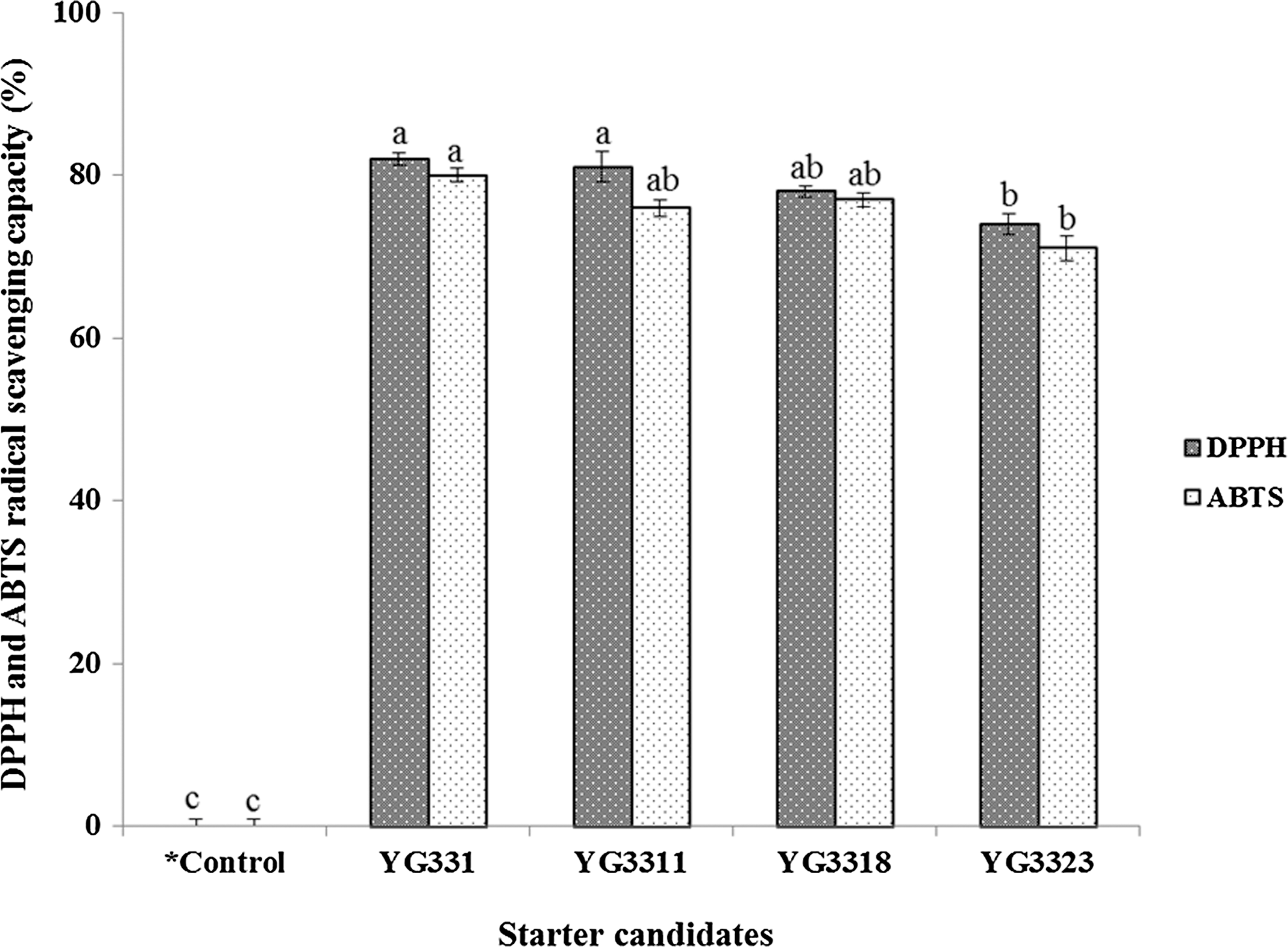
Antioxidative activity of starter candidates. Concentration of starter candidates: 0.1 mg/mL. *Distilled water. a–cMeans with different letters within a row are significantly different at P < .05 as determined by Duncan's multiple range test.
Identification of starter culture candidates
16S rDNA analysis
The 16S rRNA gene sequence analysis demonstrated that isolate YG331 belonged to the genus Lactobacillus and it was closely related to Lactobacillus brevis ATCC 14869T (99.8%). The rooted phylogenetic tree showed the relationship between the isolate and representatives of the genus Lactobacillus (Fig. 2). The clade was also confirmed in other treeing algorithms that were supported by a high bootstrap value of 100%. On the basis of pairwise 16S rDNA similarities, the closest phylogenetic relative to the isolate was L. brevis ATCC 14869T (99.8%), followed by Lactobacillus hammesii TMW 1.1236T (98.2%), Lactobacillus senmaizukei L13T (98.0%), and Lactobacillus koreensis DCY 50T (97.9%). It is evident from 16S rDNA analysis that the isolate belonged to a member of validly described L. brevis.
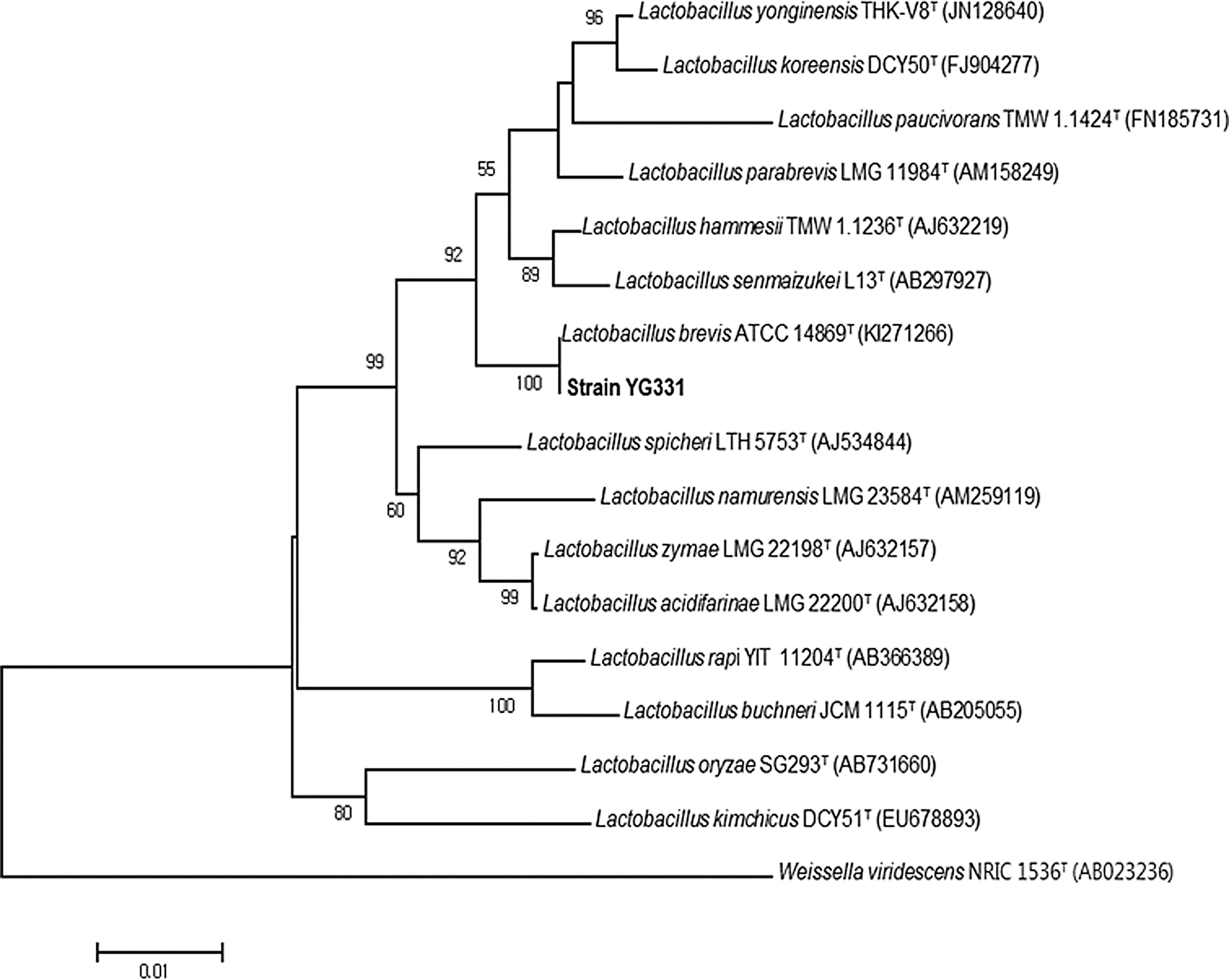
Phylogenetic tree showing the position of isolate YG331 with closely related taxa. The scale bar indicates 0.01 nucleotide substitution per nucleotide position.
Changes in microbiological and physicochemical properties of Sikhae inoculated with starter candidates
For all flatfish-Sikhae experimental batches with starter candidates, the initial LAB count was higher compared with the control batch (spontaneous fermentation). The number of LAB in the groups with YG3311, YG3318, or YG3323 increased slightly from 0 to 14 day to reach 7.14, 7.41, and 7.30 log CFU/g, respectively. In the group with YG331, the LAB count increased at 8 days and then remained relatively stable until the end of fermentation to reach a LAB count at 20 days of 8.60 log CFU/g (Fig. 3A). The total aeorobic bacteria (TAB) in all the experimental groups showed a similar growth pattern to that of the LAB count during fermentation (Fig. 3B), which indicates that LAB dominated the fermentation process of flatfish-Sikhae.
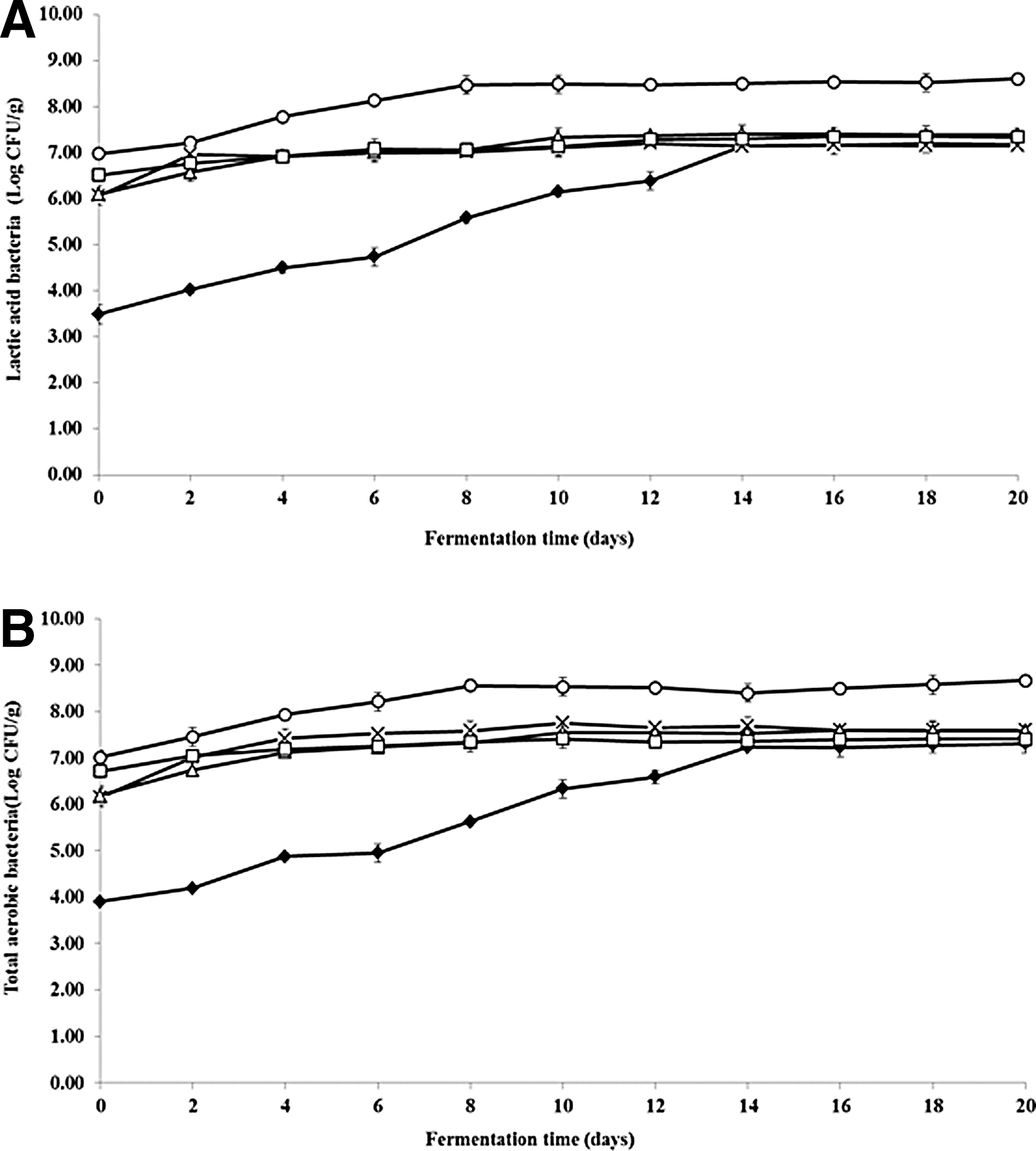
Population of lactic acid bacteria
Changes in pH and acidity are shown in Figure 4. The pH of all the experimental batches decreased with flatfish-Sikhae with YG331 showing the lowest pH at the end of fermentation among all the experimental batches, including the control batch, and the pH of the candidate YG331 batch was 4.6 at that time compared with 5.2 for the control batch (Fig. 4A).

Changes in pH
Changes in acidity showed a pattern similar to that of pH. At 0 day, all the experimental batches had very low acidity (about 0.28%) because pH was above 6.5, but after that day all the experimental groups showed increases in acidity. The candidate YG331 batch had an acidity of 0.73% at the end of fermentation, which was higher compared with the other experimental batches (0.53%, 0.65%, and 0.65%) and the control batch (0.69%) at the same time (Fig. 4B).
For all experimental batches, including the control batch, salinity and water activity (about 3.0% and 0.95%, respectively) remained relatively stable until the end of fermentation (data not shown).
Histamine contents of flatfish-Sikhae inoculated with starter candidates
Candidate YG331, YG3311, YG3318, and YG3323 batches were found to contain an average of 8.14, 9.25, 11.3, and 10.7 mg/kg, respectively, of histamine during fermentation, while the control batch had much higher average histamine concentrations during fermentation of 14.3 mg/kg (Table 3).
Results are expressed as the means ± standard deviations.
Means with different letters within a row are significantly different at P < .05 as determined by Duncan's multiple range test.
Control, without inoculated starter culture; YG331, sample inoculated with YG331; YG3311, sample inoculated with YG3311; YG3318, sample inoculated with YG3318; YG3323, sample inoculated with YG3323.
Antioxidative activity of flatfish-Sikhae inoculated with starter candidates
The half-inhibition concentration IC50, which is the concentration required to reduce the initial DPPH and ABTS concentration by 50%, was determined for the various extracts (Table 4). The results show that the ethanol extracts of all the experimental batches had a higher DPPH and ABTS radical scavenging activity than the water extract. Among the various extracts examined, the ethanol extract of the candidate YG331 batch had the lowest IC50 for the DPPH and ABTS assays of 0.73 and 1.33 mg/mL respectively, which shows that this batch had the highest DPPH and ABTS radical scavenging effect. Ascorbic acid, as the positive control, had an IC50 value in the DPPH and ABTS assays of 3.44 and 4.08 μg/mL, respectively.
IC50 value is defined as the amount of antioxidant necessary to decrease the initial DPPH and ABTS radical concentration by 50%. Results are expressed as the means ± standard deviations.
Positive control.
Means with different letters within a row are significantly different at P < .05 as determined by Duncan's multiple range test.
ABTS, 2,2′-azino-bis(3-ethylbenzothiazoline-6-sulphonic acid); DPPH, 2,2-diphenyl-1-picrylhydrazyl.
GABA-producing strain separation and selection
The TLC Rf value for GABA was 0.39 and for glutamic acid it was 0.32. Out of 400 strains separated from Sikhae samples, GABA was found in the cultures of 8 strains. On the basis of the quantitative analysis, strain PM03 was selected as an excellent strain for GABA productivity (Table 5).
The culture condition was MRS medium containing 1% MSG at 37°C.
GABA, γ-aminobutyric acid.
Identification of strain produced
In the identification tests for strain PM03, it showed 99.6% homogeny with L. brevis using the API kit and 97% homogeny with L. brevis using 16S rDNA sequence analysis. From the results of these two methods, the strain was identified as L. brevis.
GABA content of flatfish-Sikhae prepared with L. brevis PM03
During the fermentation of flatfish-Sikhae prepared using L. brevis PM03 as a starter, samples were collected and the GABA content was measured. The GABA content of the flatfish-Sikhae increased rapidly to reach 131.60 ± 8.43 μg/mL at the third day of fermentation (Fig. 5), and by the sixth day of fermentation, it had increased to about 167 times more compared with the control group (Sikhae without starter). In summary, the GABA content increased accordingly as the fermentation period increased.

Changes in the contents of γ-aminobutyric acid (GABA) in flatfish-Sikhae during fermentation.
Sensory assessment
The results of the sensory evaluation of flatfish-Sikhae by the panelists indicated a better flavor, taste, color, and overall acceptance of the candidate YG331 batch in comparison with the other experimental batches and control batch (Table 6).
Sensory evaluations were scored on a nine-point scale; it becomes very bad toward 1, whereas it was very good toward 9. Results are expressed as the means ± standard deviations.
Means with different letters within a row are significantly different at P < .05 as determined by Duncan's multiple range test.
Discussion
The major objective of this study was to isolate and select starter candidates for application in flatfish-Sikhae production. We knew that the average salinity content of flatfish-Sikhae was 3.5% from a prior study that investigated the physicochemical properties of commercial flatfish-Sikhae. Accordingly, we examined growth ability in similar NaCl conditions and then selected four strains as starter candidates isolated from flatfish-Sikhae.
It was reported in some studies that the amino acid decarboxylase activity is common among LAB and that some LAB show intensive histidine decarboxylase activity; 36 –38 however, this trait seems to be rather strain specific and is more closely associated with species such as Lactobacillus curvatus and Enterococcus faecalis. It is less closely associated with species such as Lactobacillus sakei and shows varying results for Lactobacillus plantarum strains. 23 No significant histamine production was observed in the LAB tested in this study.
Sanders reported that LAB have enzymatic or nonenzymatic antioxidative mechanisms to protect against ROS, 39 and Lin and Yen reported that intracellular cell extracts of LAB such as Streptococcus thermophilus and Lactobacillus bulgaricus (currently, Lactobacillus delbruecki spp. bulgaricus) show antioxidative activity. 18 Kaizu et al. reported that Lactobacillus spp. have antioxidative effects and decreased accumulation of ROS in the human body. 40 Kang and Lee reported that Pediococcus acidilactici isolated from kimchi has a DPPH radical scavenging ability above 80%, 41 and a similar result was found in this study.
We performed a preliminary organoleptic test on the collected flatfish-Sikhae samples to determine the overall preference range for physicochemical properties. A preference was found for Sikhae samples with a pH of ∼4.7, acidity (as lactic acid) 0.8%, salinity 3.5%, and aw 0.94 (data not shown), and these results were used as the basis for our requirements for a starter culture. In this study, we confirmed that the physicochemical properties such as pH, acidity, salinity, and aw of candidate YG331 batch correspond to these requirements, and it appears to be a good candidate for a starter.
Lee reported that the typical pH of Sikhae changed from 6.5 to 5.0 during fermentation, 42 and the candidate YG331 batch also showed a more appropriate lowering of pH and produced a lower pH value than that from the other experimental batches, including the control batch.
Kimchi with 3.0% salinity is fermented at low temperature and it achieves a suitably ripened state at an acidity of 0.6–0.8% and pH 4.2. 43 Also, Kimchi has proper sour taste for eating in the range of pH 4.2–4.4. 44 In this study, the acidity of the control batch was about 0.7% after 18 days of fermentation, the acidity of candidate YG3318 and YG3323 batches reached the proper ripening range of kimchi (0.6–0.8%) after 14 and 18 days of fermentation, respectively, and the acidity of the candidate YG331 batch reached 0.7% after only 8–10 days.
Askar et al. reported that the hazard level of histamine for human health has been suggested to be 500 mg/kg. 45 The Korean Food Code stipulates a maximum level of histamine only for fish and fish products, and this is less than 100–200 mg/kg. The European Union sets the limit for histamine in particular fish species at 200 mg/kg, while the CODEX standards stipulate that the level should be less than 100 mg/kg. Considering these standards, the histamine content of all the batches of flatfish-Sikhae in this study was at an allowable level for human consumption, including that of the control batch samples, even though they showed a higher level than the other experimental batches inoculated with starter candidates.
BAs are mainly produced by microbial decarboxylation activity; 3,4,46 however, the growth of histamine-forming strains slows down at low temperatures, with the formation of amines in food becoming lower at 10°C and no formation at 5°C. 8 A low level of BAs is found in Sikhae because it is fermented at a relatively low temperature (15°C).
The antioxidative activities of the experimental batches inoculated with the starter candidates were higher than those of the control group. The IC50 value of ethanol extracts of squid-Sikhae with low-level salt (NaCl) 47 was higher compared with spontaneously fermented flatfish-Sikhae, but it was lower compared with the ethanol extracts from starter candidate batches in this study. The ingredients in flatfish-Sikhae, such as garlic, red pepper powder, and ginger, enhance antioxidative activity, 48 –50 and it was confirmed that these contributed to the antioxidative activity of the control batch in this study. Also, the DPPH and ABTS radical scavenging activity of the experimental batches with starter candidates was higher compared with the control batch, and this appeared to be due to inoculation with the starter candidates as these have antioxidative activity.
Jo et al. reported that the constituents of traditional soybean paste changed during the fermentation period and that, as the fermentation period increased, the amount of the GABA precursor, glutamic acid, decreased as the amount of GABA increased because of various enzyme reactions. 51 Also in this study, it was found that the GABA content increased rapidly, whereas the glutamic acid content of flatfish-Sikhae decreased (data not shown). The results of these tests confirm that L. brevis PM03 may be suitable for use as a starter for functional flatfish-Sikhae.
In the sensory assessment, in contrast with the smell of the spontaneously fermented flatfish-Sikhae sample, most panelists were hardly able to detect the typical fishy smell of flatfish-Sikhae from the candidate YG331 batch. Future work should focus on an analysis of flavors using gas chromatography–mass spectrometry.
In conclusion, candidate YG331 is considered to be the best strain for flatfish-Sikhae fermentation for controlling pH changes and acidity and also for safety, functional properties, and consumer preferences.
Accordingly, candidate YG331 has great potential for use as a starter culture and is expected to be effective in flatfish-Sikhae production.
This study confirmed that flatfish-Sikhae fermented with L. brevis PM03 had higher GABA content during the fermentation period. Accordingly, further studies are recommended to confirm the fermentation characteristics of flatfish-Sikhae and to review the possibility of using this strain as a mixed starter with YG331. This will enable a determination to be made on its suitability for use in the production of flatfish-Sikhae.
Footnotes
Acknowledgment
This work was supported by the Korea Institute of Planning and Evaluation for Technology in Food, Agriculture, Forestry, and Fisheries.
Author Disclosure Statement
No competing financial interests exist.