




Abstract
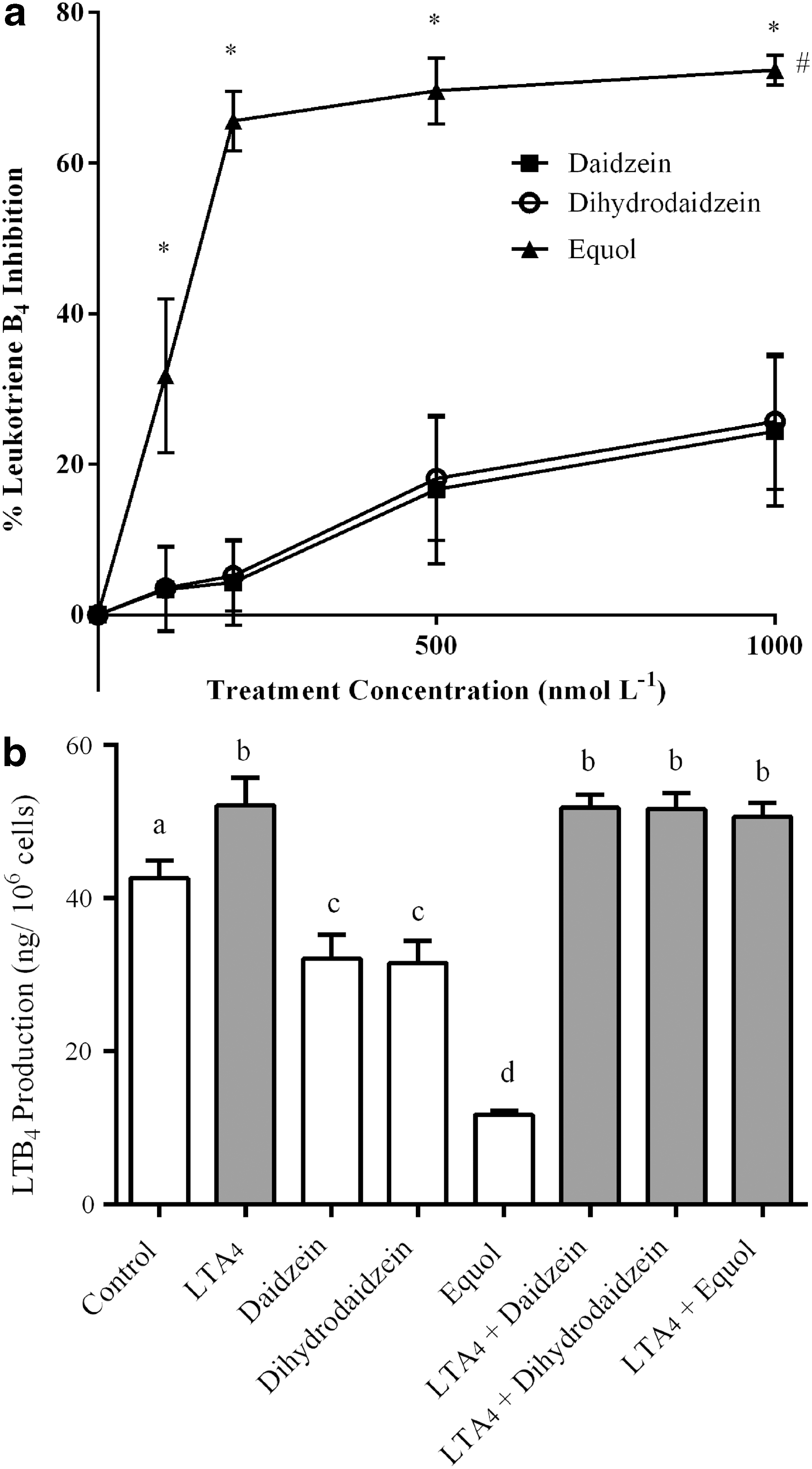
The effects of bioavailability and metabolic transformation on the biological activities of daidzein are relatively unknown. The effects of daidzein, dihydrodaidzein, and equol at physiologically relevant concentrations on the production of leukotriene B4 and F2-isoprostanes, and myeloperoxidase enzyme activity in freshly isolated human neutrophils were examined. Equol, at physiological concentrations, inhibited leukotriene B4 production (IC50–200 nmol/L) in human neutrophils significantly more than daidzein and dihydrodaidzein (IC50 values >1000 nmol/L). Daidzein, dihydrodaidzein, and equol did not affect the enzymatic hydrolysis of leukotriene A4 to leukotriene B4, suggesting that they exerted their inhibitory effects on the 5-lipoxygenase activity. Daidzein (IC50 = 600 nmol/L) protected against free radical peroxidation of arachidonic acid significantly more than did equol and dihydrodaidzein (IC50 values >1000 nmol/L). Equol also showed significantly greater inhibition of myeloperoxidase activity (IC50 = 450 nmol/L) when compared to daidzein and dihydrodaidzein. Equol accumulated within the human neutrophils at significantly higher concentrations than daidzein and dihydrodaidzein after incubation with the three compounds at physiologically relevant concentrations. Neutrophils were able to accumulate intracellular daidzein, dihydrodaidzein, and equol up to a concentration of ∼600 nmol/L. Our results provide in vitro evidence that the biological activities of daidzein are profoundly influenced by bioavailability and metabolic transformation.
Introduction
T
Inflammation 5 and oxidative stress 6 are considered to play key roles in atherosclerosis development and progression. The proinflammatory eicosanoid, leukotriene B4 (LTB4), mediates inflammatory processes in the vascular wall 7 by promoting leukocyte–endothelial interactions and their subsequent migration to the subendothelium. 8 LTB4 and the enzymes responsible for its production (5-lipoxygenase and leukotriene A4 [LTA4] hydrolase) were found to be associated with symptoms of atherosclerotic plaque instability. 9 LTB4 is also involved in other inflammatory diseases, such as rheumatoid arthritis 10 and dengue serotype 2 infection. 11 Oxidative modification of low-density lipoprotein (LDL) has been shown to associate with preclinical atherosclerosis, acute coronary syndrome, and coronary arterial atherosclerosis. 12 The generation of reactive oxygen species by free radical oxidation and myeloperoxidase (MPO) enzyme are known pathways for LDL modification in vivo. 13 To date, limited data are available to evaluate the effects of daidzein, dihydrodaidzein, and equol on the production of LTB4 and reactive oxygen species.
In this study, the abilities of daidzein, dihydrodaidzein, and equol to inhibit proinflammatory LTB4 production from human neutrophils were examined and compared. The antioxidant capacity of daidzein, dihydrodaidzein, and equol to inhibit arachidonic acid (AA) peroxidation, as well as myeloperoxidase activity, was also investigated. We hypothesized that daidzein, dihydrodaidzein, and equol at physiologically relevant concentrations exhibit significant biological activities, and that the metabolic transformation exerts profound effects on their biological activities.
Materials and Methods
Chemicals and materials
Daidzein, equol, AA, leukotriene B4-d4, and LTA4 were purchased from Cayman Chemical (Ann Arbor, MI) and dihydrodaidzein from Santa Cruz (Dallas, TX). Sodium hydrogencarbonate, guaiacol, glucose, dextran 500, hydrogen peroxide (30% by volume), phorbol 12-myristate 13-acetate (PMA), calcium ionophore A23187, MK-886, trypan blue, isooctane, Hank's balanced salt solution (HBSS), phosphate-buffered saline (PBS), and bis(trimethylsilyl)trifluoroacetamide (BSTFA) were purchased from Sigma Aldrich (St. Louis, MO); acetonitrile, ethyl acetate, methanol, ethanol, and sulfuric acid were from Tedia (Fairfield, OH); and Ficoll-Paque was from GE Healthcare (Uppsala, Sweden).
Isolation of peripheral neutrophils from human whole blood
Neutrophils were isolated from the neutrophil/erythrocyte pellet of fresh human whole blood after Ficoll-Paque gradient centrifugation and dextran sedimentation of red cells as previously described. 14 The human whole blood was obtained from the study researchers, as such human ethics approval was not required. Cell viability was assessed using trypan blue exclusion and was typically >98%. The freshly isolated neutrophils were resuspended in HBSS at a concentration of 5 × 10⁶ cells/mL.
Inhibition of leukotriene B4 production
The ability of daidzein, dihydrodaidzein, and equol to inhibit the production of LTB4 from peripheral neutrophils was determined. In brief, the cell suspension (5 × 10⁶ cells/mL in HBSS, 1 mL) was incubated with daidzein, dihydrodaidzein, or equol (final concentrations, 0, 100, 200, 500, and 1000 nmol/L) and AA (final concentration, 10 μmol/L) at 37°C for 5 min before 5-lipoxygenase stimulation. AA, daidzein, dihydrodaidzein, and equol were added using ethanol as a vehicle. The cells were stimulated with calcium ionophore A23187 (final concentration, 2.5 mg/mL) at 37°C for 15 min. Untreated cells with AA in ethanol vehicle were used as positive controls, while untreated cells incubated with the leukotriene biosynthesis inhibitor MK886 (300 nmol L−1) in ethanol vehicle served as the negative controls. 15 In another set of experiments designed to examine specific inhibition of LTA4 hydrolase, cells incubated with LTA4 (final concentration, 15 μmol/L) only or LTA4 (final concentration, 15 μmol/L) and each test compound (daidzein, dihydrodaidzein, or equol, final concentration, 1000 nmol/L) were stimulated with calcium ionophore as above. The supernatants from the cell suspensions were collected and stored at −80°C before LTB4 extraction and analysis. The release of LTB4 from stimulated neutrophils was measured by stable isotope-labeled gas chromatography–mass spectrometry (GC-MS). 14
Inhibition of functional myeloperoxidase activity
To test the effect of daidzein, dihydrodaidzein, and equol on MPO activity in peripheral neutrophils, freshly isolated cells (5 × 10⁶ cells/mL in HBSS, 1 mL) were incubated with the test compounds (final concentrations 0, 100, 200, 500, and 1000 nmol/L) for 5 min at 37°C before the incubate was removed. The neutrophils were resuspended on fresh HBSS and lysed by sonication. The functional MPO activity was determined by measuring its catalytic action on the oxidation of guaiacol in the presence of hydrogen peroxide as described previously. 16
Inhibition of AA peroxidation
The ability of daidzein, dihydrodaidzein, and equol to scavenge free radicals was examined by measuring the inhibition of F2-isoprostane (stable marker of AA oxidation) formation in peripheral neutrophils. In brief, the freshly isolated neutrophils (5 × 10⁶ cells/mL in HBSS, 1 mL) were incubated with daidzein, dihydrodaidzein, or equol (final concentrations 0, 100, 200, 500, and 1000 nmol/L) and AA (final concentration, 10 μmol/L) at 37°C for 5 min before stimulation. AA, daidzein, dihydrodaidzein, and equol were added using ethanol as the vehicle. The cells were stimulated with PMA (final concentration, 200 nmol/L) at 37°C for 15 min. AA incubated with PMA-activated cells was used as a positive control, whereas AA incubated with untreated cells without PMA activation served as a negative control. The supernatant from the cell suspension was collected and stored at −80°C before F2-isoprostane extraction and analysis. F2-isoprostanes were quantitated using stable isotope-labeled GC-MS. 17
Intracellular uptake of daidzein and equol
Freshly isolated neutrophils suspended in HBSS were incubated with daidzein, dihydrodaidzein, or equol (final concentrations 0, 100, 200, 500, and 1000 nmol/L) at 37°C for 5 min. The cell pellet, obtained after centrifugation at 2000 g for 5 min at 4°C, was washed once with HBSS and lysed in PBS (1 mL) by sonication. The supernatant was collected and stored at −80°C before GC-MS analysis. A GC-MS assay simultaneously measured the intracellular amount of daidzein, dihydrodaidzein, and equol. In brief, the supernatant was extracted with equal volume of ethyl acetate. The organic extract was dried under nitrogen, and the dried residue was derivatized with BSTFA for 30 min at 45°C. The derivatized mixture was dried under nitrogen and reconstituted in isooctane (20 μL) before injecting into the GC-MS. The derivatized isoflavones were measured using the Hewlett Packard 6890 Series GC system coupled to the Agilent 5973 mass spectrometer with chemical ionization. The daidzein, dihydrodaidzein, and equol were monitored at m/z 398, 400, and 386, respectively.
Statistical analysis
Statistical analysis of results (n = 5 independent experiments using different batches of freshly isolated human neutrophils) was performed using SPSS version 22.0 (SPSS, Inc., Chicago, IL). One-way ANOVA and Bonferroni post hoc analysis were performed on specific concentration points and on the area under the curve in the concentration–response results. The results analyzed were considered significantly different if P < .05 based on 95% confidence interval. Error bars in all of the figures were presented as plus or minus standard deviations.
Results
Inhibition of 5-lipoxygenase activity
The inhibitory activity against proinflammatory LTB4 production was expressed as the percentage reduction in LTB4 formation by the peripheral neutrophils compared to the untreated positive controls. None of the negative controls (MK886-treated) showed measurable LTB4 (data not shown). Daidzein, dihydrodaidzein, and equol exhibited dose-dependent inhibitory activities on LTB4 production (Fig. 1a). Equol (IC50–200 nmol/L) inhibited LTB4 production to a significant extent than daidzein and dihydrodaidzein (P < .001 at each tested concentration and by comparing the area under the curves using ANOVA, Fig. 1a). Daidzein and dihydrodaidzein showed only a modest inhibitory activity (<20% inhibition) up to a concentration of 1 μmol/L (Fig. 1a). Peripheral neutrophils produced significantly higher amounts of LTB4 after the addition of LTA4, and this was not affected by the presence or absence of daidzein, dihydrodaidzein, or equol compared to the positive control (without LTA4, daidzein, dihydrodaidzein, or equol, Fig. 1b). This result shows that daidzein, dihydrodaidzein, and equol do not exert their inhibitory effects on the enzymatic hydrolysis of LTA4 to LTB4.
Inhibition of myeloperoxidase activity
The effects of daidzein, dihydrodaidzein, and equol on functional MPO enzyme activity were compared to untreated positive controls. Dose-dependent inhibition of the MPO activity was observed for daidzein (IC50 > 1 μmol/L), dihydrodaidzein (IC50 = 700 nmol/L), and equol (IC50 = 450 nmol/L) (Fig. 2a). Among the three tested compounds, daidzein was least effective at suppressing the MPO enzyme activity (P < .05 using ANOVA of the area under dose–response curve and at tested concentrations >500 nmol/L versus dihydrodaidzein and equol, Fig. 2a). Dihydrodaidzein and equol inhibited the MPO activity to similar extents (Fig. 2a).
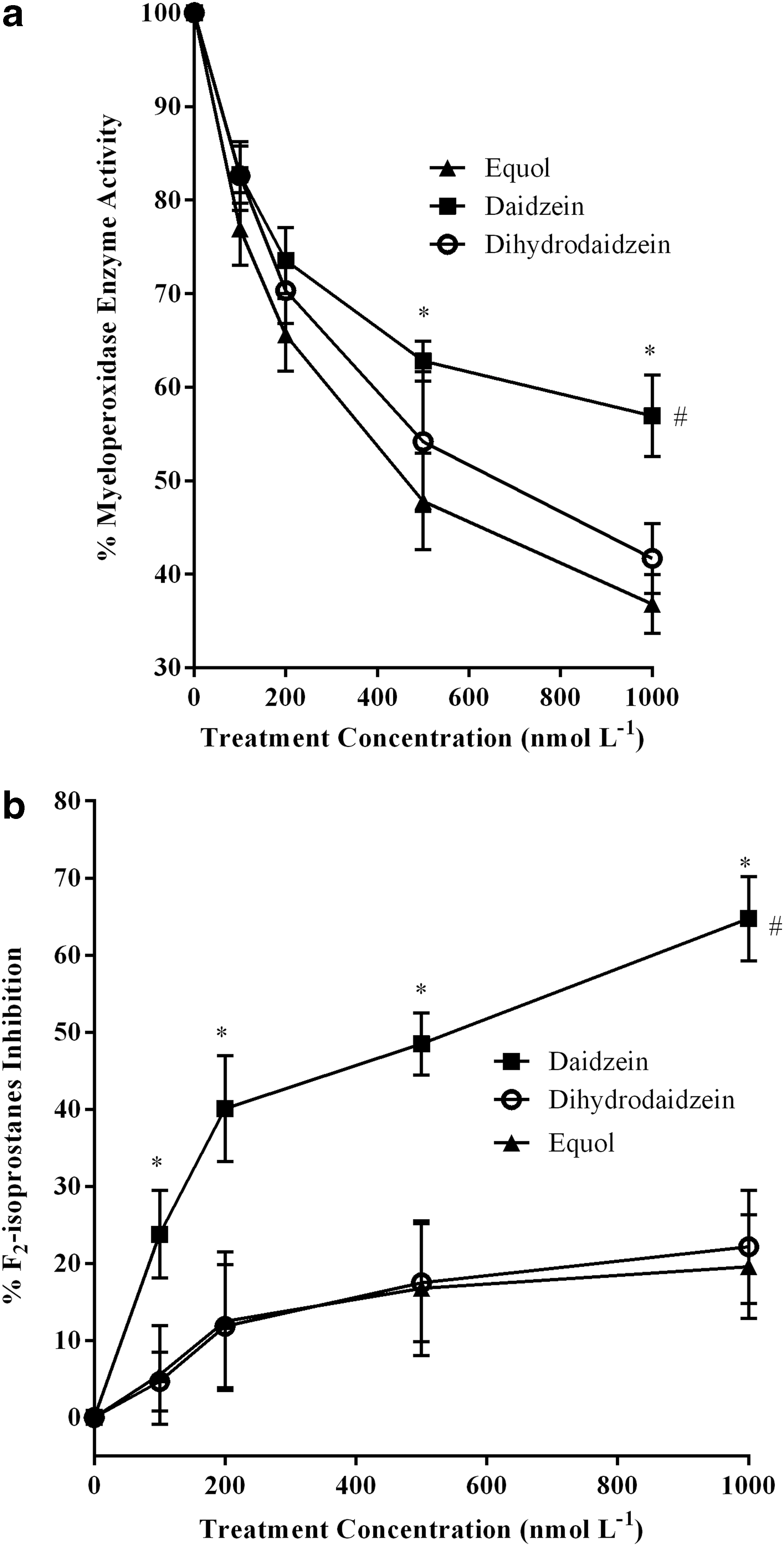
Dose-dependent inhibition of
Inhibition of AA peroxidation
The ability of daidzein, dihydrodaidzein, and equol to inhibit free radical oxidation of AA was expressed as the percentage reduction in F2-isoprostane production from peripheral neutrophils compared to the untreated positive controls. Daidzein, dihydrodaidzein, and equol exhibited dose-dependent protection against F2-isoprostane formation with IC50 values of 600 nmol/L, >1 μmol/L, and >1 μmol/L, respectively (Fig. 2b). Equol and dihydrodaidzein showed significantly lower activities than daidzein over the tested concentration range (100–1000 nmol/L) (P < .05 at each tested concentration and by comparing the area under the curves using ANOVA, Fig. 2b).
Intracellular uptake of daidzein and equol
The intracellular amounts of daidzein, dihydrodaidzein, and equol were expressed as their concentrations based on the published average cell volume of human peripheral neutrophils (330 fL/cell). 18 Daidzein, dihydrodaidzein, and equol showed plateauing of intracellular concentrations (∼600 nmol/L) when incubated with the respective compounds above 500 nmol/L treatment concentrations. Equol accumulated within the cellular matrices at significantly higher concentrations than daidzein and dihydrodaidzein (P < .05 using ANOVA of the area under dose–response curve, Fig. 3). Cellular uptake between daidzein and dihydrodaidzein did not differ significantly (Fig. 3).
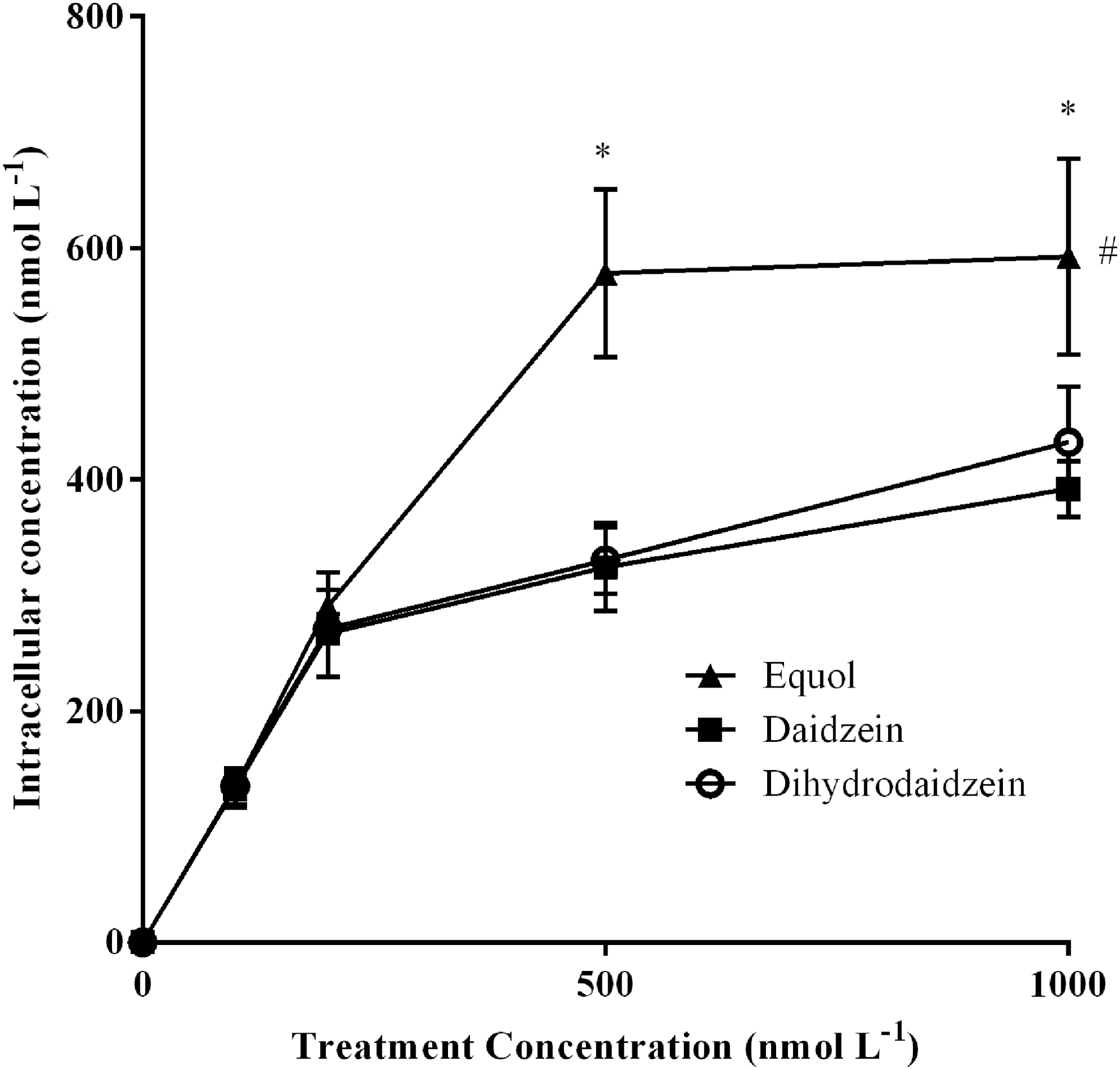
Intracellular concentrations of diadzein (■), dihydrodaidzein (◯), and equol (▲) in human neutrophils after incubation at concentrations up to 1 μmol L−1 (n = 5). *P < .05 for equol compared to daidzein and dihydrodaidzein at different concentrations (ANOVA). #P < .05 for equol compared to daidzein and dihydrodaidzein using AUC (ANOVA).
Discussion
Our results demonstrated that equol at physiologically achievable concentrations (100–500 nmol/L) inhibited LTB4 formation in human peripheral neutrophils through the inhibition of 5-lipoxygenase, not LTA4 hydrolase. However, its precursors, daidzein and dihydrodaidzein, showed a significantly diminished activity. Specific isoflavones have been reported to exert anti-inflammatory property in vitro. Genistein selectively inhibited the production of interleukin-6, interleukin-8, and monocyte chemoattract protein-1 in human inflamed intestinal epithelial cells by acting at the posttranscriptional level. 19 Genistein and equol, but not daidzein (at dosing concentration of 10 μmol/L), were effective in inhibiting nitric oxide and prostaglandin E2 production by RAW 264.7 macrophages. 20 Equol inhibited nitric oxide production and inducible nitric oxide synthase gene expression by reducing the p65 translocation from the cytosol to nucleus in the NFκB signaling pathway. 21 Recently, equol (10 μmol/L) was shown to inhibit collagen-induced platelet aggregation and exhibit thromboxane A2 receptor antagonistic activity in vitro. 22 Stimulated neutrophil LTB4 synthesis has been suggested to be a useful marker for assessing the leukotriene pathway in humans. 23 The observed inhibition of 5-lipoxygenase and its subsequent LTB4 formation in our study become even more significant in view of the roles of 5-lipoxygenase and LTB4 in the pathogenesis of cardiovascular diseases, such as atherosclerosis. 24,25
Using an established, stable marker of free radical-mediated oxidative stress—F2-isoprostanes, 26 daidzein was shown to inhibit free radical oxidation to a greater extent than dihydrodaidzein and equol. Equol and dihydrodaidzein, on the contrary, exerted significantly more potent MPO enzyme inhibitory activities than daidzein. MPO has been suggested to be a physiological catalyst for in vivo LDL modification in studies using monocytes and neutrophils isolated from humans. 27 The antioxidant properties of daidzein, dihydrodaidzein, and equol are well documented in many in vitro studies. Some of these in vitro results may not be physiologically relevant considering that the dosages used in the experiments exceeded (in some studies, by more than 100-folds) the reported physiologically achievable levels. 28 –30 Only a few studies have examined the antioxidant properties of daidzein and its metabolites at physiologically relevant concentrations. Physiologically relevant levels of equol (0.5 μmol/L) protected bovine aortic endothelial cells against hydrogen peroxide-induced apoptotic cell death. 31 Similar dose of equol increased nitric oxide availability in vitro by inhibiting superoxide production. 32 None of the in vitro works, thus far, has examined the mechanisms, by which daidzein, dihydrodaidzein, and equol exert their antioxidant activities. Our study demonstrated that daidzein, dihydrodaidzein, and equol, when present at physiologically relevant concentrations, exerted antioxidant protection through different mechanisms, such as free-radical and MPO-catalyzed pathways. Daidzein is more effective at scavenging free radicals, while equol shows stronger MPO inhibition. Our findings are especially important when the oxidative modification of lipids, through enzymatic and nonenzymatic processes, precedes the pathogenesis of atherosclerosis.
In our study, daidzein, dihydrodaidzein, and equol were able to accumulate within the cellular matrices by ∼1.5-folds, and their cellular uptake did not differ when the cells were exposed to a medium containing these compounds at physiologically achievable concentrations up to 200 nmol/L. This is consistent with recent pharmacological studies that reported the comparative bioavailability of daidzein and equol. Equol was rapidly absorbed and reached peak plasma concentrations after 1–3 h, depending on whether it was taken with or without a meal. 4,33 Daidzein and equol undergo minimal biotransformation in humans and avoid phase II metabolism by conjugation to glucuronic acid and to a minor extent sulfuric acid. 34 Equol (49.7%) had been reported to circulate in free form, which is significantly higher than daidzein (18.7% free). 35 The significantly higher uptake of equol relative to daidzein and dihydrodaidzein, when incubated at higher treatment concentrations, may be attributed to the reduced polarity of the equol moiety due to the absence of the keto group. The uses of unconjugated daidzein, dihydrodaidzein, and equol at physiologically achievable concentrations in our experiments function to mimic the in vivo conditions to better examine their biological activities.
Daidzein, dihydrodaidzein, and equol exerted distinct 5-lipoxygenase and MPO enzyme inhibitions and free radical scavenging activities at physiologically achievable concentrations (100–500 nmol/L). Our results suggested that metabolic transformation of daidzein has profound effects on its biological activity and also add evidence to support the cardioprotective benefits of daidzein, especially in equol producers. As for equol nonproducers, dietary supplementation of exogenous equol may add to the health benefits of soy consumption. Well-designed, randomized placebo-controlled intervention trials should be conducted to verify the anti-inflammatory and antioxidant properties of daidzein and equol in vivo.
Footnotes
Acknowledgment
The authors thank the support of Nanyang Polytechnic Capability Development Project Platform Scheme.
Authors’ Contribution
S.Y.T. interpreted the results and drafted the manuscript. X.Y.T. performed the experiments and interpreted the results. Y.M.T. performed the experiments and interpreted the results. B.Y.Y. performed the experiments and interpreted the results. W.M.L. designed the study, performed the experiments, interpreted the results, and reviewed the manuscript.
Author Disclosure Statement
No competing financial interests exist.