




Abstract
The effect of blue maize extract in factors related to metabolic syndrome (MS) in Wistar rats was investigated. Total polyphenols, monomeric anthocyanins, and antioxidant activity were analyzed in blue maize. MS was induced in Wistar rats fed with high-sucrose (HS) diet for 12 weeks. During a period of 4 weeks, blue maize extract was administrated to HS groups fed with high-sucrose and high-cholesterol–high-sucrose (HS+C) diets. In the blue maize extract administered by orogastric cannulation, the levels of total polyphenols and anthocyanins were 9.97 and 2.92 mg/kg of weight, respectively. HS diet administered during a period of 12 weeks increased significantly systolic blood pressure, serum triglycerides, and decreased high-density lipoprotein cholesterol (HDL-C), alterations related to the MS. Abdominal adipose tissue was only increased in the HS + C group. Blue maize extract administration enhanced HDL-C and decreased systolic blood pressure, serum triglycerides, total cholesterol, and epididymal adipose tissue weight. The blue maize may represent a promising nutraceutical option for the treatment of MS.
Introduction
M
Currently, a serious public health problem is the metabolic syndrome (MS), the group of risk factors for type 2 diabetes mellitus and cardiovascular disease, characterized by the presence of insulin resistance and hyperinsulinemia, associated with disruption of metabolism of o-carbohydrates and lipids, high arterial pressure, obesity, and atherosclerosis. 8 During the last few years, a direct relationship has been shown between high carbohydrate consumption, particularly of fructose and sucrose, and MS, which has been proved in studies performed on humans and animals. 9,10 Recent studies indicate that high ingestion of sucrose and fat is related to the expression of genes involved in the accumulation of lipids. 11 Considering this body of research, the purpose of this study was to evaluate the effect of blue maize extract on alterations related to induced MS in Wistar rats.
Materials and Methods
Blue maize extract
Sample of blue maize of the Mixteco race was donated by the Interdisciplinary Center for Research on Integral Regional Development (CIDIIR, its Spanish acronym) of the National Polytechnic Institute, Unit Oaxaca, Mexico. For analysis, the maize grains were ground and extracted with acidified ethanol (80% ethanol containing 4% 1 M citric acid) (1:1 w/v). For in vivo analysis, ethanol was removed by evaporation under reduced pressure at relatively low temperatures (<30°C). Samples were placed in amber jars and kept refrigerated in a nitrogen atmosphere. The total polyphenols, monomeric anthocyanin content, and antioxidant activity of blue maize are shown in Table 1.
Values are mean ± SD. The total phenolic content was expressed as milligram equivalents of gallic acid (EAG)/100 g. The monomeric anthocyanin content was expressed as mg of cyanidin-3-glucoside (C3G)/100 g sample. The DPPH assay was expressed as μmol equivalents of trolox (ET)/g of sample.
SD, standard deviation.
Experimental model
Thirty-four male Wistar rats were individually housed and maintained in a 12-h light–12-h dark cycle at 25°C. Animal maintenance was in accordance with the National Institutes of Health Guide for the Care and Use of Laboratory Animals (National research Council R. 1985). Rat care and experimental protocol were approved by the institution's Scientific, Academic, and Ethics Board. Animals were acquired from Harlan Teklad, Inc., USA. Weaning animals (21 days of age) were divided in two groups: the control group (C), which received a chow standard diet (Rodent Diet 2018S Harlan Teklad) consisting of raw protein (minimum) 18.0%, raw fat (minimum) 5.0%, raw fiber (maximum) 5.0%, and water; and the experimental group (high-sucrose; HS), which received the chow diet plus 30% sucrose in drinking water, ad libitum, during a period of 12 weeks. 12 Before the beginning of the experimental diet period, animals were checked for serum glucose, triglycerides, total cholesterol, and high-density lipoprotein cholesterol. Body weight and systolic blood pressure as described below were also measured.
Experimental diets
Animals presenting serum elevation of glucose, triglyceride, and cholesterol levels after being under high-sucrose diet for 12 weeks (rats) were divided into four groups receiving one of the following diets for 4 weeks (Fig. 1): MS rats were divided into four groups: MS (HS, n = 7), which received the standard diet plus 30% sucrose in drinking water; MS and extract (HS+E, n = 7) that received a high-sucrose diet plus 2 mL of blue maize extract; MS cholesterol (HS+C, n = 6) that received high-sucrose diet plus 1 g of cholesterol; and MS cholesterol plus extract (HS+C+E, n = 6) that received high-sucrose diet plus 1 g of cholesterol and 2 mL of extract. These four groups received drinking water with 30% sucrose. The control group (C, n = 8) received a standard diet and drinking water without sucrose.
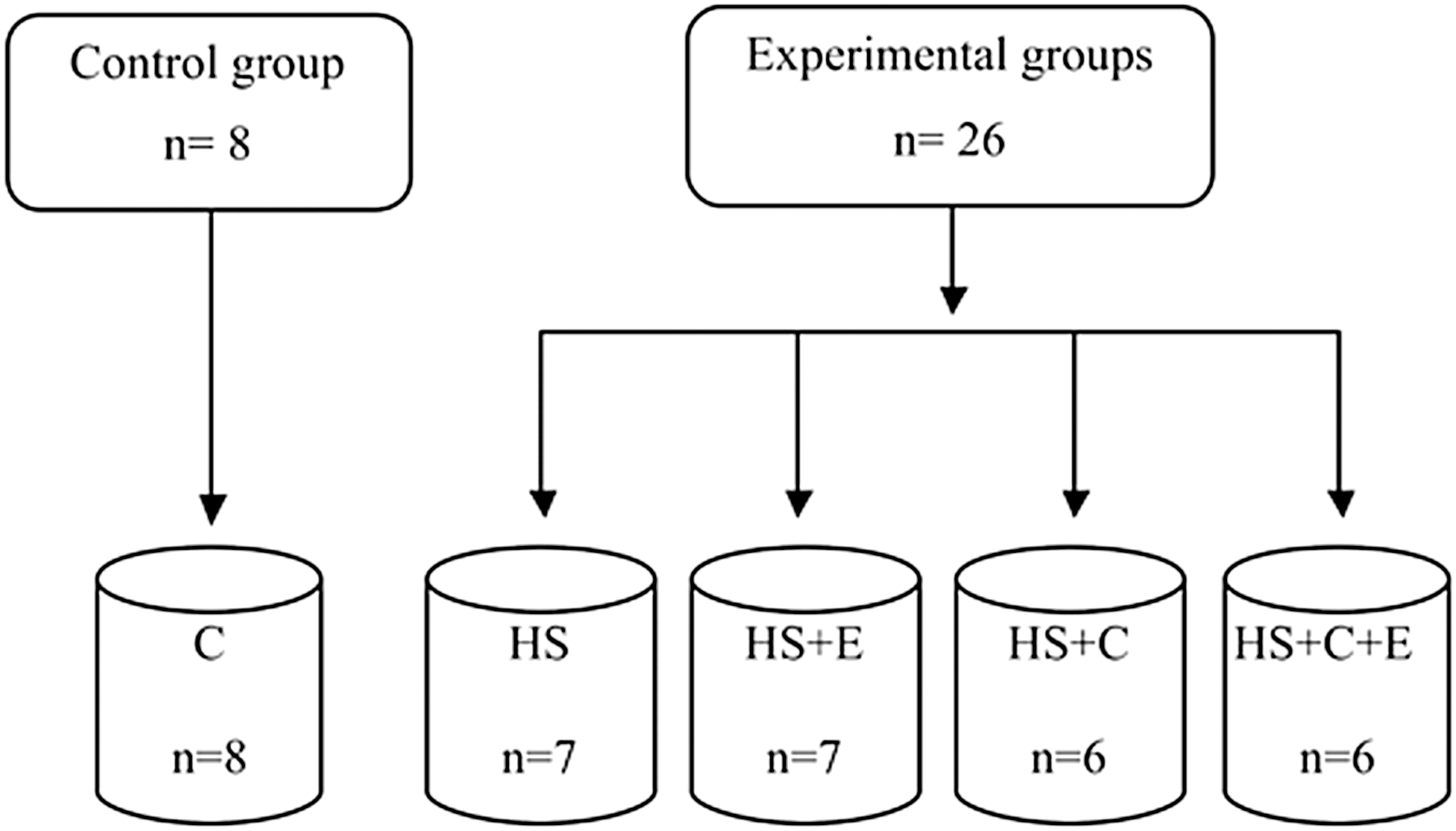
Dietary protocol. Experimental model: Control (C): chow diet plus plain water; Experimental groups: chow diet plus 30% sucrose in drinking water. Experimental diets: HS, chow diet plus 30% sucrose in drinking water; HS+E, blue maize extract diet plus 30% sucrose in drinking water; HS+C, cholesterol diet plus 30% sucrose in drinking water; HS+C+E, cholesterol and blue maize extract diet plus 30% sucrose in drinking water. Diets were administered during a period of 4 weeks.
Blue maize extract was administered by orogastric cannulation, which had a concentration of total polyphenols and anthocyanins of 9.97 and 2.92 mg/kg of body weight, respectively. This is equivalent to 67.3% of the daily recommended value of polyphenols (1 g/day) and 100% of the daily recommended ingestion of anthocyanins, (2.5 mg/kg/day). 13,14 At the end of the experimental diet period, body weight and blood pressure were measured. Fasted animals (18 h) were killed. Serum, adipose tissue (mesenteric fat), and organs were obtained, weighted, frozen under liquid nitrogen, and kept at −70°C until analysis.
Blood pressure measurement
Systolic blood pressure was estimated by a tail-cuff method (IITC noninvasive blood pressure system, model 29; Life Science Instruments Woodland Hills, CA) in conscious animals. The reported blood pressure value is the mean of five systolic measurements.
Analytical methods
Serum glucose concentration was measured by the glucose oxidase method. 15 Total cholesterol was measured using an enzymatic assay. 16 Serum high-density lipoprotein (HDL) was determined with phosphotungstic acid in the presence of Mg+. 17 A peroxide-coupled method for the colorimetric determination of serum triglycerides was used. 18
Data analysis
The main effects of supplementation type were tested using one-way ANOVA, followed by Tukey's post hoc tests for multiple mean comparison test. Results are expressed as mean ± standard deviation and the level of significance was set at P < .05.
Results
Experimental model
The model was achieved by administration of 30% sucrose in drinking water in male Wistar rats during a period of 12 weeks. Table 2 shows the values of blood pressure, body weight, and serum concentrations of triglyceride, cholesterol, high-density lipoprotein cholesterol (HDL-C), and glucose in control and high-sucrose groups. HS rats showed a higher systolic blood pressure than control rats (151 ± 1.0 vs. 103 ±3.0 mmHg; P < .05). Significant differences were found in serum triglyceride, HDL-C, and total cholesterol levels (P < .05).
Values are mean ± SD. Different letters mean statistical difference between groups. Statistical significance was determined by ANOVA, followed by Tukey's post hoc multiple mean comparison test. HS, metabolic syndrome diet plus 30% sucrose in drinking water.
HDL-C, high-density lipoprotein cholesterol.
No significant differences were found in body weight among control and HS groups (Table 2). These results were expected and similar to those found in the literature that reported similar increases in body weight after sucrose feeding. 19
Experimental diets
After administration of experimental diets, body weights were analyzed and no significant differences were observed among different groups (Table 3).
Values are mean ± SD. Different letters mean statistical difference between groups. Statistical significance was determined by ANOVA, followed by Tukey's post hoc multiple mean comparison test. HS, metabolic syndrome diet plus 30% sucrose in drinking water; E, blue maize extract; C, cholesterol diet.
A significant increase in liver weight (13%, P < .05) was observed in HS groups when compared with control rats, except for the HS + E group, which showed a significantly lower level in weight in comparison with HS group (13%, P < .05). In contrast, HS + C and HS+C+E liver weight was found higher than in the control group (Table 3). In addition, typical fatty liver was observed in HS + C rats when organs were dissected, but this condition was not found in the HS + E group (Fig. 2). A significant increase was found in abdominal fat weight in the HS + C group compared with the other groups, including control rats. Rats that received the extract (HS + E and HS+C+E) showed significantly lower epididymal fat weight than control, HS, and HS + C groups. On the other side, pericardial fat weight was found augmented in HS rats, HS and HS+C+E rats, while rats that received extract (HS+E) had lower pericardial fat weight (25%, P < .05) (Table 3).
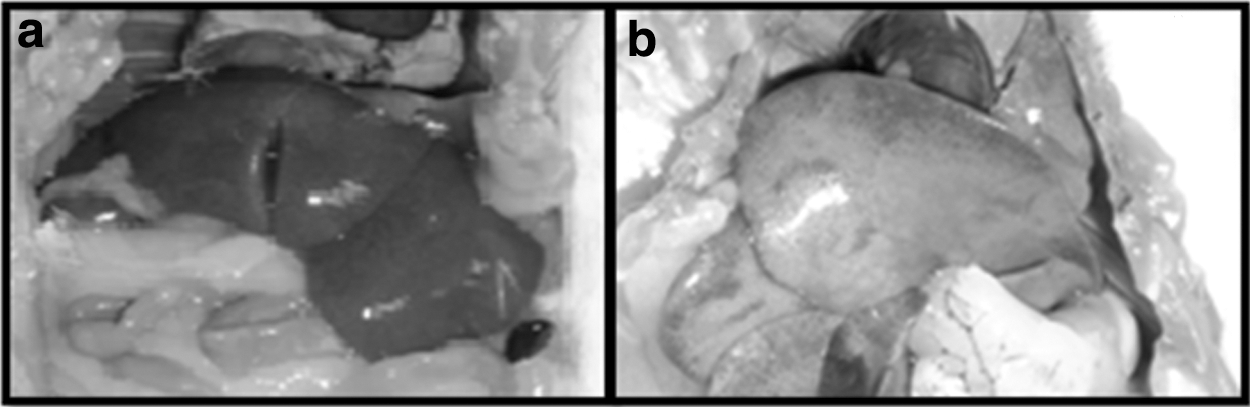
Livers extracted from sacrificed rats after dietary protocol. HS + C group showing the typical appearance of a fatty liver
With respect to systolic blood pressure (Table 4), HS and HS + C groups showed a significant increase in comparison with the control group (57% and 50%, respectively; P < .05), while significantly lower values were observed in rats that received maize extract (HS + E and HS+C+E) when compared with the HS group (31% and 32%, respectively; P < .05), but similar to those found in the control group.
Values are mean ± SD. Different letters mean statistical difference between groups. Statistical significance was determined by ANOVA, followed by Tukey's post hoc multiple mean comparison test. HS, metabolic syndrome diet plus 30% sucrose in drinking water; E, blue maize extract; C, cholesterol diet.
Significant differences in triglycerides, cholesterol total, and HDL-C were found in the HS group compared with the control group (Table 5). Triglyceride levels were lower in the HS + E group (32%, P < .05) compared with HS group, but similar to those found in the control group. Concerning the effect of the maize extract on cholesterol total, at the end of the treatment, its concentration was also found to be lower in the HS + E group (22.7%, P < .05) compared with HS and control groups. When blue maize extract was added to diets (HS + E and HS+C+E), a significant increase in HDL-C concentration was observed when compared with HS rats (20% and 30%, respectively; P < .05). No significant differences were observed in glucose among all groups (Table 5).
Values are mean ± SD. Different letters mean statistical difference between groups. Statistical significance was determined by ANOVA, followed by Tukey's post hoc multiple mean comparison test. HS metabolic syndrome diet plus 30% sucrose in drinking water; E blue maize extract; C cholesterol diet.
Discussion
Several studies have shown that blue maize is a rich source of polyphenols such as anthocyanins. 20,21 Besides contributing to maize color, anthocyanins have a beneficial effect on the prevention of cardiovascular diseases and diabetes, which are related to MS. 22,23 For this reason, we evaluated the potential application of blue maize extract on alterations related to MS.
Among the diverse factors that drive the development of MS are physical inactivity, genetic profile, and a diet with inadequate energy intake. From the original description of MS as the combination of hypertension, hyperglycemia, and gout, the concept has evolved to include obesity, as the excessive accumulation of adipose tissue in the upper body, as the metabolic alteration most frequently related to type II diabetes and cardiovascular disease. In the present study, a diet high in sucrose produced elevated arterial blood pressure, high levels of triglycerides in plasma, and a reduction of HDL-C, which is consistent with what has been established by the NCEP ATP III 24 to diagnose MS. Previous studies have shown that the increase in vivo of triglycerides in blood inhibits the utilization and oxidation of glucose due to the action of insulin in peripheral tissue. The elevation of serum levels of triglycerides is due to the increase of fatty acid reesterification from the hepatic metabolism of sucrose. 25 Likewise, the reduction of HDL-C has been reported in humans with MS. 26
In addition to a diet high in carbohydrates, it is well known that high consumption of cholesterol in the diet is also a determinant of the prevalence of MS. When cholesterol was administered for 1 month in conjunction with a diet high in sucrose, an increase in the content of total cholesterol was observed, as was a decrease in HDL-C in comparison with the HS group, although the changes were not statistically significant. The former could be attributed to the cholesterol administered as it is well known that it influences metabolism of cholesterol in rats. Similarly, it has been reported that a diet high in refined sugar and cholesterol can favor metabolic alterations even more, such as was observed in the HS + C group, in which the levels of glucose in blood rose in comparison with the HS group.
In the present study, a high-sucrose and cholesterol diet allowed the presence of nonalcoholic fatty liver to be visibly observed (Fig. 2). Various reports indicate that obesity and dyslipidemia are risk factors for this pathology, which was not detected when maize extract was administered. Recent studies in consumption of orange juice rich in anthocyanins indicate that it can suppress the expression of the liver X receptor-α and its target gene fatty acid synthase and restore liver glycerol-3-phosphate acyltransferase-1 activity. 27
Another factor that is associated with MS is visceral adipose tissue. The deep abdominal fat is not only a deposit for the excess of calories but also can produce free fatty acids and inflammatory factors related to a reduction of the action of insulin, alterations in the management of fats, and arterial damage, although there are also studies that find the increase in abdominal fat was not accompanied by the increase in body fat. 26,28 In the current investigation, the results revealed that a diet high in sucrose and cholesterol produced a greater content of abdominal fat in comparison with the group given only sucrose and the control group; however, it was markedly reduced after administration of blue maize extract. Recently, it has been reported that a diet high in sucrose and fat rapidly increases white adipose tissue due to the expression of genes in the accumulation of lipids. 11 Previous studies report that anthocyanins prevent the accumulation of abdominal fat. 4,29
As far as the effect of blue maize extract on alterations related to MS such as arterial hypertension—one of the biggest public health problems due to its prevalence and association with cardiovascular problems—blue maize extract from Mixteco race was associated with a reduction of arterial pressure. The results of this research are in agreement with studies realized about antihypertensive activity of purple corn in rats with induced arterial hypertension. 5 The possible mechanisms responsible for the antihypertensive effect of blue maize extract are unclear, but could be due to the vasoprotective effect of anthocyanins since they confer relaxing activity in isolated rings of the aorta, an effect compatible with the relaxing vascular effect that several antihypertensive compounds provoke. 30
Dyslipidemia is the alteration in lipid levels and in the metabolic syndrome is characterized by the elevation of triglycerides and very low-density lipoproteins (VLDLs), drop in lipoproteins of high (HDL-C) and low (LDL) density, small and dense. 31 In the present study, the administration of blue maize extract revealed as evidence a significant reduction in the levels of TGs in the groups, HS + E and HS+C+E, while a decrease of total cholesterol only was observed in the HS + E group. Many studies have shown that anthocyanins possess properties that impact the reduction of lipid levels. For example, the supplementation of anthocyanins of purple maize to rats with a diet high in fat suppressed enzyme mRNA levels involved in the synthesis of triglycerides. 4 Similar results have been reported in black soy extracts administered in rats with a high-fat diet, which reduced triglycerides and total cholesterol and favored the increase of high-density lipoproteins. 32
Conclusion
In the present study, our investigation group has shown that administration of the blue maize extract of the Mixteco race has a beneficial effect on some alterations related to MS such as hypertension, hyperlipidemia, and abdominal fat. It may be considered as a nutritional approach for the prevention and treatment of MS.
Footnotes
Acknowledgment
The authors gratefully acknowledge the Sistema Nacional de Recursos Fitogenéticos para la Agricultura y la Alimentación (SINAREFI) (BEI-MAI-10-32) for the financial support provided for completion of this research project.
Author Disclosure Statement
No competing financial interests exist.