




Abstract
Substantial characteristics of autism are cognitive and psychophysical disorders. Etiopathogenetic factors are thought to be responsible for development of autism in children with genetic predisposition as well as have their effect on the severity of the disorders. The main problem of early identification of patients affected by autism spectrum disorder is that there are no clear diagnostic criteria. The aim of our study was assessment of hair magnesium and serum homocysteine concentrations in children with autism. The presented work is a continuation of previous study in which we investigated the influence of disturbances in magnesium and homocysteine levels in children with autism, performed on a new, larger group of patients. One hundred and forty children had hair magnesium levels analyzed, as well as blood serum levels of homocysteine and magnesium. Hair magnesium analysis was performed using a flame atomic absorption spectrometer, blood serum homocysteine determination was performed using a radioimmunological method, and blood serum magnesium level was determined using a biochemical method. Our research showed normal magnesium blood levels and significantly high homocysteine levels and very low hair magnesium levels. Low concentration of hair magnesium progresses with age. Our hypothesis is that magnesium deficiency, as a relevant epigenetic factor, might be decreasing methylation of homocysteine, therefore decreasing genome transcription and lowering the synaptic plasticity. We suggest that analysis of hair magnesium and serum homocysteine levels might be useful in identification of children with autism spectrum disorder, as well as control of its treatment. Obtained results and performed analysis might therefore justify supplementation of magnesium among children with autism.
Introduction
R
Environmental factors modify the DNA expression in mammals. 1 Methyl radicals, acetyl groups, and other inoculators lay, depending on the environment, amid human DNA sequences, influencing the amount of coding RNA and protein production of genes. Similar influence on coding process has histone spools, entwined around the DNA, and many variants of noncoding RNA, leading to reduction of gene activity. 2 Individual phenotype is created by even a minimal change in gene expression. 3,4
Magnesium is necessary in synthesis and decomposition of high-energy molecules, it activates various enzymes, and is an elementary regulator of ATP- dependent reactions. Regeneration of methionine from homocysteine, apart from the energy, requires the presence of folic acid and group B vitamins. 5,6
Hypomethylation of methionine, typical for children affected by autism, leads to inactivation of transcription and lower synaptic plasticity, especially in the hippocampus region, blood levels of homocysteine are then higher. 7,8
High concentration of homocysteine is an essential factor of neurodegenerative disorders, 9 because its excess disturbs synthesis of neurotransmitters such as dopamine, noradrenaline, and serotonin. 10 –12
The aim of our study was assessment of hair magnesium and serum homocysteine concentrations in children with autism.
Materials and Methods
Children with autism spectrum disorders were identified by general pediatric, neurological, psychiatric, psychological, and sociological examinations. Inclusion criteria for the study group were as follows: clinical diagnosis of autism spectrum disorder and age between 2 and 18 years; exclusion criteria were as follows: cerebral palsy, epilepsy, Down's syndrome, and other diseases affecting the psychomotor development in early childhood.
Our analysis was performed on 140 children (53 girls and 87 boys) with autism. At the time of the study, children showed no signs of infection. The oldest patient was 18 years, the youngest 2.5 years, the average age was 9.5 years. 49% of the patients from the group lived in the rural area and 51% in the urban area; all children were of Caucasian race.
Hair magnesium analysis was performed in the Department of Biochemistry and Spectroscopy of the Military University of Technology in Warsaw. Collected hair samples measured ∼3–4 cm and weighed 0.2 g (±0.02 g). Test samples of hair were then washed via shaking in detergent solution (shampoo) with deionized water for 15 min. Afterward, the detergent was carefully rinsed with deionized water, and additionally, the samples were shaken in acetone for 5 min. Cleared hair was then dried to dry matter in a dryer (in temperature of ∼50°C). The samples were put into a desiccator for 24 h.
These samples were then mineralized with the mixture of 65% ultraclean acids: HNO3 and HCIO4 (in the proportion of 3:1 v/v), and then diluted with deionized water (0,06 μS·cm−1) to constant volume (25 mL).
Concentration of Mg was estimated by the means of atom absorption spectrophotometer using flame technique called F-AAS, spectrophotometer produced by Perkin Elmer (model 2100 with flame atomizer and hollow cathode lamps made by Perkin Elmer). The measurement was carried out in the flame of C2H2 with the use of air as oxidizing gas. The proportion of gases was 2.5/8, and excitation was performed at resonant wavelength λ = 285.2 nm for Mg. The measurement was carried out in a C2H2 flame with air as an oxidizing gas. The gas ratio was 2.5/8, and the excitation was performed at the resonance wavelength λ = 213.9 nm.
Blood serum homocysteine determination was performed using a radioimmunological method. Blood serum magnesium level was determined using a biochemical method. Both analyses were performed in postprandial serum.
Results and Discussion
In all analyzed cases the blood serum magnesium level remained within the normal range. The measured range was from 0.9 to 1.3 mmol/L (normal range: 0.8–1.5 mmol/L), mean value: 1.1 mmol/L.
As a point of reference was a group of 7400 children and young adults who had five basic bioelements and toxic metals determined by hair analysis in a study that can be treated as referential norms in the hair of Polish population, said study became a turning point in the hair analysis of ill children. 13,14 Our study only included the analysis of hair and serum magnesium and serum homocysteine concentrations, the analysis of other bioelements in children with autism to follow in further studies.
Obtained results were significantly lower than anticipated norms, and deficiency progresses with age (Fig. 1).
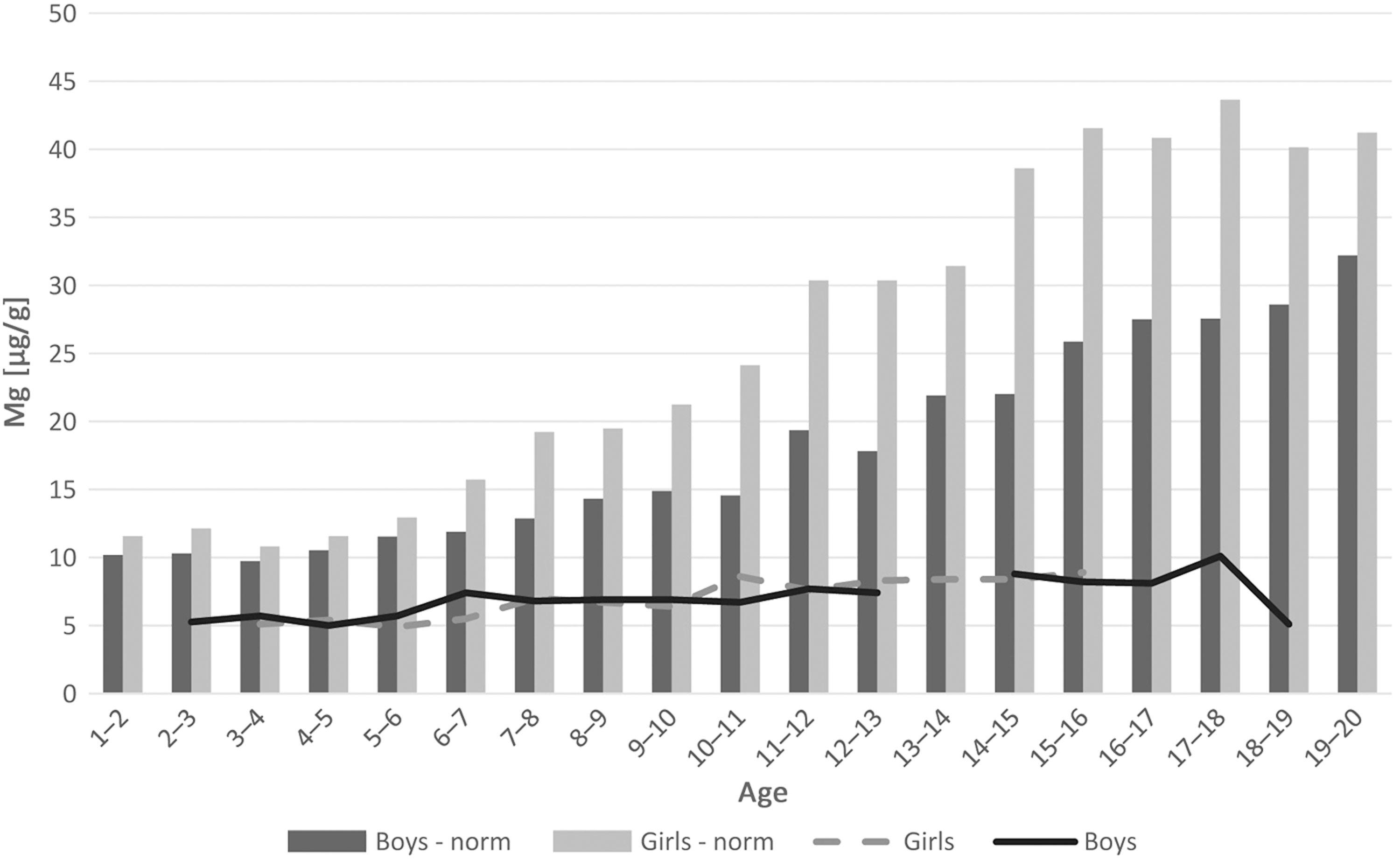
Serum magnesium levels in children with autism spectrum disorders.
Table 1. The overall study results.
Serum homocysteine analysis in children with autism showed statistically high levels of this sulfur-containing amino acid (Fig. 2.).
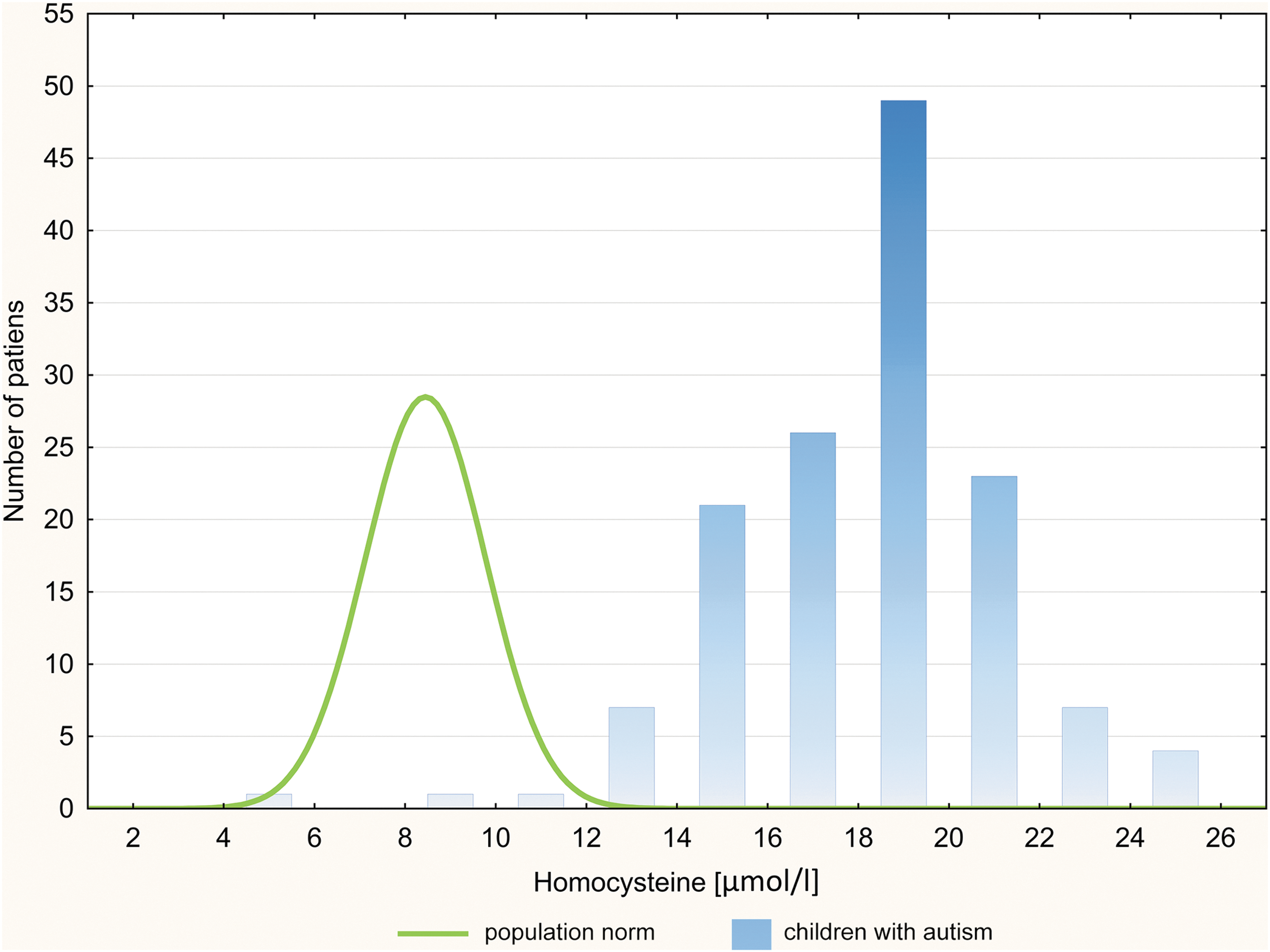
Serum homocysteine analysis in children with autism spectrum disorders.
Statistical analysis was performed using Statistica®12.0 software.
The results of our study showed low magnesium levels in the hair of children with autism spectrum disorder, which could be the reason for lower efficiency and function of ATP/ADP system and reduced methylation of homocysteine. Previous research 15 and the study that we have performed in the past on different groups of patients 16 confirm an increased homocysteine level shown in most analyzed children with autism, which suggests that assessment of hair magnesium level could be used as one of the diagnostic criteria for identification of this disease. 17
High levels of homocysteine and oxidative stress are generally associated with neuropsychiatric disorders. Previous research 18 compared the level of homocysteine and other biomarkers in children with autism to corresponding values in age-matched healthy children. The study proved that children with autism have significantly higher homocysteine level, which negatively correlates with glutathione peroxidase activity and suboptimal concentration of vitamin B12.
It seems that reduction of homocysteine could be obtained by raising the concentration of methylating factors, however, attempted supplementation with vitamin B6, B12, and folic acid had no significant result in adults. 9,19 However, there was another study, performed by James, 15 that assessed the concentrations of metabolites in the methionine transmethylation and transsulfuration pathways in children affected with autism, also, basing on the abnormal metabolic profile, introduced interventional trial with folic acid, betaine, and methylcobalamin among affected children. The researchers found that there is a disorder in concentration of these metabolites and it is consistent with impaired ability for methylation and increased oxidative stress. In their trial, the introduction of supplementation was effective in normalizing the metabolic imbalance in the autistic children.
Unfortunately, in our study we did not analyze the concentration of vitamins from group B.
As Hartzell and Seneff 20 show, the role of homocysteine is yet to be discovered, because it has been reported to be increased in autism 18 as well as decreased. 21 A decrease in homocysteine might reflect deficiency in sulfur-containing amino acids, whereas an increase could reflect dysfunction in the pathway that regenerates methionine from homocysteine, which depends on both folic acid and cobalamin (vitamin B12) as cofactors. Both free sulfate and reduced glutathione, which are depleted in autism, are important for detoxification, and lower levels of these metabolites are associated with oxidative stress, which could explain why inflammation biomarkers and antioxidant biomarkers tend to be higher in association with autism. Higher exposure to oxidative stress and lower ability to methylation could lead to the development and clinical manifestation of autism.
Different research 21 suggests possible interaction between the methionine cycle-transsulfuration and androgen pathways in some children with autism spectrum disorders. Unfortunately, the research was performed only on a group of 16 autistic children at the prepubertal age and there are no other researches in the subject.
The results obtained in our research allow us to hypothesize that magnesium deficiency lowers the ATP levels, decreases methylation of homocysteine, therefore decreasing genome transcription and lowering the synaptic plasticity (Fig. 3). However, this hypothesis is yet to be proved in further studies and experiments.
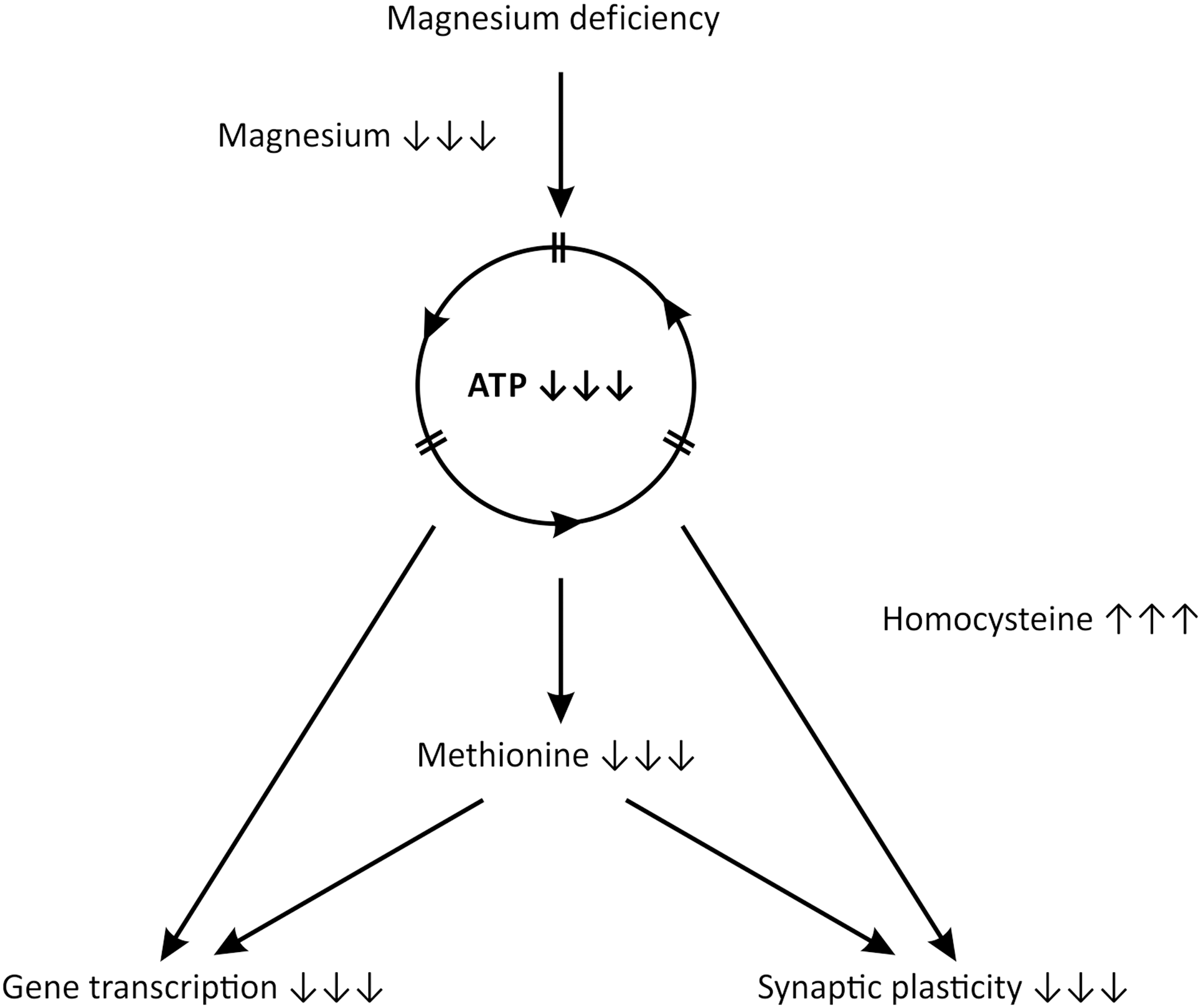
Magnesium deficiency hypothesis.
According to Marlowe, 22 low concentration of magnesium in children with autism, in comparison to both healthy control group and laboratory norms, proves many different theories of connection between magnesium and early childhood autism.
The first theory explains the essential role of magnesium in utilization of vitamin B6 as a cofactor of enzymatic reactions that plays the role in metabolism of different neurotransmitters. Therefore, it is possible that the therapeutic effect of magnesium and vitamin B6 is connected, at least partially, in modification of dopamine metabolism. If dopaminergic systems are immature or atypical in autism, it could explain the effect of both of these elements in children with autism. The main role of magnesium in utilization of vitamin B6 was also noticed in Rimland's study, 23 where authors observed that some autistic children experienced increased irritation, hypersensitivity to sounds, enuresis, when they were given high doses of vitamin B6. These afflictions disappeared when an increased dose of magnesium in children's diet was introduced.
Second hypothesis is that magnesium deficiency itself affects the metabolism of neurotransmitters. The symptoms of magnesium deficiency are, among others, state of confusion, neuromuscular irritability, hyperreflexia, and multifocal and generalized seizures.
Third hypothesis is based on the observation of intensification of extrapyramidal signs when magnesium and calcium levels are lowered, and beneficial therapeutic effects when magnesium supplementation was administered.
In summary, environmentally induced changes in magnesium and homocysteine concentrations are crucial epigenetic factors. 24 Reduced genome transcription increases the amount of histones and noncoding RNA and therefore lowers regeneration of homocysteine to methionine; therefore, long-term magnesium supplementation in the diets of children with autism seems justified. 25
Conclusions
1. Children with autism have high levels of serum homocysteine.
2. The role of magnesium in homocysteine methylation is unknown.
3. Hair magnesium and blood homocysteine analysis could be helpful in identification and treatment of autism.
4. Disruption of methylation is a characteristic hallmark in children with autism spectrum disorders.
Footnotes
Acknowledgment
This research was supported by the Foundation for Protection of the Immunological System “Immuno,” Warsaw, Poland.
Author Disclosure Statement
No competing financial interests exist.