




Abstract
Polyphenolic compounds isolated from marine algae exhibit a broad spectrum of beneficial biological properties, including antioxidant, anticancer, antimicrobial, anti-inflammatory, and antidiabetic activities, along with several other bioactivities centered on their antioxidant properties. Consequently, polyphenolic compounds are increasingly being investigated for their potential use in food, cosmetic, and pharmaceutical applications. The antioxidant activities of these compounds have been explored widely through experimental studies. Nonetheless, a theoretical understanding of the structural and electronic properties could broaden research perspectives, leading to the identification and synthesis of efficient structural analogs with prophylactic uses. This review briefly summarizes the current state of knowledge regarding antioxidant polyphenolic compounds in marine algae with an attempt to describe the structure–activity relationship.
Introduction
O
Table 1 presents a list of phenolic compounds isolated from marine algae. Owing to their broad spectrum of antioxidant activities, these compounds have been recognized as having protective effects against many disease conditions, including cardiovascular diseases, diabetes, cancer, atherosclerosis, aging, and other degenerative diseases. 39,40 Due to the potential beneficial effects on human health, research on natural antioxidants such as these phenolic compounds remains an interesting area of study. 41 This review mainly focuses on the antioxidant properties and active health benefits of the polyphenolic compounds derived from marine algae and their possible potential role in developing pharmaceutical, food, and cosmeceutical products.
Reactive Oxygen Species
“Reactive oxygen species” (ROS) encompass a group of oxygen containing compounds, which are highly reactive toward essential biomolecules, and, thus, pose a threat to the integrity of cells. It is a collective term that describes oxygen containing radicals such as hydroxyl (OH•), peroxyl (ROO•), superoxide (O2 •), hydroperoxyl (HO2 •), alkoxyl (RO•), sulfonyl (ROS•), thiyl peroxyl (RSOO•), and nitric oxide (NO•), as well as nonradical oxidizing agents such as hydrogen peroxide (H2O2), singlet oxygen (1O2), organic hydroperoxides (ROOH), and hypochlorous acid (HOCl) that can be easily converted into radicals. 42 –44 Although the term ROS exclusively describes molecules containing oxygen, the formation of free radicals or other reactive species in biological systems is not exclusively limited to oxygen containing compounds. 45 These destructive ROS can be generated in cells through a number of biological processes. 43,46 In fact, they are continuously produced during normal cellular metabolic processes depending on the type and function of the cells in different tissues. 47 In mammalian cells, the inner mitochondrial membrane, equipped with nicotinamide adenine dinucleotide phosphate (NADPH) oxidase (NOX) complexes, has been identified as the most active site of ROS production. 48,49 However, the cells have the ability to tolerate these ROS under normal physiological conditions, as the cells are equipped with antioxidant defense mechanisms that regulate the balance between ROS production and scavenging. 50 However, a number of biotic and abiotic factors can affect this equilibrium in cells that can result in an abnormally increased production of ROS. 51,52
Elevated levels of ROS have been detected in cancer cells that promote tumor progression and in neutrophils and macrophages as a strategy of killing the tumor cells in the host body. 44,53 A dramatic increase of intracellular ROS production referred to as an “oxidative burst” could be observed during a pathogenic attack. This increased production of ROS, mainly superoxide and hydrogen peroxide at the site of an invasion, acts as a defense strategy against pathogens. 54 Apart from that, environmental pollution, exposure to xenobiotics, pesticides and heavy metals, consumption of alcohol and drugs, tobacco smoking, prolonged use of certain medications, and several other lifestyle habits have an adverse influence on ROS production. 55 Excessive ROS production induces oxidative stress causing damage to essential biomolecules and subsequently to DNA, causing mutations or cell death. 55,56 Oxidative stress causes a number of chronic disease conditions that include cancer, type II diabetes, neurodegenerative diseases, atherosclerosis, and inflammatory processes. 56
Phenolic Compounds
Polyphenols or phenolic compounds are a large and diverse class of secondary metabolites that consist of around 8000 naturally occurring compounds that possess vital biological functionalities related to their antioxidant properties and free radical scavenging abilities. 57,58 The common structural features shared by these molecules are the phenol groups. Based on the number of substituents, they can be found as simple phenols or polyphenols. 59 These well-known phytochemicals can be classified into different structural groups ranging from simple phenols to complex molecules such as phenolic acids, coumarins, tannins, lignins, lignans, stilbenes, flavonoids, and other classes. 60 Polyphenols are biosynthesized mainly through two basic pathways that include the shikimic acid and acetate–malonate pathways. 61 Simple phenolic compounds and phenolic acids are considered as metabolites of the shikimic acid pathway. However, the biosynthesis of complex polyphenol compounds such as flavonoids requires both the shikimic acid and acetate–malonate pathways. 62,63
Radical Scavenging Antioxidant Activity of Phenolic Compounds
The antioxidant activity of a compound can be classified according to the mechanism of action as radical scavengers, metal ion chelators, or oxygen scavengers.
64
Among them, radical scavenging activity is an important determinant of the antioxidant activity of compounds.
65
Theoretical studies based on computational quantum chemical methods compared with experimental studies have revealed that the antioxidant radical scavenging activity of these compounds mainly proceeds through hydrogen atom transfer or through electron transfer mechanisms.
66
–68
The hydrogen atom transfer mechanism indicates the ability of the phenolic derivatives (ArOH) to transfer an H atom from the phenolic −OH group.
69
The stability of the resulting phenolic radicals (ArO•) governs the radical scavenging ability of these compounds. Therefore, factors that enhance the stability of the resulting ArO• enhance the radical scavenging activity of these compounds.
Considering the electron transfer mechanism, the ionization potential or the ability of transferring an electron governs the radical scavenging activity of phenolic derivatives. The stability of the resulting radical cation depends on its ionization potential value, whereas a lower value indicates better stability.
69
Given the simplified reaction mechanism (Fig. 1), phenols can react with free radical species designated as R• giving phenolic radicals that undergo resonance stabilization within the molecule by delocalizing the unpaired electron within the aromatic ring leading to a stable intermediate (indicated by the resonance hybrid). 70 The hydroxy groups in phenols are dually responsible for the observed antioxidant activity. Hydroxy groups arranged in the ortho position of the aromatic ring have been found to further increase the stability of the phenolic radicals through delocalizing the electrons. The presence of double bonds that conjugate with the aromatic ring further stabilizes the delocalization of electrons by extending the resonance stabilization. 71 Furthermore, the substitution of the aromatic ring with alkyl groups that sterically hinders the molecule at 2 and 6 positions and attachment of groups that can provide additional resonance stabilization further stabilize the resonance increasing the radical scavenging ability. 70

The proposed reaction between phenol and a radical that produces a phenolic radical, which undergoes resonance stabilization. (The curved half-headed arrows represent the transfer of a single electron.)
Types of Polyphenolic Compounds
Phenolic acids
Phenolic acids consist of a phenolic ring with carboxylic acid functional groups. 72 The presence of phenolic acids, including gallic, protocatechuic, gentisic, p-hydroxybenzoic, chlorogenic, vanillic, syringic, caffeic, salicylic, coumaric, and ferulic acids (Fig. 2), has been identified from 16 different algae species that possess profound antioxidant activity as revealed by antioxidant assays, including 2,2-diphenyl-1-picrylhydrazyl (DPPH) radical scavenging activity, Fe2+ chelating assay, reducing power assay and have been found to be inhibitors of lipid peroxidation in iron-induced liposomes. Furthermore, the contradictory results observed for some of the antioxidant assays were found to be explained by the synergistic effects displayed by these compounds. 5 In vitro cultures of Anabaena doliolum and Spongiochloris spongiosa have been found to contain phenolic acids, including protocatechuic, p-hydroxybenzoic, 2,3-dihydroxybenzoic, chlorogenic, vanillic, caffeic, p-coumaric, salicylic acid, and cinnamic acid. Measurement of antioxidant activity of these fractions has revealed that the antioxidant capacity of these compounds relates with their structural properties. 6
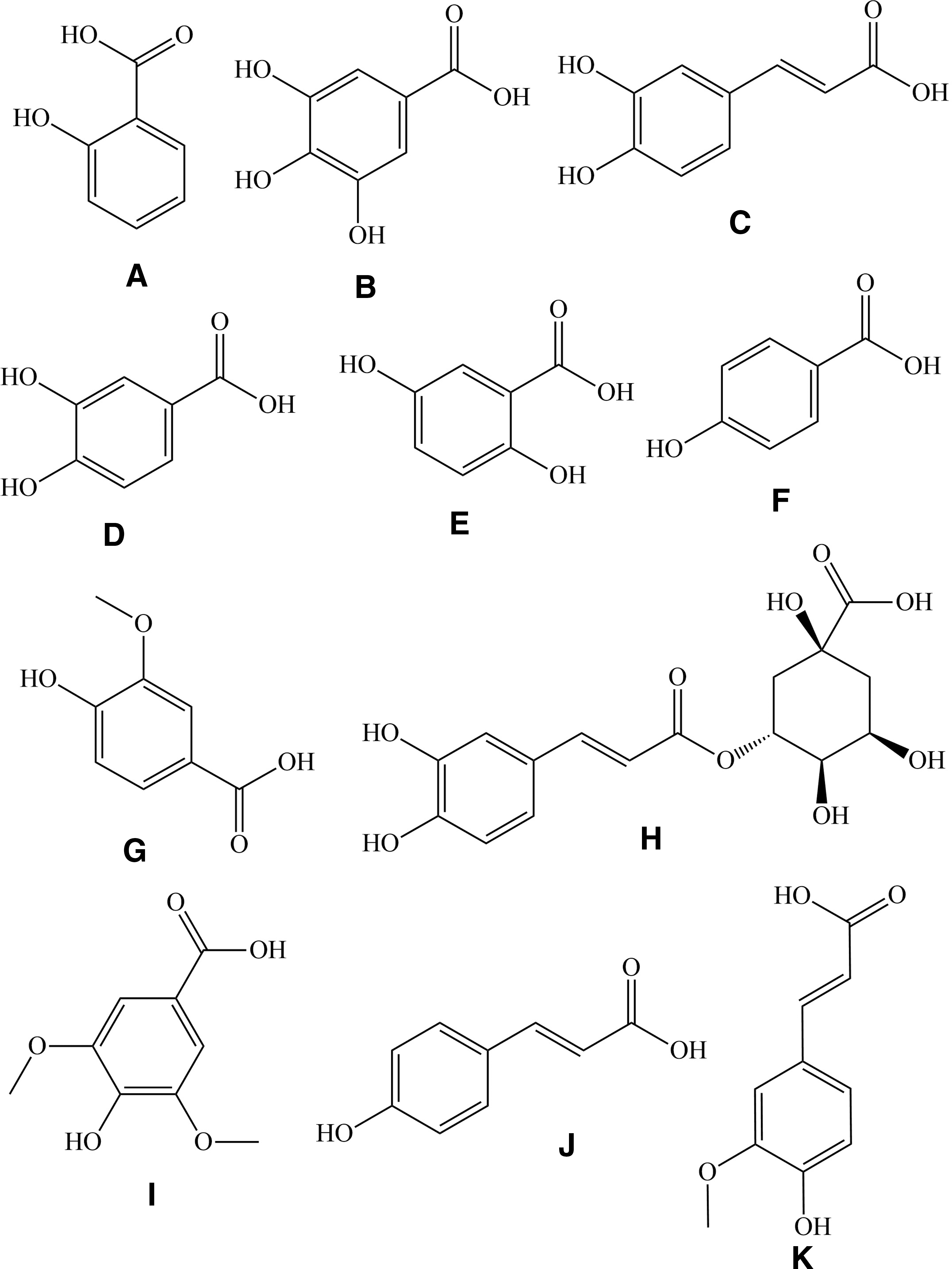
Structures of some phenolic acids found in seaweeds.
The structural features of salicylic, p-hydroxybenzoic, gallic, protocatechuic, and gentisic acids indicate that these are derivatives of benzoic acid with an aromatic benzene ring with attached −OH moieties (Fig. 2A, B, D, E, F). The carboxyl group of benzoic acid has a negative effect on proton donation due to its electron-withdrawing properties. However, the attachment of hydroxy (–OH) groups at the meta position of benzoic acid increases the H-donating radical scavenging activity. 73 According to Peron and Nkiliza, the presence of OH groups in benzene rings with ortho substitution and the presence of a meta-carboxyl group can further increase the stability of radical intermediates. 71 This feature could be identified in phenolic acids such as gallic, caffeic, protocatechuic, and chlorogenic acids (Fig. 2B, C, D, H). The chlorogenic acid (Fig. 2H) is an ester of caffeic acid and quinic acid, whereas the quinic acid is found to be an important intermediate in the shikimic acid pathway that produces mycosporine-like amino acids. 74 A higher antioxidant activity could be observed for phenolic acids with an attached −CH = CH-COOH moiety that increases the H atom donating ability and extends the radical scavenging ability. 75 Similar structural features can be identified in caffeic acid, p-coumaric acid, and ferulic acid (Fig. 2C, J, K). Hotta et al. and Fulcrand et al. suggest that the oxidation reactions in phenolic compounds such as caffeic acid could result in different oxidation products, whereas the generated radical species could be cancelled out with the formation of dimers. 76,77
Flavonoids
Flavonoids are polyphenolic compounds that are characterized by the C-15 skeleton, arranged into three rings with C6–C3–C6 units composed of two phenyl rings on either side with one heterocyclic ring (benzo-γ-pirone) in the middle that are generally abbreviated as A, B, and C, respectively. 78 Flavonoids can be classified into several groups based on the presence/absence of the carbon–carbon double bond between C2 and C3 positions, a hydroxy group on C3 position, and a carbonyl carbon at the C4 position. 79 These compounds represent a remarkably diverse group of secondary metabolites with a diverse array of biological activities mainly related to their antioxidant activity. 80 Flavonoids are found to be present mainly in land plants, but recent investigations indicate the presence of flavonoids in marine flora. 81 Several flavonol glycosides, including quercetin derivatives, have been identified in the fresh water microalga Hematococcus pluvialis. 81 Flavonol glycosides are compounds where a sugar molecule is bound with the flavonoid group through a glycosidic bond. In addition, isoflavones have also been identified from several marine and fresh water algae and cyanobacteria. 8,9 As suggested by Yan et al., the phenolic OH group in the flavonoid moiety can donate H• radicals indicating radical scavenging effects. 82 The biosynthesis of flavonoids proceeds through the phenylpropanoid metabolic pathway, whereas the amino acid phenylalanine acts as the precursor in producing 4-coumaroyl-CoA that combines with malonyl-CoA yielding chalcones. 81,83 The stereospecific cyclization of chalcones results in the formation of the general ring structure of flavonoids. 84
Flavonoids are well known for their superoxide and hydroxyl radical scavenging activities both in hydrophilic and lipophilic systems. 85 –87 These compounds can donate hydrogen radicals to peroxyl, hydroxyl, and peroxynitrite radicals, stabilizing them and producing a stable semiquinone radical that undergoes resonance stabilization as indicated in Figure 3. 88,89 Termination of further reactions proceeds through the flavonoid radical that reacts with available free radicals. 90 In general, the radical scavenging activities are mainly governed by their molecular structure and the substitution pattern of hydroxy moieties. 79 Attachment of hydroxy substituents to the phenyl rings mainly at the C3 position and unsaturation of the C2–C3 position conjugated with the C4 keto group extend the electron delocalization and increase the antiperoxidative properties. 88,91 In addition, the 3′4′-dihydroxy (catechol) structure in ring-B is found to enhance the lipid peroxidation inhibition of the flavan backbone coupled with its electron donating properties. 92,93 However, the presence of a double bond at the C2–C3 position causes a decrease in radical scavenging activity; nevertheless, the presence of OH groups at C3 and C5 positions with a C4 keto group coinciding with that of C2–C3 unsaturation increases the scavenging effect. 93 Flavan-3-ol derivatives, which fulfill these requirements, exhibit better DPPH radical scavenging activity compared with several other flavonoids. Computational quantum chemical analysis has revealed that the most feasible radical scavenging mechanism of flavonoids could proceed with the donation of an H• radical from the −OH group at C3 position. 88 Furthermore, the antioxidant activity of flavonoids in biological systems could also be due to inhibition of several redox enzymes, including lipoxygenase, cyclooxygenase, and NADPH oxidase, preventing the generation of some intracellular ROS. 94 Other than the radical scavenging activities, flavonoids have the ability to act as antioxidants by chelating transition metal ions, thereby suppressing the Fenton type reactions that are believed to be some of the most active pathways of ROS generation. 86,95
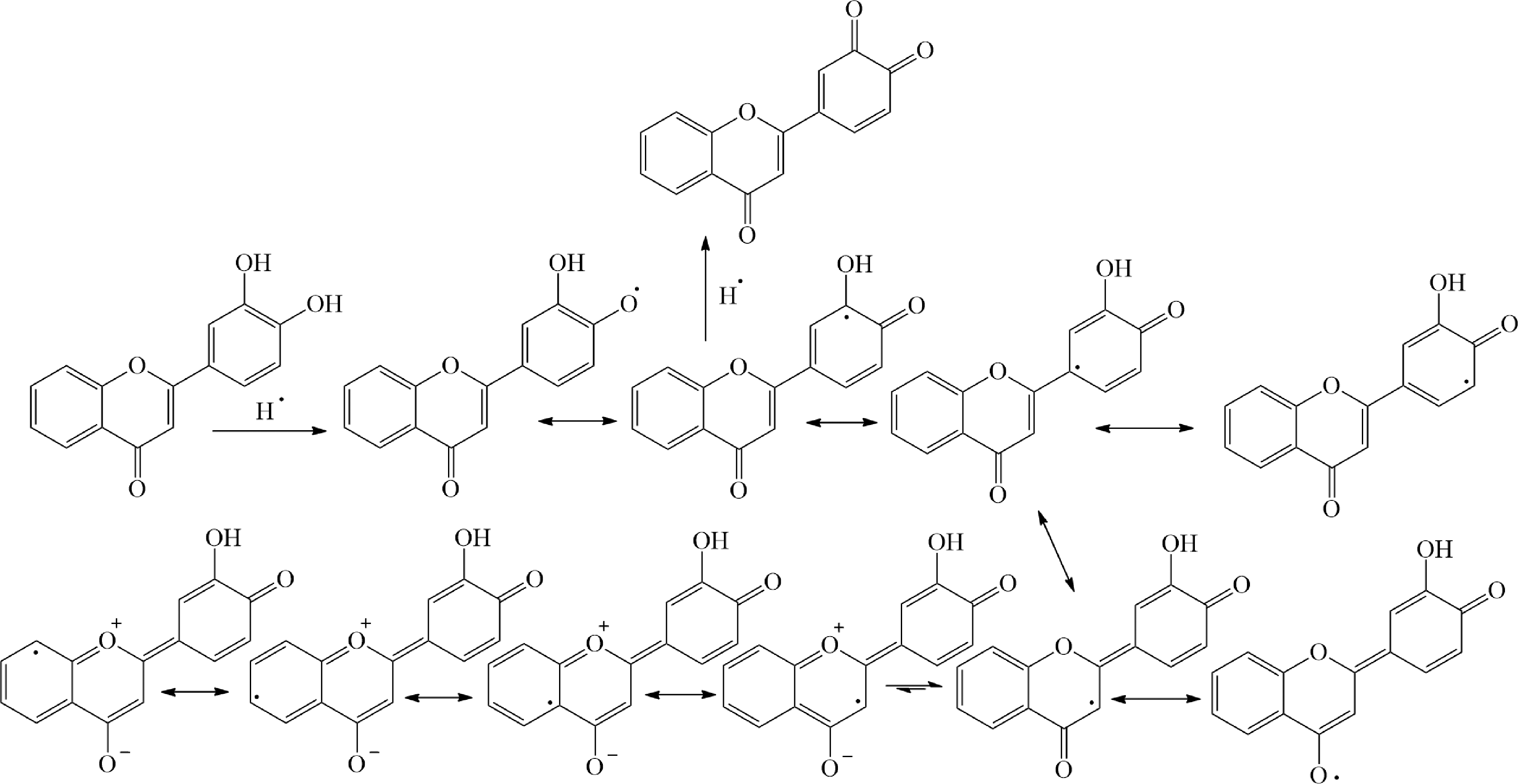
A proposed radical scavenging reaction mechanism for a flavone derivative. 88 Illustrating the formation of the flavonoid radical by the loss of hydrogen atom in the hydroxyl group followed by resonance stabilization of the flavonoid radical. It further illustrates that one of the resonance structures gets isomerized into another flavonoid radical attaining an equilibrium, whereas further extension of the resonance stabilization takes place.
Phlorotannins
Phlorotannins are a class of marine algal polyphenolic compounds mainly confined to the brown algae. 96 These compounds are oligomers of phloroglucinol (1,3,5-trihydroxybenzene) monomers that get biosynthesized through the acetate–malonate pathway. 97 The intramolecular cross-linking between different phloroglucinol units in phlorotannins could be hypothesized as being due to apoplastic vanadium-dependent haloperoxidases on the connectivity of monomeric units as demonstrated by Berglin et al. 98 Phlorotannins can be categorized into several classes, including fuhalols (phloroglucinol units joined with ether bridges at ortho and para positions with an extra OH-group in each third ring), phlorethols (phlorotannins, which contain an ether linkage), fucols (that contain a phenyl linkage), fucophloroethols (that contain an ether and phenyl linkage), and eckols (that contain a dibenzodioxin linkage). 99,100 Phlorotannins are highly hydrophilic components due to the presence of −OH groups that can form H bonds with water. The molecular sizes of these compounds range between 126 and 650 kDa. 99 Similar to other polyphenolic compounds, phlorotannins have been found to exert a range of biological activities, including antidiabetic, anti-inflammatory, anticancer, angiotensin-I-converting enzyme (ACE-I) inhibition, acetylcholinesterase (AChE) and butylcholinesterase (BChE) inhibition, tyrosinase inhibition, antimicrobial, and antiviral activities, whereas most of them are centered on their antioxidant activity. 12,101 –104
The brown alga Ecklonia cava is one of the most abundant sources of polyphenolic compounds, including phlorotannins such as phloroglucinol, eckol, fucodiphloroethol G, phlorofucofuroeckol A, dieckol, 7-phloroeckol, and 6,6′-bieckol (Fig. 4). 105 Phlorotannins, including phloroglucinol, eckol, phlorofucofuroeckol A, dieckol, and 8,8′-bieckol (Fig. 4A, B, E, F), which have been isolated from Eisenia bicyclis, E. cava, and Ecklonia kurome, have indicated superoxide anion and DPPH radical scavenging activities and lipid peroxidation inhibition activity. 106 Phlorofucofuroeckol A, dieckol, and dioxinodehydroeckol isolated from Ecklonia stolonifera have been found to possess strong DPPH radical scavenging activities, and phlorofucofuroeckol A and dieckol have been shown to inhibit intracellular ROS production. 16
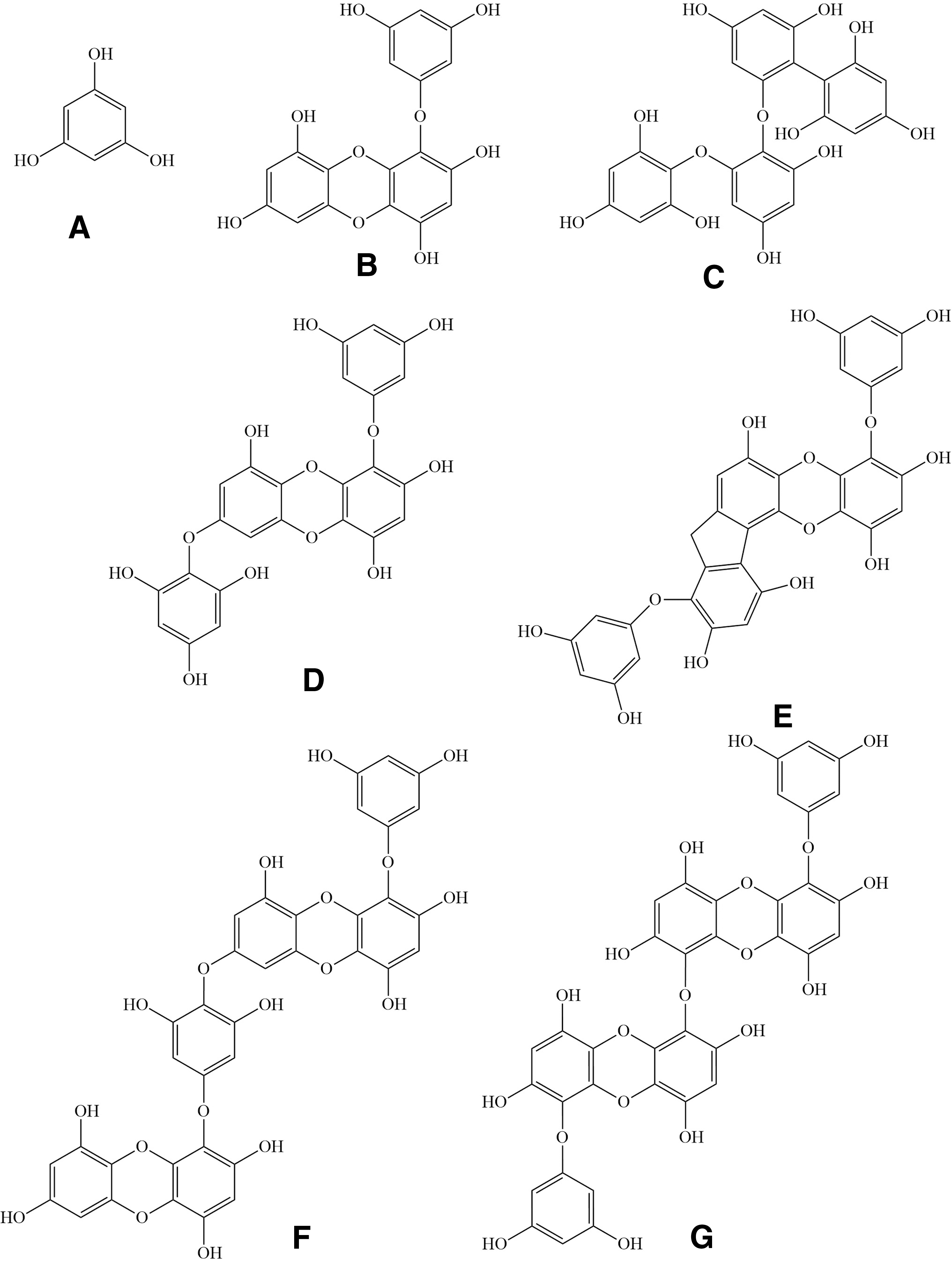
Chemical structures of some phlorotannins isolated from Ecklonia cava.
According to a recent study by Mwangi et al., four phlorotannin derivatives that include phloroglucinol, eckol, 7-phloroeckol, and 2-phloroeckol isolated from the brown algae Ecklonia maxima (Fig. 5) have demonstrated radical scavenging activities that support theoretical predictions of their structural and electronic features. 69 Comparing the stabilization energies of compounds B, C, and D given in Figure 5, the increased order of radical scavenging effects has been identified as B < D < C (Fig. 5), which is consistent with the experimental findings. Furthermore, the bond dissociation enthalpy (BDE) values of each −OH group (the bond between O–H) have indicated that the −OH groups in phloroglucinol have a comparably higher BDE value, thereby a lower radical scavenging activity in accordance with hydrogen atom transfer mechanism than the rest of the phlorotannin derivatives. The −OH attached to C7 in compound B and D had indicated a lower BDE value, suggesting the most reactive site of the H atom donation. In compound C, the −OH attached to C4 indicates the reactive site of H atom donation. The electron delocalization in radical species generated by the donation of H atoms from the most reactive sites of aforementioned compounds could account for the observed order of radical scavenging activities. 69
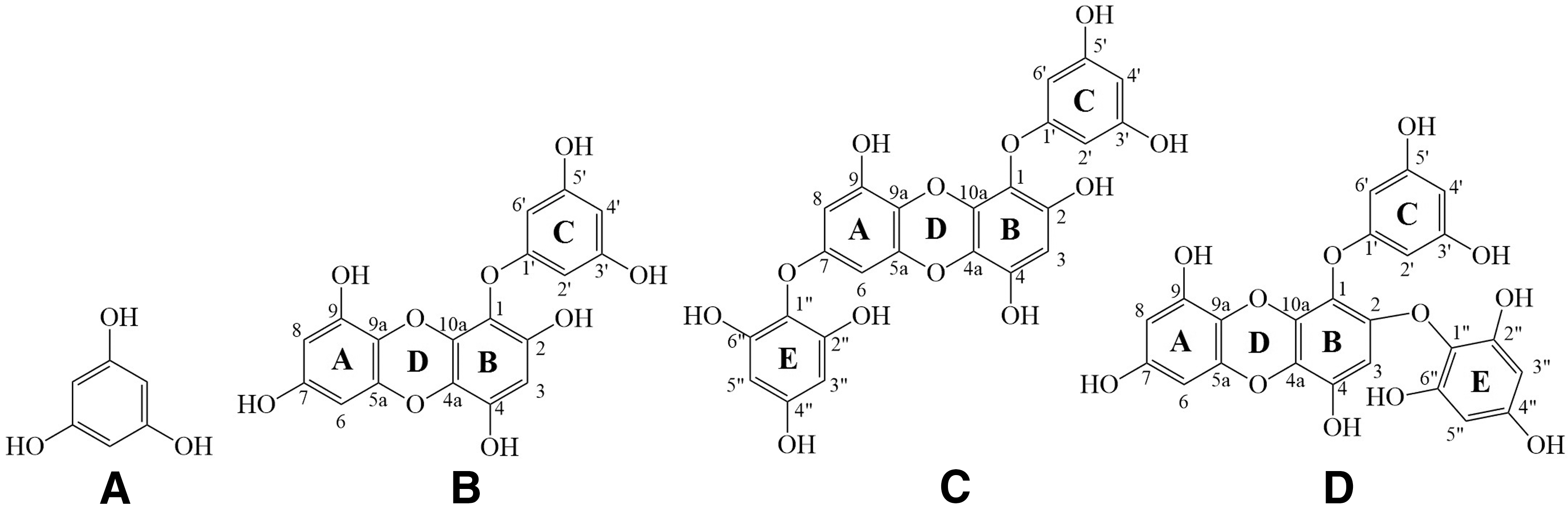
Structures of phloroglucinol derivatives isolated from the brown alga, Ecklonia maxima.
Halogenated phenolic compounds
Halogenated phenolic compounds (Fig. 6) have been found in brown algae and in red algae species. 100 Most of them have indicated pronounced radical scavenging activities. Brominated and fully substituted mono- and bis-phenols (Fig. 6A–H, R) from the red alga Symphyocladia latiuscula have shown potential DPPH radical scavenging activities. 30,31 The red alga Polysiphonia urceolata was also found to contain bromophenols (BPs) with potent antioxidant activity to DPPH radical scavenging activity. 32 Li et al. report the isolation of five nitrogen-containing BPs from Rhodomela confervoides with DPPH and 2,20-azino-bis(3-ethylbenzothiazoline-6-sulfonate) (ABTS) radical scavenging activity (Fig. 6I, J, O–Q). 33 According to recent studies, BPs have been identified as being one of the most likely potential candidates in the prevention of diseases and conditions related to free radicals, including diabetes, cancer, inflammation, and neurodegeneration. 107 According to Li et al., the radical scavenging antioxidant activities of BPs are related to the number of hydroxy groups, whereas bromination slightly decreases the radical scavenging activity by deactivating the aromatic benzene ring. 32,108

Structures of bromophenol derivatives isolated from marine algae.
Extraction and Purification Methods
The traditional methods used to prepare plant extracts include the powdering of plant material followed by organic solvent extraction. The ethanolic extracts of marine algae have shown a higher yield and variety of different phenolic compounds compared with their respective water extracts. 5 Li et al. reported that the ethyl acetate solvent fraction contains a higher yield of BPs from the 95% ethanol extraction followed by solvent fractionation, respectively, into petroleum ether, ethyl acetate, and n-butanol. Xu et al. also reports that the ethyl acetate solvent fraction from the 95% methanol extract of the red alga R. confervoides is a convenient way to proceed with the isolation of BPs. 109 The use of pressurized-liquid extraction (PLE) combined with solid-phase extraction (SPE) is an efficient extraction technique for phenolic compounds. 6 PLE is a technique in which the extraction solvent approaches supercritical conditions under elevated temperature and pressure that affects a higher recovery of the targeted compounds. 110 Supercritical fluid extraction of marine and freshwater algae and cyanobacteria with methanol:water 1:9 extract using CO2 at 35 MPa and 40°C has been found to be effective for the isolation of isoflavones. 9 Microwave-assisted extraction could also be utilized for the efficient extraction of phenolic compounds. 111
Novel environmentally friendly extraction methods have attracted the attention of modern natural product research due to decreased usage of organic solvents, efficiency, and higher extraction yields of targeted compounds. Enzyme-assisted extraction (EAE) of algae is one such approach that can be implemented to extract phenolic compounds. The enzymes assist in breaking algae cell walls, releasing some of the phenolic compounds that remain attached to the cell wall proteins by intermolecular interactions. EAE should be carried out under constant pH and temperature conditions optimal for the used enzymes. 112 Wang et al. reported that protease enzymes can significantly enhance the extraction efficiency of phenolic compounds compared with carbohydrase enzymes and respective water extracts. 113 Athukorala et al. indicate that EAE is an efficient and nontoxic technique for extracting phenolic compound. 114
Although many studies have characterized methods for extraction and semipurification of phenolic compounds, a relatively limited number of studies have described the isolation and structural identification of these compounds. The isolation of phenolic compounds is generally considered a difficult strategy owing to their high structural diversity. 115 Based on several previous reports, the ethyl acetate solvent fraction of the initial organic extracts of algae material reports higher amounts of phenolic content. 116 –118 Further purification and enrichment of phenolic compounds from these traditional methods follow several repetitive chromatography processes that employ the use of reverse phase and sephadex LH-20 cross-linked dextran gel filtration open column chromatography. 117,119,120 These traditional methods are found to be time-consuming and extravagant. 121 Kim et al. report the use of macroporous adsorption resins (HP-20) for the enrichment and purification of phlorotannins from crude ethanolic extract of E. cava. This procedure was reported to be a highly efficient method to purify phlorotannins with a recovery rate of 92%. 115 Lee et al. report centrifugal partition chromatography as an efficient method to simply purify bioactive phenolic compounds. 121
Analysis of Phenolic Content
Most of the studies included in this review report that the method described by Yuan et al. is a convenient way of analyzing the total phenolic content in extracts. 122 The sample is initially treated with 2% Na2CO3 solution. After 2 min, 50% Folin–Ciocalteu's phenol reagent, which contains a mixture of phosphomolybdate and phosphotungstate, is introduced to the mixture. Then, the absorbance is measured at 720 nm wavelength following a 30-min reaction time. In general, gallic acid is used as the calibration standard. The polyphenolic level is expressed as the percentage or, more commonly, as gallic acid equivalents. 122 In addition, some studies report the use of the “Prussian blue assay” for the determination of total phenolic content. 123 Apart from generalized methods of detecting total polyphenolic content, specific assays are available for the quantitative analysis of specific polyphenolic compound categories. The vanillin assay described by Butler et al. is specific for mainly flavan-3-ols and other minor constituents, including dihydrochalcones and proanthocyanidins. 124 As described by Stern et al., 2,4-dimethoxybenzaldehyde (DMBA) assay provides quantitative measurement of phlorotannins using phloroglucinol as the reference standard. 125
Potential Industrial Applications of Marine Algal Phenolic Compounds
Over the past few decades, there has been an increased interest and growth in the use of marine algal polyphenolic compounds for industrial applications such as functional foods, pharmaceuticals, nutraceuticals, and cosmeceuticals. 126,127 The increased consumer awareness about the incorporation of functional molecules into consumer products has attracted the public concern in today's society. 128 With growing industrial applications and consumer demand, novel sources of antioxidant compounds are urgently needed. 129 In this regard, the antioxidant activities of polyphenolic compounds isolated from marine algae could be a potentially beneficial source of antioxidants with protective effects that can be used in industrial production of consumer and medicinal products. Although phenolic compounds exert beneficial effects on physiological well-being, their perceived role as “antinutrients” reduce the digestibility of proteins; potential adverse side effects due to excessive consumption should be studied in detail. 130,131
According to previous reports, antioxidant phlorotannins from E. cava (phloroglucinol, eckol, and dieckol) have potential use in cosmeceutical preparations. 132 Furthermore, these phlorotannins have been found to exert tyrosinase inhibition and protective effects against photo-oxidative stress conditions induced by UV-B radiation. 119 Phlorofucofuroeckol-B, isolated from the edible brown alga Eisenia arborea, has shown strong antioxidant and histamine release inhibitory activity, which suggests potential utilization in antiallergic drug preparations. 21 Algal polyphenols with their antioxidant activities have the potential to be used in the preparation of health enhancing drinks with functional properties. 133 Taken together, polyphenolic compounds from marine algae with their broader therapeutic perspectives could be used in industry to manufacture a range of consumer products and pharmaceuticals.
Conclusions
Marine algae are rich sources of polyphenolic compounds with pronounced antioxidant activities. The antioxidant properties of these compounds mainly depend on the structure that signifies the geometric arrangement, number and positions of hydroxyl moieties, and the substitution of aromatic rings. 75 The beneficial biological functionalities of these phenolic compounds can be attributed to their pronounced antioxidant activity. 89 Nevertheless, further studies are needed to assess the harmful and adverse side effects of these phenolic compounds. 130,131 Understanding the underlying principles of reaction mechanisms responsible for their antioxidant activity could lead to synthesizing phenolic derivatives with optimum antioxidant efficiency. These phenolic derivatives of marine algae could lead in producing a wide variety of pharmaceuticals, cosmeceuticals, nutraceuticals, and functional foods with potential biological functionality.
Footnotes
Acknowledgment
This work was supported by a grant from the National Institute of Fisheries Science (R2016059).
Author Disclosure Statement
No competing financial interests exist.