




Abstract
The effects of Canavalia gladiata ethanolic extract on endurance swimming capacity were evaluated in a mouse model. The mice were orally administered distilled water (CON), hot water extract (CGW), or 80% ethanol extract (CGE). The swimming time to exhaustion was significantly prolonged in the CGE group. Of the three groups, the CGE showed the lowest blood lactate and the highest nonesterified fatty acid and muscle glycogen levels. These results suggest that the administration of CGE could improve endurance swimming capacity by enhancing lipid catabolism and thereby preserving glycogen stores.
I
Canavalia gladiata, commonly known as the sword bean, is a type of legume that is cultivated throughout the tropical and subtropical regions in Asia. 4 It contains various phytochemicals, including phenolics, tannins, phytic acid, canavanine, and saponins, as well as a good balance of starch and protein. 5 Some studies have reported the efficacy of C. gladiata for protecting against bone loss, increasing antioxidant activity, and improving lipid profiles. 6,7 However, data supporting the effect of C. gladiata on exercise endurance capacity and its underlying mechanism are lacking. Therefore, in the present study, we investigated the stimulatory effects of extracts of C. gladiata on exercise endurance capacity and antifatigue using mice that were forced to exhaustively exercise in an adjustable-current swimming pool. In addition, the effects of the extract on energy substrate changes were determined.
The Canavalia gladiata beans were harvested in Gwangju, Korea, and 1 kg was refluxed with 20 L of water or 80% ethanol at 250°C for 5 h. The aqueous extracts were then filtered, concentrated, and lyophilized to yield organosoluble and hydrosoluble extracts (CGW and CGE, 290 and 110 g, respectively). Four-week-old male ICR mice (19 ± 2 g body weight, b.w.) were purchased from Orient Bio (Seongnam, Korea) and housed in cages under automatically controlled air-conditioned temperature (22 ± 2°C), humidity (∼50%), and lighting (12-h light:12-h dark cycle). The mice were fed commercial pelleted chow (AIN-76A rodent purified diet, Orient Bio) and water ad libitum. The Institutional Animal Care and Use Committee of Chonnam National University approved the protocol for the animal study, and the animals were cared for in accordance with the Guidelines for Animal Experiments established by the University (CNU IACUC-YB-2013-44).
Before the endurance exercise capacity tests, the mice were forced to swim once before the grouping to familiarize them with the swimming pool, which was an adjustable-current water pool (90 × 45 × 45 cm with water filled to a depth of 38 cm) at a flow rate of 7.5 L/min. 8 In addition, the swimming capacities of the mice were determined, and then they were divided into three groups (n = 12 per group) with similar mean swimming capacities: the exercised control group (distilled water vehicle, CON) and exercised groups that orally received hot water extract (CGW) and 80% ethanol extract (CGE) from C. gladiata (1 g/kg b.w./d) via gavage for 14 days. The exercise endurance capacity was evaluated on day 14 by measuring the total swimming time until exhaustion, determined as the point when the mice failed to rise to the surface to breathe within a 7-sec period. 8 After the experimental period, all the mice were sacrificed. The blood and muscle were collected, and the samples were stored at −70°C until further analysis.
Figure 1 shows the exhaustive swimming capacity of the mice administered CGW and CGE for 14 days. On day 14 of the experiment, the mean swimming duration of the mice administered CGE was significantly enhanced, greater than those of the CON and CGW groups. The CGE group showed an ∼1.6-fold increase in exhaustive swimming time compared with the CON group (47 and 30 min, respectively). In addition, the endurance swimming time of mice treated with CGE was considerably longer than that of the CGW-treated mice (33 min), indicating that orally administered CGE increased the endurance exercise capacity of the mice. Nutritional regimens can induce performance-enhancing effects. 8,9 Our results indicate that the organosoluble rather than the hydrosoluble compounds in C. gladiata might contribute to the endurance exercise-elevating effects. This result is in line with previous studies, which suggested that extracts with an abundant content of organosoluble components improved endurance exercise capacity of mice. 9,10 The CGE contained more phenolic compounds, which are more organosoluble than those in CGW (3.4% and 2.3%, respectively, data not shown).
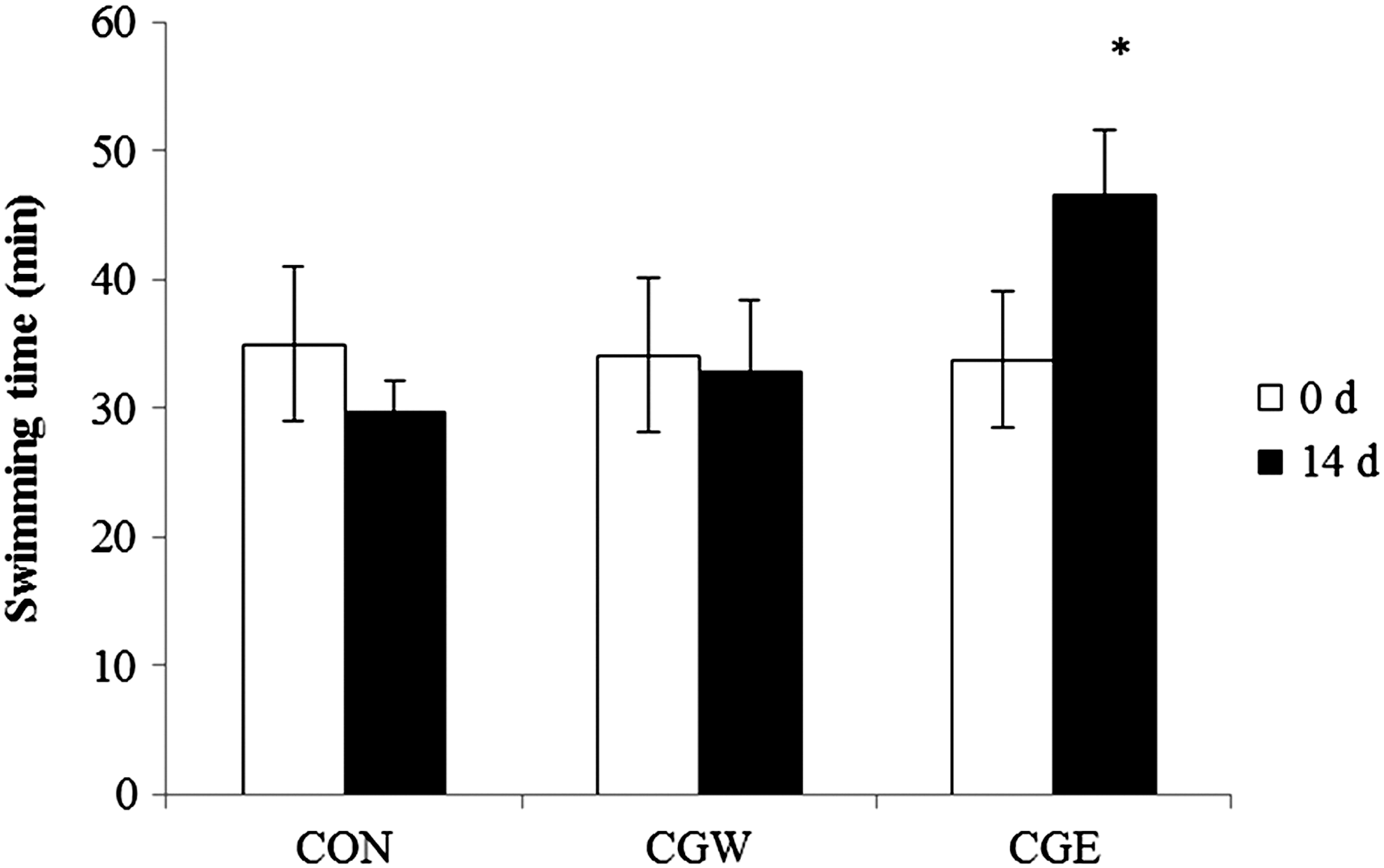
Effects of Canavalia gladiata extracts on exhaustive swimming capacity of mice. Swimming time was measured at a flow rate of 7.5 L/min. CGW and CGE are the hot water and 80% ethanol extracts of C. gladiata, respectively. Mice were administered distilled water (control) or extracts (1 g/kg body weight/d) before exercise. Data are expressed as the mean ± SE for 12 mice in each group. The asterisk above a result indicates a statistically significant difference compared with the control by Student's t-test (P < .05).
Strenuous exercise causes physiological changes such as increased blood lactate levels. 11 For the measurement of lactate and nonesterified fatty acid (NEFA) levels in the blood, and glycogen content in muscle, the mice were assigned to three groups (n = 6 per group) with similar mean swimming capacities, similar to the previous experiments, and administered CON, CGW, and CGE. Each group orally received the vehicle or test sample daily through gavage for 14 days and the mice were subjected to the exercise test consisting of an 80% exhaustive swimming time test. The blood lactate level was measured before and after the 80% exhaustive swimming time, while the blood NEFA level and muscular glycogen were determined after the swimming test. At the end of the experiment, all the mice were sacrificed, their blood and muscle were collected, and the samples were stored at −70°C until further analysis.
The determination of lactate level is a key indicator of the level of muscle fatigue. This is based on the evidence that intense exercise-induced production of lactate can lead to the overaccumulation of lactate to a level that exceeds the rate of its removal, which subsequently lowers blood and muscular pH, leading to muscle fatigue. 12 As expected, an obvious elevation of the blood lactate level was found in the CON group after exercise (Fig. 2), which is consistent with other reports. 10,13 However, the CGE-administered mice exhibited a significantly smaller increase in the lactate level than the vehicle and CGW-administered mice, indicating that CGE played an important role in decreasing lactate production or increasing the rate of its removal or both. Our observations confirm that orally administered CGE reduced the physical fatigue induced by exhaustive swimming.
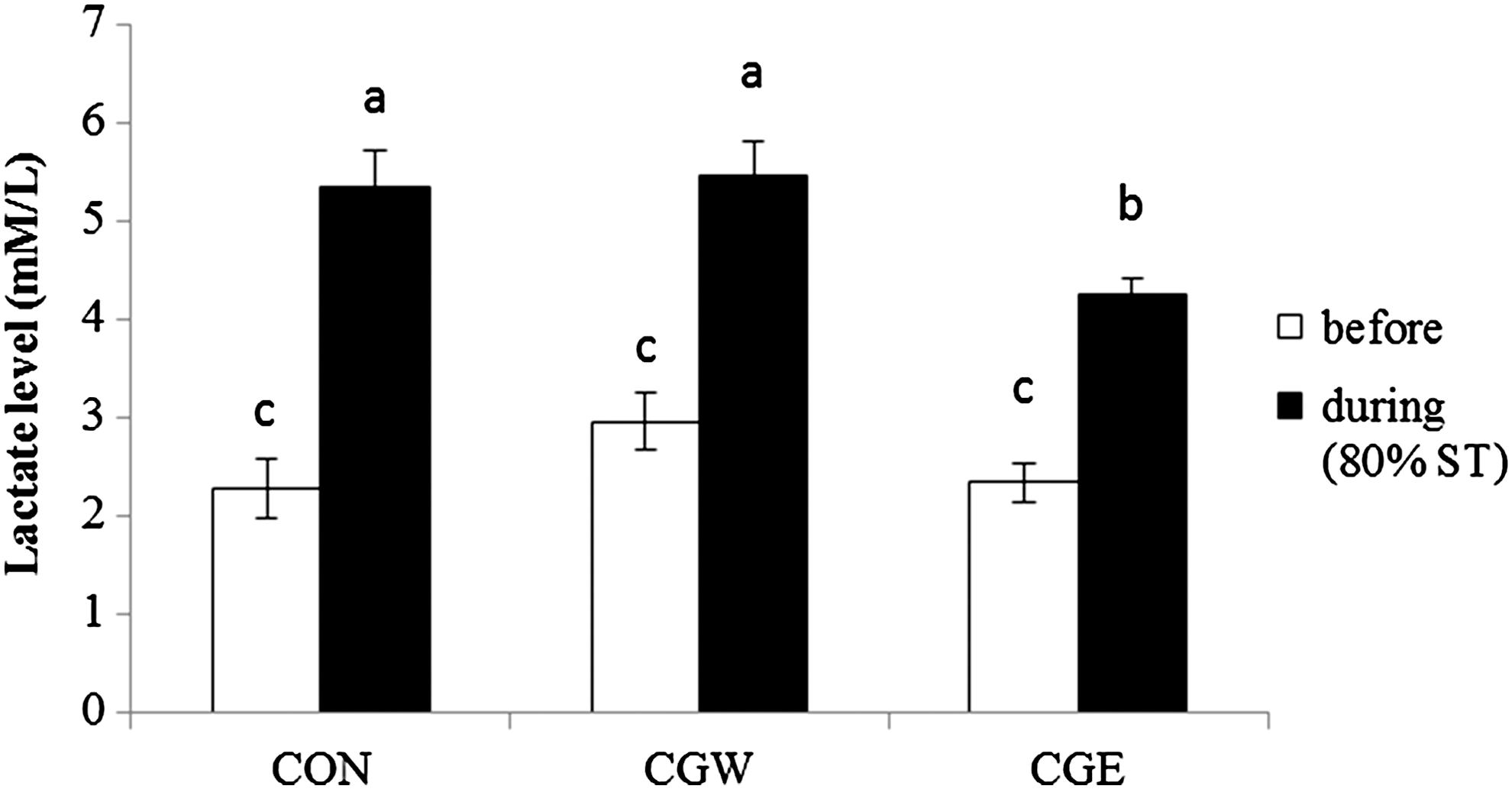
Effects of C. gladiata extracts on blood lactate level. Blood lactate level was measured twice: before the swimming and the 80% to exhaustive swimming time (during 80% ST). CGW and CGE are hot water and 80% ethanol extracts of C. gladiata, respectively. Mice were administered distilled water (control) or extracts (1 g/kg body weight/d) before exercise. Data are expressed as the mean ± SE for six mice in each group. Different letters above the bar are statistically different by Duncan's multiple range test (P < .05).
NEFAs are one of the major fuels available in combination with glycogen for oxidative metabolism during exercise. The blood NEFA levels of all three groups at the submaximal exhaustion point of the swimming test are shown in Figure 3. The CGE group showed a higher NEFA level than the other two groups, indicating an increased level of fat utilization during exercise. Numerous studies have demonstrated an improvement in endurance exercise capacity with the elevation of fat utilization during exercise, evidenced by an increase in the level of NEFA during exercise. 14
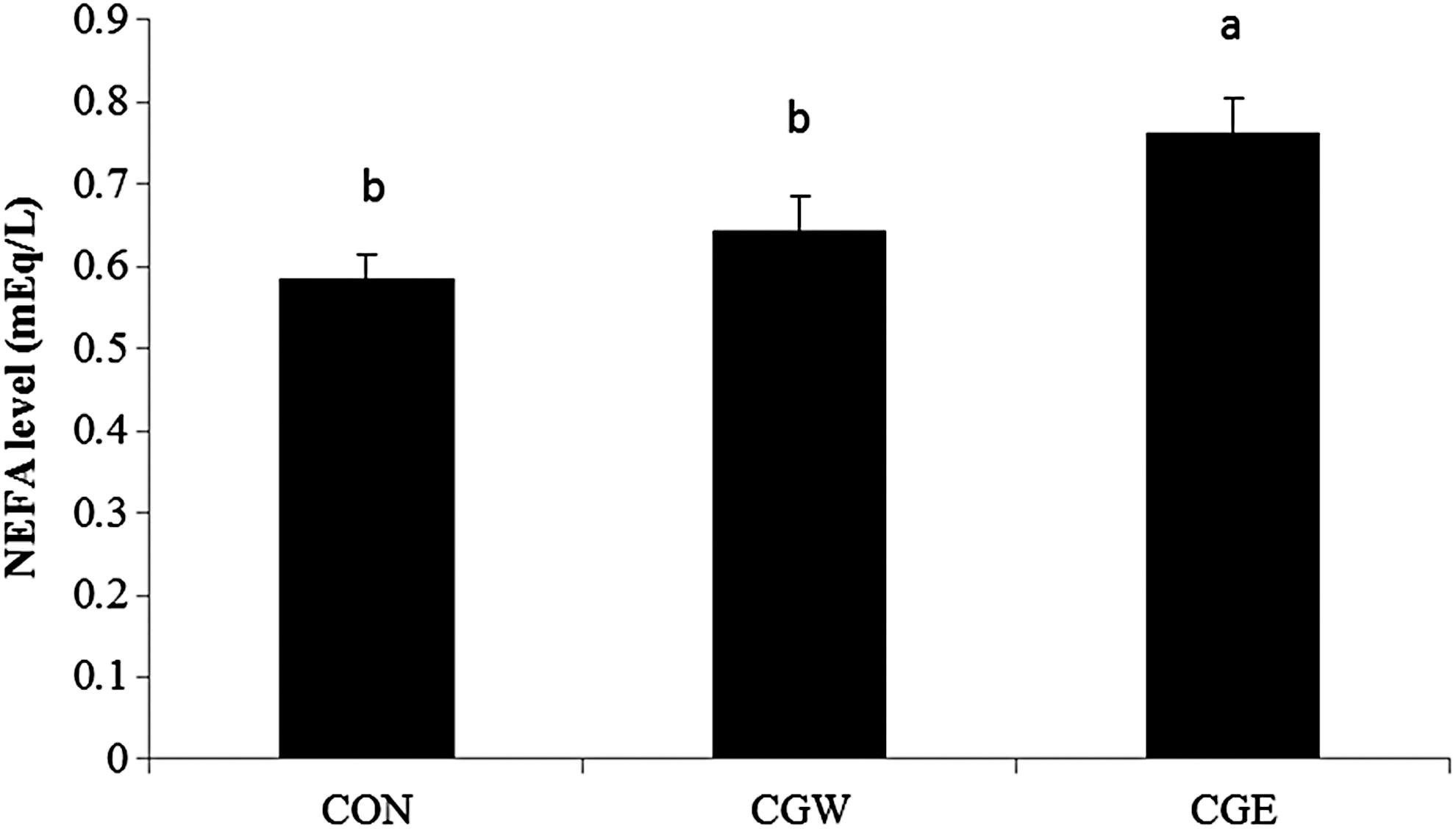
Effects of C. gladiata extracts on blood nonesterified fatty acid (NEFA) levels. Blood NEFA levels were measured after submaximal swimming. CGW and CGE are hot water and 80% ethanol extracts of C. gladiata, respectively. The mice were administered distilled water (control) or extracts (1 g/kg body weight/d) before exercise. Data are expressed as the mean ± SE for six mice in each group. Different letters above the bar are statistically different by Duncan's multiple range test (P < .05).
The glycogen level is another important indicator for determining the degree of fatigue. 15 As shown in Figure 4, a relatively high level of muscular glycogen was observed in the CGE mice compared with those in CON and CGW groups. This implies that the mice supplemented with CGE experienced less fatigue than those that were not supplemented. A reduced rate of glycogen breakdown contributes to improved exercise endurance capacity because the slowing of glycogen depletion during exercise decreases exercise-induced fatigue by maintaining the blood glucose levels. 16 Glycogen depletion modulates the availability of fatty acids, which leads to the amelioration of fatigue. 17 The present finding indicates that the rate of glycogen storage increased after administration of CGE, and the utilization of glycogen was delayed in the CGE mice during exercise. In addition, this result explains the CGE-induced reduction of the lactate level because blood lactate is the main product of glycolysis of glucose from glycogen under anaerobic conditions.

Effects of C. gladiata extracts on muscular glycogen level. Muscular glycogen levels were measured after submaximal swimming. CGW and CGE are hot water and 80% ethanol extracts of C. gladiata, respectively. Mice were administered distilled water (control) or extracts (1 g/kg body weight/d) before exercise. Data are expressed as the mean ± SE for six mice in each group. Different letters above the bar are statistically different by Duncan's multiple range test (P < .05).
In conclusion, to the best of our knowledge, this study is the first report to show that administration of the ethanolic extract of C. gladiata improves endurance exercise capacity in mice. Furthermore, we propose that the mechanism mediating the increased endurance exercise capacity induced by CGE supplementation might involve the amelioration of glycogen depletion through the enhancement of lipid catabolism. Further studies are currently underway to elucidate the underlying molecular mechanism mediating the enhanced endurance exercise capacity.
Footnotes
Acknowledgments
This work was supported by the Korea Institute of Planning and Evaluation for Technology in Food, Agriculture, Forestry, and Fisheries (IPET) through the High Value-added Food Technology Development Program funded by the Ministry of Agriculture, Food, and Rural Affairs (MAFRA, 113022-2).
Author Disclosure Statement
No competing financial interests exist.