




Abstract
Resveratrol is a naturally occurring phenol that is generated by plant species following injury or attack by bacterial and fungal pathogens. This compound was first described as the French Paradox in 1992. Later in 2003, resveratrol was reported to activate sirtuins in yeast cells. Recent experimental studies have found that resveratrol offers a variety of benefits that include both anticarcinogenic and anti-inflammatory effects in addition to the ability to reverse obesity, attenuate hyperglycemia and hyperinsulinemia, protect heart and endothelial function, and increase the life span. Multiple molecular targets are associated with the cardioprotective capabilities of resveratrol, and therefore, resveratrol has potential for a wide range of new therapeutic strategies for atherosclerosis, ischemia/reperfusion, metabolic syndrome, cardiac failure, and inflammatory alterations during aging. Expectations for application in human patients, however, suffer from a lack of sufficient clinical evidence in support of these beneficial effects. This article reviews recently reported basic research results that describe the beneficial effects of resveratrol in an attempt to condense the evidence observed in clinical trials and provide support for the future development of novel clinical therapeutics in patients with cardiovascular diseases.
Introduction
C
The French Paradox is a catchphrase that describes the low incidence of coronary heart disease in French people despite a saturated fat-rich diet. 2,3 While the validity of this phenomenon remains controversial, many explanations have been suggested to explain the paradox based on the assumption that it is true. 3 –5 One of the most plausible explanations for this paradox is that French people consume considerably greater quantities of red wine than people in other countries. 3 Red wine contains many polyphenolic compounds, including resveratrol, in addition to alcohol; and this natural phenol has been found to exert healthful effects on the human body. 3,6 In particular, consumption of resveratrol at high doses has been correlated with increased longevity and cancer prevention in other species. 6
Herein, we review the potential effects of resveratrol on CVDs and describe the evidence for the related molecular mechanisms underlying these effects. We describe five beneficial effects of resveratrol: antiatherogenic, anti-inflammatory, antihypertensive, cardioprotective, and metabolic modulation effects. The potential beneficial effects of resveratrol on the main CVDs observed in trials will also be discussed.
RESVERATROL IN CVDs
Antiatherogenic effects of resveratrol
Inflammation of the arterial wall or atherosclerosis is a disorder that is caused by endothelial damage induced by cytokines in response to both hemodynamic and redox stress conditions. 7 Inflammation mediates all stages of atherosclerosis, 7 and macrophages appear to play a key role in this disease. 8 Macrophages are transformed to foam cells following uptake of excessive amounts of lipoproteins, and this phenomenon is the central mechanism of early-stage development of atherosclerotic lesions. 9 Interestingly, many chemical compounds involved in macrophage lipid metabolism are affected by resveratrol. 10 As shown in Figure 1, resveratrol exerts effects on cyclooxygenase (COX)-2, peroxisome proliferator-activated receptor gamma (PPAR-γ), liver X receptors (LXRs), ATP-binding cassette (ABC) transporters A1 and G1, and nitrous oxide (NO). 11,12

Illustration of the antiatherogenic effects of resveratrol. The black arrows indicate serial reactions that are initially activated by resveratrol. Resveratrol causes eNOS activation, increased HDL efflux, and endothelin 1 gene downregulation, which are directly linked to the antiatherogenic effects. ABCA1(G1), ATP-binding cassette (ABC) transporters A1 and G1; eNOS, endothelial nitrous oxide synthase; ERK1/2, extracellular-signal regulated kinase 1/2; LXRα, liver X receptors; PPAR-γ, peroxisome proliferator-activated receptor gamma; SIRT1, sirtuins 1. Color images available online at
Prostaglandin E2 (PGE2), which is a key player in inflammation, is catalyzed by COX-2. 13 Resveratrol restricts atherosclerosis-associated inflammation via transcriptional regulation of COX-2 activity, ultimately suppressing PGE2 production. 14 PPAR-γ promotes macrophage maturation and modified low-density lipoprotein (LDL) 15 uptake, and this factor exerts antiatherogenic effects on macrophages, endothelial cells, and smooth muscle cells. 16 Consequently, PPAR-γ agonists may contribute anti-inflammatory functions that help prevent atherosclerosis. 17
Interestingly, resveratrol selectively activates PPAR-γ, 18 and LXRs, which are the primary transcriptional regulators of lipid metabolism, are direct PPAR-γ transcriptional targets and also serve as cholesterol sensors. 13 A study on the antiatherosclerotic effects of LXRs revealed that a synthetic LXR agonist reduced atherosclerosis development in hypercholesterolemic LDL receptor-deficient mice. 19 Another experimental study revealed that many oxysterols, which are the oxidized derivatives of cholesterol, function as cholesterol pathway intermediates and activate LXR-α. 16 Importantly, resveratrol enhances LXR activation, thereby regulating the atherogenesis process. 20
ABC transporters, which are transmembrane proteins, hydrolyze ATP and harvest the resultant energy to facilitate transport of molecules across cell membranes. 21 Some ABC transporters, including ABCA1 and ABCG1, also are involved in cholesterol and phospholipid efflux and reverse cholesterol transport to preserve cellular cholesterol homeostasis and to prevent the development of atherosclerosis in arteries. LXRs induce several lipid transporters, including ABCA1 and ABCG1. 21 Resveratrol also regulates the production of NO via an inhibitory effect on vasoconstrictor endothelin-1 (ET-1), offering thromboresistance and preventing atherogenesis. 22 –24 This beneficial effect of resveratrol occurs due to the suppression of stress-induced ET-1 expression via inhibition of the extracellular signal-regulated kinase (ERK) 1/2 pathway. 25,26
Anti-inflammatory effects of resveratrol
Recent studies underscore the importance of age-related changes as well as the traditional risk factors for CVD development. 27 In particular, low-grade inflammation that is associated with age increases the incidence of both stroke and coronary artery disease in aged subjects. 27 Additional studies support the notion that increased NAD(P)H oxidase activity and overproduction of mitochondrial reactive oxygen species (ROS) underlie the vascular oxidative stress associated with age and promote inflammation and endothelial damage. 28 –31
NO, which plays a key role in maintaining endothelial cell function, appears to be an important compound in age-related changes. Aging-induced oxidative stress results in inactivation of NO by high superoxide concentrations, and these changes result in significant vasomotor dysfunction, increased endothelial cell apoptosis, and mitochondrial biogenesis impairment. 32 –36 Endothelium-derived NO functions to protect the cardiovascular system during aging, as evidenced by the observation that mice deficient for the endothelial nitrous oxide synthase (eNOS) gene display premature cardiac aging concomitant with early mortality. 37
In the past few years, supplementation of the diet with resveratrol has been touted as a strategy to combat the proatherogenic vascular changes that occur with aging (Fig. 2). 38 –43 Consistent with these potential benefits, resveratrol upregulates eNOS and increases NO bioavailability. 44 In animals, resveratrol is vasoprotective by counterbalancing the oxidative stress-induced physiological changes caused by aging. 45,46 In addition, downregulation of vascular and cardiac expression of tumor necrosis factor-α and inhibition of vascular NADPH oxidases are induced by resveratrol, 41,43,47 and this phenolic compound is also able to abolish mitochondrial ROS production in the vasculature. 42,46
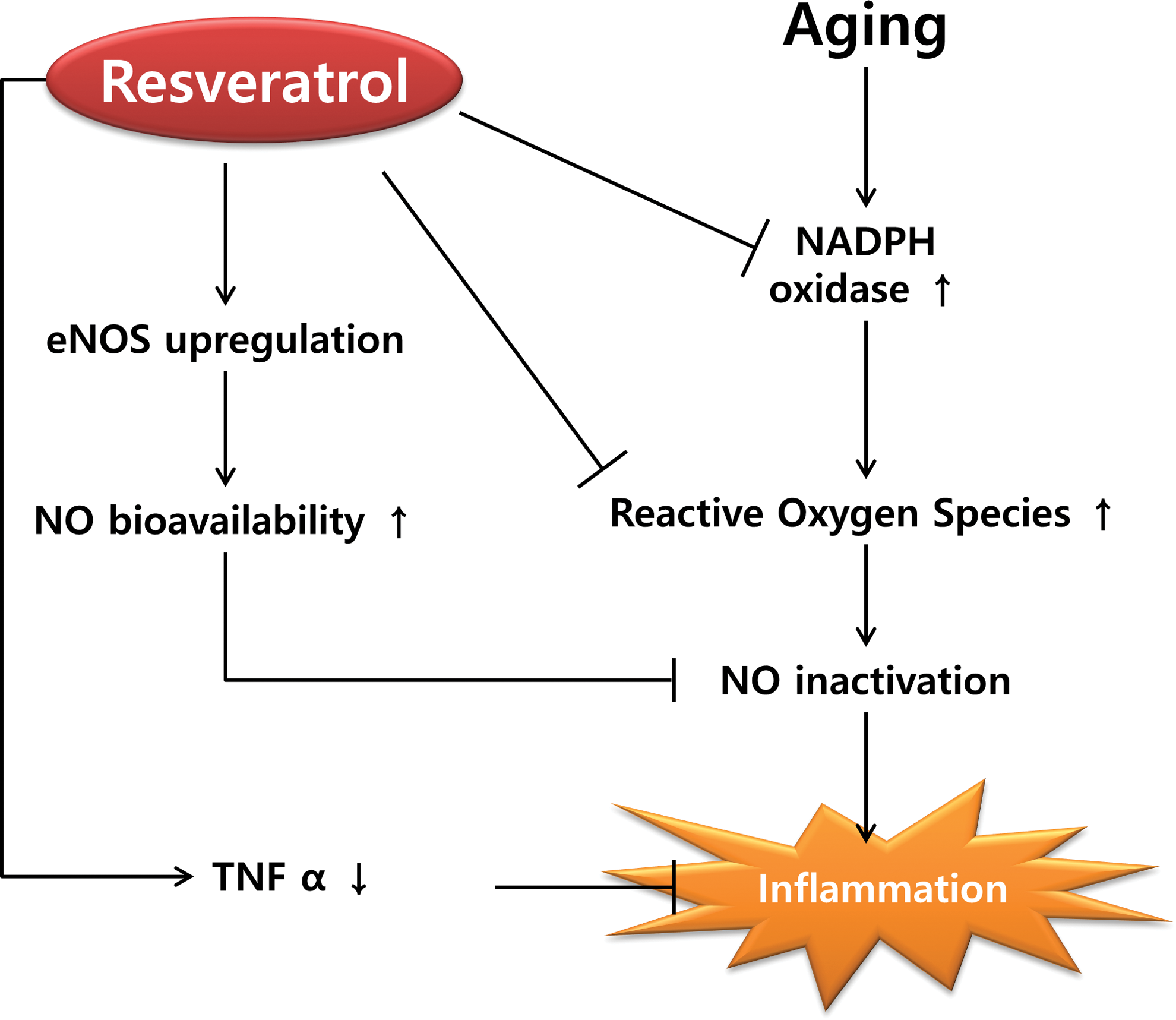
Proposed mechanism of the anti-inflammatory effects of resveratrol in the aged vasculature. TNF α, tumor necrosis factor α. Color images available online at
These experimental studies strongly suggest that resveratrol functions as an anti-inflammatory agent in elderly patients, and thus, this compound has the potential to reduce mortality caused by atherosclerosis. A meta-analysis that assessed the published results of 19 studies on longevity across species, however, revealed that resveratrol acts to extend life in yeast and nematodes, but that this effect is less reliable in most higher order species. 48 Further research is necessary to clarify whether resveratrol can positively impact human health.
Antihypertensive effects of resveratrol
Hypertension is a chronic medical condition that is characterized by sustained arterial blood pressure elevation. As of 2000, hypertension plagued nearly one-fourth of the global adult population. 49 This medical condition, which increases the risk of ischemic heart disease, stroke, peripheral vascular disease, and other CVDs, is conceivably the most critical and preventable risk factor for premature death worldwide. 50
Recent studies suggest that resveratrol can reduce blood pressure through complex mechanisms that involve vasodilatation, antioxidative processes, and neovascularization (Fig. 3). The molecular target of resveratrol are sirtuins, and SIRT 1 is the most intensively investigated target among the sirtuins. 36,51 Resveratrol activates SIRT 1 expression, which induces NO synthesis in the vascular endothelium, resulting in vasodilation. Upregulated endothelial NO also increases synthesis of hemeoxygenase-1 (HO-1), which is a precursor of bilirubin and also exerts an antihypertensive effect. 52 ET-1 is an endogenous vasopressor. Angiotensin II and stretch stimulation modulate the gene expression and secretion of ET-1 from vesicular endothelial cells resulting vasoconstriction. Resveratrol suppressed angiotensin II-induced ET-1 expression and strain-induced ET-1 secretion, consequently decreasing blood pressure. 53,54 In rat vascular smooth muscle cells, resveratrol downregulates expression of angiotensin II receptor type 1 via activation of SIRT 1. 55 Thus, the increased longevity and antiatherogenic effects of resveratrol may stem, in part, from inhibition of the renin–angiotensin system. 56
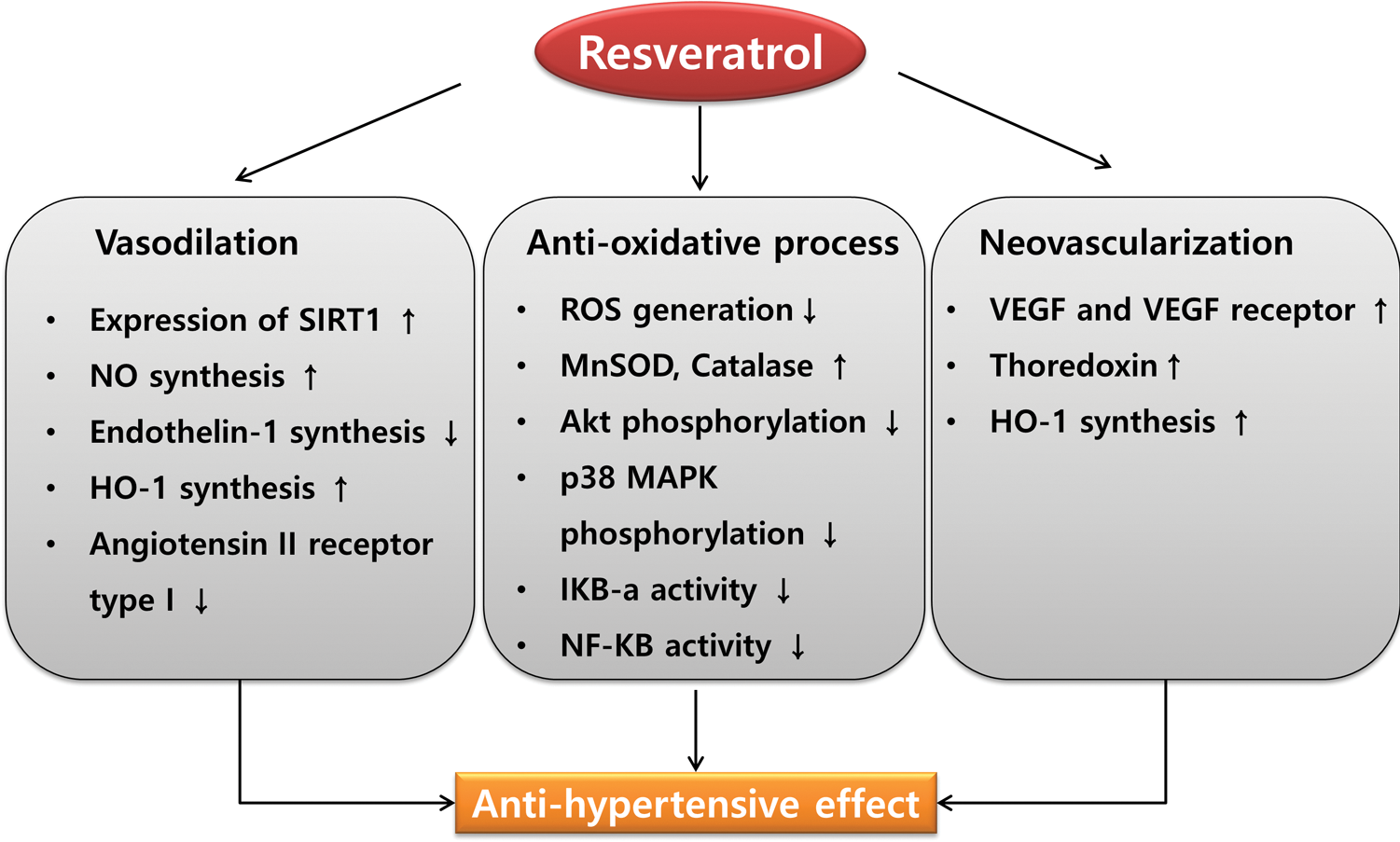
Proposed mechanism of the antihypertensive effects of resveratrol. Resveratrol causes vasodilation, antioxidation, and neovascularization, resulting in antihypertensive effects. The affected molecular players in each process are listed. HO-1, hemeoxygenase-1; MnSOD, manganese-dependent superoxide dismutase; VEGF, vascular endothelial growth factor. Color images available online at
Preservation of vascular endothelial cell function by resveratrol occurs through antioxidative processes, such as suppression of ROS generation, phosphorylation of Akt and p38 MAPK, and IKB-a and NF-KB activities. 56 –59 With respect to neovascularization, resveratrol upregulates vascular endothelial growth factor and its receptor in ischemic myocardium of rats. 60 Also, resveratrol induces upregulation of thioredoxin and HO-1, which together provide antioxidative and myocardial angiogenesis functions. 61
Our knowledge of the effects of resveratrol within functional vascular endothelial cells indicates that this compound is more effective as a prophylactic drug than as a therapeutic drug in response to the irreversible vascular remodeling. Moreover, the rapid metabolism of resveratrol ensures low bioavailability of this molecule, supporting an essential need for the identification of a resveratrol analogue to provide greater therapeutic potential in antihypertension treatment. 62
Cardioprotective effects of resveratrol
Cardioprotection is one of the important beneficial effects of resveratrol, as such effects were suggested by many recent studies in animal models of heart disease. 63,64 Resveratrol was found to protect cardiomyocytes against oxidative stress, autophagy, apoptosis, and cardiac fibrosis in animal studies (Fig. 4). 64 –67 In particular, resveratrol selectively inhibits production of ROS via SIRT1 activation. This compound also induces mitochondrial superoxide dismutase (SOD2) expression, ultimately reducing oxidative stress in mitochondria and the resultant cellular damage. 68
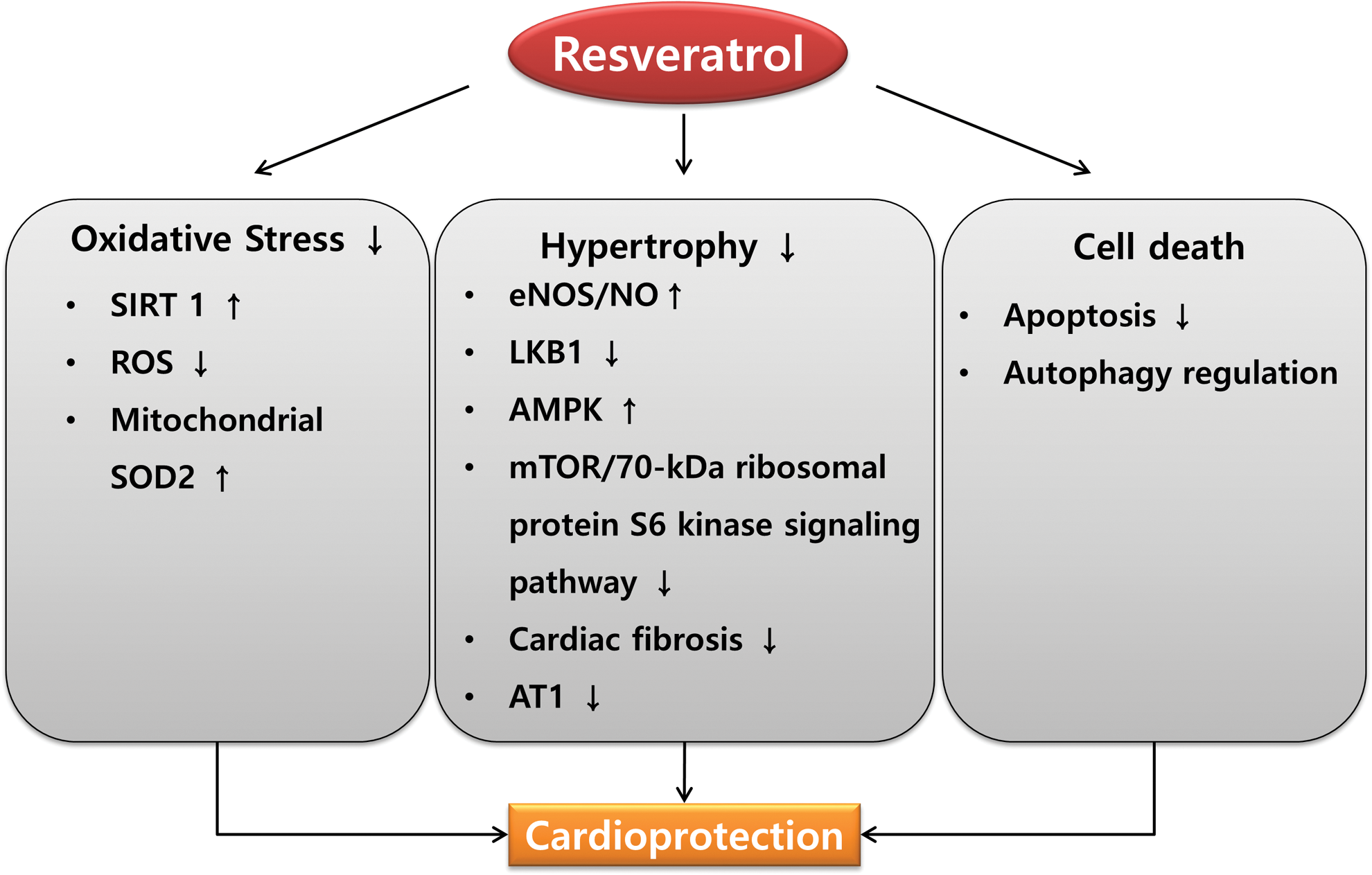
Illustration of the cardioprotective effects of resveratrol. Resveratrol decreases oxidative stress, hypertrophy, apoptosis, cardiac fibrosis, and autophagy to exert its cardioprotective effect. Important mechanistic players are described for each process. AMPK, 5
Myocardial hypertrophy is the physiological response of cardiac muscle to hemodynamic overload induced by various physiological and pathological conditions. Sustained hypertrophy, however, is regarded as a maladaptive process, leading to accelerated work overload and finally the death of the organism. 69 The protective effects exerted by resveratrol against cardiac hypertrophy can be explained by several mechanisms.
First, resveratrol attenuates the compliance and remodeling of small arteries. 70,71 In fact, resveratrol-treated rats with abdominal aortic bands exhibit regression of pressure overload-induced cardiac hypertrophy and dysfunction 38,72 and these effects may be a result of the upregulation of eNOS/NO. 38 Second, resveratrol prevents the inhibitory effect of oxidative stress on the serine–threonine kinase liver kinase B1 (LKB1), thereby favoring the activation of the downstream signaling molecule 5′ AMP-activated protein kinase (AMPK). AMPK activation in concert with subsequent mTOR/70-kDa ribosomal protein S6 kinase signaling inactivation abrogates unnecessary protein synthesis and remodeling in the heart. 65,73 –75 Third, resveratrol protects the heart against hypertrophy progression, in part, by affecting cardiac transcription of angiotensin II receptor, AT1a. 76
The cardioprotective effects of resveratrol are also observed in additional situations. Low ambient temperature leads to cardiac hypertrophy and weakening of function and is considered to be an important CVD risk factor. 77 Resveratrol treatment effectively suppresses these alterations by inhibiting cardiomyocyte apoptosis. 77 Autophagic dysfunction is often present in diabetic patients, and resveratrol, which directly induces autophagy, thereby exerts a beneficial effect on this diabetic cardiomyopathy. 78 Resveratrol ameliorates myocardial fibrosis by inhibiting the ROS/ERK/TGF-β/periostin pathway in diabetic mice. 64 Moreover, resveratrol prevents myocardial injuries from myocardial infarction or hypoxia/reoxygenation injury via increasing microRNA-130a expression, 79 suppressing miR-34a upregulation in anoxia and reoxygenation injury and the miR-34a/Sirt1, 80 or reducing oxidative stress and decreasing cardiac inflammation and fibrosis. 59
As previously mentioned, resveratrol protects the heart against endogenous factors such as inflammation, dyslipidemia, and endothelial dysfunction, but recently additional studies have focused on whether resveratrol exerts a protective effect on the myocardium against exogenous factors, such as therapeutic drugs or endotoxin lipopolysaccharides. 67 Cardiac toxicities caused by doxorubicin or arsenic trioxide are ameliorated by resveratrol. 81 –83 In addition, resveratrol enhances the anticancer effect of doxorubicin by increasing cellular uptake of this drug. 82 These results suggest that supplementation of doxorubicin therapy with resveratrol is useful to prevent cardiotoxicity and achieve a synergistic effect against cancer cells.
In summary, resveratrol protects cardiomyocytes by decreasing oxidative stress, inhibiting autophagy, decreasing apoptosis, and ameliorating cardiac fibrosis. In addition, resveratrol offers a beneficial effect for the prevention of cardiac hypertrophy; however, despite the encouraging results in animal models, clinical trials that provide support for the beneficial effects of resveratrol in human subjects are rare to date. 84 Thus, additional research is warranted to clarify the discrepancy in the outcomes between humans and experimental animals.
Antimetabolic syndrome effects of resveratrol
Metabolic syndrome is a chronic disorder associated with CVD and diabetes risk. 85 This syndrome is categorized by the presence of at least three of the following medical conditions: abdominal (central) obesity, elevated blood pressure, high serum triglycerides, low high-density lipoprotein (HDL) levels, and elevated fasting glucose levels. The incidence of metabolic syndrome is very high in modern society, affecting nearly one-quarter of the world's adult population. 86 Current management of metabolic syndrome includes life style modifications and/or administration of agents, such as simvastin, for the treatment of hypercholesterolemia. The pathophysiology of metabolic syndrome is quite complex and has only been partially elucidated, but insulin appears to be the key hormone in this syndrome. In fact, some investigators speculate that prediabetes and metabolic syndrome may actually be the same disorder and that these conditions are merely diagnosed by a different set of biomarkers. 87
Several studies indicate that resveratrol may be useful for the control of metabolic syndrome. In rats, resveratrol exerted a stronger effect on insulin sensitivity, metabolic syndrome, and hepatic oxidative stress than metformin. 88 In a swine model, resveratrol supplementation lowered levels of serum cholesterol and C-reactive protein, as well as body mass indices. In addition, this supplementation also improved glucose tolerance and endothelial function and positively boosted signaling associated with myocardial metabolism, suggesting that resveratrol positively influences metabolic syndrome risk factors. As a result, resveratrol may therefore decrease the chronic metabolic disease-associated burden and improve cardiovascular health. 89 In another animal model of metabolic syndrome, supplementation with resveratrol was found to positively affect the liver and skeletal muscle glucose metabolism and lead to improved control of glucose levels in the animals. 90
Contrary to the effects of the well-known French Paradox, a recent study reported that moderate alcohol consumption in a swine model of metabolic syndrome negatively impacted glucose metabolism via modification of insulin signaling in the liver and skeletal muscle. 91 In this study, moderate alcohol consumption resulted in upregulation of AKT, AMPKα, and GLUT4 in the liver. Sarcolemmal expression of GLUT4 was also increased in the alcohol consumption group. Together, these results indicate that moderate intake of alcohol, such as wine that contains resveratrol, negatively affects glucose metabolism via changes in the activity of the insulin signaling pathway in the liver and skeletal muscle. The negative effect of the alcohol in wine is reportedly stronger than the effect of small amounts of resveratrol in wine, as the quantity of resveratrol necessary for control of metabolic syndrome is likely much greater than that consumed in drinking typical amounts of wine.
Furthermore, a very recent randomized clinical trial suggests that resveratrol may indeed offer beneficial effects on insulin secretion and sensitivity in human subjects as well. 84 This study, which assessed 24 patients with metabolic syndrome, indicated that individuals who took resveratrol exhibited significantly decreased body weight, body mass index, fat mass, waist circumference, total insulin secretion, and glucose and insulin levels. As a result, intake of resveratrol without concomitant alcohol consumption may be the key.
Resveratrol derivatives
Even though resveratrol positively affects CVD and cancer therapy, low potency and stability are the major limitations for its clinical application. Therefore, various derivatives have been synthesized in an effort to increase the efficiency and stability of this molecule. The effects and applications of resveratrol derivatives were described in detail in recent reviews, 92 –94 and these derivatives are briefly described in Table 1.
Modified from Fulda. 87
COX, cyclooxygenase.
Our previous study described the resveratrol derivative HS-1793 as a strong cardioprotective drug with enhanced stability and efficiency. 95 HS-1793 attenuated mitochondria damage against cardiac ischemia/reperfusion injury by reducing ROS generation and preserving oxidative phosphorylation capacity. Thus, such resveratrol derivatives provide solid therapeutic potential for CVD as well as various cancers.
Clinical trial status of resveratrol in CVDs
Recently, the wealth of basic science research supporting resveratrol's potential to prevent, treat, and delay CVDs has led to a number of human clinical research studies. 96 –100 The results from these multiple clinical trials exploring the impact of resveratrol on CVDs have emerged and confirmed the potential benefits of resveratrol seen in earlier laboratory animal studies. Mostly, clinical trial data are consistent with preclinical data, confirming the efficacy of resveratrol in using resveratrol as an agent for primary prevention. In this section, cardiovascular protective capacities of resveratrol are related to atherosclerosis, hypertension, myocardial infarction, and metabolic syndrome in clinical trials, as summarized in Table 2.
Modified from Zordoky et al. 105
CVD, cardiovascular disease; LDL, low-density lipoprotein; HDL, high-density lipoprotein.
Atherosclerosis can contribute to multiple CVDs by obstructing flow of blood to the heart, brain, or lower extremities. 101 Interestingly, the antiatherosclerotic effect of resveratrol has been supported by large clinical trials showing its ability to attenuate the detrimental processes of atherosclerotic relative signals. As an example, in patients at high cardiovascular risk under statin treatment for primary prevention, resveratrol (350 mg/day of res-enriched grape extract containing 8 mg resveratrol) led to a decrease of 20% oxidized LDL and decrease of 4.5% LDL-cholesterol. 98 In type 2 diabetes patients, a daily resveratrol dose of 250–1000 mg caused a significant reduction in LDL-cholesterol. 101,102 Also, resveratrol treatments of 150 and 500 mg/day reduced the plasma triglyceride levels in healthy obese men and healthy adult smokers, respectively. 103,104 However, clinical trials investigating the effect of resveratrol on plasma lipid profile in human subjects remain unclear (as mentioned in a previous review 105 ), since some studies found an absence of effect on the lipid profile and some found beneficial effects. 106
Since hypertension constitutes a major risk factor for CVDs, 107 clinical studies investigated the effect of resveratrol on blood pressure and reported that high doses of resveratrol (≥150 mg/day) significantly reduced systolic blood pressure, 103,108 while diastolic blood pressure was not significantly affected. 108 Furthermore, lower doses of resveratrol had no effect on blood pressure. 109 It is noteworthy that the blood pressure-lowering effect of resveratrol would be more pronounced if resveratrol is administered to hypertensive subjects. 99
In addition to atherosclerosis and hypertension, the effects of resveratrol in patients with ischemic heart disease have been investigated in several clinical trials. 96 –101 Cardiac function of Caucasian patients (with a mean age of 66.3 years) experienced with stable coronary artery disease was improved with daily supplements of 10 mg resveratrol associated with standard medication treatment for 3 months. 96 Interestingly, resveratrol improved left ventricle diastolic function and endothelial function, lowered LDL-cholesterol level, and protected against hemorheological alterations. 96 Thus, resveratrol may mediate its effects in this patient cohort via improving vascular function, preventing negative consequences associated with atherosclerosis, and is a promising approach to decreasing the risk of secondary myocardial infarction. 96
Another clinical study focusing on the effects of resveratrol in a grape extract also pointed toward the potential of resveratrol as a treatment of acute coronary syndrome. 100 The combined treatment of resveratrol (8 mg for 6 months, and 16 mg for next 6 months) with grape extract increased adiponectin and decreased plasminogen activator inhibitor-1, 100 suggesting that a dietary intervention with grape extracted resveratrol could complement the gold standard therapy in the primary prevention of CVDs. 110 Consistent with other clinical data, oral administration of resveratrol, calcium fructoborate, and their combination improved several markers in patients with stable angina pectoris. 111 The N-terminal pro b-type natriuretic peptide, a biomarker of heart failure, was significantly lowered in patients with angina pectoris compared to the nonsupplemented group. 111 However, resveratrol could not repair the disrupted β-catenin/FOXO signal pathway, which was linked to oxidative stress in a coronary artery disease patient with metabolic syndrome. 112 In this trial, the authors suggested the need for further studies to clarify therapeutic roles of resveratrol in coronary artery disease patients with different disease severities.
The effects of resveratrol on energy metabolism, mitochondrial function, and as a calorie restriction mimetic in obese elderly subjects with cardiometabolic dysfunction were well supported through clinical trials. 96,100 Treatments of 150 and 500 mg/day reduced the plasma triglyceride levels in healthy obese men and healthy adult smokers, respectively. 103,104 Resveratrol supplement (dose of 150 mg/day) for 30 days significantly decreased sleeping and resting metabolic rates in the healthy obese men. 103 In this study, resveratrol activated AMPK, increased SIRT1 and PGC-1α protein levels, increased citrate synthase activity without change in mitochondrial content, and improved muscle mitochondrial respiration on a fatty acid-derived substrate in muscle sample. Resveratrol treatment also improved gene expression in vascular endothelium. 97
In addition to cardiac function effects, resveratrol elevated intramyocellular lipid levels, while it decreased intrahepatic lipid content, circulating glucose, triglycerides, alanine aminotransferase, and inflammation markers. 103 In type 2 diabetic patients, resveratrol supplement (250 mg/day for 3 months) improved hemoglobin A1c, total cholesterol, and total protein. 102 Thus, oral supplementation of resveratrol was found to be effective for improving glycemic control of diabetes. 102 A resveratrol-decreased systolic blood pressure 103 and an improved cardiometabolic health in older adults in larger clinical trials in short-term administration of 300 and 1000 mg/day resveratrol were also reported. 113 Possessing antioxidant and anti-inflammation effects, resveratrol contributed pronounced cardiovascular benefits in clinical trials that enrolled diabetic type 2 patients. 102,114,115
In contrast, in healthy nonobese individuals, resveratrol along with other dietary supplements did not affect cardiometabolic risk factors. 116 However, this is only speculation as the duration of these clinical trials was too short to determine the long-term effects of the intervention. Another research group also suggested a need for a long-term safety study to confirm the optimal dosage of resveratrol. Importantly, assessing factors that contribute to chronic diseases should be thoroughly undertaken because it may greatly improve our understanding of the resveratrol efficacy for primary prevention of cardiometabolic diseases.
In addition to these main signals above, prevention and treatment of CVDs also attempted to target cardiac arrhythmia, stroke as a consequential development of CVDs. To the best of our knowledge, there are no human studies that investigated the antiarrhythmic effect of resveratrol. And although there is still a lack of clinical trials investigating the protective effects of resveratrol in stroke patients, single doses of orally administrated resveratrol were shown to modulate the cerebral blood flow variables during a performance task in healthy human adults. 117
In recent reviews, 105,118 the cardiovascular effects of resveratrol in humans and the challenges that face translating the basic research into therapeutic were also discussed. Indeed, clinical studies involving resveratrol are either inconsistent or not as promising as the preclinical findings. While several positive clinical studies have been published, 96,114,115 other clinical studies have disputed the beneficial effects of resveratrol for the treatment of certain cardiovascular disorders. 113,119 Clinical trials have generally examined changes in multiple biomarkers and evaluated them independently of each other, so the physiological effects of resveratrol are also considered in isolation. Furthermore, conflicting findings between different clinical trials are due to major differences in research protocols, because the relationships between dosage, bioavailability, and physiological response may result in different conclusions in resveratrol effects.
Resveratrol dosages ranging from 8 to 2000 mg/kg/day (as summarized in Table 2 and previous reviews 105,113 ) are observed in the published clinical studies. As optimal dosing of resveratrol may vary for different outcome measures, it is not appropriate to make generalized conclusions regarding resveratrol's clinical utility until protocols, influent factors, and its interactions with other interventions are thoroughly investigated. 120 Perhaps one of the largest challenges associated with resveratrol is its low bioavailability, 118,121 poor solubility, 122 and then its different dosage ranges. Also, some clinical studies administered resveratrol alone or in combination with other supplements, which may create dose variability issues. To overcome these issues, the poor solubility of resveratrol may be enhanced by increasing its aqueous solubility via suitable drug delivery systems (as previously reviewed 121 ). There is evidence that resveratrol's bioavailability can be enhanced when it is administered with other polyphenols 97,123 and appropriate clinical outcome makers are necessary for appropriate conclusions.
In addition to exploring the effects of stand-alone resveratrol interventions, it is also important to investigate whether resveratrol can further enhance clinically validated treatments and resolve the challenges of translating promising preclinical results to clinical benefits of resveratrol.
Conclusion
Resveratrol exerts multiple beneficial effects on CVDs. Such effects include antiatherogenic effects, anti-inflammatory effects, antihypertensive effects, cardioprotective effects, and metabolic modulatory effects. With additional research, it may be possible that resveratrol will be used for the prevention or treatment of CVDs. For example, we speculate that resveratrol will be administered as a prophylactic treatment to coronary artery disease patients who are undergoing stent insertion in an effort to decrease complications and mortality caused by the procedure.
The fact that resveratrol mimics calorie restriction in yeast via Sirt2 stimulation, increased DNA stability, and life span extension strongly suggests that this agent may have much more profound effects on human health. 124 This is supported by the potential effects of resveratrol on the main CVDs observed in clinical studies. Generally, the interpretation of the effectiveness of resveratrol in treating humans with CVDs should be carefully considered as translating from basic preclinical research to human studies. Safety trials are clearly mandatory before clinical application of resveratrol, as this agent is beneficial at proper low doses but is toxic or even lethal at higher doses. In the near future, the clinical usefulness in patients with CVDs should be determined in large-scale clinical trials, at least, to support the idea of a resveratrol dietary supplement choice to enhance one's overall health and well-being. Ultimately, the promising beneficial function of resveratrol in CVD therapy supports imminent experimental and clinical studies. Also, as long as some human clinical trials continue to produce positive results, resveratrol will remain a popular candidate for the prevention and treatment of CVDs.
Footnotes
Acknowledgment
These investigators were supported by grants (2010-0020224, 2015R1A2A1A13001900, and 2015R1D1A1A01057937) from the Priority Research Centers Program of the National Research Foundation of Korea (NRF), which is funded by the Ministry of Education, Science and Technology of the Republic of Korea.
Author Disclosure Statement
No competing financial interests exist.