




Abstract
In this study, we compared the antiobesity effects between gochujangs prepared using different koji products and Tabasco hot sauce in rats fed a high-fat diet (HFD). Male Sprague-Dawley rats were fed HFD containing four different types of 10% gochujang powder or 0.25% commercial Tabasco sauce powder for 8 weeks. The body weight gain, liver and epididymal and mesenteric fat pad weights, serum leptin levels, and lipogenesis-related mRNA levels of HFD-gochujang supplementation groups were significantly decreased compared with those of the HFD group. In addition, gochujang supplement significantly reduced adipocyte size; hepatic triglyceride and total cholesterol levels; the occurrence of fatty liver deposits and steatosis by inhibiting lipogenesis through downregulation of fatty acid synthase, acetly-CoA carboxylase, and glucose-6-phosphate-dehydrogenase. These effects were greater in the gochujang-supplemented groups than the Tabasco hot sauce-supplemented group. The gochujang prepared by nutritious giant embryo rice koji and soybean koji was most effective in terms of antiobesity effects, compared with the other tested gochujangs. In gochujangs, the antiobesity effects are mediated by high levels of secondary metabolites such as isoflavone, soyasaponin, capsaicin, and lysophosphatidylcholine. The current results indicated that the gochujang products have the potential to reduce fat accumulation and obesity.
Introduction
O
Gochujang, a major traditional Korean fermented red pepper paste, is a slow food made by mixing grains such as rice, barley, or wheat, soybean, red pepper powder, salt, and fermented soybean (meju) or koji product. 3 Gochujang is usually used as a cooking sauce for Korean dishes such as Tokpokki or Bibimbap and is also added to soups and stews as a seasoning.
Based on the proportion of raw materials in gochujang, its functionality is assumed to be derived from red pepper, soybean, and the koji product; as the ingredients undergo fermentation, the nutritional and functional properties are enhanced. The biologically active substances in gochujang contain capsaicin and its analogs, the major components of red pepper, which have an antiobesity effect, 4 –9 browning pigment, and phenol compounds that are effective antioxidants. 10,11 Gochujang prepared with meju or steamed soybeans is reported to show antioxidant effects, 12,13 anticancer effects, 14 antiobesity effects, 15,16 and antidiabetes effects. 8,17 Koji, which is fermented with Aspergillus oryzae, undergoes a solid-state culture of koji-mold on grains such as rice, barley, and wheat and is commonly used in commercial gochujang. The spores first take root on moist, partially or fully cooked grains, releasing proteases (to break down proteins) and amylases (to break down starches) as they grow, converting the grain into sugar and using that sugar to fuel growth of koji. The resulting koji-grain culture, rich with enzymes, is then mixed with a second product, such as soybeans. The proteases and amylases transform soybeans into an entirely new product. Recently, koji and koji molds used in the manufacture of gochujang have been investigated for the biological activities of the secondary metabolites produced during the fermentation process. 10 –13,18 –20 Koji itself shows antioxidant and antiobesity effects, 10,13 and rice koji is reported to be effective as an antiobesity agent in rats fed high-fat diet (HFD). 19 Additionally, gochujang prepared with koji caused weight loss and cholesterol reduction in animal experiments. 21
In this study, we comparatively analyzed the bioactive compounds of gochujang prepared using various kinds of koji and Tabasco hot sauce by using ultra high performance liquid chromatography and mass spectrometry (UPLC-Q-TOF-MS). In addition, we aimed to compare the lipid metabolism and antiobesity effects of gochujang and Tabasco hot sauce in serum and in liver and adipose tissues in HFD-induced obese rats.
Materials and Methods
Sample preparation
Gochujangs were provided by the CJ Cheiljedang Corporation (Suwon, South Korea). Four commercial gochujangs prepared with different kinds of koji were used in this study. The information for the gochujang is summarized in Table 1. The four types of rice gochujangs were produced by mixing and maturing rice (white rice, nutritious giant embryo rice, or brown rice) koji fermented with A. oryzae 1354, wheat koji fermented with A. oryzae CJ KY for 30 h at 36°C, or soybean koji fermented with Bacillus amyloliquefaciens CJ 15-6 or for 36 h at 37°C, steamed rice or meju powder, salt water (20% NaCl, 0.2 g/mL), and yeast cultures. The gochujang mixtures were fermented for 30 days at 35°C, after which hot pepper powder (10–11%), corn starch syrup, purified salt, and tap water were mixed in at certain ratios. Tabasco hot sauce (original red sauce; McIlhenny Co., LA, USA) was purchased from a local market (Seoul, Korea). Gochujang and Tabasco hot sauce were freeze-dried and powdered by grinding, and then used as samples while kept frozen at −70°C.
Mixture: yeast culture, red pepper powder (Capsicum annum), red pepper seasoning, corn starch syrup, Korean soy sauce, purified salt, and water.
Sample extraction and metabolite profiling analysis of gochujang produced using different koji and Tabasco hot sauce
Fermented metabolites of four kinds of gochujang and Tabasco hot sauce were analyzed. Samples (500 mg) were extracted with 1 mL of 80% methanol at room temperature. The supernatants were collected, and then the methanol extract residues were re-extracted using the same procedure. The methanol extracts were filtered through a 0.2 μm polytetrafluoroethylene filter. Metabolite compounds in the samples were analyzed by UPLC-Q-TOF-MS using a UPLC system (Waters Corp., Milford, MA, USA) combined with a Q-TOF Premier MS system (Waters Micromass Technologies, Manchester, United Kingdom), coupled with a UV detector and an autosampler. The methanol extracts were assayed by injecting 10 μL aliquots into an ACQUITY BEH C18 HPLC column (100 × 2.1 mm i.d., 1.7 μm; Waters Corp.). The mobile phase consisted of 0.1% formic acid in water (v/v, solvent A) and 0.1% formic acid in acetonitrile (v/v, solvent B). The mobile phase gradient was initially maintained at 5% of solvent B for 1 min, and raised to 100% of solvent B over 10 min at a flow rate of 0.3 mL/min, held at 100% B for 2 min, and then finally decreased to 5% of solvent B over 1 min. The metabolites were analyzed in both positive and negative ion modes under the following operating conditions: cone voltage, 40 V; capillary voltage, 2.5 kV; mass range, m/z 100–1000; and source and desolvation temperatures of 100°C and 300°C, respectively. Capillary voltages were set at −2.3 and +2.5 kV in negative and positive ionization modes, respectively. All peak data were analyzed by Mass Lynx software (Version 4.1; Waters Corp.). Six analytical replications were analyzed.
Animals, diets, and experimental design
A total of 70 male Sprague-Dawley rats, 5 weeks of age, were obtained from Central Lab Animal, Inc. (Seoul, Korea). After arrivals, rats were housed in individual stainless steel cages and maintained with a 12:12 h light-dark cycle (08:00–20:00 h light) in a temperature-controlled room (21°C ± 2°C, 50% ± 10% humidity). Rats were acclimatized with free access to rat chow diet and water for at least 1 week. After acclimatization, the rats were divided into seven body weight-matched groups as follows: normal diet group (ND), HFD group, HFD containing 10% (w/w) white rice koji plus wheat koji-added gochujang group (HFD-A), HFD containing 10% (w/w) nutritious giant embryo rice koji plus soybean koji-added gochujang group (HFD-B), HFD containing 10% (w/w) white rice koji-added gochujang group (HFD-C), HFD containing 10% (w/w) brown rice koji-added gochujang group (HFD-D), and HFD containing 0.25% Tabasco hot sauce group (HFD-THS). The amount of Tabasco hot sauce added to the diet was adjusted to match the amount of capsaicin in gochujang. The Scoville heat units (SHU) of gochujang products and Tabasco hot sauce used in this experiment are 1127–1272 SHU and 3079 SHU, respectively. The diets were based on a modification of the AIN-93 diet (Table 2). 22 All animals had free access to food and water. Food intake and body weight were measured every week. The animal experimental protocol used in this study was approved by the Institutional Animal Care and Use Committee of Chosun University (CIACUC2015-A0028).
AIN-93-MX mineral mixture and AIN-93-VX vitamin mixture. 22
See the footnote “1” of Table 1.
HFD-THS, high-fat diet-Tabasco hot sauce; ND, normal diet group.
Blood and tissue sample processing
At the end of the study (8 weeks), animals were fasted overnight. Rats were sacrificed by decapitation after light anesthesia in a CO2-saturated chamber. Blood samples were collected and centrifuged at 1500 g at 4°C for 20 min to obtain blood serum. The liver, epididymal, mesenteric, retroperitoneal, and perirenal fat pads were removed, weighed, rinsed, quickly frozen in liquid nitrogen, and stored at −70°C until analysis.
Analysis of serum
Serum triglyceride (TG), total cholesterol (TC), and high-density lipoprotein cholesterol (HDL-C) contents and alanine aminotransferase (ALT), aspartate aminotransferase (AST), alkaline phosphatase (ALP), and lactate dehydrogenase (LDH) activities were measured using a commercial assay kit (Fuji Dri-Chem 3500 s; Fujifilm, Tokyo, Japan). Serum low-density lipoprotein cholesterol (LDL-C) level was calculated by the Friedwald formula. 23 Serum leptin contents were measured with an enzyme-linked immunosorbent assay kit (Linco Research, St. Charles, MO, USA).
Lipid profiles in liver and adipose tissues
Total lipid levels in liver and epididymal adipose tissues were extracted according to the method of the Folch, 24 and the dried lipid residues were dissolved in ethanol to detect TG and TC contents. TG and TC contents were measured by the methods of Biggs et al., 25 and Zlatkis and Zak, 26 respectively.
Hepatic RNA extraction and reverse transcription–polymerase chain reaction analysis
Hepatic total RNA was isolated using the RNeasy mini kit (Qiagen, Germantown, MD, USA) and reverse transcribed by using AccuPower RT Premix (BIONEER Corp., Daejeon, Korea) according to the manufacturer's instructions. A reverse transcription–polymerase chain reaction (RT-PCR) analysis was performed using the forward primer F (5′-CAACGCCTTCACACCACCTT-3′) and R (5′-AGCCCATTACTTCATCAAAGATCCT-3′) for acetly-CoA carboxylase (ACC); F (5′-TGCTCCCAGCTGCAAG-3′) and R (5′-GTATCCTCGGGACCGGTTAT-3′) for fatty acid synthase (FAS); F (5′-GTTTGGCAGCGGCAACTAA-3′) and R (5′-GGCATCACCCTGGTACAACTC-3′) for glucose-6-phosphate-dehydrogenase (G6PDH). After PCR, 6 μL of PCR products were subjected to 1.5% agarose gel electrophoresis and visualized with ethidium bromide under a transilluminator. The band intensities were measured with the Carestream MI SE (Carestream Health, Inc., Rochester, NY, USA) program.
Histological examination of the liver and adipose tissue sections
The dissected hepatic tissues and epididymal adipose tissues were fixed in 3% formaldehyde solution overnight, embedded in paraffin, cut into 8-μm-thick sections, which were mounted on two glass slides and then stained with Oil-Red O for hepatic tissue and hematoxylin-eosin for epididymal adipocytes. Liver sections were viewed with a light microscope at 100 × magnification. Epididymal adipocyte sizes were examined using an Olympus microscope system (Olympus, Tokyo, Japan), and the means of adipocyte sizes were calculated using ImageJ software (National Institute of Mental Health, Bethesda, MD, USA).
Statistical analysis
All data were analyzed using Statistical Package for Social Science (SPSS, Inc., Chicago, IL, USA). Results were expressed as mean ± standard error. Data were analyzed by one-way and Tukey's test was used for establishing statistically significant differences among groups (P < .05).
Results
Secondary fermented metabolites in gochujang and Tabasco hot sauce
Table 3 shows the results of measurement of flavonoides, isoflavones, soyasaponins, and lysophosphadidyl compounds in the secondary metabolites of gochujang prepared using various kinds of koji and Tabasco hot sauce. Flavonoid compounds including luteolin, apigenin, and kaempferol; isoflavone compounds including genistein, daidzein, and glycitein; alkaloid compounds including capsaicin and dihydrocapsaicin; and lysophosphatidycholine compounds were detected in all types of gochujang included in the study. In contrast, Tabasco hot sauce contained only luteolin-diglucoside, apigenin-diglucoside, genistein-diglucoside, capsaicin, and dihydrocapsaicin. Gochujang B, which was prepared with nutritious giant embryo rice koji and soybean koji showed a higher content of isoflavone and soyasaponin compounds, as compared to other types of gochujang. Gochujang prepared with brown rice koji (gochujang D) showed a high content of lysophosphatidylcholine compounds.
Mean ± standard deviation (n = 6).
Values with different superscript letters in the same row are significantly different (P < .05) between groups by Tukey's test.
Peak area corresponding to the relative contents of metabolites per mg of gochujang and Tabasco hot sauce.
See the footnote “1” of Table 1.
NS, no significance.
Effects of gochujang and Tabasco hot sauce on body weight gain, food intake, and organ weights
The body weight gain was significantly greater by 24.3% in the HFD group, as compared to the ND group (Table 4). The HFD-gochujang supplemented groups (HFD-A, HFD-B, HFD-C, and HFD-D) showed 9.5% to 22.0% lower weight gain compared to the HFD group. The HFD-B group fed gochujang B made of nutritious giant embryo rice koji and soybean koji showed the lowest weight gain compared to the HFD group, with a tendency toward a similar weight as that of the ND group. Food intake was not significantly different among the HFD groups. The HFD-B and HFD-D groups showed significantly lower food intake than the ND group. Food efficiency ratios (FERs) in the HFD groups (HFD, HFD-A, HFD-B, HFD-C, HFD-D, and HFD-THS) showed significant elevations compared with the ND group. Among the HFD groups, the HFD-B group had the lowest FER. The HFD group had heavier liver weights than the ND group with no statistical significance, and there were no differences in the weights of liver between the HFD-gochujang supplemented groups (Table 5). The weight of total white fat pads was significantly increased by 34.8% in the HFD group compared with the ND group. Gochujang supplementation decreased the HFD-induced increases in the weight of total white fat pads and the weight of visceral fat pads, such as epididymal, mesenteric, and perirenal fat pads. Among the HFD-gochujang supplemented groups, the HFD-B group had the lowest epididymal, perirenal, and total white fat pads weights. However, the weights of retroperitoneal fat pads showed no differences among the experimental groups. The HFD-THS group, fed an HFD with supplemented with Tabasco hot sauce, showed no difference in weight gain and white fat pads weights compared with the HFD group.
The results are mean ± SE of 10 rats per each group.
Values with different superscript letters in the same column are significantly different (P < .05) between groups by Tukey's test.
See the legend of Figure 1.
FER (food efficiency ratio): weight gain (g/day)/food intake (g/day).
SE, standard error.
The results are mean ± SE of 10 rats per each group.
Values with different superscript letters in the same column are significantly different (P < .05) between groups by Tukey's test.
See the legend of Figure 1.
Serum leptin contents
Serum leptin content was significantly increased in the HFD group by 2.5-fold compared with the ND group (Fig. 1). However, the serum leptin contents of the HFD-gochujang supplemented groups (HFD-A, HFD-B, HFD-C, and HFD-D) were lower by 8.9–24.5% compared with the HFD group, with a tendency toward higher values than the ND group. Serum leptin contents were significantly lower in only the HFD-A, HFD-B, and HFD-C groups compared with that in the HFD groups. However, the leptin contents in serum showed no difference between HFD-gochujang supplemented groups and the HFD-THS group.
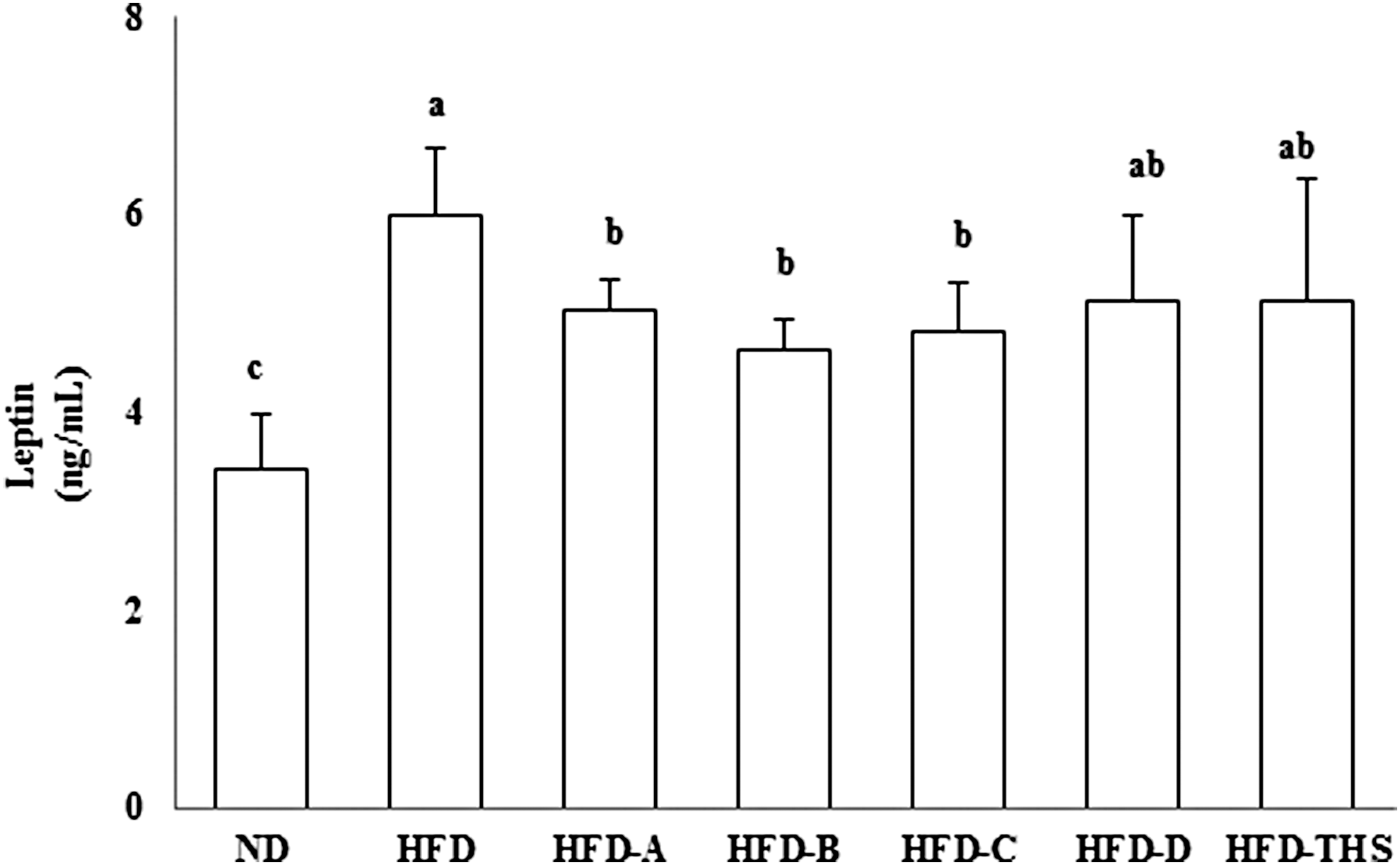
Level of leptin in serum of rats fed experimental diets after 8 weeks. Values are mean ± SE (n = 10). Bars with different letters are significantly different (P < .05) between groups by Tukey's test. Diet groups: ND, normal diet group; HFD, high-fat diet group; HFD-A, HFD+gochujang A group; HFD-B, HFD+gochujang B group; HFD-C, HFD+gochujang C group; HFD-D, HFD+gochujang D group; HFD-THS, HFD+Tabasco hot sauce group. SE, standard error.
Lipid contents in serum
Serum TG, TC, and LDL-C levels were significantly higher by 54.4%, 14.6%, and 78.4%, respectively, in the HFD group compared with the ND group (Table 6). The atherosclerotic index (AI) showed a 1.5-fold elevation in the HFD group compared to the ND group. Serum TG, TC, and LDL-C levels and AI were significantly lower in the HFD-B group compared to the HFD group, with similar values to those in the ND group. The HDL-C content of the HFD group was significantly lower by 26.4% compared to the ND group, with no significant difference between the HFD groups. The HFD-THS group showed a slight improvement in the serum lipid profiles, as compared to the HFD group, without significance.
The results are mean ± SE of 10 rats per each group.
Values with different superscript letters in the same row are significantly different (P < .05) among groups by Tukey's test.
AI (atherogenic index): (total cholesterol −HDL-C)/HDL-C.
See the legend of Figure 1.
ALT, alanine aminotransferase; ALP, alkaline phosphatase; AST, aspartate aminotransferase; HDL-C, high-density lipoprotein cholesterol; LDH, lactate dehydrogenase; LDL-C, low-density lipoprotein cholesterol.
ALT, AST, ALP, and LDH activities in serum
Serum ALT activity showed no differences among the experimental groups (Table 6). Serum AST, ALP, and LDH activities were significantly higher by 43.9%, 47.3%, and 52.9%, respectively, in the HFD group compared to the ND group. The HFD-induced elevated activities of ALP and LDH were significantly lowered by 15.7–17.2% and 5.4–18.4%, respectively, due to gochujang supplementation (HFD-A, HFD-B, HFD-C, and HFD-D). Changes in serum ALT, AST, ALP, and LDH activity showed no difference between the HFD group and HFD-THS group. These results indicate that the liver damage indices were within the normal range in serum of all groups supplemented with gochujang and Tabasco hot sauce; moreover, there were no adverse effects due to ingestion of gochujang and Tabasco hot sauce.
Hepatic tissue lipid concentration and fat accumulation
TG and TC contents of hepatic tissue were significantly higher by 32.6% and 121.8%, respectively, in the HFD group compared to ND group (Fig. 2A, B). The TG contents in the hepatic tissue of the HFD-gochujang supplemented groups were lower by 8.9–17.41% compared to the HFD group. The HFD-THS group showed no difference in the TG content of hepatic tissue compared with the HFD-gochujang supplemented groups. TC contents in hepatic tissue of the HFD-gochujang supplemented groups were also decreased by 28.0–52.5% compared to the HFD group. The HFD-THS group showed higher hepatic TC content than the HFD-gochujang supplemented groups. However, the hepatic TC content was significantly lower in the HFD-THS group than in the HFD group. Immediately after sacrificing the rats, the color of hepatic tissue (Fig. 2C) was dark reddish in the ND group, and light pink to yellow in the HFD group; the HFD-gochujang supplemented groups showed a scarlet hepatic tissue color. To confirm the accumulation of lipid, the hepatic tissue was also stained with Oil-Red O and observed under optical microscopy (Fig. 2D). In the HFD group, lipid accumulation was clearly observed due to the presence of reddish stained fat globules in hepatocytes as compared with the ND group. However, lipid accumulation appeared to be inhibited in the hepatocytes of the HFD-gochujang supplemented groups. The lipid accumulation in hepatic tissue showed no differences between the HFD and HFD-THS groups.
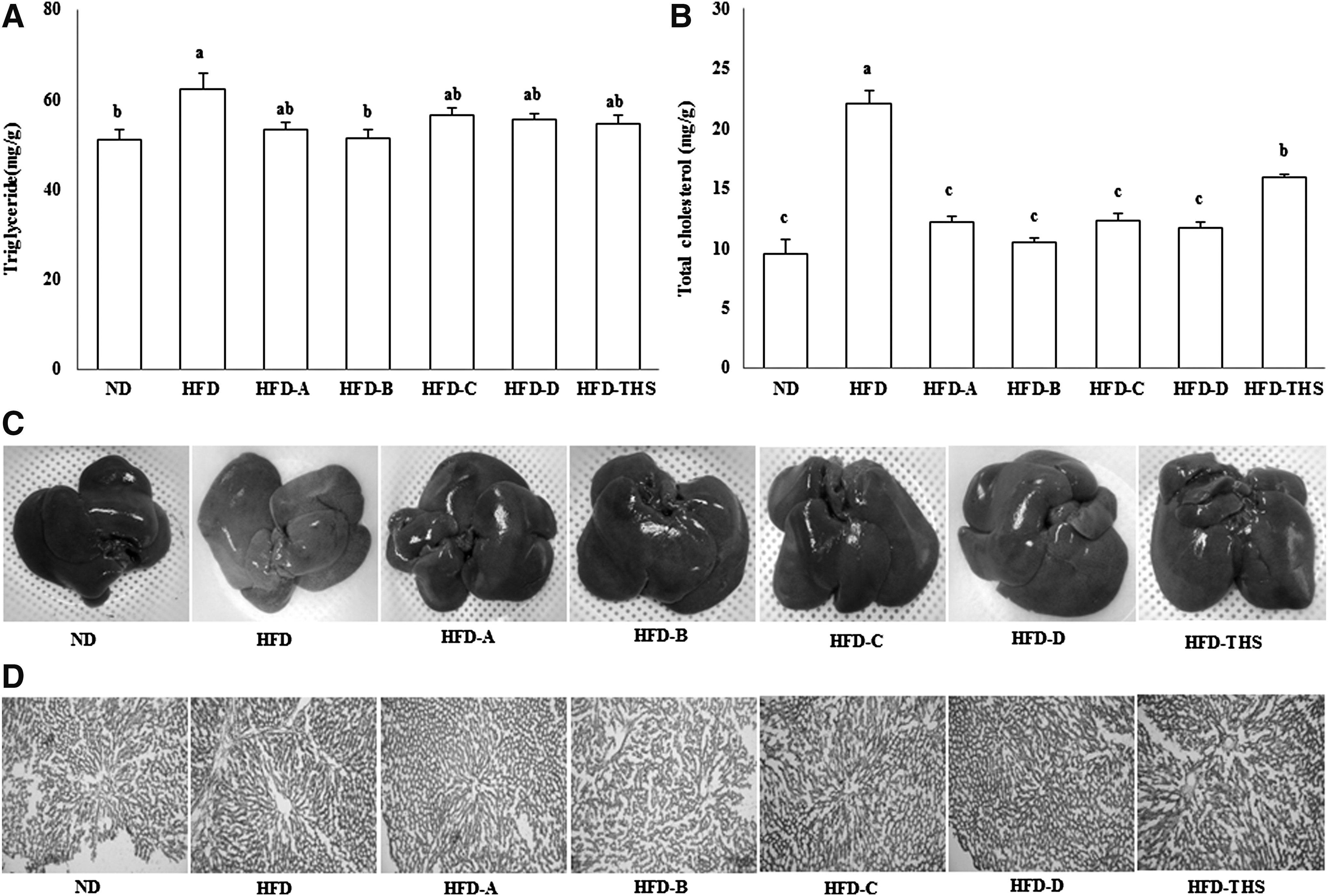
Hepatic TG
Expression of ACC, FAS, and G6PDH mRNA in the liver
The mRNA expressions of FAS, ACC, and G6PDH, the major enzymes involved in lipid synthesis in the liver, are shown in Figure 3. The gene expressions of FAS, ACC, and G6PDH were increased in the HFD group compared to the ND group. Among the HFD groups, the FAS and ACC gene expressions in the liver was the lowest in the HFD-A and HFD-B groups, and G6PDH showed the lowest expression in the HFD-B and HFD-C groups. The mRNA expressions of FAS, ACC, and G6PDH in the liver showed a decline in the HFD-THS group compared to the HFD group, without significance.
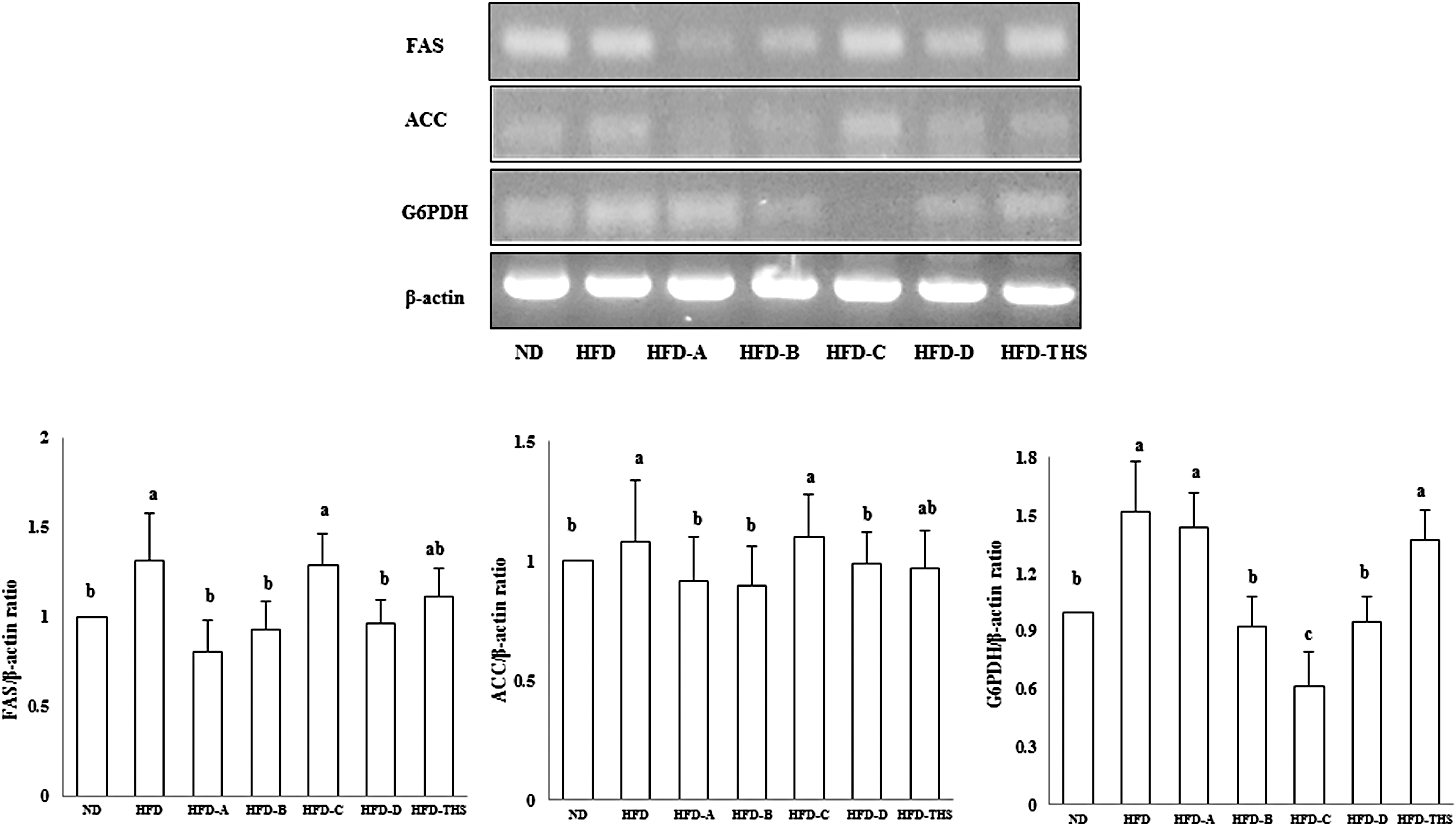
Expression of mRNA of enzyme related to lipid synthesis in liver of rats fed experimental diets after 8 weeks. The mRNA expression of ACC, FAS, and G6PDH was measured by RT-PCR. In the determination of mRNA levels, β-actin served as a loading control. Values are mean ± SE (n = 10). Bars with different letters are significantly different at P < .05 by Tukey's test. Diet groups: See the legend of Figure 1. ACC, acetly-CoA carboxylase; FAS, fatty acid synthase; G6PDH, glucose-6-phosphate-dehydrogenase; RT-PCR, reverse transcription–polymerase chain reaction.
Epididymal adipose tissue TG, and TC contents, and histological changes
The TG and TC contents in the epididymal adipose tissue were significantly increased by 25.3% and 42.8%, respectively, in the HFD group compared to the ND group (Fig. 4A, B). The contents of TG decreased by 13.5–23.6% in the HFD-gochujang supplemented groups compared to the HFD group. The HFD-gochujang supplemented groups showed significantly lower TC content than the HFD group, and the values were similar to the ND group. However, the TG and TC contents in the epididymal adipose tissue showed no difference between HFD-gochujang supplemented groups and the HFD-THS group. The size of epididymal adipocytes (Fig. 4C, D) was significantly higher in the HFD group compared with the ND group. The epididymal adipocytes sizes of the HFD-gochujang supplemented groups were decreased compared to the HFD group. The size of epididymal adipocytes showed no difference between the HFD and HFD-THS groups.
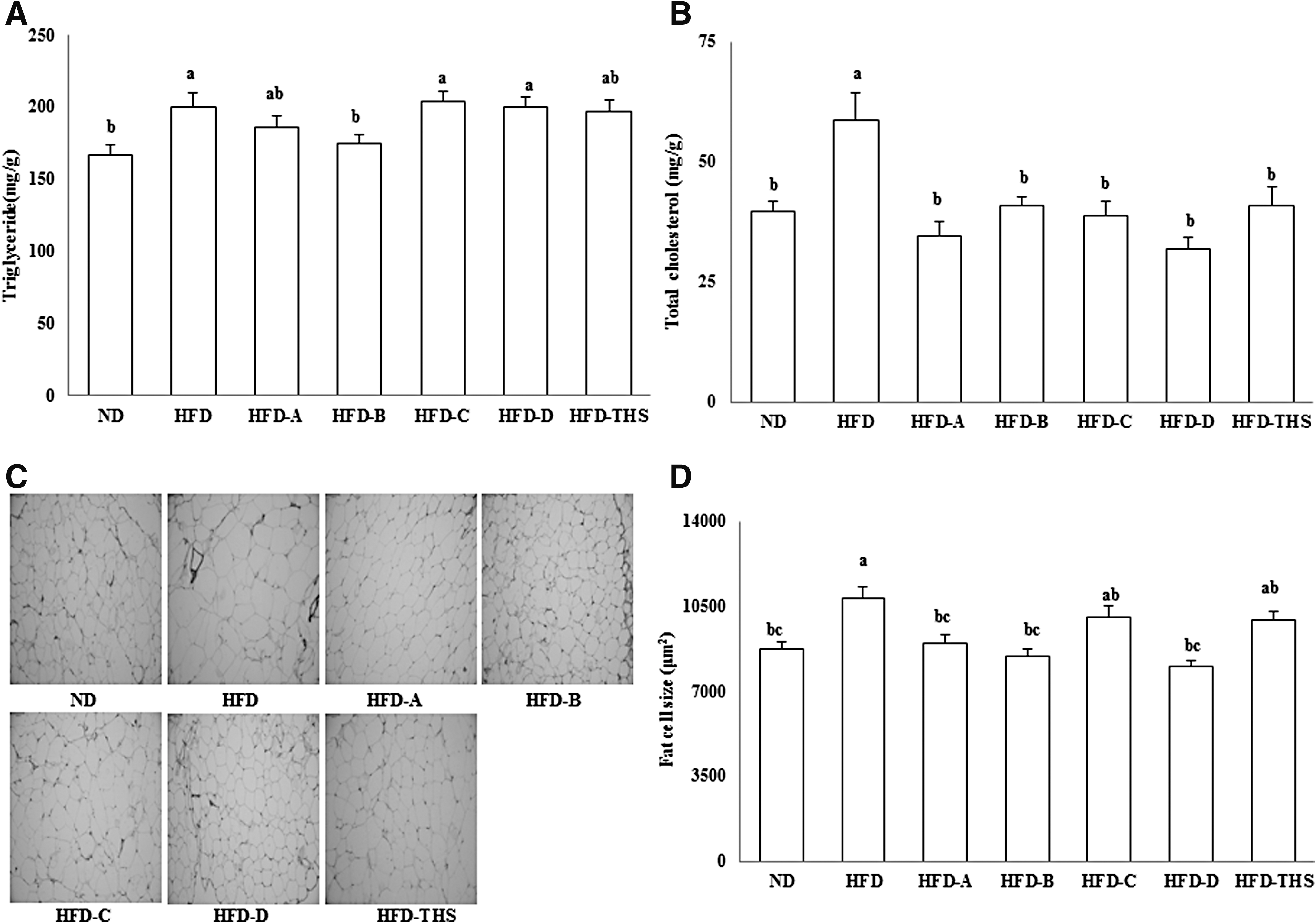
Epididymal TG
Discussion
Various kinds of antiobesogenic compounds are found in gochujang. 10,11,27 The results of our analyses determined that the secondary metabolites known to be antiobesogenic and/or antiatherogenic compounds of gochujang prepared with various kinds of koji used in the study (Table 2) included the flavonoid compounds (luteolin, apigenin, and kaempferol), the isoflavone compounds (genistein, daidzein, and glycitein), the soyasaponin compounds, the alkaloid compounds (capsaicin and dihydrocapsaicin), and lysophosphatidylcholine compounds; whereas, only the phenolic compounds such as capsaicin and dihydrocapsaicin were detected in Tabasco hot sauce, as they are the main bioactive compounds in pepper. The metabolic fermentation products of gochujang are different according to the kinds of grains and microorganisms used in the production of koji. 10,11,21 In this study, gochujang A and B that contained both rice koji and soybean koji fermented by the fungus A. oryzae CJ 1354 and B. amyloliquefaciens CJ 15-6, respectively, showed slightly higher contents of isoflavone and soyasaponin compounds, compared with gochujang C and D that contained both rice koji and meju powder fermented using only the fungus (A. oryzae CJ 1354 and commercial A. oryzae product). Gochujang D prepared with brown rice koji and meju powder showed high contents of the alkaloid and lysophosphatidylcholine compounds. Lee et al. 10 reported that the content of linoleic acid, oleic acid, and lysophosphatidylcholine in brown rice gochujang was high, whereas the content of γ-aminobutyrate was high in white rice gochujang. These physiologically active materials of gochujang and Tabasco hot sauce are potentially involved in the antiobesity and cholesterol-lowering effects observed in experimental animals. Therefore, this study was conducted to investigate whether the antiobesity effects and lipid metabolism in the blood and liver are improved in HFD-induced obese rats by feeding them gochujang, which is the most commonly used hot-tasting condiment among Koreans, and Tabasco hot sauce, which is commonly used among western populations.
Weight loss improves obesity-related diseases and metabolic disorders. In general, obesity increases body fat rather than just the body weight, especially the increase of the visceral fat pads located in the abdominal cavity rather than the subcutaneous fat pads, and is thus a health hazard. 28 Abnormal hypertrophy of the epididymal adipose tissue, which is a white adipose tissue, is known to cause severe metabolic syndrome. 29 The results of this study indicate that the gochujang feeding prevented excessive weight gain in HFD-induced obese rats. In addition, gochujang feeding resulted in lower weights of visceral adipose tissues, such as epididymal, mesenteric, and perirenal adipose tissue, which are known to be most sensitive to weight loss, and decreased the size of epididymal adipocytes. Taken together, gochujang intake lowered epididymal adipocytes size, probably leading to less epididymal fat pad weight and eventual decreased body weight gain. However, feeding Tabasco hot sauce only slightly reduced the body weight gain and the weight of white fat pads in the experimental animals, and the effect on body weight was less than that of gochujang. These results indicate that gochujang contains various kinds of antiobesogenic compounds that reduce body weight and body fat accumulation.
The leptin in serum reduces body weight since it increases according to the increase in body fat, which influences the function of the hypothalamus, the energy metabolism regulating center; hence, it suppresses appetite and reduces dietary intake while increasing the energy metabolism. 30 In this study, the experimental groups fed gochujang showed a decreased level of leptin. Among the gochujang groups, gochujang B produced by nutritious giant embryo rice koji and soybean koji, showed the lowest body weight and body fat content in addition to the lowest level of leptin in the serum, indicative of a positive association between the fat mass via generation and secretion of leptin and the levels of serum leptin.
TG is the main component of adipose tissue and is the form of fat used for energy storage in the body. When the obesity index is high, the TG level is used as an index of obesity because the serum TG level is increased. Thus, decreasing the TG content in obese people is important for the prevention of cardiovascular disease. In this study, the supplementation of gochujang showed effectiveness for lowering TG in the serum, liver, and epididymal adipose tissues, thus reducing the risk of arteriosclerosis. In addition, the gene expressions of lipid synthesis-related enzymes, FAS, ACC, and G6PDH, were decreased after gochujang supplementation, which indicates that the decrease in TG content and the inhibition of fat accumulation in the liver tissue are related to the expression of lipogenic genes.
The effect of koji produced by different kinds of microorganisms appears to be different from that of secondary metabolites and the effect of physiological activity. 31 The amounts of bioactive phenolic and lysophospholipid compounds increased during fermentation. 11 Rice koji produced by fermentation with B. amyloliquefaciens KCCM 11718P showed higher antioxidative activity, and higher contents of flavonoids and lysophospholipid compared to the rice koji produced by fermentation with A. oryzae KCCM 11300P. 11 According to Shin et al., 21 antiobesity and lipid-lowering effects of a gochujang product prepared with a fungal rice koji and a bacterial soybean meju were more effective than those in gochujang product prepared using only the fungus or the nonfermented gochujang mixture. In this study, gochujang B prepared with a nutritious giant embryo rice koji and soybean koji mixture resulted in the greatest improvement in lipid metabolism and the strongest antiobesity effects due to the higher contents of daidzein, genistine, and soyasaponin compounds, which are known to have antiobesogenic or antiatherogenic properties. 20,32 –34 Additionally, the soybean koji contained in the gochujang B was fermented with B. amyloliquefaciens CJ 15-6.
Soy protein intake suppresses hepatic lipid accumulation and reduces the deleterious effects of lipotoxicity in rats. 35 It has been reported that the functional materials in fermented soybean, which is a major ingredient of gochujang, reduces weight gain in HFD-induced obese rats. 20,21,32 –34 Genistein, daidzein, and their derivatives, major components derived from meju, reportedly have antiobesity effects in mice 33 and have been reported to reduce TC and LDL-C levels and increase HDL-C levels in serum, and, thus, are potential preventive materials for arteriosclerosis. 32,36 Kim et al. 34 reported that the isoflavonoid intake in mice caused improvement in lipid metabolism. Soyasaponin was also reported to have antioxidant activity, a serum TC lowering-effect, selective toxicity to cancer cells, and an immunity-enhancing effect. 22 Furthermore, phospholipids have been reported to decrease cholesterol levels, 34 regulate inflammatory reactions, and improve immunological functions. 37 Thus, high content of genistein, daidzein, soyasaponin, and lysophospholipid in gochujang is considered to contribute to antiobesity and cholesterol-lowering effects.
In the case of obesity, which is a metabolic disease, carbohydrates and fatty acids are not fully utilized as an energy source and causes abnormal hepatic metabolism, which increases the level of hepatotoxicity indicator enzymes such as AST and ALT. 38 In this study, the activity of serum hepatotoxicity indicator enzymes in the experimental group fed gochujang decreased significantly compared to the HFD group, suggesting that gochujang powder reduces abnormal liver metabolism-induced hepatotoxicity.
As a result of feeding gochujang prepared with various kinds of koji together with HFD, rats showed improvement in obesity-related factors, such as serum and liver TG, lipid accumulation, and lipid synthesis-related gene expression in the liver; in addition, the size of epididymal adipocytes decreased. The antiobesity effects and improvement in serum lipid metabolism were greater in the gochujang groups than the Tabasco hot sauce group. Among the gochujang groups, gochujang B made of nutritious giant embryo rice koji and soybean koji mixture, which had the highest contents of bioactive materials, showed the highest antiobesity effect. Thus, gochujang could be a hot sauce product for consumers worldwide, as it contains highly functional ingredients. Nonetheless, more studies are warranted to determine whether the reduction in body weight gain and body fat accumulation is a direct or an indirect effect of gochujang.
Footnotes
Acknowledgment
This work was supported by a grant from CJ CheilJedang Corp. (No. 2015-00000533).
Author Disclosure Statement
No competing financial interests exist.