




Abstract
Alopecia is divided into two categories: androgenic alopecia and nonandrogenic alopecia. An androgen-dependent abnormality of biological functions causes alopecia in males, but the role of androgens is not yet elucidated in female pattern hair loss (FPHL). Modulation of androgenic activity is not effective in certain kinds of androgenic alopecia in females, as well as in cases of nonandrogenic alopecia in males and females. The hair growth drug, minoxidil, stimulates vascular endothelial growth factor (VEGF) production as well as vascularization and hair growth in females. Yet, because minoxidil has side effects with long-term use, a safe alternative hair growth agent is needed. Whereas hair develops after birth in mammalian species, hair mostly grows in a precocial bird, in the chicken, between hatching days 14 and 15. Therefore, we hypothesized that the chicken egg contains a key hair growth factor. In this study, we demonstrated that water-soluble peptides derived from the egg yolk stimulate VEGF production and human hair follicle dermal papilla cell growth. We also found that these peptides enhance murine hair growth and improve hair growth in FPHL. Finally, we characterized that water-soluble egg yolk peptides induce VEGF expression through insulin growth factor-1 receptor activation-induced hypoxia-inducible factor-1
Introduction
A
Previous studies have demonstrated that vascular endothelial growth factor (VEGF) stimulates hair growth through increases in hair follicular angiogenesis in mice. 5 Moreover, increases in the production of: (1) VEGF; (2) fibroblast growth factor (FGF); and (3) insulin growth factor (IGF)-1, 6,7 all of which increase vascularization, is a part of minoxidil-mediated hair growth, suggesting that stimulation of vascularization and/or production of VEGF, FGF, and/or IGF-1 is a therapeutic strategy to treat various types of alopecia. Yet, because minoxidil has side effects with long-term use, 8 a safe alternative hair growth agent is needed.
Hair development occurs after birth in mammalian species, whereas precocial birds, including chickens, develop hair within 1 day in the middle stage of hatching in parallel with reduced egg yolk volume. 9 It remains unclear how hair development is stimulated within this short period in these birds.
We hypothesize that chicken egg yolk protein contains substances that accelerate hair growth. We prepared peptides of chicken egg protein and demonstrated that these peptides isolated from egg yolk (but not egg white) stimulate production of VEGF and hair follicular dermal papilla cell (HFDPC) proliferation. We further showed that these peptides increase hair growth in vivo in both murine and FPHL subjects.
Materials and Methods
Egg peptide preparation
Egg proteins were isolated from chicken egg yolks and egg whites. To improve solubility in aqueous solution, isolated proteins were hydrolyzed by serine endopeptidase derived from Bacillus licheniformis (Novozymes, Bagsvard, Denmark) as previously described.
10
Briefly, egg proteins were incubated with 120 mU/mL of the enzyme at 60°C for 3 h. Enzyme reaction
The water-soluble peptide fraction was recovered by filtration using a filter press, and dried in a spray dryer.
Cell cultures
Human HFDPCs purchased from Cell Applications, Inc. (San Diego, CA, USA) were grown in papilla cell growth medium, as described previously. 11,12 Cells were plated in 3 × 10⁴ cells/well in a 24-well plate in the medium followed by incubation with water-soluble egg yolk or white peptides for 48 h. Cell growth was measured using the CCK-8 Kit (Dojindo Molecular Technologies, Inc., Kumamoto, Japan).
VEGF assay
HFDPC were plated at 3 × 10⁴ cells/well in a 24-well plate. Cells were treated with water-soluble egg yolk peptides for 24 h. The amount of VEGF in the culture supernatants was assayed using the Human VEGF ELISA Kit (R&D System, Minneapolis, MN, USA) following the manufacturer's instructions.
Quantitative real-time polymerase chain reaction
Total RNA was isolated from cell lysates by the guanidine isothiocyanate–phenol–chloroform method 13 with ISOGEN (Nippon Gene Co., LTD., Tokyo, Japan), following the manufacturer's instructions. cDNA was then prepared using the PrimeScript™ RT Reagent Kit (TaKaRa, Kyoto, Japan). Quantitative real-time polymerase chain reactions were performed using the SYBR®Premix Ex Taq II Tli Kit (TaKaRa), as we described previously. 14 Primer sequences of IGF-1, VEGF, and glyceraldehydes 3-phosphate dehydrogenase (GAPDH) are as follows; IGF-1, F5′-TTTCAAGCCACCCATTGACC-3′ and R5′-GCGGGTACAAGATAAATATCCAAAC-3′, VEGF, F5′-CTACCTCCACCA TGC and R5′-ATGATTCTGCCCTCCTCC-3′, and GAPDH, F5′-GCACCGTCAAGGCTGAGAAC-3′ and R5′-ATGGTGGTGAAGACGCCAGT-3′. IGF-1 and VEGF mRNA expression were normalized by GAPDH.
In vivo murine hair growth study
Animals were maintained at a temperature of 21 ± 1°C and a relative humidity of 40–60%. Male C3H mice (from Japan SLC, Inc., Shizuoka, Japan) were fed commercial chow diet (CRF-1; Charles River Japan, Yokohama, Japan) and tap water ad libitum, and maintained under a 12-h light–12-h dark cycles. The hairs of dorsal skin of the 7-week-old (telogen phase) male mice were shaved gently with an electric clipper. Three days after shaving, mouse diet was switched to either hair growth peptide (HGP) containing (0.1% w/w) or control commercial diet (10 animals/group) for 17 days. In a parallel study, 100 μL of minoxidil (1.0%) or vehicle (ethanol) was topically applied to the dorsal skin. Hair growth was assessed by pixel analysis from back skin photographs at 17 days. All experiments were approved by the Animal Research Committee of Nihon Bioresearch, Inc. (Gifu, Japan) and followed the Council Guide of Japan Ministry of Health, Labor, and Welfare (Protocol 0601001).
Human clinical study
Seventy-six healthy subjects who were diagnosed with FPHL by specialists at DRC Co. Ltd. (Osaka, Japan) were randomly divided into two groups (38 per group, HGP 49 ± 5 years and placebo 49 ± 6 years) (Supplementary Table S1; Supplementary Data are available online at
This study was planned according to the guidelines of the Declaration of Helsinki and Ethical Guidelines for Medical and Health Research Involving Human Subjects proposed by the Japan Ministry of Health, Labor, and Welfare. All subjects provided written informed consent before the commencement of the study, which was approved by the Ethics Committees at the Medical Corporation Kenshokai, Fukushima Healthcare Center (Osaka, Japan).
Statistical analysis
Results were statistically analyzed by student unpaired (in vitro cultured cell and in vivo murine study) and paired (human clinical study) t-test. In the human study, unequal variance data were analyzed by Welch's t-test.
Results
Effects of peptide isolated from chicken on HFDPC cell growth
We first isolated chicken egg proteins. To improve solubility in aqueous solutions, isolated proteins of egg yolk and egg white were enzymatically hydrolyzed. Because VEGF plays a critical role in hair growth, 17 we assessed changes in VEGF level. Similar to minoxidil, 18 we found that water-soluble egg yolk, but not egg white, peptide Fr. significantly increased VEGF production in HFDPC compared with vehicle control treatment (Fig. 1A).
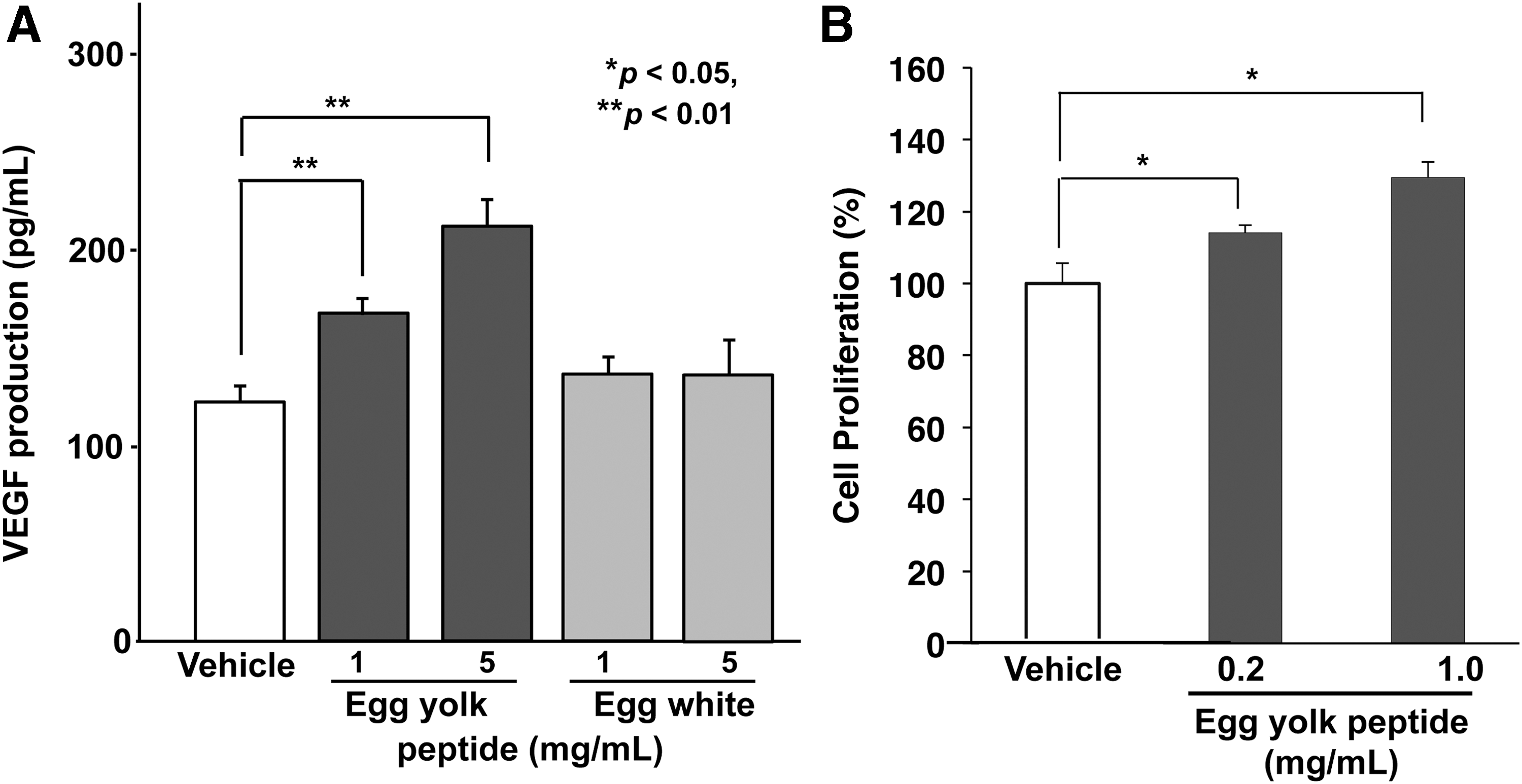
Egg yolk, but not egg white, peptide fraction significantly increases VEGF production and proliferation of HFDPC. HFDPC was incubated with water-soluble egg yolk, egg white peptide fraction, or vehicle for 48 h.
Since VEGF increases dermal papilla cell proliferation, 19 we next investigated whether water-soluble egg yolk peptide Fr. increases HFDPC growth. HFDPC growth was significantly increased following incubation with egg yolk peptide Fr. compared with vehicle control (Fig. 1B). These results suggest that water-soluble peptides isolated from egg yolk enhance both VEGF production and HFDPC growth.
Water-soluble egg yolk peptide Fr. stimulates murine hair growth
Since increases in VEGF production and HFPDC proliferation are a part of the process of hair growth, we next addressed whether water-soluble egg yolk peptide Fr. increases murine hair growth. Because we assumed that intestinal absorption of large-size peptides is generally better than a percutaneous delivery, we orally administered a water-soluble egg yolk peptide Fr.-containing diet for 17 days. In parallel, as a positive control, we topically applied minoxidil (1%) on murine dorsal skin. There were no significant differences in body weight between animals fed a diet with or without egg yolk peptide Fr., and minoxidil and vehicle throughout the testing period (Table 1). All mice tolerated and completed the study without showing adverse effects. In addition, we did not see changes in behavior in any animals (data not shown). Minoxidil significantly increased hair growth compared with the vehicle control group (Fig. 2A, B). Similar to minoxidil, oral administration of water-soluble egg yolk peptide Fr. significantly enhanced hair growth of mice (Fig. 2A, B).
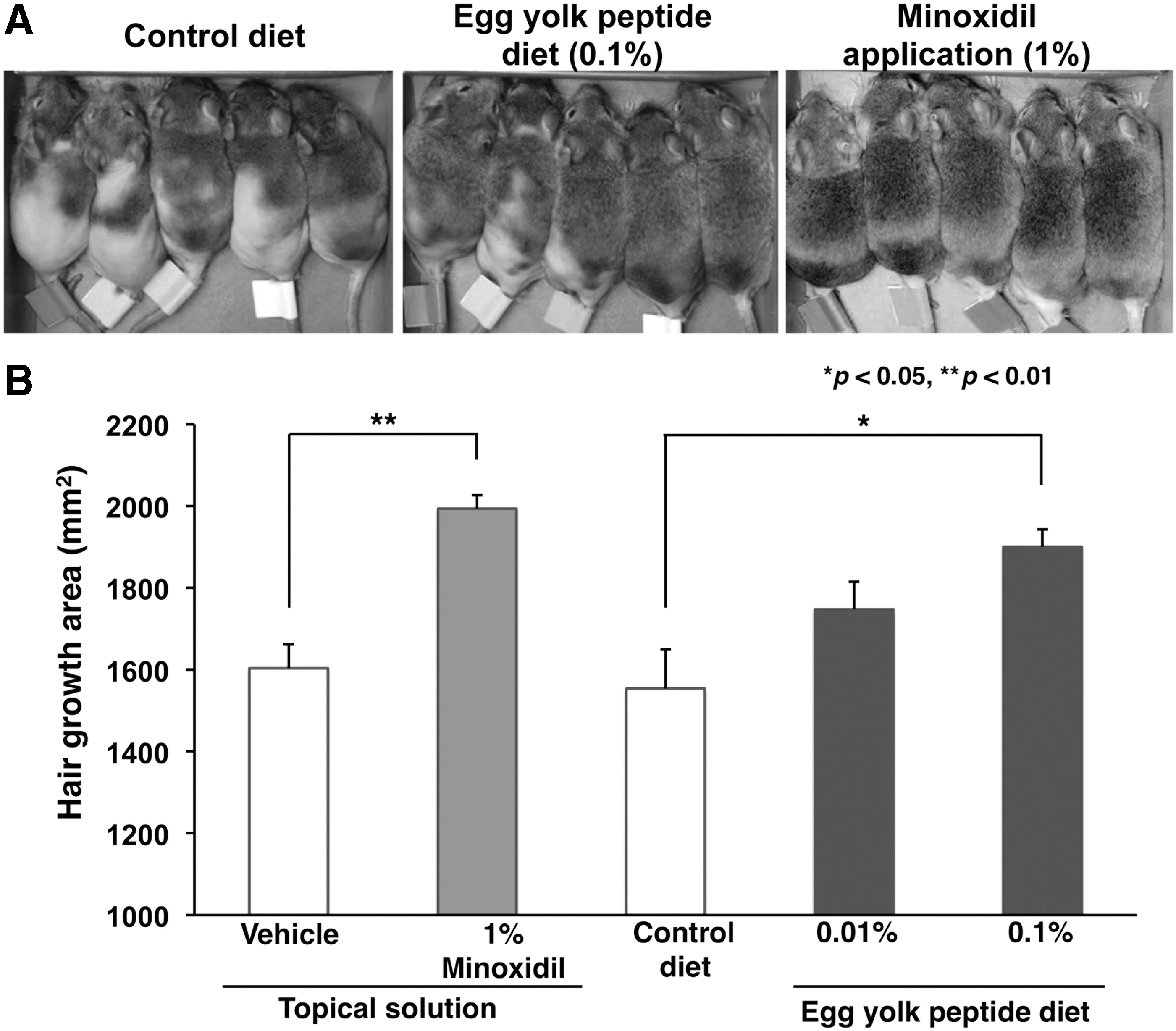
Both minoxidil and egg yolk peptide significantly stimulate murine hair growth. Mice were fed control diet or egg yolk peptide-containing diet for 17 days. In a parallel study, minoxidil (0.1%) or vehicle (ethanol) was topically applied on dorsal skin of mice.
Taken together, the in vitro using HFDPC cultures and in vivo murine study demonstrate that water-soluble egg yolk peptide Fr. improves hair growth, paralleling stimulation of VEGF production and endothelial cell growth. Hence, we named water-soluble egg yolk peptide Fr. as HGP.
HGP, water-soluble egg yolk peptide Fr. stimulates hair growth of FPHL subjects
We next assessed the effect of HGP, water-soluble egg yolk peptide Fr., on hair growth in FPHL (Table 2; Fig. 3).
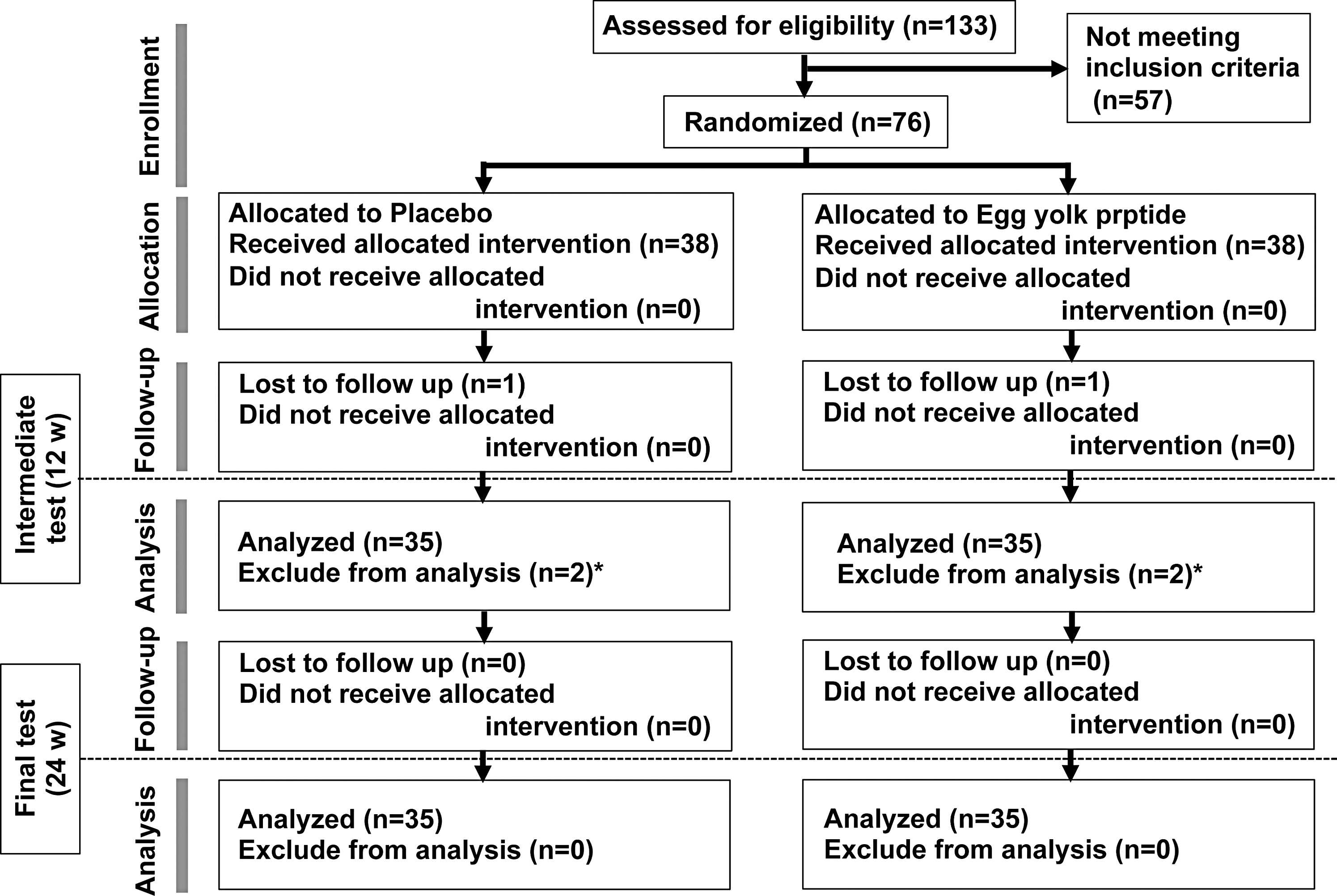
Study design of oral administration of HGP in female pattern hair loss. *Significant changes detected in hair growth rate and hair density on Smirnoff-Grubbs rejection test. HGP, hair growth peptide.
HGP, hair growth peptide.
All subjects receiving placebo and HGP completed the test without showing adverse effects, including hypertrichosis and development of facial hairs during the test period. Savin scale measurements 20,21 showed that whereas there were variations of efficacy of HGP in improving hair growth among subjects, HGP significantly improved hair growth compared with the placebo control at 12 weeks (Fig. 4A, B). Hair growth was further improved at 24 weeks following the start of HGP administration (Fig. 4A–C). Phototrichogram analysis showed that hair density significantly increased in FPHL after administration of HGP (Fig. 4D), and also showed an increase in both terminal hair ratio and diameter following 24 weeks of HGP (Table 3).
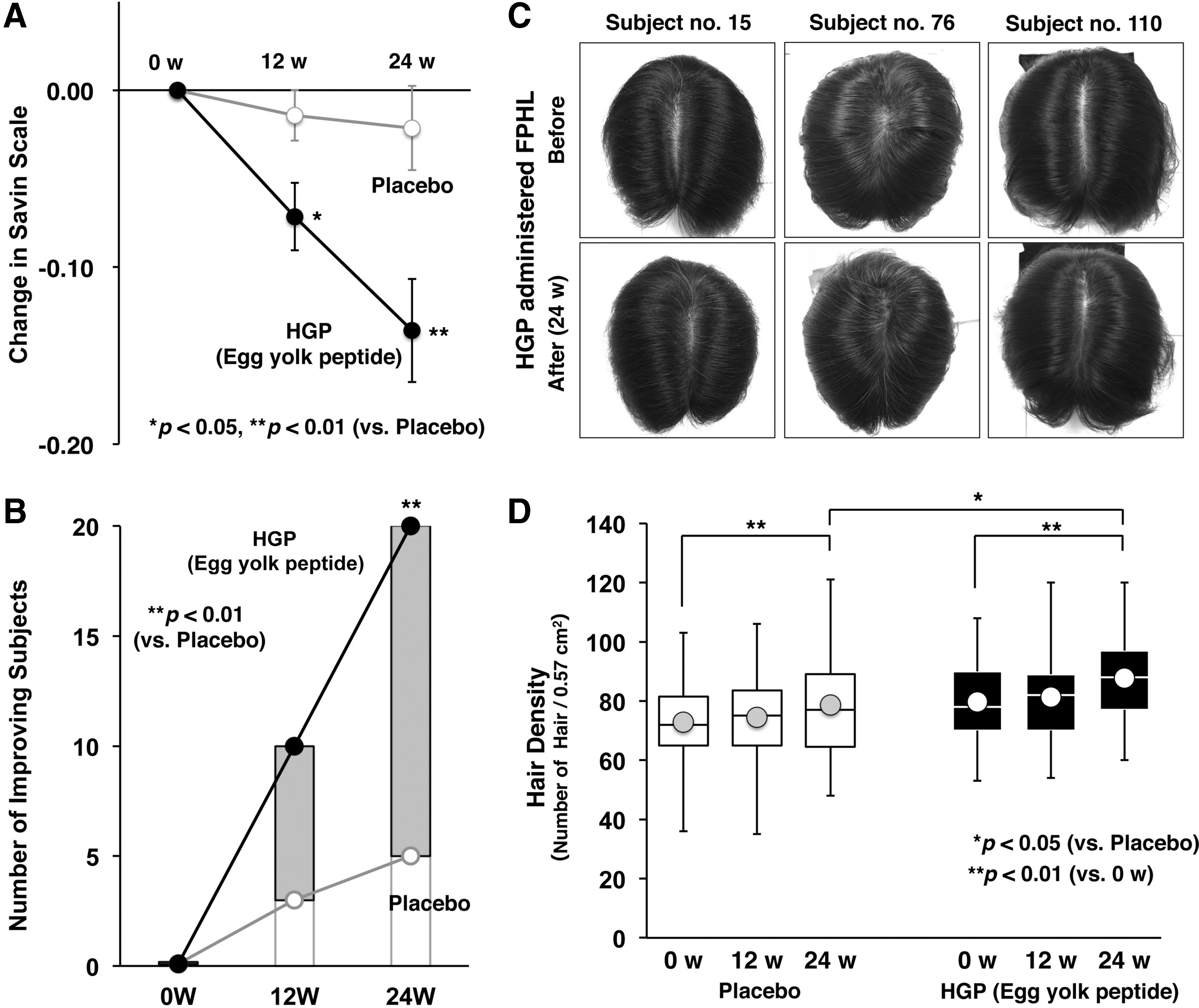
Oral HGP improves hair growth. FPHL patients were orally administered placebo or HGP-containing capsule for 24 weeks. Hair growth was assessed by Savin scale.
How HGP stimulates VEGF production
Prior studies show that the activation of IGF-1 22 and epidermal growth factor (EGF) 23 receptors is an upstream signal that activates VEGF transcription. We next investigated whether HGP increases VEGF production through both/either IGF-1 and/or EGF receptor-dependent mechanisms.
A blockade of IGF-1 receptor by a specific pharmacological inhibitor, OSI-906 (but not an inhibitor of EGF receptor, OSI-744), significantly decreases VEGF production in HFPDC (Fig. 5), suggesting that IGF-1 receptor activation is responsible for the upstream mechanistic step of HGP-mediated increases in VEGF production. We further elucidated a downstream pathway of IGF-1 receptor-dependent VEGF expression. Prior studies showed that activation of IGF-1 receptor activates phosphatidylinositol-4,5-bisphosphate 3-kinase (PI3K) and then a transcription factor, hypoxia-inducible factor (HIF)-1α that binds to promoter regions of VEGF. 24 As expected, VEGF mRNA levels were significantly increased in cells incubated with HGP. Specific inhibitors of PI3K (LY294002) and of HIF-1α (dimethyloxalylglycine) attenuated expression of VEGF in cells (Fig. 6).
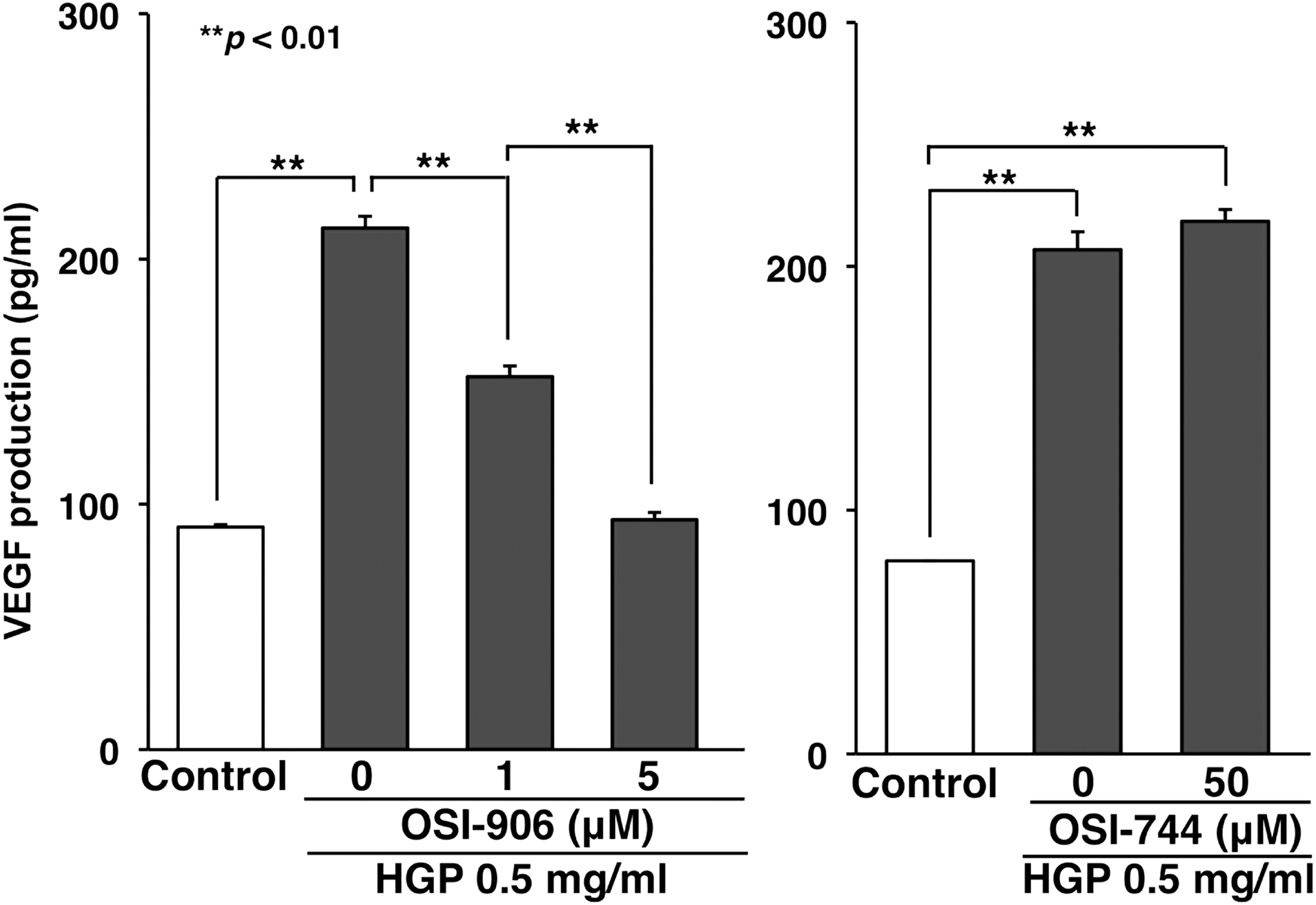
HGP-induced VEGF production through IGF-1 receptor activation. HFDPC was coincubated with HGP and a specific inhibitor of IGF-1 receptor (OSI-906 906; AdooQ BioScience, Irvine, CA, USA) or epidermal growth factor receptor (OSI-744; ChemScene, LLC, Monmouth, NJ, USA) for 48 h. VEGF amount in the culture supernatant was assessed by ELISA. IGF, insulin growth factor.
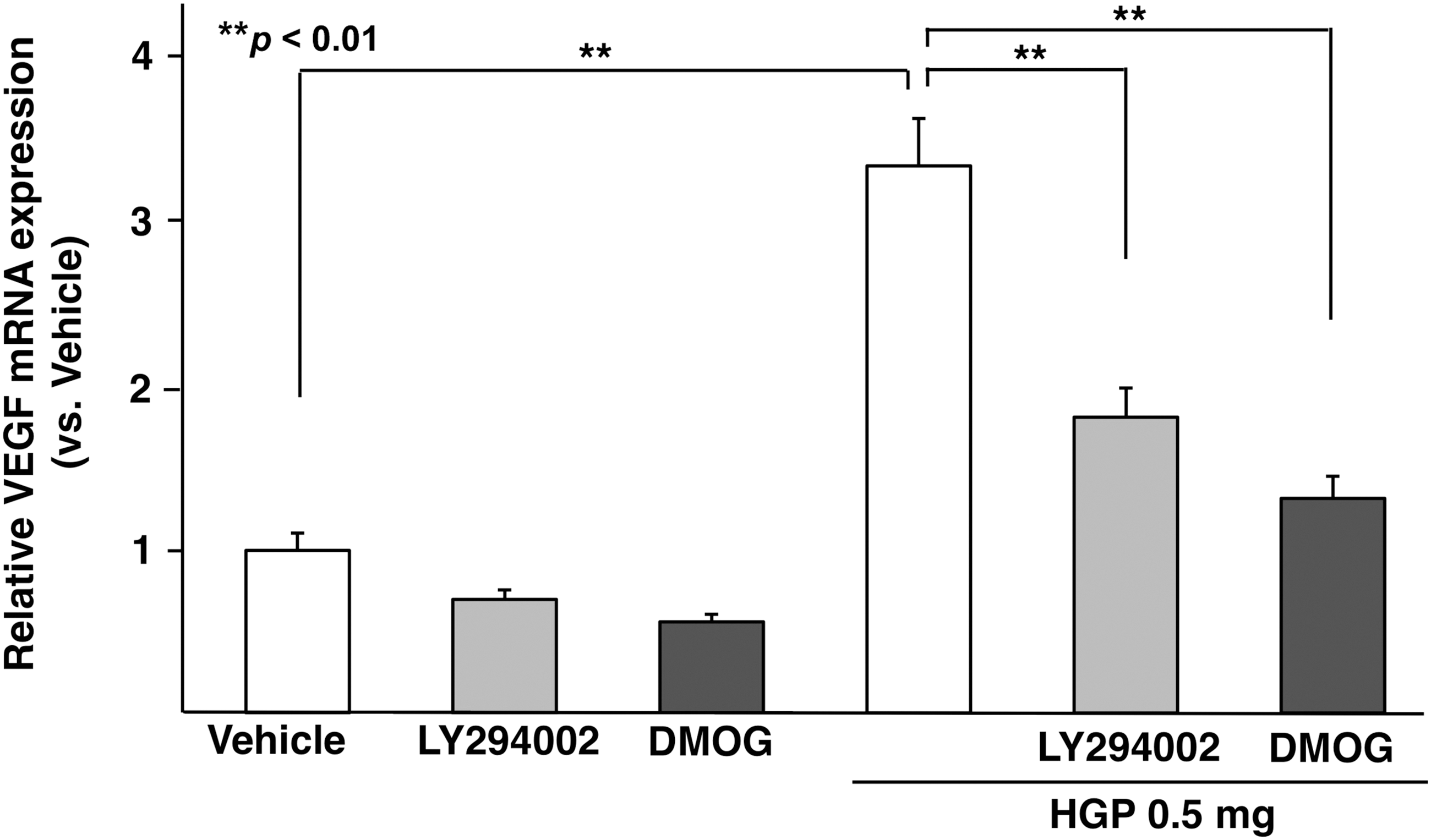
HGP-induced VEGF production through IGF-1 receptor activation. Normal dermal fibroblasts were incubated with HGP, and a specific inhibitor of HFDPC was coincubated with HGP and a specific inhibitor of phosphatidylinositol-4,5-bisphosphate 3-kinase (LY294002, 20 μM; Wako Pure Chemical Industries, Ltd., Osaka, Japan) and of hypoxia-inducible factor-1α (dimethyloxalylglycine, 1 μM; Abcam, Cambridge, MA, USA) for 48 h. VEGF amount in the culture supernatant was assessed by ELISA.
Finally, we also found that HGP increases IGF-1 production (2.7-fold, vs. vehicle control, P < .01), suggesting that HGP increases IGF-1 production followed by activating IGF-1 receptor, leading to VEGF production.
Taken together, increases in VEGF production through stimulation of IGF-1 and IGF-1 receptor activation are likely responsible for the upstream signaling pathway of HGP-mediated hair growth (Fig. 7).

Proposed pathway of HGP-mediated hair growth.
Discussion
Absorbed egg yolk proteins in a chicken embryo are proteolytically hydrolyzed and are utilized for the generation of biological components. In addition to this nutritional role, certain peptides could serve as modulators of embryonic development. Because hair growth significantly increased between hatching day 14 and 15 in chickens, before birth, 25 we hypothesized that certain egg proteins and/or peptides stimulate hair growth. Using mammalian models, we found that water-soluble egg yolk peptides increase hair growth.
We demonstrated in this study that HGP, a water-soluble peptide fraction isolated from chicken egg yolk, stimulates HFDPC in vitro in parallel to increases in VEGF production. We further showed that HGP not only increases HFDPC proliferation, but also stimulates hair growth in both mice and FPHL. Hence, similar to minoxidil, 6 HGP can be categorized as a hair growth agent, effective in various types of alopecia treatment, including FPHL.
HGP stimulates scalp, but not body hair growth in human subjects. There are known differences between body and scalp hairs: (1) a hair cycle of body hair (2–3 mo) is faster than that of scalp hair (2–5 yrs) and (2) density of capillary vessel (scalp > body) near hair tissues. Therefore, it is possible that more circulating chemicals can be incorporated into scalp hair tissues versus body and utilized for cell growth. In addition, water-soluble egg yolk peptide(s) (HGP) can be incorporated into cells through unidentified binding/receptor protein(s) expressed in scalp hair cells.
Our study revealed that HGP-mediated VEGF induction is required for activation of IGF-1 receptor, PI3K and transcription factor, HIF-1α. We ruled out EGF receptor activation serving as an upstream signaling of HGP-mediated VEGF production. In addition, STAT3 activation is shown to stimulate VEGF transcription, 26 whereas inhibition of STAT3 using a specific pharmacological inhibitor of STAT3, S3I-201, does not attenuate HGP-induced VEGF expression (data not shown). Therefore, HIF-1α-mediated transcription regulation initiated by IGF-1 receptor activation is most likely responsible for HGP-induced VEGF production.
Finally, we also found that HGP increases IGF-1 production. Because VEGF induces IGF-1 synthesis, increases in IGF-1 by VEGF could further accelerate VEGF production. Therefore, HGP additively and/or synergistically stimulates hair growth by increases in IGF-1 and VEGF production. Yet, it is unclear how HGP increases IGF-1 production. Nevertheless, in this study we elucidated that HGP stimulates hair growth through IGF-1 receptor activation-mediated upregulation of VEGF production and HFDPC proliferation in parallel to increasing in IGF-1 generation. 27 Notably, HGP consists of various peptides, not just one; consequently, two or more peptides could activate both/either VEGF and/or IGF-1 expression.
Finally, up to 500 kDa molecules, including peptides, are confirmed as absorbed through intestinal mucous membranes. 28 Hence, hydrolyzed smaller sizes of peptide of HGP should be effector(s) that stimulate VEGF production and hair growth. Yet, alternatively large sizes of proteolytic HGP can be absorbed by endocytosis through Peyer's patches and/or Goblet cells.
In conclusion, our study demonstrated that HGP increases VEGF production and HFDPC growth. We further showed that HGP accelerates murine hair growth and also demonstrated that HGP improves hair growth in FPHL. HGP-induced VEGF production is mediated by IGF-1 receptor activation-induced HIF-1α transcription pathway. Minoxidil has been used as a hair growth medicine, and HGP can also be regarded as an alternative, oral, chicken egg-derived, hair growth stimulation agent to treat broad types of alopecia, including FPHL.
Footnotes
Author Disclosure Statement
No competing financial interests exist.
References
Supplementary Material
Please find the following supplemental material available below.
For Open Access articles published under a Creative Commons License, all supplemental material carries the same license as the article it is associated with.
For non-Open Access articles published, all supplemental material carries a non-exclusive license, and permission requests for re-use of supplemental material or any part of supplemental material shall be sent directly to the copyright owner as specified in the copyright notice associated with the article.
