




Abstract
In this study, we investigated a potent acetylcholinesterase inhibitor that was isolated from radish leaf (Raphanus sativus L.) extracts. Through sequential fractionation of radish leaf extract, the active constituent was identified as cis-13-docosenamide (erucamide). To validate the potency, erucamide derived from radish leaves was supplemented in diets and then fed to trimethyltin (TMT)-exposed mice. Specifically, mice had free access to a control diet or diets containing different concentrations of erucamide for 3 weeks, followed by an injection of TMT (2.5 mg/kg body weight). Our results showed that pretreatment of mice with erucamide (20 and 40 mg/kg body weight per day) significantly attenuated the TMT-induced learning and memory deficits that were assessed by Y-maze and passive avoidance tests. These findings suggest that radish leaves, and possibly its isolated erucamide, may have preventive effects against memory deficits related to Alzheimer's disease by modulation of cholinergic functions.
Introduction
A
This study aimed to explore a safe natural compound from vegetables that may prevent or delay the onset and progression of dementia. Specifically, Raphanus sativus L. (radish), belonging to the cruciferous family, is widely available and consumed throughout the world. Different parts of radish, including the leaves, stem, roots, and seeds, have been used for medicinal purposes as well. For instance, radish leaves are being used as laxative, stimulant, digestive aid, and appetizer. 12 Furthermore, it was recently reported that radish leaf extract has antihypertensive effects in spontaneously hypertensive rats, 13 whereas other studies showed its efficacy as a selective antibacterial, antioxidant, gastrointestinal stimulatory, uterotonic, and gut stimulatory agent. 14 –17 However, to our knowledge, no study has reported the AChE inhibitory activity of radish leaf extract.
The objective of this study was to explore an active AChE inhibiting constituent in radish leaf extract. To identify the AChE inhibitor in radish leaf extract, solvent partition, silica gel open column chromatography, thin layer chromatography (TLC), high performance liquid chromatography (HPLC), and gas chromatography/mass spectrometry (GC/MS) were employed. Afterward, behavioral tests (i.e., Y-maze and passive avoidance tests) were performed to confirm in vivo potency of the AChE inhibitor in trimethyltin (TMT)-induced amnesic mice.
Materials and Methods
Cell culture
PC12 cells (ATCC, Manassas, VA, USA), which were derived from a rat pheochromocytoma, were propagated in Roswell Park Memorial Institute-1640 medium (Invitrogen, Carlsbad, CA, USA) supplemented with 10% horse serum (Invitrogen), 5% fetal bovine serum (Invitrogen), and 1% antibiotic-antimycotic (Invitrogen). Cultures were maintained at 37°C with 5% CO2.
AChE inhibition bioassay
AChE activity was measured using the Ellman's method. 18 In brief, the PC12 cells were homogenized in lysis buffer (Tris-HCl, pH 7.5), and centrifuged at 10,000 g for 15 min. The supernatant was then used as an enzyme source. In a 96-well plate, samples dissolved in 5% DMSO, an enzyme solution, and a reaction solution (0.5 mM acetylthiocholine iodide and 1 mM 5,5′-dithiobis-(2-nitro) benzoic acid in 50 mM sodium phosphate buffer, pH 8.0) were incubated at 37°C for 15 min. The absorbance values were measured at 405 nm using a 96-well microplate reader (GENios, Tecan Ltd., Mannedorf, Switzerland). Protein concentration was determined using a conventional Bradford assay.
Extraction and isolation of active constituent
Dried radish leaves (4.2 kg) were purchased from the local Gyung-dong market (Seoul, South Korea). Dried radish leaves were extracted using ethanol at room temperature. After 24 h, the suspension was filtered (Whatman ashless filter paper No. 42; GE Healthcare Life Sciences, Little Chalfont, United Kingdom). The extraction procedure was repeated five times. Then, the extracted ethanol fractions were combined and then concentrated in a rotary evaporator under vacuum conditions at 39°C. Once concentrated, the radish leaf extract was dissolved in water and subsequently partitioned using solvents of increasing polarity, that is, n-hexane (1800 mL × 3), chloroform (1800 mL × 3), and ethyl acetate (1800 mL × 3). The second and third fractions of the chloroform layer, represented the most potent AChE inhibitory activity, were subjected to silica gel column chromatography and separated into 33 fractions (chloroform:ethanol = 100:0 → 0:100; 3 times each). Subsequently, the potent active fractions (fr.12–fr.16) were subjected to TLC plates (60 F254, 0.2 mm; Merck, Kenilworth, NJ, USA), in which the mobile phase was a chloroform-ethanol solution (50:50); the TLC bands were observed under a UV lamp (254 and 356 nm). Further purification of the AChE inhibitor was carried out by HPLC (Young Lin Instruments Co., Inc., Anyang, Korea), interfaced with YL9111 binary pumps, an YL9150 auto-sampler, and an YL9160 photodiode array detector. A C18 reverse phase column (5 μm Capcell Pak, 250 × 4.6 mm ID; Shiseido Co., Tokyo, Japan) was used for separation. Elution solvents were (A) water and (B) ethanol, and gradient elution was applied as follows: 0–3 min, 0% B; 60 min, 100% B; 65 min, 100% B; 75 min, 0% B; and 80 min, 0% B. The total running time was 80 min, and the flow (0.5 mL/min) and temperature (T) (25°C) were constant. The structure of the isolated active constitute was determined by GC-MS (JMS-AX505WA; JEOL, Tokyo, Japan).
Animals
The Institute of Cancer Research (ICR) male mice (5 weeks old) were purchased from the DBL Co (Chungbuk, South Korea) and housed in a room on a 12-h light/dark cycle (23°C ± 1°C and 55% humidity); the animals had a free access to diets and water. Erucamide from radish leaves was supplemented in a standard diet (10, 20, and 40 mg/kg body weight [bw] per day). After a 1-week adaptation period, the animals were randomly assigned into 5 groups of 8 animals each as follows: negative control (saline-treated group), positive control (TMT-treated group), TMT + erucamide 10 mg/kg, TMT + erucamide 20 mg/kg, and TMT + erucamide 40 mg/kg. The mice were subjected to the diets for 3 weeks and then, memory impairment was induced by a single intraperitoneal injection of TMT (2.5 mg/kg bw) that was dissolved in 0.85% saline. The negative control group received an injection of 0.85% saline. Behavioral tests, including Y-maze and passive avoidance, were performed 2 days after the TMT injection. 19 All experimental procedures were approved by the Animal Care and Use Committee of Korea University and performed according to animal use regulations (KUIACUC-2017-150).
Y-maze test
Immediate spatial working memory was examined by recording spontaneous alternation behavior in a Y-maze. 20 The Y-maze is a three-arm maze with equal angles between the arms. The mice were placed at the end of one arm and allowed to move freely through the maze over 8 min. The sequence and number of arm entries were recorded manually in a blinded manner. The percent alternation was calculated as the ratio of actual alternations to possible alternations (the total number of arm entries minus two), multiplied by 100. The total number of arm entries reflects locomotor activity.
Passive avoidance test
The passive avoidance test exploits the rodent's preference for darkness and measures long-term memory. 21 The step-through latency testing was carried out in a chamber with two compartments (illuminated and dark) with an electrifiable grid floor. During the training trial, a mouse was placed into the illuminated compartment, and received an electric shock (0.5 mA, 1 sec duration) as soon as it entered the dark compartment. One day later, the mouse was placed in the illuminated compartment again and then the latency period to enter the dark compartment was recorded for up to 300 sec.
Data analysis
All data were expressed as mean ± standard deviation (SD). Significant differences among groups were examined by one-way ANOVA followed by a Scheffe's multiple range test using SAS software (SAS Institute, Cary, NC, USA). A P-value less than .05 was considered statistically significant.
Results
Isolation of active constituent from radish leaves
The ethanol extract of dried radish leaves (total weight: 670.93 g) exhibited the most potent inhibitory activity against AChE among samples we examined (data not shown). To isolate the active constituents of radish leaves, the extract was subsequently partitioned with hexane, chloroform, and ethyl acetate. Of those, the significant inhibitory activity on AChE was shown in the second and third fractions of the chloroform layer (Fig. 1). These chloroform fractions (total weight: 1.3 g) were combined and then separated on a silica gel column. Among the resulting 33 fractions from the silica gel column chromatography, fraction 12 through 16 showed the most significant AChE inhibition (Fig. 2). These fractions (total weight: 93.5 mg) were further separated through TLC, thereby resulting in a total of 12 bands (Rf values; 0.08–0.93). The bands were scrapped and extracted with chloroform and/or ethanol for the in vitro AChE activity assay. The fourth band (Rf value = 0.45) had the highest AChE inhibitory activity (Fig. 3). Following the TLC, the selected fraction (total weight: 12 mg) was further purified using HPLC and a major peak was shown at 5.027 min (detection wavelength: 210 nm; Fig. 4). The final yield of the isolated component from radish leaves (4.2 kg) was about 0.7 mg. The major peak was then collected and analyzed using GC-MS to confirm its chemical structure; the potential AChE inhibitor from radish leaves was identified as erucamide (cis-13-docosenamide; Fig. 5).
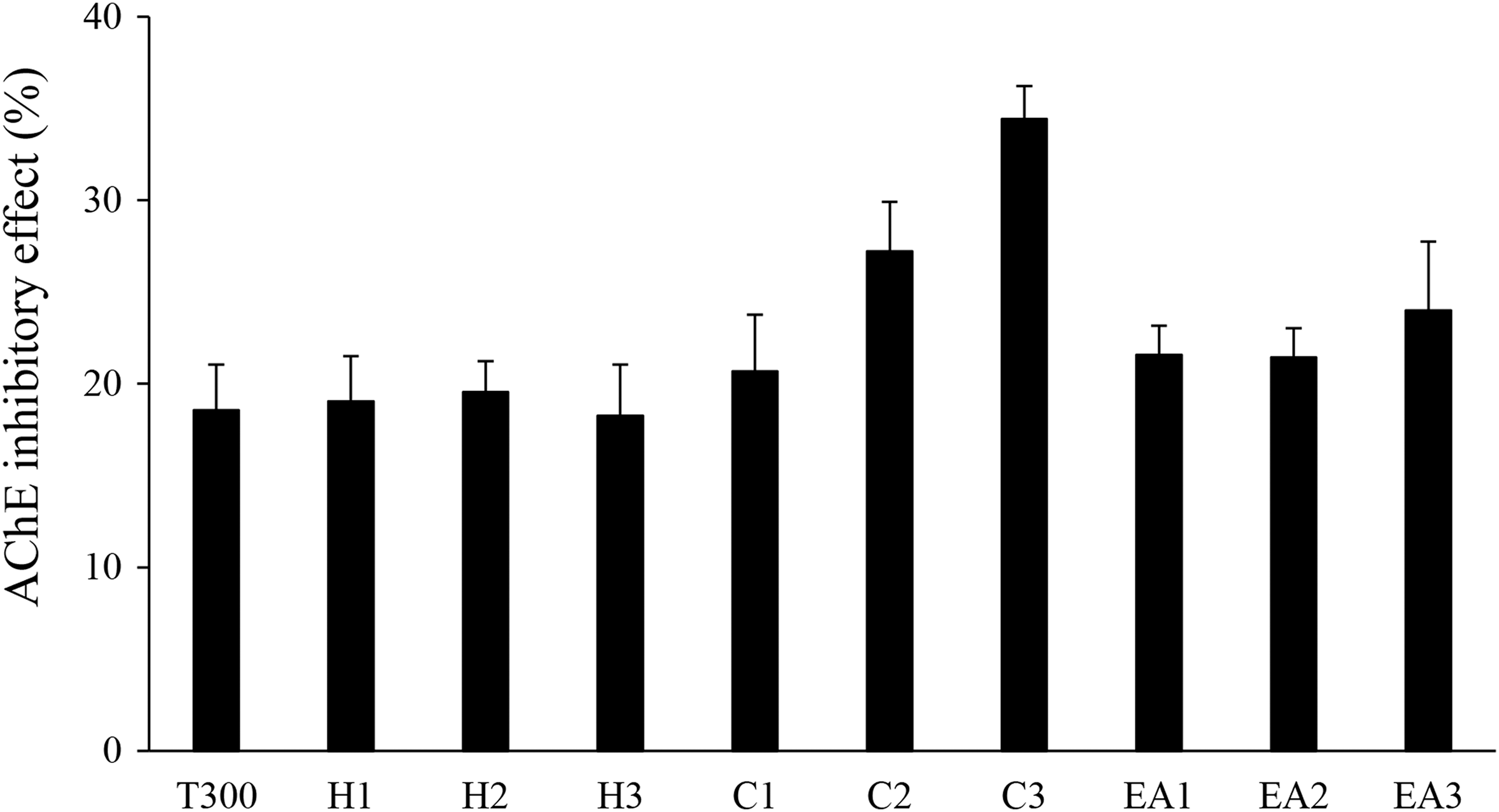
The inhibitory activity on AChE of nine fractions separated by solvent partition of radish leaf extract. The T300 group was treated with 300 nM of tacrine, a specific AChE inhibitor. Sample groups were isolated with hexane (H1, H2, and H3), chloroform (C1, C2, and C3), and ethyl acetate (EA1, EA2, and EA3), respectively. Each value represents the mean ± SD of triplicates. AChE, acetylcholinesterase; SD, standard deviation.
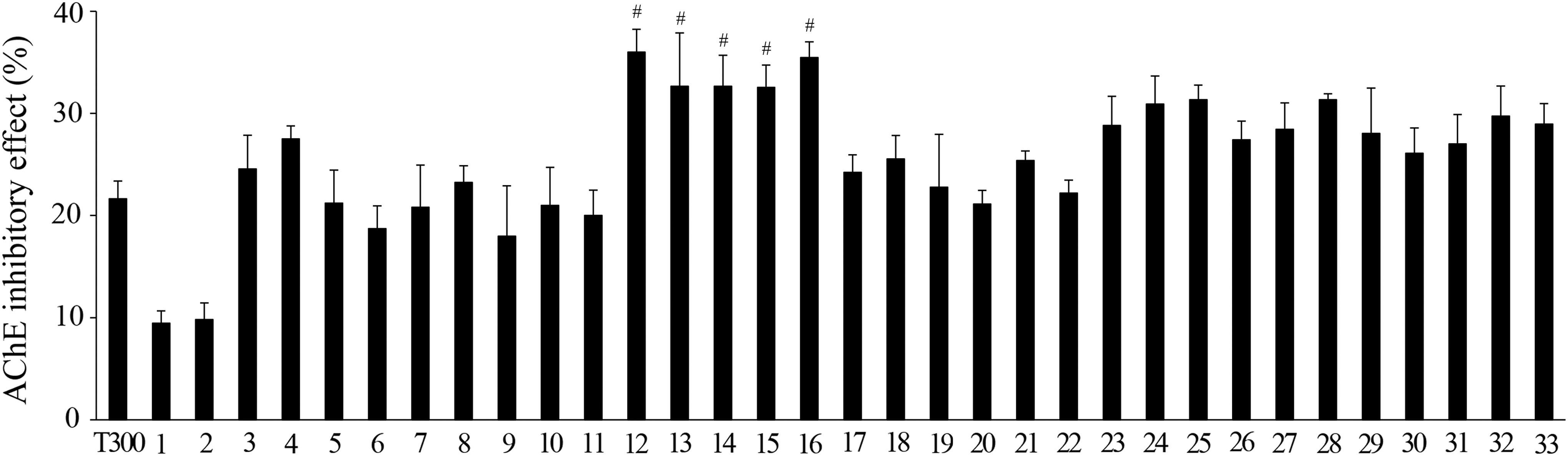
The inhibitory activity on AChE of 33 fractions separated by silica-gel open column chromatography. The T300 group was treated with 300 nM of tacrine, a specific AChE inhibitor. Sample groups were isolated with the eluents in a mixture of chloroform and ethanol (100:0, 90:10, 80:20, 70:30, 60:40, 50:50, 40:60, 30:70, 20:80, 10:90, and 0:100, respectively, 3 times; v/v). Each value represents the mean ± SD of triplicates. Scheffe's multiple range test of SAS indicates a significant difference (# P < .05).
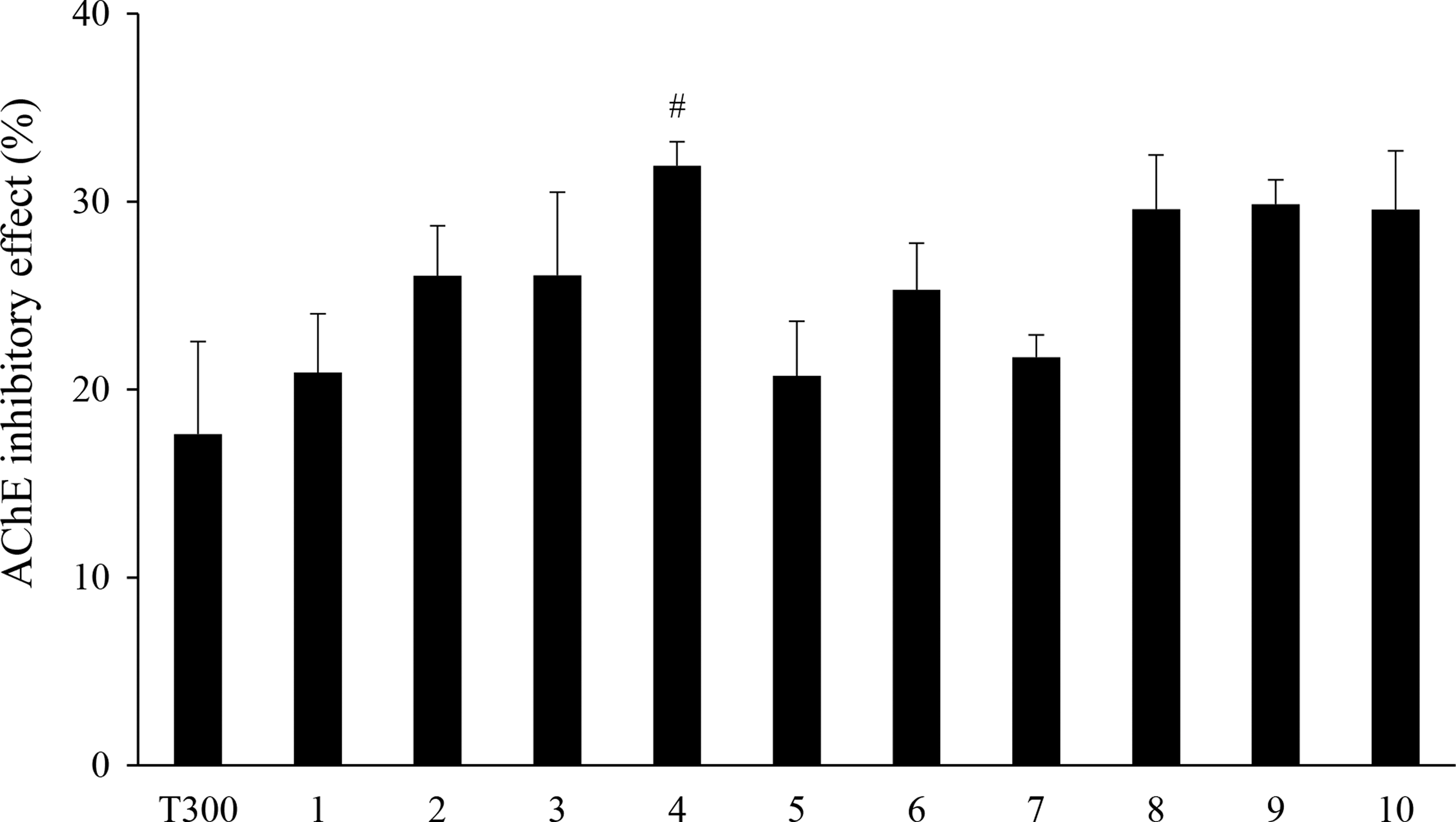
The inhibitory activity on AChE of radish leaf extract separated by TLC. The T300 group was treated with 300 nM of tacrine, a specific AChE inhibitor. Sample groups were isolated, and well-defined bands clustered near the intermediate range of Rf values, that is, 0.08–0.92. Each value represents the mean ± SD of triplicates. Scheffe's multiple range test of SAS indicates a significant difference (# P < .05). TLC, thin layer chromatography.
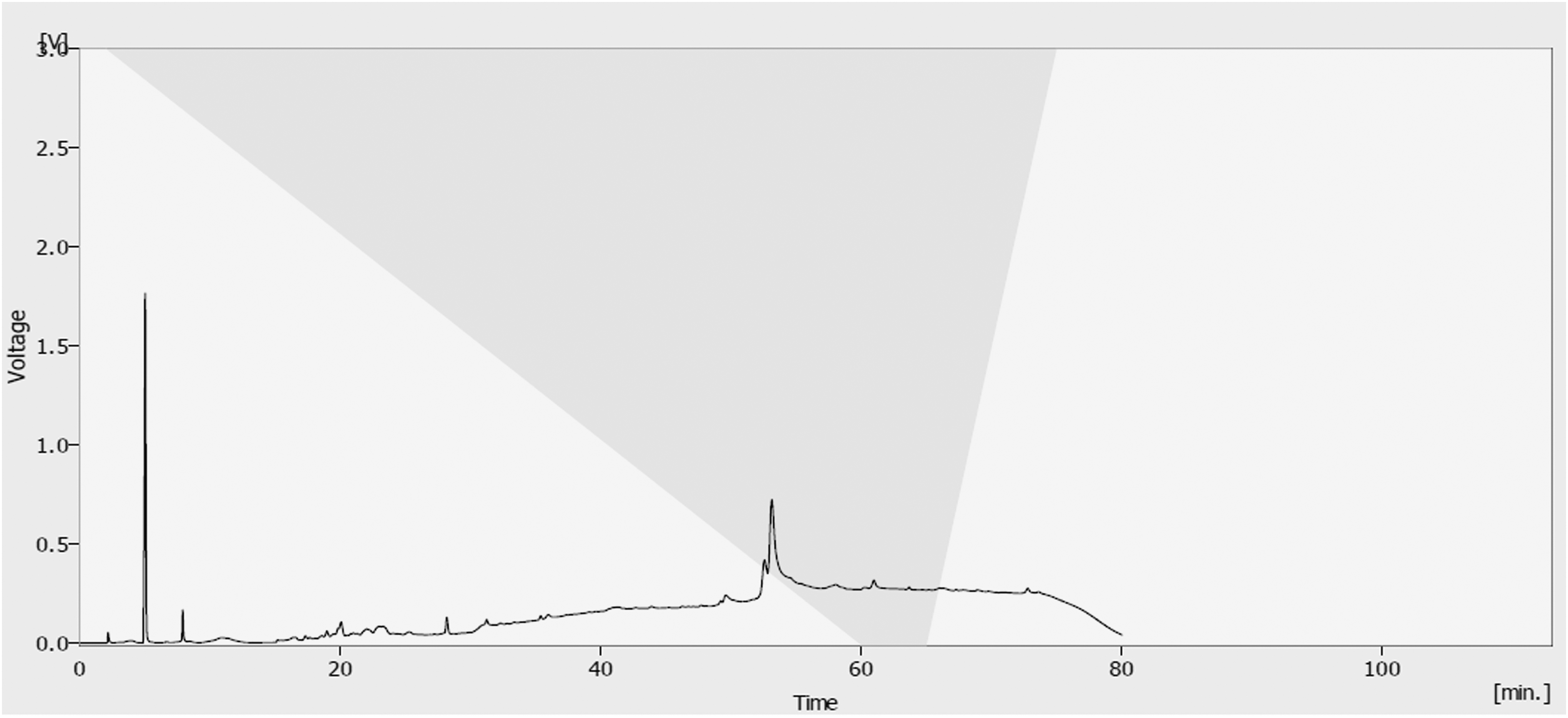
Purification of the target active constituent from radish leaves by HPLC. Radish leaf extract was analyzed by HPLC with UV detection at 210 nm. The mobile phase was used as gradient of 0–100% HPLC grade ethanol in water over 55 min. The detection was performed at 296 nm with a PDA detector, and the retention time was 5.027 min. HPLC, high performance liquid chromatography.

GS-MS spectrum of the active constituent from radish leaf extract. The spectrum was recorded on a positive ion EI mass spectrometer (JMS-AX505WA; JEOL, Japan). The prepared sample was dissolved in MeOH, the molecular weight of the sample was an anticipated 337.6 m/z. The identification of erucamide was confirmed by the NIST library search. EI, electron ionization.
In vitro AChE inhibitory effect of erucamide
To confirm the AChE inhibitory potency of erucamide, an in vitro AChE assay was performed. In this, erucamide concentration-dependently (1–10 mM) inhibited the ACh degrading enzyme AChE similar to tacrine (300 nM), a standard AChE inhibitor (Fig. 6).

The inhibitory effect of erucamide on AChE. The T300 group was treated with 300 nM of tacrine, a specific AChE inhibitor. Sample groups were treated with erucamide. Each value represents the mean ± SD of triplicates. Scheffe's multiple range test of SAS indicates a significant difference (# P < .05).
Effect of erucamide from radish leaves on TMT-induced memory deficit
As shown in Figure 7A, alternation behavior of TMT-exposed mice (i.e., positive control) was lower compared with the negative control mice (P < .05), indicating that TMT exposure effectively induced short-term memory deficit. However, the reduced alternation treated by the TMT treatment was significantly reversed by erucamide supplementation (10, 20, and 40 mg/kg; P < .05), in a dose-dependent manner. In addition, the alternation in mice receiving 40 mg/kg erucamide was higher than that in control group mice. The number of arm entries did not change among all the experimental groups, confirming that the locomotor activity was not influenced by TMT or erucamide (Fig. 7B).
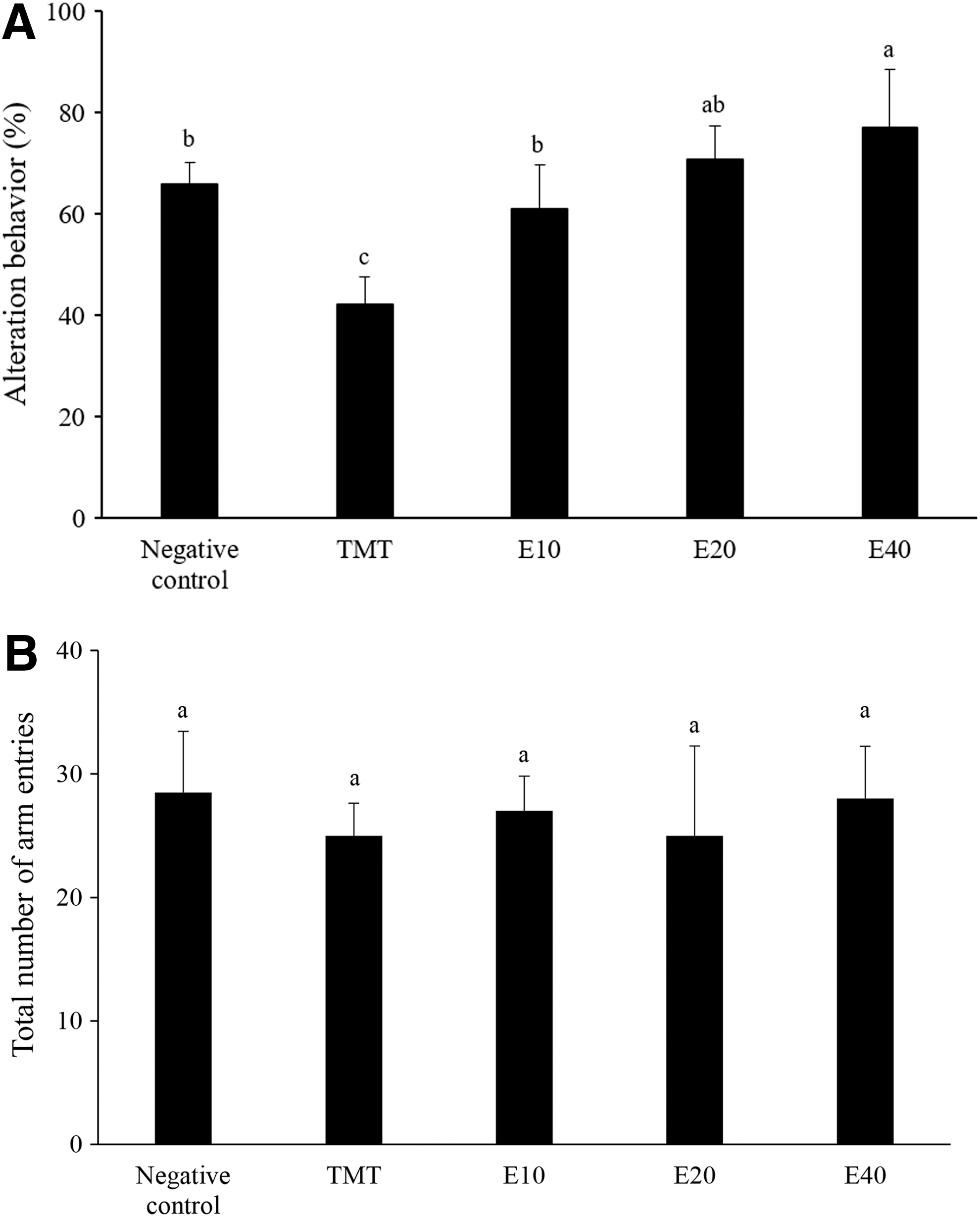
Preventive effect of erucamide on TMT-induced memory deficits in the Y-maze test. The negative control group was injected with saline (0.85%). The TMT group was injected with TMT. “E” groups were injected with TMT after feeding with erucamide (10, 20, and 40 mg/kg per day, respectively). Spontaneous alternation behavior
The step-through latency of TMT-exposed mice was shorter compared with saline-treated mice (P < .05). Similar to the Y-maze test, such shorter latencies induced by TMT treatment were effectively reversed by erucamide supplementation (Fig. 8). In particular, administration of erucamide at high doses (20 and 40 mg/kg) significantly attenuated the TMT-induced memory impairment (P < .05), although there was no difference noted in the lowest level of erucamide supplementation (Fig. 8).
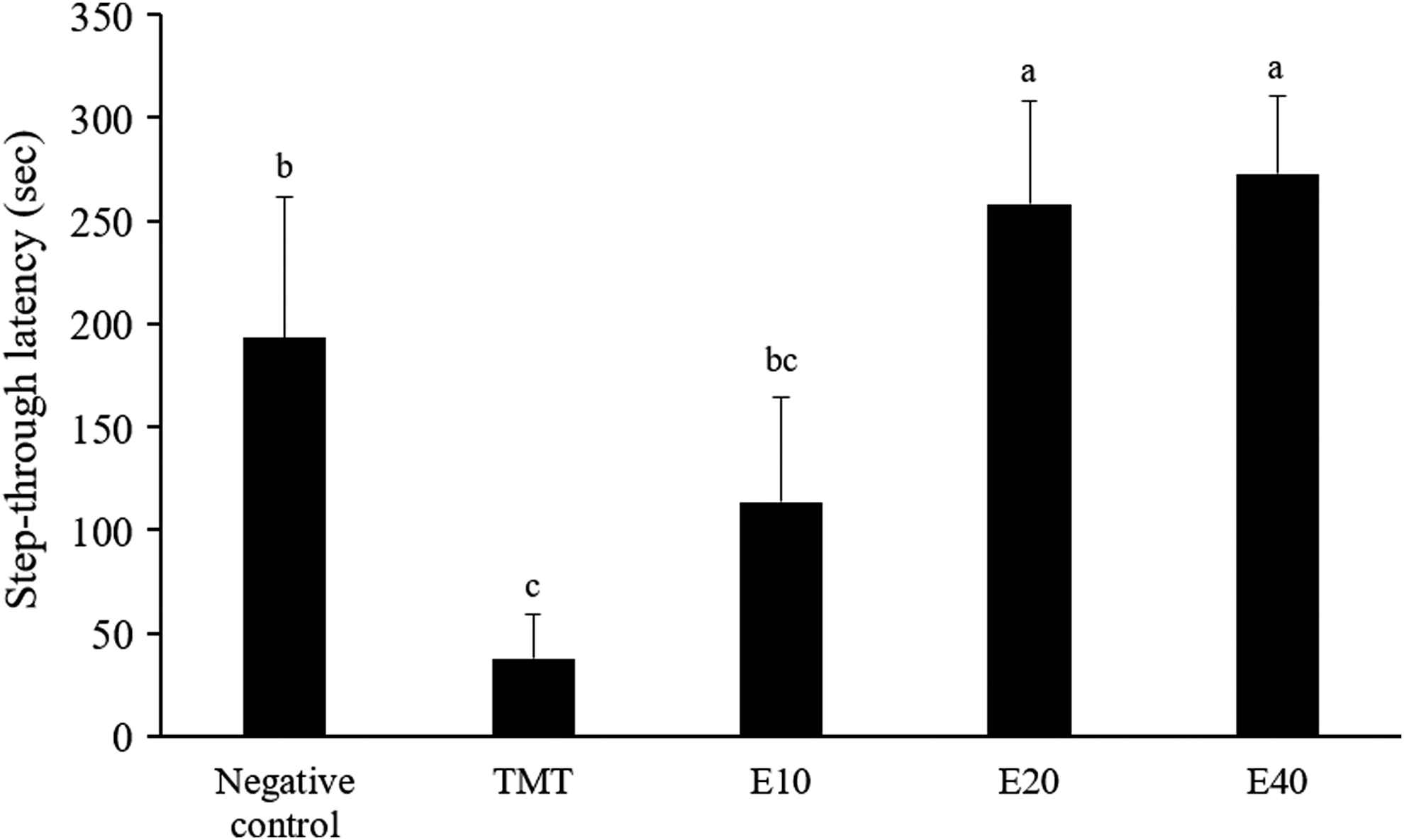
Preventive effect of erucamide on TMT-induced memory deficits in the passive avoidance test. The negative control group was injected with saline (0.85%). The TMT group was injected with TMT. “E” groups were injected with TMT after feeding with erucamide (10, 20, and 40 mg/kg per day, respectively). The step-through latency was measured for 5 min. The results shown are mean ± SD (n = 8). a,b,cDifferent superscripts indicate significant differences among groups at P < .05.
Discussion
The ethanol extract of dried radish leaves exhibited the most potent inhibitory activity against AChE among samples we examined (data not shown). Hence, in this study, we aimed to isolate the potent AChE inhibitor from radish leaves. Accordingly, crude extracts were subjected to sequential separation techniques (i.e., solvent partitioning, open column chromatography, TLC, and HPLC). To select a fraction that exhibits the most inhibition, the in vitro AChE activity assay was carried out at the end of each separation step. As a result, through the GC-MS analysis, we were able to elucidate the chemical structure of the potential AChE inhibitor from the dried radish leaves: erucamide. It was previously reported that this bioactive fatty acid amide presents physiological functions in a receptor-mediated manner. 22 Furthermore, it was demonstrated that erucamide was effective for treating viral infections and skin inflammation. 23 In addition, evidences in the literature showed its biological activity, including stimulation of angiogenesis, 24 enhancement of neovascularization in regenerating skeletal muscle, 25 and amelioration of depressive and anxiety-like behaviors in mice. 26 However, to the best of our knowledge, this is the first study to demonstrate the inhibitory potency of erucamide against AChE.
In this study, we used TMT to induce cognitive and memory deficits in mice. This organotin compound TMT is known to cause neuronal degeneration in the limbic system, particularly the hippocampus, thereby resulting in cognitive impairment and seizures. 27 TMT-induced neurodegeneration studies have been useful in the study of AD. 28,29 Of note, it was documented that TMT decreases ACh release in cerebral tissue. 30 Similarly, Ishikawa et al. showed that the concentration of ACh was significantly decreased after TMT treatment. 31 A deficiency of ACh is one of the most significant causes of memory deficit. 32,33 Therefore, TMT-induced learning and memory impairments are likely due to a decrease in levels of ACh, which is relevant to our study objective: identification of an AChE inhibitor.
As aforementioned, we clearly showed that erucamide significantly inhibited AChE activity in a dose-dependent manner. Furthermore, our in vivo behavioral tests confirmed that oral supplementation of erucamide attenuated memory deficits in TMT-exposed mice. These results suggest that erucamide possibly ameliorates cognitive deficits related to memory loss through a restoration of ACh, which might have been compromised by the TMT. In addition, there were no significant differences in brain or body weight and liver toxicity among the groups, with a survival rate of 100% (data not shown). These results show that the levels of erucamide we supplemented in the study may not represent acute toxicity.
In conclusion, we isolated erucamide, a potent AChE, inhibitor from radish leaves and demonstrated that erucamide could ameliorate TMT-induced memory impairment in mice; it is possible that erucamide, at least in part, contributed to such effects through restoration of ACh, given the clear dose-dependent inhibition of AChE. Therefore, our results suggest that radish leaves and isolated erucamide might be potential preventive agents against memory deficits related to cholinergic dysfunction in AD.
Footnotes
Acknowledgments
This research was supported by a Korea University Grant in 2016.
Author Disclosure Statement
No competing financial interests exist.