




Abstract
Royal jelly (RJ) is widely used as a cosmetic or dietary supplement to relieve various health disorders, such as dry skin, fatigue, and menopause. RJ has been recommended to improve constipation on a commercial basis. However, the detailed mechanisms by which RJ influences intestinal motility and whether RJ improves constipation remain unclear. Therefore, we investigated the effects of RJ on the motility of mouse ileum both in vitro and in vivo. Using myograph methods, RJ dose-dependently induced contractions of isolated ileal segments, which were inhibited by treatment with atropine. Eserine sulfate, a cholinesterase inhibitor, enhanced the RJ-induced contractions, whereas RJ treated with acetylcholinesterase did not result in ileum contraction. RJ-induced contractions were not affected by N
G-nitro-
Introduction
Royal jelly (RJ) is a milky substance secreted from the hypopharynx and mandibular glands of worker bees. After hatching, larvae that will become worker bees consume RJ for only 3 days, whereas queen bees continue to ingest RJ after this period. 1 –3 RJ has been used as a traditional medicine in Asia and is marketed as a cosmetic product and supplement for the promotion of beauty and health in many countries. 1,2,4 Fresh RJ consists of water, proteins, carbohydrates, fats, mineral salts, and small amounts of polyphenols and vitamins. 1,4 –6 In addition, fatty acids, proteins, adenosine, acetylcholine (ACh), testosterone, progesterone, prolactin, and estradiol have been reported as useful bioactive components in RJ. 2 These components in RJ have many pharmacological actions, such as antibacterial, antitumor, antiallergic, anti-inflammatory, and immunomodulatory effects. 2 –4,6–10
Generally, women and elderly people tend to be constipated. 11 Constipation is a common problem in daily life, particularly for people with maladaptive dietary habits, systemic disorders, and psychological complications, and can be caused by some drugs as a side effect. 11,12 Changes in lifestyle, such as in diet and exercise, may alleviate constipation. Furthermore, laxative administration improves constipation but can cause severe side effects, such as diarrhea. 13 RJ is sometimes commercially recommended for use as a gentle laxative; however, only few studies have examined these actions in detail. In a study in humans, intake of Bee energy® (Manuka honey-based product, including 3% RJ, ∼90 mg RJ in 3 g/day) for 8 weeks considerably decreased constipation. 14 In contrast, administration of enzyme-degraded RJ (∼4 g/day) did not improve constipation. 14 In animal studies, RJ was reported to induce contractions in the isolated guinea pig ileum, which were inhibited by acetylcholinesterase (AChE) and a muscarinic receptor blocker. 15,16 However, the detailed mechanisms underlying RJ-induced ileum contractions and the functional factors present in RJ are unclear.
Therefore, in this study, we investigated the detailed mechanisms of RJ-induced intestinal contractions using isolated mouse ileum samples. Moreover, to investigate whether oral administration of RJ increases ileal motility to improve constipation, we evaluated whether gastrointestinal (GI) transit is increased by oral administration of 300 mg/kg RJ in normal mice and loperamide-treated mice as a constipation model. 17 The dose of RJ used in this study was estimated from the approximate dose of 2 g/day RJ in humans. This study is the first to evaluate the effects of RJ on mouse ileum motility in in vitro and in vivo experiments to validate the application of RJ as a gentle laxative.
Materials and Methods
Animals
Male Slc:ICR mice (26–41 g) were purchased from Japan SLC, Inc., (Hamamatsu, Japan) and housed under a controlled room temperature (22°C–24°C) at 50% ± 10% humidity under a 12/12-h light/dark cycle for at least 1 week before the experiments. They were provided standard chow (CE-2; Clea Japan, Inc., Tokyo, Japan) and water ad libitum. All protocols involving animals were approved by the animal ethics committee (P-12-2016-06-A, P-12-2017-02-A, P-12-2018-02-A) and performed in accordance with the Guidelines for the Care and Use of Laboratory Animals at Mukogawa Women's University, Japan.
Materials
RJ was kindly supplied by Japan Royal Jelly Co., Ltd., (Tokyo, Japan, Lot No. 20130805). ACh was purchased from Daiichi Sankyo Co. Ltd., (Tokyo, Japan). Atropine, N
G-nitro-
AChE was dissolved in sodium phosphate buffer (0.5 mg Brij-35/mL 100 mM Na2HPO4, pH 7.5) and stored frozen at −70°C until use. All other chemicals were dissolved in distilled water. Krebs–Henseleit solution (Krebs; 118.4 mM NaCl, 4.7 mM KCl, 2.5 mM CaCl2·2H2O, 1.2 mM KH2PO4, 1.2 mM MgSO4·7 H2O, 25.0 mM NaHCO3, 11.1 mM glucose, bubbled with 95% O2/5% CO2 gas) was prepared for in vitro experiments.
Measurements of contractile response in isolated mouse ileum
After fasting for 24 h, the ileum was removed from the mice under sodium pentobarbital anesthesia (65 mg/kg, i.p.). All segments (∼10 mm length) were taken from the upper position of 30 mm or more from the ileum–cecum junction. The segments were suspended in a 10-mL organ bath chamber filled with Krebs solution with a resting tension of 0.5 g. All drugs were added to the bath. Isometric tension was recorded using a recorder (WR 3320, GRAPHTEC, Tokyo, Japan) through a transducer (Model T-7, NEC San-Ei Instruments, Tachikawa, Japan). The contractile force was measured from the chart using the midpoint of spontaneous contraction as the baseline.
First, a single dose of ACh (10−6 M) was added to the bath, followed by equilibration for 30 min. Between all measurements, the system was allowed to stabilize for a total of 30 min with three exchanges with fresh Krebs solution every 10 min. Next, RJ (10−8–3 × 10⁻³ g/mL) or ACh (10−9–3 × 10⁻⁴ M) was cumulatively added to the bath (first measurement of the reaction). Finally, after the stabilization period, cumulative addition of RJ or ACh was carried out (second measurement of the reaction). In some segments, RJ (10−8–3 × 10⁻³ g/mL) or ACh (10−10–3 × 10⁻⁵ M) was cumulatively added in the presence or absence of atropine (3 × 10⁻⁷ M) in the second measurement. Treatment with atropine or vehicle (distilled water) was allowed for 3 min before cumulative administration of RJ or ACh. To investigate the effect of an AChE inhibitor, other preparations were treated with physostigmine (10−8 M) for 5 min, and then RJ (10−5 or 3 × 10⁻⁵ g/mL) or ACh (3 × 10⁻⁷ M) was administered.
In another segment, nicotine (10−8–10−5 M), RJ (10−6–10−3 g/mL), or ACh (10−6–10−4 M) was cumulatively added to the bath for the first measurement of the reaction. To investigate the effect of a nitric oxide synthase (NOS) inhibitor on these contractions, L-NAME (10−4 M) or vehicle (distilled water) was incubated for 20 min, and then RJ, nicotine, or ACh was added cumulatively for the second measurement.
Treatment conditions of each antagonist were selected from a series of preliminary experiments. The contraction in the presence of each concentration obtained in the second measurement was calculated as 100% when the contraction reached the maximum contractile force obtained in the first measurement of the reaction. Individual concentration response curves were analyzed by nonlinear curve fitting of contraction drug concentration relationships to calculate the negative log EC50 and maximum response (Emax) using GraphPad Prism® software (ver. 5.0; GraphPad, Inc., La Jolla, CA).
Effect of AChE on RJ or ACh-induced contractions in isolated mouse ileum
A single dose of RJ (10−4 g/mL) or ACh (10−6 M) was added to the bath as a control (first measurement of the reaction). In the second measurement of the reaction, RJ or ACh incubated with AChE or vehicle (distilled water) at 37°C for 5 min was added to the bath. The final concentrations of RJ, ACh, and AChE in the organ bath were 10−4 g/mL, 10−6 M, and 30 ng/mL, respectively.
The contraction height induced by RJ incubated with AChE or vehicle in the second measurement was calculated as 100% when the contraction reached the contractile force obtained in the control reaction of each segment.
Assay of concentration of ACh in RJ
The concentration of ACh in RJ was measured using the Amplite Fluorimetric acetylcholine assay kit as reported previously. 18 In brief, 0.03 g RJ was dissolved in 1 mL distilled water and incubated with the reaction solution for 30 min at room temperature (25°C). The results were calculated as the concentration contained in 1 g RJ.
Assessment of GI transit
Following the guidelines of previous reports from other groups, 13,19,20 we investigated whether RJ affects the GI transit of charcoal meal. The mice were fasted for 24 h with water available ad libitum before the experiment. Loperamide (10 mg/kg) dissolved in 0.25% CMC or vehicle (0.25% CMC) was orally administered. After 30 min, RJ (300 mg/kg, p.o.) dissolved in distilled water or vehicle (distilled water) was orally administered. After 15 min, charcoal meal (10% charcoal/10% Arabic gum) was orally administered. Each drug was prepared for administration to mice at 10 mL/kg body weight. At 30 min after treatment with the charcoal meal, the mice were sacrificed by cervical dislocation under anesthesia with sodium pentobarbital (65 mg/kg, i.p.). The small intestine was carefully isolated and rinsed with Krebs solution. The GI transit of charcoal meal was calculated as the percentage of distance traveled by the charcoal meal relative to the whole length of the small intestine for each mouse.
Data analysis
All data are expressed as the mean ± standard error of the mean. Statistical analyses of contractile rate data were performed using Student's t-test or the Welch's t-test, and GI transit data was performed with one-way analysis of variance by Bonferroni's multiple comparison test. Values were considered significant when P < .05. Statistical analyses were performed using GraphPad Prism software.
Results
RJ- and ACh-induced contractions in isolated mouse ileum and effect of atropine on contraction
Figure 1 shows the effects of RJ and ACh on the functions of the ileum isolated from mice. RJ (10−8–3 × 10⁻³ g/mL) and ACh (10−9–3 × 10⁻⁴ M) induced an increase in contractions in a dose-dependent manner. There were no significant differences between the maximum contractile forces induced by RJ and those of ACh (Table 1).
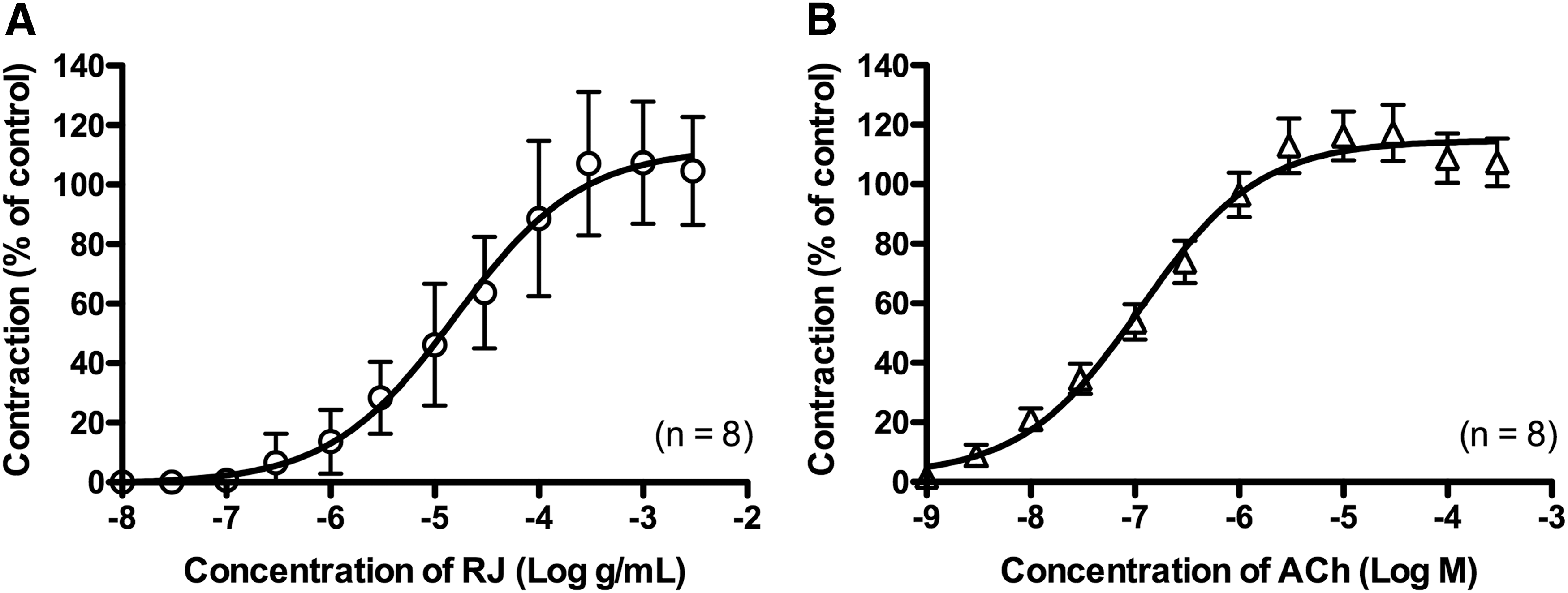
Dose-dependent contractions induced by RJ
Parameters of Royal Jelly- and Acetylcholine-Induced Contractions in Isolated Mouse Ileum
The logEC50 value was calculated from each concentration-action curve. The maximum contractile force was calculated by correcting the obtained contractile strength (g tension) and the sample weight (g). Values are the mean ± SEM.
ACh, acetylcholine; RJ, royal jelly; SEM, standard error of the mean.
To examine whether muscarinic receptors are involved in the RJ-induced contractions, the mouse ileum was treated with the nonselective muscarinic receptor antagonist atropine. RJ-induced contractions were dramatically reduced by pretreatment with 3 × 10⁻⁷ M atropine for 3 min, which was similar to the results for ACh-induced contractions (Fig. 2).

Effects of atropine on contractions induced by RJ
Effects of physostigmine and AChE on RJ- and ACh-induced contractions in isolated mouse ileum
As shown in Figure 3A and B, contractions induced by a single dose of RJ (10−5 or 3 × 10⁻⁵ g/mL) and ACh (3 × 10⁻⁷ M) were increased by pretreatment with physostigmine, an AChE inhibitor, at 10−8 M for 5 min. In contrast, contractions induced by RJ (10−4 g/mL) or ACh (10−6 M) completely disappeared after pretreatment with AChE at 30 ng/mL for 5 min (Fig. 3C, D).
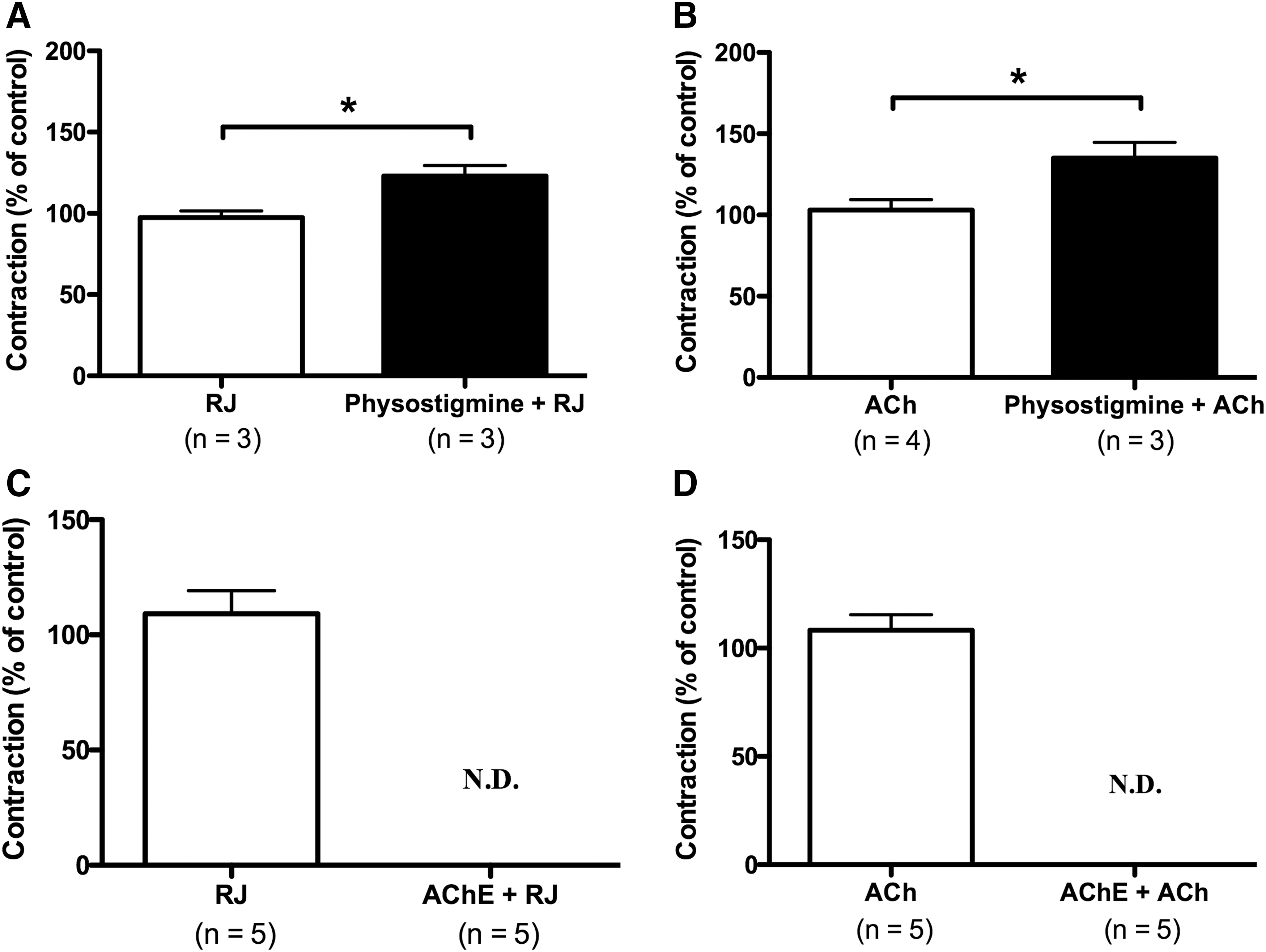
Effects of physostigmine or AChE on contractions induced by RJ
Effects of L-NAME on RJ-, ACh-, or nicotine-induced contractions in isolated mouse ileum
Activation of nicotine receptors has been reported to induce relaxations through nitric oxide (NO) production in the mouse colon 21 and mouse ileum. 22 Therefore, we tested whether nicotine receptors are involved in RJ-induced contractions in the mouse ileum. Treatment with L-NAME (10−4 M, 20 min), an NOS inhibitor, did not affect the contractions induced by RJ at 10−5 or 10−4 g/mL (Fig. 4A, B). Similarly, contractions induced by ACh at 10−5 and 10−4 M were unchanged by pretreatment with L-NAME (Fig. 4C, D). In contrast, the contractions induced by nicotine at 10−6 or 10−5 M were significantly increased after treatment with L-NAME (Fig. 4E, F).
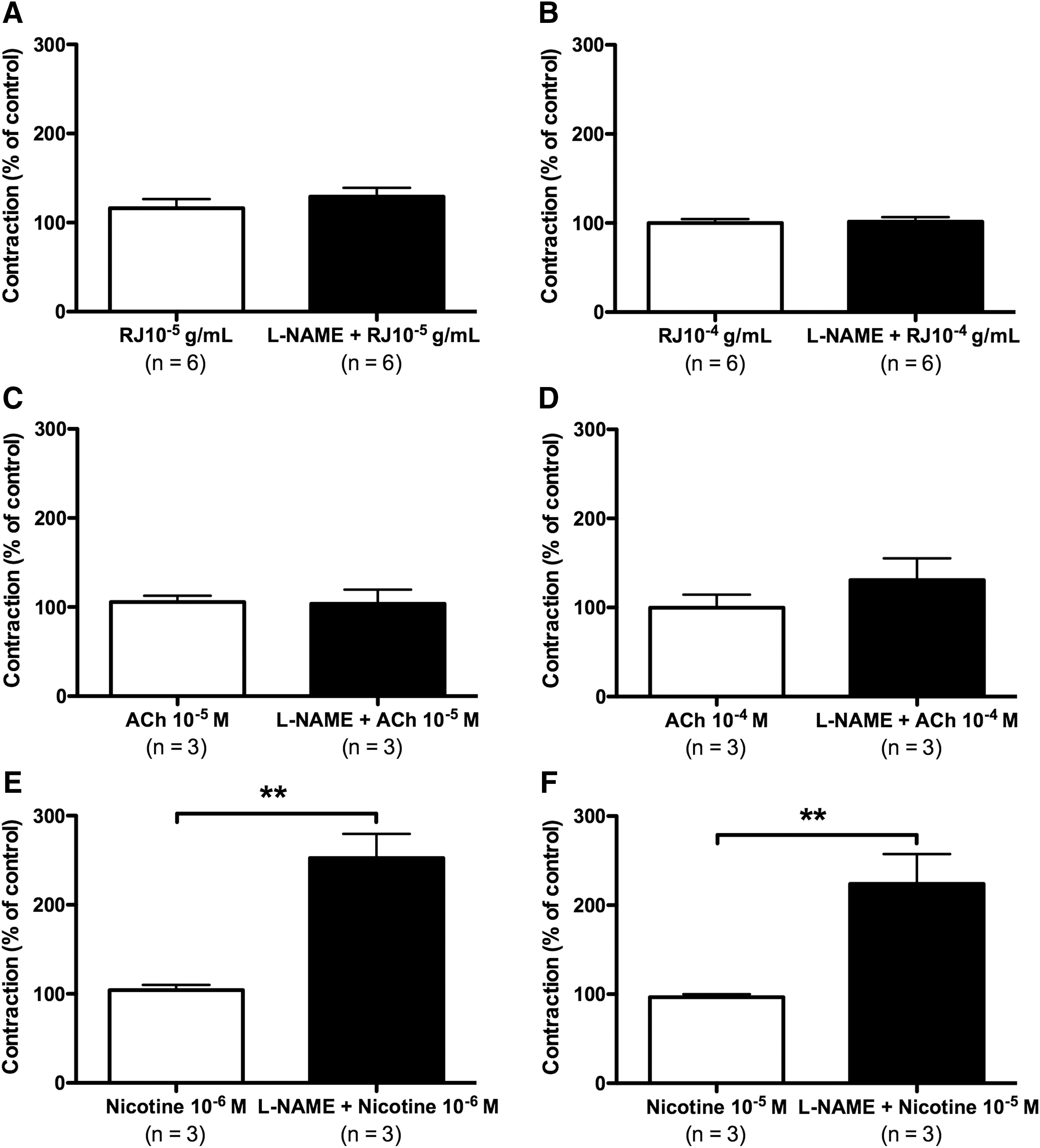
Effects of L-NAME on contractions induced by RJ (
Measurement of ACh concentrations in RJ
The concentration of ACh in 1 g RJ was 926 ± 23 μg. The ACh concentration in the RJ at the −logEC50 value of RJ as shown in Table 1, was found as 1.13 × 10⁻⁷ M (1.10–1.16 × 10⁻⁷ M) by the conversion to the molar unit (mol/L: M). This value was nearly the same as that for the −logEC50 value of ACh (Table 1), which showed a concentration of 0.98 × 10⁻⁷ M (0.75 − 1.27 × 10⁻⁷ M).
Assessment of GI transit of charcoal meal
To assess whether RJ administration increases the GI transit of a charcoal meal under normal conditions, 300 mg/kg RJ was orally administered to normal mice. RJ administration for 15 min did not increase the distance traveled by the charcoal meal (Fig. 5, left). Furthermore, we assessed the effects of oral administration of RJ under constipation conditions using a loperamide-induced constipation model. Oral administration of 10 mg/kg loperamide decreased the GI transit of charcoal meal in mice, which is consistent with previous reports. 20 Oral administration of 300 mg/kg RJ for 15 min did not affect the GI transit of charcoal meal in mice with loperamide-induced constipation (Fig. 5).
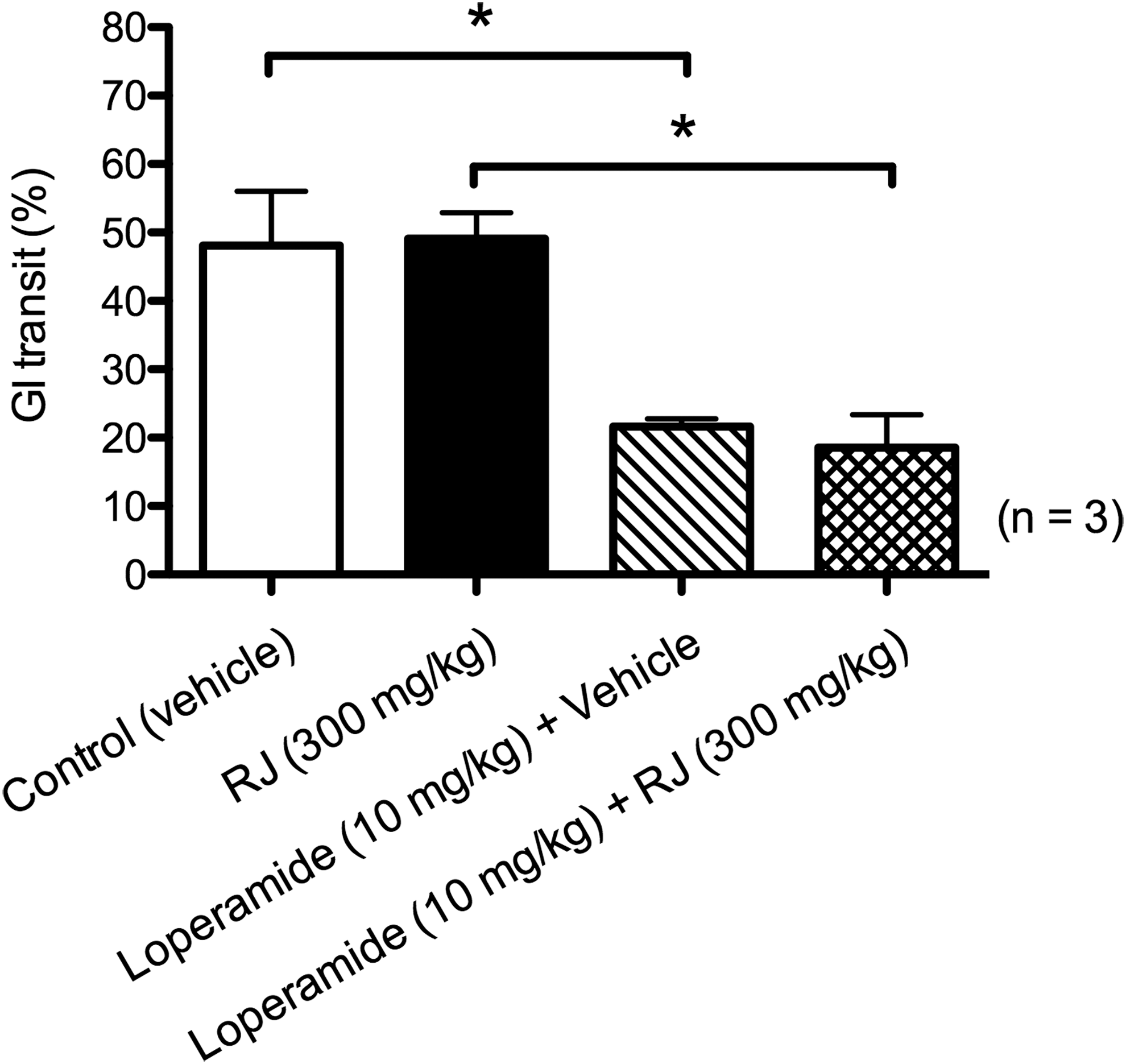
Effects of oral administration of RJ (300 mg/kg) on charcoal meal GI transit in mice treated with or without loperamide (10 mg/kg). Loperamide or vehicle was orally administered for 30 min, after which RJ or vehicle was orally administered for 15 min. Finally, charcoal meal (10% charcoal/10% Arabic gum) was orally administrated for 30 min, after which the mice were sacrificed to evaluate GI transit. Values are the mean ± SEM. *P < .05 (one-way analysis of variance by Bonferroni's multiple comparison test). GI, gastrointestinal.
Discussion
This study has demonstrated that RJ induces dose-dependent contractions in the isolated mouse ileum, and the RJ contractile response is caused by muscarinic receptor agonist(s) such as ACh. However, RJ did not act on the nicotine receptor, leading to relaxation in the mouse ileum. Furthermore, a single dose of 300 mg/kg RJ in mice, which is approximately the daily dose of RJ used in humans, did not increase the GI transit of a charcoal meal under normal conditions, suggesting that RJ can be administered without causing severe symptoms, such as diarrhea, under normal conditions. However, RJ did not improve constipation in the loperamide-induced constipation model. This suggests that single administration of RJ is insufficient for improving constipation.
RJ has been suggested to exhibit ACh-like activity because RJ contracted the isolated smooth muscle of the guinea pig ileum and was antagonized by atropine. 15,23 This study demonstrated that 1 g of RJ contains 926 ± 23 μg ACh, which agrees with results of previous studies. 16,24 Because the ACh concentration in RJ at the −logEC50 value of RJ was nearly the same as that of the value of ACh, ACh may be the main factor causing ileum contractions in RJ. We found that RJ-induced contractions in the mouse ileum were antagonized by atropine and enhanced by physostigmine, a cholinesterase inhibitor; no contractions were observed after treatment with AChE. These results are supported by those of a previous study in guinea pig ileum, which showed that AChE treatment with RJ decreases contractions in a time-dependent manner; based on the results of paper chromatography, ACh was responsible for this activity. 15 ACh in RJ contracts smooth muscle in the ileum and small intestine of guinea pig. 15,16 Taken together, increased GI contraction induced by ACh in RJ occurred through activation of the muscarinic receptor in different animal species and intestinal sites in in vitro studies.
The nicotine receptor in the intestine has been reported to have dual effects, such as contraction and relaxation effects, on the mouse ileum. 22 NO released from enteric nerves and/or produced by the smooth muscle is considered to be a major inhibitory substance that modulates cholinergic neurotransmission and causes GI relaxation in different species (e.g., rabbit, mouse, and guinea pig) 22,25 –29 and at different sites of the intestine (e.g., mouse ileum or colon). 21,26,27 NO was also reported to act as a neurotransmitter of nonadrenergic noncholinergic inhibitory nerves that innervate the GI smooth muscles in the rat ileum. 30 Furthermore, endogenous NO produced by neuronal NOS inhibits ACh release and cholinergic contraction in the mouse ileum. 27 In this study, nicotine-induced contraction was dramatically increased by pretreatment with L-NAME, a NOS inhibitor, in the mouse ileum, whereas RJ-induced contraction was not affected. These results suggest that RJ does not act to a nicotine receptor(s) and that NO is not associated with RJ-induced contraction in the mouse ileum.
Based on our in vitro results, we expected that ACh in RJ increased the motility of the intestinal tract under in vivo conditions, resulting in improvement of intestinal diseases such as constipation. Therefore, we tested this hypothesis using GI transit methods. However, single oral administration of 300 mg/kg RJ did not increase GI transit of the charcoal meal in normal mice, although the dose of RJ was calculated as the daily intake administered in humans (2 g/day). We next assessed whether RJ affects GI transit of the charcoal meal in loperamide-treated mice, which are commonly used to assess the effects of supplements and medicines on GI functions. This study indicated that single administration of RJ did not increase GI transit under constipation conditions. It is possible that multiple administration of RJ enhances intestinal motility. However, our preliminarily study indicated that administration of 300 mg/kg/day RJ for 1 week to normal mice did not significantly affect GI transit of the charcoal meal. Further studies such as with modified RJ and loperamide administration conditions are needed. Our results showed that RJ did not increase intestinal motility under in vivo conditions to lead to constipation relief. Approximately 30% of ACh in RJ was degraded by gastric juice in 120 min in previous in vitro experiments. 31 However, although RJ contains a high concentration of ACh, the lack of in vivo effects may be explained by the fact that ACh is partly absorbed and quickly degraded by AChE in the blood. 31
RJ is sometimes recommended as a laxative on a commercial basis, but the results of this study do not support this claim. Our findings may indicate that RJ can be administered at a single dose without causing negative GI effects such as diarrhea under normal conditions. Honey, which is produced by bees, has also been traditionally used as a mild laxative to treat constipation. 32,33 The mechanism underlying this effect is considered to be incomplete fructose absorption, which is associated with abdominal symptoms and/or diarrhea in healthy individuals. 34 Furthermore, when healthy adults consume an ordinary dose of honey, they frequently report abdominal complaints resulting from carbohydrate malabsorption. 34 RJ does not contain high concentrations of fructose and carbohydrate (fructose, ∼35% in honey and 10% in RJ; carbohydrates, ∼75% in honey and 15% in RJ). 1,2,4,34 These findings may explain the difference in the effects between honey and RJ.
In conclusion, ACh in RJ caused contraction of the mouse ileal smooth muscle through the muscarinic ACh receptor under in vitro conditions, which was not associated with nicotinic ACh receptor activity. Although RJ contained a high concentration of ACh, single oral administration of RJ was not sufficient to increase intestinal motility or improve constipation. These findings suggest that RJ does not cause severe symptoms, such as diarrhea, under normal conditions.
Footnotes
Acknowledgments
The authors are grateful to Japan Royal Jelly Co., Ltd., Tokyo, Japan for the generous gift of RJ. The authors express sincere gratitude to Ms. Hikari Kozuke and Ms. Mayu Kimoto for technical assistance.
Author Disclosure Statement
No competing financial interests exist.