




Abstract
This study evaluated the effects of tomato sauce and lycopene on hepatic and cardiac cell biomarkers in rats fed a high-fat diet. Animals were split into five groups: control group, high-fat group (HG), high-fat tomato sauce group, high-fat lycopene 2 mg, and high-fat lycopene 4 mg. Food and water were offered ad libitum, whereas tomato sauce and lycopene (2 and 4 mg/day) were offered daily for 60 days. Body, heart, and liver weights, cardiosomatic and hepatosomatic indices, and serum parameters were also analyzed in rats. The animals' hearts and liver were processed, and cells were examined by flow cytometry. Results showed that the groups receiving tomato sauce and lycopene had lower glycemia. The serum concentration of high-density lipoprotein cholesterol, hepatic enzymes, and tumor necrosis factor-α did not change upon treatment. Tomato sauce and lycopene supplementation did not increase interleukin-1β in response to a high-fat diet. Cell cycle analysis of cardiac and liver cells showed a lower percentage of cells in the G0/G1 phase and an increase in the G2/M phase in HG. Both lycopene and tomato sauce reversed this effect. Both lycopene and tomato sauce reversed this effect and prevented high-fat diet-stimulated cardiac and liver cell death. Supplementation of tomato sauce and lycopene showed beneficial effects on cardiac and liver cell metabolism; therefore, it is suggested as a nutritional approach for the prevention and treatment of cardiovascular diseases and nonalcoholic hepatic steatosis.
Introduction
Obesity is a risk factor for various chronic diseases, and the metabolic defects of obesity and type 2 diabetes, characterized by fatty liver disease, insulin resistance, and dyslipidemia, lead to an increased risk of cardiovascular disease and cancer. 1 –3 Although diagnosed worldwide, it has variations in prevalence, reaching ∼20–30% in western countries. In the United States, a country where 25% of the adult population is obese, the disease affects more than 60% of these individuals. It is estimated that 2–3% of the population has hepatic steatosis. 3 The consumption of diets rich in saturated fats is linked to synthesis of proinflammatory cytokines, an increase in reactive oxygen species, development of oxidative stress, and damage to several biomolecules. It is also a predisposing factor in the development of a variety of chronic diseases, including obesity, cognitive dysfunction, diabetes, and cancer. 4 –9 Thus, a high-fat diet has a central role in the development of oxidative events, as occurs in hepatic steatosis and atherosclerosis. Fatty liver is associated with several atherosclerotic risk factors such as hypertension, diabetes, and dyslipidemia. 10,11 Bioactive compound supplements are a potential disease-preventing or health-promoting treatment to be taken daily. 12 Bioactive compounds are substances discovered from natural sources, which are capable of retarding or inhibiting oxidation rates and can be produced endogenously or absorbed through foods in the diet. 13 –15 Some authors have demonstrated an inverse relationship between the consumption of carotenoid-rich foods and the risk of diseases induced by oxidative stress. 6,16 –18
Lycopene is a lipophilic non-provitamin A carotenoid, responsible for the red color in some fruits and vegetables, such as tomatoes. It has a capacity to protect against many diseases, mainly due to its antioxidative effects, lipid-regulating enzyme activities, capacity to induce adipocyte differentiation, and improvement of the plasma lipid profile in rats fed with a high-fat diet. 12 Previous studies have linked the high intake of tomato products or lycopene with a lower risk of metabolic diseases, protective effects against high-fat diets, and decreased hepatic inflammation. 19 –22 However, there is no consensus in the literature regarding which form of lycopene (i.e., tomato products or isolated lycopene supplement) is more beneficial to these inflammatory diseases.
The aim of this study was to evaluate the effect of tomato sauce and isolated lycopene on changes related to cardiac and hepatic tissues in Wistar rats, such as glycemia, lipid profile, inflammatory mediators, hepatic, and cardiac cell cycle.
Materials and Methods
Samples
Samples of Brazilian tomato sauce (ingredients: tomato [97%], sugar, salt, modified starch, vegetable oil, onion, parsley, marjoram, celery, thickener xanthan gum, aromatizing and potassium sorbate, and sodium benzoate) were obtained from a local market (Rio de Janeiro, RJ, Brazil). Water-soluble lycopene 10% (containing sucrose, corn starch, fish gelatin, lycopene, corn oil, ascorbyl palmitate, and
Appropriate solutions for each experimental group were prepared daily in the laboratory by dissolving the content in filtered water at 50°C and adding 20% refined sugar to obtain a palatable solution.
Experimental model
Fifty female, adult Wistar rats were individually housed and maintained in a 12-h light–12-h dark cycle at 22°C (±2°C). Animal maintenance was in accordance with the Animal Research: Reporting of In Vivo Experiments (ARRIVE) guidelines. 23 Rat care and experimental protocols were approved by the Institution's Scientific, Academic, and Ethics Board.
Animals were divided into five groups (Fig. 1): control group (CG), which received a standard diet (based casein) ad libitum, consisting of protein (minimum) 12.95%, fat (minimum) 4.0%, and water; high-fat group (HG), which received a high-fat diet ad libitum, consisting of protein (minimum) 12.95%, fat (minimum) 20.0%, and water; tomato sauce group (TG), which received the high-fat diet ad libitum, plus a tomato sauce solution providing 2.0 mg of lycopene per day; 2.0 mg lycopene group (L2G), which received the high-fat diet ad libitum, plus a solution containing 2.0 mg all-trans lycopene (water soluble) 10% dissolved in water daily, and water; 4.0 mg lycopene group (L4G), which received the high-fat diet ad libitum, plus a solution containing 4.0 mg all-trans lycopene (water soluble) 10% dissolved in water daily, and water. The ingredients for the formulation of the control and high-fat rations used in the experiment are shown in the Supplementary Table S1.
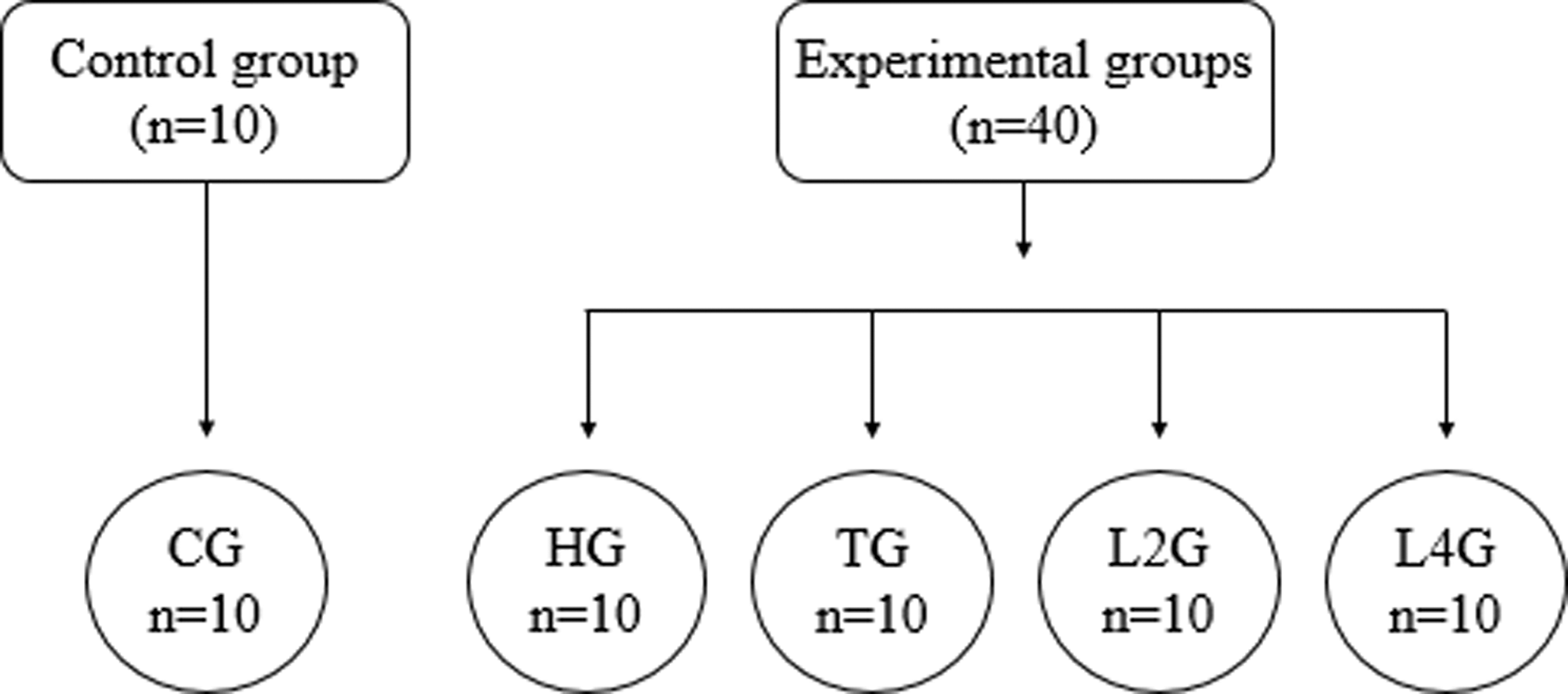
Dietary protocol. Experimental model: CG: standard diet plus water; experimental groups: HG. high-fat diet plus water; TG. high-fat diet plus solution with tomato sauce and water; L2G. high-fat diet plus solution with 2.0 mg all-trans lycopene and water; L4G. high-fat diet plus solution with 4.0 mg all-trans lycopene and water. Diets and solutions were administered during a period of 60 days. CG, control group; HG, high-fat group; TG, tomato sauce group; L2G, lycopene 2 mg group; L4G, lycopene 4 mg group.
After 60 days of the experiment, the vaginal smear procedure was performed on all animals to identify their phase in the estrous cycle and to establish that all were in the same physiological state without hormonal interference in the analysis. After the estrous cycle check, rats in the “estrus” phase were separated and trapped. Body weight was measured, and trapped animals were sacrificed. Serum and organs (heart and liver) were obtained, weighed, frozen, and kept at −70°C until analysis. Experimental procedures were conducted according to the study of Ribeiro et al. 13
The hearts and livers were weighed to determine the relative weight of the organ denominated cardiosomatic index and hepatosomatic index, which is calculated according to the formula:
Analytical methods
A glucometer was used to measure serum glucose concentration. Serum total cholesterol, high-density lipoprotein (HDL) cholesterol, triglycerides, aspartate aminotransferase (AST), alanine aminotransferase (ALT), interleukin (IL)-1β, and tumor necrosis factor (TNF)-α concentration were measured using the BioClin® Commercial Kits and wavelengths specific to each biochemical indicator, using the colorimetric method with automated spectrophotometer reading (BioClin BS-120 Chemistry Analyzer®). Low-density lipoprotein (LDL) cholesterol was calculated according to Friedwald's formula. 24
Cell cycle
Animal heart muscle and liver tissues were processed, and cardiac and liver cell cycles and apoptosis were measured using flow cytometry. Cell extractions were performed through maceration of the tissue and addition of 0.5 mg/mL collagenase (Sigma®). After centrifugation, the cells were washed twice with phosphate-buffered saline and resuspended in 500 μL of ice-cold Vindelov solution containing 0.1% Triton X-100, 0.1% citrate buffer, 0.1 mg/mL RNase, and 50 mg/mL propidium iodide (PI; Sigma Chemical Co., St. Louis, MO, USA). After 15 min of incubation, the cell suspension was analyzed for DNA content by flow cytometry using a FACSCalibur flow cytometer (Becton Dickinson, Mountain View, CA, USA). The relative proportions of cells with DNA content haploid subG1 (<2n), diploid G0/G1 (2n), S phase (>2n and <4n), and G2/M phase (4n) were acquired and analyzed using CellQuest and WinMDI 2.9. Respectively, the percentage of cell population at a particular phase was estimated with FlowJo software following the acquisition of 30,000 events. To our knowledge, the cell dissociation procedure does not affect fluorescence under the experimental conditions used in this study. Nuclei of viable cells were gated according to the FL-2W × FL2-A relationship based on the study conducted by Guimarães et al. 25
Apoptosis assay
Cells were resuspended in 400 μL of binding buffer containing 5 μL of Annexin V fluorescein isothiocyanate and 5 μL PI (Apoptosis Detection Kit II; BD Biosciences, BD Pharmingen, Mountain View, CA, USA) for 15 min at room temperature (25°C). Annexin V binding was evaluated by flow cytometry (FACScalibur; BD Biosciences) after acquisition of 30,000 events. The data were analyzed in CellQuest and FlowJo software.
Data analysis
The effects of tomato sauce and isolated lycopene supplementation were analyzed using one-way analysis of variance followed by Tukey's post-hoc test for the multiple mean comparison test. Results are expressed as mean − standard deviation, and the significance level was set at P < .05.
Results
At the end of the experiments, body weights were measured, and the final body weight was higher (P < .05) in the TG (277.7 ± 11.48 g) and lower in the L2G (197.3 ± 13.12 g) and L4G (188.9 ± 15.02 g) groups compared with the control group (Table 1). Heart weight was higher (P < .05) in the TG (1.06 ± 0.05 g) and lower in the L4G (0.72 ± 0.11 g) groups compared with the control group. No differences were observed in liver weight or hepatosomatic and cardiosomatic index among the groups (Table 1). Images of rat hearts included in this study are displayed in Figure 2.
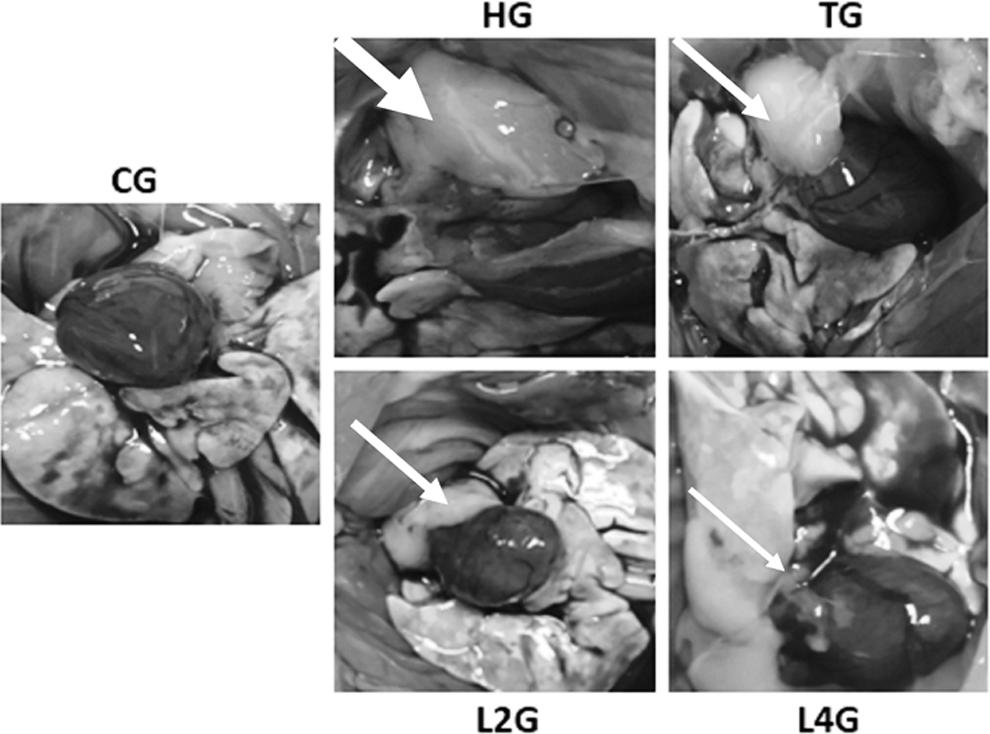
Heart extracted from sacrificed rats after dietary protocol. White arrows indicate accumulated fat in tissues.
Body and Tissue Weight in Control and Experimental Groups
Values are mean − SD.
abc Different letters mean statistical difference between groups. Statistical significance was determined by ANOVA followed by Tukey's post hoc multiple mean comparison test.
CG, control group; HG, high-fat group; TG, tomato sauce group; L2G, lycopene 2 mg; L4G, lycopene 4 mg; SD, standard deviation; ANOVA, analysis of variance.
Significant differences (P < .05) in glycemia, total cholesterol, and triglycerides were found among the groups analyzed (Table 2). Groups receiving tomato sauce (TG) and lycopene (L2G, and L4G) had lower glycemic values compared with the control. Furthermore, the group receiving a high-fat diet had higher triglyceride levels compared with the CG group; however, no differences were observed when compared with the L4G group. In addition, there were no differences in the concentrations of serum HDL cholesterol and liver enzymes (AST and ALT) among the groups (Table 2).
Serum Parameters in Rats Fed with Experimental Diets
Values are mean − SD.
Different letters mean statistical difference between groups. Statistical significance was determined by ANOVA followed by Tukey's post hoc multiple mean comparison test.
AST, aspartate aminotransferase; ALT, alanine aminotransferase; HDL, high-density lipoprotein; LDL, low-density lipoprotein.
High-fat diet induced an increase in LDL when compared with the control group. However, lycopene and tomato sauce treatment did not promote changes in the LDL concentration caused by the hyperlipidic diet.
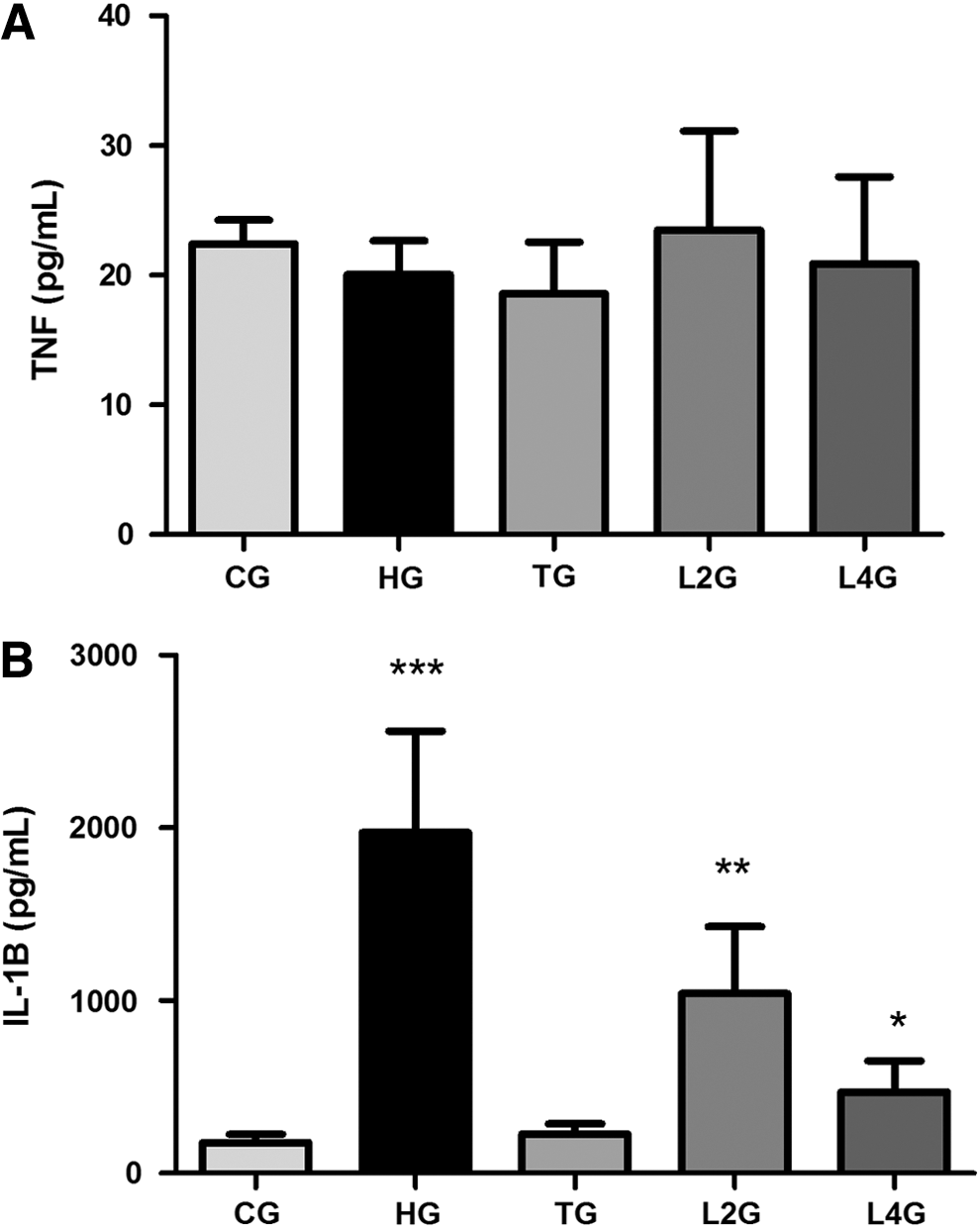
HG showed an increase in IL-1β expression compared with the other groups. Tomato sauce and lycopene, however, did not show this effect and presented a similar profile. Importantly, TG showed similar results to CG. There were no variations in the levels of TNF-α among the groups (Fig. 3).
Cell cycle analysis of cardiac cells showed that the HG group presented a lower percentage of cells in the G0/G1 phase (47.98 ± 6.28), compared with the other groups (Table 3). Furthermore, a high-fat diet increased the percentage of cells in the G2/M phase, which was reversed by the action of both lycopene and tomato sauce (P < .05). In liver cells, high-fat diet decreased the number of cells in the G0/G1 phase and increased the percentage of cells in the G2/M phase. We hypothesized that the highest rate of cell death in that group promoted an increase in cellular proliferation to reduce cellular loss. Both tomato sauce and lycopene-treated groups increased the number of cells in the G0/G1 phase and decreased numbers in the G2/M phase induced by the high-fat diet (Table 4).
Effect of Lycopene and Tomato Sauce on Cell Cycle Progression of Cardiac Cells in Rats Fed High-Fat Diet
The results are expressed as the percentages of total cells. Values are mean − SD.
abc Different letters mean statistical difference between groups. Statistical significance was determined by ANOVA, followed by Tukey's post hoc multiple mean comparison test.
Effect of Lycopene and Tomato Sauce on Cell Cycle Progression of Hepatic Cells in Rats Fed High-Fat Diet
The results are expressed as the percentages of total cells. Values are mean − SD.
abcd Different letters mean statistical difference between groups. Statistical significance was determined by ANOVA followed by Tukey's post hoc multiple mean comparison test.
Annexin V and PI biomarkers were used to assess apoptosis. An increase in apoptotic cells was present in liver and heart cells in every group receiving the high-fat diet compared with the CG group. High-fat diet promoted a significant decrease in the population of viable cells and a significant increase of 5.2 and 3.9 times, respectively, in cardiac and hepatic cells compared with controls (Figs. 4 and 5). High-fat diet supplemented with lycopene and tomato sauce reversed the increase in apoptosis caused by the hyperlipidic diet, exhibiting higher values when compared with the control group.

Monitoring of cell death of cardiac cells from rats fed a high-fat diet supplemented with lycopene and tomato sauce.
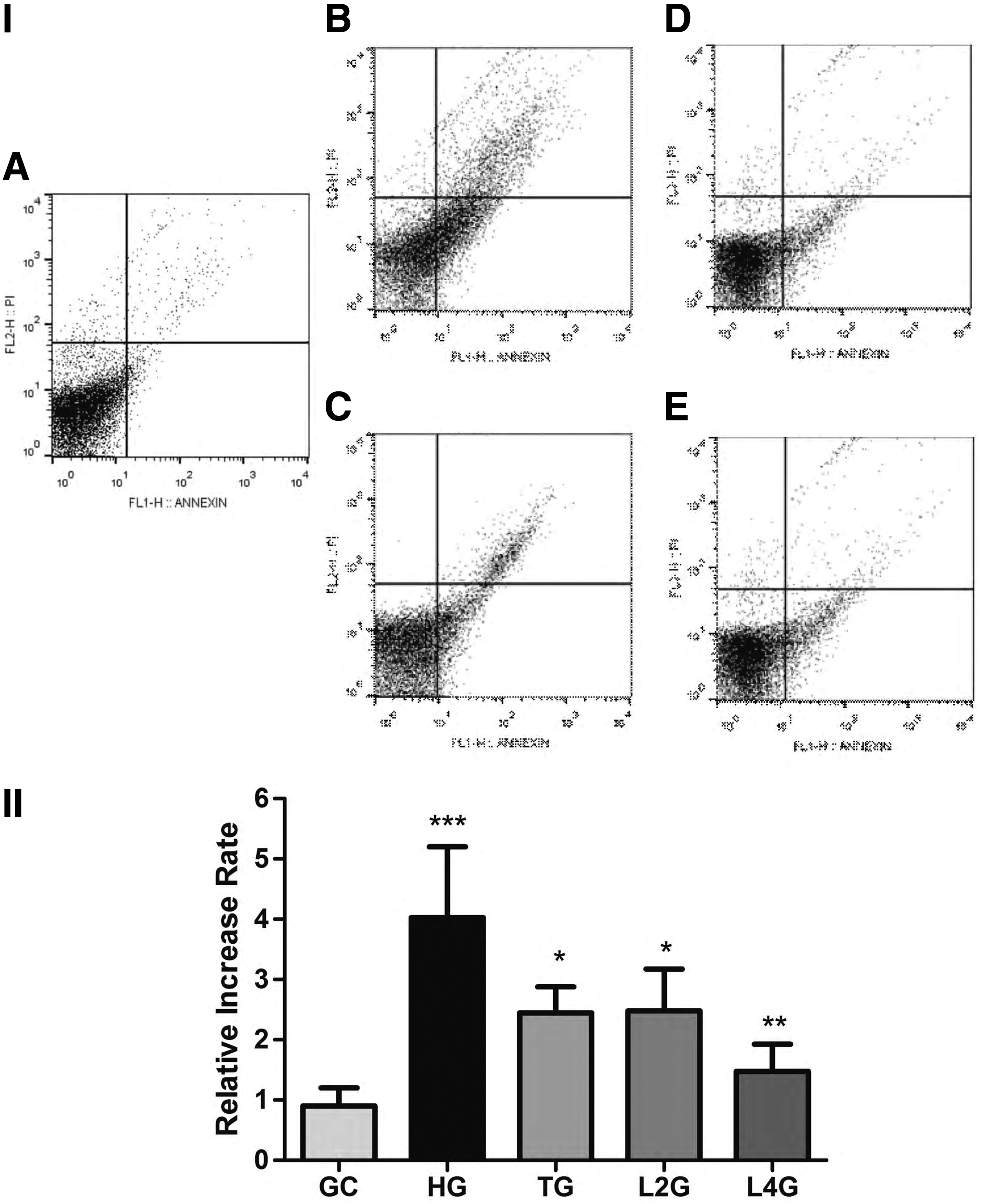
Monitoring of cell death of hepatic cells from rats fed a high-fat diet supplemented with lycopene and tomato sauce.
Discussion
Tomato sauce is a rich source of lycopene, which has potent antioxidant activity. Nevertheless, very little is known about different forms of lycopene supplementation in cardiovascular diseases and nonalcoholic hepatic steatosis. 4,21,26 –30
A previous study has shown that 762 individuals with hepatic steatosis (76.8%) had at least one atherosclerotic plaque, evidencing a higher prevalence of atherosclerotic plaques in patients with hepatic steatosis. The study observed a direct association between hepatic steatosis and carotid plaques independent of age and sex. 15 For this reason, it is important to evaluate factors that may contribute to their prevention.
The present study provided information regarding the effects of lycopene and lycopene in food matrix supplementation on cardiac and liver metabolism, cell cycle, and apoptosis. Our outcomes agree with published results in which quercetin supplementation in rats was able to reduce weight gain and increase heart size even with ingestion of a high-fat diet when compared with the control. 12 Herein, lycopene supplementation in rats reduced high-fat diet-induced weight gain and was cardioprotective.
Previous studies have shown that a tomato juice intervention in vivo did not affect glucose and lipid profiles. 31,32 Furthermore, no changes in weight gain were observed in accordance with our results.
Obesity and dyslipidemia are considered risk factors of cardiovascular disease and nonalcoholic hepatic steatosis. Furthermore, it has been reported that a high-fat diet and high cholesterol levels can favor metabolic alterations. 33 Our results revealed that a high-fat diet promoted an increase in triglycerides and cholesterol, and lycopene and tomato sauce supplementation improved the rat's lipid profile.
Previous study observed that treatment with a lycopene mix and other bioactive compounds promoted an increase in HDL levels and reduced oxidative stress through prevention of LDL oxidation. 18
Cellular mechanisms triggered by the consumption of a high-fat diet include apoptosis, necrosis, and autophagy. 34 –37 Those effects may be linked to the genesis of cardiovascular diseases and nonalcoholic hepatic steatosis. Therefore, it is vital to identify strategies that may contribute to their prevention and reduction.
Stress factors can induce IL-1β and TNF-α. Proinflammatory cytokine IL-1β is elevated in chronic inflammatory diseases, such as obesity, and can be associated with increased cell proliferation, cell cycle arrest, and increased apoptosis in different cell types. 37,38 We showed that tomato sauce and lycopene supplementation reversed the increase in IL-1β levels induced by high-fat diet.
Numerous studies have investigated the effects of individual compounds on vital cellular parameters and apoptosis to determine the underlying mechanisms of action. However, few studies have investigated the influence of phytochemical combinations in this context. 39,40
To determine the basic mechanisms by which carotenoids present in the food matrix may be more effective in preventing and treating diseases than individual compounds, this study compared two versions of lycopene, isolated and food matrix lycopenes, and their inhibitory effects on cell growth and apoptosis.
Few studies have reported the mechanism by which fruits and vegetables could prevent or reduce inflammatory diseases, such as cardiovascular diseases and nonalcoholic hepatic steatosis. Cardiac cell cycle analysis reported that a high-fat diet promoted a decrease in the G0/G1 phase and an increase in the percentage of cardiac cells in the G2/M phase, demonstrating compensation by cell proliferation for higher levels of cell death. Nevertheless, it is important to mention that the pronounced cell proliferation may be harmful to the organism.
Lycopene promoted an increase of cells in the G0/G1 phase and a decrease in the cell percentage in the G2/M phase in different cancer cell lines. 4 Our study showed that both tomato sauce and lycopene supplementation increased the number of cardiac cells in the G0/G1 phase and a decrease in the number of cardiac cells in the G2/M compared with the high-fat diet. Tomato sauce reduced the effects caused by high-fat diet in the cardiac cells of the study animals. Lycopene increased the percentage of cardiac cells in the G0/G1 phase, perhaps lessening damage caused by the high-fat diet. Similar results were observed in the liver cell cycle, in which tomato sauce and lycopene supplementation increased and decreased the percentage of cells in the G0/G1 and G2/M phase, respectively.
Consumption of tomato juice and pure lycopene regulates the cell cycle of HepG2 cells. Nonetheless, tomato juice did not promote apoptotic changes; only lycopene supplementation was able to induce apoptosis in HepG2 cells. 40,41
Apoptosis is characterized by a series of distinct changes in cell morphology, loss of cell attachment, cytoplasmic contraction, DNA fragmentation, and other biochemical changes, including the activation of caspases through extrinsic and/or intrinsic mitochondrial pathways. Therefore, an inhibitory effect on cell proliferation is very desirable for a compound. It is known that changes in the cell growth process and cell cycle are main features of different pathologies. This study showed a damaging effect of high-fat diet on cardiac cell apoptotic induction. However, tomato sauce and lycopene were not able to reduce high-fat diet-induced apoptosis. Similar results have been observed in different cancer cell lines in which lycopene promoted an increase in apoptosis. 4,41
We demonstrated that tomato sauce and lycopene supplementation have beneficial effects on cardiac and liver cell metabolism and may be considered as a nutritional approach for the prevention and treatment of cardiovascular diseases and nonalcoholic hepatic steatosis.
Footnotes
Acknowledgments
This research was supported by CNPq and CAPES grants of the Brazilian Federal Government and the FAPERJ grant of the Rio de Janeiro State Government.
Author Disclosure Statement
No competing financial interests exist.
Supplementary Material
Supplementary Table S1
References
Supplementary Material
Please find the following supplemental material available below.
For Open Access articles published under a Creative Commons License, all supplemental material carries the same license as the article it is associated with.
For non-Open Access articles published, all supplemental material carries a non-exclusive license, and permission requests for re-use of supplemental material or any part of supplemental material shall be sent directly to the copyright owner as specified in the copyright notice associated with the article.
