




Abstract
The increase in the prevalence of diabetes has become a severe problem around the world; mainly affecting indigenous communities as the Mayan of Yucatán in Mexico. Because of the high rates of poverty and insufficient health services in this ethnic group, inexpensive and accessible treatments are necessary. Some plant foods grown in traditional Mayan agricultural systems have antidiabetic potential. Our objective was to present a review of plant foods with nutritional alternatives for diabetes prevention from traditional agricultural systems in Mayan communities of Yucatán. This review reports the hypoglycemic, antihyperglycemic, and antidiabetic activities of leaves, fruits, vegetables, grains and legumes, and tubercles grown in milpas and home gardens of Mayan communities. Some plant foods have antidiabetic effect in vitro, in vivo, and in clinical studies. Some plant foods grown in traditional Mayan agricultural systems have antidiabetic potential. The inclusion of these plant foods in the diet can serve in the treatment of diabetes.
Introduction
Diabetes has become the most common metabolic disease characterized by the progressive loss of the secretion of insulin by pancreatic β cells and insulin resistance. The insufficient secretion of insulin by pancreatic β cells disrupts the functioning of organs such as the liver, kidney, brain, and pancreas. In addition, a deficiency of the cellular receptors of insulin generates alterations in the metabolism of carbohydrates, lipids, and proteins. 1 In 2017, it was calculated that 424.90 million (8.80%) adults were affected by diabetes and this number is estimated to increase to 628.60 million (9.90%) by 2045. 2
In Mexico, the cases of diabetes have increased severely in recent years. According to the National Health and Nutrition Survey, rural communities in south eastern Mexico have a prevalence of 10.2%, which is higher than the national average (9.4%). 3 This region includes the second largest indigenous population in the country, the Mayas. 4 Studies in Yucatán Mayan communities have reported that the high prevalence of diabetes is the result of social, economic, and cultural factors, 5 in addition to genetic susceptibility related to this ethnic population. 6
Because of the high cost of insulin therapy and the side effects associated with oral antidiabetic drugs, the search for more effective and safer antidiabetic drugs is an important step toward the management of diabetes and its complications. Recently, attention has focused on natural products, especially plant foods, as possible sources of more potent and safer antidiabetic therapy. 7
Plant foods have generated interest in researchers because of their health benefits, being an alternative in the treatment of diabetes. 8 The presence of bioactive compounds include saponins, flavonoids, alkaloids, pectin, and glucosides rich in various parts of the plants showed enhanced antidiabetic activities. The antidiabetic activities of these compounds can be varied based on mechanism of their actions for improving glucose control. 9
In recent decades, there has been considerable interest in the study of indigenous plant foods as potential promoters of health in developing countries and to integrate their use in the modern medical system. 8 The traditional farming systems (milpa and home gardens) in the rural communities of Yucatán are an important resource of plant foods with antidiabetic potential. In a study of food sovereignty in the Mayan communities of Yucatán, Calix de Dios et al. documented >50 species, an excellent conservation of native biodiversity, and the introduction of new crops and varieties. 10,11 This work aims to review the antidiabetic effects of plant foods from Mayan communities of Yucatán on studies in vitro, in vivo, and clinical studies.
Diabetes Mellitus
Diabetes mellitus is a set of biochemical, physiological, and anatomical abnormalities that is derived from a disturbance of glucose homeostasis and deficiency in the secretion of insulin by β cells in the pancreas. This disease can be classified into two groups: type 1 diabetes, namely insulin-dependent or childhood-onset diabetes is caused by insulin deficiency, which is related to dysfunctional β cells. 12 Type 2 diabetes (T2DM) is characterized by insulin resistance and relatively insulin secretion reducing. T2DM is the main category accounting for ∼90% of diabetic cases. The risk factors for T2DM are relatively clear including age, obesity, lifestyle, dietary patterns gene—environment interactions, and ethnicity. 13
Diabetes in Mayan communities
Diabetes is a problem that has reached epidemic proportions in the indigenous peoples of the world. 14 In Mexico, indigenous groups represent 11% of the total population, whereas the Mayan-speaking population currently represents the second largest indigenous group with 800,000 people living in the Yucatán Peninsula, in the southeast of the country. 14 Overall, 62.7% of the population of Yucatán is identified as indigenous, which is the highest percentage in Mexico. 4 The region Southeast of Mexico, including Yucatán, increased by 128% in mortality because of diabetes from 1980 to 2000. 15 Recently, studies in Yucatán Mayan communities have reported a prevalence of diabetes of 10.6%, which is higher than the rest of the country according to epidemiological studies. 5,16 This high prevalence is explained by two factors: genetic and environmental. 17 According to Moreno-Estrada et al., some Mexicans may be at a higher risk of developing diabetes. The reason for this may be the Mayan ancestry, which carries genetic variations associated with the disease. 18 The Mayans, unlike other indigenous groups in Mexico, have a single ancestral component and, unexpectedly, are genetically different from the rest of the Mexican population. 19 Recent findings have revealed high susceptibility in the Mayan population to metabolic disorders related to diabetes, such as insulin resistance. 6
In addition, the Yucatán diet is highly caloric; dishes like cochinita pibil and beans with pork are part of a common style of eating, but their inclusion is considered relatively recent. 20 The foreign influence that has had an important role in tourism development in Yucatán exposed the population to various changes in their lifestyle and diet, and an increase in consumption and access to industrialized food products. 21 In the transition from a diet based on vegetables, a high caloric diet is directly related to health problems, including diabetes. 22 In addition, rates of extreme poverty among the indigenous people of Mexico are 50% higher compared with those in other countries. 23 This inequality extends in the sector health, where medical care is poor and morbidity rates are higher, including for diabetes. 24
To curb the high prevalence of diabetes, the Mexican Government has taken measures for the prevention, control, and treatment of diabetes, which includes health programs and even the increase in taxes on industrialized food products. 25,26 However, despite the efforts of the federal and state governments to curb the epidemic of diabetes, different strategies are needed to reduce the impact on Mayan communities. One possible way would be the development of programs focusing on cultural preservation that emphasize the benefits of a traditional diet, one that depends much less on meat and processed foods. 20
Plant Functional Foods an Alternative in the Treatment of Diabetes
Functional foods represent a viable strategy to assist in the treatment of patients with diabetes. 27 These have generated interest from the second half of the 20th century because of its role in the promotion of health beyond its mere nutritional contribution. 28 This term was coined in Japan during 1980, and quickly achieved popularity worldwide, mainly in the United States and Europe. 29 Nature is an excellent source of food with antidiabetic potential and some compounds produced by plants are valuable dietary supplements to improve blood glucose control and prevent long-term complications in patients with diabetes. 30 Various research studies have confirmed the antidiabetic activity of plant foods that are commonly part of a diet. 31 –35
Plant foods are grown in variable proportions within the agricultural system that operates at any location in particular or are in wild conditions and the community, through custom, habit, and tradition as appropriate and desirable foods. 36 Plant foods are classified as tubers, legumes and seeds; vegetables and fruits; and leaves. These foods contain many chemical compounds necessary for metabolic functions in varying proportions and some of these chemical compounds are not nutrients that have been shown to be beneficial to people. 37
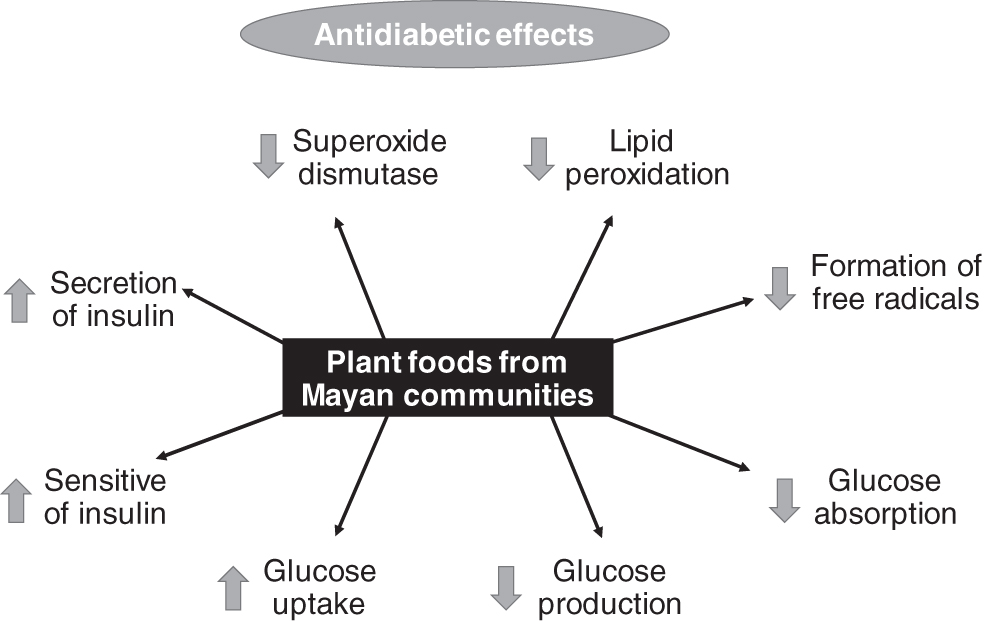
The antidiabetic effect of vegetables has been attributed to the presence of these chemical compounds, identified as bioactive compounds. 38 The bioactive compounds are considered as molecules with therapeutic potential that can exert actions on energy intake, while decreasing excessive oxidative stress, proinflammatory state, and metabolic disorders such as diabetes. 39 The chemical structure of some bioactive compounds must resist the digestive process and then act on the organism in a specific way. In addition, other compounds could have a physiological effect in the digestive tract without being absorbed. 40 Some compounds present in vegetables, such as polysaccharides, gums of galactomannan, peptidoglycan, guanidines, glycopeptides, triterpenoids, alkaloids, amino acids, steroids, flavonoids, and carotenoids, have been shown to have antidiabetic activity through different mechanism (Fig. 1). 41
Plants food from Mayan communities with antidiabetic effect.
The main mechanisms of action of bioactive compounds with antidiabetic effects are inhibition of enzymes related to the metabolism of carbohydrates, improving β cell dysfunction, and increasing glucose uptake in the peripheral tissues. 42 Glucose enters the bloodstream and concentrates to levels that endanger the integrity of the organism; the physiological activity of α-amylase and α-glucosidase are key in the degradation of carbohydrates. The enzyme salivary and pancreatic α-amylase hydrolyses starch molecules to produce oligosaccharides and disaccharides. Most of the digestion of carbohydrates is carried out in the brush border of the small intestine by α-glucosidase. 43 Therefore, the inhibition of both enzymes provides a significant biological effect in the reduction of postprandial glucose.
On the contrary, insulin is the hormone responsible for the maintenance of normal blood glucose-consuming processes (e.g., glycolysis and glycogenesis) while inhibiting glucose-producing ones (e.g., gluconeogenesis and glycogenolysis). It is exclusively synthesized in and secreted from pancreatic β cell to maintain blood glucose level within a narrow range. 7 In addition, in the skeletal muscle, adipose tissue, and liver the insulin promotes uptake and storage of carbohydrates, fat, and amino acids.
Nevertheless, cytokine-induced inflammation, oxidative stress, and overconsumption of saturated fat and free fatty acid can cause β cell dysfunction and insulin resistance, which are factors characterized in the pathogenesis of diabetes. 42 Therefore, presence of bioactive compounds on plant foods have been shown to improve glucose homeostasis to stimulate the secretion of insulin by β cell of the pancreas and decrease insulin resistance through regulating of signal pathways on glucose uptake. Other antidiabetic complementary mechanisms of action are decrease in the formation of free radicals, proinflammatory cytokines, and lipid peroxidation. 42
Maya Milpa: Plant Foods with Antidiabetic Potential Source
The main source of food and the productive activity of the Mayan communities of Yucatán are based on the cultivation of milpa, the traditional system where there are cultural and religious relations between farmers and their natural environment. 11 Another source for obtaining food from the Mayan communities of Yucatán is family gardens. Family gardens contribute to the food security of the population. 44 Family gardens, although practiced in different socioeconomic sectors, are predominantly used by farmers for their subsistence and are widely practiced in tropical climates in rural environments. 45 A distinctive feature of family gardens is the presence of a great diversity of species from different groups such as vegetables, fruit trees, medicinal plants, spices and condiments, beverages, ornamental plants, and animals for own consumption. 44
Calix de Dios et al., in a study on food safety in indigenous communities of Yucatán, reported a high agricultural diversity, including white, yellow, and purple corn (Zea mays L.), beans (Phaseolus vulgaris L.), squash (Cucurbita pepo L.), lemon (Citrus limon [L.] Buró), orange (Citrus sinensis [L.] Osbeck), mango (Mangifera indica L.), plum (Spondias purpurea L.), habanero pepper (Capsicum chinense), watermelon (Citrullus vulgaris Schrad.), onion (Allium cepa L.), cucumber (Cucumis sativum L.), sweet potato (Ipomoea batatas L.), lettuce (Lactuca sativa L.), tomato (Solanum lycopersicum L.), tomato (Lycopersicum esculentum Mill.), radish (Raphanus sativus L.), banana (Musa spp.), chaya (Cnidoscolus aconitifolius [Mill.] IM Johnst.), avocado (Persea americana Mill.), guava (Psidium guajava L.), ciricote (Cordia dodecandra ADC), ramón (Brosimum alicastrum Sw.), papaya (Carica papaya L.), mamey (Pouteria sapota [Jacq.] HE), guaya (Talisia olivaeformis [HBK] Radlk), mamoncillo (Melicoccus bijugatus Jacq.), nance (Byrsonima crassifolia [L.] Kunth), tamarind (Tamarindus indica L.), chicozapote (Manilkara zapota [L.] P. Royen), mint (Mentha spp.), rue (Ruta graveolens L.), basil (Ocimum basilicum L.), and arnica (Tithonia diversifolia [Hemsl.] Gray). 10
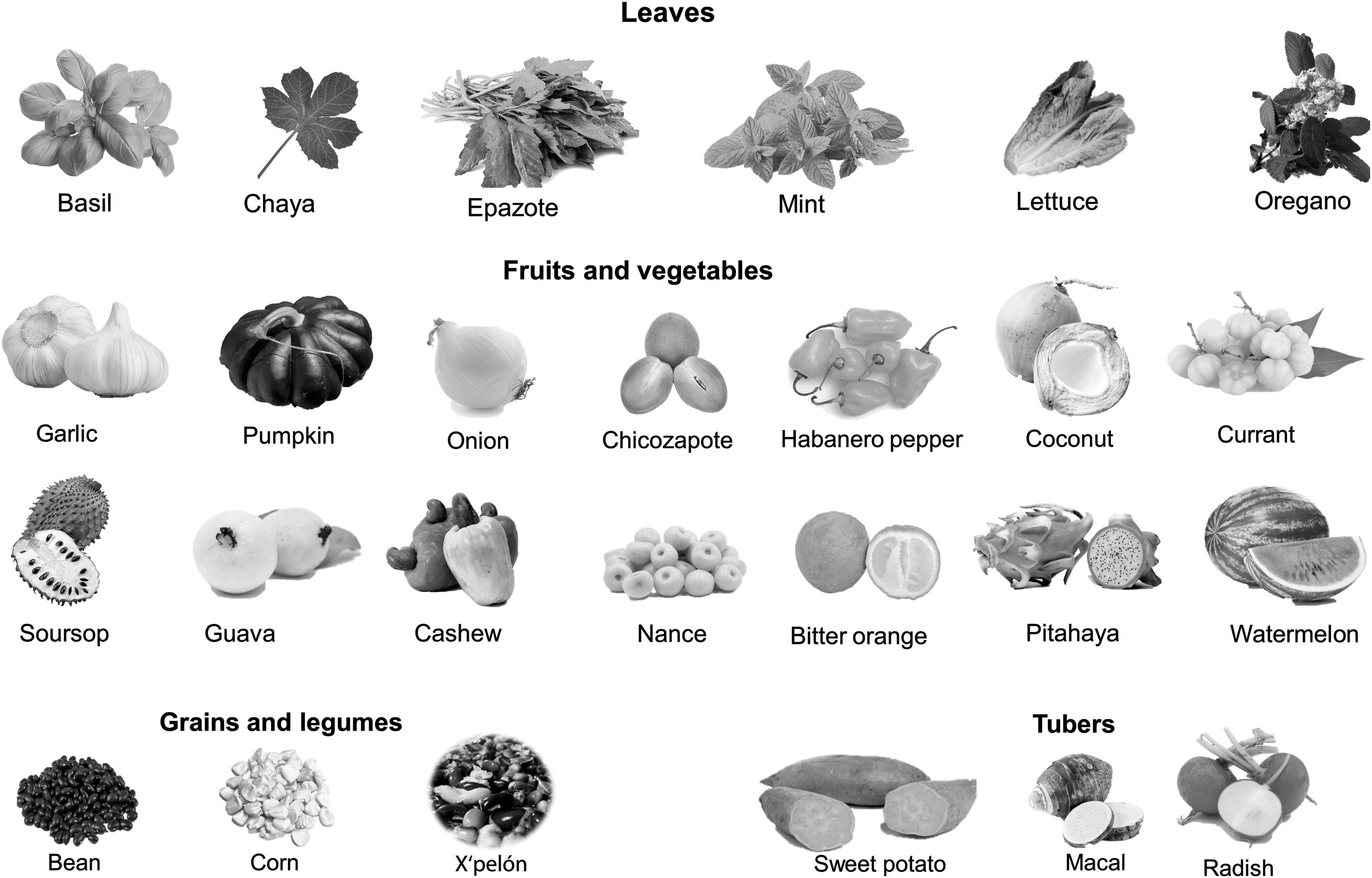
Twenty-seven plant foods with antidiabetic potential have been reported (Fig. 2) and are presented in Tables 1 to 4. These tables are classified by food groups (fruits and vegetables, tubers, grains and vegetables, and leaves), the part of the food used, the concentration of the biological effect, and study type: in vitro, in vivo, or clinical. In vitro tests evaluated the inhibition of α-amylase and α-glucosidase; the inhibitory concentration of 50% of enzymatic activity (IC50) is reported in the tables. In the in vivo tests, the murine models were the ones that best simulate the conditions of the diabetic process in humans and the main biomarkers evaluated were glycemia, the absorption of glucose in lipids and muscle cells, and the histological evaluation of the liver and pancreas. In clinical studies, the inclusion of plants foods with antidiabetic potential was evaluated on prediabetic and diabetic patients’ groups, regularly during periods 4 to 6 weeks.
Mechanisms by plant foods from Mayan communities on diabetes homeostasis.
Leaves with Antidiabetic Activity
NS, nonspecified.
Fruits and Vegetables with Antidiabetic Activity
Grains and Legumes with Antidiabetic Activity
Tubers with Antidiabetic Activity
Leaves
The leaves with antidiabetic potential (Table 1) are common in Yucatán gastronomy; these are usually consumed fresh in dishes or mixed with other spices and aromatic herbs to make pastas (errands). 46 Similarly, some leaves are used for infusions, because of their known health effects, including diabetes. 47 Samuel et al., in a study with extracts of chaya in alloxan-induced diabetes Wistar rats, reported a blood glucose decrease of up to 73.46%, attributing the hypoglycemic effect to its high flavonoid content. In a study with streptozotocin-induced diabetic rats, epazote extract showed significant reductions in blood glucose levels. However, the bioactive compound responsible for the effect was not identified. 48,49
The antidiabetic effects of basil and peppermint are related to the inhibition of α-amylase and α-glucosidase. The possible inhibitors were identified as phenolic compounds such as flavonoids in basil, and epicatechin, ρ-coumaric acid, caffeic acid, and chlorogenic acid in peppermint. 50,51 In addition, mint showed lower glucose levels in the blood in diabetic studies of rats with alloxan; the effect is probably caused by the control of oxidative stress (preventing the formation of free radicals). 52 Cheng et al. performed a study with high fat diet-induced obese mice; lettuce was shown to improve the metabolic syndrome conditions of fatty liver and glucose metabolism, whereas the presence of chlorogenic acid probably inhibits glucose production. The treatment of oregano reduced blood glucose in alloxan diabetic rats demonstrated could be potentially useful in treating hyperglycemia and related diabetic complications such as improving renal function, decreasing apoptosis in kidney cells and lipid profile. 53,54 On the contrary, Béjaoui et al. showed that oregano possesses inhibitory effect on amylase activity. 55
Fruits and vegetables
Table 2 summarizes the fruits and vegetables consumed by the Mayan community and which have shown antidiabetic potential in studies. According to Ogunmodede et al., onions have hypoglycemic and hepatoprotective effects, mainly owing to the decrease in antioxidant parameters such as superoxide dismutase, catalase, glutathione peroxidase, and lipid peroxidation in a study on alloxan-induced diabetic rabbits. 56 Behrouj et al. reported that garlic decreased glucose levels, liver activities, and oxidative parameters, and it can reverse liver injury of diabetic rats. In addition, onion and garlic inhibited α-amylase and α-glucosidase coupled with their ability to prevent lipid peroxidation in the pancreas. 57,58 The antidiabetic potential in these plant foods is because of the content of sulfur compounds derived from cysteine, primarily sulfoxide S-alkyl cysteine. 59 The synergy of bioactive compounds such as phenols, carotenoids, flavonoids, and reducing sugars in habanero peppers is a potent inhibitor of α-amylase. 60 Pumpkin significantly decreased glucose and lipid parameters, and increased the diameter and number of Langerhans islets compared with control groups of alloxan-induced diabetic rats. 61 A possible antidiabetic mechanism of actions may be through inhibitory effect on α-amylase activity. 62
Barbalho et al. reported a significant decrease in the glycemic levels of Wistar rats fed with chicozapote pulp for 50 days. 63 The mechanism of action of chicozapote is unknown; however, its effect has been related to the presence of compounds such as polyphenols, terpenes, flavonoids, and glycosides. 64 Coconut water (3 mL/kg) showed multiple beneficial effects on diabetic rats, preventing hyperglycemia and decreasing oxidative stress. The presence of various compounds, such as an ascorbic acid, caffeic acid, and polyphenols, acts as an antioxidant modulating the glycemia. 65 Trinidad et al. included coconut flour in the preparation of breads and evaluated it in patients with diabetes; the results suggested the benefits of the consumption of coconut flour owing to its high fiber content. 66 In a study with male albino rats diabetised with alloxan, currants had a potent antidiabetic effect; this activity is probably related to the inhibition of hepatic gluconeogenesis, glycogenolysis, and increased glucose uptake in peripheral tissues related to the antioxidant activity of the content of vitamin C. 67 Oboh et al. determined the glycemic index and evaluated the inhibitory activity of α-amylase and α-glucosidase from various tropical fruits: guava, soursop, and cashew; this resulted in greater inhibitory activity and a lower glycemic index. 68
Perez-Gutierrez et al. suggested that the antihyperglycemic activity of nance is because of the sensitization of insulin receptors in the target organs or to the inhibition of insulin activity in the liver and kidney, as well as to the recovery of the activity of glucose-6-phosphatase in the liver. 69 Soluble and insoluble fiber and the increased antioxidant activity of compounds such as flavonoids in sour orange protect the liver against oxidative stress. 70 In addition, Jia et al. reported a hypoglycemic effect of neohesperidin, a flavone that is present in sour orange. 71 The mechanism of action of pitahaya is because of its content of anthocyanins and flavonoids that act as stimulators of insulin secretion. 72 Watermelon extracts in streptozotocin-induced diabetic rats significantly reduced blood glucose and increased serum insulin levels; immunohistochemical analysis revealed that the extract effectively protected pancreatic cells. Watermelon contains citrulline, a precursor of arginine, which is an amino acid that is related to antidiabetic activity. 73
Grains and legumes
Beans inhibited α-amylase in vitro; the bean had an antihyperglycemic effect in studies with Wistar rats. 74 The bean probably stimulated the β pancreatic cells to secrete insulin through a mechanism of action similar to glibenclamide. 75 Corn is the main grain grown in the milpa and has been the most important food source of Mayan communities since the origin of their culture. 76 Frank and Durden performed a study with diabetic patients in Mayan communities of Yucatán and reported corn products to be an unhealthy food. 20 However, aqueous extracts of corn have a potent inhibitory effect on digestive enzymes. 74
In studies in mice, it was found that purple corn significantly reduces blood glucose levels by increasing the concentration of insulin, C-peptide, and adiponectin and decreasing GLUT4 levels in skeletal muscle. 77 In addition, flavonoids and phenolic compounds such as quercetin derivatives, kaempferol, apigenin, luteolin, and myricetin have an essential role in the inhibition of free radicals and hepatoprotective effects. 78,79 The x'pelon bean had a hypoglycemic effect in Wistar rats with high caloric diets; its effect is because of the content of fiber, phenolic compounds, and saponins. 80 In addition, x'pelon beans demonstrated an inhibitory effect on α-glucosidase and potent antioxidant activity. 81
Tubers and roots
The inclusion of sweet potato in the diet of diabetic patients reduced their blood glucose levels; the possible mechanism of action was because of an acid glycoprotein that acted by improving insulin sensitization. 82 In rats, sweet potato significantly improved the function of pancreatic β cells. 83 In addition, the sweet potato has a low glycemic index and a higher energy content, which decreases the rate of postprandial glucose with other starches. The macal significantly reduced postprandial blood glucose levels in alloxan-induced diabetic rats, with an effect that is probably similar to that of glibenclamide. 84
Shajeela et al. reported similar effects in experiments with macal extracts; they observed a significant increase in plasma insulin. 85 The macal effect is possibly related to the antioxidant capacity attributed to the presence of phenols, flavonoids, and other compounds. 86 Radish has comparable effects with macal; Shukla et al. observed an increase in insulin secretion in studies performed in streptozotocin-induced diabetic rats. 87 In addition, the antioxidant activity of radish decreases oxidative stress and lipid peroxidation, helps to regulate glucose levels, stimulates cell glucose capture, and decreases intestinal glucose absorption. 88
Conclusion and Recommendations
In this review, we described different mechanisms of plant food from Mayan communities on controlling glucose levels and decreasing the negative effects of diabetes, primarily through in vitro and in vivo studies. The biological properties of the foods described in this article are a viable low-cost alternative for the treatment of diabetes in indigenous communities of Yucatán. However, local investigations of these foods are necessary for the abiotic conditions of the culture sites that can modify the concentration of bioactive compounds. In addition, more clinical studies are needed to provide greater scientific support to these plant foods. In addition, studies are required to document the optimal dose of bioactive compounds responsible for biological activity and its different varieties. No antidiabetic evidence was found for some foods of traditional farming systems of the Maya communities of Yucatán; so, it is therefore necessary to assess their antidiabetic potential.
Scientific evidence demonstrates that several products of the Mayan community can contribute to the prevention and treatment of diabetes. However, future research is necessary to promote nutrition based on them, as possible functional foods.
Footnotes
Acknowledgment
The authors are thankful for the support from Kellogg's Foundation.
Author Disclosure Statement
No competing financial interests exist.
Funding Information
This review is part of “Food Education with Action in People with Diabetes in Tixmehuac, Yucatán, México,” a project funded by Kellogg's Foundation (Project P3037075).