




Abstract
Solanum sessiliflorum is an Amazonian fruit (cubiu) that has been domesticated since pre-Colombian era. It is also used in folk medicine to treat some clinical conditions. This investigation chemically characterized and analyzed the in vitro antioxidant and antitumoral effect of a cubiu pulp/seed hydroalcoholic extract. Cubiu extract was chemically characterized by high-performance liquid chromatography with diode array detector (HPLC-DAD), its antioxidant capacity measured by 2.2-diphenyl-1-picrylhydrazyl (DPPH) assay, and the following complementary in vitro protocols were performed: (1) cytoprotective effect of cubiu on human peripheral blood mononuclear cells (PBMCs) exposed to H2O2, a genotoxic and procarcinogen molecule; (2) effect of cubiu on low density lipoproteins oxidation; and (3) cytotoxic and antiproliferative effect on breast (MCF-7) and colorectal (HT-29) cancer cell lines. Biochemical and flow cytometry analyses were conducted in these protocols. Cubiu extract presented high concentrations of caffeic and gallic acids, beta-carotene, catechin, quercetin, and rutin, and its antioxidant capacity was confirmed. Cubiu attenuated H2O2 cytotoxicity on PBMCs, presented lowering effect on LDL oxidation, and induced mortality and proliferative inhibition of colorectal cancer cells. In cancer cells, cubiu extract at 10 μg/mL showed similar effects to 5-fluorouracil chemo drug reducing its viability and frequency of S-phase, indicating that cells are undergoing mitosis. In summary, despite the limitations of in vitro protocols, our results suggest that cubiu has several biological properties that affect human health.
Introduction
The Amazon is a rich and biodiverse biome full of fruits that have been consumed by local people since pre-Columbian era. However, the biological properties of many of these fruits need to be better understood. This is the case of Solanum sessiliflorum (Dunal), popularly known in Brazil as “cubiu” (Fig. 1). 1 –3 In English-speaking countries, it is named “apple/peach tomato.” 4
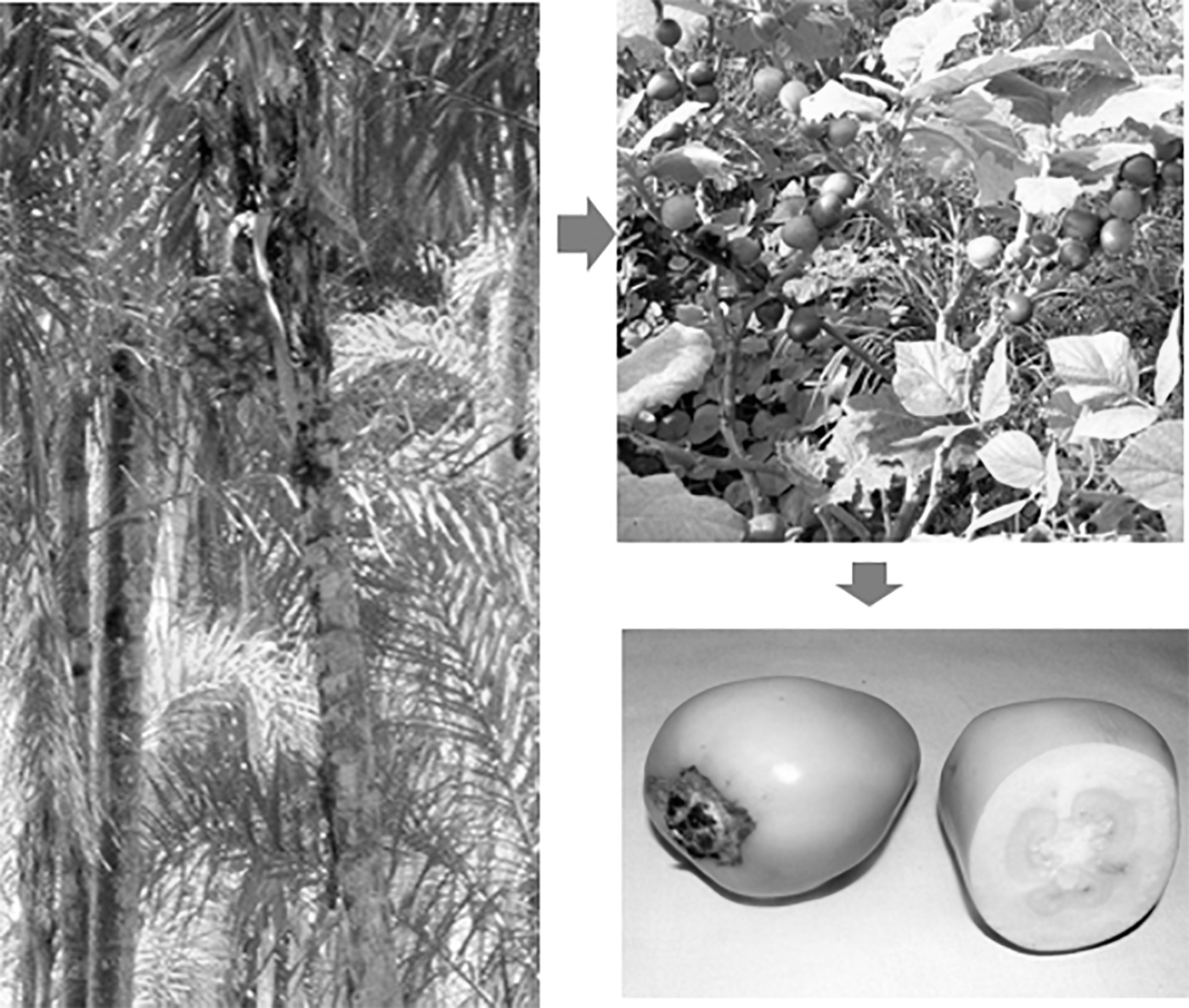
Solanum sessiliflorum popularly known as cubiu is an Amazonian fruit widely used as food produced by an upright shrub and branched annual cycle, with heights ranging from 80 cm to 2 m. The cubiu fruit is an oval fruit with 4–12 cm diameter, and peel color goes from green to reddish orange during ripening. The pulp presents a light-yellow color due to the carotenoid content.
Cubiu presents in its chemical matrix, solasodine, an alkaloid molecule associated with steroidal hormone synthesis. 1 It includes secondary metabolites with important biological properties, such as p-coumaric acid, p-hydroxidihidrocumaric acid, methyl and ethyl esters, and the flavonoid naringenin. 5,6 Beyond these molecules, a study performed by Rodrigues et al. 7 described seventeen carotenoids and three phenolic compounds—mainly (all-E)-β carotene, (all-E)-lutein, and 5-caffeoylquinic acid.
Cubiu is used in Amazonian traditional medicine to treat myriad conditions. 8 However, the number of studies evaluating the pharmacological properties of cubiu is less and generally limited to antioxidant effects. 1,3,7,9,10 The effect of cubiu on colorectal cancer cells should be considered relevant because epidemiological data estimated that colorectal cancer is expected to increase by 60%, resulting in >2.2 million new cases and 1.1 million deaths by 2030. 11 The antibreast cancer tumor effects of cubiu are also important, considering it is the most common cancer in women, accounting for 25.1% of all cancer types. 12
Since cardiovascular and cancer morbidities are the leading causes of mortality in developed and developing countries, 13 this study evaluated the potential effect of cubiu on processes associated with these diseases. For this purpose, in vitro protocols were conducted to analyze effect of hydroalcoholic cubiu pulp/seed extract chemically characterized on (1) preventive action against hydrogen peroxide exposure, a genotoxic molecule associated with procarcinogenesis; (2) modulation of low density lipoproteins-cholesterol oxidation levels; and (3) antiproliferative effect of cubiu on breast and colorectal cancer strains compared with 5-fluorouracil action, a chemotherapeutic drug used in the treatment of these tumors.
Materials and Methods
Cubiu fruit samples and hydroalcoholic extract preparation
This study is part of a project previously authorized by the Brazil Environmental Ministry to assess the components of genetic patrimony in national territory (n° 010547/2013-4) according to Brazilian legislation (n° 2186-16). Cubiu samples (∼20 kg) were harvested in the legally authorized geographic region in Maués City (03° 23′ 01″ S, 57° 43′ 07″ W; Amazonas, Brazil). A botanic specialist confirmed the fruits to be S. sessiliflorum.
Cubiu pulp/seed hydroalcoholic extract was obtained using a procedure described by de Souza Filho et al. 14 for Astrocaryum aculeatum, another Amazon fruit. The fresh fruits used in this study weighted 147 ± 38 g. Cubiu extract was produced as follows: fruits were washed, peeled, and the pulp with small seeds was triturated using a mixer (particles ≤3 mm) for ∼5 min and placed into sealed amber glass containers with 70% absolute ethanol (Neon, commercial-03467; São Paulo, SP, Brazil) for 7 days. During this period, the extracting solvent was exchanged three times. After extraction, the product obtained was filtered, evaporated, lyophilized, and stored at −20°C until use.
Chemical characterization of cubiu extract and antioxidant capacity
Cubiu's chemical matrix was chemically characterized by HPCL-DAD to evaluate six antioxidant molecules: gallic acid, catechin, caffeic acid, quercetin, rutin, and β-carotene. Identification of these molecules was performed by comparing their retention time and UV absorption spectrum with those of the commercial standards.
The lyophilized extract of cubiu pulp and peel was analyzed and dissolved in ethanol at a concentration of 5 mg/mL. The analysis was done according to the method described by Lagharia et al. 15 The chromatography peaks were confirmed by comparing retention time with reference standards and by DAD spectra (200–600 nm). All chromatography operations were carried out at ambient temperature in triplicate.
To confirm that cubiu hydroalcoholic extract had biological effects before the in vitro protocol, we assessed its capacity to neutralize the stable synthetic free radical 2.2-diphenyl-1-picrylhydrazyl (DPPH) according to Mohamad et al. 16 and Zhang et al.'s method. 17
General design of in vitro protocols
First, human blood samples from healthy adults were used to evaluate the influence of cubiu extract on LDL-oxidation processes and evaluate cytoprotective effects against hydrogen peroxide (H2O2) exposure. The LDL-oxidation test was performed using plasma, whereas the cytoprotective protocol was performed using peripheral blood mononuclear cells (PBMCs). To obtain plasma and PBMCs, peripheral blood samples were collected after 12-h overnight fasting by venipuncture, and PBMCs were obtained using gradient centrifugation with Ficoll-Histopaque 1077. Cells were immediately transferred to a 96-well microplate at a concentration of 2.5 × 10⁵ cells/well in phosphate buffered saline (PBS) plus 5% glucose. The isolated plasma was used for LDL-oxidation analysis. The second protocol was performed using two commercial cell cancer lines: breast (MCF-7 [ATCC® HTB-22™]) and colorectal (HT-29 [ATCC HTB38™]), obtained from the American Type Culture Collection (ATCC), exposed to different cubiu extract concentrations.
PBMCs were cultured in Roswell Park Memorial Institute and cancer cells in DMEM (Dulbecco's modified Eagle's medium). All cell cultures were supplemented with 10% fetal bovine serum and 1% penicillin (100 U/mL)/streptomycin (100 mg/mL). Cells were cultured until there was an ideal confluence and number of cells to perform all the treatments and experiments at 37°C in 5% CO2 and 95% O2 in a humidified environment.
All in vitro assays were performed according to Organisation for Economic Co-operation and Development Guidelines for the Testing of Chemicals. 18
H2O2 human PBMC cytotoxicity assay
Cubiu's cytoprotective effect against PBMCs exposed to H2O2 was determined using a rapid protocol, previously described by Batel et al. 19 and de Souza Filho et al. 14 In brief, blood samples were collected from healthy volunteers. This study was previously approved by the Ethics Committee at the Universidade Federal de Santa Maria, Brazil, and all volunteers signed an informed consent document. Peripheral blood samples were collected after a 12-h overnight fasting period by venipuncture, using top Vacutainer (BD Diagnostics, Plymouth, United Kingdom) tubes with heparin. High H2O2 concentrations cause oxidative stress with extreme and acute cell damage, thereby inducing rapid cell death and consequently releasing double-strand DNA (dsDNA) to extracellular medium. The dsDNA in medium was quantified using the DNA PicoGreen® dye that interacts preferentially with dsDNA, despite the presence of single-strand DNA (ssDNA), RNA, and proteins at high pH (>12.0). This selectivity characteristic was used to follow cell toxicity that releases dsDNA fragments into medium, increasing the fluorometric signal intensity. The test was performed in fluorescent 96-well microplates using Quant-iT™ PicoGreen kit following the manufacturer's instructions. DNA denaturation kinetics (0, 15, 30, 45, and 60 min) were determined in the PBMC samples with PicoGreen dye addition in the dark at room temperature. To minimize photobleaching effects, fluorescence measurement times were kept constant for all samples. Fluorescence emission was recorded at 528 nm, and an excitation wavelength recorded at 480 nm in a SpectraMax M2/M2e Multi-Mode Plate Reader. The dsDNA concentration in extracellular medium represents the presence of cell death promoting compounds. The results were expressed as percentage fluorescence values in relation to the positive control group treatment (untreated with cubiu extract and exposed to H2O2). Therefore, percentage values lower than those of the H2O2 group indicated protective effects of the cubiu extract.
In addition to dsDNA levels, reactive oxygen species (ROS) levels produced by exposure to H2O2 were quantified by a fluorometric assay of ethyl dichlorofluorescein (DCFH-DA) according to the protocol described by Lebel et al. 20 with slight modifications.
LDL-oxidation human plasma assay
This assay was performed as described by Portella et al. 21 using isolated plasma. Plasma from three healthy, nonfasted normolipidemic voluntary donors who did not regularly ingest cubiu was collected with EDTA (1 mg/mL) and pooled. Sucrose (final concentration 0.5%) was added to prevent LDL aggregation. Five milliliters of EDTA–plasma adjusted to a density of 1.22 g/mL with solid KBr (0.326 g/mL) was layered on the bottom of a centrifuge tube. Then, 5 mL EDTA containing sodium chloride solution (density 1.006 g/mL) was overlaid on the top of the plasma. Ultracentrifugation was run at 350,000 g for 2 h at 4°C. LDL particles were collected by the aspiration of the yellow/orange band at the middle of the saline layer and dialyzed exhaustively overnight at 4°C with 10 mM phosphate buffer (pH 7.4). Protein concentration in LDL solution was determined by Lowry's method. 22 The purity of LDL preparation was verified by agarose gel electrophoresis. Isolated LDL was stored at −20°C for no longer than 2 weeks.
Conjugated diene (CD production) analysis was performed, and the oxidation was monitored by measuring the increase in absorbance at 234 nm due to CD formation as previously described by Gieseg and Esterbauer. 23 Determination of lag phase and maximum oxidation rate was performed and graphically presented by the intercept of the tangents to the slow and fast diene absorption. The maximum oxidation rate was determined by the peak of the first derivative.
Cancer viability and proliferative assays
In general, potential therapeutic effects of food extracts, herbal phytotherapies, or pharmacological drugs against cancer cells are investigated first by decreasing viability and cell proliferation rate. These two analyses were performed here following a protocol described by Cadoná et al. 24 for breast and colorectal cancer cells. In brief, cancer cell cultures were supplemented at different cubiu extract concentrations and the effect on cellular viability was evaluated in 24 h cell cultures, whereas cellular proliferation was evaluated in 72 h cell cultures. Both analyses were conducted using an MTT [3-(4,5-dimethylthiazol-2-yl)-2,5-diphenyltetrazolium bromide] assay.
The most effective concentration of cubiu extract was compared with 5-fluorouracil using flow cytometry as described by Cadoná et al. 24 Cells were exposed to cubiu concentrations that triggered inhibition of cellular proliferation after initially being evaluated by MTT assay.
Statistical analyses
The results obtained from all in vitro protocols were analyzed using GraphPad Prism 6 statistical package software. All experiments were performed independently in triplicate, and data analysis was performed according to good in vitro practices. 19 Before statistical analysis, most data were normalized and transformed as % of control. This type of standardization is currently used in many assays in cell biology, pharmacology, and toxicology that generate data where a parameter is measured in a reference system (negative control) as well as under conditions of increasing stress or drug exposure as described by Schott et al. 25 The treatments were compared by one-way analysis of variance followed by post hoc Dunnett's or Tukey's test. A P-value of <.05 was considered statistically significant.
Results
Chemical characterization and antioxidant capacity of cubiu extract
The cubiu hydroalcoholic extract showed 149.11 ± 0.05 standard error (SE) of total polyphenols expressed as gallic acid (mg/g fraction), 19.23 ± 0.03 SE flavonoids expressed as quercetin (mg/g fraction), 2.96 ± 0.02 SE tannins expressed as catechin (mg/g fraction), and 0.15 ± 0.11 alkaloids mg/g. Concentrations of main bioactive molecules present in cubiu hydroalcoholic extract are detailed in Table 1. Among all, gallic acid, β-carotene, and caffeic acid presented higher concentrations in the extract than others.
Phenolics and Flavonoids Composition of Cubiu (Solanum sessiliflorum) Hydroalcoholic Extract Determined by High-Performance Liquid Chromatography with Diode Array Detector Analysis
Results are expressed as mean ± standard deviations (SDs) of three determinations.
Averages followed by different letters differ by Tukey's test at P < .001.
A 50% inhibition of DPPH free radical capture that estimates antioxidant capacity estimated from cubiu extract was 267.72 μg/mL, whereas purified antioxidant molecules used as controls presented 50% DPPH inhibition as follows: ascorbic acid = 5.70; gallic acid = 2.68; and rutin = 16.03 μg/mL.
Cytoprotective effects of cubiu on PBMCs exposed to H2O2 were determined by analyzing ROS levels and cell mortality quantified by dsDNA fragments on supernatant cultures (Fig. 2B, C). As expected, H2O2 exposure triggered higher ROS levels in untreated control cells. Lower ROS effects were observed in PBMC cultures supplemented with higher cubiu concentrations (≥300 μg/mL). Cultures exposed to 1000 μg/mL cubiu presented significantly lower ROS concentrations than the negative control group.
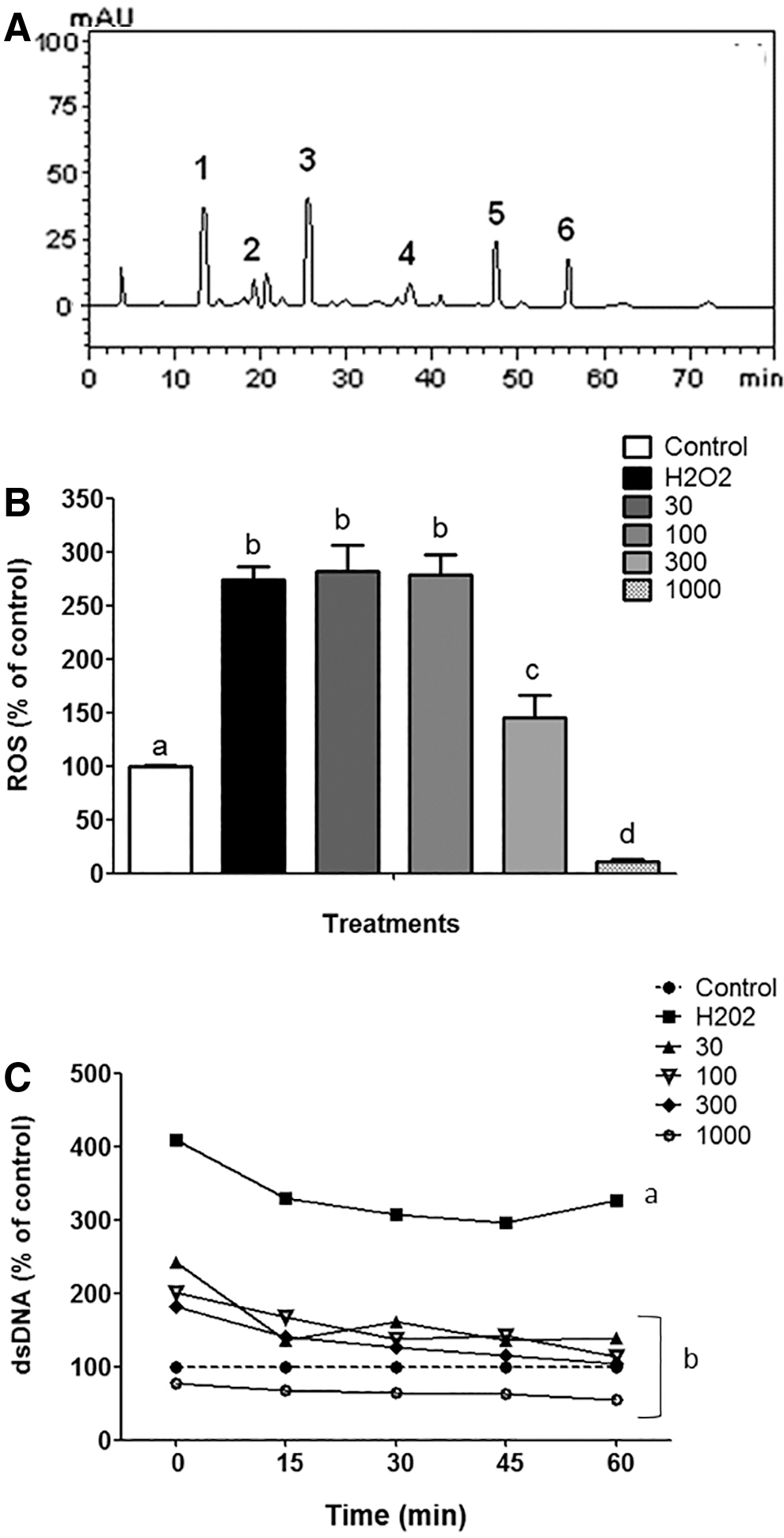
Chemical characterization of cubiu extract and its cytoprotective effect at different concentrations (μg/mL) against human PBMCs H2O2 exposure.
The H2O2 was highly cytotoxic increasing the dsDNA levels in extracellular medium during the first 60 min of exposure. However, cubiu extract at ≤300 μg/mL concentrations was able to partially revert the H2O2 cytotoxicity until 30 min of exposure, whereas after 30 min H2O2 cytotoxicity was completely reverted. These results indicated that at higher H2O2 concentrations, the cubiu extract acted cytoprotectively decreasing ROS generation and cellular mortality.
In vitro LDL-oxidation assay
A complementary protocol was performed to confirm the potential antioxidant action of cubiu by evaluating its effect on LDL-cholesterol oxidation. When isolated LDL plasma samples were incubated with cubiu extract at different concentrations, a significant increase in the lag phase of LDL oxidation (P < .05) was observed. Cubiu concentration 3 μg/mL significantly inhibited CuSO4-induced LDL oxidation (Fig. 3A, B). Moreover, alterations in maximum CD formation values and no LDL oxidation were observed in the medium without CuSO4. In the presence of this oxidizing molecule, cubiu extract at concentrations of 3 at 300 μg/mL was able to trigger significant decreases in LDL oxidation in a dose-dependent manner. The results indicated that different cubiu concentrations were able to control in vitro plasma LDL-oxidation processes.
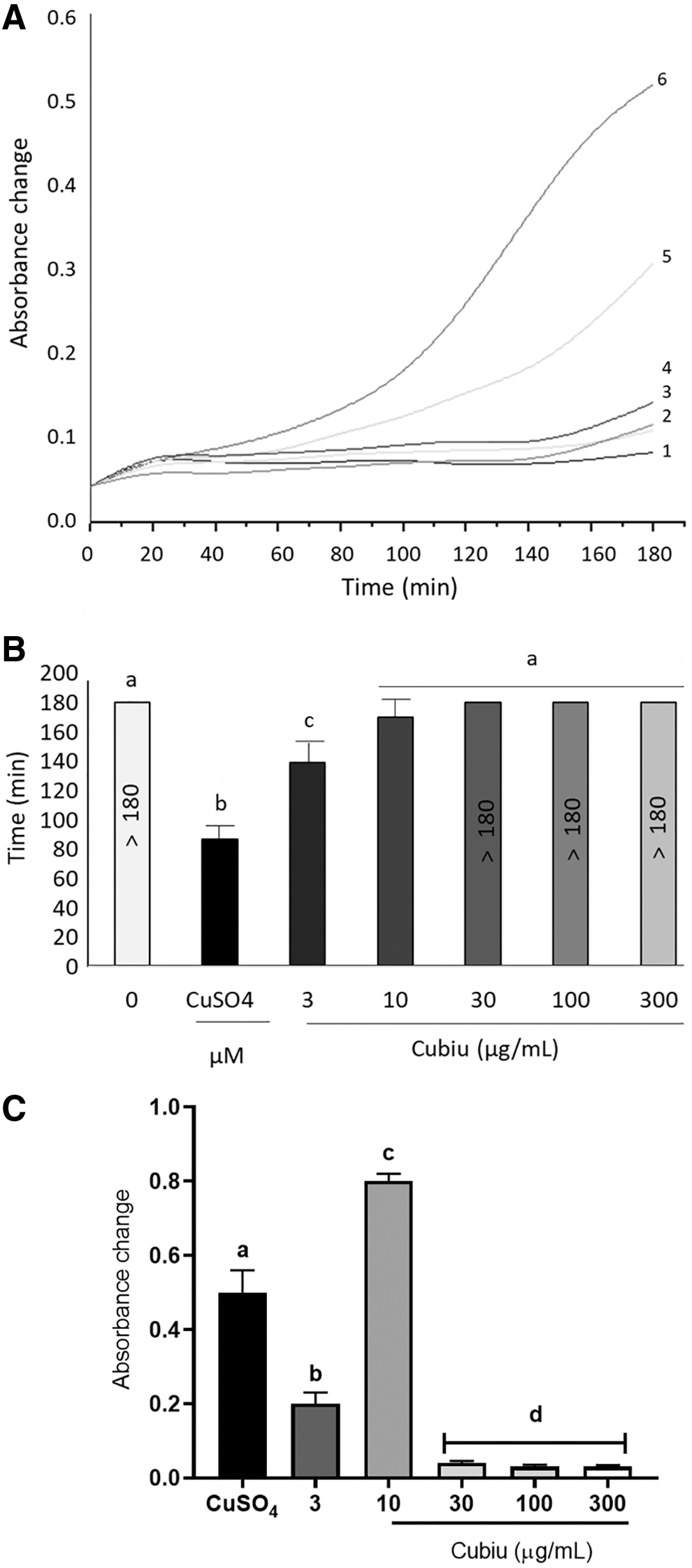
Modulation of LDL oxidation by cubiu hydroalcoholic extract.
Antitumor effect of cubiu extract
The viability and antiproliferative effects of cubiu extract on two cancer cell lines were determined. The MTT assay analysis showed that cubiu extract was able to decrease both viability and cellular proliferation in HT29 cancer cells at 3 and 10 μg/mL (Fig. 4). Higher cubiu concentrations induced an increase in the breast and colorectal cancer viability and cellular proliferation (≥30 μg/mL).

Effect of Cubiu hydroalcoholic extract, at different concentrations on viability and cellular proliferation of MCF-7 breast cancer and HT-29 colorectal cell cultures. Treatments were statistically compared by one-way analysis of variance followed by Tukey's post hoc test. Different letters indicate statistical differences among treatments at P < .05.
From these results, complementary analyses were performed in the HT29 colorectal cancer cell line using 10 μg/mL cubiu. Cubiu decreased HT-29 cell viability significantly compared with 5-fluorouracil, as evaluated by MTT assay and flow cytometry analyses (Figs. 5 and 6).

Viability and cellular proliferation rate of colorectal cancer cells exposed to cubiu hydroalcoholic extract at 10 μg/mL and 5-fluorouracil (10 nM), a chemotherapeutic drug (10 nM).

Cellular proliferation of colorectal cancer cells exposed to cubiu hydroalcoholic extract at 10 μg/mL and 5-fluorouracil, a chemotherapeutic drug (10 nM).
Cubiu significantly altered colorectal cell cycle with and without concomitant supplementation of 5-fluorouracil (P ≤ .001). All treatments increased the frequency of G1-cells than untreated culture. As expected, 5-fluorouracil significantly decreased the frequency of cells in the S phase (6.6% ± 0.7%) over untreated cancer cells (8.6% ± 0.9%). S-phase cells (5.3% ± 0.4%) exposed to cubiu were similar to those exposed to 5-fluorouracil. When cultures were concomitantly supplemented with cubiu and 5-fluorouracil, a synergic effect was not observed on S-phase cells (12.7% ± 0.9%). Similar frequencies of G2-cells were observed in all groups.
Discussion
The Amazon biome has a great biodiversity in fruits that have been consumed since pre-Columbian times. However, despite their culinary use in traditional medicine, biological activity of many of these fruits has not been studied in depth. This is the case with cubiu investigated here. Considering that its seeds are small and closely linked to the fruit pulp, this research produced a seed extract from the pulp and seed. Chemical analysis of the extract has identified bioactive molecules that have biological effects on human health, such as gallic acid, caffeic acid, quercetin, rutin, β-carotene, and catechin. 26 However, complementary studies could be performed to determine the existence of other bioactive compounds in the cubiu extract that are not identified here or in previous investigations.
Cubiu extract presented a moderate antioxidant capacity using DPPH assay in comparison with chemical molecules used as control. However, when human PBMCs were exposed to H2O2, a pro-oxidant molecule, cubiu extract presented an important cytoprotective effect confirming its antioxidant activity.
Two complementary in vitro protocols confirmed the potential cubiu effects on human health. The first one showed that cubiu presents lowering effect on LDL-oxidized levels. Amazonian folk medicine has used cubiu to treat hypoglycemia and hypercholesterolemia. The mechanism behind atherosclerosis remains elusive; however, the dominating accepted theory presumes that LDL oxidation is pivotal in atherogenesis. Evidence suggests that foods rich in dietary phenolic compounds with antioxidant activity could mitigate the extent of LDL oxidation in vivo and in vitro.
Amarowicz and Pegg performed a review 26 with several plant foods that could attenuate LDL oxidation, such as grapes, berries, orange, grapefruit, coffee, tea, chocolate, olives, and nuts. Similar to these plants, cubiu presents bioactive molecules that could contribute to decreasing LDL-oxidation levels, as the case gallic acid that presents higher concentration in the extract investigated here. Gallic acid has many applications across several scientific fields and has been indicated as an anticancer, antimicrobial, antimutagenic, antiangiogenic, and anti-inflammatory agent alongside its use in treating lipid-related conditions. 27,28
The effect of cubiu extract on cancer cells was also evaluated here in two cell lines. However, its potential antitumoral effect does not seem universal, as cubiu increased cellular mortality and decreased the proliferation rate only in colorectal cells and not in breast cancer cells. Differences between the two cancer cell lines could be expected considering that each cancer type has a unique biology and pathogenic process.
Epidemiological evidence also pointed out that diet and lifestyle variables including sedentarism and high meat and alcohol consumption are important risk factors for colorectal cancer development. 29 These risk factors exert chronic oxidative stress and inflammatory reactions that negatively affect the gut barrier and microbiota, predisposing to cancer development. 30 Moreover, colorectal cancer treatment involves surgery and chemotherapy, but side effects and drug resistance are recurrent clinical problems. In these terms, studies of natural products with anticolorectal cancer effects including decreased cell proliferation, metastasis, apoptosis, and autophagy induction could be considered relevant as described by Huang et al. 31
Some evidence shows that foods can decrease colorectal cancer risk, such as coffee. Here, it is important to highlight that coffee has some bioactive molecules in its chemical matrix, such as caffeic acid, that was also identified in the cubiu extract. 32 Moreover, there are some investigations, including one performed by Subramanian et al., 33 which described gallic acid antitumor activity against colon cancer cells by inducing apoptosis. Quercetin, rutin, and catechin also present relevant antitumor effect against colorectal cancer by cellular cycle arrest, increases in apoptosis, inhibition of metastasis and angiogenesis, among others. 34 –36
A complementary analysis performed here showed that cubiu extract could present a similar effect in cells treated with 5-fluorouracil. Chemically, 5-fluorouracil is a nucleoside analog that inhibits the enzyme thymidylate synthase and leads to the incorporation of fluoropyrimidine metabolites into DNA and RNA. 37 This antitumor agent was able to increase Bax gene expression that encourages proapoptotic action. 38 Therefore, it is possible that cubiu could induce apoptosis in colorectal cancer cells.
Considering that cubiu has been domesticated since pre-Colombian era, its use in disease treatment with a “modern concept” such as cancer is not specifically recognized in Amazonian folk medicine. In this context, results described here open the perspective that cubiu acts effectively against colorectal cancer. Complementary in vivo studies could elucidate the mechanisms associated with cubiu colorectal anticancer activity.
In summary, our results suggest that cubiu extract has important bioactive antioxidant molecules in its composition that probably contribute to cell protection against oxidative stress, by cytoprotective action, lowering effect on LDL-oxidation and cytotoxic and antiproliferative effect against colorectal cancer cells. Cubiu has been considered an important raw material for modern agroindustry, because the plant is rustic, easy to cultivate, very productive depending on the genotype cultivated, and can reach 100 tons of yield per hectare of fruit. 8 Therefore, results described here support potential use of cubiu in the production of functional food supplements to benefit human health.
Footnotes
Authors' Contributions
G.F.F.S.M., F.B., and I.B.M.C. contributed to the design of the study, and participated in data collection and statistical data analysis. P.C.L. and A.B. contributed to cubiu extract production and chemical characterization. V.F.A., F.C.C., J.R.M., and A.K.M. contributed to data collection of PBMCs and cancer cell analyses. R.P.B. contributed to LDL-oxidation analyses. E.E.R. and R.S.P. contributed to obtaining the sample of cubiu fruits in Maués city (Amazonas State), fruits transportation to the Biogenomics Laboratory (UFSM), to the literature review of cubiu and writing of the article.
Ethical Approval
This study was approved by the Universidade Federal de Santa Maria, Santa Maria- Brazil, ethical board (No. 23081.015838/2011-10).
Acknowledgments
Parts of this study were based on the PhD thesis of G.F.F.S.M. The thesis is available in the repository of the Federal University of Santa Maria.
Author Disclosure Statement
No competing financial interests exist.
Funding Information
This study was supported by the following Brazilian research agencies: National Council for Scientific and Technological Development (CNPq) and Coordination for the Improvement of Higher Education Personnel (CAPES).