




Abstract
This study was to compare the anticolitis activity of fresh Saengshik (FSS) with heated Saengshik (HSS) with dextran sulfate sodium (DSS)-induced experimental colitis mouse model. Both FSS- and HSS-fed colitis mice exhibited the effects of the increase in the body weight, the alleviation in the colon shortening, and the reduction of the ratio of colon weight to length. However, FSS-fed colitis mice showed a much more significant decrease in DSS-induced tissue damage by mucosal edema and crypt deficiency than did HSS-fed ones. Besides, FSS contributed to decreasing the serum levels of proinflammatory cytokines (tumor necrosis factor-alpha and interleukin-1 beta) and inhibiting the colonic mRNA expressions of these cytokines in colitis tissue of the mice. FSS also resulted in the lower colonic mRNA expression level of inflammation-related inducible nitric oxide synthase (iNOS) and cyclooxygenase-2 (COX-2) in colitis mice than did HSS. Overall results confirmed Saengshik, especially FSS, inhibits more effectively against DSS-induced inflammation reaction in colitis mice than HSS.
Ulcerative colitis (UC) is a severe inflammatory bowel disease (IBD). The incidence rate of UC is increasing in the Asia-Pacific region, especially in China and South Korea. 1 The primary therapy for UC is to use chemical medicines and immune inhibitor. However, interest in the naturally sourced materials and herbs has increased in IBD research and its clinical therapy. 2,3 Saengshik is a traditional Korean health food invented by Korean Buddhist monks that mainly contains freeze-dried whole grain, fruit, and vegetable powders. 4 Many previous studies have reported that Saengshik exhibited some health benefits such as antidiabetic, 4,5 antioxidation, 6,7 anticolitis, 8 and hepatoprotective function. 6,9 In this study, we aimed to compare the anticolitis activity of fresh Saengshik (FSS) with heated Saengshik (HSS) using a dextran sulfate sodium (DSS)-induced experimental colitis mice model.
Both FSS (Saengshik 45) and HSS (heated at 121°C for 15 min, and then hot-air dried) were kindly provided by EROM Co., Ltd (Chuncheon, Gangwon-do, South Korea). FSS was mainly composed of whole grains, legumes, fruits, vegetables, mushroom, and seaweeds as powder forms. 10 Forty-two male C57BL/6J mice (specific pathogen-free grade, 6-week-old, 16–18 g) were purchased from Samtako Bio, Inc. (Osan, Gyeonggi-do, South Korea), and housed under a standard environment (light/dark cycle, 12 h/12 h and temperature, 25 ± 1°C) for 14 days and fed diets ad libitum. The experimental design was normal group (AIN-93G diet), DSS group (AIN-93G diet), DSS+FSS group (AIN-93G diet with a 30% or 70% of FS), and DSS+HSS group (AIN-93G diet with a 30% or 70% of HSS). From the 7th to 14th day, mice (except the normal group) were fed with a DSS solution (2%, w/v) to induce experimental colitis. At the 15th day, all animals were euthanized with carbon dioxide, sacrificed, collected blood, and quickly recorded the length and weight of the colon. The collected colon tissue and blood were stored at −80°C for the histological observation and reverse transcription-polymerase chain reaction (RT-PCR) assay. The experimental animal protocol was reviewed and approved by the Institutional Animal Care and Use Committee of Pusan National University, South Korea (approval number PNU-2011-000408).
As shown in Figure 1A, DSS treatment significantly decreased the body weight in mice, but DSS-induced colitis mice fed both FSS and HSS equally maintained body weight. Colon shortening is a typical clinical symptom in colitis, 11 which was evidenced by significantly shortened colon length by DSS in the mice (Fig. 1B). Both FSS and HSS protected against shortening of the colon length in colitis mice. In particular, DSS+FSS group showed longer colon lengths in colitis mice than DSS+HSS group. The ratio of colon weight to length is also a classic index to evaluate the levels of abdominal swelling in colitis. 11 FSS decreased more effectively the ratio of colon weight to length in colitis mice more than did HSS (Fig. 1C). In our previous study, an American-style Saengshik without high legume content also showed protective activity against shortening of the colon length and decreased ratio of colon weight to length in high-fat diet and DSS-induced colitis mice. 8

Effect of Saengshik on the attenuation of clinical signs of DSS-induced colitis in C57BL/6J mice.
In a histological study, colon tissues were fixed in 10% (v/v) para-formaldehyde solution for 24 h, dehydrated in an ethanol solution, embedded in paraffin, and stained with hematoxylin and eosin solution. Histological images were photographed using a microscope with a camera (Carl Zeiss MicroImaging, LLC, Thornwood, NY, USA). The results confirmed significant intestinal damage such as inflammatory cell infiltration, crypt loss, and mucosal damage in DSS-induced colitis mice (Fig. 2B). Both 30% and 70% levels of FSS could reduce the infiltration of inflammatory cells, maintaining the crypt structure and promoting the mucosal healing (Fig. 2E, F). Furthermore, the 70% level of HSS also reduced the inflammation reaction in colon tissue of colitis mice (Fig. 2D), but 30% level of HSS did not alleviate the inflammatory damage in colitis mice (Fig. 2C). These results suggested the effectiveness of FSS to attenuate the inflammatory reaction-induced intestinal edema in colitis mice. 8

Histological observations of colonic mucosa from C57BL/6J colitis mice treated with different Saengshik samples:
The abnormal levels of serum proinflammatory cytokines, including tumor necrosis factor-alpha (TNF-α), interleukin-1 beta (IL-1β), and IL-6 played an essential role during the pathological colitis processing and colitis-associated colon cancer. 12 ELISA assay using kits (Biolegend Inc., San Diego, CA, USA) was employed to determine the effects of FSS and HSS on serum levels of TNF-α, IL-1β, and IL-6 in colitis mice. The DSS treatment significantly increased the serum TNF-α, IL-1β, and IL-6 compared with the normal group (Fig. 3), but the DSS+FSS and DSS+HSS groups exhibited a significant reduction in the serum concentrations of TNF-α, IL-1β, and IL-6, compared with the DSS group, which demonstrated effective reductions of these cytokines in the serum of colitis mice by both FSS and HSS. Reducing of TNF-α and IL-6 generation in the serum can attenuate clinical symptoms, improve intestinal permeability, and promote mucosal healing in human UC patients. 13 –15 Saengshik has been reported to significantly reduce the proinflammatory TNF-α, IL-1β, and IL-6. 8,15,16
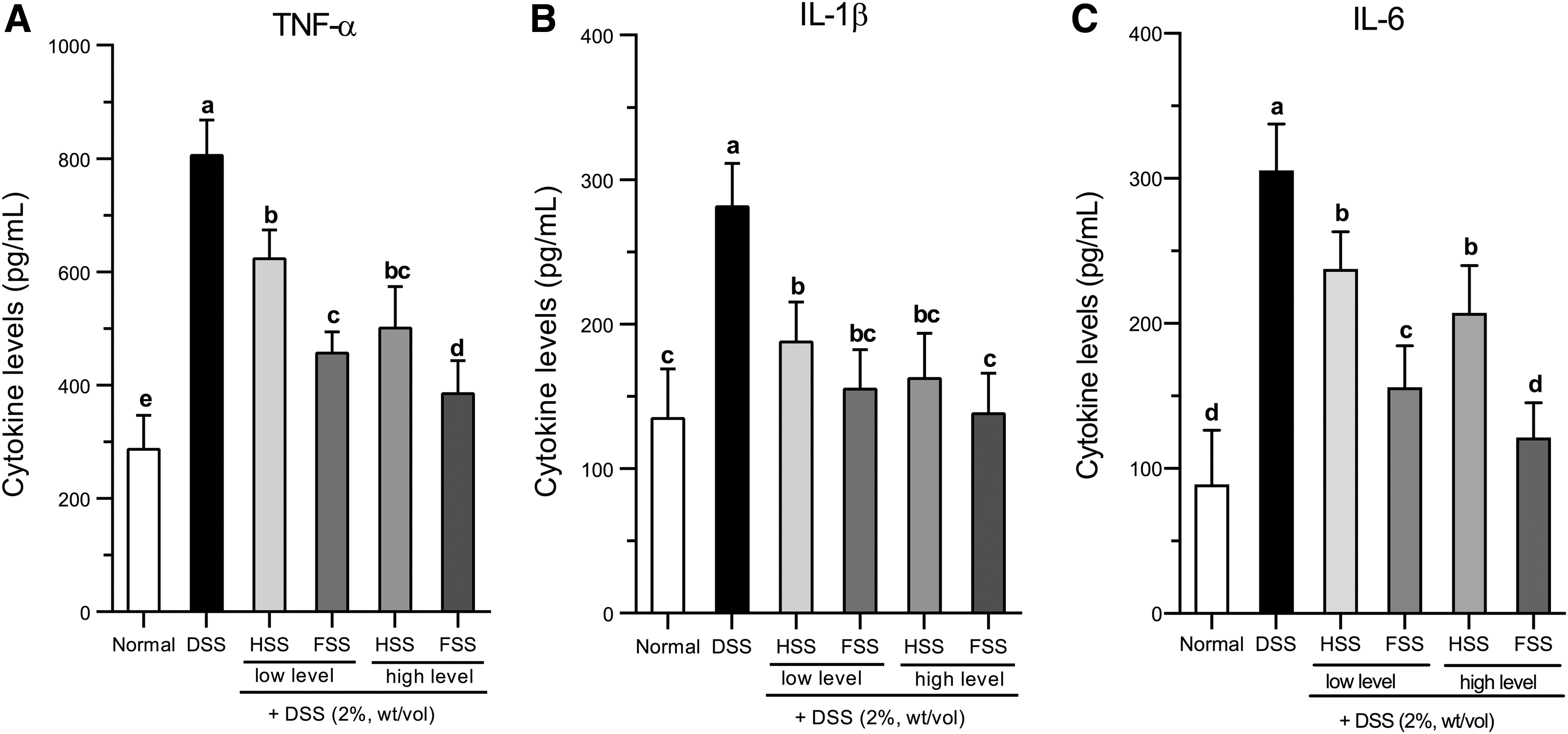
Effects of Saengshik on serum levels of
The effects of FSS and HSS on the intestinal mRNA levels of proinflammatory cytokines (TNF-α, IL-1β, and IL-6) and inflammation-related enzymes (inducible nitric oxide synthase [iNOS] and cyclooxygenase-2 [COX-2]) were observed by using an RT-PCR assay. The total RNA was isolated from colon samples using TRIzol reagent (Thermo Fisher Scientific, Carlsbad, CA, USA), dissolved with RNase-free water (QIAGEN, Hilden, Germany) and quantified for the RT-PCR assay with an Applied Biosystems Veriti 96-Well Fast Thermal Cycler (Thermo Fisher). 17 The DSS+FSS and DSS+HSS groups showed a significant reduction in the mRNA levels of TNF-α, IL-1β and IL-6 compared with the DSS group (Fig. 4). As the main ingredient of Saengshik, brown rice has been reported an activity to reduce the mRNA levels of TNF-α and IL-6 in DSS-induced colitis mice. 18
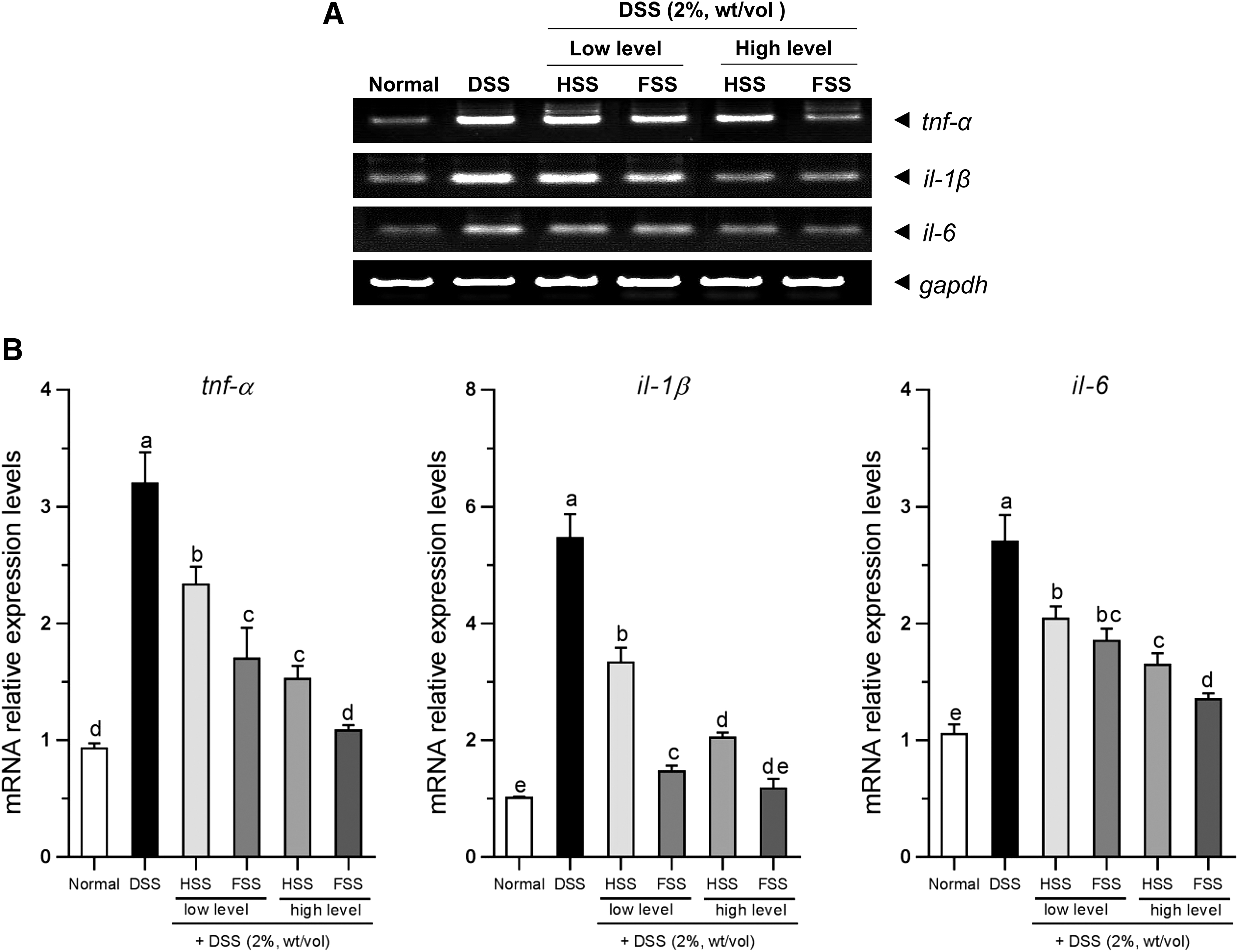
Effects of Saengshik on mRNA expression
Both iNOS and COX-2 are key inflammatory enzymes associated with UC. 19,20 As shown in Figure 5, DSS treatment also significantly induced the colonic mRNA levels of iNOS and COX-2 in colitis mice (P < .05). The DSS+FSS and DSS+HSS groups exhibited a significant reduction in the colonic mRNA levels of iNOS and COX-2 than the DSS group. Although FSS and HSS could alleviate DSS-induced colitis in mice, FS was more effective than HSS. FSS retains many nutrients, phytochemicals, and functional components such as dietary fiber, polyphenols, and resistant starch (RS). 8,21 Brown rice contains many physiologically active compounds such as ferulic acid, ɤ-oryzanol, myo-inositol, inositol hexaphosphate, β-sitosterol, tocopherol, and tocotrienol. 10 Besides, brown rice and legume can be excellent sources of RS and categorized as RS1. 6,8,10,21 –23 RS acts as a prebiotic that can be fermented by probiotics and converted to short-chain fatty acids that are able to regulate the balance of intestinal microbiota and reduce the intestinal pH for a healthy bowel environment. In comparison with FSS, HSS treated at 121°C for 15 min would loosen the bran layer of brown rice, facilitating the access by α-amylase to hydrolyze starch granules and decreasing the starch resistance, whereas brown rice in FSS is kept in a tightly bound bran layer, which makes it difficult to access by the hydrolyzing enzyme. Cooking reduces or destroys the nutrients and enzymes, and alters the physical structure of food, and thus digestibility and physiological effects. 24 Heating also increases dietary advanced glycation end products and Maillard reaction products that increased inflammatory mediators of C-reactive protein and TNF-α. 25 Kim et al. have reported that the main ingredients in Saengshik enriched in total phenols and total flavonoid. 4 Dietary fiber and polyphenols suppressed the intestinal iNOS and COX-2 generation and reduced the intestinal inflammation to protect the colon mucosa. 26,27
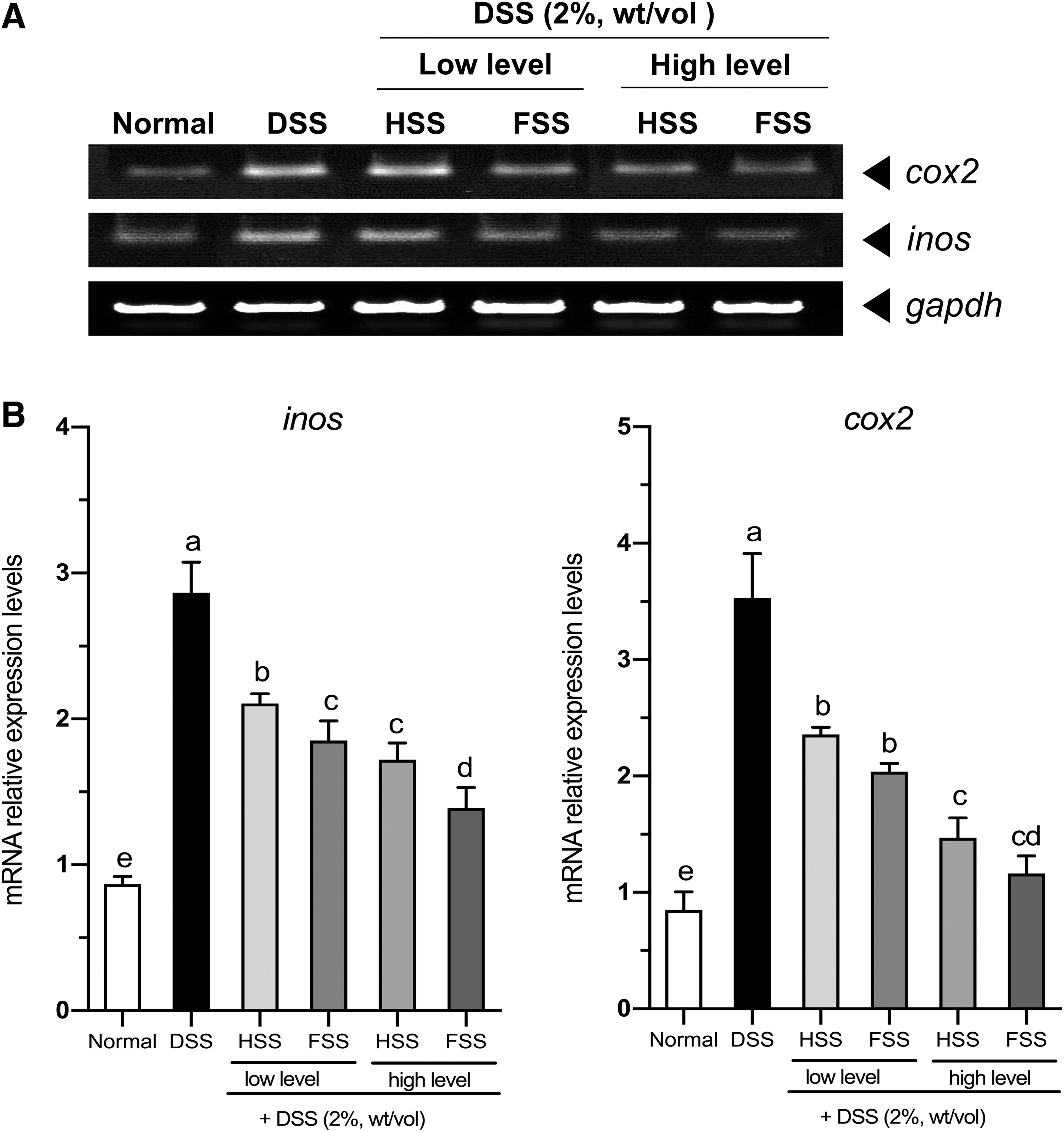
Effects of Saengshik on mRNA expression
In conclusion, both FSS and HSS significantly suppressed the DSS-induced intestinal inflammation, the colon shortening, and the decrease in the ratio of colon weight to length in C57BJ/6J mice. FSS and HSS also considerably reduced the serum generations of proinflammatory cytokines (TNF-α, IL-1β, and IL-6) and their mRNA expression in the colon tissue of colitis mice. FSS was a more effective modulator for the intestinal mRNA levels of iNOS and COX-2 than was HSS in DSS-induced colitis mice, because heating may destroy the active components in fruits, vegetables, and herbs. Overall, our results suggest that the ingredients in Saengshik may synergistically attenuate colitis. The impact of Saengshik on the improvement of the intestinal microbiota levels and its specific mechanism will be investigated in the next study.
Footnotes
Author Disclosure Statement
No competing financial interests exist.
Funding Information
This study was partly supported by the National Center of Efficacy Evaluation for the Development of Health Products Targeting Digestive Disorders (NCEED) funded by the Ministry of Health and Welfare, South Korea, and the Construction Program of Chongqing Collaborative Innovation Center for Functional Food, Chongqing University of Education, the Scientific Research Foundation for Returned Scholars of Guilin Medical University (04010150001), the Foundation for University Key Teacher by the Department of Education of Guangxi Zhuang Autonomous Region (GRJ[2018]18), and Funding Scheme for High-Level Overseas Chinese Students' Return of Ministry of Human Resources and Social Security (RSTH[2019]160), China. This research was also funded by National Natural Science Foundation of China (81560530, 81760589, and 81960590), Natural Science Foundation of Guangxi Zhuang Autonomous Region of China (2016GXNSFCA380026).