




Abstract
We investigated the effect of Curcuma longa L. extract on endurance exercise capacity (EEC). EEC is the ability to exercise continuously and recover quickly, even when tired. C. longa contains antioxidants that contribute beneficial effects on the body. We separated groups of nonexercise (CON), exercise control (Ex-CON), branched-chain amino acid (BCAA) intake, and C. longa water extract (CLW) intake (Ex-CLW). EEC increased on the 28th day of BCAA and CLW intake. Both treatment groups exhibited decreased lactate levels with increased levels of nonesterified fatty acids and muscular glycogen compared with the Ex-CON group. Also, the Ex-CLW group possessed higher intramuscular antioxidant enzyme activities (catalase, superoxide dismutase, and glutathione peroxidase) than the Ex-CON group. The expression of PGC-1α, NRF, and Tfam, which are factors related to mitochondrial biogenesis, increased in the Ex-CLW group. Results suggest that CLW intake elevated EEC by increasing intramuscular mitochondrial biogenesis through suppressing the accumulation of fatigue substances and increasing fat consumption, and antioxidant enzyme activity.
INTRODUCTION
To meet the needs of consumers who want foods that promote health and improve the quality of life and that are also economically available, many healthy functional foods are being researched and placed on the market. 1,2 In particular, the development of functional foods that improve exercise performance are of substantial interest in tonic foods. 3 In addition, such foods are of interest and in demand by people who want to conduct activities that promote good health, regardless of age, with a high probability of success. 4
Exercise performance refers to exercising using the maximum force that muscle tissues can exert.
5
Physical health can be maintained through exercise, but exercise results differ depending on the ability to perform exhaustive exercise.
6
Exercise can be reduced by congenital disabilities or other illnesses, stress loading, nutritional imbalances, age-related hormonal changes, obesity, and alcohol or tobacco use.
7
Thus, various studies have been conducted on substances that have an exercise substitution effect. It has been reported that exercise performance can be improved by bamboo extract,
8
Rubus coreanus extract,
9
One of the reasons why exercise cannot be continued indefinitely is energy depletion. 15 Glucose and fatty acids are used as energy sources in muscles during exercise. 16 Glucose and fatty acids are stored in other forms in the body. When the accumulated glucose and fatty acids are decomposed, they are used as an energy source during exercise. However, continuous exercise depletes stored energy sources, which in turn causes the body to be unable to produce energy and impairs the ability to exercise. During exercise, fatigue-related metabolites are produced, such as lactic acid, which is the most common metabolite that makes muscles feel fatigued. 17 Lactic acid is a chemical byproduct of anaerobic respiration whereby cells produce energy without oxygen in the muscles. 18 Lactic acid makes muscles tired and interferes with exercise.
Exercise can be inhibited by the production of active oxygen. 19 Generally, a certain amount of reactive oxygen species (ROS) are formed in body and they are removed by the antioxidation system. 20 However, overproduction of ROS, which have not been removed in body becomes toxic and causes damage to cells; local peroxidation occurs in the damaged cells, and there can be excessive peroxidized fat. 21,22 Once excessive ROS are formed and accumulated, exercise cannot be continued.
Curcuma longa L. is a perennial plant. It is native to India and it is mainly the rhizomes that are used; the leaves and flowers are not used. C. longa is used to make curry because it has a spicy and bitter taste, and imparts a yellow color. 23 It is rich in curcumin, which is a known antioxidant and that has liver detoxifying effects. 24 Many studies have confirmed that endurance exercise capacity (EEC) is increased when natural products with high antioxidant are consumed. 8,9,14 Therefore, C. longa, which possesses high antioxidant activity would increase EEC. Based on the earlier information, this study investigated the effects of C. longa water extract (CLW) on EEC in mice. Also, its underlying mechanism relevant to EEC was assessed.
MATERIALS AND METHODS
Materials
C. longa was grown in Jindo Province, Jeollanamdo, and was provided by the SDC (Damyang, Korea). It was stored at −20°C for further examination. Hydrogen peroxide, bovine serum albumin, bovine liver glycogen, Bradford reagent, nicotinamide adenine dinucleotide phosphate in the reduced form (NADPH), malondialdehyde (MDA), and phosphate-buffered saline were purchased from Sigma-Aldrich (St. Louis, MO). All other chemicals were of analytical reagent grade.
Animal experiments
Four-week-old male ICR mice (n = 40) were purchased from Orient Bio (Gyeonggi-do, Korea), and allowed to adapt to their habitat for 1 week. Four groups, including the sedentary control group (CON), exercise control group (Ex-CON), exercise+branched-chain amino acid (BCAA) administration group (Ex-BCAA), exercise+C. longa water extract (CLW) administration group (Ex-CLW), were used in the experiments. The BCAA and CLW groups were orally administered BCAA and CLW, respectively, at concentrations of 0.5 and 1 g/kg body weight/day. The temperature of the animal breeding room was 22°C ± 1°C, the humidity was 50% ± 5%, the photoperiod was 12-h light and dark, and food was given ad libitum. Each group was provided a normal 5L79 diet. The total experimental period was 28 days.
All experimental animals were cared for and tested after receiving approval from Chonnam National University Institutional Animal Care and Use Committee (CNU IACUC-YB-R-2016-49).
Exercise method
The swimming exercise was performed using an acrylic resin water tank (90 × 45 × 45 cm). Water to a depth of 38 cm was filled in the swimming pool with 34°C ± 1°C of temperature. The swimming pool had a pump that created artificial waves. A flow velocity was 8 m/min. Exhaustive swimming exercise time was the maximum exercise ability determined by when the mice fell into the water and did not rise to the surface for ∼7 sec. Mice could not exercise to maximum athletic ability because muscle atrophy occurred when their maximum ability was reached.
Determination of antioxidant potential
Dissected muscle tissue was homogenized with liquid nitrogen, to which 0.2 M KCl buffer was added and allowed it to react for ∼2 h. Next, this homogenate was centrifuged at 13,000 × g for 30 min, and the supernatant was used in the experiments. The Bradford assay was used to determine the amount of extracted protein. The measured absorbance was substituted into the standard curve formula and shown as mg protein/mL. The activities of catalase (CAT), superoxide dismutase (SOD), and glutathione peroxidase (GPx) were determined by the published methods. 25 –27 MDA level was measured by the method of Draper and Hadley. 28
Analyses of energy metabolic parameters
Blood lactate and non-esterified fatty acid (NEFA) were collected from the tail vein (pre-exercise) and then collected again 10 min after swimming (postexercise). Blood lactate levels were measured using commercial test strips (ARKRAY, Kyoto, Japan) and NEFA level was assayed using a commercial kit (Wako Pure Chemical Industries, Ltd., Osaka, Japan). NEFA levels were detected in plasma collected from blood that was centrifuged at 1000 × g at 4°C for 10 min. The mice were sacrificed 4 h after the last exhaustive swimming exercise. The gastrocnemius muscle glycogen concentration was measured as described in a previous report. 26 The values are expressed as mg/g tissue.
Real-time polymerase chain reaction
Homogenized muscle tissue RNA was extracted using easy-BLUE™ (INtRON Biotechnology, Seongnam, Korea). The extracted RNA was unstable and was synthesized into complementary DNA (cDNA). RNA was quantified using Nano-drop (SeolinTech, Seoul, Korea) to synthesize a given amount of RNA into cDNA. Then, 300 ng of RNA was synthesized into cDNA. For synthesis into cDNA, the iScript cDNA Synthesis Kit (Qiagen, Valencia, CA) was used. The cDNA primer was synthesized, iQ SYBR Green Supermix (Qiagen) was added, and a real-time polymerase chain reaction (RT-PCR) was performed. The primer sequence is shown in Table 1.
Real-Time Polymerase Chain Reaction Primer Sequences
CAT, catalase; GPx, glutathione peroxidase; NRF, nuclear respiratory factor; PGC-1α, peroxisome proliferator-activated receptor gamma coactivator 1-α; SOD, superoxide dismutase; Tfam, mitochondrial transcription factor A.
Statistical analysis
Statistical analyses were performed using SPSS (version 23, SPSS, Inc., Chicago, IL). Values are shown as the mean ± standard error. After performing an analysis of variance (ANOVA), pairwise significance was determined at P < .05 Duncan's multiple range test.
RESULTS
Effects of CLW on endurance ability as assessed by exercise capacity
To measure the effects of the CLW on EEC, mice were grouped without significant differences in body weight and swimming time between groups. CLW was administered for 28 days, and then the exhausted exercise time was measured. When the EEC was measured on the 28th day, the Ex-BCAA and Ex-CLW groups exhibited significantly increased EEC compared with the Ex-CON group (Fig. 1).
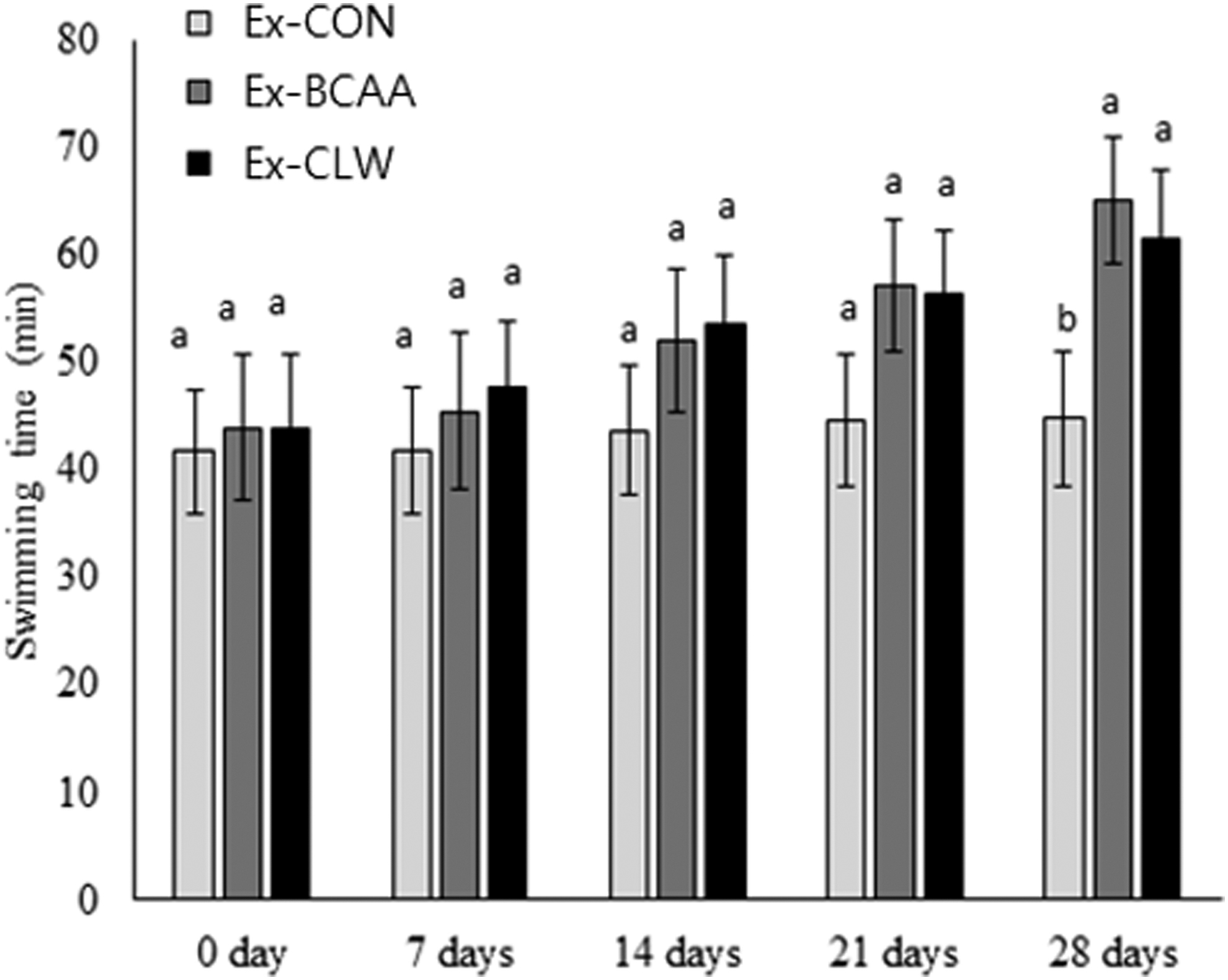
Effects of water extract (CLW) from C. longa L. on exhaustive swimming capacity. Swimming time was measured at 8 L/min. Each value represents the mean ± SE for each group. Ex-CON, exercise control group; Ex-BCAA, exercise+branched-chain amino acid administration group; Ex-CLW, exercise+CLW administration group. Different letters indicate significant differences between groups (P < .05). SE, standard error.
Changes in blood lactate concentration after exercise
Blood lactate is a primary substance generated during anaerobic metabolism and is an index that can be used to estimate the degree of fatigue after exercise. Blood lactate inhibits continuous exercise when lactate production is high and maintained in larger quantities than the removal of lactate through exercise in multiple tissues. As shown in Figure 2, the lactate levels of the pre-exercise groups were not significantly different. However, the lactate levels after exercise were significantly lower in the Ex-BCAA and Ex-CLW groups than in the Ex-CON group.

Effects of water extract (CLW) from C. longa L. on blood lactate level. Each value represents the mean ± SE for each group. Ex-CON, exercise control group; Ex-BCAA, exercise+branched-chain amino acid administration group; Ex-CLW, exercise+CLW administration group. Different letters indicate significant differences between groups (P < .05).
Changes in blood-free fatty acid concentration after exercise
NEFA is transported to multiple tissues and used for energy generation and re-esterification by β-oxidation. NEFA is carried to the muscles and used as an energy source for continuous exercise. Measurements of NEFA before and after exercise showed no significant difference between the pre-exercise groups. However, postexercise, NEFA levels were significantly higher in the Ex-BCAA and Ex-CLW groups than in the Ex-CON group (Fig. 3A).

Effect of water extract (CLW) from C. longa L. on blood NEFA
Changes in the glycogen level in muscle
Glycogen is an important energy source during exercise, and exercise for long periods results in a decrease in the glycogen content of tissues. Glycogen levels were significantly lower in the Ex-CON group than in the not-exercised group indicated as CON in Figure 3B. This suggested that decreased glycogen levels occurred with exercise. However, the Ex-BCAA and Ex-CLW groups did not exhibit a significant difference from the CON group, and their levels were significantly higher than that of the Ex-CON group.
Changes in the mRNA expressions of mitochondrial biogenesis-related factors
We measured the mRNA expression level of factors related to mitochondrial biogenesis to confirm increases in the production of mitochondria that generate cellular energy. In the Ex-BCAA and Ex-CLW groups, the expression of PGC-1α, NRF, and Tfam, which are mitochondrial biogenesis factors, elevated and the Ex-BCAA group showed the highest expression of these factors (Fig. 4).
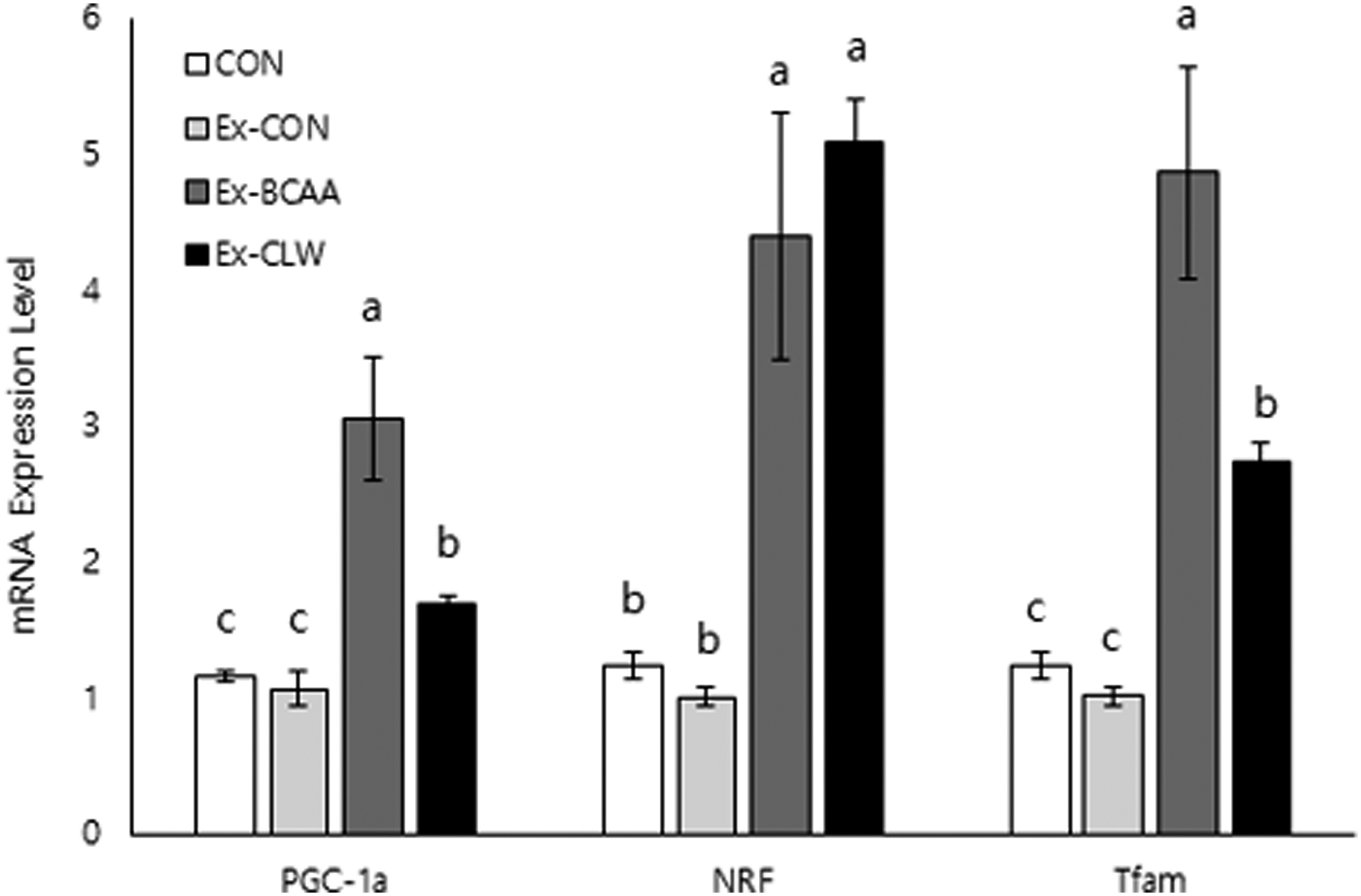
Effect of water extract (CLW) from C. longa L. on mRNA expression levels including PGC-1α, NRF, and Tfam. CON, sedentary control group; Ex-CON, exercise control group; Ex-BCAA, exercise+branched-chain amino acid administration group; Ex-CLW, exercise+CLW administration group. Different letters indicate significant differences between groups (P < .05).
Changes in muscular antioxidant parameters and mRNA expressions of antioxidant enzymes
Normally, even if active oxygen is formed, an equilibrium state is maintained by oxidase in the body, and it has no influence; however, it did have an effect, when the swimming exercise was performed.
The mRNA expression levels of the antioxidant enzyme were measured. The Ex-BCAA group and the Ex-CLW groups exhibited significantly increased levels compared with the Ex-CON group (Fig. 5A). The Ex-CON group exhibited reduced antioxidant activities compared with the CON group. In contrast, higher activities were observed in the Ex-BCAA and Ex-CLW groups than in the Ex-CON group (Fig. 5B–D). The antioxidant enzyme activity remained high in the former groups, and they could exercise for a longer period. MDA is an indicator of oxidative stress. The MDA level was increased by exercise, but the mice in Ex-BCAA and Ex-CLW group showed lower levels (Fig. 5E).
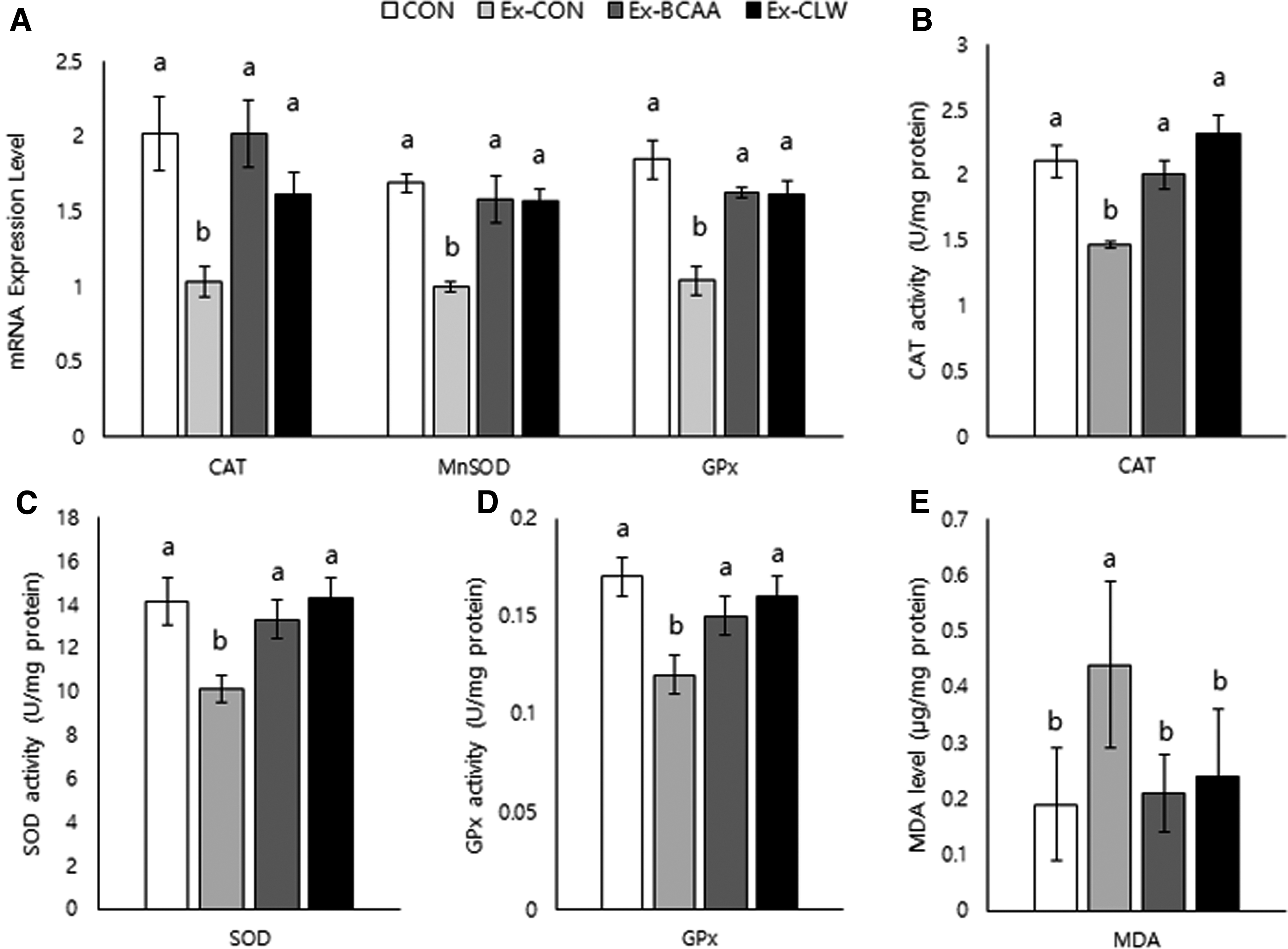
Effect of water extract (CLW) from C. longa L. on intracellular antioxidant mRNA expression levels
DISCUSSION
CLW contains curcumin and has excellent antioxidant capacity. Numerous studies have confirmed that materials with high antioxidant capacity increase EEC. Thus, we hypothesized that CLW would also increase EEC. EEC was measured via swimming time. The exercise devise that measures EEC is a treadmill or a swimming pool. The treadmill has an effect on the experimental results as the continuous electric shocks act as a stress to the mice. In contrast, swimming exercise has the advantage of allowing continuous exercise without such stress. Therefore, we measured EEC through swimming exercises. 29 BCAA is a general term for leucine, isoleucine, and valine. BCAAs are known to increase muscle synthesis and endurance. 30 Therefore, we used BCAA as a reference to determine the effectiveness of CLW.
The increased EEC in the Ex-CLW group was attributable to the intake of CLW. The endurance exercise of Ex-BCAA group did not show a significant difference compared with the Ex-CLW group. For the EEC to increase, the body must not have accumulated a large amount of fatigue-related substances. 31 We measured the levels of lactate, one of the fatigue-related substances. 32 Lactate is generated when muscles are not supplied with sufficient oxygen. Pyruvate is generated in the process; the oxygen-free tricarboxylic acid cycle cannot be continued for long periods of time. Reducing form of nicotinamide adenine dinucleotide (NADH) is generated in this process and can also move to the electron transport chain. 33
Pyruvate receives NADH electrons and becomes lactate if unable to proceed to the electron transport chain. 34 When excessive lactate is produced and accumulates, the muscles are acidified, becoming fatigued and unable to exercise. 35 As a result of measuring the lactate level, it was significantly lower in both the Ex-BCAA and Ex-CLW groups than in the Ex-CON group. CLW inhibited the accumulation or generation of lactate. In addition, the accumulation of lactate was inhibited using fat, not glucose, as an energy source. This result showed that when green tea extract and Plantago major L. was ingested, the lactate decreased. 36,37
NEFA is a free fatty acid in the blood, and fat is an important energy source during exercise. 38 Fat can provide more energy than carbohydrates and proteins. Therefore, it is a necessary energy source for continuous exercise; furthermore, when fat is used as an energy source, fatigue substances, such as lactate, are not produced. 39 Eventually, the level of fatty acids in the blood must increase to use them as an energy source for exercise. Our observations indicated that the NEFA level was higher in the Ex-CLW group than in the Ex-CON group. Ingestion of CLW inhibited lactate accumulation using fat as an energy source instead of glucose and increased EEC.
Muscular glycogen is one of the energy sources consumed during exercise. When glycogen is completely consumed, fatigue occurs. 40 Also, when the consumption of glycogen increases, the accumulation of lactate increases, 41 and the consumption of fat decreases because glycogen is used as an energy source, 34 so that the exercise time cannot increase. The present results showed that the glycogen level in the Ex-CLW group was greater than that in the Ex-CON group. Thus, ingestion of CLW increased fat utilization, reduced the use of glucose and glycogen in the body, and increased EEC due to reduced glucose and glycogen utilization. The ingestion of Pseudosasa japonica, R. coreanus, and Vaccinium corymbosum increased EEC by inhibiting the accumulation of lactate and increasing NEFA. 8,9,39
Mitochondria consume oxygen to generate energy and produce ROS. 42 The ROS promote body tiredness. 21 Thus, the sufficient removal of ROS generated during exercise delays the onset of tiredness and increases EEC. In our results, the activities of CAT, SOD, and GPx were reduced during exercise, but the activities were recovered by CLW intake. Also, mice in the Ex-CLW group, which maintained antioxidant enzyme activity, had greater EEC.
The MDA level was measured to confirm that amount of ROS was generated. 44 When ROS were increased by exercise, overproduced ROS decompose polyunsaturated lipids, and MDA is generated. Our results indicated that the MDA level increased in the Ex-CON group after the swimming exercise, whereas the MDA levels of the Ex-CLW and Ex-BCAA groups were significantly lower than those in the Ex-CON group.
Earlier studies showed that supplementing with BCAA increased EEC by inhibiting ROS, which is in agreement with our results. 44 Also, another study confirmed that water extract of C. longa increased the antioxidant capacity of the liver, 45 which showed similarities to increased muscular antioxidant capacity by ingesting CLW. We determined not only the antioxidant enzyme activity but also the gene expression levels of the antioxidant enzymes. The expression levels were decreased in the Ex-CON group, as was the antioxidant enzyme activity, whereas significantly increased in the Ex-CLW and Ex-BCAA groups compared with the Ex-CON group. Therefore, it could be suggested that the ingestion of CLW maintained the effective role of antioxidant enzymes in body, which in turn increased EEC.
The number of mitochondria in muscle cells is important for the production of energy. The production of a lot of energy in the muscle increases the EEC. 44 We measured the expression of PGC-1α, NRF, and Tfam, which are factors related to mitochondrial biogenesis. 15 PGC-1α is a transcriptional coactivator associated with energy metabolism and a master regulator for mitochondrial biogenesis. 46 NRF is involved in mitochondrial DNA transcription and replication as a necessary factor for cellular growth. 47 Tfam is an indispensable element for mitochondrial genome replication as a mitochondrial transcription factor. 48 Exercise and other stimuli increase the expression of PGC-1α, which increases the expression of NRF.
Also, the increased expression of NRF increases the expression of Tfam, leading to mitochondrial biogenesis. The expression levels of PGC-1α, NRF, and Tfam, in the Ex-CLW group were significantly higher than those in the Ex-CON group. Thus, it was shown that CLW intake elevated mitochondrial biogenesis, which increased EEC. These results were similar to the previous research in which the intake of V. corymbosum led to an increase in EEC due to improving mitochondrial biogenesis. 49 When curcumin, a major bioactive in C. longa, was taken, the expression of PGC-1α was also increased. 50
In conclusion, the supplementation of CLW suppressed the accumulation of fatigue-related metabolic substances in the body and increased the use of fat as an energy source (Fig. 6). CLW also prevented a decrease in antioxidant enzyme activity. All of these factors contributed to an increase in muscular mitochondrial biogenesis, which led to the elevation of EEC.
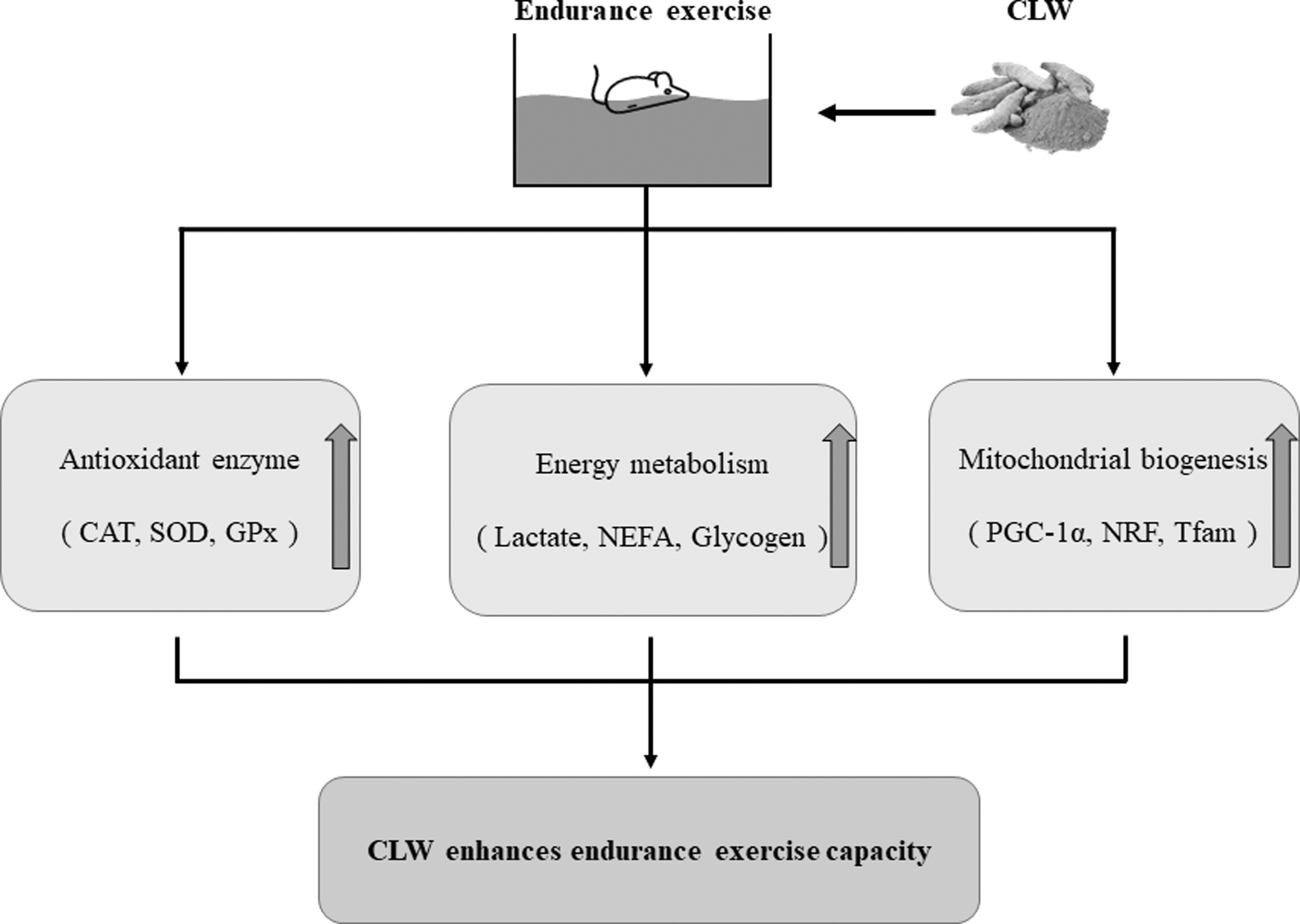
The suggested mechanisms by which water extract (CLW) from C. longa L. administration enhance endurance exercise performance.
Footnotes
AUTHOR DISCLOSURE STATEMENT
No competing financial interests exist.
FUNDING INFORMATION
This research was supported by the Basic Science Research Program through the National Research Foundation of Korea (NRF), funded by the Ministry of Education and the Korea government (MSIT) (2016R1A6A3A01010738, 2021R1C1C2008063).