




Abstract
We investigated the changes in the main active ingredients and pharmacodynamic differences in the therapeutic effect of garlic before and after steaming and the correlation between them. The main active ingredients in raw garlic products (RGPs) and steamed garlic products (SGPs) were determined by high-pressure liquid chromatography and ultraviolet spectroscopy. Acute rapid diarrhea (AD) and antibiotic-induced diarrhea (DD) models were established in rats, and each group was treated with RGP and SGP, respectively. The main chemical components of garlic changed before and after steaming. Garlicin and alliinase were only found in RGP, whereas only alliin was found in SGP. Both RGP and SGP contained garlic polysaccharides. For in vivo experiments on AD, the average rate of loose stools was 100.00 ± 0.00, 31.55 ± 11.76, and 19.14 ± 6.62 in the RGP high-dose and SGP high-dose treatment groups, respectively; in DD, the rates were 91.11 ± 14.40, 19.33 ± 3.63, and 30.56 ± 4.30, respectively (P < .01, treatment vs. model groups). In AD, the average grade of loose stools was 2.33 ± 0.52 and 1.83 ± 0.75 in the model and RGP high-dose treatment groups, respectively (P < .05); in DD, the values were 2.17 ± 0.41 in the model group and 1.67 ± 0.52 in the SGP high-dose treatment group (P < .05). RGP had a better therapeutic effect on AD, mainly related to the antibacterial effect of garlicin in RGP. SGP had a better therapeutic effect on DD, mainly related to the alliin and garlic polysaccharide in SGP. This study could provide evidence to support the clinical use of garlic.
INTRODUCTION
Diarrhea is a digestive tract disease characterized by increased stool frequency and changes in stool characteristics, and is one of the main causes of high morbidity and mortality in developing countries. 1 Diarrhea is the second leading cause of child death worldwide, 2 causing ∼500,000 deaths every year. 3 At present, antibiotics are often used for symptomatic treatment of acute diarrhea in the clinic, but long-term use of antibiotics can easily cause adverse reactions such as drug resistance, constipation, nausea, and colon ischemia. 4 There are no specific drugs for treating chronic diarrhea. Therefore, it is critical to develop therapeutic drugs that are both safe and effective.
Garlic is the bulb of Allium sativum L., a plant of the genus Allium in Liliaceae. It is rich in nutrients and has been widely recognized as an edible and medicinal plant for thousands of years. Garlic has been widely used because of its advantages of no allergic reactions, no side effects, and no drug resistance. 5 In recent years, domestic and foreign scholars have studied the chemical constituents and pharmacological effects of garlic. The results show that garlic contains a variety of bioactive components, including alliin, allicinase, garlicin, garlic polysaccharide, organic sulfur compounds, saponins, and polyphenols, 6 as well as abundant vitamins and minerals. 7 Garlic has a wide range of biological activities, including antidiabetes, 8 anticancer, antimicrobial, 9 antiobesity, 10 hepatoprotective, 11 immune system regulation, 12 and nerve and kidney protection.
Among them, the most well-known benefits of garlic are the antibacterial, antifungal, 13 and antioxidant effects. Garlicin shows dose-dependent antibacterial activity and is an effective antibacterial substance, 14 so garlic is often considered a “natural broad-spectrum antibiotic.” As early as 1982, some researchers studied the bacteriostatic effect of garlic and found that garlic can effectively inhibit enterotoxic Escherichia coli, 15 and can also relieve diarrhea caused by various bacteria such as air stem bacteria, air monobacteria, and Bacillus. 16 Garlic was used as the research object to solve the problem of diarrhea. The antimicrobial components in garlic were not affected by the acidic environment, and the gastric juice could enhance the activity of antimicrobial components in garlic, greatly improving its ability to fight infection. In addition, garlic inhibits unfavorable flora. Garlicin and garlic polysaccharides in garlic can increase the flora number of some beneficial bacteria. 17
It is hypothesized that garlic may be able to control diarrhea by regulating the diversity of flora. Sun Simiao, the King of Medicine from China, once used garlic to treat diarrhea and used steamed garlic to treat diarrhea in children. Steamed garlic is often used to treat diarrhea in children in China. Steaming is a traditional processing method used in traditional Chinese medicine. The main purposes of steaming were to enhance the tonic effect, moderate the medicinal properties, and reduce side effects. 18 The Chinese Pharmacopeia (2010 edition, 2015 edition, 2020 edition) clearly stated that garlic has the effect of stopping dysentery. Danielle White 19 found that early use of garlic was used to treat gastric infections, fever, and diarrhea.
However, modern research on garlic treatment of diarrhea is limited, and little is known about its scientific implications. Based on this, we became interested in whether the chemical components of garlic change before and after consumption, and whether there is a medicinal difference in the therapeutic effect of garlic before and after consumption, for diarrhea.
MATERIALS AND METHODS
Materials
Hematoxylin–Eosin Dye Kit (Jiangsu KeyGEN BioTECH Corp., Ltd., No.: KGA224); DNA extraction Kit (Omega Bio-Tek, model: E.Z.N.A.® SOIL DNA Kit); Fast PFU Polymerase (China Trans Gen, Model: Fast PFU Polymerase); AxyPrep DNA Gel Extraction Kit (Axygen Biosciences, Axygen); Sequencing Kit (Illumina, No.: MiSeq Reagent Kit V3).
Experimental animals
Seventy-two 2-week-old rats with a body weight of 60 ± 5 g were provided by the Zhejiang Academy of Medical Sciences (Animal Certificate No. SCXK [Zhejiang] 2019-0002). The experimental rats were maintained in a controlled environment with 60 ± 5% humidity, standard light, free water, and standard nutrient pellet feed (1.0% Ca, 0.6% P). The animal experimental procedures were approved by the Institutional Animal Care and Use Committee of Nanjing University of Chinese Medicine (Ethical authorization number: 202005A029). All animals were handled in accordance with the institutional guidelines and ethics.
Reagent preparation
Garlic was peeled into two amounts. One part was ground directly, and the other part was steamed in a steamer for 1 h and then cooled to 25°C. Raw garlic product (RGP) and steamed garlic product (SGP) were placed in a vacuum freeze dryer. After vacuum freeze-drying at −65°C for 48 h, the RGP and SGP were removed. The samples to be tested were crushed using a powder beater and stored at 25°C. Garlic freeze-dried powder can retain the original components of garlic, except moisture.
Determination of main active components in RGP and SGP
The content of alliin and garlicin was determined by high-pressure liquid chromatography. The content of alliinase and garlic polysaccharide was determined by ultraviolet spectrophotometry. The precision, repeatability, and stability were investigated. The specific steps are provided in the Supplementary Data S1 and S2.
In vivo studies
Experimental groups
After successfully establishing the models, the drugs were administered by gavage once daily for 7 days. Specific group dosing regimens are shown in Table 1.
Specific Group Dosing Regimen Table
AD, acute rapid diarrhea; DD, antibiotic-induced diarrhea; RGH, raw garlic product high dose; RGP, raw garlic product; SGH, steamed garlic product high dose; SGP, steamed garlic product.
Model building
The rat diarrhea model was established based on a previous study. Specifically, the acute diarrhea model was intraperitoneally injected with E. coli for 3 days, once a day. The antibiotic diarrhea model was intragastrically administered cefadin and gentamicin sulfate once daily for 5 days. The rate of loose stools, grade of loose stools, and diarrhea index were weighed and observed every day. 20
Histopathology
Following drug administration, each group's rats were sacrificed by neck dissection. The colon segment 2 cm away from the cecum was selected, surgically removed, and the contents were washed. The colon tissue was fixed in 4% paraformaldehyde and embedded in paraffin. The slices were dehydrated, dewaxed, and stained with hematoxylin and eosin (HE) for morphological evaluation. Each slice was observed under a microscope.
DNA isolation, PCR, and 16S rRNA gene analysis
DNA extraction from rat feces was accomplished using a fecal DNA extraction kit, followed by the use of bacterial 16S V3−V4 primers (upstream primer: 5′-ACTCCTACGGGAGGCAGCAG-3′, downstream primer: 5′-GGACTACHVGGGTWTCTAAT-3′) to amplify the DNA template. PCR amplification was conducted in a total mixture volume of 20 μL containing 4 μL 5 × FastPfu Buffer, 0.8 μL of each primer, 0.2 μL bovine serum albumin, 2 μL of 2.5 mM deoxy-ribonucleoside triphosphate, 0.4 μL FastPfu Polymerase, 10 ng template DNA, and 11.8 μL double distilled water. PCR was performed under the following conditions: initial denaturation at 95°C for 3 min; 27 cycles of 95°C for 30 s, 55°C for 30 s, and 72°C for 45 s; and a final extension at 72°C for 10 min.
The Next Flex Rapid DNA-Seq Kit was used to prepare libraries for the PCR amplification products for next-generation sequencing. The paired-end 250-bp mode of an Illumina MiSeq PE300 sequencer was used.
21
Operational taxonomic units (OTUs) were clustered with a 97% similarity cutoff using Usearch (version 7.0,
The sequencing data were deposited into the SequenceRead Archive database of National Center for Biotechnology Information.
In vitro
The concentration of the bacteriostatic circle was measured by the disk method. To measure the minimum inhibitory concentration (MIC) of garlic liquid against E. coli, the micro-broth dilution method was utilized. The in vitro sterilization curves were drawn using the results from colony counting. The specific steps are described in the Supplementary Data S1 and S2.
Data analysis and statistics
In the experiment, all data are expressed as the mean ± standard deviation. All statistical analyses were performed using SPSS (version 16.0; SPSS Inc., Chicago, IL, USA). All P-values were two-tailed. Statistical significance was set at P < .05. Single factor analysis of variance and Bonferroni test were used to determine statistical differences between groups.
RESULTS
Changes of main chemical components of garlic before and after steaming
The results showed that garlicin only exists in the RGPs, alliin only in SGP, and alliinase only in RGPs. Garlic polysaccharides are present in both RGP and SGP. As shown in Supplementary Figure S1F and G, the content of garlic polysaccharides in SGP was higher than in RGP.
Effects of modeling and garlic treatment on apparent characteristics of rats
On the 5th day of adaptive feeding, the rats in each group had normal food and water intakes, active movements, flat and smooth coats, and dry and dark brown feces. On the 3rd day of acute rapid diarrhea (AD), most of the rats had severe diarrhea, fur tumbling, fur darkening, depression, fear of cold, and curled up together in the cage, indicating successful model establishment. On day 5 of antibiotic-induced diarrhea (DD), most of the rats had severe diarrhea, severe hair tossing, dark fur, depression, and fear of cold and they huddled together in the cage, also with indications of a successful model. During the modeling period, the rats in the blank group had dry and dark brown feces and were active. After the administration of the drug, the rats in each dosing group gradually recovered and their coats gradually became smooth and resumed normal activities.
Effect of garlic on weight of diarrhea rats
The weight of rats is an intuitive and easy-to-examine index, which is closely related to many factors. The results of weight changes are shown in Supplementary Figure S2.
Effect of garlic on loose stools and intestinal tissue of rats with diarrhea
Diarrhea status of rats in each group is shown in Table 2. The results of HE are shown in Figure 1. Colonic tissue staining is shown in Table 3.
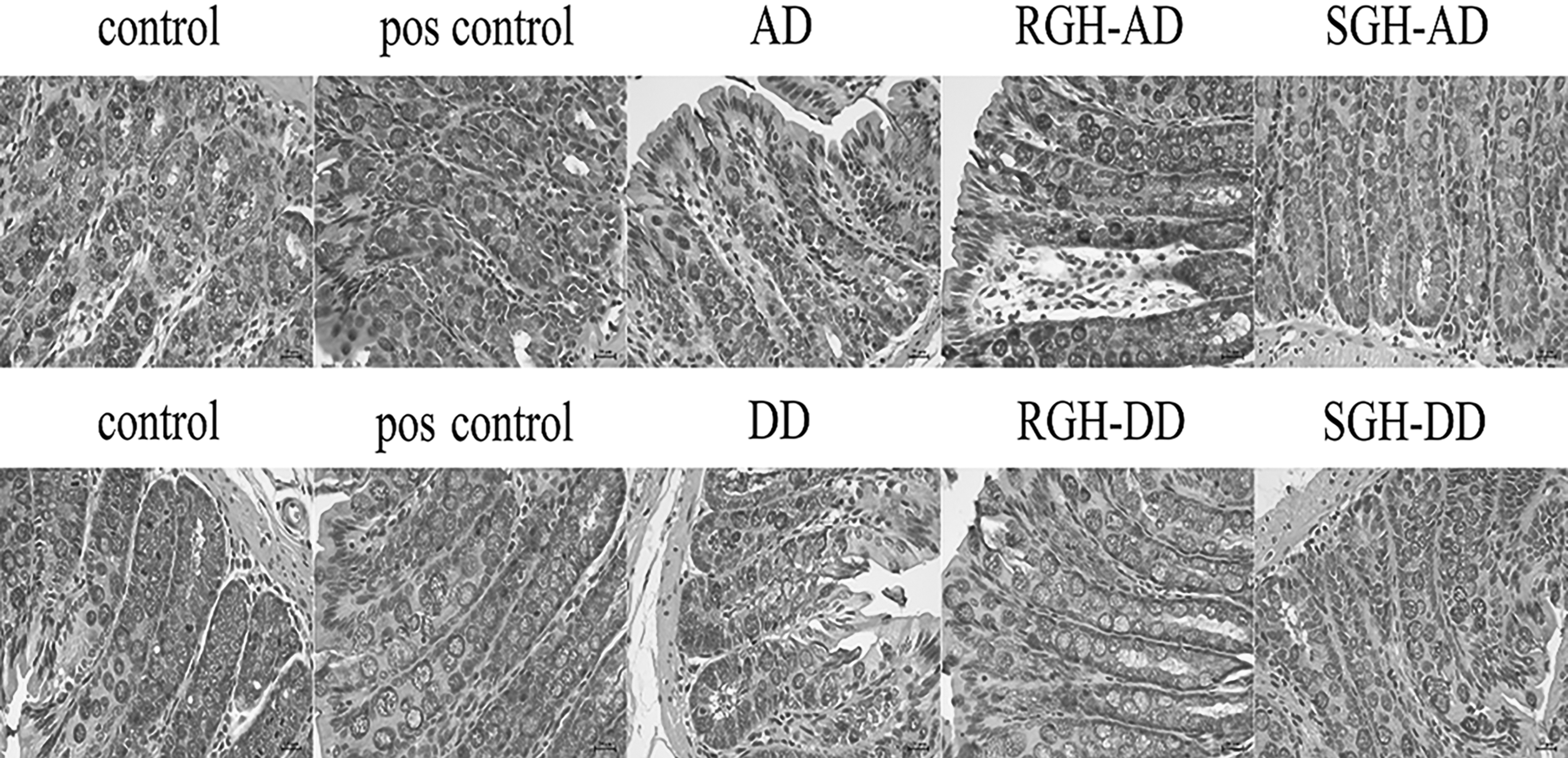
Colon tissue staining. AD, acute rapid diarrhea; DD, antibiotic-induced diarrhea; RGH, raw garlic product high dose; SGH, steamed garlic product high dose.
Diarrhea Status of Rats in Each Group
Data are expressed as means ± standard deviation, n = 6. Statistical significance was set at P < .05. Significance of differences were assessed by ANOVA and followed by Bonferroni test using SPSS statistical software (version 16.0; SPSS Inc., Chicago, IL, USA).
Compared with the model group, * P < .05, ** P < .01.
Colonic Tissue Staining Table
Regulation of intestinal microbiota by garlic
Draw level and clustering of each sample based on the removal of mitochondrial and chloroplast interference showed that 1235 OTU numbers were obtained at a 97% similarity level. As shown in Table 4, the coverage index of rats in each group reached 99%, indicating that the sample size of this sequencing was sufficient and the sample sequence was measured. Principal Co-ordinates Analysis based on Bray–Curtis distance, as shown in Figure 2, showed that according to the composition and abundance of intestinal flora in rats, 22 the two kinds of diarrhea models had an impact on the intestinal flora of rats, and the composition and abundance of intestinal flora in rats were changed after modeling.

Results of PcoA analysis.
Alpha Diversity Index of Rats in Each Group (n = 6, )
Compared with the model group, * P < .05, ** P < .01, *** P < .001.
As shown in Figure 3A and C, in AD, the rest of the model groups showed increased abundance of Bacteroidetes and decreased abundance of Firmicutes compared to the blank group. RGP acts mainly by modulating the bacteroidota. As shown in Figure 3B and D, in DD, bacteroidota was almost absent in the postmodeling; the abundance of Firmicutes and Proteobacteria decreased and the abundance of Bacteroidetes increased in the positive drug group compared with the drug-administered group. SGP mainly regulates Firmicutes. As shown in Figure 4A and C, in AD, RGP exerted its effect mainly through the regulation of Bacteroides. As shown in Figure 4B and D, SGP exerted its effect mainly by regulating the Lactobacillus bacteria. Species with the top 50 taxonomic total abundances in the intestinal flora of rats in each group were analyzed at the phylum level, 22 as shown in Figure 5A.

Colony abundance analysis.
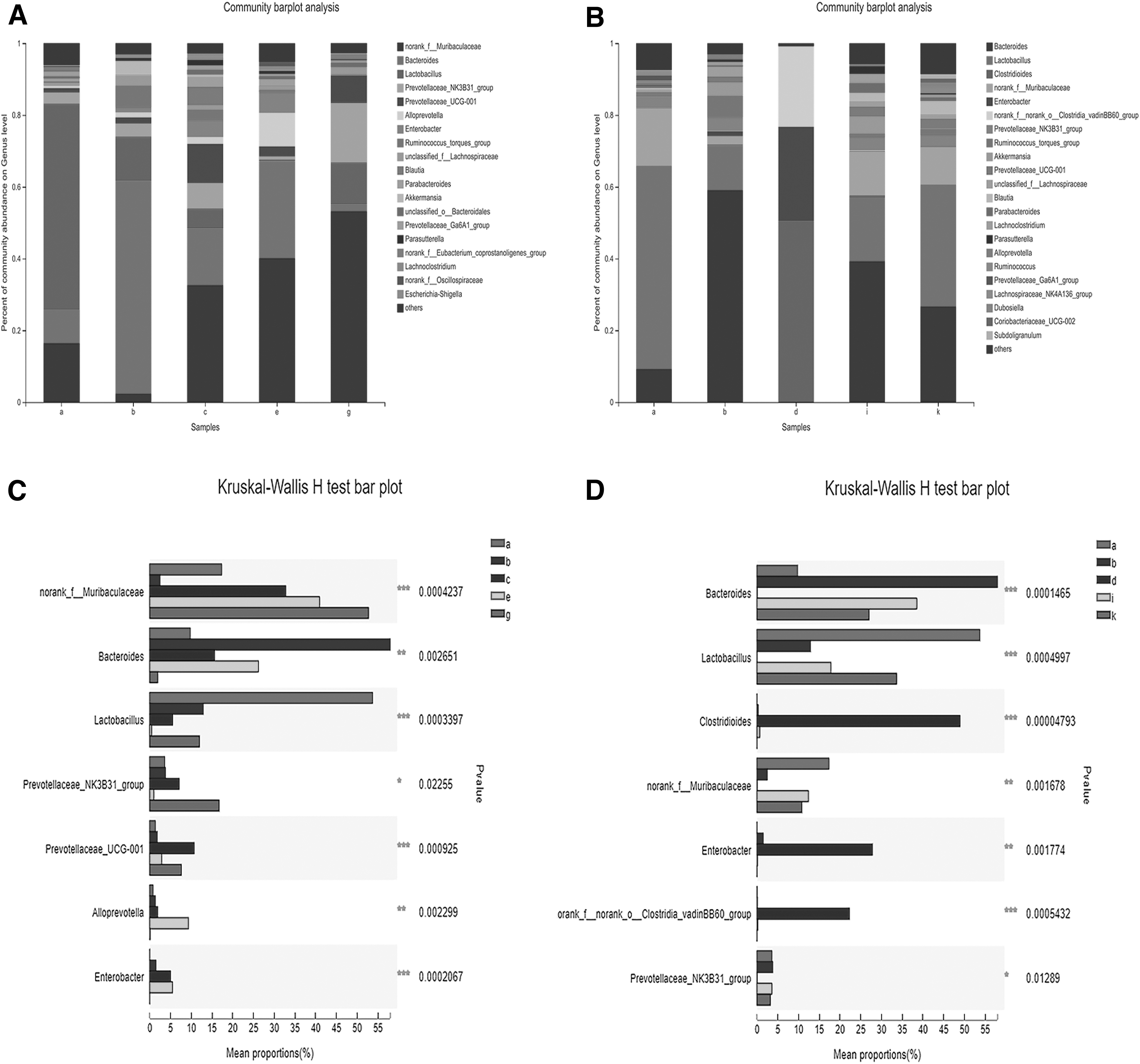
Colony abundance analysis.
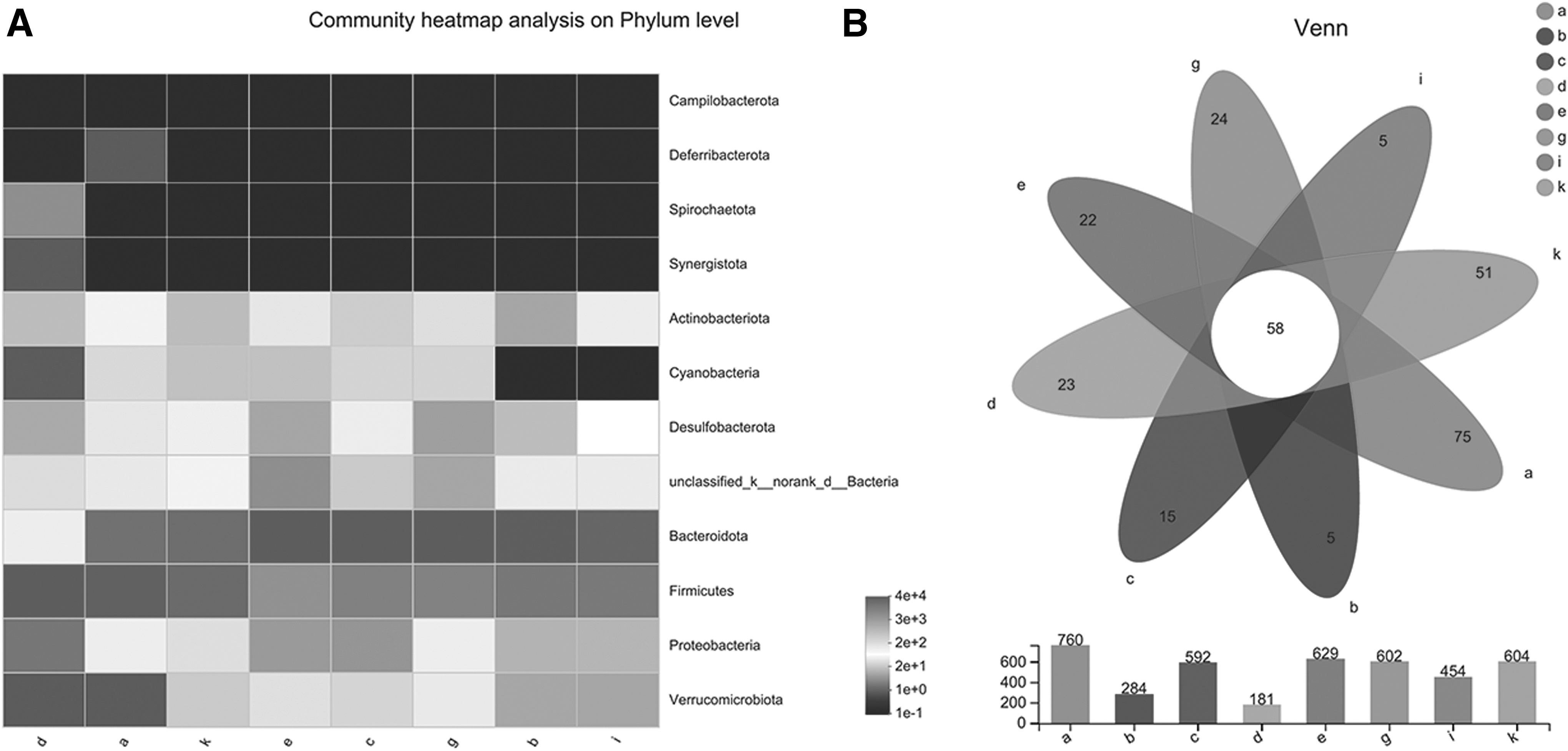
Colony abundance analysis.
The Venn chart of OTU species was analyzed for young rats, and the results were shown in Figure 5B. The common OUT number of rats in each group was 58, including two model groups, regions (c) and (d), where endemic species were less, and positive medicine group (b) after the treatment and RGP antibiotic treatment of diarrhea group (I), where endemic species were less, RGP and steam for the treatment of acute diarrhea group in regions (e, h), where endemic species were almost the same, and SGP antibiotic treatment model group (k), where endemic species increased.
In vitro regulation of main bacteria E. coli by garlic
RGP and SGP were incubated with E. coli. The results showed that RGP was highly sensitive to E. coli, whereas SGP had lower sensitivity or was insensitive. The results are presented in Table 5.
Determination Results of Concentration of Bacteriostatic Circle
The measurement results of MIC are shown in Figure 6A and B. Based on the measured optical density values, it can be seen that S1, S2, and S3 in RGP (i.e., at concentrations of 18.47 mg/mL, 9.23 mg/mL, and 4.62 mg/mL) showed significant in vitro bacterial inhibition compared to the control group in a dose-dependent manner (P < .05). Therefore, the MIC value of the MIC was finally determined to be 4.62 mg/mL by combining all the results.
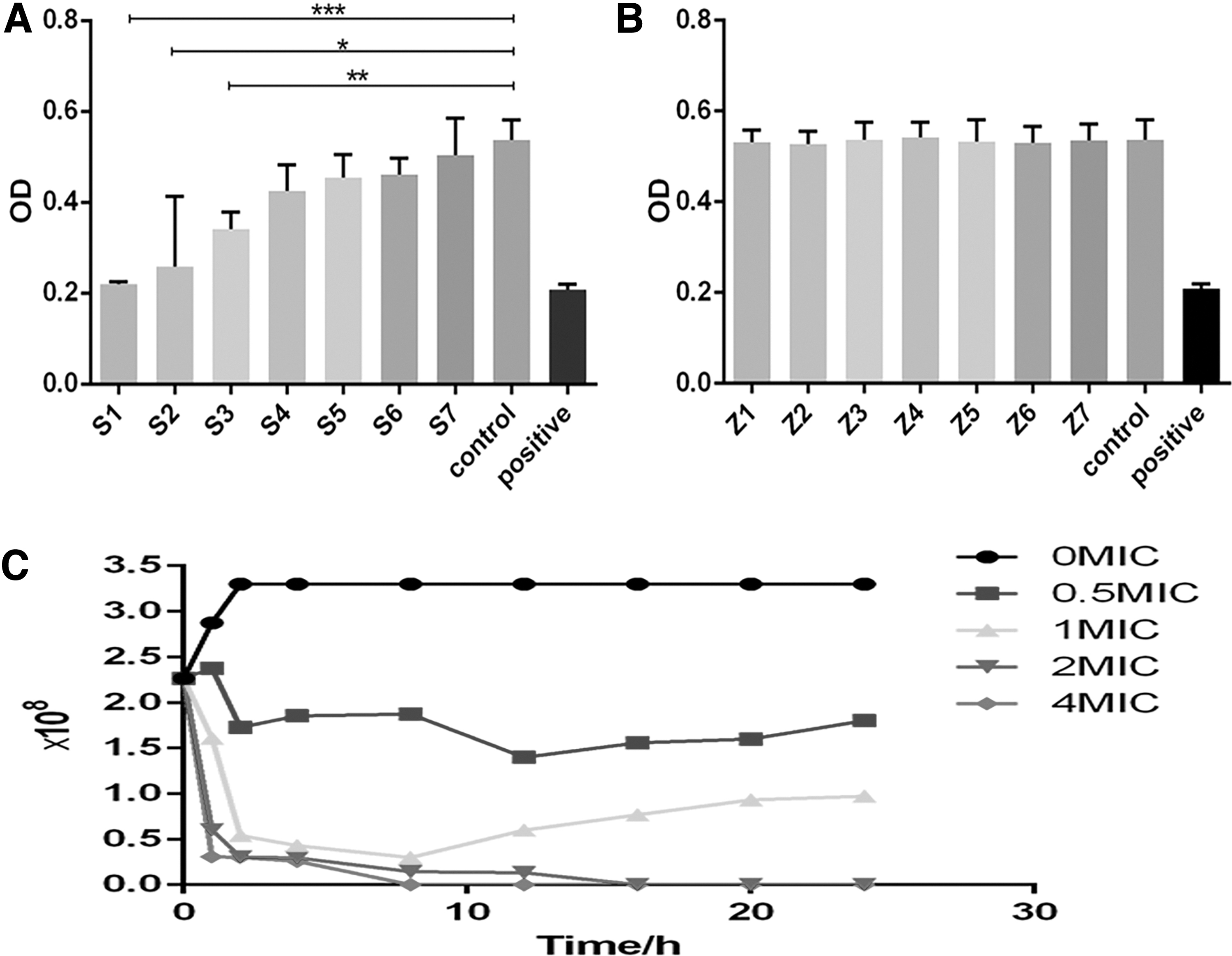
Effects of RGP and SGP on the growth of Escherichia coli.
According to the results, the antibacterial curve of garlic against E. coli was plotted, as shown in Figure 6C. The inhibitory effect of garlic on E. coli was found to be concentration dependent. Bacteria were killed within 24 h at 2 MIC, and within 12 h at 4 MIC. Garlic powder was co-incubated with E. coli, and it was found that RGP had a better antibacterial effect on E. coli, but SGP had almost no antibacterial effect.
DISCUSSION
Diarrhea is considered to be an important cause of death in childhood. At present, the drugs used in clinics to treat diarrhea have side effects, 23 and new safe and effective drugs are urgently needed. Garlic, a medicinal plant with homology to medicine and food, has been used to treat various diseases. 24 The morbidity and mortality associated with diarrhea and related gastrointestinal diseases have been well addressed. 19 However, there are few modern studies on the treatment of diarrhea using garlic. In this study, we investigated the changes in the chemical composition of garlic before and after steaming and the pharmacodynamic differences of garlic in treating diarrhea before and after steaming.
The research results showed that garlicin and alliinase were only found in RGP, while alliin was only found in SGP. Both RGP and SGP contained garlic polysaccharides, and the content of garlic polysaccharide was highest in SGP. RGP contains only alliinase and garlicin because alliin in garlic is unstable, and after impact (slicing or crushing), alliinase activates and catalyzes the formation of garlicin from alliin. 25 SGP contains only alliin because the high temperature in the steaming process destroys the enzyme and destroys the conversion process of alliin, thus retaining alliin. 26
According to the results of pharmacodynamic research, both RGP and SGP have therapeutic effects on diarrhea. RGP has better therapeutic effects on acute diarrhea, whereas SGP has better therapeutic effects on diarrhea caused by antibiotics. From the experimental results, it was speculated that the difference in the type of diarrhea treated before and after steaming of garlic could be caused by changes in the main chemical components before and after steaming. Changes in intestinal flora are closely related to acute diarrhea and DD, 27 and garlic may have some therapeutic effect on diarrhea by regulating the abundance of intestinal flora. Raw garlic was more effective in treating acute diarrhea, mainly due to the action of allicin, 28 which is the main component that exerts an antibacterial effect 29 and can effectively inhibit the growth of the flora that causes diarrhea 30 ; it also influences the number of Bacteroidota and Bacteroides.
Steamed garlic has a better therapeutic effect on antibiotic-associated diarrhea because alliin has unique pharmacological activity, significantly enhanced antibacterial and bactericidal effects, and it is a natural phytoncide. 25,31 As a prebiotic, polysaccharide can promote the proliferation of probiotics, which can effectively prevent or improve the symptoms of various diseases, including antibiotic-associated diarrhea. 32 SGP has a good therapeutic effect on antibiotic-associated diarrhea, mainly because alliin and garlic polysaccharide act on it, 32,33 by regulating the ratio of flora to treat diarrhea. 34 The treatment of diarrhea was achieved by modulating Firmicutes, Lactobacillus bacteria, and Actinobacteria. Studies have shown that an increase in Proteobacteria and Bacteroidetes and a decrease in Firmicutes can cause abdominal discomfort and damage to the gastric mucosa, which can lead to diarrhea. 35
Some members of the genus Actinobacteria have recently been proposed as indicators of a healthy gut. 36 Two components of garlic, garlic polysaccharides and alliin, significantly modulate the intestinal flora population and increase the fermentation of beneficial bacteria such as Ruminococcaceae and Lactobacilli in the intestinal tract. Both of these bacteria belong to Firmicutes. The results may also provide clinical evidence to support the use of garlic in reducing the use of antibiotics. However, the use of garlic has its limitations. Garlic is a strong irritant, and its spicy taste is not suitable for everyone. For example, seriously ill patients usually strictly avoid this kind of food.
For patients with peptic ulcer, it is best not to eat garlic when the ulcer is not healed. Garlic may aggravate gastric ulcer, but at present, the effects on people with such discomfort have not been completely determined, and further research is needed. Patients with diarrhea should be treated with garlic carefully according to their own conditions. The results will allow the formulation of relevant clinical programs and their corresponding guidelines.
CONCLUSION
In summary, we found that the main chemical components of garlic changed before and after steaming. Alliinase was activated after RGP was broken, which can catalyze alliin to form garlicin and then inactivated. Alliin was retained, and the content of garlic polysaccharide was increased. In vivo experiments showed that both RGP and SGP improved diarrhea symptoms in the rat models. RGP had a better therapeutic effect on AD, and SGP had a better therapeutic effect on DD. In vitro experiments found that RGP had a better antibacterial effect on E. coli, but SGP had almost no antibacterial effect.
Comprehensive in vitro and in vivo studies have found that the difference in therapeutic species before and after garlic steaming was correlated with the change in chemical composition before and after steaming. The better therapeutic effect of RGP on AD was mainly related to the antibacterial effect of garlicin on RGP, while the better therapeutic effect of SGP on DD was mainly related to the alliin and garlic polysaccharide in SGP.
Footnotes
AUTHORs' CONTRIBUTIONS
All authors contributed to the study conception and design. Material preparation, data collection, and analysis were performed by Y.L., Y.Z., H.L., C.W., S.C., Z.H., Y.X., and Y.W. The first draft of the article was written by Y.L., and all authors commented on previous versions of the article. All authors read and approved the final article.
ETHICS APPROVAL
The animal experimental procedures were approved by the Institutional Animal Care and Use Committee of Nanjing University of Chinese Medicine (Ethical authorization number: 202005A029). All animals were handled in accordance with the institutional guidelines and ethics.
AUTHOR DISCLOSURE STATEMENT
The authors have no conflicts of interest.
FUNDING INFORMATION
This work was supported by the National Science Foundation of China (Grant Nos. 81773902 and 81973484).
SUPPLEMENTARY MATERIAL
Supplementary Data S1
Supplementary Data S2
Supplementary Figure S1
Supplementary Figure S2