




Abstract
The aim of this study was to systematically review the scientific literature, with Preferred Reporting Items of Systematic Reviews and Meta-analyses (PRISMA) guidelines, of the articles found in the past 11 years on the gastroprotective role of fruit extracts in gastric ulcers induced by non-steroidal anti-inflammatory drugs (NSAIDs). Scientific articles published between 2010 and 2020 were included in this systematic review, including in vitro and in vivo models, to define the gastroprotective role of fruit extracts. Studies were selected by Rayyan using PubMed, Web of Science, Scopus, and Science Direct databases. The keywords for the search strategy were: “gastric injury,” “gastric ulcer,” “fruit,” “indomethacin,” and “aspirin.” Twenty-two articles with animal models of gastric ulcers were included. The NSAIDs used were aspirin and indomethacin. To know the damage caused by these, the ulceration index and biomarkers, such as aggressive/defensive factors involved in the gastric ulceration process, were measured. Most studies have shown that fruit extracts have antiulcer activity, with the most abundant metabolites being flavonoids, followed by terpenes and alkaloids. Possible antiulcer activities such as antioxidant, cytoprotective, gastric acid antisecretory, anti-inflammatory, or angiogenesis stimulant were declared, manifested mainly as a reduction of lipid peroxidation products, an increase in antioxidant enzymes and prostaglandins, and by the formation of a protective film through protein precipitation in the ulcer area. This systematic review demonstrates the importance of fruit extracts as gastric protectors.
INTRODUCTION
Non-steroidal anti-inflammatory drugs (NSAIDs) are widely used worldwide due to their anti-inflammatory, analgesic, and antipyretic properties. 1,2 In 2014, it was reported that the most widely used drugs within this therapeutic group were acetylsalicylic acid (aspirin), ibuprofen, diclofenac, indomethacin, and naproxen. 3 It is estimated that 30 million individuals use NSAIDs daily. In general practice, NSAID usage among patients aged 65 years and older is as high as 96%. 4
In Chile, in 2014, ∼27.5 million boxes of products with NSAIDs were sold in community pharmacies throughout the country, which shows its high consumption considering that the Chilean population for that year was 17.8 million inhabitants. 5 Among the most used were ibuprofen (26.8%), diclofenac (21.8%), ketoprofen (10.3%), naproxen (7.3%), and aspirin (6.4%). 3 Posteriorly, it was pointed out that one of the two drugs most consumed by Chileans was NSAIDs, and the main reason they used them was for pain relief. 6
In the context of a global pandemic of coronavirus disease 2019 (COVID-19) and despite the concerns that NSAIDs could enhance the ability of severe acute respiratory syndrome coronavirus 2 to invade human cells, there is no scientific evidence to support that these drugs would increase the risk of developing COVID-19 or more adverse outcomes (mortality or need for respiratory support). 7 –9 Consequently, the studies suggest that NSAIDs can be used safely in these patients to relieve pain, inflammation, and fever during the acute phase of infection and post-acute COVID-19 syndrome. 9 –11
However, this practice could increase the damage to the gastrointestinal (GI) mucosal surfaces already directly injured by the systemic inflammatory and pro-coagulative environment induced by the virus, suggesting the necessity of therapeutic and preventive actions. 12
The mechanism of action of NSAIDs, in general, is by inhibiting the enzyme cyclooxygenase 1 (COX-1), which is found in the stomach, platelets, vascular endothelium, and kidneys, and/or inhibiting cyclooxygenase 2 (COX-2), which mainly can be up-regulated during pathological conditions such as in response to inflammatory stimuli in macrophages, leukocytes, fibroblasts, and vascular endothelium. 3 COX is a key enzyme in prostanoid synthesis that is recognized as a potent bioactive lipid messenger with several functions in physiology and disease. 13
However, the distribution of COX isoforms in healthy tissues and its up-regulation in several pathological conditions are more complex than generally assumed. 14 Despite the multiple benefits of NSAIDs, their long-term use in the symptomatic control of chronic inflammatory diseases, such as rheumatoid arthritis, 15 could generate adverse drug reactions (ADRs) of varying severity at the GI (asymptomatic erosions and ulcers, abdominal pain, or dyspepsia), cardiovascular (myocardial infarction, cerebrovascular accident, or venous thromboembolism), and renal levels (acute and chronic kidney damage or nephrotoxicity), among others, 1 which is why they are considered the fourth most frequent cause of hospitalizations related to medication use. 3
By 2014, it was estimated that more than 100,000 patients were hospitalized annually due to NSAID-related GI complications in the United States. 3 In the same year, in Chile, the National Pharmacovigilance Center received 190 notifications of suspected ADRs associated with NSAIDs, which involved patients aged between nine months and 89 years, mostly female (65%). 3 A national study conducted between 2001 and 2017 reported that analgesic/NSAID-type drugs caused ADRs in 13.2% of adults and 6.4% of children. Overall, 16.9% of reactions were caused by propionic acid derivatives and 4.07% by salicylic acid derivatives. 16
These ADRs are produced because they are (1) due to their mechanism of action (inhibition of COX) and (2) independent of it. In the first case, a decrease in prostaglandin (PG) levels in the GI mucosa is mainly associated with the inhibition of COX-1, inhibiting PG-mediated effects. Prostaglandin I2 (PGI2) and prostaglandin E2 (PGE2) inhibit gastric acid secretion, have vasodilator effects on the vasculature of gastric mucosa, and stimulate mucus secretion. 13
Hence, NSAIDs induce the inhibition of mucin production, HCO3 secretion, and mucosal proliferation. 17 COX-1 inhibition by the use of NSAIDs also causes gastric hypermotility, which restricts blood flow, resulting in tissue hypoxia followed by microvascular disturbances and neutrophil activation. 17,18 Eventually, neutrophil-endothelial interactions increase the permeability of the stomach barrier and gastric damage, generating erosion, ulcers, and complications such as hemorrhage, protein loss, and perforation.
In particular, oxidative burst through the activation of neutrophils reduces the protective lining of the GI tract. 18 Unlike COX-2, isoform 1 is constitutively (or constantly) expressed in the GI tract. However, dual inactivation of both isoforms can cause gastric and small bowel injury. 18,19
In the second case, the pathogenesis of GI damage occurs through direct contact of NSAIDs with the lumen and mucosal epithelium. At this level, a compromise of the hydrophobic lining by the interaction of the drug with phospholipids, in addition to the uncoupling of mitochondrial oxidative phosphorylation, could damage intestinal cells and increase GI permeability. 19 This process is associated with the reactive oxygen species (ROS) generation that accumulates within the mitochondria, and after a series of biochemical processes, the loss of the intercellular junctions of the GI tract and subsequent cell death occurs.
For this reason, it is believed that preventing ROS formation could be an important protective action pathway against GI damage. 19,20 However, the pathogenesis of NSAID-induced gastric damage is complex and multifactorial, and several aspects need to be elucidated, including genetic polymorphisms related to NSAID susceptibility. 21
People who use NSAIDs long-term have been reported to have gastroduodenal ulcers (15–40%) and damage to the small intestine, where 70% were due to inflammation, and 30% were due to erosion or ulcer. 19
Some representatives of this family, such as aspirin and indomethacin, are known to generate GI and ROS disorders. For this reason, they are used as part of the experimental models to induce gastric damage by NSAIDs. Due to the previous situation associated with the use of anti-inflammatory agents, mainly conventional, new products with potential cytoprotective effects have been proposed. Some studies acknowledge that the use of fruit extracts rich in dietary polyphenols and flavonoids, such as berries, fruit peel extracts, and fruit juices, among others, could be helpful against the cytotoxic effects of the drugs mentioned earlier. 22 –26
For example, an in vitro study with apple peel extracts pre-added or incubated with indomethacin prevented mitochondrial alterations, oxidative stress, and cell viability concentration-dependent alterations. 23 The same situation occurred with another in vitro study where the gastroprotective activity of the flavonoid quercetin was evaluated after NSAIDs mitochondrial alterations. 26
Due to those mentioned earlier, this research aimed at evaluating the gastroprotective role of fruit extracts in gastric damage induced by NSAIDs in documents published between 2010 and 2020. For this reason, the methodological approaches used to determine the gastroprotective effect of fruit extracts against the damage induced by NSAIDs were analyzed, as well as the main metabolites of fruit extracts with gastroprotective activity against NSAID-induced damage were identified, and integrated the mechanisms of gastroprotective action of fruit extracts against gastric damage induced by NSAIDs.
MATERIALS AND METHODS
Literature search
A descriptive research study on the protective role of fruit extracts in NSAID-induced GI damage was carried out.
The information was collected by searching for scientific articles in the different available databases and free access to scientific journals. Specifically, PubMed, Web of Science, Scopus, and Science Direct databases were used.
Boolean operators, exact phrases, and keywords in English such as the following were used: “gastric injury,” “gastric ulcer,” “fruit,” “indomethacin,” and “aspirin,” in Spanish and English to collect information related to the topic raised.
The articles found in each database were exported in .txt, .ris, .csv formats, as appropriate.
The free access tool Rayyan, 27 developed by the Qatar Computing Research Institute, was used to analyze and select the articles found in the databases. The terms used for selection are shown in Table 1.
Terms of Inclusion and Exclusion for the Rayyan Program
NSAID, non-steroidal anti-inflammatory drug.
This systematic review was prepared under the guidelines of the Preferred Reporting Items of Systematic Reviews and Meta-analyses (PRISMA) statement 28,29 and PROSPERO strategy. 30 This protocol provides an explicit statement of this review's question, which refers to the Participants, Interventions, Comparators, and Outcomes, as follows: Participants: Pre-clinical studies. Intervention: The use of fruit extracts. Comparison: The standard medication for the treatment of gastric ulcers, like antiulcer drugs. Outcome: Protection against GI damage.
Finally, the search results in each database were exported to the Rayyan web tool. 27 This facilitates the initial selection of studies through a semi-automated process for individual selection of articles using various criteria, such as inclusion and exclusion, and in this way, the selection bias was reduced. In addition, the authors could add labels to their selections to make the subsequent analysis and synthesis of the studies easier. The searches exported from the databases to Rayyan were in “txt” and “ris” format, and Rayyan also includes a tool to detect duplicates, which was used on this occasion.
The selected articles were chosen under inclusion criteria consisting of articles published between the years 2010 and 2020, both inclusive; articles that in their content deal with GI damage induced by indomethacin or aspirin as a model of damage; articles that in their content deal with fruit extracts used to treat GI damage; articles that had omeprazole, ranitidine, pantoprazole, misoprostol, sucralfate as antiulcer drug reference; in vitro and in vivo pre-clinical studies; studies in Spanish and English; full-text articles; and articles that meet the AXIS criteria with a score greater than 12.5.
In contrast, the exclusion criteria consisted of articles that dealt with gastric damage induced by other NSAIDs, as a model of damage; articles that evaluated extracts from flowers, aerial parts, or roots; articles that did not deal with gastric damage or gastroprotective activity; clinical studies; articles that did not use a reference or comparison drug; articles that were not available in full text.; narrative review articles, systematic reviews, and clinical studies; articles published in languages other than English or Spanish; articles not available in full text with free access; and articles with an AXIS score of 12.5 or less.
The review was carried out by peer reviewers to avoid bias in the selection of studies, and when necessary, it was solved with the opinion of a third party. Each author's assessment of the quality of the selected articles was done independently using the AXIS tool, which is a critical appraisal tool that evaluates the quality and risk of bias in a study. 31 It was developed via the Delphi panel that consisted of 20 components. 32,33 Selected articles that meet the AXIS criteria with a score greater than 12.5 were selected, as declared in the inclusion criteria.
Data synthesis and analysis
The information from the articles selected using the Rayyan tool was used to create a table in a Microsoft Office Excel 2010 spreadsheet, registering the fields: article title, authors, year, type of article, journal, keywords, and abstract. This information was reviewed in-depth and, if necessary, was complemented by reading the full text of the article to discard those documents that did not meet all the inclusion criteria.
Once the articles were chosen, another table was created in Excel, which, in addition to the previous fields, contained the following: species, plant drug, type of extract, compounds, gastric damage, drug, experimental model, reference drug, and mechanism of action of gastroprotective action. These data were used for further analysis.
Description of the variables
Species
Botanical classification of the plant species indicates the article based on which the research is carried out and is expressed by its scientific name in Latin and italics. Scientific name and family were verified on The Plant List website (
Plant drug
The part of the plant used to obtain an extract or a phytopharmaceutical product.
Type of extract
Liquid, semi-solid, or solid substances of plant origin extracted from a part of the fruit or its entirety, using solvents or not, which has gastroprotective activity.
Compounds
The main metabolites in the plant extract declared in the scientific article that could have gastroprotective activity.
Gastric damage
Pathology or gastric disorder described by experimental models in vitro or in vivo.
Damage-inducing drug
Corresponds to the drug with NSAID-type biological activity to which gastric damage is attributed in the experimental model.
Experimental model
The biological system that intends to simulate totally or partially, in vitro or in vivo, the gastric damage induced by NSAIDs, which can be measured qualitatively or quantitatively.
Reference drug
A drug used as standard in the treatment of gastric damage.
Gastroprotection mechanism of action
The process by which gastric protection occurs by the reference drug or the analyzed plant extract.
Analysis of the information
The analysis was qualitative and was complemented by a fundamental statistical analysis of the variables. The results were expressed in tables, circular graphs, and summary diagrams. Microsoft Office Excel 2010 program, Biorender, and Visme tools were also used.
RESULTS AND DISCUSSION
Search results
The final search strategy using Boolean search engines and specified keywords was: (“gastric injury” OR “gastric ulcer”) AND “fruit” AND (“indomethacin” OR “aspirin”). When using this strategy, in PubMed were found 19 results, Web of Science 17, Scopus 48, and Science Direct 191, giving a total of 275 items. Once the duplicates were analyzed using the Rayyan tool, 37 were excluded, leaving 238 articles. Subsequently, an analysis of the abstracts of the articles was carried out, inserting the inclusive and exclusive terms to facilitate reading and selection.
The articles that did not present an abstract were searched in the corresponding database, and if they did not have an abstract, they were discarded. Articles other than English or Spanish were excluded, leaving only 215 studies. In the last analysis carried out in Rayyan, it was found that in the abstract, a drug with gastroprotective properties was proposed in the article as a reference for the study, and 23 articles were selected for review, as illustrated in the PRISMA diagram (Fig. 1).
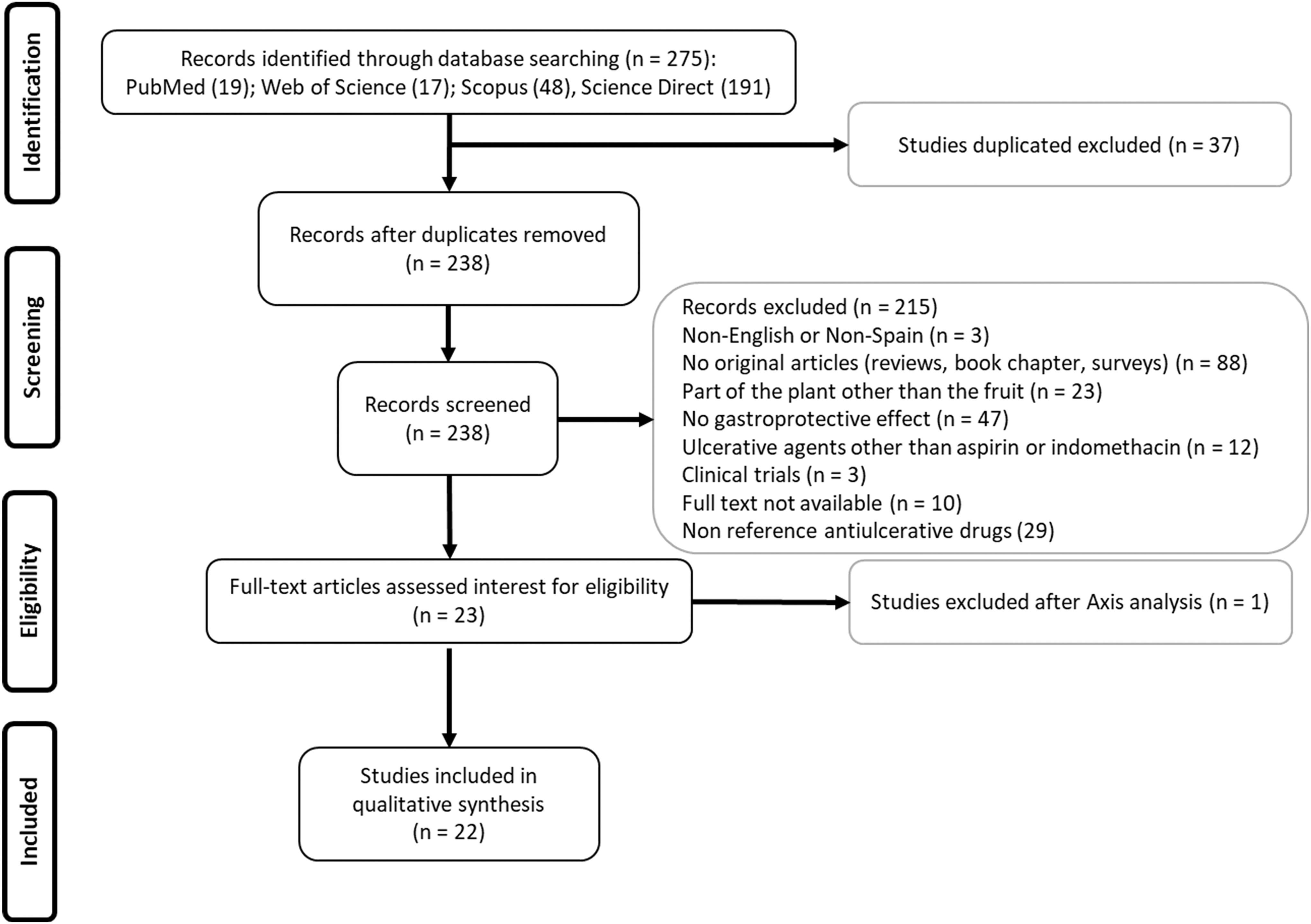
PRISMA flowchart. PRISMA, Preferred Reporting Items of Systematic Reviews and Meta-analyses.
Finally, after the complete reading of the 23 selected articles, one article was excluded because it did not have one of the inclusion criteria (drug-causing NSAID-type GI damage), which was not specified in the abstract. The characteristics of the 22 articles included, such as the author and year, title, origin, journal, keywords, and aspects of the abstract, are shown in Table 2.
Characteristics of the Articles Included in the Review
AE, aqueous extract; COX-2, cyclooxygenase-2; DPPH, 1,1-diphenyl-2-picryl-hydrazyl; EE, ethanolic extract; eNOS, endothelial nitric oxide synthase; GAE, gallic acid-enriched ethanolic extract; GSH, glutathione; HAEPD, hydroalcoholic extract of the fruit of P. dulce; iNOS, inducible nitric oxide synthase; L-NAME, N-nitro-
Gastric injury
Experimental models
This review analyzed the studies in in vivo and in vitro experimental models. For the in vivo models, rats (Wistar, Sprague Dawley, or albino), 34 –49 mice (Swiss or albino), 50 –52 and rabbits 53 were used (Fig. 2). A study that dealt with the induction of GI damage in diabetic rats was the only one that used an in vivo model with this underlying disease. 51 For the rest of the articles, the specimens were completely healthy before the induction of GI ulcers.
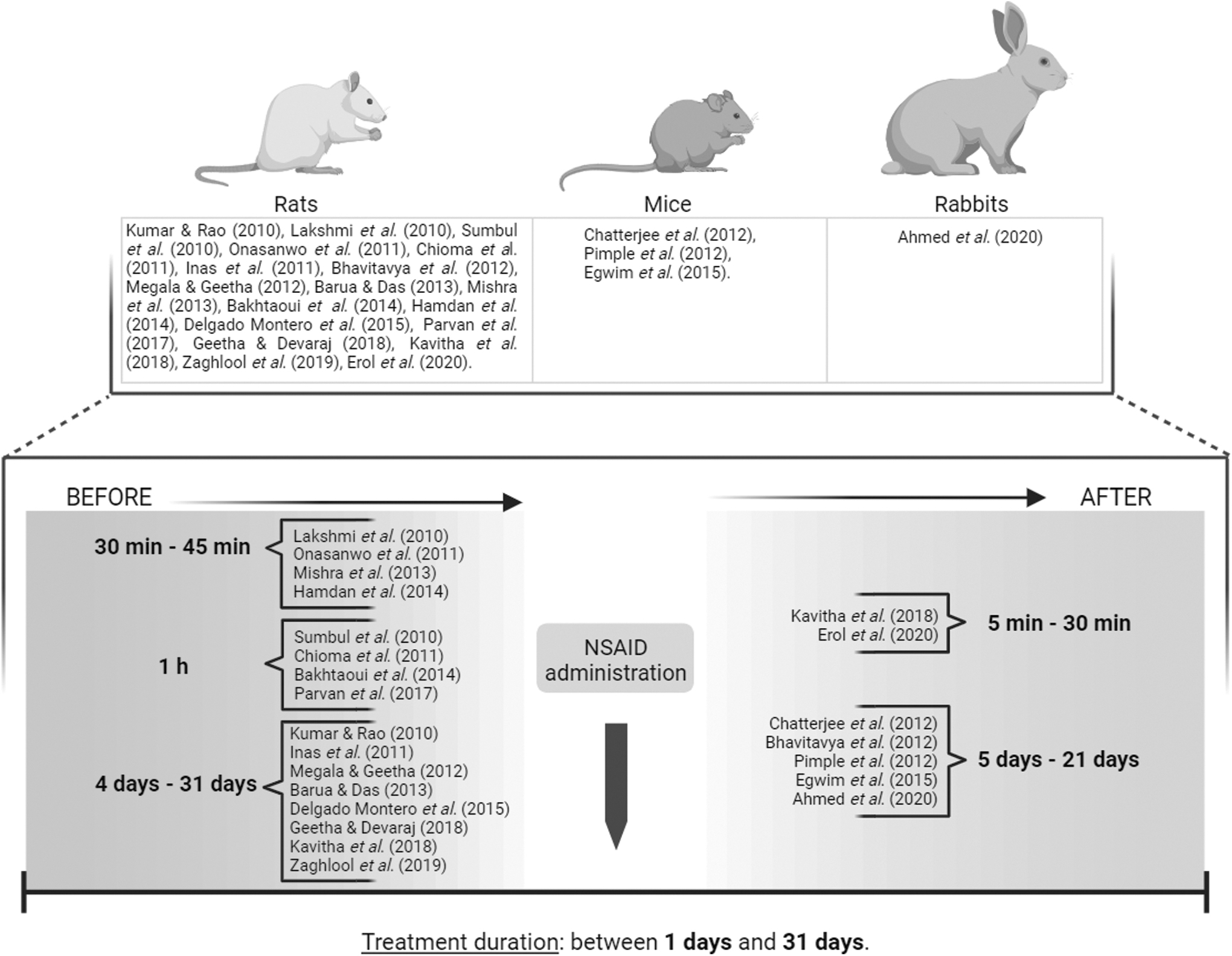
General chronological scheme of the different treatments before or after administering the ulcerating agent (NSAID) in the different animal models. Created with
Regarding the in vitro models, only 7 out of 22 articles (32%) resorted to these to determine the antioxidant capacity of the extracts. 35,37,39,41,43,48,50 The test of the antioxidant capacity of the extracts by 2,2-diphenyl-1-picryl-hydrazyl-hydrate was the most used method, where six of the seven articles (86%) included this assay in their studies. 35,37,39,41,43,48,50
Radical scavenging activity superoxide anions (O2 •−) also measured this antioxidant property by superoxide dismutase (SOD, 29%), 37,41 nitric oxide (NO) removal assay (14%), and Fenton reaction hydroxyl removal assay (14%). 37 Another method used was the enzymatic assay that measures the activity of the proton pump of gastric microsomes isolated from the rat stomach incubated with the extract and a reference drug (29%). 35,41
In vivo gastric injury models
The main model of reported GI damage among the included studies was NSAID-induced gastric ulcer. This was induced in the different animal specimens by administering a drug such as acetylsalicylic acid (aspirin) or indomethacin. The articles that only used aspirin or only indomethacin were 11 out of 22 articles (50%) 34,35,37,39 –42,46,49,51,52,54 and 10 out of 22 articles (46%), 36,39,42,44 –50,55 respectively. Only one of the articles used both anti-inflammatory drugs in its experimental design. 38
The most used route of administration was the oral route (19 articles) compared with the intraperitoneal route, where only three articles were registered; for this last route, the ulcerating agent used was indomethacin.,45,48,55 Aspirin doses used in these studies were 150, 200, and 400 mg/kg of body weight 34,35,37 –42,46,51 –54 and the most used was 200 mg/kg of body weight (5/22 articles). In the case of indomethacin, doses from 5 mg/kg of body weight to 80 mg/kg of body weight were administered 36,38 –40,42 –45,47 –50,55 and the most used was 25 mg/kg of body weight (3/22 items). All except Geetha and Devaraj 46 declared the dose.
Studies have revealed that the lethal dose 50, when indomethacin is administered acutely, ranges from 15.2 mg/kg in mice to 21.5 mg/kg in rats that have been studied. 56 Therefore, it is essential to control the dose of this drug when inducing reversible experimental GI damage, which a gastroprotective agent can suppress.
Indicators of gastric ulcers
The main methods used to determine the GI damage produced by NSAIDs in animals were as follows.
Macroscopic
The damage caused by NSAIDs in the stomach tissue was visualized. For this, various instruments were used to determine the ulcer index (UI) at the macroscopic level: magnifying glass, 38,40,43,48,49 optical macroscope 35,37,41 and in two articles, software was used for tissue analysis stomach as Scion, by scanning the samples, 39 and Fiji P, by taking photos. 43 The level of ulceration was evaluated based on a score that the authors assigned to each type of lesion, using the quantification of lesions, color, size, or shape as criteria. In total, 11 articles measured the UI by this method. 35,37 –42,45,48,49,55
Microscopic
The damage caused by NSAIDs was visualized at the cellular or histological level of the gastric tissue. For this purpose, optical microscopy was used to determine the index of ulcers, and, similarly to the previous case, the level of ulceration was evaluated based on a score that the authors assigned to each type of lesion by quantification, color, size, or shape of these. In total, nine articles measured the UI by this method. 36,43 –45,48 –50,53,54
Three of the 22 articles evaluated gastric lesions using light microscopy and macroscopy. 45,48,49 On the other hand, five articles did not specify the method for visualizing animal gastric mucosal lesions. 34,46,47,51,52
Seven articles did not measure biomarkers. 34 –38,42,44 The rest of the studies determined the levels of aggressive factors such as pepsin, gastrin, histamine, the volume of gastric content and its pH, titratable acidity (free and total acidity), proton pump activity, tumor necrosis factor-alpha (TNF-α) and interleukin-1 beta (IL-1β) levels, and COX enzyme to determine ulcer damage. 39 –41,43,45 –48,52 –55 In addition, oxidative parameters such as SOD, catalase (CAT), heme oxygenase 1 (HO-1), glutathione (GSH), lipid peroxidation (LPO) products such as myeloperoxidase (MPO) and malondialdehyde (MDA) (in an article quantified as thiobarbituric acid reactive species), and NO levels and inducible and endothelial nitric oxide synthase (eNOS) isoforms were used. 39,43,45,47 –52,54,55
Because neutrophil infiltration contributes to gastric damage, MPO, an enzyme secreted by activated neutrophils, is also used to quantify neutrophils in tissue indirectly. 18 Also, the levels of defensive factors such as PGE2 (PGI2), mucin, gastric mucus secretion, factor VIII von Willebrand, together with tissue growth factors that favor angiogenesis such as hepatocyte growth factor (HGF) or vascular endothelial growth factor (VEGF) and cystathionine-β-synthase (CBS) were measured. 40,41,46,48,50,54,55
Gastroprotection models (antiulcer)
Schematization of antiulcer treatment
Various ways of carrying out antiulcer treatment with plant extracts were recorded. Some studies aimed at measuring the capacity of the extract to prevent (before) or cure (after) GI damage induced by NSAIDs (Fig. 2). Studies that measured the ability to prevent ulcer formation administered the plant extract before the ulcer agent, 34 –49,55 contrary to the studies that measured the healing capacity in ulcers administered the extract after the NSAID. 39,47,50 –53 One study evaluated the effect of the plant extract before and after the ulcerating agent. 47 The moment of supplying the extract was variable, as can be seen in Figure 2.
Pharmacological treatments for gastric ulcers
This systematic review found several drugs used as a reference antiulcer agent or positive control. All were administered orally. These were misoprostol at a dose of 100–300 μg/kg, 48,53 omeprazole at a dose of 3–100 mg/kg, 35 –37,41 –43,48,50,54 pantoprazole at a dose of 20 mg/kg, 39 ranitidine with doses from 2.5 to 150 mg/kg 34,38 –40,44 –47,49,52,55 and sucralfate with a dose of 250 mg/kg. 45 In one study, the ranitidine dose was not specified. 52
The literature has reported that the concomitant use of extracts improves the condition of gastric ulcers induced by NSAIDs such as indomethacin. 57 For example, the ethanolic extract of the aerial parts of the Artemisa asiatica Nakai plant, when used in conjunction with the antiulcer drug omeprazole in gastric ulcers induced by indomethacin, inhibited ulcers by 78.5% in a statistically significant manner compared with damage control. Although the administration of omeprazole and the extract was also inhibited in a statistically significant way compared with the control, this only occurred in 43% and 56.7%, respectively.
Two studies included in the systematic review used the drug concomitantly with the extract. 39,55 One of them 55 tested ranitidine concomitantly with the hydroalcoholic (ethanolic) extract of Cordia myxa L., reducing the rate of gastric ulcers (90.3% prevention) induced by indomethacin 10.3 times more compared with indomethacin damage control and 2.5 times more than the use of ranitidine alone (75.9% prevention), according to the authors in a statistically significant way. In addition, gastric pH increased in the presence of ranitidine when administered alone or in conjunction with the plant extract.
Total and free acidity decreased in both groups similarly compared with the indomethacin damage control group; that is, for these two parameters, the use of ranitidine alone or concomitantly with C. myxa L. does not seem to have any difference as treatments; however, use of the extract alone did not result in a significant reduction in levels compared with NSAID damage control.
The levels of the aggressive factor pepsin had similar behavior to the two previous cases: The administration of the hydroalcoholic extract alone did not generate a significant reduction compared with the damage control, but the groups with ranitidine did, with no statistically significant differences in the use concomitant with the extract.
In contrast, mucin levels increased in the groups where the plant extract was administered (alone and concomitantly with ranitidine) in a similar way, unlike the trial with only ranitidine, which generated mucin levels similar to the control group with indomethacin. Therefore, it could be deduced that the pretreatment with ranitidine and the extract produces a more significant gastroprotective effect.
On the other hand, in the second article, 39 four out of nine study groups with indomethacin as an inducer of gastric damage used the aqueous extract of Citrus limon juice in conjunction with the antiulcer drugs ranitidine and pantoprazole. Group 6 used ranitidine+low-dose extract (100 mg/kg), group 7 used ranitidine+high-dose extract (200 mg/kg), group 8 used pantoprazole+low-dose extract (100 mg/kg), and group 9 used pantoprazole+extract at a high dose (200 mg/kg). According to the authors, there was a significant reduction in the rate of gastric ulcers compared with control and even with treatment with the antiulcer agent alone.
Mucin and SOD enzyme levels were significantly increased relative to control and both ranitidine or pantoprazole individual treatments. Therefore, the concomitant use of lemon juice with antiulcer agents gave better curative results than antiulcer treatment alone to treat gastric ulcers.
The most used drug was ranitidine since it was used as the reference drug in 11 out of 22 articles (50%), followed by omeprazole, used in 9 out of 22 articles (41%). The pharmacological groups used as gastric protectors were PG analogs (misoprostol), proton pump inhibitors (omeprazole and pantoprazole), histamine H2 receptor antagonists (ranitidine), and cytoprotective agents (sucralfate). In this case, the most used pharmacological group was histamine H2 receptor antagonists (12/22 articles, 55%), followed by proton pump inhibitors (10/22 articles, 45%).
Antiulcer treatments with plant extracts
The 22 articles included in this systematic review had various plant species as their principal object of study. Despite this, some can be grouped according to more common families, such as the Rutaceae of the Citroideae or Citrus subfamily (C. limon, Citrus aurantium var. bigaradia, Citrus decumana, and Citrus aurantifolia), 39,43,52 the Solanaceae (Capsicum annuum, Solanum aethiopicum, and Solanum nigrum), 38,44,48 Cucurbitaceae (Lagenaria breviflora and Luffa acutangula), 27,51 Moraceae (Ficus racemosa and Maclura pomifera), 34,49 and Phyllanthaceae (Phyllanthus emblica and Phyllanthus acidus). 47,50
Other species also found are those that are widely used worldwide, such as bananas (Musa sapientum var. paradisiaca), 40 quince (Cydonia oblonga), 45 and grapes (Vitis vinifera) 46 (Table 3).
Species and Fruit Part Used in the Review Grouped by Botanical Family
Scientific name and family were verified on The Plant List website (
var.: variety. Subf.: subfamily.
Although the original pharmacognostic drug varied between the articles, the most common in the use of the gastroprotection test was the whole fruit (15/22 articles), 34 –38,40,42,44,46 –50,54,55 and only one article used it in the immature state (F. racemosa). 34 The second most used part among the studies was the fruit peel (3/22 articles). 43,52,53 The peeled fruit, 45 seedless fruit, 41 fruit juice, 39 and the fruit pulp 51 were also studied. Table 3 specifies the part of the fruit studied in each article by species.
Composition of fruit extracts
In the articles included in this systematic review, fruit extracts of various kinds were reported. The most used was the hydroalcoholic, representing just over a quarter of the total mentions among articles. 41 –43,45,53 –55 This consists of the extraction of an active principle using a solvent formed on an aqueous and an alcoholic part, which, for the case of this review, the researchers used solvents with an ethanolic portion (57% of the hydroalcoholic extracts) and solvents with a methanolic portion (29% of the hydroalcoholic extracts). 58
In the second and third place, methanolic extracts (24%) 36,38,40,46,47,51 and ethanolic extracts (20%), 27,34,44,48,50 respectively, were used (Fig. 3A). Three studies used two types of extracts for their experimental design (Fig. 3B). One made aqueous and methanolic extracts of Myrtus communis, 36 whereas another used aqueous and methanolic extracts of L. acutangula, 51 and the last one used hydroalcoholic and aqueous extracts of C. oblonga. 45
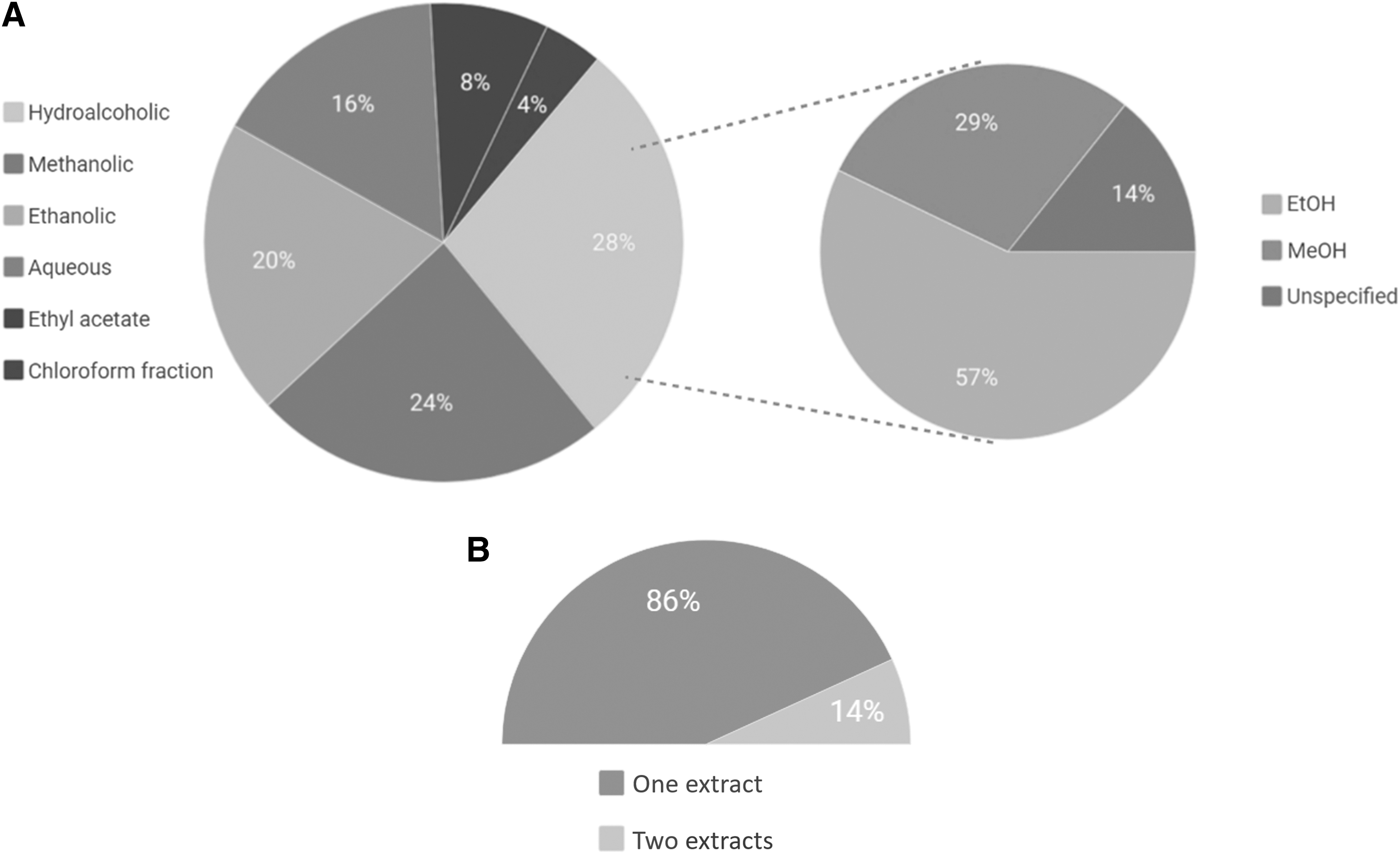
Types of extracts obtained in the studies
Regarding the phytochemical analysis, various primary and secondary metabolites in the plant extracts were reported. Most of the studies analyzed the composition of their extracts, with 13 out of 22 articles (59%). 34,35,38,39,41 –43,45,48 –50,52,55 Of these, five articles isolated secondary metabolites such as genudin, photogenudin, gallic acid, quebunilic acid, hesperidin, neohesperidin, and osajin. 35,41,43,49,50
It should be noted that not all the studies included in the review made a preliminary analysis of the composition of their extracts. Seven of the 22 articles (32%) proposed metabolites based on what was reported in the literature, and such information could be found in the introduction or results and discussion sections of the article. 36,37,40,44,51,53,54 On the other hand, two studies (9%) did not report any constituents in the extract. 46,47 This information is summarized in Table 4.
Declared Metabolites in Fruits of THE Species Included in this Review
The frequently declared metabolites were the flavonoids (18%, considering that the total frequency of metabolites mentioned was 89), including hesperidin, neohesperidin, the isoflavone osajin, anthocyanins, leucoanthocyanidins, and some traces of flavonoids. 34,36,38 –40,42,43,46,48,49,52,53,55
In second place are the terpenes (12%), 34,35,37 –40,42,48,52,53,55 followed by the alkaloids (11%) 34,36,38,44,48,55 and the tannins (10%), 34,35,37 –40,48,52,53,55 which, for the first group, triterpenes, terpenoids, and triterpenoids such as genudinin and photogenudin contained in the fruit of Xylocarpus granatum 35 and triterpenoid saponins in the fruit of L. breviflora 37 were declared; for the second group of metabolites, an article declared capsaicin-type alkaloids such as capsaicin, dihydrocapsaicin, norhydrocapsaicin, homocapsaicin, and homodihydrocapsaicin, contained in the fruit of C. annuum. 55 This information is summarized in Table 5.
Declared Primary and Secondary Metabolites and Frequency of Occurrence
Proposed mechanisms for antiulcer activity
The vast majority of studies on fruit extracts were favorable for antiulcer activity. Only one article reported that the isolated compounds did not present gastroprotective properties; conversely, they aggravated gastric ulcers. According to Hamdan et al., 43 hesperidin (100 mg/kg) and neohesperidin (100 mg/kg), isolated from the peel of the fruit of C. aurantium var. bigaradia and dissolved in saline solution, produced extensive hemorrhagic damage in the stomach of rats treated with these compounds.
This would suggest that the presence of both flavanones aggravated gastric ulcers and, therefore, have proinflammatory properties at the GI level. TNF-α levels were similar between the groups pretreated with hesperidin and neohesperidin, and the group was given indomethacin (62.5 mg/kg in distilled water) alone to induce gastric ulcers. The expression of this proinflammatory cytokine was statistically higher in the three groups compared with the group pretreated with the antiulcer drug omeprazole (100 mg/kg in distilled water).
A similar situation occurred with the expression of COX-2, with the difference that the administration of hesperidin significantly increased the COX-2 levels compared with the group with ulcers induced by indomethacin and without antiulcer treatment.
In addition, the level of gastric MDA and, therefore, LPO was found to be elevated after the administration of indomethacin in the group without treatment and in the groups treated with hesperidin and neohesperidin (there was no statistically significant modification of MDA) despite its antioxidant properties. On the other hand, hesperidin and omeprazole similarly reversed the indomethacin-induced reduction in gastric GSH content, whereas neohesperidin did not, which reduced GSH as well as the indomethacin group. The high dose of indomethacin could influence these negative results used to induce the damage, which could cause irreversible GI damage. 56
On the other hand, these findings contradict those found by Bigoniya and Singh (2014), 22 in which they evaluated the antiulcer activity of hesperidin, isolated from Citrus sinensis, through the antiulcerogenic potential of this flavanone (150, 300, and 450 mg/kg), dissolved in an aqueous solution and 0.25% Tween-80, using indomethacin (25 mg/kg) as a damage-inducing agent. Hesperidin, at doses of 300 and 450 mg/kg orally, showed a significant increase in pH, a decrease in acidity, and UI compared with indomethacin, together with histological evidence of cytoprotection.
The authors claimed that the hesperidin dose-dependently prevents oxidative cell injury by significantly increasing SOD, GSH, and CAT levels in the gastric mucosa. Further, they pointed out that hesperidin allowed the regeneration of ulcerated tissue and prevented hemorrhagic injury of the gastric mucosa and that the potential antiulcer effect of hesperidin may be due to its antioxidant, mucoprotective, and cytoprotective activities.
The rest of the articles agree on specific results regarding the pathways that could generate the extracts' antiulcer capacity by oxidative stress protection, cytoprotection, anti-gastric acid secretion, anti-inflammation, and angiogenesis stimulant (Fig. 4). Only one study did not raise mechanisms because it did not perform molecular-level assays to determine biomarkers. However, they determined that the extract from the fruit of F. racemosa had antiulcer activity by reducing the rate of gastric ulcers in rats. Kumar and Rao 34 observed that this occurred dose-dependently and commented that it could be due to its content of flavonoids.

Molecular mediators involved in ulcer formation and their modulation by fruit extracts or their secondary metabolites across this review. CAT, catalase; COX, cyclooxygenase; eNOS, endothelial nitric oxide synthase; GPx, glutathione peroxidase; GSH, glutathione; HGF, hepatocyte growth factor; HO-1, heme oxygenase 1; IL-1β, interleukin-1 beta; iNOS, inducible nitric oxide synthase; LPO, lipid peroxidation; MDA, malondialdehyde; MPO, myeloperoxidase; NO, nitric oxide; PGs, prostaglandins; ROS, reactive oxygen species; SOD, superoxide dismutase; VEGF, vascular endothelial growth factor; v.W.f, von Willebrand factor. Created with
Oxidative stress
Some authors did not specify the action pathway against oxidative stress of their extracts; however, they suggested that the antioxidant activity, for example, of the whole fruit of M. communis could be given by its content of tannins, alkaloids, and polyphenols such as flavonoids. 36 A similar situation occurred with the study of the extract of M. sapientum var. paradisiaca, where they stated that its antiulcer activity is given by the content of antioxidants such as flavonoids. 40
Some articles addressed the antioxidant activity from the point of view of free radical scavenging and the reduction of LPO products. The flavonoids and phenolic compounds contained in the fruit extract of C. myxa and the peeled fruit of C. oblonga probably acted as free radical scavengers and caused a decrease in the activity of MDA and MPO. 45,55
In the case of the Pithecellobium dulce extract, the significant decrease in the concentration of MPO was probably due to the saponins of the fruit. 54 In the study on the extract of Phyllanthus embilica, it was shown that gallic acid, also present in this extract, was capable of reducing the activity of MPO and inhibiting the formation of free radicals, although on this occasion mediated by neutrophils, generating an increase in PGE2 levels. 50
On the other hand, Onasanwo et al. 37 stated that the antioxidant capacity of L. breviflora was dose-dependent and was due to its metal-chelating capacity, hydrogen donation, and its efficiency in capturing free radicals of hydrogen peroxide (H2O2), O2 •−, and NO; however, the type of metabolites involved in these processes was not specified.
Another way proposed to combat oxidative stress was through the increase in antioxidant enzymes, where it was found that chebunilic acid isolated from the seedless fruit of Terminalia chebula and phenolic compounds contained in the peel of Punica granatum generated an increase in the activity of SOD, CAT, and glutathione peroxidase. 41,53 In the article by Erol et al., 49 in addition to the effect on the first enzymes, it was found that there was an increase in GSH levels after the administration of high doses of osajin isolated from the fruit of M. pomifera.
Although some authors did not relate the metabolites analyzed with antioxidant mechanisms, they found that the fruit extracts of C. limon, L. acutangula, C. decumana, C. aurantifolia, and P. acidus also increased the concentration of the enzymes SOD, CAT, and the molecule GSH, which would be favoring the defense of the mucosa against the effects of the high concentration of H2O2 by catalyzing its decomposition into molecular oxygen. 39,47,51,52
In addition to the effect on the enzymes mentioned earlier, the S. nigrum extract could increase the antioxidant enzyme HO-1 and the levels of CBS, an enzyme from the sulfur amino acids metabolism, and a precursor hydrogen sulfide (H2S), a gaseous vasoactive mediator with gastroprotective activity. 59 H2S, according to the authors, could generate gastroprotection through various action pathways. 48
Cytoprotection
Increase of PGs
The cytoprotective activity of some extracts has been reflected in the ability to increase the release of PGs in the gastric content. This was the case in the articles by Lakshmi et al. 35 and Mishra et al., 41 where gedunin and photogedunin were isolated from X. granatum fruit and chebulinic acid from T. chebula seedless fruit, respectively, with cytoprotective activity.
Other studies also showed that the content of flavonoids, saponins, and tannins in the fruit of S. aethiopicum, C. myxa, and S. nigrum could be responsible for the increase in PGE2, PGI2, mucin, mucus, and bicarbonate at the gastric level. In addition, the cytoprotective effect of the C. myxa extract was, in part, due to its mucilage content since it serves as a lining for the gastric mucosa. 38,48,55
Increased production of mucus or mucin
In other studies, the production of gastric mucus was mainly analyzed. M. communis, C. limon, and C. oblonga extracts improved gastric mucus content in NSAID-induced ulcers, presumably due to secondary metabolites, glycosides, polyphenols (such as flavonoids), and pectin. 36,39,45 For the C. oblonga extract, it was also suggested that its components could have been bound to functional proteins such as pepsin to protect the gastric wall from acid attacks and the same proteolytic enzyme. 45
A particular case was that of the fruit extract of the C. annuum. In this study, Delgado Montero et al. 44 suggested that the origin of the cytoprotective activity may be due to the capsaicin contained since, after prolonged intake at low doses, the formation of ulcers is prevented. They suggest that this probably occurs due to the transient receptor potential vanilloid 1 (TRPV1) stimulation at the GI level, favoring the synthesis of PGs and mucus secretion.
Interestingly, TRP family of ion channels localized on capsaicin-sensitive afferents and non-neuronal structures have been proposed as potential targets in gastritis. 60 Despite the gastroprotective mechanism of TRPV1 remaining unclear, it has been proposed that these channels can inhibit gastric acid secretion through the release of calcitonin gene-related peptides.
TRPV1 signaling can also increase gastric mucosal flow and stimulate salivary glands to secrete epidermal growth factors. In addition, its activation facilitates the release of tachykinins by nerve fibers, promoting gastric motility and accelerating the gastric emptying process. However, these peptides, also via neurokinin type 1 receptor in gastric epithelial cells, may increase the generation of cytotoxic ROS, as well as mediate the inflammatory visceral hyperalgesia. 61
The active principles causing the cytoprotective activity were not proposed in two articles. However, the L. breviflora fruit consumption seems to have inhibited gastric mucus depletion in vivo models. 37 In the case of P. acidus, mucus synthesis seems to be due to an increase in NO concentration, mediated by increased expression of the eNOS gene. 47
Formation of a protective film
Tannins and saponins in the extracts of the fruit of Zizyphus lotus and the P. granatum peel react with the outermost layer of the mucosa. According to Bakhtaoui et al., 42 and Ahmed et al., 53 this was possibly due to the astringent capacity (in the case of tannins) that could have precipitated microproteins at the ulcer site, thus forming a protective film, making the gastric mucosa less permeable to prevent the absorption of toxic substances, and more resistant to attack by proteolytic enzymes. This same capacity attributed to tannins was reported for the extract of M. communis, previously mentioned. 36,42,53
Anti-secretion of gastric acid
The glycosides in the extract of M. communis, some alkaloids in the fruit of S. aethiopicum, and the flavonoids in the extract of M. sapientum var. paridisiaca inhibited or reduced gastric parietal cell acid secretion. 36,38,40 The chloroform fraction of X. granatum that contains the terpenes genudin and photogenudin also favored the suppression of acid secretion in vivo models. The authors related this effect with the possible inhibition of the proton pump, as revealed in vitro studies. 35
Following this last idea, it was found that chebulinic acid isolated from the seedless fruit of T. chebula was also capable of inhibiting the activity of the proton pump. 41 On the other hand, it was recorded that the mechanism of action of P. dulce could be in part due to the significant decrease, although comparable to the antiulcer drug (omeprazole), in the activity of the proton pump in vivo, generating, in turn, the decrease in acid secretion and the increase in gastric pH. 54
In another study where the fruit of C. myxa was used, it was stated that the flavonoids contained in the whole fruit extract could be inhibiting acid secretion by influencing mast cell histamine. It could occur due to the suppression of the enzyme histidine decarboxylase. 55
Although some authors did not relate the metabolites analyzed with antiulcer mechanisms, it was reported that the L. breviflora extract, C. oblonga peeled fruit extract, and V. vinifera extract in vivo studies have antisecretory activity because they are capable of decreasing pepsin activity, reduce acid secretion, 37,45,46 and increase stomach pH. 46
Anti-inflammatory action
The presence of flavonoids in the extract of the fruit of C. myxa suppressed the production of TNF-α in experimental models. 55 A similar situation occurred in the study with the fruit of S. nigrum, where there was a decrease in IL-1β in the blood; however, the authors did not specify the metabolites responsible for this mechanism. 48 Likewise, the C. oblonga peeled fruit contained flavonoids and phenolic compounds with anti-inflammatory activity, 45 but the authors did not specify the action pathways.
Stimulation of angiogenesis
The fruit extract of C. myxa could increase NO levels in the mucosa, probably due to the content of flavonoids, which, in turn, stimulated microcirculation. 55 For its part, the fruit extract, rich in gallic acid, of P. emblica increased the von Willebrand factor, HGF, and VEGF in the ulcerated mucosa, thus favoring the formation of microvessels, platelet aggregation, oxygenation, and nutrition due to increased blood flow. According to the authors, these conditions would favor accelerated healing of gastric ulcers. 50
Study limitations
Some studies did not relate the properties given to the extracts with a specific mechanism. This could be due to the lack of biomarker assays in their experimental designs. They have in common that the macroscopic or microscopic analysis and the UI were the only parameters used to measure gastric damage.
On the other hand, some studies performed analyses on biomarkers such as antioxidant enzymes or levels of proteolytic enzymes, for example, and in addition performed phytochemical analyses on their extracts, but they could not integrate both results. This was reflected in the statement of some action mechanisms of the extracts, where it was not specified which compounds were responsible for the activities, leaving half the resolution of a possible action mechanism.
SUMMARY
In this systematic review, 22 articles referring to the gastroprotective effect (specifically of gastric ulcers) of fruit extracts in various animal models performed in rats, mice, and rabbits against ulcers caused by aspirin and indomethacin are analyzed. Most reports identified metabolites that could be responsible for the described activity, whether antioxidant, cytoprotective, antisecretory of gastric acid, anti-inflammatory, or stimulating angiogenesis.
The main secondary metabolites to which antiulcer activity is attributed are flavonoids, terpenes, and alkaloids. The latter group includes capsaicinoids, which have a potential gastroprotective effect, as their authors show, contradicting the widespread belief that these metabolites aggravate gastric ulcers. Another interesting case is that of tannins (the fourth most analyzed metabolite) because their ability to precipitate proteins makes them an agent that forms protective films at the gastric ulcer level, as has been described with the use of mucilages and pectins from the fruits.
Some fruits seem to have more than one molecular target, as is the case of C. myxa, which increases the NO, PGs, and bicarbonate levels and inhibits the products of LPO, histamine, and the proinflammatory cytokine TNF-α. In addition, it can form a protective film based on mucilage.
This systematic review demonstrates the importance of fruit extracts or derivatives as gastric protectors. For this reason, consuming fruits or their derivatives in the daily diet could be recommended since they play a preventive or curative role against gastric ulcers due to the abuse of NSAIDs. To the best of our knowledge, this is the first systematic review that integrates the mechanisms of action involved in the gastroprotection of fruit extracts and their metabolites in the damage induced by NSAIDs.
Footnotes
AUTHORs' CONTRIBUTIONS
M.G-.V.: Conceptualization, study design, experimental studies, data curation, formal analysis, Investigation, Methodology, and writing the original draft. L.D-.V.: Conceptualization, study design, experimental studies, Formal analysis, Funding acquisition, Investigation, Methodology, Project administration, and writing the original draft. M.V-.G.: Supervision, validation of the execution of the project, and proofreading. B.B.G-.S.: Supervision, validation of the execution of the project, and proofreading. G.G.: Conceptualization, study design, experimental studies, Formal analysis, Funding acquisition, Investigation, Methodology, Project administration, writing the original draft, reviewing and editing the original draft, and supervision of the project execution.
AUTHOR DISCLOSURE STATEMENT
No competing financial interests exist.
FUNDING INFORMATION
The content of this study was part of the FONDECYT project 1130601 (Chile).