




Abstract
The crucial role of the gut microbiome in various diseases has led to increased interest in interventions and therapeutics targeting the human microbiome. Accordingly, the current scoping review analyzed the diseases and interventions involved in gut microbiome research in Africa. The electronic databases of PubMed, Google Scholar, and Scopus were searched from inception to October 2021. This study identified 48 studies involving 7073 study participants. Of the 48 studies, 20 (42%) used interventions to modulate gut microbiota, whereas the remaining 28 (58%) did not. Out of the total African countries, only 13% were involved in intervention-based gut microbiome research, whereas a larger proportion of 67% were not involved in any gut microbiome research. The interventions used in gut microbiome research in Africa include supplements, natural products, educational approaches, associated pathogens, albendazole, fresh daily yogurt, iron-containing lipid-based nutrient supplements, fecal microbiota transplant, and prophylactic cotrimoxazole. This scoping review highlights the current state of gut microbiome research in Africa. The findings of this review can inform the design of future studies and interventions aimed at improving gut health in African populations.
INTRODUCTION
For the past two decades, there has been a worldwide surge of research interest in the gut microbiome. 1,2 The gut microbiota, along with the microbes found in various parts of the body such as the skin, body fluids, and mucosal cavities (including oral cavity, nasal passages, reproductive system, and pulmonary cavities), constitutes a subset of the overall body microbial community. This community colonizes the gastrointestinal tract and possesses a collective genome known as the microbiome. 3 Over time, it has been recognized as a critical mediator for maintaining health and alleviating disease pathologies. 4,5 The strong links between gut microbiome dysfunction and the pathology of diseases of public health importance, such as metabolic, neurological, and gastrointestinal disorders, have gained tremendous attention. This has led to an increased focus on gut microbiome-based interventions as therapeutics against diseases.
The reasons for the plethora of research interests in microbiome-based intervention as a target for therapeutics are not far-fetched. The gut microbiome is composed of 100 trillion microorganisms, including >1000 species of mostly bacteria, but also fungi, archaea, protozoa, and viruses. 6,7 In humans, the gut microbiota is about 10 times the total number of all human cells, 8 and the gut microbiome encodes >3 million genes, which is 90 times the entire number of human genes (30,000 genes) documented by the Human Microbiome Project. 9,10 In addition, there is a bilateral pathway of interaction between gut microbiota and the central nervous system through the microbiota–gut–brain axis. 11 –13 This interaction has led to the gut microbiome being referred to as the “second brain” due to its essentiality for maintaining homeostasis and health throughout the body. 14,15
In the past, two previous studies have focused on the level of microbiome research in Africa. Allali et al. conducted a review that assessed African microbiome research in all body compartments, and thus lacked specific focus on the gut microbiome entity. 16 Brewster et al. surveyed African microbiome research with specificity toward the gut microbiome, which contained analysis on African gut microbiome related to diseases and lifestyle changes. 17
Africa is not one country; it is diverse in social, economic, geopolitical, and cultural dimensions. Africa is also rich in biodiversity, with diverse indigenous food systems. 18 The dietary influence of many African diets could be linked to the gut microbiota, and associated host immune and inflammatory responses. Considering that the sub-Saharan African account for nearly half of infectious disease deaths globally, and that infectious diseases, such as acute respiratory infection and diarrheal disease, are the major causes of mortality in Africa, the indigenous diet could be used as a potential biotherapy to improve the gut microbiome and the host responses. 19
In addition, diseases of undernutrition and or overnutrition that elevate health challenges in Africa are considered to be “microbiota-dependent,” and can be mitigated by microbiota intervention. 20 However, in contrast with other public health challenges widely studied in Africa, the microbiome is given less attention. The total amount of microbiome research is much less than on other continents. 21
Therefore, it is imperative to adequately study the African population perspective considering the microbiome variability among populations, and thus any microbiome-based interventions should be applicable to the African population. In this study, we aimed to carry out a scoping review to assess the level of gut microbiome research output from the African population, which highlights research gaps and opportunities for future African gut microbiome studies.
MATERIALS AND METHODS
Research question and design
The aim of this scoping review was to determine the extent of gut microbiome research in Africa. The review followed the research methodology framework. 22,23
Search strategy
Three databases—PubMed, Google scholar, and Scopus—were searched from their inception until October 2021 for peer-reviewed articles. The search terms included MESH-terms such as “microbiota,” “gut microbiome,” “microbiome,” “gut flora,” “intestinal microflora,” or “intestinal bacteria” and “Africa.” An iterative search style was used on each database. In addition, manual searches and forward citation tracking from the reference list of selected studies were conducted.
Selection of studies and screening
Studies were selected based on predefined inclusion and exclusion criteria. The review included studies on the gut microbiome that involved Africans or African countries. Reviews, editorials, expert opinions, and conference proceedings were excluded. After removing duplicates, the remaining studies were uploaded to Covidence (

Flowchart depicting the identification and selection process of studies.
Data extraction
Data were extracted by two authors using a data extraction form developed through Microsoft Excel. Data extracted included the author, year of publication, country of study population, aim of the study, population, age of the participants, interventions used, control, results, and source of funding for the study. No assessment of the methodological quality of the included studies was carried out.
RESULTS
The database search result
A total of 205 studies related to the gut microbiome and Africa were identified after removal of duplicates from the database search results, as well as manual search and forward citation tracking (Fig. 1). After screening by title and abstract, 82 articles qualified for full-text screening. Among those, the final 48 articles were included in this study as they met the inclusion criteria. Supplementary Table S1 shows the characteristics of the included studies.
The population of Africa and African countries involved in gut microbiome research
We analyzed the overall population of Africa involved in gut microbiome research (Fig. 2a), the proportion of intervention-based African gut microbiome studies (Fig. 2b), and the proportion of African countries where gut microbiome research was carried out (Fig. 2c). The total African population involved in gut microbiome research was 7073 individuals, categorized into three groups. The “Disease Only” category (n = 4975, 70%) assessed the gut microbiome in a specific disease condition but did not involve a control group. Control category (n = 1131, 16%) assessed the gut microbiome in a specific disease condition compared with the control group. The “Intervention-based” category (n = 967, 14%) used an intervention and assessed the gut microbiome in a specific condition compared with the control group.
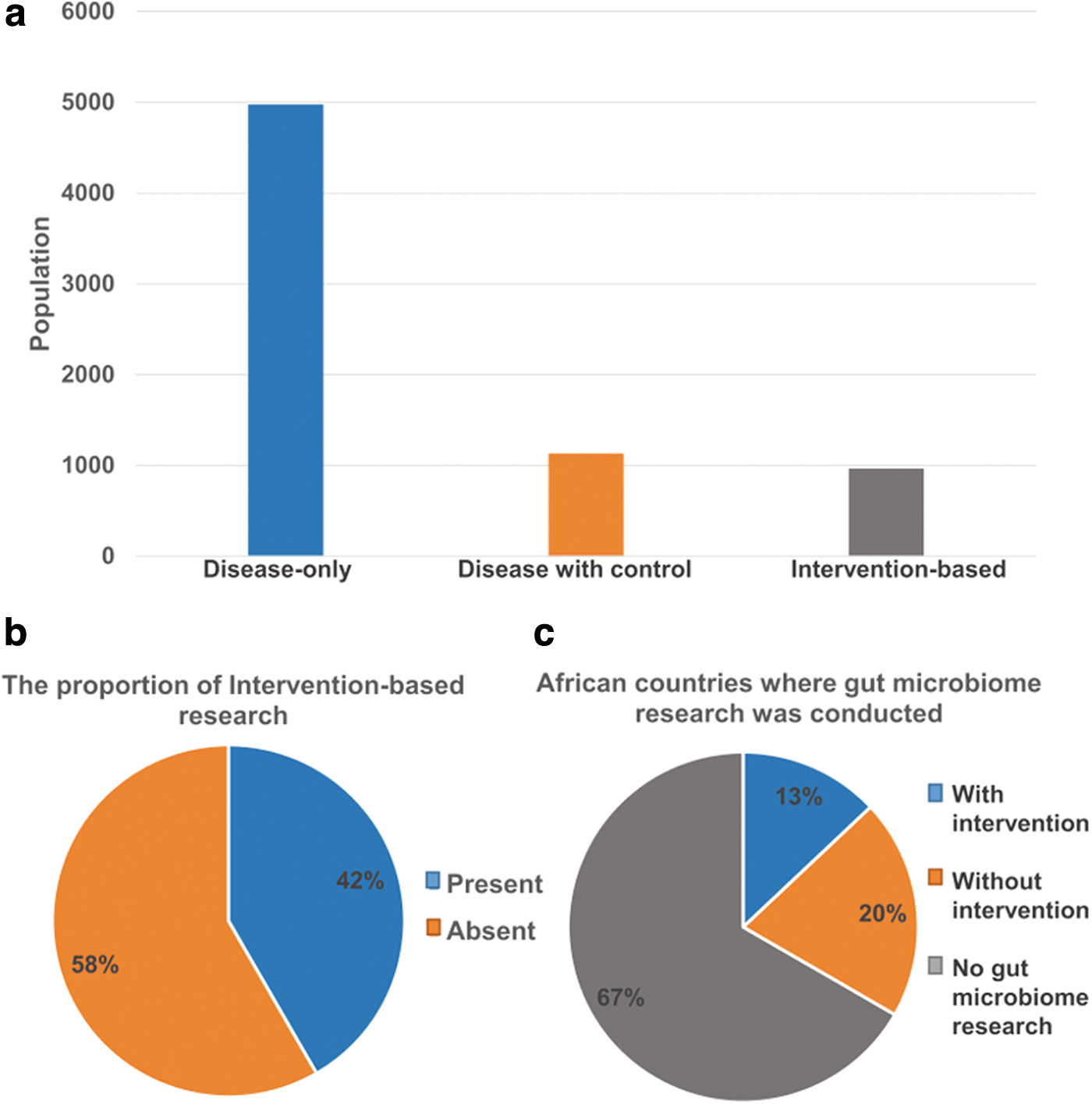
The proportion of African gut microbiome studies where interventions were used is shown in Figure 2b. The number of published studies that used intervention was 42% (n = 20), whereas the number of published studies that did not use intervention was 58% (n = 28). Figure 2c shows the proportion of African countries where gut microbiome research was carried out. The results show that out of the total of African countries, only 13% was involved in intervention-based gut microbiome research, 20% was involved in gut microbiome research without intervention, whereas a larger proportion of 67% was not involved in any gut microbiome research.
The distribution of African countries involved in gut microbiome research
We identified the distribution of African countries involved in gut microbiome research (Fig. 3). Burkina Faso, Tanzania, Kenya, Malawi, South Africa, Uganda, and Ethiopia were involved in intervention-based gut microbiome research, whereas Tunisia, Morocco, Senegal, Gambia, Liberia, Ghana, Nigeria, Cameroon, Egypt, Zimbabwe, and Mozambique showed the presence of gut microbiome research without intervention. The remaining African countries did not show any gut microbiome research.

Map of Africa indicating the distribution of African countries involved in intervention-based gut microbiome research. Orange dots indicate the presence, blue dots indicate the absence, and gray dots indicate no report on intervention-based research on gut microbiome analysis in Africa.
Gut microbiome-associated diseases studied in Africa
We then analyzed the intervention-based gut microbiome studies performed in Africa based on the diseases (Fig. 4). This includes infectious diseases such as HIV/AIDS, deficiency diseases such as diarrhea, and noncommunicable diseases such as type 2 diabetes (T2D), which are the most highly prevalent diseases among the African population. 24 Cameron, Egypt, Ethiopia, Ghana, Kenya, Liberia, Malawi, Morocco, Mozambique, Nigeria, Senegal, South Africa, and Tunisia are the countries where the studies were located. Northeastern countries were mostly involved in noncommunicable diseases such as cancer, T2D, and obesity (Supplementary Table S1). For countries in Southern Africa, infectious diseases such as HIV/AIDS, helminthiasis, and other infectious diseases were involved. 24 West African countries included both communicable and noncommunicable disease studies. In particular, Malawi performed intervention-based research in three various diseases, including T2D, Kwashiorkor, and Schistosomiasis (Fig. 4). 25

Heatmap showing the gut microbiome analyses performed in Africa on various diseases. Pink squares indicate the presence of a disease condition, whereas the blue–green squares indicate the absence of a disease condition. SAM, severe acute malnutrition; T1D, type 1 diabetes; T2D, type 2 diabetes.
Different types of interventions were used in African gut microbiome research
A variety of interventions were used to target specific disease conditions within the realm of the gut microbiome studies in Africa (Fig. 5; Supplementary Table S1). Supplements and natural products were the focus of intervention-based research in five countries: Ethiopia, Kenya, Uganda, Malawi, and South Africa. Burkina Faso and Tanzania were excluded since they used educational approaches as a means of intervention. In Ethiopia, associate pathogens were used to target diarrhea and environmental enteric dysfunction, a chronic subclinical inflammatory condition of the small intestine that is prevalent in developing countries. 26
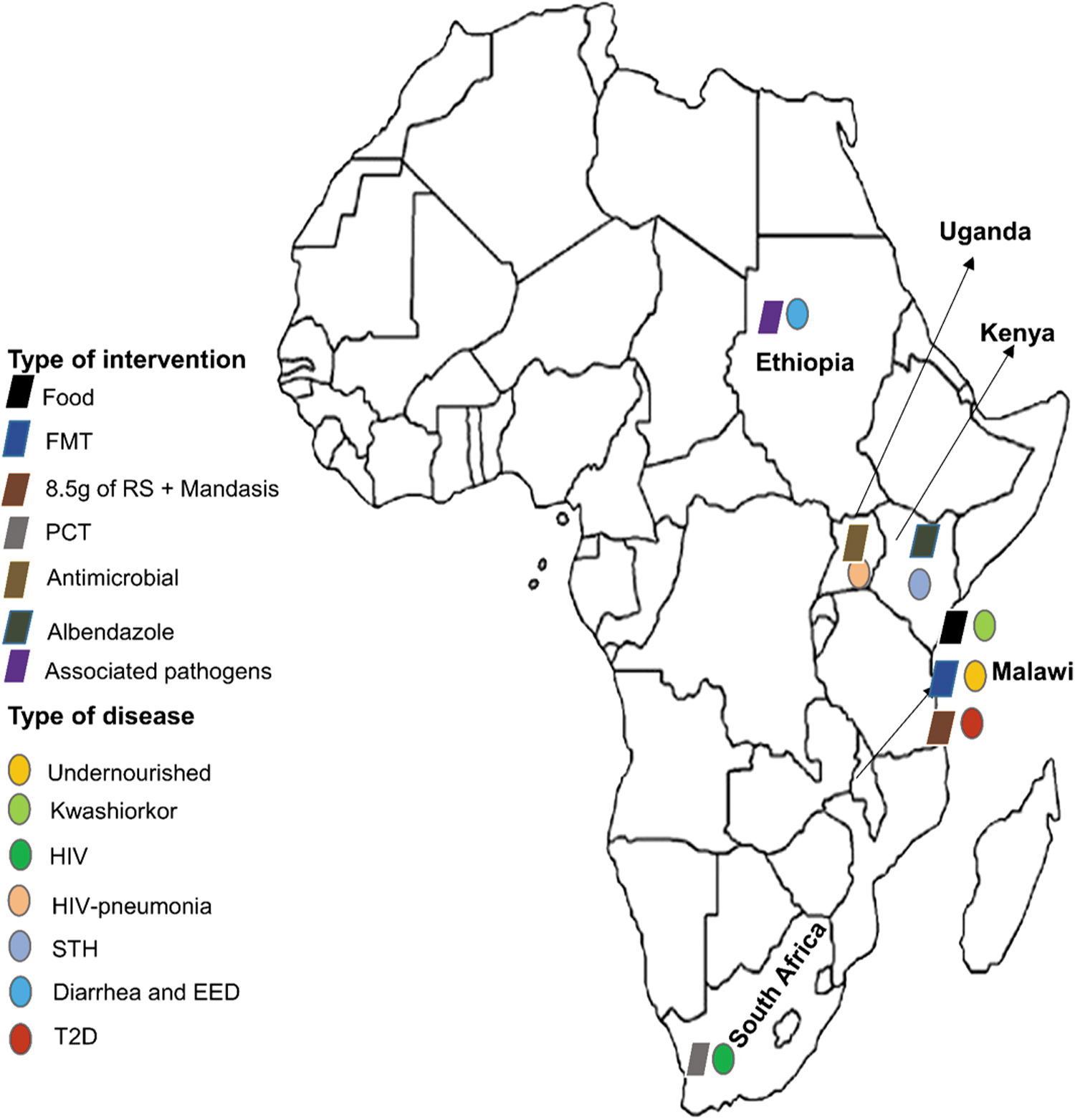
Map of Africa indicating the distribution of various interventions used against various diseases based on gut microbiome analyses performed in Africa. Specific interventions used are color-coded according to disease type. Pregnancy-based research and other non-control-based studies are not included: EED, environmental enteric dysfunction; FMT, fecal microbiota transplant; PCT, prophylactic cotrimoxazole; RS, resistant starch; STH, soil-transmitted helminths.
Kenya's research group used albendazole intervention for soil-transmitted helminths, 27,28 whereas the Ugandan group used antimicrobial intervention for HIV pneumonia. 29 Malawi was reported to have the highest number of intervention-based research, with three different interventions: food for kwashiorkor, 30 fecal microbiota transplant (FMT) for undernourished, 31 and resistant starch (RS) and Mandasis intervention for T2D. 25 In South Africa, prophylactic cotrimoxazole (PCT) intervention was used for individuals with HIV. 32
Figure 6 illustrates the interventions used in gut microbiome research in Africa, including non-control-based studies. These interventions include the use of albendazole (ALB), fresh daily yogurt, and iron-containing lipid-based nutrient supplements.
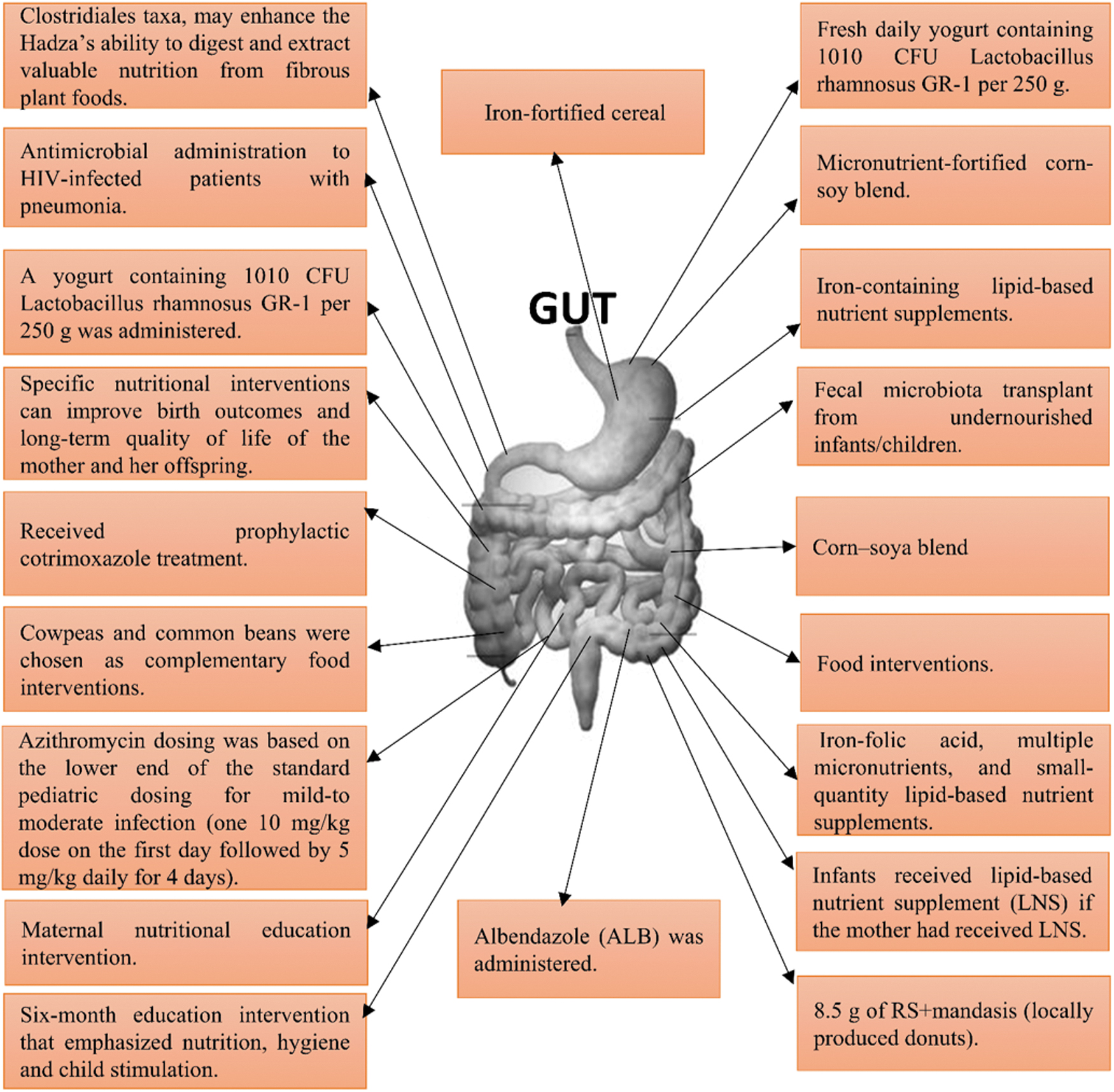
Schematic representation illustrating all types of interventions used in gut microbiome research in Africa. CFU, colony-forming unit.
DISCUSSION
In this study, to evaluate the scope, nature, and characteristics of gut microbiome research in Africa and characterize the regional distribution of the region, target diseases, and intervention type of the gut microbiome studies in Africa, we conducted a scoping review of the literature and assessed the level of evidence about gut microbiome research in Africa, and their potential intervention.
Our findings revealed that the African population involved in the gut microbiome studies are mostly constituted by disease-only studies (70%, Fig. 2a), indicating a larger sample size of this category. In contrast, 42% of African gut microbiome studies were intervention-based studies, (Fig. 2b), reflecting the recent trend of increased intervention research worldwide. 33 It is worth noting that the majority of the countries in which gut microbiome research was performed in Africa are located in West Africa, followed by East and North Africa (Fig. 3). In the South African region, only two countries were reported to conduct gut microbiome research. In contrast, in the case of intervention-involved studies, Eastern African countries have relatively dominated. Although only one country was reported in the West and South Africa, none of the North African region has performed gut microbiome research using interventions.
Regarding diseases involved in the gut microbiome in Africa, many countries performed research on infectious disease such as helminthiasis and HIV as well as T2D (Fig. 4), which remain the leading cause of morbidity and mortality in Africa. 34 –36 This corresponds well to the fact that the African continent is the only continent in the world where the burdens of infectious diseases outweigh those of noncommunicable diseases. 34 In contrast, some noncommunicable diseases of major concern such as cancer and obesity received less attention in Africa, with only Morocco and Egypt performing gut microbiome-based research on colorectal cancer and obesity, respectively. 37,38
This could be related to the low cancer rates in Africa. 39 Moreover, it was remarkably astonishing to observe that not a single African study based on the gut microbiome was performed on any type of neurological disorder, which is in sharp contrast to the trend of research in other parts of the world that study interactions of the gut microbiome with neurological disorders. This finding is of great importance, especially when considering that the African continent comprises 55 countries and is home to >1.3 billion people, emphasizing the need for greater focus on research into the gut microbiome–neurobiology relationship in Africa.
Various interventions have been observed to be used to target diseases in Africa, including food supplementation, FMT, and RS in combination with Mandasis, PCT, antimicrobial therapy, ALB, and associated pathogens (Fig. 5). It is noteworthy that there is diversity in African interventions that cover the whole range of microbiome-based interventions. 40 The use of local foods such Mandasi as a target for T2D is also interesting. Mandasi, a wheat flour fritter, was reported to show a positive effect on improving height-for-age z score among Malawian children. 25 Therefore, research into the development and utilization of traditional African food that modulates the gut microbiome to influence disease could have a prospect in tackling prevalent African challenges, especially those diseases that are associated with malnourishment.
Overall, although there has been an increasing number of African gut microbiome research, there is still a considerable concentration in the region and types of target diseases. Given that African population has a great level of cultural, and ethnic variation, 41 more studies should be conducted in all areas of the continent in a unique way tailored to the local characteristics of each region in the future. The insights gained from this review can help in the design of future studies on the gut microbiome of African populations.
CONCLUSIONS
To evaluate the scope, nature, and characteristics of gut microbiome research in Africa, we identified 205 studies related to the topic and selected 48 articles that met our inclusion criteria. Our analysis found that only 13% of African countries were involved in intervention-based gut microbiome research, with interventions ranging from supplements and natural products to associated pathogens, FMT, and traditional African foods. This scoping review provides an overview of the current state of gut microbiome research in Africa, highlighting research gaps and opportunities for future studies.
Footnotes
ACKNOWLEDGMENTS
We thank the institute for providing us with the funding support.
AUTHORs' CONTRIBUTIONS
Conceptualization and formal analysis by A.Y.M. Funding acquisition by S.L. Supervision by B.B., U.U., and S.L. Data acquisition by A.Y.M., M.M., and B.B. Writing—original draft preparation by M.M. and A.Y.M. Writing—review and editing by A.Y.M. and S.L.
AUTHOR DISCLOSURE STATEMENT
The authors declare no conflict of interest.
FUNDING INFORMATION
This study was supported by the National Research Foundation of Korea (NRF) grant funded by the Korea government (MSIT) (NRF-2020R1A5A8017671 and NRF-2023R1A2C1002934).
SUPPLEMENTARY MATERIAL
Supplementary Table S1