




Abstract
This study researched the mineral composition of Korean washed-dehydrated solar salt (WDS) without bittern. It also evaluated the anticancer effects of doenjang (WDSD) prepared using WDS on azoxymethane (AOM)/dextran sodium sulfate (DSS)–induced colon cancer in C57BL/6 mice. The mineral composition of WDS showed lower Mg (11.71 ± 1.89 g/kg) and S (9.77 ± 2.88 g/kg) contents, and it was confirmed that mice in the WDSD group (AOM/DSS+WDSD) displayed significantly lower weight loss, colon length reduction, and tumor formation compared with the control (Con) group. In addition, pathologically, it was confirmed that the extent of epithelial cell damage and inflammation in the colon tissue of the WDSD group was restored to a state similar to that of the Nor group. Besides, WDSD regulated the protein expression of apoptosis (Bcl-2–associated X protein [Bax], B cell lymphoma-2 [Bcl-2], B cell lymphoma-extra large [Bcl-xL], and caspase 9, caspase 3), and p53, p21, and proinflammatory cytokines (interleukin [IL]-6, tumor necrosis factor [TNF]-α), thereby inducing the apoptosis and cell cycle arrest of cancer cells and suppressing inflammation. In addition, the intestinal microbiota of the mice treated with WDSD were more diverse, with an abundance of Bifidobacterium, a lactic acid bacterium beneficial to colon health, was also a greater presence of Faecalibaculum, which showed antitumor effects. These results indicate that solar salts and their different processing methods affect their functional health-promoting properties. In addition, the inhibitory effect on colon cancer was further enhanced when doenjang was prepared with WDS with low Mg and S content.
INTRODUCTION
Doenjang is a traditional fermented food that uses soybeans as its main ingredient. It is reported to have various functional properties, which include anticancer, 1 anti-obesity, 2 and antihypertension 3 effects. Doenjang is made by steaming and boiling soybeans to make Meju and adding brine. 4 Several microorganisms are involved in the fermentation. 5 These microorganisms convert genistin, daidzin, and glycitin contained in soybeans into useful highly absorbable aglycone 6 forms through fermentation and exhibit various health-promoting functional properties. 7,8
Salt is an essential ingredient in doenjang production. 9 In particular, the mineral components of salt affects the activity of doenjang microorganisms and are related to the taste and health effects. 10 Salt may be classified into purified salt (PS), solar salt, and so on, and differences in the manufacturing method result in differences in mineral contents. 11 PS is manufactured by the ion membrane permeation technique, resulting in a high purity exceeding 99% NaCl. 12 On the contrary, solar salt is formed naturally, and crystallized using the sun and wind. 13 Unlike PS, solar salt is known to contain not only sodium (Na) but also various minerals such as iron (Fe), magnesium (Mg), calcium (Ca), and potassium (K). 13 Owing to these characteristics, Korean solar salt is known to have significant anticancer 14 and anti-obesity 15 effects compared with PS.
Traditionally, the manufacture of Korean fermented foods has involved the removal of bittern through a 3-years aging process salt. 16 But currently, salt without bittern is manufactured through a process of washing and dehydration before it is used. 17 After washing and dehydration, the magnesium content, the main component of bittern, is reduced by more than half 18 ; also, because of this when making kimchi 18 or ganjang, 19 the use of washed-dehydrated solar salt (WDS) improves the flavor and provides enhanced health benefits. Thus, the choice of salt is important when manufacturing traditional fermented foods.
This study evaluated the mineral content of various salts according to the manufacturing process, namely, PS, generally manufactured solar salts (GS), and WDS. In addition, doenjang was prepared using various kinds of salts, which was administered to mice with azoxymethane (AOM)/dextran sodium sulfate (DSS) to induce colon cancer to establish a model for investigating its potential anticancer effects.
MATERIALS AND METHODS
Doenjang preparation
Doenjang was prepared in the ratio of 1:1:4 (wt:wt:wt) of Meju (fermented soybeans):salt:water based on the standardization study of Park et al. 20 Grain-type Meju (Alali Foods Co., Goryeong, Korea), and three types of salts, namely, PS (Ulsan, Korea), GS, and WDS were used. The two types of solar salts were provided by T Salt Farm (Shinan, Korea).
Meju was prepared by soaking and steaming soybeans, adding Aspergillus oryzae (0.02% w/w), and fermenting it at 37°C for 48 h. Then, 3 kg of the mixture was placed in a mesh with brine made by mixing 12 kg of water and 3 kg of salt and fermenting at 34°C for 4 months. After fermentation, the ganjang (liquid phase) and doenjang (solid phase) were separated. PS doenjang (PSD), GS doenjang (GSD), and WDS doenjang (WDSD) were prepared and used for this study.
Analysis of the mineral content of salts using inductively coupled plasma optical emission spectrometer
Mineral analysis was conducted using an Optima 8300 inductively coupled plasma optical emission spectrometer (ICP-OES; PerkinElmer, Waltham, MA, USA). The instrument was operated at a power of 1.5 kW, utilizing a Mira mist® nebulizer, with a plasma gas flow rate of 12.0 L/min, an auxiliary gas flow rate of 0.2 L/min, and a nebulizer gas flow rate of 0.55 L/min. 15
Study of the in vivo anticancer effects of doenjang
This experiment was conducted with the approval obtained from the Animal Ethics Committee of Cha University (IACUC200004). C57BL/6 mice (male, 6 weeks) were purchased from Orient Bio (Sungnam, Korea), which were housed in specific pathogen-free room (Cha Bio complex, Sungnam, Korea) and had access to food (DooYeol Biotech, Seoul, Korea) and water ad libitum. After 1 week acclimation, the mice were divided randomly into five groups (n = 8 per group): (1) AIN-93G diet group (Normal, Nor); (2) AIN-93G diet and induced colorectal cancer (CRC) by AOM/DSS group (Control, Con); PSD diet and induced CRC by AOM/DSS group (PSD); GSD diet and induced CRC by AOM/DSS group (GSD); WDSD diet and induced CRC by AOM/DSS group (WDSD). The doenjang samples were freeze-dried and ground into powder, then added to the AIN-93 diet at a ratio of 10%, respectively. 21
Colon cancer was induced by a single intraperitoneal administration of 10 mg/kg AOM (Sigma-Aldrich Co., St. Louis, MO, USA), and 2 weeks after AOM injection, 2% DSS (Reagent grade, M.W. 36,000–50,000; MP Biomedicals, LLC, Illkrich, France) diluted with water was provided for drinking for 7 days at 2 and 5 weeks. After the end of the experiment (8 weeks) all mice were fasted for 12 h and killed.
Body weights of the mice were assessed on a weekly basis throughout the 8 weeks. To minimize potential errors, consistent protocols were performed, including the use of the same scale, measurement conducted on the same weekday (Thursday), and at the same time (10 a.m.).
Measurement of colon length, number of tumors, and histological analysis of colon tissue
After the experiment, the colon tissue was removed and the length and the number of tumors were measured. A shorter length of the colon indicated colon cancer development caused by tumorigenesis. Furthermore, the degree of colon cancer occurrence was assessed by measuring the tumor numbers present in the colon. Colon tissues for histological analysis were washed with phosphate-buffered saline (PBS), then they were fixed in 10% formalin, and embedded in paraffin block. Each of the sections were sliced into 5 μm thickness, then, tissue sections were stained with hematoxylin and eosin (H&E). 22 The sections were observed using a Nikon Microscope ECLIPSE 50i (Nikon, Inc., Tokyo, Japan) equipped with an infinity camera (SPOT RT741 Slider Color; Diagnostic Instruments, Sterling Heights, MI, USA).
Measurement of cancer-related protein expression levels
The colon tissue specimens were sliced into 1 cm sections, followed by lysis using a radio-immunoprecipitation assay (Invitrogen, Carlsbad, CA, USA) buffer, and centrifuged at 13,572 g for 15 min to collect the supernatant containing the isolated proteins. This experimental procedure was conducted under ice-cold conditions. 23 The protein concentration was quantitated using a BCA protein assay dye reagent (Thermo Fisher, Waltham, MA, USA), mixed with an equal volume of the Laemmli sample buffer (Bio-Rad, Hercules, CA, USA), and reacted at 95°C for 10 min. The proteins were separated by SDS-PAGE and were subsequently transferred to PVDF membranes (Bio-Rad). Following the transfer, the PVDF membranes were blocked with 5% skim milk for 1 h, followed by washing with PBS-T and PBS. 24
Membranes were then captured using the primary antibodies Bax, Bcl-2, Bcl-xL, caspase 9, cleaved-caspase 3, p53, p21, interleukin (IL)-6, tumor necrosis factor (TNF)-α, and α-Tubulin (SantaCruz Biotechnology, Dallas, TX, USA) overnight. A second antibody (SantaCruz Biotechnology) was added and incubated for 1 h. Images were obtained after chemiluminescence using ECL (Bio-Rad) and sensitized with Amersham Imager 680 (GE Healthcare Bio-Sciences AB, Uppsala, Sweden) for subsequent analysis.
Gut microbiota analysis of mice
DNA extraction was performed utilizing the DNeasy PowerSoil Pro kits (MOBIO, Carlsbad, CA, USA) following the guidelines provided by the manufacturer. Each sequencing sample was processed following the standard protocols of the Illumina 16S Metagenomic Sequencing Library. DNA quantification and quality were measured by the picogreen and nanodrop assays. The 16S rRNA genes were amplified using 16S V3–V4 primers (Forward: 5′-TCG TCG GCA GCG TCA GAT GTG TAT AAG AGA CAG CCT ACG GGN GGC WGC AG; Reverse: 5′-GTC TCG TGG GCT CGG AGA TGT GTA TAA GAG ACA GGA CTA CHV GGG TAT CTA ATC C). The input gDNA samples were amplified using 16S V3–V4 primers, followed by a limited cycle, which was performed to add multiplexing indices and Illumina sequencing adapters.
The final results were normalized and pooled using picogreen, and the library sizes were verified using the LabChip GX HT DNA High Sensitivity Kit (PerkinElmer) and sequenced using the MiSeq™ platform (Illumina, San Diego, CA, USA). 25
Statistical analysis
All experimental results were reported as mean ± standard deviation. Duncan's multiple range tests and one-way analysis of variance were used to determine significant intergroup differences. Statistical analysis was performed using the IBM SPSS version 23.0 (SPSS, Inc., Chicago, IL, USA). Significance of the experimental results was tested at the P < .05 level.
RESULTS AND DISCUSSION
Mineral composition analysis of salt by ICP-OES
The mineral composition of the salts used to make doenjang in this study was measured using an ICP-OES. Three kinds of salt were evaluated: PS, GS, and WDS. As given in Table 1, the mineral composition was dependent on the different processing methods used to manufacture the salt. In the PS sample, the main mineral was Na (827.47 ± 0.13 g/kg), but GS and WDS were found to contain various other kinds of minerals apart from Na. Specifically, the Mg (11.71 ± 1.89 g/kg), and S (9.77 ± 2.88 g/kg) contents of WDS were more than twofold lower than those in GS. This result was similar to an earlier study, which observed that the Mg content of WDS was similar to that of 3-years aged solar salt, 26 and the Mg and S contents were half that of various types of solar salt. 18
Proportion of Minerals in the Salt Samples Determined by Inductively Coupled Plasma Optical Emission Spectrometer
ns, no significance.
Mean values with different letters in each row are significantly different (P < .05) by Duncan's multiple range test.
GS, generally manufactured solar salt; PS, purified salt, WDS, washed-dehydrated solar salt.
Better quality doenjang has a higher amino-type nitrogen and a lower ammonia-type nitrogen content. 27 Compared with PSD, doenjang made with solar salt (GSD, WDSD), and especially WDSD, showed significantly higher amino-type nitrogen (1577.80 ± 13.79 mg%) and lower ammonia-type nitrogen content (245.64 ± 16.71 mg%) (data not shown). In an earlier study, 28 in the WDSD, soy isoflavones such as genistein, daidzein, and glycitein, and functional anticancer, 29 and anti-inflammatory 30 substances such as soyasaponin B and ganoderol B were detected. It is believed that the various minerals in solar salt affect microbial activity 31 and the taste, and enhance the functional properties of doenjang. Yoon et al. 32 also reported that better quality doenjang prepared with 4-years aged solar salt, with a rather low Mg content showed enhanced anticancer effects compared with other samples by suppressing the cancer cell growth rate by >50% in human gastric adenocarcinoma cells and CRC cells (HT-29).
Therefore, it is believed that solar salts have different functionalities depending on the manufacturing process. Specifically, salt in which Mg content has been reduced by removing the bittern through washing and dehydration may be used to manufacture doenjang with improved taste and functionality.
Body weights of the mice
The results of measuring the body weight of the mice are given in Figure 1. The all mice average weight before the experiment was 20 ± 2 g, exhibiting no difference between the groups. In the Nor group, in which colon cancer was not induced, the body weight tended to increase during the experimental period.
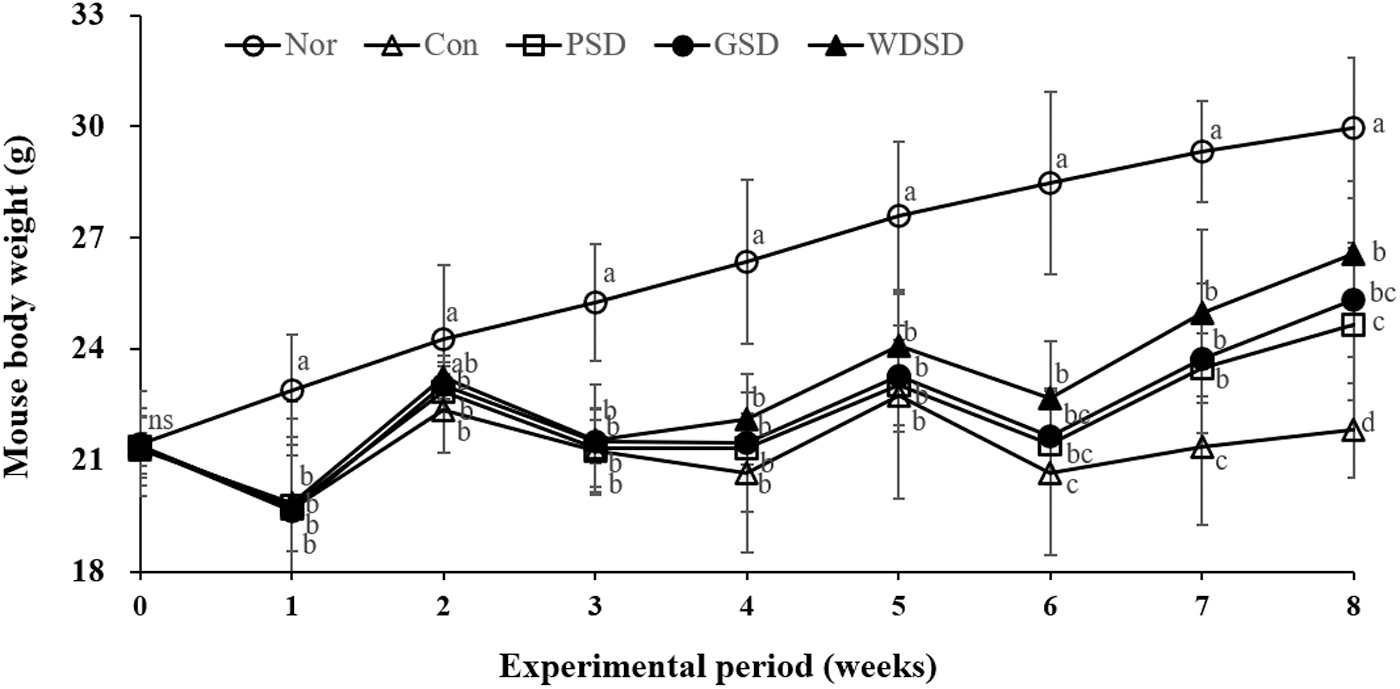
Effects of doenjang on the body weight of C57BL/6 mice with AOM/DSS-induced colon cancer. Nor: AIN-93G, Con: AOM/DSS + AIN-93G, PSD: AOM/DSSS + 10% PSD with AIN-93G, GSD: AOM/DSS + 10% GSD with AIN-93G, WDSD: AOM/DSS + 10% WDSD with AIN-93G. ns, no significance; a–dMean values with the different letters at the same experimental period are significantly different (P < .05) by Duncan's multiple range test. AOM, azoxymethane; DSS, dextran sodium sulfate; GSD, generally manufactured solar salt doenjang; PSD, purified salt doenjang; WDSD, washed-dehydrated solar salt doenjang.
AOM/DSS is a method of inducing CRC by causing chronic inflammation in a short period of time, 33 and cancer-induced mice exhibit bloody stools and diarrhea and lose weight. 34 In the Con, PSD, GSD, and WDSD groups, the weight of the mice decreased, confirming the induction of colon cancer by AOM/DSS.
Mouse colon length, number of tumors, and histological analysis of the colon tissue
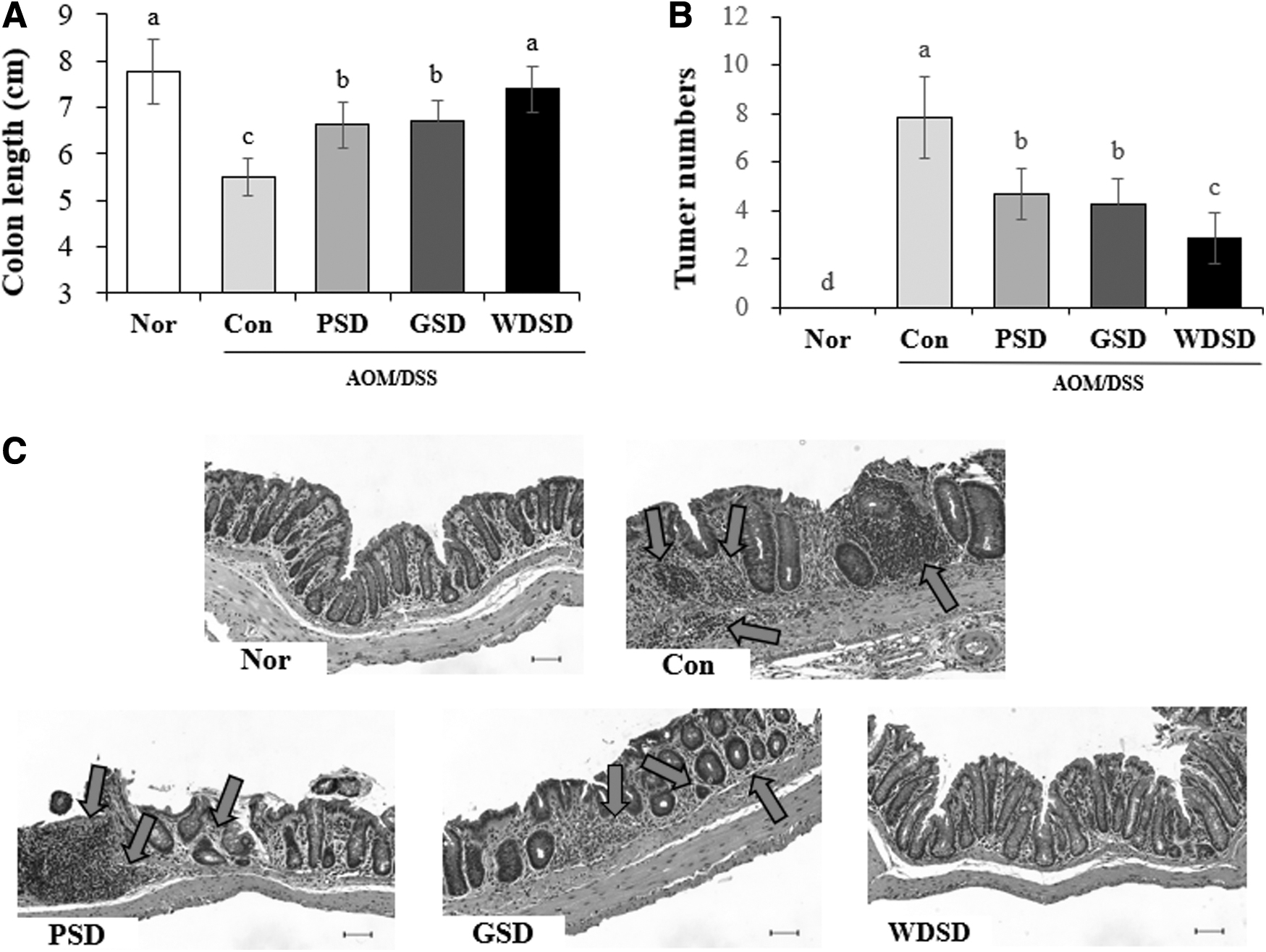
When the colon is inflamed, the colon length is shortened owing to epithelial tissue damage and mucosal contraction. 35 This process is repeated, leading to contraction of the colon length and formation of tumors. 36 The colon length of the Con group (5.34 ± 0.39 cm) treated with AOM/DSS was significantly decreased compared with that of the Nor group (7.91 ± 0.60 cm), confirming that cancer was induced (P < .05). However, the colon length of the doenjang treated group was significantly longer than that of the Con group (P < .05) (Fig. 2A).
Effects of doenjang on change in
The number of tumors was also significantly higher in the Con group, at 7.75 ± 1.58, and a decrease was observed with the consumption of doenjang (P < .05) (Fig. 2B). Specifically, the colon length of the WDSD group was 7.45 ± 0.49 cm, which was similar to that of the Nor group, and also the number of tumors (2.63 ± 1.19) was significantly lower, indicating that it is possible to produce doenjang with significant anticancer effects. In an earlier study, 19 the length of the colon in the group that consumed ganjang with WDS (aWDG) was 8.0 ± 0.1 cm, similar to that of the normal group, and the number of tumors (2.6 ± 1.4) was significantly lower, reflecting the inhibitory effect on AOM/DSS-induced CRC. In addition, it was confirmed that kimchi made with solar salt from which bittern was removed had excellent anticancer 11 and anti-obesity 26 effects compared with kimchi made with other solar salts. Therefore, doenjang prepared with solar salts from which the bittern is removed through washing and dehydration exhibits a higher cancer prevention effect than when it is produced with PS or GS.
Colon cancer is characterized by tumor cell accumulation, cell and mucosal layer destruction, extensive inflammatory cell infiltration, and so on, 15 and morphological changes are observed. 16 Therefore, histological analysis of the colon tissues of each group was performed (Fig. 2C).
The Nor group showed normal colonic mucosal and epithelial morphology. In addition, cell morphology was normal. However, in the Con group, it was observed that the mucous membranes and cell structures were destroyed, there was extensive infiltration of inflammatory cells, and multiple tumors were seen in the mucosa and submucosa. In the PSD and GSD groups, also, mucosal damage, cell structure destruction, and tumors occurred, but in the WDSD group, colon tissue recovered to a state similar to that of the Nor group, confirming that colon health had improved (Fig. 2C). The reason for this result appears to be the mineral composition of solar salt that affects health functionality. 14 It was confirmed in the obesity and cancer complex model in an earlier study that the colon health of the mice in the WDSK (washed-dehydrated solar salt kimchi) group had significantly improved compared with those of the other solar salt groups. 37
Therefore, it can be concluded that the use of WDS with lower levels of Mg and S would enhance its functionality in fermented foods.
Protein expression of apoptosis-related genes in mouse colon tissue
The Bcl-2 gene family is closely related to apoptosis, and Bax induces apoptosis. 38 However, Bcl-2 and Bcl-xL are anti-apoptotic, suppressing cell death and causing cancer. 39
The protein expression of Bax was higher in the group that consumed doenjang than the Con group, and in the WDSD group, the expression level was 4–4.5 times higher than that in the Con and PSD groups (P < .05) (Fig. 3), and 1.5 times higher than that in the GSD group (P < .05). Bax expression is associated with the inhibition of colorectal tumor development, 40 and based on these results, it is believed that Korean solar salt-based doenjang, especially WDSD, can partially promote Bax expression and inhibit colon tumors. Bcl-2 showed similar expression levels in the Con and PSD groups. However, significantly lower expression levels were seen with doenjang prepared using solar salts (P < .05), and the WDSD group specifically showed a 4.3-fold lower expression than the GSD group (Fig. 3).
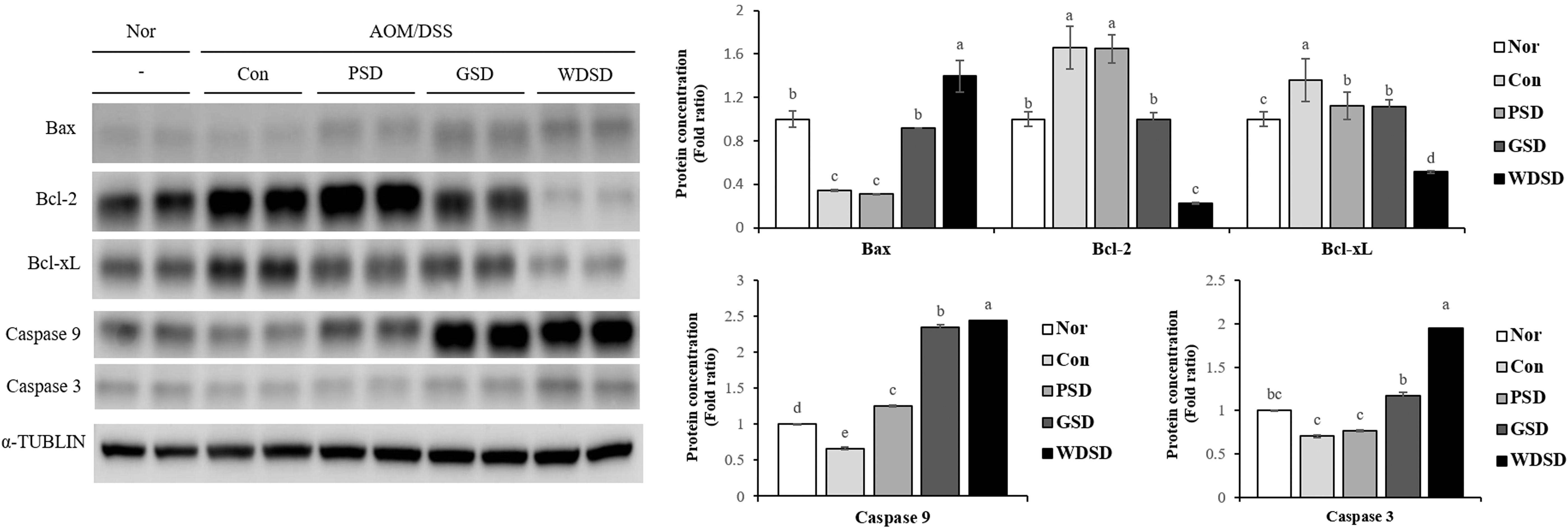
Effects of doenjang on the protein expression of apoptosis-related genes in the colon of C57BL/6 mice with AOM/DSS-induced colon cancer. Nor: AIN-93G, Con: AOM/DSS+AIN-93G, PSD: AOM/DSS +10% PSD with AIN-93G, GSD: AOM/DSS +10% GSD with AIN-93G, WDSD: AOM/DSS +10% WDSD with AIN-93G. a–eMean values with different letters on the bars are significantly different (P < .05) by Duncan's multiple range test.
The expression of Bcl-xL was also significantly higher in the Con group and lower in the group that consumed doenjang (P < .05). It was also significantly lower (2.1 times) in the group consuming with WDSD than the PSD and GSD group (Fig. 3).
The caspase gene also induces apoptosis, 41 and the protein expression of caspase 9 was high in the doenjang groups, especially in the WDSD group compared with the Con (4.0 times), PSD (2.0 times), and GSD (1.0 time) groups (P < .05) (Fig. 3). Expression of cleaved-caspase 3 was also significantly higher in the WDSD group than the Con (2.8 times), PSD (2.5 times), and GSD (1.7 times) groups (Fig. 3).
Several factors are involved in apoptosis, but the Bcl-2 family plays the most important role. 42 Regulation of the expression of Bcl-2 family genes is also associated with caspase gene expression and consequently affects cancer cell death. 43 Therefore, this result showed that doenjang prepared with WDS enhanced the expression of Bax, caspase 9, and cleaved-caspase 3, and relatively reduced the expression of Bcl-2 and Bcl-xL, activating the induction of apoptosis and inhibiting colon cancer.
Protein expression of p53, p21, and proinflammatory cytokines-related genes in mouse colon tissue
p53 activated by DNA damage or reactive oxygen species is known as a tumor suppressor gene, 44 and can even induce apoptosis. 45 p21 is involved in the suppression of cell proliferation in the G1 phase of the cell cycle, and is also involved in the suppression of the growth of malignant tumor cells, cell differentiation, aging, and so on. 46
The results of evaluating the protein expression levels of p53 and p21 in mouse colon tissue (Fig. 4A) showed that the levels of p53 protein expression in the Con, PSD, and GSD groups were similar, but the WDSD group showed a significantly higher expression. The expression level was 1.4 times higher than that of the PSD and GSD group. The p21 protein expression was significantly lower in the Con group compared with the PSD and GSD groups. In the GSD group, expression was 1.4-fold that of the PSD group, but 2.1-fold lower than that of the WDSD group. This indicates solar salts have different functionalities depending on the manufacturing process. Specifically, in the WDSD group, both p53 and p21 showed significantly high protein expression levels, and it is believed that the cell cycle leading to CRC was arrested and cell proliferation was inhibited.
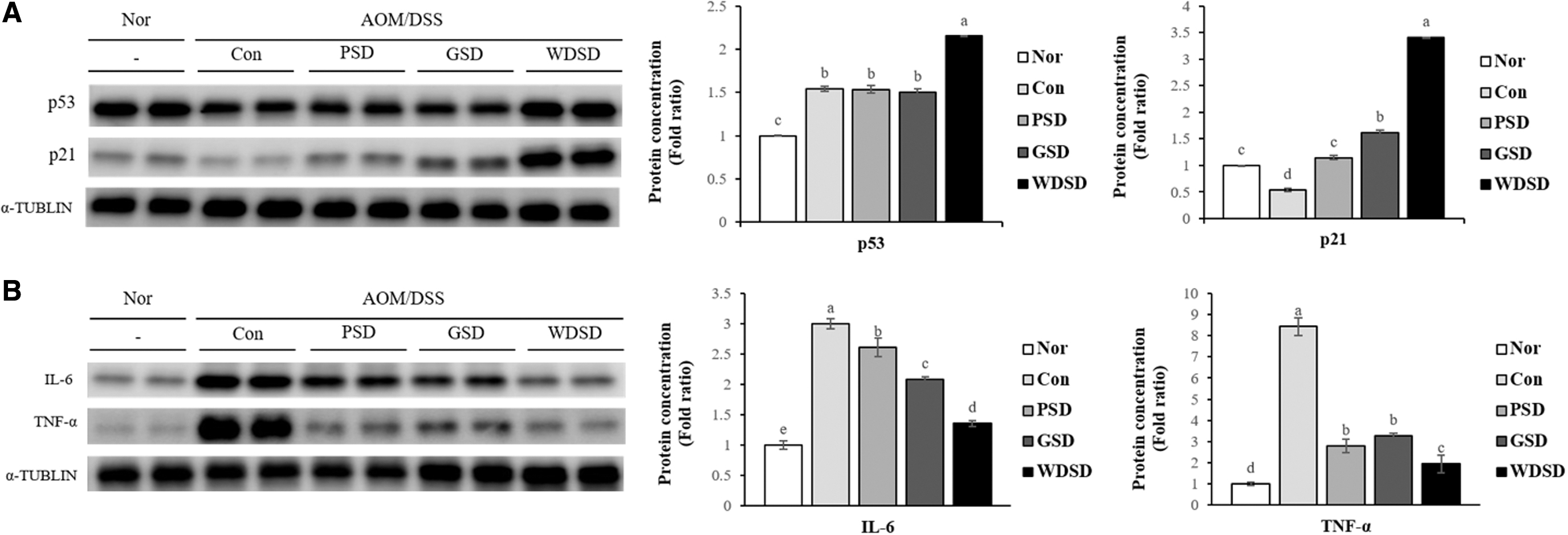
Effects of doenjang on the protein expression of cell cycle arrest
Therefore, WDSD not only enhanced the induction of apoptosis but also seemed to have an inhibitory effect on colon cancer by inducing cell cycle arrest by enhancing the expression of p53 and p21. A study by Yu et al. 18 also reported that kimchi prepared with washed and dehydrated solar salt showed a high inhibition rate of HT-29 cancer cell growth through the regulation of genes involved in apoptosis and cell cycle arrest.
Proinflammatory cytokines play a significant role in inflammatory diseases, 47 and induce inflammation associated with the progression of colitis and colon cancer. 48 Therefore, they are biomarkers of inflammation in inflammatory diseases and cancer.
The protein expression of proinflammatory cytokines in the colon tissue is given in Figure 4B. The expressions of IL-6 and TNF-α proteins were significantly elevated in the Con group compared with the Nor group, and the expressions in all doenjang (PSD, GSD, and WDSD) groups were lower than that of the Con group. In the case of IL-6 expression, it was two times lower than PSD in the GSD and WDSD groups. The TNF-α expression in the WDSD group was markedly reduced by 4.4 times compared with the Con group, and the expression was 1.4-fold and 1.6-fold lower than that of PSD and GSD groups, respectively (P < .05) (Fig. 4B).
The induction of colon cancer by AOM/DSS increases proinflammatory cytokines such as TNF-α and IL-6, which are highly expressed in inflamed or cancerous tissues. 49 The intake of doenjang significantly reduces the inflammation and specifically doenjang prepared with WDS can effectively alleviate the inflammation caused by cancer. Removing bittern through the washing and dehydration process controls the content of Mg and S resulting in an enhanced functionality. In our previous study, traditional foods such as kimchi 18 and ganjang 19 prepared using WDS, in which Mg and S content was controlled through the removal of bittern, showed quality improvement and an enhanced anticancer effect through the regulation of apoptosis gene expression.
Therefore, it can be concluded that the use of sea salt from which the bittern has been removed through washing and dehydration, like the traditionally used 3-years aged solar salt, has an important bearing on the CRC prevention effects of doenjang.
Analysis of the gut microbiota
Intestinal microbes are known to be closely related to the alleviation or exacerbation of inflammatory responses. 50 Therefore, next-generation sequencing was performed to understand how WDSD affects the gut microbial community.
The analysis of the microbial community at the phylum level revealed the presence of Bacteroidetes and Firmicutes (Fig. 5A). Bacteroidetes are the predominant species found in inflammatory bowel disease 51 and CRC 52 patients. They promote inflammatory responses by increasing the expression of TNF-α and IL-6. 53 In contrast Firmicutes increases the expression of anti-inflammatory cytokines and suppresses inflammation. 53 Studies have shown increases in Bacteroidetes and decreases in Firmicutes in CRC or colitis. 54,55 The results of this study showed that the abundance of Bacteroidetes was 28.60% in the Con group with colon cancer, which was higher than the Nor group at 14.02% and the WDSD group at 6.44%. The corresponding level of Firmicutes was 29.50% in the Con group, which was lower than that of the Nor group (76.97%) and the WDSD group (57.55%).
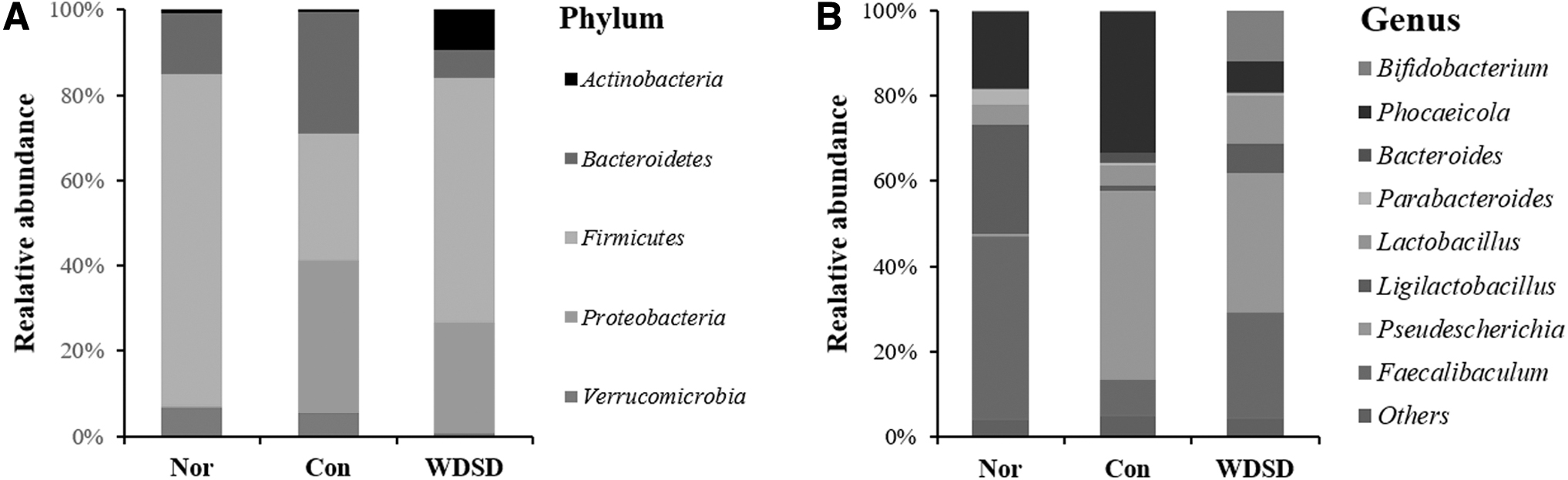
The composition of gut microbiota at the phylum
The ratio of Bacteroidetes to Firmicutes increased by ∼5 times in the Con (96.4%) group compared with the Nor group (18.2%), but the consumption of WDSD tended to decrease this ratio. In addition, in the case of WDSD, the ratio of Actinobacteria (9.48%) was higher than that of the Nor (0.90%) and Con (0.59%) groups. Actinobacteria are also associated with lower inflammation 53 and are the dominant bacteria in the marine environment. 56 This increase in Actinobacteria seen in the WDSD group could be attributed to the use of seawater in the production of WSD.
At the genus level (Fig. 5B), WDSD showed more diverse microbial groups than those in Con, and Bifidobacterium, Lactobacillus, and Faecalibaculum were the dominant genera. The abundance of Bifidobacterium was 9.28% in the WDSD group, which was higher than those in the Nor group (0.24%) and the Con group at (0.23%). Lactobacillus at 8.70% was also higher in the WDSD group, compared with the Con group (3.85%). Faecalibaculum was 27.76% and 19.56% in the Nor and WDSD groups, respectively, higher than that in the Con group (6.84%). Bifidobacterium is a probiotic belonging to the phylum Actinobacteria and is known to prevent infections by producing short-chain fatty acids (SCFAs) such as acetic acid. 57 Lactobacillus and Faecalibaculum are bacteria belonging to the phylum Firmicutes, and all of them increase the production of SCFAs, which are known to reduce inflammation, 57 prevent infection by pathogens, and inhibit tumor cell proliferation. 58
Thus, this study confirmed that the intake of WDSD restores the balance of the intestinal microbial flora from one that is characteristic of disease states such as colon cancer and restores it to a more normal state with increases beneficial bacteria such as Bifidobacterium, Lactobacillus, and Faecalibaculum.
In this study, solar salt was washed and then dehydrated and had the bittern removed, thereby leading to a reduction in Mg content. The in vivo experiment was conducted with doenjang prepared using this salt (WDSD) and confirmed that it inhibited the proliferation of colon cancer cells and reduced severe damage and inflammation to the colon epithelial cells that are caused by cancer. It has been shown that WDSD effectively inhibits the development and growth of cancer cells by regulating the expression of various genes related to apoptosis, cell cycle arrest, and inflammation. In addition, it was found that the imbalance in the intestinal flora following colon cancer was restored, with an increase in the abundance of beneficial bacteria. The beneficial bacteria are effective in combating inflammation and suppressing tumor formation, thereby preventing colon cancer and maintaining colon health.
These results are a kind of a Korean paradox, 59 and it is believed that appropriate Mg and S content is established by the washing and dehydration process and the various other mineral components of solar salt affect the growth of microorganisms and contribute to the production of various physiologically active substances in doenjang.
Footnotes
AUTHORs' CONTRIBUTIONS
S.-Y.L.: Conceptualization, methodology, validation, formal analysis, data curation, writing—original draft. G.-H.H.: Validation, data curation, visualization. J.H.C.: Writing—review and editing. K.-Y.P.: Conceptualization, writing—review and editing, resources, supervision, project administration.
AUTHOR DISCLOSURE STATEMENT
No competing financial interests exist.
FUNDING INFORMATION
This work was supported by the Gyonggi Regional Research Center (GRRC) program of Gyeonggi Province (Grant GRRC-CHA2017-B03, Development of Functional Kimchi and Taemyeongcheong Beverage as a Functional Food and Dietary Supplement).