




Abstract
The global prevalence of diabetes and its related complications has increased drastically and is currently a worldwide health challenge. There is still an urgent need for safe and effective natural products and supplements as alternative and/or adjunctive therapeutic interventions. Nowadays, people pay more and more attention to the nutritional and medicinal value of food ingredients. As one of the most widely employed spices in cooking, pepper also has novel medicinal values attributed to its main component, piperine (Pip). Pip is an amide alkaloid with pleiotropic properties such as anti-inflammatory, antioxidant, anti-cancer, and other related activities. Recently, Pip has received increasing scientific attention due to its antidiabetic and related complication properties. However, the values of existing studies are limited due to being scattered and unsystematic. The present study reviewed the therapeutic potential and possible mechanisms of Pip in diabetes and related complications, with the aim of providing promising candidates for the development of novel and effective alternative and/or adjunctive nutraceutical agents for the management of diabetes.
Introduction
Diabetes mellitus (DM) is a chronic endocrine metabolic disease characterized by a persistent state of abnormally elevated hyperglycemia, with typical clinical manifestations such as polydipsia, polyphagia, polyuria, and weight loss. 1,2 DM is an increasing global public health threat. The latest report from the International Diabetes Federation (IDF) states that more than 500 million people worldwide are living with DM, which means that more than 10.5% of adults worldwide have this condition, and the global prevalence of diabetes is expected to rise to 12.2% by 2045, reaching 783.2 million people. 3
The spurt in DM prevalence is placing a heavy economic burden on the global economy. Global health expenditure costs associated with DM are estimated to be up to $966 billion in 2021 and are expected to reach $1054 billion by 2045. 3 In addition, the cost of treating diabetic microvascular and macrovascular-related complications further drives the global economic burden. 4
Long-term hyperglycemia could damage the tissues and organs of the whole body, and then cause a host of serious complications, such as diabetic nephropathy (DN), diabetic retinopathy (DR), cardiovascular disease (CVD), etc. These complications bring numerous negative effects on the lives of diabetic patients and even threaten their life and health. 5,6
Currently, exogenous insulin, metformin, sulfonylureas, recombinant dipeptidyl peptidase IV inhibitors, glucagon-like peptide-1 (GLP-1) analogs, etc. are widely used in the treatment of DM. 7,8 Unfortunately, although these hypoglycemic drugs are effective in regulating hyperglycemia, the side effects and safety issues seriously affect patient compliance, such as hypoglycemia, gastrointestinal discomfort, hepatic and renal toxicity, and cardiac problems. 9 –11
Moreover, they do not completely prevent or delay the progression of diabetic complications. Therefore, the development of safe and effective natural hypoglycemic drug molecules has great potential and clinical significance in the treatment of diabetes and its complications.
Recently, bioactive compounds of plant or food origin, especially alkaloids, have shown promise as hypoglycemic agents for diabetes management in animal and human studies. 12,13 Piperine (Pip), an alkaloid with multiple pharmacological effects, is naturally found in black, green, and white pepper. The primary route of human exposure to Pip is via diet, and exposure depends on dietary patterns and net consumption of Pip-containing diets.
It was estimated that a person consumes about 1 pg/kg of Pip per day. 14 Several clinical trials have shown that the consumption of peppers reduces the incidence of several chronic diseases, given the spice's pleiotropic properties, particularly on glucose metabolism and energy regulation. A randomized controlled trial (RCT) of 16 healthy subjects found that consumption of a black pepper-based beverage moderated overall acute appetite by decreasing “hunger,” “desire to eat” and “anticipatory consumption.” 15
In addition, a meta-analysis that included 8 trials with 530 subjects showed that supplementation with peppers significantly lowered blood glucose in people over the age of 40. 16 Over the past two decades, as the main ingredient in pepper, Pip has also received extensive attention from medicinal chemists and health experts for its beneficial nutritional and therapeutic effects. 17
A plethora of in vitro and in vivo studies have shown that Pip has many pharmacological effects such as analgesic, antioxidant, anti-inflammatory, anticonvulsant, and insecticidal, etc. 18,19 In addition, Pip is recognized to have efficacious anti-hyperglycemic activity and may enhance the hypoglycemic effect of other drugs in diabetic mice. 20,21 Not only that, but Pip has also shown powerful potential in anti-diabetes and its complications. However, the pharmacological properties of Pip and its mechanism of action on the effects of diabetes and its complications still deserve in-depth investigation.
This review presents a detailed summary of the effects of Pip on diabetes and related complications, aiming at providing a reference for the development and application of Pip as a nutraceutical agent or basic functional food used in the treatment of diabetes and its complications.
Background Information on Piperine
Structure of piperine
Piperine, an amide alkaloid, exists abundantly in the fruits and roots of black pepper (Piper nigrum Linn.) and long pepper (Piper longum Linn.), with the IUPAC name of (2E,4E)-5-(1,3-benzodioxol-5-yl)-1-piperidin-1-ylpenta-2,4-dien-1-one. 22 Chemically, Pip consists of three substituents (a piperidine ring containing an α-β-unsaturated carbonyl group, 1,3-benzodioxy, and a butadiene chain), moreover, it possesses three geometric isomers owing to the presence of a conjugated double bond structure in the butadiene chain. 23 The structure of Pip is shown in Figure 1.
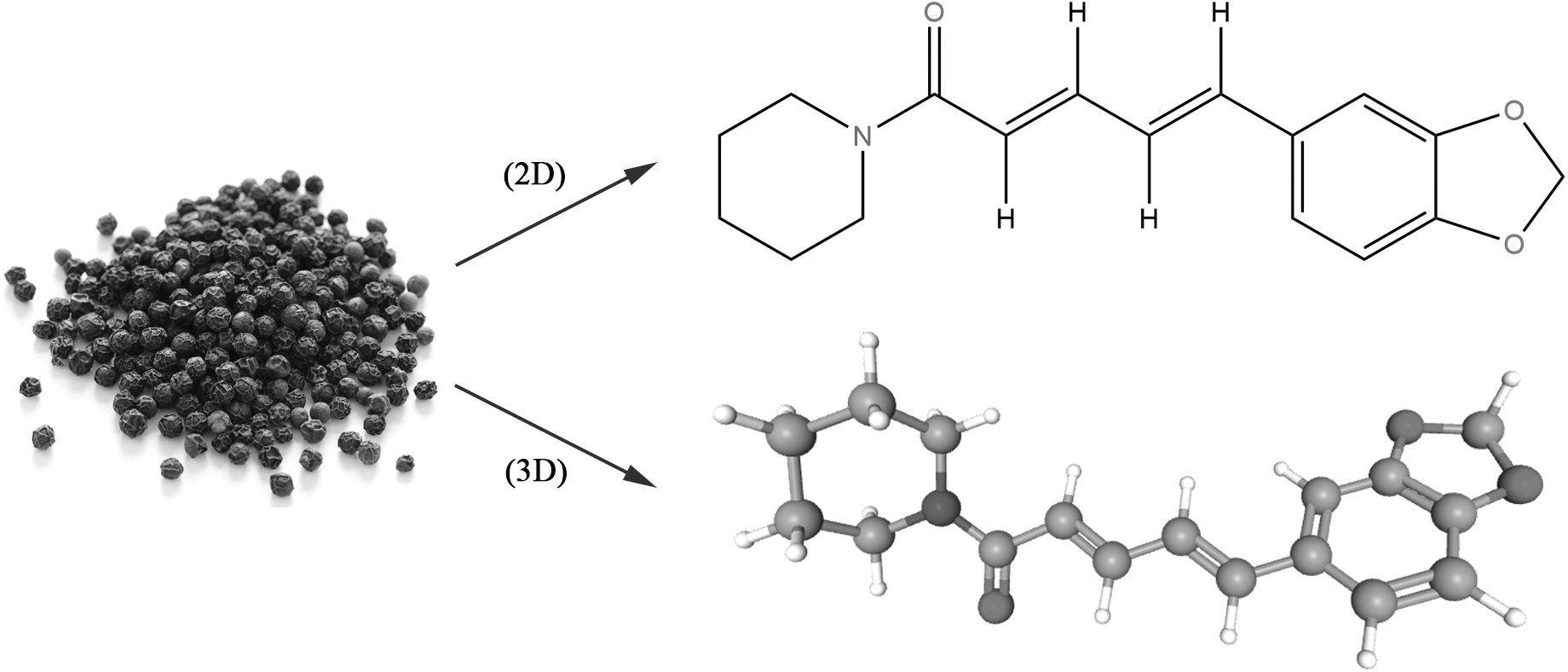
The skeletal formula and 3D stick representation of piperine. 3D, three-dimensional.
Pharmacokinetics of piperine
Characterization of pharmacokinetic properties is fundamental for drug development and administration. Hence, the investigations of the absorption, distribution, metabolism, and excretion (ADME) of Pip would be instrumental in monitoring its possible effects on various lifestyle-related diseases. Liu et al. investigated the pharmacokinetics of Pip.
After oral administration of Pip to Sprague Dawley rats, the pharmacokinetic analysis showed that Pip peaked after 2.45 ± 2.12 h. The mean plasma concentration (CMax) of Pip was 4292 ± 967 ng/mL, and elimination half-life (t1/2) and the average area under the plasma concentration-time curve extrapolated to infinitive time (AUC0–∞) were 4.10 ± 0.94 h and 23,107 ± 7189 ng/mL × h, respectively. 24 In rats, the tissue concentration distributions of Pip 2 h after oral administration is ranked by concentration in the tissues were: liver > spleen > kidney > lung ≈ heart > brain. 25
An earlier study also confirmed that the maximum amount of Pip was always observed in rat liver compared with other tissues, from 1 to 24 h of treatment, regardless of the route of administration (oral or intraperitoneal). 26 The decomposition processes of Pip in rats mainly include glucuronidation and sulfation, in addition to complex metabolic reactions involving methoxylation, ring cleavage, hydroxylation, and oxidation during metabolism. 14,27
Piperonylic acid, vanillic acid, piperonyl alcohol, and piperonal are the major excretion products of Pip, most of which are excreted through the urine. 27 However, clinical data on the ADME of Pip, as a promising nutraceutical agent, remain limited, which severely limits its clinical application. These issues need to be urgently investigated in future in-depth intervention studies.
Toxicity of piperine
Safety is also an aspect that needs to be considered for Pip as a potential nutraceutical agent. The intake of Pip in humans is primarily through the daily diet, ranging from 0.4 to 6 PPM (candy) to 640 PPM (some baked goods). 28 Pip showed no significant adverse effects when ingested at less than 5 mg/kg per day, which is much more than the individual human exposure to Pip of 1 pg/kg per day. 14,28 Sub-acute toxicity tests have shown Pip to be non-toxic at doses up to 100 mg/kg. 29
Therefore, ingesting Pip through the consumption of normal serving sizes of black pepper does not lead to any toxic effects, but when consumed in unconventional, large doses, it may cause some adverse reactions. According to Piyachaturawat et al., the LD50 values for a single intravenous and oral administration of Pip were 15.1 and 330 mg/kg for adult mice, respectively.
In adult female rats, the LD50 value for intraperitoneal injection was 33.5 mg/kg, whereas the LD50 value increased to 514 mg/kg for oral administration. 29 In terms of genotoxicity, Pip has been confirmed to have no toxic effects by different scholars. 30,31 In some cases, one alkaloid can act as an antidote to the toxicity of another. 32 Pip has been found to possess immunomodulatory properties that alleviate immunotoxicity induced by different agents. 33,34
This immunomodulatory effect may be related to the pentacyclic oxindole group contained in the Pip molecule. In reproductive toxicity studies, higher doses of Pip interfere with several key reproductive events, including alkali inhibition of spermatogenesis, increased levels of reactive oxygen species, and impairment of the epididymal environment and sperm function, although low doses of Pip did not have any negative effects on reproductive function. 35,36 In general, Pip showed good safety as a nutraceutical agent at normal intake doses, while exhibiting low acute and chronic toxicity when ingested at high doses.
Health perspectives of piperine
Nowadays, increasing attention is being paid to the nutritional and medicinal value of foods. Extensive biological activities of Pip have been reported as research continues. Numerous in vivo and in vitro investigations have indicated that Pip is an active ingredient with anti-inflammatory, antioxidant, antiviral, and significant cardiovascular-related benefits. 14,37 In addition, mounting evidence suggests that Pip may inhibit anti-diabetic and related complications effects via multiple pathways, making it a potential natural medicine for the prevention and nutritional therapy of those diseases. 38,39
Beneficial Effects and Possible Mechanisms of Piperine on Diabetes
Numerous prospective cellular, animal, and clinical research provides critical evidence for Pip as a potential nutritional agent for the treatment of diabetes and its complications. The mechanisms of Pip for the treatment of diabetes were described, as shown in Tables 1 and 2.
Summarized Effects of Piperine for the Treatment of Diabetes Mellitus
Pip: piperine.
AR, aldose reductase; FBG, fasting blood glucose; Gal-3, galactose lectin-3; GLP-1, glucagon-like peptide-1; GLUT4, glucose transporter type 4; GSH-Px, glutathione peroxidase; GSSG, glutathione disulfide; HbA1c, hemoglobin A1c; ICR, institute of cancer research; IL-1β, interleukin-1β; IR, insulin resistance; LPS, lipopolysaccharide; MSG, monosodium glutamate; OGTT, oral glucose tolerance test; ROS, reactive oxygen species; SOD, speroxide dismutase; T2DM, type 2 diabetes mellitus; T-CHO, total cholesterol; TG, triglyceride; WBC, white blood cell.
Summarized Effects of Piperine Combined with Other Agents in the Treatment of Type 2 Diabetes Mellitus
ALT, alanine aminotransferase; AST, aspartate aminotransferase; AUC, area under curve; CPQ, curcumin with Pip and quercetin; hs-CRP, hypersensitive-c-reactive-protein; FPI, fasting plasma insulin; HDL-C, high-density lipoprotein cholesterol; HOMA-IR, homeostatic model assessment for insulin resistance; LDL-C, low-density lipoprotein cholesterol; MAD, malondialdehyde; MRT, mean retention time; PGL, plasma glucose; PTC, plasma cholesterol; PTG, plasma triglyceride; STZ, streptozocin; TAC, total antioxidant capacity; TNF-α, tumor necrosis factor-alpha.
Protection of islet β-cells and promotion of insulin secretion
Insulin is an endocrine peptide hormone that is secreted by pancreatic β cells and regulated primarily by blood glucose concentration. 40 Disorders of carbohydrate, protein, and fat metabolism caused by complete or relatively inadequate insulin secretion are the main cause of DM. 41 In a high-fat diet-induced prediabetic mouse model, oral administration of Pip (15 or 30 mg/kg/day) for 8 weeks significantly improved oral glucose tolerance, insulin tolerance test (ITT), and fasting blood glucose (FBG).
It also significantly reduced serum lipopolysaccharide (LPS), galactose lectin-3 (Gal-3), and interleukin-1β (IL-1β) levels. Further investigation revealed that Pip partially reversed the alterations of Pdx1 and ALDH1A3 in β cells, which significantly improved the dedifferentiation and dysfunction of β cells. 42 In addition, GLP-1 is an enteric-derived peptide with a wide range of pharmacological activities, of which the most prominent metabolic effect is glucose-dependent stimulation of insulin secretion. 43
GLP-1 is generally released after feeding and acts through a specific GLP-1 receptor to lower blood glucose concentrations by increasing insulin secretion and inhibiting glucagon release. 44 Therefore, the effect of Pip on GLP-1 secretion in Caco-2 cells has been investigated. Huang et al. reported that administration of 2, 10 or 50 μM Pip to Caco-2 cells increased intracellular calcium mobilization, significantly enhanced GLP-1 secretion, and elevated proglucagon mRNA levels. 45 The effect of Pip in promoting GLP-1 secretion by enteroendocrine cells may be achieved via activation of the TAS2R14 signaling pathway. In summary, the studies cited earlier demonstrated that Pip has both direct and indirect effects on β cell function and insulin secretion.
Improvement of insulin sensitivity
Insulin resistance (IR) is defined as the inability of insulin to increase glucose uptake and utilization in insulin-sensitive target tissues, resulting in excess glucose accumulation in the blood and ultimately leading to hyperglycemia. 46,47 IR is one of the key pathogenic factors in many metabolic diseases, including type 2 diabetes mellitus (T2DM).
Metabolic inflammation that involves many major factors such as inflammatory cytokines, lipids, and their metabolites is one of the major mechanisms leading to IR and T2DM. 48 Considering the excellent anti-inflammatory activity of Pip, Liu et al. investigated the effect of Pip on adipose tissue inflammation and IR in monosodium glutamate induced diabetic mice. 49
Oral administration of Pip (40 mg/kg/day) for 10 weeks significantly reduced serum LPS, Gal-3, and IL-1β levels in the diabetes model mice. In addition, the results of the study suggested that Pip improved the sensitivity of pancreatic β cells to glucose stimulation. Moreover, the results of the ITT showed that Pip treatment improved systemic insulin sensitivity in the diabetic mice.
Enhancement of glucose uptake and metabolism
Glucose uptake depends on the cellular transport of glucose, which is mainly mediated by the family of facilitative glucose transporters. 50 As a major carrier of glucose transport, glucose transporter type 4 (GLUT4) is widely present in adipose tissue, cardiac muscle, and bone and is critical for glucose uptake. 51,52 Maeda et al. evaluated the effect of 24 spice extracts on glucose uptake in L6 myotubes, among which the effect of black and white pepper extracts was most significant, with the active ingredient in these extracts being Pip. 53
Further, the GLUT4 translocation and AMPK phosphorylation could be observed. Notably, Nogara et al. identified a novel mechanism by which Pip prevents obesity and T2DM. 54 Their data suggest that Pip enhances resting muscle thermogenesis by perturbing the skeletal muscle myosin heads super-relaxed state/disordered relaxed state ratio, that is, accelerates calorie burning by increasing resting skeletal muscle metabolic rate to treat obesity or T2DM. The experiments cited earlier suggest that affecting glucose uptake and metabolism is one of the mechanisms by which Pip prevents hyperglycemia.
Inhibition of intestinal glucose absorption
Carbohydrates are the largest source of calories in the diet and are closely associated with the risk of developing DM. Ingested carbohydrates are broken down into the corresponding monosaccharides by the action of α-amylase and α-glucosidase, causing elevated postprandial glucose in DM patients. 55 Inhibition of their activity reduces glucose absorption and reduces the stress of elevated blood glucose in DM patients. 56
Based on in silico docking analysis with Maestro software, the inhibition activity of Pip for α-glucosidase and α-amylase was found to be not significantly different from that of acarbose (P > .05), a widely used inhibitor of α-glucosidase and α-amylase. 57 It is hypothesized that Pip could regulate postprandial hyperglycemia. Interestingly, Kumar et al. conducted an in vitro study to evaluate the possible mechanism of Pip against DM by using α-glucosidase, aldose reductase (AR), and pancreatic lipase inhibitory activities. 58
In contrast, the results of this study showed that Pip had IC50 values of up to 2550 ± 6.8, 2375 ± 7.6, and 2490 ± 5.8 μg/mL for α-glucosidase, AR, and pancreatic lipase, which were much greater than those of standard drugs. In summary, further in vivo and in vitro experiments must be performed to verify the effect of Pip on the inhibition of intestinal glucose absorption.
Improvement of bioavailability of other nutrients and anti-diabetic drugs
It was found that Pip improves the bioavailability of other nutrients or anti-diabetic drugs by facilitating the absorption of these drugs, thus exerting a more significant hypoglycemic effect. The known mechanisms include: inhibition of metabolic enzyme activity, thus decreasing the metabolism of different drugs; modulation of membrane kinetics; and increasing the permeability of the absorption site. 59
Curcumin has been demonstrated to possess significant hypoglycemic effects, but its bioavailability is usually low. Several clinical trials have explored the effects of the combination of curcumin and Pip on DM-related metabolic parameters in T2DM patients. With the addition of Pip, curcumin effectively controlled metabolism in T2DM patients, including lowering FBG, hemoglobin A1c and triglyceride in T2DM patients. 60,61
Further, curcumin combined with Pip supplementation also showed beneficial effects on liver parameters in T2DM patients. Participants in the intervention group showed significant improvements in liver function and fatty liver index compared to the placebo group. 62,63 Another RCT revealed that supplementation with curcumin plus Pip is beneficial in reducing the risk of cardiovascular events in T2DM patients with dyslipidemia. 64
In addition, data from several other clinical trials indicated that supplementation with curcumin plus Pip reversed elevated serum leptin, tumor necrosis factor-alpha (TNF-α), and malondialdehyde concentrations in T2DM patients, compared with the placebo group. 65,66 Overall, curcumin combined with Pip has shown promising effects in improving metabolic parameters in T2DM patients.
In two animal studies from the same research team, combined extracts of curcumin, quercetin, and Pip were used to treat diabetic rats and mice, respectively. The compound extract significantly reduced blood glucose and lipid levels in diabetic animals, as well as improved body weight and glucose tolerance. In addition, the high dose of the combined extract significantly inhibited the changes in oxidative stress parameters. 67,68 Notably, Pip has also been demonstrated to act as a potential adjuvant/bioenhancer for T2DM patients treated with metformin, glimepiride, and nateglinide. 20,21,69
Protective Effects and Therapeutic Mechanisms of Piperine on Diabetic Complications
Long-term poorly controlled hyperglycemia may cause a host of complications, such as kidney disease, eye damage, nerve damage, erectile dysfunction, and other serious problems. On the basis of anti-diabetic properties, Pip also exhibited counteracting diabetic complications effects.
Diabetic nephropathy
DN is a serious microvascular complication of DM, which is considered to be an important cause of the end-stage renal disease (ESRD) in humans. 70 Currently, several therapies have been developed to mitigate the progression of DN and kidney damage, including drugs, dietary interventions, and lifestyle improvements, which have not been effective in delaying the progression of ESRD despite glycemic control. 71,72
Some natural products have shown beneficial effects in clinical trials for the treatment of DN, and thus supplementation with these ingredients may be a promising alternative treatment strategy for the relief of DN. 73 Samra et al. investigated the ameliorative effect of Pip on DN in streptozocin (STZ)-induced diabetic rats. 74 Intraperitoneal administration of Pip (30 mg/kg/day) for 8 weeks significantly inhibited serum nuclear factor kappa B, IL-1β, and TNF-α levels in diabetic rats.
In addition, Pip reversed the abnormalities of serum and renal biochemical parameters in DN rats, probably through the inhibition of renal thioredoxin-interacting protein (TXNIP) and NLRP3 expression. Hence, Pip may be a suitable nutritional supplement for DN prevention, but more research is needed.
Diabetic retinopathy
DR is a common and specific microvascular disease of DM, which remains the leading cause of blindness in DM patients. 75 Laboratory and clinical evidence demonstrated that hyperglycemia-induced retinal damage involves multiple pathways, including microvascular changes, inflammation, and retinal neurodegenerative changes. 76,77
The current treatment strategy for DR is based on intravitreal drug delivery or surgery. However, due to the side effects of drugs and the inevitable risks of surgery, safe and effective alternative therapy drugs remain a focus of research. New therapies and safe alternatives are needed to reduce the risk and improve the outcome of DR. Certain nutrients possess a powerful potential to facilitate DR treatment by interfering with the various pathological processes that promote the development of DR to maintain the structure and function of the retina. 78,79
Zhang et al. explored the protective mechanism of Pip on DR by in vivo and in vitro experiments. 80 Pip treatment attenuated morphological damage and significantly reduced retinal vascular leakage in diabetic mice. In addition, Pip significantly elevated the level of anti-angiogenic factor of pigment epithelium-derived factor. Further mechanistic studies indicated that Pip may exert DR protective effects via the regulation of hypoxia-inducible factor-1α and vascular endothelial growth factor A. The mechanism by which Pip improves DR is worthy of continued in-depth investigation.
Diabetic CVD
As one of the most frequent and hazardous of the multitude of health complications caused by DM, CVD is directly related to DM. 81 The development of diabetic CVD is exacerbated by oxidative stress, inflammation, and activation of apoptotic pathways. 82,83 Animal models of diabetes show that the direct toxic effects of hyperglycemia on cardiomyocytes cause pathological changes in cardiac structure and function. 84,85
It was shown that Pip treatment inhibited the expression of myocardial injury markers and reversed the electrocardiographic and hemodynamic changes in diabetic rats. 86 On the one hand, Pip increased myocardial mitochondrial enzyme activity and decreased cardiac oxido-nitrosative stress levels. On the other hand, Pip increased B cell lymphoma-2 (Bcl-2) expression in the myocardium and subsequently regulated Caspase-3 activation and inhibited inflammatory factor release and cardiomyocyte apoptosis, thereby protecting the myocardium.
Further, a recent study has demonstrated for the first time that Pip exhibited ameliorative effects on macroangiopathy in STZ-induced diabetic rats. 87 Oral administration of Pip for 15 days significantly reduced aortic endothelial denudation and fibrous tissue proliferation in diabetic rats, compared with an untreated STZ group. In addition, PIP restored the contractile and diastolic capacity of the aorta to phenylephrine and acetylcholine, respectively.
Further studies indicated that targeting the TXNIP-NLRP3 signaling pathway may be the primary mechanism by which Pip improves functional and structural aortic remodeling associated with diabetes. Therefore, Pip-rich diets or supplements for the prevention of diabetic CVD should be encouraged.
Diabetic encephalopathy
Diabetic encephalopathy (DE) is one of the central nervous system complications of DM, characterized by cognitive decline and affective disorders, which seriously affect the quality of life of diabetic patients. 88 Kumar et al. evaluated the protective effect of Pip on STZ-induced hyperglycemia and neurodegenerative disease-related gene expression. 89
The Morris water maze and probe test results showed that Pip treatment (20 mg/kg/day, i.p) caused significant improvement in memory function in diabetic rats. In addition, there was a significant improvement in brain tissue structure in Pip-treated diabetic rats compared with controls. Brain tissue gene expression profiling showed that Pip treatment significantly reduced the expression of Alzheimer's disease-related genes, such as BACE1, PSEN1, APAF1, and CASPASE3. These observations suggest that Pip supplementation for the prevention of DE is a new therapeutic intervention strategy.
In conclusion, Pip exerts its protective effects against diabetes and its complications through multiple pathways, including DN, DR, diabetic CVD, and DE. However, more investigations are needed to reveal Pip's effects on other types of diabetic complications. In addition, we summarize in detail the role of Pip on diabetic complications in Table 3.
Summarized Effects of Piperine on Diabetes Complications by In Vitro and In Vivo Studies
AD, Alzheimer's disease; Bcl-2, B cell lymphoma-2; DN, diabetic nephropathy; DR, diabetic retinopathy; HIF-1α, hypoxia-inducible factor-1α; MDA, malondialdehyde; NF-κB, nuclear factor kappa B; PEDF, pigment epithelium-derived factor; SD, Sprague Dawley; TXNIP, thioredoxin-interacting protein; VEGFA, vascular endothelial growth factor A.
Summary and Future Perspectives
Over the past few decades, numerous studies have evaluated the beneficial effects of Pip in the treatment of diabetes and its related complications. This article reviews the progress of pharmacological studies on the improvement of DM and its complications by Pip via multiple targets and pathways.
Overall, Pip can prevent and treat DM by lowering blood glucose levels through protecting pancreatic β cells, promoting insulin secretion, improving insulin sensitivity, enhancing glucose uptake and metabolism, inhibiting intestinal glucose absorption, and improving the bioavailability of other nutrients and antidiabetic drugs. Further, Pip has also shown therapeutic properties against DN, DR, DE, and diabetic CVD.
Although some mechanisms involved in the antidiabetic effect of Pip have been reported in recent years, the exact mechanism and possible molecular targets remain to be clarified. Besides, the ultimate goal of drug discovery is for clinical application, so clinical research is essential. However, the current studies describing Pip's antidiabetic efficacy and for amelioration of its complications are mostly in vitro cellular experiments and in vivo rodent models, and further clinical trials are still needed to explore its true efficacy.
Meanwhile, transferring drug doses appropriately from animal models to clinical trials is essential. Several studies have found that subacute treatment is only partially effective for DM, whereas acute high-dose administration conversely raises blood glucose. 90,91 Consequently, the appropriate dose of Pip must be clearly defined before clinical research. In addition, given the side effects of Pip, there are also precautions to consider when taking Pip in clinical studies or clinical applications for specific patients.
Pip has been shown to affect the activity of drug metabolizing enzymes in a non-specific manner, such as the cytochrome P450 family (mainly CYP 3A 4, but also CYP1A1, CYP2E1, etc.), which is the main enzyme system responsible for the metabolism of many drugs or nutrients. 92 Studies have confirmed that Pip could increase carbamazepine concentrations by inhibiting metabolizing enzyme activity and their associated gene expression, thereby significantly increasing its oral bioavailability. 92,93
Notably, inhibition of CYP enzymes may lead to serious consequences, especially for drugs with a narrow therapeutic window. Therefore, in addition to carbamazepine, Pip should be used with caution in combination with therapeutic agents metabolized by CYP3A4, especially those with a narrow therapeutic window. Further, some studies have found that although Pip improves intestinal permeability, it impaired the intestinal barrier. 94,95 Therefore, patients with gastrointestinal disorders need to carefully consider the use of Pip as an adjunct to the treatment of other conditions.
In conclusion, the use of Pip as a nutraceutical agent in the improvement of therapeutic natural therapies for diabetes and its complications still needs much additional research.
Footnotes
Authors' Contributions
Y.W.: Investigation, Writing—Original Draft. S.X.: Visualization, Data curation. L.T.: Visualization, Data curation. J.G.: Visualization. D.S.: Funding acquisition, Writing—Review and Editing. H.Y.: Conceptualization ideas, Writing—Review and Editing, and Funding acquisition. Final manuscript read and approved by all authors.
Author Disclosure Statement
No competing financial interests exist.
Funding Information
The work was supported by the Young Talent Development Plan of Changzhou Health Commission (CZQM2022011), and the Applied Basic Research of Changzhou Science and Technology Program (CJ20220254, CJ20229011).