




Abstract
Hyperuricemia (HUA) is a metabolic disease and contributes to renal injury (RI). Vine grape tea polyphenols (VGTP) have been widely used to treat HUA and RI. However, the potential mechanism of VGTP activity remains unclear. To explore the underlying mechanism of VGTP treatment for HUA-induced RI based on network pharmacology that is confirmed by an in vivo study. All ingredients of VGTP were retrieved using a Traditional Chinese Medicine Systems Pharmacology Database and Analysis Platform and Comparative Toxicogenomics Database systems. The related targets of HUA and RI were obtained from GeneCards and National Center for Biotechnology Information (NCBI) databases. Some ingredients and targets were selected for molecular docking verification. One hour after administering potassium oxonate (300 mg/kg), VGTP (50, 100, and 200 mg/kg/d) was orally administered to HUA mice for 4 weeks. Histopathology and western blotting were performed in renal tissue. Our results showed that VGTP significantly reduced blood urea nitrogen, creatinine, uric acid, and significantly improved the RI and fibrosis of HUA mice. There were 54 active ingredients and 62 targets of HUA-induced RI. Further studies showed that VGTP decreased the expression of Bax, cleaved caspase 3, transforming growth factor-β (TGF-β1), CHOP, p-STAT3, and P53, and increased Bcl-2 expression in renal tissue. The related signaling pathways have apoptosis, TGF-β1, P53 and STAT, and endoplasmic reticulum stress (ERS). In this study, VGTP exerted antihyperuricemic and anti fibrosis effects by regulating the apoptosis and ERS signaling pathways. VGTP is expected to become a drug for combating HUA and RI.
INTRODUCTION
Hyperuricemia (HUA) is a metabolic disorder characterized by high uric acid (UA). It is an independent risk factor for gout, diabetic vascular complications, hypertension, cardiovascular, and kidney disease. 1 Many studies have shown that elevated serum UA levels can induce endoplasmic reticulum stress (ERS), oxidative stress and mitochondrial dysfunction, and fibrosis in the kidney. 2,3 HUA contributes to the occurrence and development of renal injury (RI) and chronic kidney disease. 4 However, the causal relationship between HUA and RI, and the pathophysiological mechanism of HUA-induced RI are unclear. Therefore, there is significant clinical significance in clarifying the possible pathogenesis of HUA-induced RI and in searching for effective therapeutic drug targets.
The effective treatments of HUA include low-purine diets, urine alkalization, and antihypertensive drugs. Antihyperuricemic drugs include medications that promote UA excretion and those that inhibit UA production. Substantial evidence suggests that antihyperuricemic drugs have considerable side effects. Moreover, there is growing evidence to support that botanical drugs can decrease the level of serum UA and attenuate HUA-induced RI. 5 Therefore, it is necessary to find the effective agents in the treatment of HUA and RI.
Plant polyphenols are natural substances in vegetables, fruits, and seeds such as vine tea, grapes, black and green tea, blueberries, and apples. Numerous studies have confirmed that plant polyphenols have a wide range effects, including antioxidation, anti-inflammation, hypouricemic, cardioprotection, and nephroprotection, but no toxicity. 6 –8 Studies have shown that vine tea, grape, and black and green tea polyphenols can protect against various kidney diseases, and inhibit renal fibrosis. 9,10 Tea, grape, and their components, such as resveratrol, quercetin, dihydromyricetin, epigallocatechin gallate (EGCG), and theaflavin can inhibit xanthine oxidase (XOD) and reduce the production of UA. 5,11 –13
Moreover, Cordyceps militaris has an antihyperuricemic effect by downregulating UA transporter 1 in kidney. 14 Vine grape tea polyphenols (VGTP) include Ampelopsis grossedentata polyphenols (vine tea), Vitis vinifera polyphenols (grape), Camellia sinensis polyphenols (black and green tea), and C. militaris. Based on the information above, we hypothesized that VGTP could be used as a potential food resource to prevent HUA-induced RI. However, the drug targets and mechanism of VGTP treatment for HUA-induced RI remain unclear.
Plant polyphenols have synergistic regulatory effects on disease treatment with multiple components, targets, and pathways. Network pharmacology and molecular docking are important methods for obtaining targets of plant polyphenols. Growing evidence suggests that network pharmacology has a vital role in the research and development of botanical drugs. 15 In this study, we utilized the methods of network pharmacology and molecular docking to explore the mechanism of VGTP for treating HUA-induced RI.
MATERIALS AND METHODS
Materials
VGTP (No: 20211216) was purchased from Wuxi Century Bioengineering Co., Ltd (Wuxi, China). Potassium oxonate (PO) was purchased from MedChem Express (New Jersey, USA). Sodium Carboxymethyl cellulose (CMC-Na) was acquired from Solarbio Science and Technology (Beijing, China). The XOD kit was obtained from Jiancheng Biotechnology Institute (Nanjing, China). Antibodies for B-cell lymphoma-2 (Bcl-2), Bcl2 associated protein X (Bax), caspase 3, CHOP, P53, signal transducer and activator of transcription 3 (STAT3), and GAPDH were all sourced from Proteintech (Wuhan, China). Antibodies for transforming growth factor-β (TGF-β1) and p-STAT3 (Ser727) were bought from ABclonal (Wuhan, China). All other chemical reagents were of analytical grade.
Network pharmacology analysis
Typical active ingredients of VGTP were sourced from the Traditional Chinese Medicine Systems Pharmacology Database and Analysis Platform (TCMSP;
Relevant targets associated with HUA and RI were retrieved using GeneCards (
Gene Ontology, the analysis of Kyoto Encyclopedia of Genes and Genomes pathway enrichment and protein–protein interaction network
Gene Ontology (GO) enrichment and Kyoto Encyclopedia of Genes and Genomes (KEGG) pathway enrichment and analysis were performed by R software and Bioconductor cluster profiler package. GO enrichment was carried out in terms of cellular components (CC), biological processes (BP), and molecular functions (MF).
The related target sets for VGTP- and HUA-induced RI were imported into the String tool (
Ingredients–target molecular docking
The three-dimensional structure of key targets was downloaded from PubChem (
Animals
We purchased 7-week-old male C57BL/6J mice from SPF Biotechnology (Beijing, China; n = 50). They were raised in standardized housing conditions with a steady temperature range of 20–22°C and relative humidity maintained at 55 ± 5%. The mice had continuous access to conventional laboratory pellet food and tap water. They were adaptively fed for a week-long before the onset of experimental. All procedures were approved by the Animal Ethics Committee of Shandong University (Approval No: 22023).
All animal experiments were conducted in accordance with the guidelines of the Experimental Animal Center of Shandong University and the ARRIVE guidelines. C57BL/6J mice were earmarked as control group (CC, n = 10), while the remaining mice were orally administered PO 300 mg/kg once daily by gavage for 4 weeks. For HUA model, the subjects were assorted into five groups: receiving water (HUA, n = 10), low dose VGTP (VGTPL, 50 mg/kg, n = 10), medium dose VGTP (VGTPM, 100 mg/kg, n = 10), and high dose VGTP (VGTPH, 200 mg/kg, n = 10). The formulation of PO was freshly prepared in 0.5% CMC-Na. VGTP was dispensed via gavaging 1 h subsequent to PO administration, continuing for 4 weeks. Following the experimental period, euthanasia was performed under sodium pentobarbital, allowing collection of fasting blood and kidneys, which were subsequently preserved at −80°C for future assessments.
Determination of body weight, kidney weight, serum Cr, blood urea nitrogen, UA, and XOD
After the experiment, mice and kidney weight were determined. Kidney index was calculated by kidney weight/body weight (milligram per gram). Serum Cr, blood urea nitrogen (BUN), and UA contents were quantified using a DVI-1650 Automatic Biochemistry Analyzer (Bayer, Germany). Serum XOD activity was detected by the commercial XOD kit.
Light microscopy
Paraffin-embedded biopsies of the left kidney were sectioned into slices of 4 μm thickness and underwent staining with hematoxylin and eosin (HE) and Masson's Trichrome, and then examined with light microscopy. According to the histopathology of the kidney, the renal tubule injury score was calculated by semiquantitative appraisal, and the scores were 0, 1, 2, 3, and 4 corresponding to 0%, <25%, 26–50%, 51–75%, and ≥76%, respectively. Quantification of renal interstitial fibrosis staining was accurately performed using ImageJ software, with positive staining area percentages indicative of overall tissue staining.
Western blot analysis
Renal tissue samples were pulverized in a chilled protease-inhibited lysis buffer, specifically containing phenylmethanesulfonyl fluoride (Jiangsu Beyotime Biotechnology, China). Protein quantification ensured equal loading for electrophoresis on a 10% sodium dodecyl sulfate-polyacrylamide gel electrophoresis, subsequently translocated onto polyvinylidene fluoride membranes. These membranes were initially obstructed using phosphate buffered saline with tween 20 (PBST)-5% skimmed milk or PBST-5% bovine serum albumin, followed by an overnight incubation at 4°C with primary antibodies targeting Bax (1:5000), Bcl-2, caspase 3, TGF-β1, CHOP, P53 (1:1000), STAT3 (1:2000), pho-STAT3 (Ser727 1:1000), and GAPDH (1:2000). Blots were probed with secondary antibody (Beyotime, China) for an hour at room temperature. The intensity of western blots was quantified by densitometry using the ImageJ software.
Statistical analysis
Enrichment assessments for GO and KEGG were executed using Fisher's exact test, and false discovery rate correction was applied from multiple comparisons. The data are expressed as means ± standard deviations. Group comparisons were statistically analyzed through one-way analysis of variance and Student's t-test. P < .05 was considered statistically significant. All statistical computations were processed with SPSS version 22.0 software (SPSS, Chicago, IL, USA).
RESULTS
Potential targets of VGTP in treating HUA-induced RI and network analysis of botanical drugs‑active ingredients-targets
We obtained 13 active ingredients from A. grossedentata polyphenols, 22 in V. vinifera polyphenols, 17 from C. sinensis polyphenols, and 2 from C. militaris. (Table 1). We obtained 130 potential targets from the intersection of HUA (834) and RI (714), and mapped 62 potential therapeutic targets from the VGTP (436) and HUA-RI (130). These targets are considered potential targets of VGTP in treating HUA-induced RI (Fig. 1A, B, Tables 2 and 3).

Potential targets of VGTP in treating HUA-induced RI and botanical drugs-active ingredients-targets network analysis.
Vine Grape Tea Polyphenols and Active Ingredients
CTD, Comparative Toxicogenomics Database; TCMSP, Traditional Chinese Medicine Systems Pharmacology Database and Analysis Platform.
The Possible Targets of Vine Grape Tea Polyphenols Against Hyperuricemia-Induced Renal Injury
The Possible Targets of the Main Active Ingredient of Vine Grape Tea Polyphenols Against Hyperuricemia-Induced Renal Injury
The network of disease‑ingredient-target involved 93 nodes (including 62 targets) and 375 edges (Fig. 1C). The network of botanical drugs-ingredient-targets involved 95 nodes (including 4 botanical drugs, 54 ingredients, and 62 targets) and 289 edges (Fig. 1D). The majority of active ingredients possessed multiple targets, with each target being associated with several active ingredients.
Best active ingredients-drug targets network analysis
The top 15 active ingredient-related targets are shown in Figure 2A. The active ingredients with the interaction with drug targets included resveratrol, quercetin, EGCG, chlorogenic acid, genistein, p-Coumaric acid, cordycepin, and taxifolin (Fig. 2B–I). The most important ingredients were identified as MOL012744 (resveratrol, 33 targets), MOL000098 (quercetin, 32 targets), MOL006821 (EGCG, 28 targets), and D002726 (chlorogenic acid, 28 targets), respectively. This also shows that resveratrol, quercetin, EGCG, and chlorogenic acid have broad pharmacological effects, such as hypouricemic, anti-inflammation, antiapoptotic, antifibrotic, and nephroprotective ability.
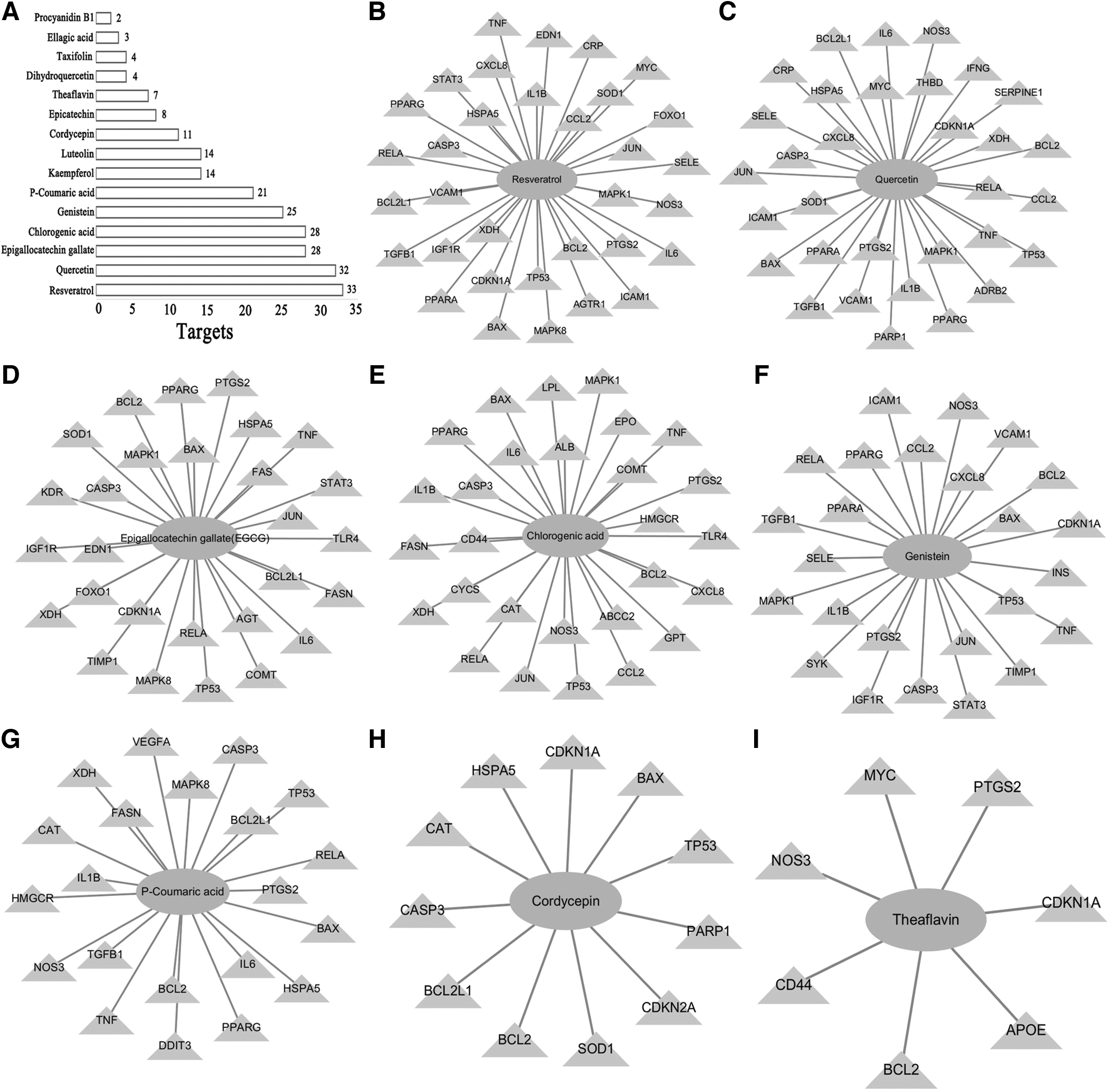
Part active ingredients-drug targets network analysis.
Best drug targets-active ingredients network analysis
The top 15 targets of active ingredients are shown in Figure 3A. The drug targets with the interaction with active ingredients included transcription factor p65 (RELA), prostaglandin G/H synthase 2 (PTGS2), caspase 3, Bcl-2, TP53, Bax, xanthine dehydrogenase (XDH), TGF-β1, and STAT3 (Fig. 3B–I). These targets are mainly related to apoptosis, ERS, TGF-β1, P53, and STAT signaling pathway.
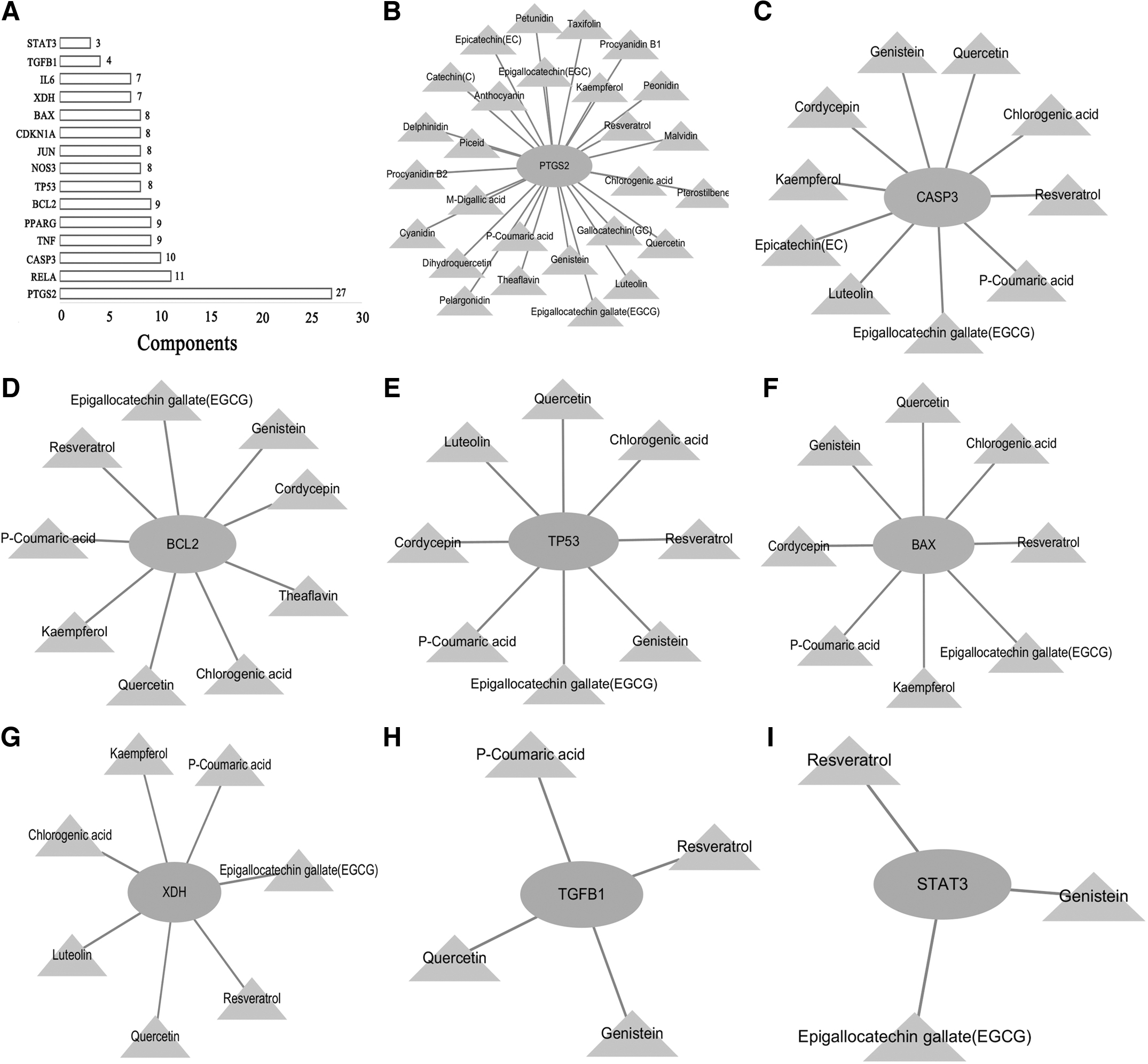
Part drug targets-active ingredients network analysis.
GO function and the analysis of KEGG pathway enrichment, and PPI network
There were 62 drug targets of VGTP in treating HUA-induced RI by GO enrichment analysis (Fig. 4A). BP enriched targets consist of response to organic substance, response to stress, regulation of cell apoptosis, and response to oxygen-containing compound. CC-enriched targets mainly include extracellular regions, extracellular spaces, cytoplasmic vesicles, and ER lumens. Enriched MF is related to enzyme binding, signaling receptor binding, cytokine receptor, and protein-containing complex binding. The significant signaling pathways involved apoptosis, TGF-β1, P53 and Jak-STAT, and protein processing in ER, and so on. (Table 4, Fig. 4B). There were 62 nodes (representing targets) and 415 edges (representing the interaction between proteins), with an average node degree of 13.83 (Fig. 4C). The larger the node the greater the degree value. There were 29 targets which exceeded the average node degree.
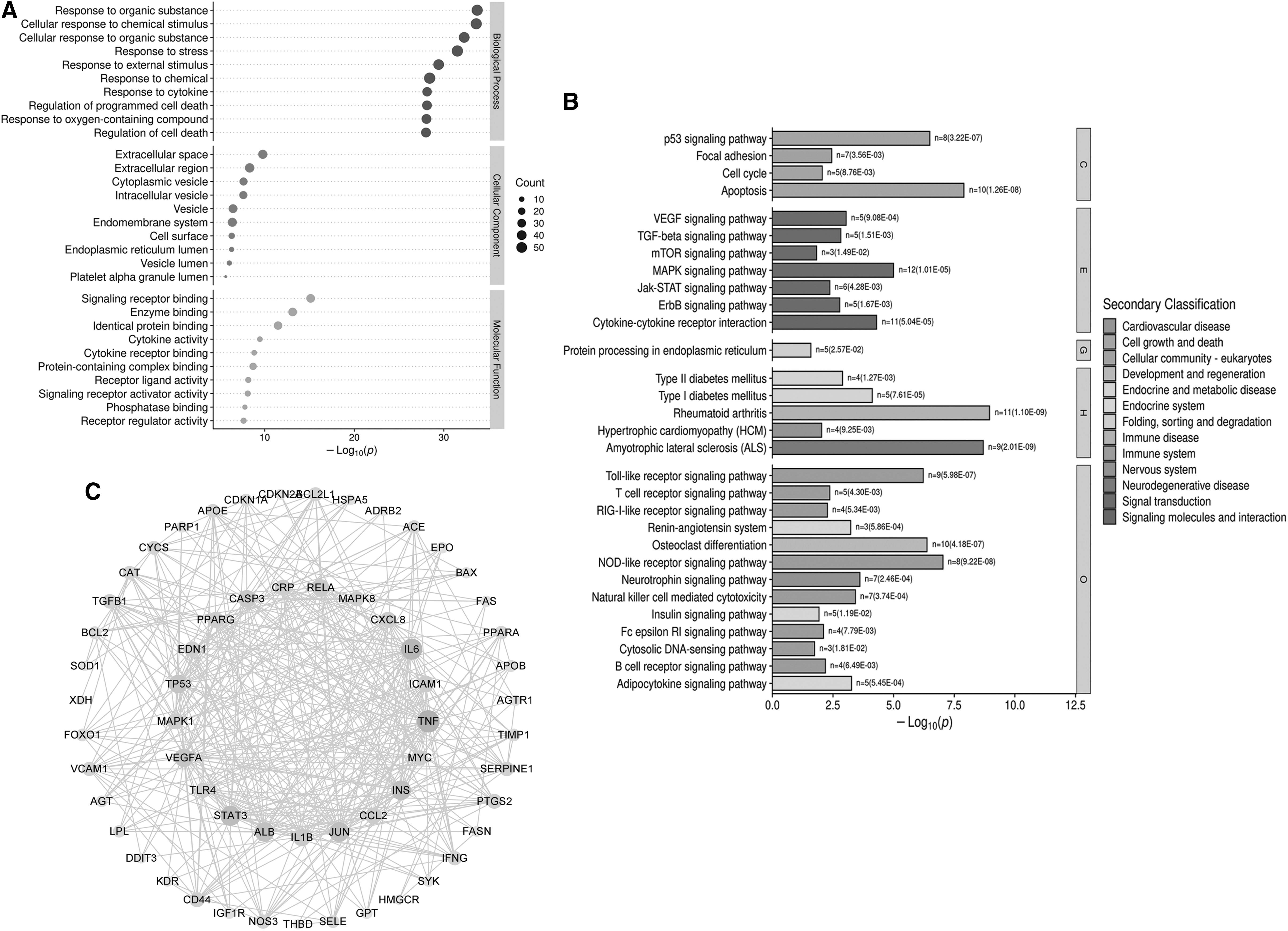
GO function and KEGG pathway enrichment analysis, and PPI network analysis.
Pathway Enrichment Analysis of Vine Grape Tea Polyphenols Against Hyperuricemia-Induced Renal Injury
Botanical drugs-active ingredients-drug targets-biological process-signaling pathway network analysis
We mapped a “botanical drugs-active ingredients-drug targets-biological process-signaling pathway” network (Fig. 5). In this network, we selected 20 important active ingredients from VGTP. Then, the 20 critical targets corresponding to the active ingredients were analyzed by GO and KEGG. Enriched BP mainly includes regulation of apoptotic, ERS, inflammatory, metabolic process of reactive oxygen species, cellular response to cytokine stimulus, and signal transduction. KEGG signaling pathways are related to apoptosis, protein processing in ER, TGF-β1, P53, Jak-STAT, and mTOR signaling pathways.
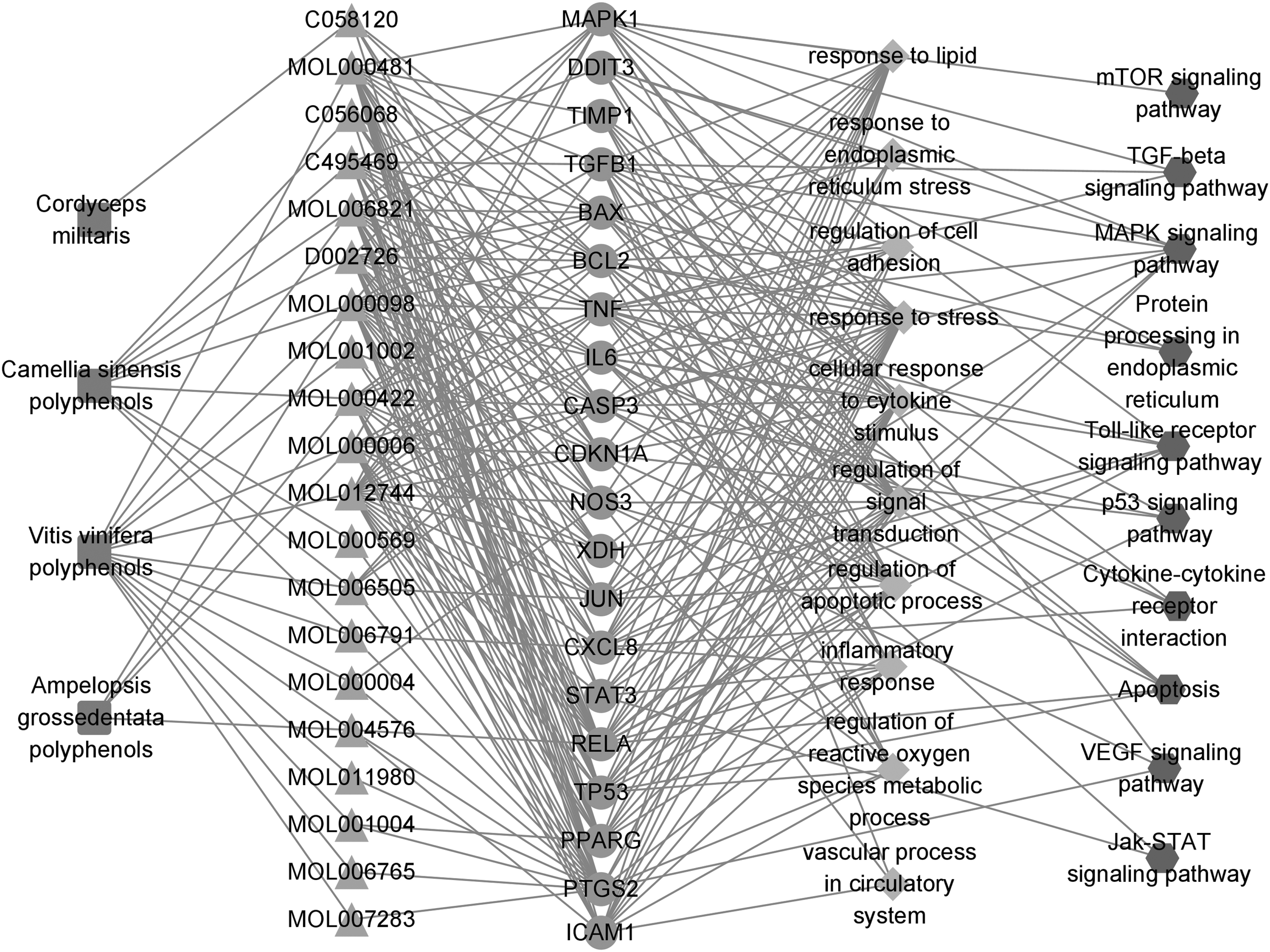
Botanical drugs-active ingredient-drug target-biological process-signaling pathway network analysis.
Docking prediction of active ingredients and key target molecules
The active ingredients (resveratrol, quercetin, EGCG, chlorogenic acid, genistein, p-Coumaric acid, cordycepin, and theaflavin) in the VGTP and key targets (Bcl-2, caspase3, Bax, TGF-β1, XDH, P53, and STAT3) were selected for molecular docking studies (Table 5 and Fig. 6).

Molecular docking diagram and visualization of the major active ingredients of VGTP and the key targets.
The Molecular Docking Result of Major Active Ingredients of Vine Grape Tea Polyphenols with Key Target Proteins
Effects of VGTP on kidney index, serum BUN, Cr, UA, and XOD in mice
After the experiment, the kidney index, serum BUN, Cr, UA, and XOD significantly increased in the HUA group (P < .01). VGTP (50, 100, and 200 mg/kg) could markedly decrease kidney index, serum BUN, Cr, UA, and XOD (P < .05; Fig. 7A–E). Moreover, the VGTPH group had the most significant effect in reducing kidney index, serum BUN, Cr, UA, and XOD. This showed that VGTP improved PO-induced HUA and kidney injury in mice.
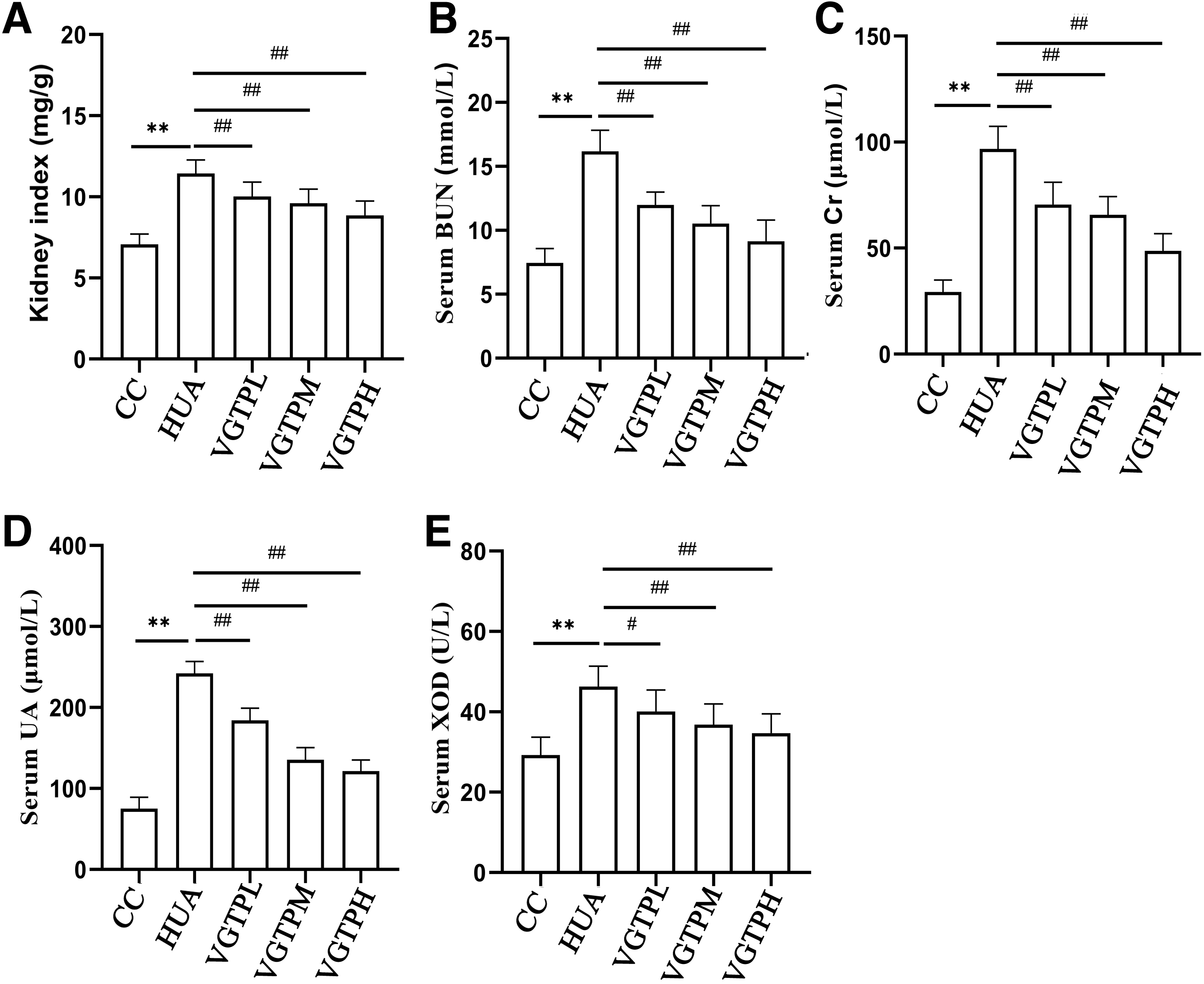
Effects of VGTP on kidney index, serum BUN, Cr, UA, and XOD.
Effect of VGTP on pathological changes in the kidneys
The HUA group developed tubular injury, which was characterized by tubular atrophy and dilatation, tubular epithelial vacuolation or flatness, brush border loss, and atrophic glomerular forms by HE staining. RI was improved in the VGTPL, VGTPM, and VGTPH groups when treated with VGTP (Fig. 8A). Compared to CC group, the renal collagen content and fibrosis were significantly increased in the HUA group by Masson's staining. VGTP (50, 100, 200 mg/kg) decreased the fibrotic formation in the kidney of the HUA group (Fig. 8C; P < .01). Moreover, the tubular injury score and Masson trichrome staining positive area significantly increased in the HUA group (P < .01). VGTP (50, 100, 200 mg/kg) treatment group significantly decreased them (Fig. 8B, D; P < .01).
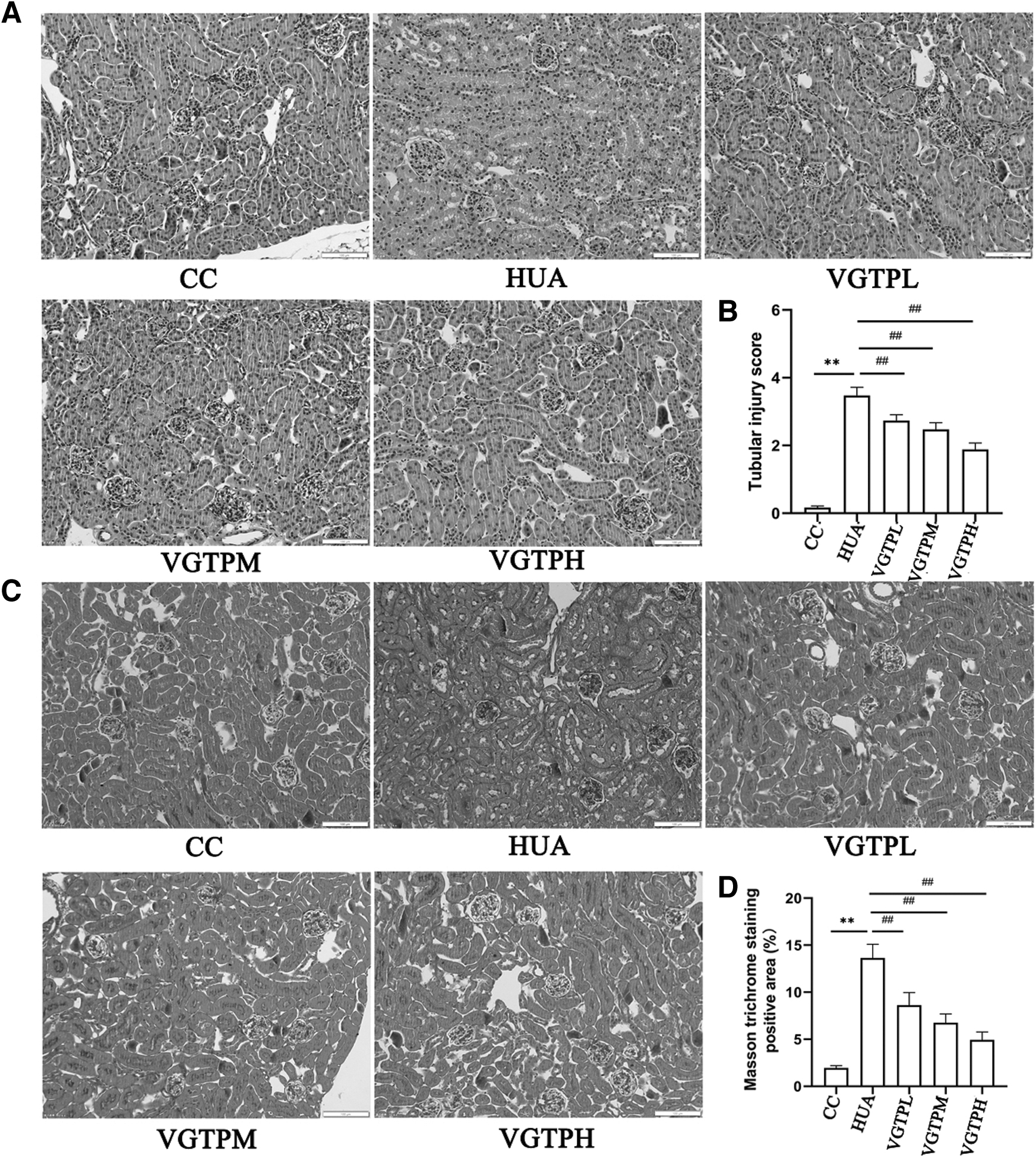
Effect of VGTP on pathological changes in the kidneys.
Verification of drug targets by western blot
The proteins of Bax, Bcl-2, caspase 3, TGF-β1, CHOP, P53, and p-STAT3 (Ser727) were measured by western blotting. Compared to the CC group, the HUA group displayed marked upregulation of Bax, cleaved caspase 3, TGF-β1, CHOP, P53, and p-STAT3 (Ser727) in renal tissues (P < .01). VGTP (50, 100, and 200 mg/kg) effectively reduced the expression of those in the renal tissue. Furthermore, Bcl-2 expression was decreased in the renal tissues of the HUA group (P < .01). VGTP increased Bcl-2 expression in the HUA mice (Fig. 9A–H; P < .01).
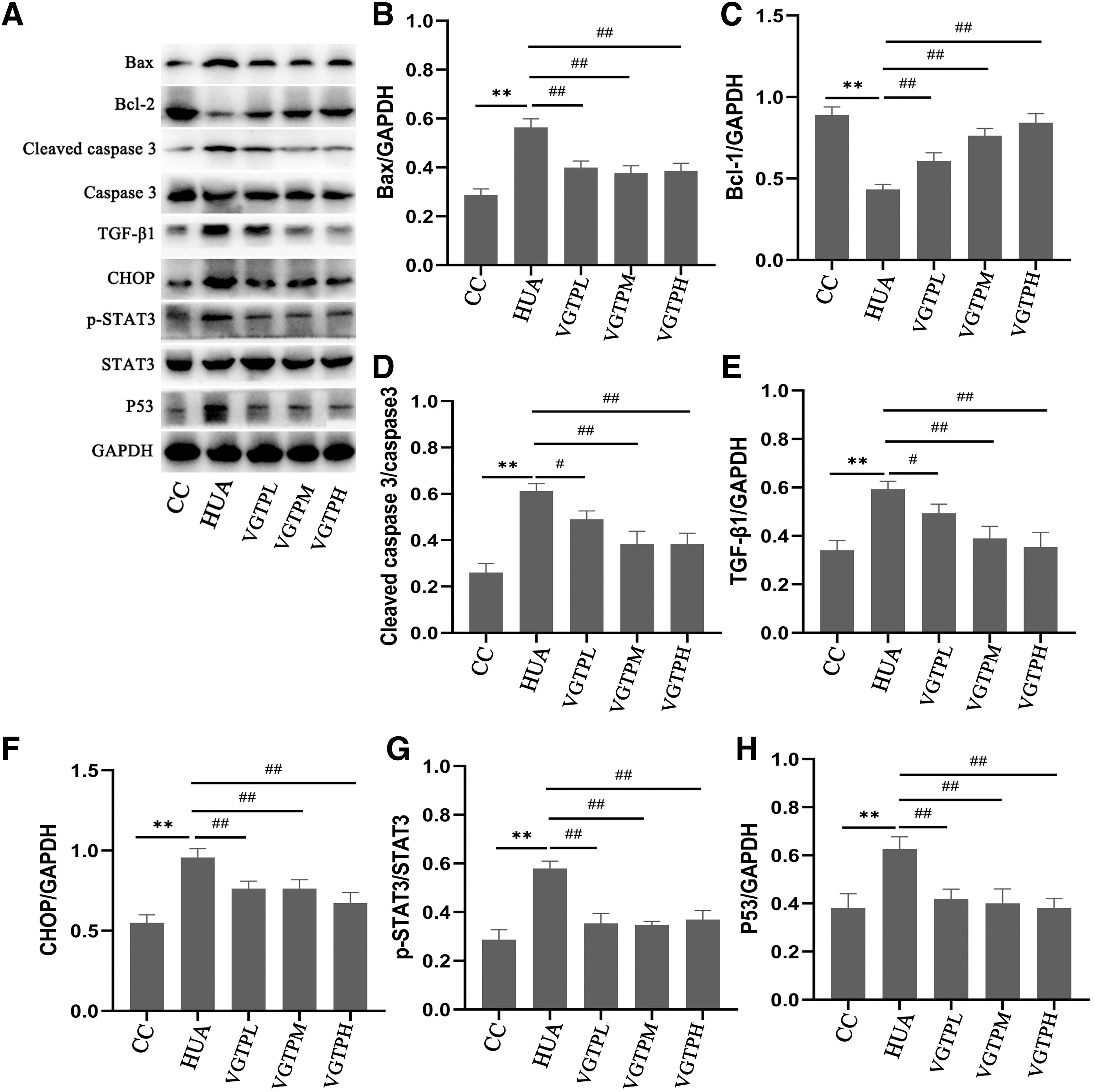
Validation of drug targets of network pharmacology with western blot.
DISCUSSION
With the changes in lifestyle, the prevalence of HUA is increasing worldwide. Chronic HUA has pathological causes in gout and kidney disease, and plays a presumptive role in metabolic syndrome and cardiovascular disease. 16 –18 The application of chemical drugs in the treatment of HUA and RI is limited by toxicity and side effects, and increasing numbers of researchers are turning to botanical drugs. Moreover, many researchers have reported that grape seed procyanidins, resveratrol, EGCG, theaflavin, and cordycepin can significantly reduce the level of serum UA, and have strong nephroprotective ability. 9,14,19,20 Therefore, it is necessary for us to develop anti-HUA drugs with good efficacy and fewer side effects.
At present, many research reports that PO-induced rodents have been used as useful models for evaluating possible therapeutic agents or drugs that decrease the level of serum UA and prevent target organ damage. 21 As a natural polyphenol extract, the active ingredients of VGTP have been proven to have the effects of reducing UA and kidney protection. 22,23 In this study, the HUA mouse model was successfully induced by PO, which showed HUA, renal dysfunction, and fibrosis. Moreover, VGTP reduced serum UA and alleviated the RI in the HUA mice model. Therefore, identifying potential targets in treatment of HUA-induced RI and revealing the mechanism of VGTP is of great significance.
In our experiment, we investigated the main active ingredients of VGTP in the therapy of HUA-induced RI, and revealed its mechanism and targets by network pharmacology, molecular docking and experimental validation. We also found that Bax, Bcl-2, Caspase 3, TGF-β1, CHOP, STAT3, and P53 are core targets in the VGTP in the therapy of HUA-induced RI. We validated the relationship of ingredients and targets with molecular docking and the protein expression of them with western blot.
HUA-induced RI involves many processes, of which apoptosis, oxidative stress, and ERS are the most important factors. Many studies have suggested that UA crystal deposition can lead to renal cell apoptosis. 24 The Bcl-2 family is an important regulatory factor for cell apoptosis. Bcl-2 and Bax form heterodimers, which can inhibit the proapoptotic effect of Bax. Bax can induce caspase activation and promotes cell apoptosis. It is notable that caspase 3 serves as a pivotal biomarker responsible for cellular apoptosis. 25,26 In the study of HUA after PO induction, several apoptosis indexes such as Bax and cleaved caspase 3 in renal tissues were increased, and Bcl-2 was reduced. Noteworthy, VGTP could alleviate apoptosis in the kidney. Our results found that caspase 3, Bax, and Bcl-2 exhibit interactions with up to 10 associated active ingredients, thereby representing crucial targets for VGTP treatment of RI.
HUA may disrupt ER homeostasis, resulting in ERS and subsequent unfolded protein response. Some studies have shown that ERS leads to CHOP expression and cell apoptosis in kidney disease models. 27,28 CHOP has been identified as a proapoptotic signal initiated by ER. 29 The study revealed the elevation in CHOP expression within renal tissues of HUA mice. VGTP can reduce the RI by attenuating UA‑induced ERS. Renal fibrosis is a result of chronic organ damage, resulting in the production of extracellular matrix components, structural deformation, and dysfunction. 30,31 TGF-β1 has been identified as a central contributor to renal fibrosis, fostering excessive extracellular matrix deposition, and exacerbating renal function deterioration. 32
Our results indicate that the HUA mice can cause RI and fibrosis, including apoptosis and ER dysfunction, which may be stimulated by UA. Our study found the protective efficacy of VGTP against HUA-induced RI by modulating the protein expression of apoptosis indexes, CHOP, and TGF-β1. In the treatment of HUA and RI patients, this may be a new treatment approach.
The signaling pathways mainly consist of apoptosis, protein processing in ER, TGF-β1, P53, and STAT according to network pharmacology methods. Moreover, TGF-β1, P53, and STAT3 play a role as molecular hubs connecting multiple signaling pathways such as ERS and cell apoptosis. 33,34 Inhibition of TGF-β1, P53, and STAT3 can suppress oxidative stress, ERS, and renal fibrosis.
In conclusion, HUA-induced RI treated with VGTP can be obtained by inhibiting apoptosis, decreasing the degree of ERS, and enhancing antioxidant effects by multiple targets and signaling pathways. This study elucidates the molecular mechanism and provides the theoretical basis for VGTP therapy against HUA and RI. Further research is needed to explore whether inhibition of ERS can become a new treatment for RI caused by HUA and research the detailed molecular mechanisms. Therefore, these active ingredients of VGTP can be used as dietary or nutritional supplements to treat RI-related diseases.
Footnotes
ACKNOWLEDGMENTS
The authors thank Dr. Hong Yu from Shanghai Bioprofile Biotechnology Co., Ltd and Hongjian Yu from Tianjin UBasio Biotechnology Group Co., Ltd.
AUTHOR DISCLOSURE STATEMENT
No competing financial interests exist.
FUNDING INFORMATION
No funding was received for this article.