




Abstract
Today, diabetes is considered a growing global epidemic. In the diabetic environment, a large amount of reactive oxygen species are produced. This type of active oxygen causes severe damage to cell membranes, proteins, and DNA. Therefore, finding a solution to deal with and reduce this type of reactive oxygen is very important. One of the most effective ways to deal with oxidative damage and inflammation is the modulation of the nuclear factor erythroid 2 (Nrf2) signaling pathway. One of the useful natural substances that can be used for treatment in the signaling system is saffron. In this article, research evaluating the medicinal effects of saffron and its compounds and their mechanisms of action, especially the Nrf2 signaling pathway, have been investigated and studied. The results show that saffron and its components have the potential to treat diabetes due to their unique properties.
INTRODUCTION
Today, diabetes is considered to be one of the most common and dangerous chronic diseases that reduce life expectancy. In addition, it incurs huge costs to the affected person and has serious side effects on health. 1 In recent decades, diabetes has become very common in Iran and worldwide. It is predicted that 9.2 million Iranians will be diagnosed with diabetes by 2030. 2 Relative lack of insulin in type 2 diabetes with impaired pancreatic beta cell activity and insulin resistance in target organs is the most common of the two different types of diabetes. 3 Type 1 diabetes includes about 5–10% of sufferers, but globally, its prevalence is increasing. This disease has many short- and long-term negative effects on the patient. 4
Reactive oxygen species (ROS) are oxygenated molecules produced in chemically active biological systems. They are produced naturally by all aerobic organisms and are considered byproducts of oxygen metabolism. 5 Superoxide, hydroperoxyl radicals, single and hydroxyl radicals, nitric oxide, peroxynitrite, etc., 6 are among the primary types of ROS. By increasing the accumulation of ROS, oxidative stress (OS) is produced, which destroys important cellular components such as lipids, proteins, and DNA. In hyperglycemia and glycolysis processes, ROS are overproduced. 7
In hyperglycemia, glucose-derived pyruvate is further oxidized in the mitochondrial tricarboxylic acid cycle, which increases the flux of electron donors to the electron transport chain and the voltage gradient across the inner mitochondrial membrane. When the voltage gradient is at the critical level, electron transfer in complex III is prevented. This leads to the return of electrons to coenzyme Q and, as a result, sends all of them to oxygen to produce superoxide. 7,8 The production of superoxide in mitochondria is highly effective in initiating the operating system and the damage caused by hyperglycemia. In addition, hyperglycemia and glucose metabolites can activate some other non-mitochondrial ROS production pathways. 9
The anti-oxidant defense system (AOD) vitally protects the biological system, whose function is based on reducing the harmful effects of ROS. Some of its examples are superoxide dismutase (SOD), glutathione peroxidase (GPx), glutathione reductase (GR), catalase (CAT), paraoxanase (PON), and other anti-oxidant enzymes. 10 Non-enzymatic ROS are very important for maintaining normal levels of AOD. Examples are ascorbate, tocopherols, retinol, carotenoids, reduced glutathione (GSH), melatonin, polyphenols, ceruloplasmin, and carnosine. 11 Pancreatic beta cells have low anti-oxidant capacity and are therefore susceptible to oxidative damage. 12 To eliminate free radicals (FR) and ROS, the body must be given a regular supply of anti-oxidants. This can be provided through nutritional supplements. 13
Plant-derived flavonoids have demonstrated anti-diabetic efficacy throughout time through several pathways, equally in vivo and in vitro. Several common flavonoids have hypoglycemic effects, including quercetin, safranal, saffron, kaempferol, rutin, naringenin, fisetin, and morin. 14 Studies have demonstrated that flavonoids can inhibit the digestion of carbohydrates and the absorption of glucose while also controlling the release of insulin through a variety of signaling pathways. 15 Natural anti-oxidant substances can offer defense against ROS species. It has been demonstrated that these elements lower the incidence of photocarcinogenesis and photoaging. 16 Safranal is one such naturally occurring biomolecule that has a strong anti-oxidant capability and is thought to be an effective treatment for illnesses brought on by OS. 16,17 One more is saffron, which has a bitter flavor but is to be utilized as a culinary addition because of its benefits as an anti-oxidant. 18 Some nutritional supplements are considered a source of help in diabetes management. Nuclear factor erythroid 2 (Nrf2), a master regulator of the anti-oxidant response, may be activated by several factors. This protein stimulates the genes related to anti-oxidant, anti-inflammatory, and cell protection responses, thereby protecting the cells. Also, Nrf2 plays an important role in several cancerous 19 –21 and non-cancerous 21 –23 diseases.
Also, Nrf2 is very effective in the prevention of diabetes (diabetes mellitus [DM]) and the development and consequences of DM. 24 In patients with diabetes, various drugs are used to reduce plasma glucose. Of course, some of these anti-diabetic agents may be associated with unwanted side effects. For this reason, in this review article, the aim is to examine the therapeutic role of saffron and its compounds through Nrf2 in diabetes and its related complications.
METHODS
A comprehensive literature review was conducted to explore the therapeutic potential of saffron and its bioactive components, with a specific focus on the Nrf2 signaling pathway in the context of diabetes and its associated complications. The review encompassed peer-reviewed articles published between 2000 and 2024 to ensure a comprehensive understanding of the subject matter, including both historical and recent advancements in the field. Various search keywords and phrases such as “Saffron,” “Crocus sativus,” “Nrf2,” “Crocin,” “Safranal,” “Crocetin,” “Quercetin,” “Antioxidants,” “Diabetes,” “Diabetic complications,” “Oxidative stress,” “Inflammation,” “Pharmaceutical properties,” “Therapeutics,” “Cardiovascular complications,” “Nephropathy,” “Neuropathy,” and “Retinopathy” were employed to retrieve relevant studies from scientific databases including PubMed, Scopus, Web of Science, Google Scholar, and ScienceDirect.
The inclusion criteria for reviewed studies required a specific focus on the effects of saffron or its components on diabetes and its related complications, emphasizing Nrf2 signaling. This included peer-reviewed articles, clinical trials, review articles, and meta-analyses published within the specified timeframe to ensure a comprehensive historical perspective and account for current advancements. Studies that did not specifically pertain to diabetes or its complications, did not address saffron or its pharmacologically active constituents, were not in English, or were not fully available were excluded from the review.
SAFFRON AND ITS PRINCIPAL COMPONENTS
The scientific name of saffron is Crocus sativus L. This perennial and stemless plant belongs to the Iridaceae family, which mostly grows in Iran and several other countries such as Spain, Greece, and India. The plant may reach 20–30 cm in height and has 5–11 true leaves protected by 5–11 extra white non-photosynthetic leaves (cataphylls). This plant blooms in October with purple stripes and a honey smell. 25 The distinctive color and aroma of saffron have caused it to be used as a food color and flavoring. 26
Saffron is known as “the red gold” because it is among the most expensive revenue crops produced by medicinal plants worldwide. 27 The annual global production of saffron is thought to be around 205 tons. Iranian saffron accounts for 80% of global production each year, 85% of which is produced in the Khorasan province, home to the world’s best saffron. 28
Carbohydrates make up 63% of saffron’s chemical composition, with proteins coming in at 12%, moisture at 10%, fat at 5%, minerals at 5%, crude fiber at 5%, and vitamins, including B1 and B2, at 5%. Additional significant saffron components include carotenoids, monoterpenes, anthocyanins, and flavonoids. 29
Natural carotenoid compounds, including saffron and its primary ingredients, have a wide range of capabilities including anti-oxidative, neuroprotective, and anti-inflammatory properties. Several experimental investigations on animals, humans, and other species have examined the impacts and modes of function of these compounds and their potential as medicines applications in managing diabetes. 30 The ingredients in saffron have also demonstrated many beneficial therapeutic effects, including anti-convulsant, anti-depressant, anti-cancer agent, and radical scavenging benefits, and can also exert cognitive benefits such as improved learning and memory. This herbal remedy has a high level of safety. 25
Saffron, a known medicinal plant, contains several active substances, such as safranal, flavonoids, crocetin, crocin, and quercetin. These compounds are efficient in reducing inflammation and OS, which can be crucial in alleviating the symptoms of diabetes. 31 –34
The aroma of saffron is caused by the lipophilic substance safranal (C10H14O, 2,6,6-trimethyl-1,3-cyclohexadiene-1-carboxaldehyde). The chemical structure of safranal is monoterpene aldehyde (Fig. 1). At a wavelength of 330 nm, maximum absorption of safranal occurs. Another characteristic of it is its ability to dissolve well in water. The review of research conducted in this field shows that Safranal has many medicinal properties such as effects on the nervous system, skin, sexual behavior, anti-toxic, metabolic, lowering blood pressure, anti-ischemic, pain-relieving, anti-inflammatory, anti-microbial, anti-oxidant, genetic, and cytotoxic protection. 33,35
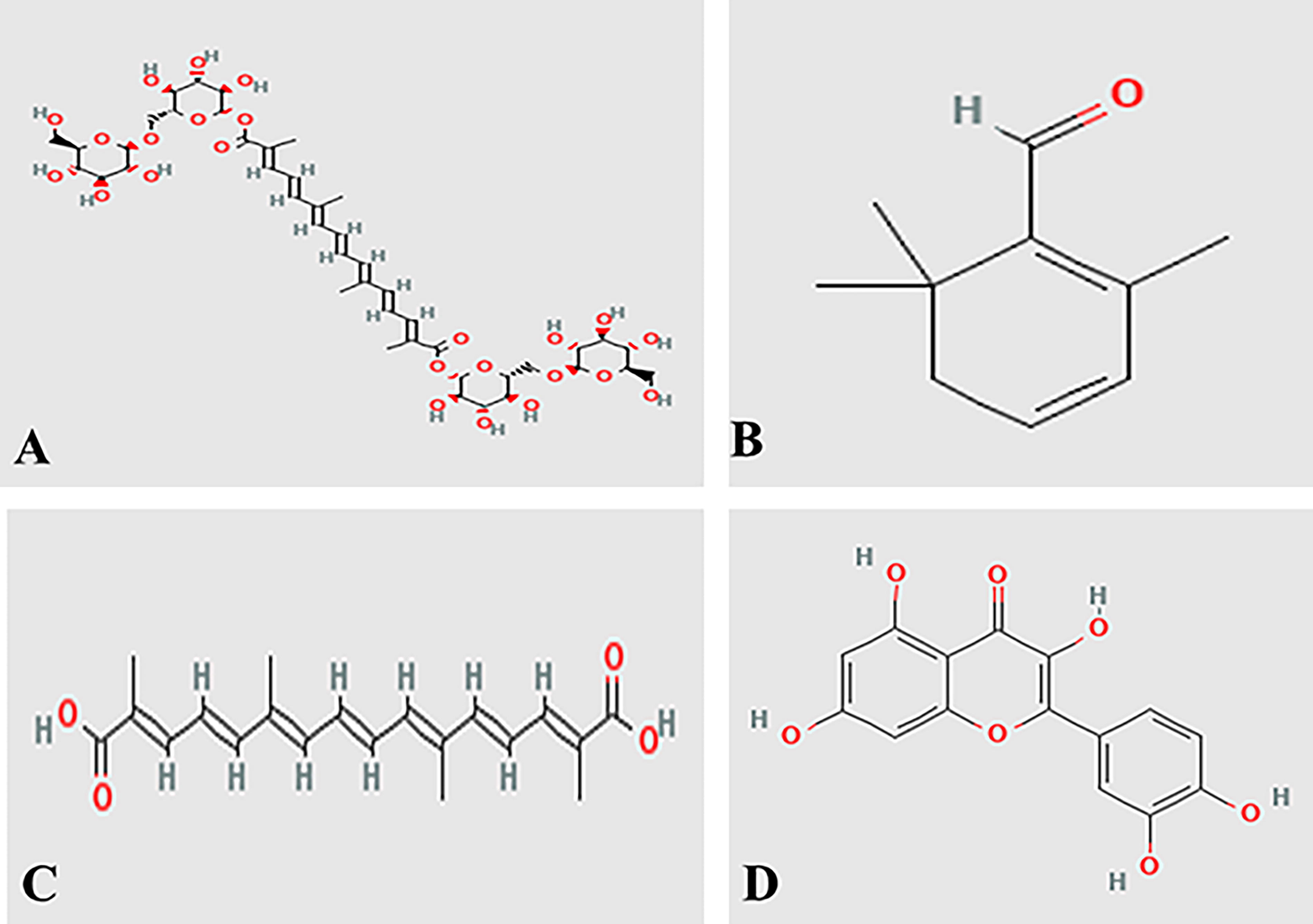
Chemical structures of saffron bioactive constituents
The bright red color of saffron is due to the presence of crocin, which is obtained from the stigma of the plant. 34 By esterifying crocetin in different glycosides, crocin is produced, which are glycosyl esters. The major portion of crocins consists of trans isomers and a small part is related to cis isomers. Also, about 16–28% of saffron is crocetin esters. 36
The results of a study conducted in 2022 on 150 uncontrolled type 2 (non-insulin-dependent) diabetes sufferers revealed that the fasting blood sugar decrease was substantial in all groups 3 months after therapy with saffron and crocin (P < .05). Additionally, the groups treated with saffron and crocin significantly reduced HbA1c relative to the control group 37 (Table 1).
The Effect of Saffron and Its Components in Improving Diabetes
BG, blood glucose; BUN, blood urea nitrogen; CAT, catalase; EPC, endothelial progenitor cells; FBS, fasting blood sugar; MDA, malondialdehyde; Nrf2, nuclear factor erythroid 2; OS, oxidative stress; SOD, superoxide dismutase.
C20H24O4, 8,80-diapocarotenedioic acid is the active substance of crocetin saffron stigma, which is insoluble in water and most organic solvents in the free acid state. Crocetin is a carotenoid with a molecular weight of 328.40 g/mol and a melting point of 285°C. Also, crocetin improves health and has prominent properties such as anti-cancer and neuroprotective, anti-diabetic effects, anti-inflammatory, and anti-lipid activities. 50,51
The ability of crocetin to prevent excessive hyperglycemia from inducing apoptosis in Human umbilical vein endothelial cells (HUVECs) has been investigated by Meng et al. The results showed that at concentrations of 0.1 and 1.0 mM, crocetin increased p-Akt activity and subsequently increased the production of endothelial nitric oxide synthase (eNOS) and nitric oxide (NO), which prevents apoptosis in high glucose. These results demonstrate a mechanism by which Crocetin might control diabetes. 52
According to research, saffron and its derivatives may improve insulin sensitivity and manage blood sugar levels. As with traditional anti-diabetic drugs, they have several limitations, potential side effects, and safety concerns. The potential negative effects and toxins associated with its consumption raise concerns. A high dose of saffron (more than 5 g per day) can cause nausea, vomiting, diarrhea, and dizziness. It is even possible to die from very high doses. 53 A dose range of 0.1–5 g/kg of saffron extract was found to be non-toxic for mice when administered orally. Using the Ames/Salmonella test system, crocin and dimethyl-crocetin isolated from saffron were found to be non-mutagenic and non-toxic. 54 In terms of allergic reactions, saffron may cause allergic reactions in some people. Skin rashes and respiratory problems are common symptoms. 55 As far as drug interactions are concerned, saffron may interact with anti-coagulants and other liver-metabolized medications. It may alter their effectiveness or increase the risk of side effects. There are still limitations in these studies, such as insufficient evidence. Saffron has been shown to have positive effects on blood sugar control, but further studies are needed to establish its efficacy and safety as a standard treatment for diabetes. 30 Standardization issues are another limitation. There is a wide range of concentrations of active compounds in saffron, depending on the source, which can lead to inconsistent therapeutic effects as opposed to many diabetic medications, which are rigorously tested for safety and efficacy. Also, saffron’s exact mechanisms of anti-diabetic action are still being explored, so comparisons with conventional treatments are difficult. It is unclear whether saffron can be used as an herbal medicine because of contradictory reports about its toxicity. According to some reports, saffron is a completely non-toxic herb. 44 There is potential for saffron-derived compounds to be used as adjunctive therapy in diabetes management, but caution is warranted due to potential toxicities and challenges related to dosing, standardization, and insufficient clinical evidence. For individuals with more severe forms of diabetes or those requiring insulin, they should not be considered a substitute for established anti-diabetic medications.
NRF2 SIGNALING AND DIABETES
Current research indicates that Nrf2 affects metabolic syndrome, obesity, kidney disease, retinopathy, and neuropathy. The activation of this gene leads to a reduction in the onset of diabetes and its pathologies. 24
The functional domains of the Nrf2 protein are: bZip transcription factor along with Nrf2, nuclear respiratory factors (1 and 3), tramadol complex, bric-a-brac, Cap ‘n’ Collar homology (CNC) 1, and basic leucine-Zip transcription factors, Nrf2 A member of the CNC collar cap. 56,57
Nrf2 is rapidly degraded in stressful situations, and its lifetime generally varies from 15 min in untreated cells to 30 min in cells exposed to a stressor. 58
Nrf2 protein acts as a transcription factor when located in the nucleus. This causes the uniform activation of several genes involved in cellular defense, including genes related to biotransformation enzymes, anti-oxidant proteins, drug transporters, anti-apoptotic proteins, and proteasomes. 59
Combining saffron with existing anti-diabetic medications or other nutraceuticals targeting Nrf2 and related pathways could potentially yield synergistic effects that enhance glucose metabolism and improve overall metabolic health. Both saffron and other nutraceuticals (e.g., curcumin, resveratrol, or specific flavonoids) activate Nrf2, which promotes anti-oxidant enzymes, such as heme oxygenase-1 (HO-1) and nicotinamide adenine dinucleotide phosphate (NADPH) quinone dehydrogenase 1 (NQO1). Combining these effects may result in a more robust AOD in patients with diabetes, reducing the oxidative stress associated with hyperglycemia. 60 Saffron improves insulin sensitivity. When combined with medications such as metformin or sulfonylureas, both of which improve insulin signaling pathways, the effect on glucose uptake by cells could potentially be amplified. As a result, glycemic control could be improved. 61 Saffron possesses anti-inflammatory properties that can enhance the anti-inflammatory actions of certain anti-diabetic medications (such as thiazolidinediones). Combining saffron with anti-diabetic drugs may reduce chronic inflammation associated with insulin resistance and type 2 diabetes. 61 Some nutraceuticals that target Nrf2 pathways may also positively affect gut bacteria. Combining these with saffron could further enhance gut health and metabolism, which play crucial roles in glucose homeostasis and overall metabolic function. 62 Lipid levels are reduced by saffron. When used in conjunction with statins or other lipid-lowering agents, there could be enhanced effects on lipid profiles, which is beneficial as patients with diabetes often have dyslipidemia. 63 There are different mechanisms of action for different medications and nutraceuticals. For instance, when one drug increases insulin secretion, and another enhances insulin sensitivity, using saffron in combination might optimize blood glucose (BG) levels more efficiently than using either approach alone. 30 It has been suggested that saffron and some nutraceuticals may reduce the side effects commonly associated with certain anti-diabetic drugs, such as gastrointestinal issues caused by metformin or muscle pain caused by statins. 64 Combining saffron and other nutraceuticals targeting Nrf2-related pathways may improve metabolic health, addressing not just BG control but also related complications such as hypertension, obesity, and metabolic syndrome. 39 While the theoretical basis for these synergistic effects is promising, it is critical to conduct further clinical studies to evaluate the safety, efficacy, and actual synergistic benefits of these combinations in diabetic populations. When considering such combinations, it is also important to consider individual variations in response to treatment, potential interactions between compounds, and overall patient health. A combination of saffron with existing anti-diabetic medications or other nutraceuticals that target the Nrf2 pathway may enhance diabetic control. To fully understand these interactions and optimize treatment strategies, future research is essential.
When Nrf2 binds to enhancer regions in the promoters of cellular defense genes, it regulates the response of cells to oxidants and electrophiles. Enhancer regions are known as “anti-oxidant response elements” (ARE) and electrophiles are known as inducers. 24 A key component of most models for Nrf2 regulation is protein 1. This protein is related to an ECH-like clutch (Kelch like ECH associated protein1 [Keap1]). If it is exposed to stressful conditions, Nrf2 is activated by oxidation of critical cysteine residues in Keap1, which causes the Keap1/Nrf2 complex to dissociate and Nrf2 to enter the nucleus. 40,41
The ability of saffron and its compounds to activate the Nrf2 pathway has been studied, including safranal, crocin, crocetin, and quercetin. It plays a crucial role in the defense of the cell against OS and inflammation. In this section, we describe some specific mechanisms and insights into how these compounds interact with Nrf2. Keap1 is a negative regulator of Nrf2 that facilitates its degradation under unstressed conditions. It is believed that saffron compounds stabilize and accumulate Nrf2 by electrophilicly modifying Keap1 cysteine residues. 65 For instance, studies indicate that crocin and safranal can bind to Keap1 directly or indirectly, affecting its ability to target Nrf2 for ubiquitin-mediated degradation. According to some studies, saffron compounds activate the PI3K/Akt signaling pathway, which is linked to Nrf2 activation. Akt activation can inhibit mammalian target of rapamycin (mTOR), which is likely to stabilize Nrf2. 60 The extracellular signal-regulated kinase (ERK) pathway may be activated by compounds such as crocetin and safranal. This can promote Nrf2 nuclear translocation and enhance its transcriptional activity by facilitating the phosphorylation of specific residues on Nrf2. 60 In addition to their anti-oxidant properties, these compounds reduce ROS levels, which could reduce OS that triggers the Nrf2 pathway. By lowering ROS levels, Nrf2 can be stabilized in the cytoplasm and eventually translocated to the nucleus. 50 Numerous studies have examined the effects of saffron compounds on Nrf2, but few have reported direct interactions with Keap1 or other Nrf2 regulators. However, some overlaps point to such interactions. Some in vitro experiments investigate saffron compounds’ electrophilic properties. Crocin and Safranal modify cysteine residues in Keap1, inhibiting its function and increasing Nrf2 activity. 66,67 Animal studies have reported that saffron supplementation can lead to increased levels of Nrf2 and its downstream anti-oxidant genes such as HO-1. As a result, these compounds may interact with the Nrf2 pathway, although direct interactions with Keap1 may not be the primary focus. 60 Flavonoids in plants, such as quercetin, may activate Nrf2 by competing with Keap1 for binding or by directly modifying Keap1. This leads to increased transcription of phase II detoxifying enzymes. 45 Despite preliminary findings supporting saffron’s ability to activate the Nrf2 pathway, further research is needed to determine how saffron interacts directly with Keap1 and other regulatory factors. In addition, structural analyses and specific binding assays are needed to provide a clear understanding of how these compounds modulate the Nrf2 signaling pathway directly.
Nrf2 activation can (1) increase the production of enzymes that detoxify ROS, including CAT and SOD. (2) Increasing the level of NADPH or GSH increases the anti-oxidant protection of cells. (3) Also, Nrf2 activation is associated with increased mitochondrial function and decreased superoxide production in mitochondria. (4) By promoting the production of pentose phosphate pathway enzymes, it maintains endothelial activity and reduces BG levels 68 (Fig. 2).
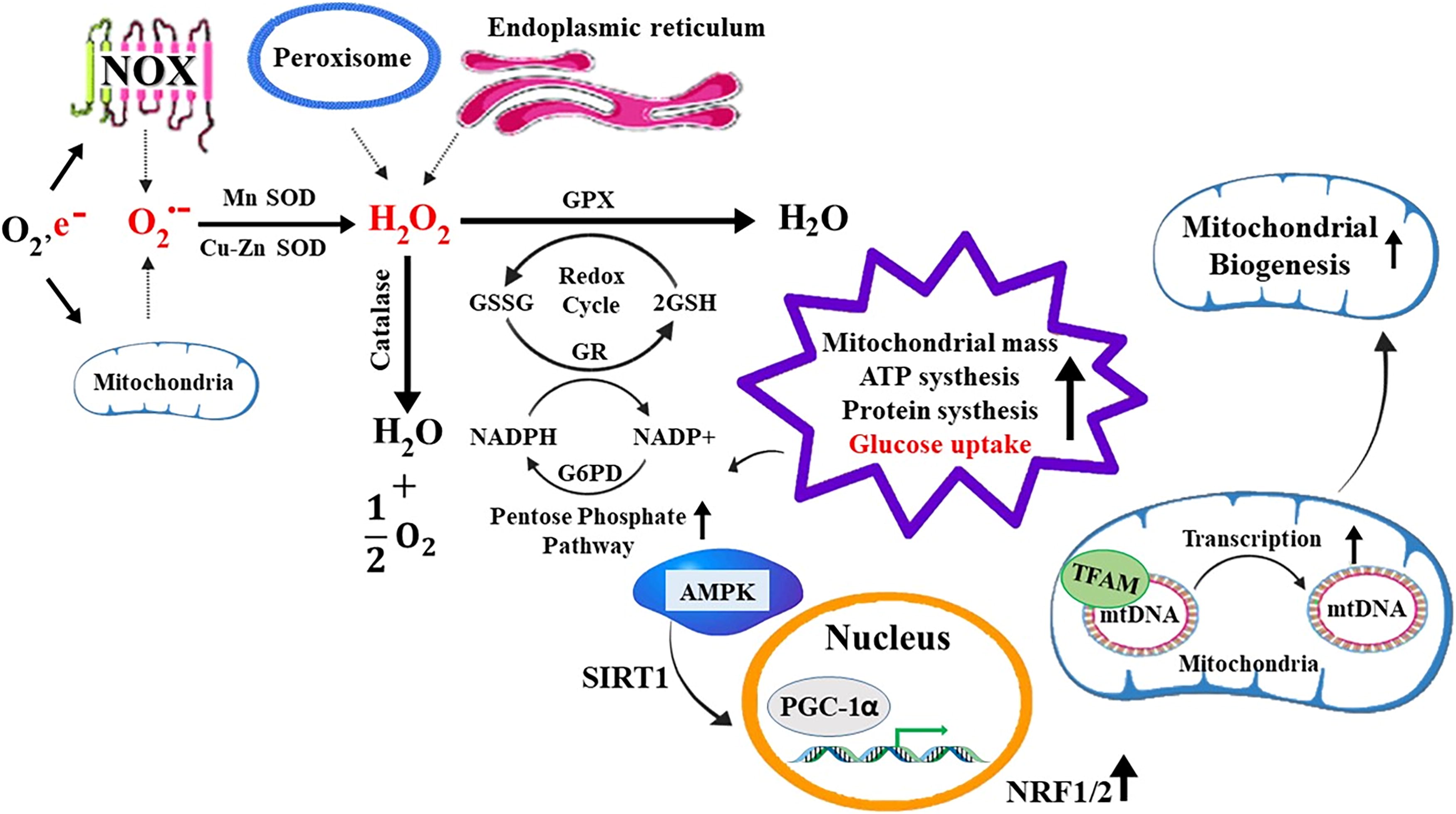
Increased enzyme productions to detoxify ROS, boost antioxidant levels, activate Nrf2 for improved mitochondrial function, and promote pentose phosphate pathway enzyme production to maintain endothelial activity and lower blood glucose levels. AMPK, AMP-activated protein kinase; CuZn SOD, copperZinc SOD; G6PD, glyceraldehyde 6 phosphate dehydrogenase; Mn SOD, manganese SOD; NADPH, nicotinamide adenine dinucleotide phosphate; Nrf1/2, nuclear factor erythroid 2-related factor 1/2; PGC-1α, peroxisome proliferator-activated receptor gamma coactivator 1-alpha; SIRT1, Sirtuin1; TFAM, transcription factor A.
Various models, including diabetic conditions, have been studied for the effects of saffron compounds on mitochondrial function. One of the active components, crocin, along with other carotenoids and flavonoids present in saffron, has shown promise in influencing mitochondrial respiration and biogenesis. It has been suggested that saffron compounds may stimulate mitochondrial biogenesis by activating Nrf2 pathways. 69 Cellular defense mechanisms are regulated by Nrf2. As a result of its activation, anti-oxidant enzymes and other protective proteins can be produced, improving mitochondrial function. Several studies have shown that saffron extracts improve glucose metabolism, reduce OS, and protect pancreatic beta cells in diabetic models. This may indirectly support improved mitochondrial function. Additionally, saffron compounds enhance ATP production and decrease apoptosis in mitochondria under stress conditions. This suggests a direct impact on mitochondrial respiration. Saffron compounds appear to play a beneficial role in mitochondrial function, though more research is needed to fully understand the mechanism and effects. This is especially true for diabetics.
Nrf2 is regarded as part of a significant cellular pathway guarding against OS. Particularly in illnesses where ROS and inflammation play a crucial role, such as diabetes, NRF2 has been suggested as a significant protective component. 47 If the BG level is not controllable, then OS plays an important role in the pathophysiology of diabetic complications. Research has shown that Nrf2 has a protective function in diabetes and its consequences in rats, so its activation has been suggested as a strategy for managing diabetes and hyperglycemia-induced OS. 70
Some research has shown promising results for the treatment of diabetes. For example, sulforaphane can prevent hyperglycemia-induced metabolic and systemic dysfunction in human microvascular endothelial cells by activating Nrf2. 38
Saffron has been studied for its potential protective effects against various diabetes complications, including diabetic nephropathy, neuropathy, and endothelial dysfunction. While there is promising evidence supporting the benefits of saffron compounds across these conditions, the effects may not be uniform for all complications. There is some evidence that saffron extracts can reduce OS and inflammation in the kidneys, potentially protecting against nephropathy progression. 71 Saffron’s anti-oxidant properties, particularly due to compounds such as crocin and safranal, could play a significant role here. Through its anti-inflammatory and neuroprotective properties, saffron may alleviate diabetic neuropathy symptoms. Due to its effects on OS and inflammation, it may improve nerve function and reduce pain. 42 Saffron has been shown to improve endothelial function, likely through its anti-hyperlipidemic and vasodilatory effects. The flavonoids and carotenoids in saffron may contribute to improved endothelial nitric oxide levels, which is beneficial in maintaining vascular health. 72 Overall, saffron protects against diabetic-related complications, but its mechanisms and efficacy may vary depending on the condition. Some pathologies show stronger responses than others, depending on the strength of the evidence supporting these effects. To fully understand saffron’s protective effects across these diabetic complications, more comprehensive clinical trials are needed.
SAFFRON EFFECT IN DIABETES MEDIATED THROUGH NRF2
Many researchers have shown that saffron and its compounds can prevent some diseases such as diabetes, cancer, and colitis through various mechanisms, including increasing anti-oxidant enzymes such as SOD, CAT, and GPx, reducing lipid peroxidation, reducing inflammation and causing apoptosis of cancer cells. Some tissues become ulcerative by affecting the Nrf2/HO-1 signaling pathway (Fig. 3). In particular, Nrf2/HO-1 signaling reduces OS and inflammation. 73
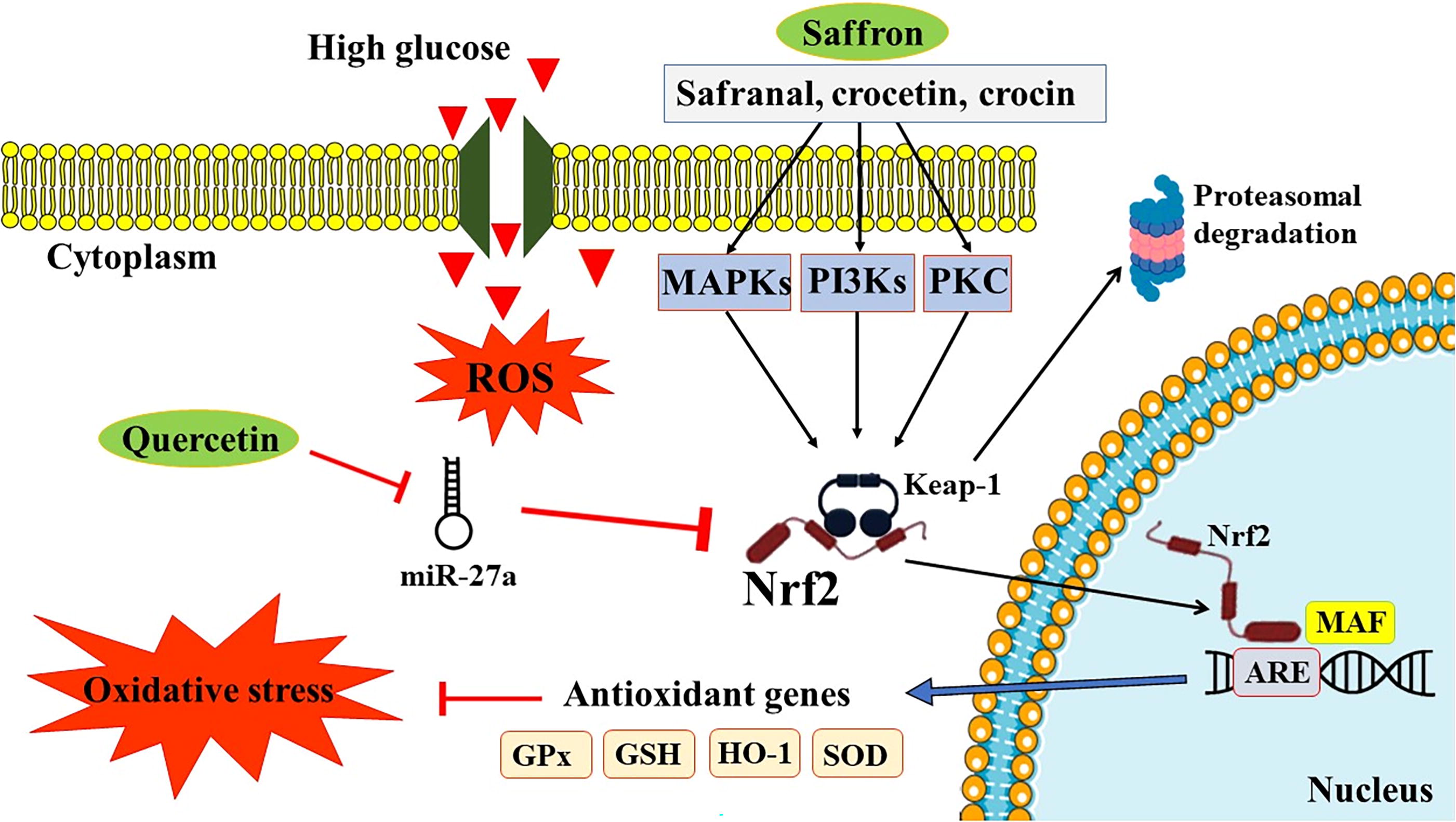
Schematic of the benefits of saffron and its compounds on the Nrf2-dependent anti-oxidant pathway. Saffron and its compounds can boost the expression of Nrf2/HO-1 signaling, which reduces oxidative stress and inflammation. HO-1, heme oxygenase-1; MAPK, mitogen-activated protein kinase; PI3K, phosphoinositide 3-kinase. PKC, protein kinase C; Keap1, Kelch like ECH associated protein1.
Several mechanisms are involved in how saffron compounds upregulate anti-oxidant enzymes such as SOD, CAT, and GPx. There is evidence that saffron compounds activate transcription factors such as Nrf2, which play a crucial role in the cellular response to OS. After Nrf2 is activated, it translocates to the nucleus and promotes the expression of several anti-oxidant enzymes, including SOD, CAT, and GPx. 74 Saffron compounds reduce OS in cells by directly scavenging FR. This reduction can create a feedback loop that signals the need for increased endogenous anti-oxidant production, thus upregulating anti-oxidant enzymes. 75 Saffron may also elevate GSH levels in cells. Since GSH is a critical cofactor for GPx and a key anti-oxidant itself, increased levels can enhance GPx activity and further support the overall AOD. 76 Saffron has anti-inflammatory properties that can reduce inflammation-related OS. As a result of reducing inflammatory mediators, saffron may increase anti-oxidant activity as a protective mechanism. 48 Saffron compounds may prevent oxidative damage to mitochondria. Mitochondria are significant sources of ROS, and their protection can help maintain cellular redox balance, promoting the expression of anti-oxidant enzymes. 77 Saffron active components might influence anti-oxidant defense genes. Besides enhancing transcription factors, saffron could also lead to post-transcriptional modifications that stabilize anti-oxidant enzyme mRNA, increasing their expression levels. 43 These mechanisms underscore saffron’s potential as a natural anti-oxidant and may explain its beneficial effects on OS-related diseases. It will take more research to fully elucidate these pathways and confirm their relevance in various biological contexts.
Therefore, saffron extract can increase the expression of Nrf2 in living organisms. This result has been confirmed experimentally in the laboratory. The results show that the aqueous extract of C. sativus L. protects against heart diseases in patients with disorders related to endothelial function (such as atherosclerosis and diabetes) and improves endothelial function. 78
Saffron is consistently used in traditional medicine because it has anti-convulsant, anti-depressant, anti-cancer, and excellent BG, lipid, and cholesterol-lowering properties. In a clinical trial study, saffron reduced hyperlipidemia and hyperglycemia in patients with type 2 diabetes and also enhanced anti-oxidant indices in obese patients with pre-diabetes 79 (Table 1).
According to research by Elgazar et al. on diabetic rats, oral saffron extract administrations reduces BG levels and the occurrence of various problems as a result of hyperglycemia. Saffron is beneficial because it is associated with bioactive compounds with anti-oxidant properties 44 (Table 1). Research conducted on diabetic rats by Kianbekht et al. showed that saffron has hypoglycemic properties and increases blood insulin in alloxan-induced diabetic rats, without kidney and liver toxicity. Also, crocin, crocetin, and safranal enhance these benefits 49 (Table 1).
In addition, the consumption of saffron supplements can stimulate peroxisome-activated receptor gamma and insulin receptor 1 in adipose tissue, which improves blood sugar regulation and insulin signal transmission. These effects of Nrf2 increase the expression of HO-1, mitochondrial activity, and the level of anti-oxidant enzymes. 80
The progression of type 2 DM (T2DM) appears to be mostly influenced by excessive OS, and ROS and reactive nitrogen species (RNS) play important functional and dysfunctional roles in cells, especially in tissues that exacerbate T2DM, such as the liver, adipose, muscle, and pancreatic islets. 46 According to research, ROS can boost the expression of genes for anti-oxidants by causing Nrf2 to separate from Keap1. 81
Those with diabetes are more likely to have hypertension than people without diabetes. Therefore, finding a suitable solution that could help diabetic people regulate their blood pressure is crucial. In an experiment, the potential bioactive ingredient in saffron, crocin, reduced systolic blood pressure via inhibiting calcium channels in a dose-dependent manner in hypertensive rats 82 (Table 1).
Understanding the pharmacokinetic compounds of saffron in diabetic animal models can provide insights into their potential efficacy and usefulness in human therapeutic applications. The following is an overview of their pharmacokinetic profiles (including absorption, distribution, metabolism, and excretion [ADME]). In terms of absorption, typically, crocin has low-to-moderate bioavailability, as it is a glycosylated compound. There is evidence that absorption may be enhanced by its formulation, such as nanoparticles or liposomes, which improve its solubility and bioavailability. 83 Compared with crocin, safranal is more lipophilic, which may facilitate better absorption from the gastrointestinal tract. After ingestion, it is usually absorbed quickly. 84 Picrocrocin also displays moderate absorption characteristics, potentially affected by formulation and other food components. Distribution-wise, once absorbed, saffron compounds are distributed to various tissues. Research indicates that crocin can accumulate in organs, including the liver and kidneys, which are often examined in diabetic model studies. 83 Safranal can cross the blood–brain barrier, which is notable given its potential neuroprotective effects. In diabetic conditions, where OS often affects the nervous system, this property may prove particularly beneficial. 84 As for metabolism, crocin undergoes enzymatic hydrolysis to form crocetin, which can then be metabolized. The metabolic process extends biological activity but is still subject to first-pass metabolism which reduces systemic availability. 83 The absorption characteristics of picrocrocin are moderate, possibly affected by the formulation and other food components. 84 Regarding excretion, the excretion of saffron compounds primarily occurs via urine. Crocin, safranal, and picrocrocin metabolites can be found in urine, indicating renal excretion is a significant elimination pathway for these compounds. 83,84 Saffron doses in animal models often vary, ranging from milligrams to hundreds of mg/kg of body weight. For example, studies on diabetes could utilize dosages of crocin or safranal in the range of 10–30 mg/kg in rodents. 85 When translating these doses to humans (considering an average human weight of around 70 kg), effective doses could range from around 700 to 2100 mg for crocin and similar compounds. Various conditions, including mild depression and anxiolytic effects, have been treated with oral saffron supplementation at doses of 30–300 mg per day. 86 Overall, oral saffron supplementation may have significant pharmacological effects on diabetic conditions. However, further research is needed to identify the optimal dosing and formulation for maximum efficacy. The long-term safety of this medication and its potential interactions with other medications commonly used by patients with diabetes need to be evaluated in further studies.
CROCIN EFFECT IN DIABETES MEDIATED THROUGH NRF2
Some of the medicinal effects of crocin include anti-inflammatory, anti-convulsant, and anti-cancer activity. Also, the results of experiments show that the OS caused by the chemotherapy drug cisplatin in mice is prevented. 87 One of the characteristics of crocin is its significant anti-oxidant activity, which may be caused by endogenous anti-oxidant enzyme activities. Crocin with this feature can remove ROS. 88
Flavonoids help in the successful treatment of many diseases, including diabetes. Crocin helps in modulating the AOD system by reducing lipid peroxidation and ROS production. It was also found in experiments that crocin in mice that received methylglyoxal (MGO). It significantly affected the regulation of Nrf2 and GLO1 by reducing OS, which also reduced endoplasmic reticulum (ER) stress. Consequently, crocin delays the progression of diabetes by regulating ER stress-related microRNAs and GLO1 function through GSH and Nrf2 89 (Table 1).
Additionally, in 2022, researchers showed that crocin reduces the decrease in cell viability caused by high glucose levels. Crocin decreased apoptosis caused by high glucose concentration to about 30 mM in the HK-2 cell line and decreased the amount of MDA and intensified the activation of anti-oxidant SOD in the culture medium. Crocin increased the mRNA concentration of Nrf2, HO-1, and NQO1. It also enhanced Sirtuin 1 (SIRT1) expression and p-Akt expression. Crocin also has protective effects such as inhibiting Nrf2 using siRNA and SIRT1 and PI3K/Akt inhibitors. Consequently, the regulation of Nrf2, SIRT1, and Akt molecules may be responsible for the protective properties of crocin. 90
Diabetes causes an accumulation of MGO. MGO exacerbated lipid peroxidation and induced OS in mouse kidneys by increasing malondialdehyde (MDA) levels and lowering anti-oxidant enzymes. Radmehr et al. discovered that the kidneys of crocin-treated mice had lower MDA levels and higher GSH, SOD, and CAT activity. Crocin’s anti-oxidant function protects kidney cells from oxidative damage. Crocin furthermore reduced ER stress in MGO-induced diabetic nephropathy by controlling the GSH-GLO1-Nrf2 signaling pathway and ER stress-related microRNAs 91 (Table 1).
According to research published by scientists in 2020, crocin is effective for the treatment of diabetic nephropathy by stimulating the Nrf2 signaling pathway, and by activating the Nrf2 signaling pathway, it can cause hypoglycemia, lower blood lipids, and protect the kidney in db/db mice. In all the studied rats, crocin led to a decrease in the expression of phospho-IkBa and NF-kB and an increase in the expression of Nrf2, SOD1 Mn, and CAT 92 (Table 1).
The research conducted in 2005 shows that crocin, the main compound of saffron, has an anti-diabetic effect on male rats. 93
SAFRANAL ACTS AGAINST DIABETES THROUGH NRF2
Clinical research confirms that plant extracts reduce the OS associated with DM. Safranal has anti-oxidant properties. Research shows that safranal reduces BG levels in diabetic rats in a dose-dependent manner. Also, a significant decrease in BG, MDA, NO, total lipids, triglyceride, and cholesterol was observed in the diabetic groups treated with safranal compared with the untreated diabetic groups, with dose-dependent improvements. The homogenate reduces the level of GSH, CAT, and SOD. The anti-oxidant properties of safranal help to treat chemically induced diabetic complications (Table 1). 94
The chronically active nucleotide-binding domain, leucine-rich family, inflammasome domain-containing pyrin-3 (NLRP3) has been implicated in the pathogenesis of diabetes and several autoimmune disorders, including Alzheimer’s, atherosclerosis, gout, and silicosis. Safranal treatment increased Nrf2 expression, but si-RNA-mediated suppression of Nrf2 abolished the anti-NLRP3 effect of safranal. In general, safranal-mediated upregulation of Nrf2 is associated with downregulation of NLRP3 expression. 95
Safranel administration causes a significant increase in Nrf2 and GSH protein expressions and a decrease in soluble protein and MDA levels. The Nrf2-Keap1 system has a protective role and is known as one of the primary cellular defenses against OS factors. 96
CROCETIN EFFECT IN DIABETES MEDIATED THROUGH NRF2
The main bioactive components of saffron, crocin, and crocetin are the most important carotenoids with various biological activities. Crocetin decreases leptin expression in adipose tissue and increases tumor necrosis factor-alpha (TNF-α). In addition, it reduces insulin resistance by suppressing the expression of palmitate and adiponectin. 97
The results of recent pharmaceutical research reveal the strong anti-inflammatory properties of crocetin. Crocetin inhibits the expression of LPS-induced nitric oxide production and inducible nitric oxide synthase (iNOS). Based on molecular data, crocetin mediates its anti-inflammatory actions by blocking the MEK1/JNK/NF-B/iNOS pathway and activating the Nrf2/HO-1 pathway. 98
Crocetin is effective in the treatment of non-alcoholic fatty liver disease (NAFLD). OS and diabetes-related signaling pathways are important signaling pathways that mediate therapeutic effects in NAFLD. Crocetin treatment causes a significant decrease in the activity of aspartate aminotransferase and alanine transaminase, total cholesterol, triglyceride, MDA, blood urea nitrogen, creatinine, and uric acid levels, but crocetin increases the activity of CAT and SOD. In addition, crocetin decreases the expression of interleukin-6 and interleukin-1b and increases the expression of HO-1 and Nrf2. 99
Research has shown that when diabetic mouse endothelial progenitor cells (EPC) are exposed to hyperglycemic conditions, they exhibit incorrect function. Also, crocetin treatment in people with diabetes reduces EPC colony formation and proliferation disorder. Furthermore, upon crocetin stimulation, lactate dehydrogenase release, apoptosis, and caspase-3 activities are suppressed. Crocetin restores PI3K/AKT-eNOS pathway activation and NO production in diabetic EPCs, while reducing ROS elevation. Crocetin has a positive effect on diabetic EPC dysfunction 100 (Table 1).
Crocetin has been shown to upregulate Nrf2/HO1 signaling, which lowers the inflammatory response. Nrf2 activates some anti-inflammatory molecules since it’s a transcription factor. The innate immune/inflammatory system is significantly influenced by Nrf2-mediated signaling, which also controls pro-inflammatory biomarkers. 101
In a 2007 study, the effects of crocetin on insulin resistance and related abnormalities were investigated with a high fructose diet in rats. Insulin resistance, hyperinsulinemia, dyslipidemia, and hypertension were only part of the pathological changes in fructose-fed mice compared with control mice. The results showed that crocetin causes a significant reduction in the abnormalities caused by fructose, including insulin resistance and other associated abnormalities 102 (Table 1).
The anti-oxidant, anti-inflammatory, and neuroprotective properties of crocin and crocetin make them particularly noteworthy. Crocin is a glucosylated carotenoid. Its bioavailability after oral administration is relatively low due to its chemical structure. In the gastrointestinal tract, this affects its solubility and absorption. In the intestine, crocin undergoes hydrolysis, transforming it into crocetin, which is more bioavailable. 103 Crocetin, a derivative of crocin, exhibits better solubility and bioavailability than crocin. Research indicates that crocetin can be absorbed more efficiently in the intestine, allowing for greater systemic circulation. Crocetin’s lipophilic characteristics may enhance its absorption, particularly when consumed with dietary fats. 104 Several factors, including pH, temperature, and enzyme presence in the digestive tract can influence crocin and crocetin stabilities. Both compounds are generally stable under acidic conditions but degrade under alkaline conditions and at high temperatures. Metabolic stability can also play a role; crocin may be rapidly metabolized in the gut, affecting the concentration of active compounds that reach the systemic circulation. 105 The food matrix can significantly influence saffron compounds’ bioavailability and activity. Consuming saffron with fatty foods may enhance crocetin absorption due to its lipophilic nature. Fatty acids can improve the solubility and, consequently, the bioavailability of carotenoids. 106 Proteins in food may also interact with saffron compounds, stabilizing or destabilizing them, influencing their absorption and bioactivity 107 Chemical properties, gastrointestinal conditions, and food matrix composition affect the bioavailability of saffron compounds such as crocin and crocetin. Consuming saffron with fats or well-balanced meals may maximize its health benefits while minimizing its potential inhibitory effects. Further research is needed to optimize the bioavailability and therapeutic efficacy of saffron compounds.
There has been ongoing research into the pharmacokinetic and bioavailability profiles of saffron active compounds. This includes its primary bioactive constituents, crocin, picrocrocin, and safranal. These compounds are studied for their potential therapeutic effects, including anti-depressant, anti-oxidant, anti-inflammatory, and neuroprotective properties. Generally, saffron compounds have ADME characteristics. Studies have shown that these compounds are relatively poorly bioavailable, which makes achieving the desired therapeutic effects challenging. Factors such as the method of administration (e.g., oral vs. intravenous), formulation (e.g., whole saffron vs. standardized extracts), and individual variations in metabolism can greatly influence their pharmacokinetics. Research indicates that saffron’s active compounds are low when taken orally, often due to extensive first-pass metabolism. 108 Some studies have suggested that formulations aimed at enhancing bioavailability (such as liposomal formulations or combining saffron with other substances) may improve absorption. 109 Determining optimal dosing is still a research focus. While some studies have suggested effective doses for various conditions (such as depression or anxiety), the variability in individual responses necessitates further clinical trials to establish standardized dosing recommendations. While the pharmacokinetics and bioavailability profiles of saffron compounds have been somewhat characterized, further research is needed to optimize dosing strategies for clinical applications. Further research is needed to fully understand the therapeutic implications of these profiles. The relationship between bioavailability, pharmacokinetics, and clinical efficacy should be clarified in future studies. In this way, saffron as a therapeutic agent will be established with clear guidelines.
QUERCETIN EFFECT IN DIABETES MEDIATED THROUGH NRF2
A bioflavonoid called quercetin, which is present in many foods has been shown to have anti-oxidant properties. 110 Many studies demonstrate that quercetin reduces OS damage brought on by diabetes, which in turn improves diabetic complications, including nephropathy. 111 In diabetes, it was discovered that quercetin had an excellent therapeutic impact on different organs, including the pancreatic islets, myocardium, kidney, and others. Quercetin could protect many kinds of cells and tissues from OS damage, according to the studies. 112
Quercetin has a variety of biological effects that are beneficial to health, including the ability to scavenge FR and exhibit anti-inflammatory, anti-diabetic, anti-tumor, and anti-bacterial effects. Additionally, Quercetin indirectly contributes significantly to the defense against OS by modulating the Nrf2-ARE pathway. HO1, NQO1, GPx 1, SOD1, and CAT are just a few of the anti-oxidant response element-dependent genes that Nrf2 controls to avoid OS and lipid formation in diabetic mellitus DM 113 (Table 1).
Under high glucose conditions, quercetin boosted the neuronal activity of SH-SY5Y cells (a cell line of central neurons). Quercetin then increases Globacom-1 and turns on the Nrf2/ARE pathway. Finally, under prolonged high glucose settings, quercetin’s activation of the Nrf2/ARE pathway was presumably linked to the activation of PKC and/or the inhibition of glycogen synthase kinase-3. 114
It was previously established that diabetes may have an impact on male reproductive function by decreasing the release of male accessory glands, especially seminal vesicles. According to the study findings, the expression of Nrf2 was low in rats with DM, but it increased with increasing quercetin dosage. These findings suggested that hyperglycemia may result in decreased Nrf2 expression and activation, which in turn contributed to weaker AODs and severe OS, which in turn caused cell death in seminal vesicles in rats. By activating Nrf2 and reducing OS, quercetin has a powerful anti-apoptosis effect. In summary, it was found that quercetin activates Nrf2 in rats to reduce OS-induced cell death of seminal vesicles (Table 1). 112
The Nrf2 pathway is one of the key mechanisms through which quercetin acts. This pathway is crucial in cellular defense against OS and anti-oxidant response genes. Potential upstream regulators of Nrf2 influenced by quercetin include Keap1, PI3K/Akt pathway, AMP-activated protein kinase (AMPK), mTOR, and SIRT1. Keap1, a negative regulator of Nrf2, is modified by quercetin. When modified, Keap1 leads to Nrf2 stabilization and accumulation in the cytoplasm. This allows it to translocate to the nucleus and activate AREs. 115 Quercetin has been shown to activate the PI3K/Akt pathway, which can promote Nrf2 activation via inhibition of GSK-3β activity, resulting in enhanced nuclear translocation of Nrf2. 116 Quercetin activates AMPK, which activates the Nrf2 signaling pathway. AMPK activation can also increase energy status and reduce inflammation. 117 Inhibition of the mTOR pathway by quercetin can increase Nrf2 activation, although the exact relationship may depend on cellular context and conditions. 118 It has been suggested that quercetin activates SIRT1, an NAD+ dependent deacetylase that promotes Nrf2 activation through deacetylation, increasing its activity. 119 While the above mechanisms are relevant generally, quercetin’s effects might have specific implications for diabetics. The condition is characterized by increased OS and inflammation, which can lead to complications such as vascular damage, neuropathy, and impaired wound healing. Quercetin’s role in enhancing Nrf2 activity can help mitigate increased OS observed in diabetes, potentially reducing complications. 120 Nrf2 also has anti-inflammatory effects, which could be beneficial in managing diabetes’ chronic inflammatory state. 121 Some studies indicate that quercetin may influence insulin sensitivity and glucose metabolism, which can further modulate the diabetic state and enhance Nrf2 protective roles in tissues. 122 Quercetin can indirectly boost Nrf2 activity through several upstream regulators, leading to increased anti-oxidant response and a reduction in OS and inflammation. While these effects are generally beneficial, they may be particularly relevant in the diabetic population. This is due to diabetes’ increased OS and comorbid inflammatory states. More studies are needed to fully elucidate the specificity and potential therapeutic applications of quercetin in diabetes.
CONCLUSION
In this review, we have discussed the therapeutic benefits of saffron and its constituents for treating diabetes and its related consequences via Nrf2. Many investigations have revealed that OS contributes to the growth of diabetes and plays a significant role in the disease, including impairing insulin function and increasing the incidence of complications. The Nrf2/keap1/HO-1 signaling pathway works to counteract OS and inflammatory conditions.
One of the organic substances that have medicinal advantages via this signaling system is saffron. Different therapeutic properties are produced by saffron and its components, including safranal, crocin, crocetin, and quercetin. They can raise amounts of anti-oxidant enzymes such as SOD, GPx, GR, CAT, and PON, as well as reduce lipid peroxidation and inflammation. They can also induce apoptosis in cancer cells and particularly inducing the Nrf2/HO-1 signaling pathway. Finally, we demonstrated that, according to studies, the effects of saffron and its components on the Nrf2/HO-1 signaling pathway can help avoid diseases such as diabetes by different mechanisms.
Footnotes
AUTHORS’ CONTRIBUTIONS
S.S. and T.F. carried out conceptualization and editing. M.S.A.A. and E.A. contributed to writing—original draft preparation and writing—review editing. M.M., F.S., and M.A. were involved in writing review and editing. All of the authors read and approved the final article.
AUTHOR DISCLOSURE STATEMENT
There are no competing interests.
FUNDING INFORMATION
This research did not receive funding.