




Abstract
Abstract
Glaucoma therapy typically begins with topical medications, of which there are 4 major classes in common use in the United States: beta-adrenergic antagonists, alpha-agonists, carbonic anhydrase inhibitors, and prostaglandin analogs. Unfortunately, all 4 classes require at least daily dosing, and 3 of the 4 classes are approved to be administered 2 or 3 times daily. This need for frequent dosing with multiple medications makes compliance difficult. Longer-acting formulations and combinations that require less frequent administration might improve compliance and therefore medication effectiveness. Recently, we developed an ocular drug delivery system, a hybrid dendrimer hydrogel/poly(lactic-co-glycolic acid) nanoparticle platform for delivering glaucoma therapeutics topically. This platform is designed to deliver glaucoma drugs to the eye efficiently and release the drug in a slow fashion. Furthermore, this delivery platform is designed to be compatible with many of the glaucoma drugs that are currently approved for use. In this article, we review this new delivery system with in-depth discussion of its structural features, properties, and preclinical application in glaucoma treatment. In addition, future directions and translational efforts for marketing this technology are elaborated.
Introduction
Glaucoma therapy typically begins with topical medications, of which there are 4 major classes in common use in the United States: beta-adrenergic antagonists (e.g., timolol), alpha-agonists (e.g., brimonidine), carbonic anhydrase inhibitors (e.g., dorzolamide), and prostaglandin analogs (e.g., latanoprost). 2 A medication regimen may require more than one class, but, if successful, can help to avoid surgical procedures, which have significant costs and risks. Unfortunately, all 4 classes require at least daily dosing, and 3 of the 4 classes are approved to be administered 2 or 3 times daily. This need for frequent dosing with multiple medications makes compliance difficult. Longer-acting formulations and combinations that require less frequent administration might improve compliance and therefore medication effectiveness. Glaucoma management presents an enormous opportunity to develop new and combination medications, improved formulations, and unconventional delivery mechanisms.
Ideally, new dosage forms will noninvasively provide sustained drug release. To this end, various forms, such as mucoadhesive gels, microparticles, and nanoparticles, are being extensively studied.3–5 However, few existing eye drop formulations are able to sustain ocular hypotensive effects for more than 1 day. Recently, we developed an ocular drug delivery system, a hybrid dendrimer hydrogel/poly(lactic-co-glycolic acid) (PLGA) nanoparticle platform (HDNP), for delivering glaucoma therapeutics topically. This platform is designed to deliver glaucoma drugs to the eye efficiently and release the drugs in a slow-release fashion. Furthermore, this delivery platform is designed to be compatible with many of the glaucoma drugs that are currently approved for use. In this article, we restrict our efforts to review this new delivery system with in-depth discussion on its structural features, properties, and preclinical application in glaucoma treatment, which were presented by our recent publications.6–8 In addition, future directions and translational efforts for marketing this technology are elaborated.
Dendrimer Hydrogel: A Cross-Linked Nanoparticle Network
Since their inception,9,10 dendrimers including polyamidoamine (PAMAM) dendrimers have been exhaustively researched for drug and gene delivery. The utility of dendrimers in biomedical and pharmaceutical applications relies primarily on their highly ordered structures and nanoscale sizes.11–15 With motivation to create novel structures based on PAMAM dendrimers, we pioneered an unconventional methodology to utilize PAMAM dendrimers by cross-linking dendrimer nanoparticles to form a hydrogel network (Fig. 1). 6 In this approach, we covalently tethered acrylate-carrying polyethylene glycol (PEG) to the dendrimer and convert the resulting photoreactive dendrimer macromonomers into completely or partially cross-linked hydrogel networks using UV light in the presence of a photoinitiator. To make photocurable dendrimer macromonomers, we developed 2 methods (method 1 and method 2).
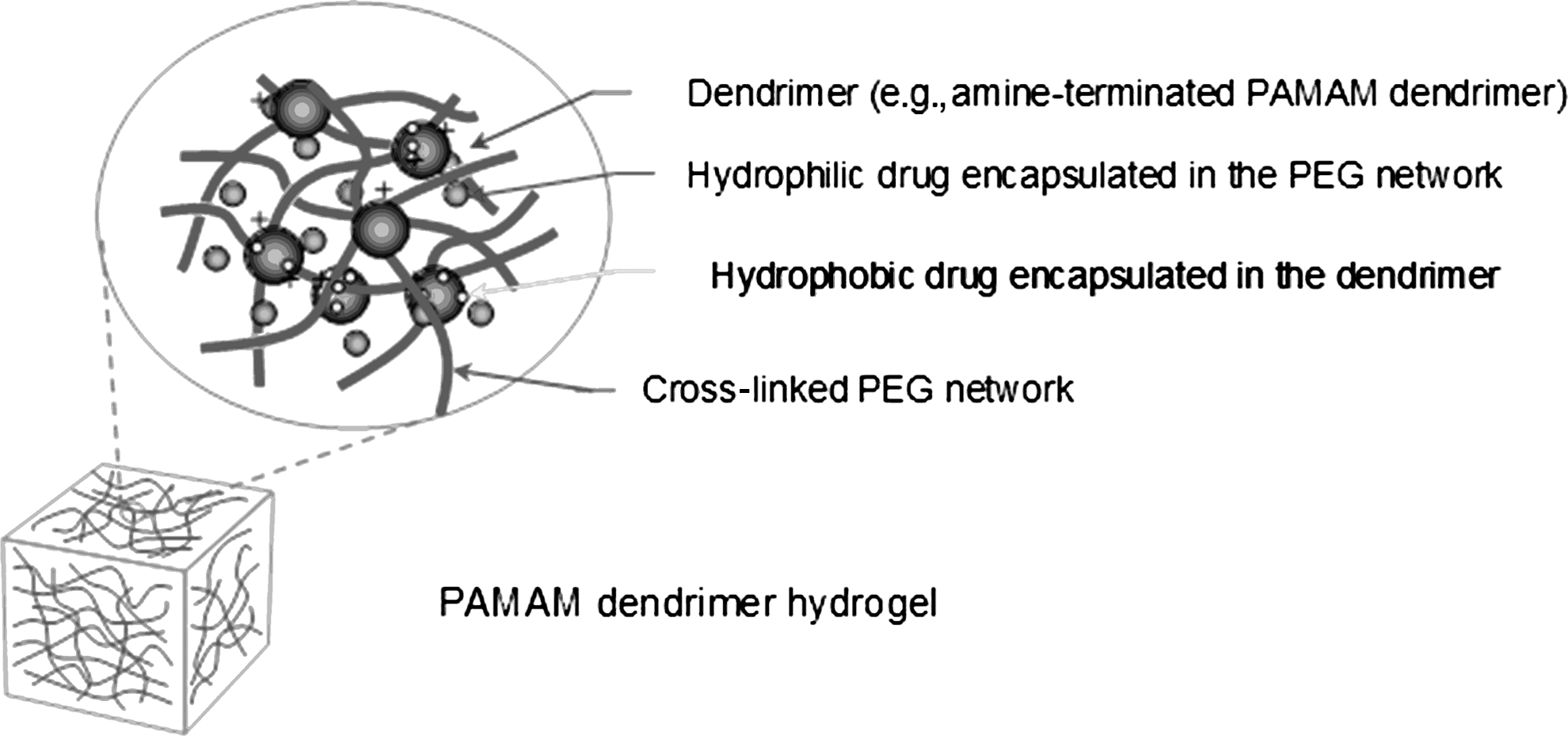
Schematic of a cross-linked polyamidoamine (PAMAM) dendrimer network. (Reprinted with permission from Desai et al. 6 Copyright 2012 American Chemical Society.)
As illustrated in Fig. 2, method 1 used PEG diol, a precursor molecule, which was conjugated to a PAMAM dendrimer, for example, G3.0, in such a fashion that the loading density of PEG on the dendrimer surface (also known as degree of PEGylation) could be modulated and the PEG chain length predetermined. We coupled PEG of different lengths (1500, 6000, and 12,000 g·mol−1) to the PAMAM dendrimer G3.0 to various degrees. Subsequently, acrylate groups were introduced to the PEGylated dendrimer by reacting with acryloyl chloride. Although UV-triggered photopolymerization of acrylate-carrying linear polymers can be initiated by a wide spectrum of photoinitiators, not all photoinitiators could be utilized to produce a cross-linked dendrimer–PEG-acrylate network as found in our work. Three widely used photoinitiators were screened, including dimethoxyphenylacetophone (DMPA), Irgacure 2959, and the eosin Y photoinitiating system (0.1 wt.% eosin Y, 40 wt.% triethanolamine, and 4 wt.% N-vinyl-2-pyrrolidinone).
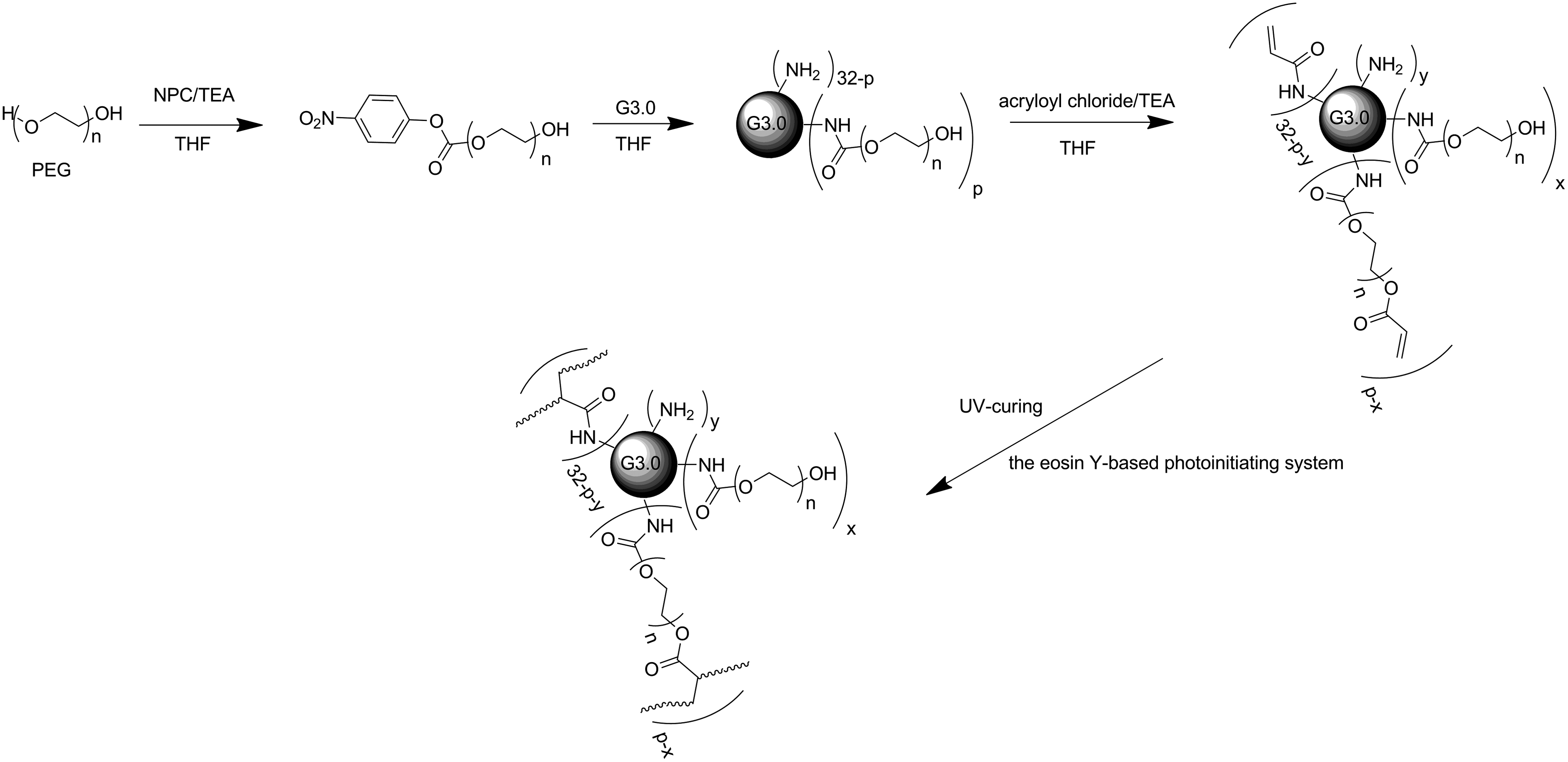
Method 1 for synthesis of photoreactive G3.0-PEG-acrylate macromonomer and its photoinitiated cross-linking reaction. In this method, polyethylene glycol (PEG) diol is coupled to a dendrimer proceeding acrylation. (Reprinted with permission from Desai et al. 6 Copyright 2012 American Chemical Society.)
Our initial screening study showed that the eosin Y photoinitiating system is an effective photoinitiator for cross-linking star-shaped photoreactive polymers, including our G3.0-PEG-acrylate macromonomer. Furthermore, we discovered that the degree of PEGylation, PEG chain length, and distribution of acrylate groups on the dendrimer surface affect cross-linking of G3.0-PEG-acrylate. We observed that only G3.0-PEG-acrylate with a high degree of PEGylation undergoes photoinitiated polymerization and forms a no-flow gel when the PEG chain length is 12,000 g·mol−1. 6
Although method 1 is a valid chemistry strategy to make dendrimer hydrogel (DH), primary amine surface groups can also react with acryloyl chloride during the acrylation step, making it difficult to control acrylation sites and preserve amine groups. Ideally, acrylate groups are coupled to the terminal hydroxyl groups of PEG chains on the dendrimer surface. This would allow a more efficient cross-linking reaction by avoiding the shielding effect of PEG chains on acrylate groups on the dendrimer surface. To address this concern, we developed method 2. In this method (Fig. 3), we reacted acryloyl chloride with PEG diol first to attach acrylate to one end of PEG and then couple the resulting PEG acrylate to the dendrimer. This improved method restricts acrylate to the PEG chain and avoids consuming remaining primary surface groups.
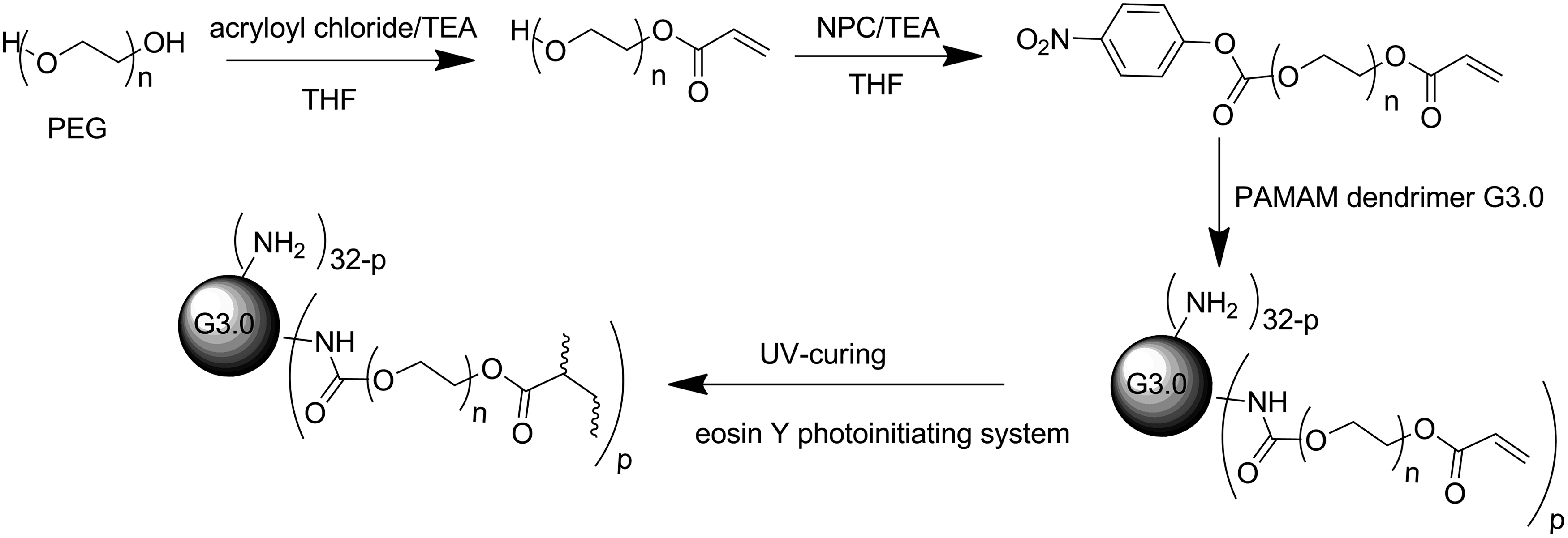
Method 2 for synthesis of photocurable G3.0-PEG-acrylate macromonomer. In this method, one distal end of PEG diol is coupled to an acrylate group, and the modified PEG is conjugated to the dendrimer. (Reprinted with permission from Holden et al. 7 Copyright 2012 Elsevier.)
Due to a high degree of surface modification, the resultant DH network based on the PAMAM dendrimer G3.0 becomes insensitive to pH, and its disintegration process invariably lost 40% of mass after 24-h incubation. We also made DH networks on the basis of the PAMAM dendrimer G3.5 tethered with PEG acrylate. The networks show strong pH-dependent disintegration when the surface still possesses one-third of carboxylate surface groups. As expected, the network disintegrates more readily at a higher pH (Fig. 4). Overall, serial structural features and properties of DH networks such as cytocompatibility, swelling, and disintegration can be fine-tuned by optimizing dendrimer generation, degree of PEGylation, PEG chain length, and density and distribution of acrylate groups. The DH can be explored for many applications in tissue engineering and drug delivery.

Dendrimer hydrogel made from the PAMAM dendrimer G3.5 tethered with PEG acrylate displays pH-dependent disintegration. (Reprinted with permission from Desai et al. 6 Copyright 2012 American Chemical Society.)
HDNP as an Enabling Vehicle for Antiglaucoma Drug Delivery
On the basis of DH, a novel scaffold we developed, we made an HDNP. 8 This platform is an integrative delivery system combining the DH network and PLGA nanoparticles, each of which owns unique structure and properties. Biodegradable biocompatible PLGA nanoparticles were used as a well-defined primary vehicle for drug loading and evenly dispersed in the DH network. As illustrated in Fig. 5, the HDNP possesses 3 distinct domains that can be possibly used for drug loading and adjustment of release kinetics: a PAMAM dendrimer core for loading of hydrophobic drugs and to confer positive charges to the system; PLGA nanoparticles for separate loading and confining of either hydrophilic drugs, hydrophobic drugs, or both; and the PEG network for loading hydrophilic drugs and modulation of the swelling, release, and biocompatibility of the formulation. This new platform is novel and uniquely integrates structures and properties of light-induced gelling, mucoadhesive polymers, and dendrimers, and enables a greater control over drug loading, release kinetics, and properties of the carrier (e.g., degradation, stability, and safety). The platform can combine multiple drugs in the same dosage form and deliver them in a slow-release fashion with multiple release profiles and sustained efficacy. In vitro drug release studies showed that sustained release of brimonidine and timolol maleate from HDNP lasted over a period of 35 days.
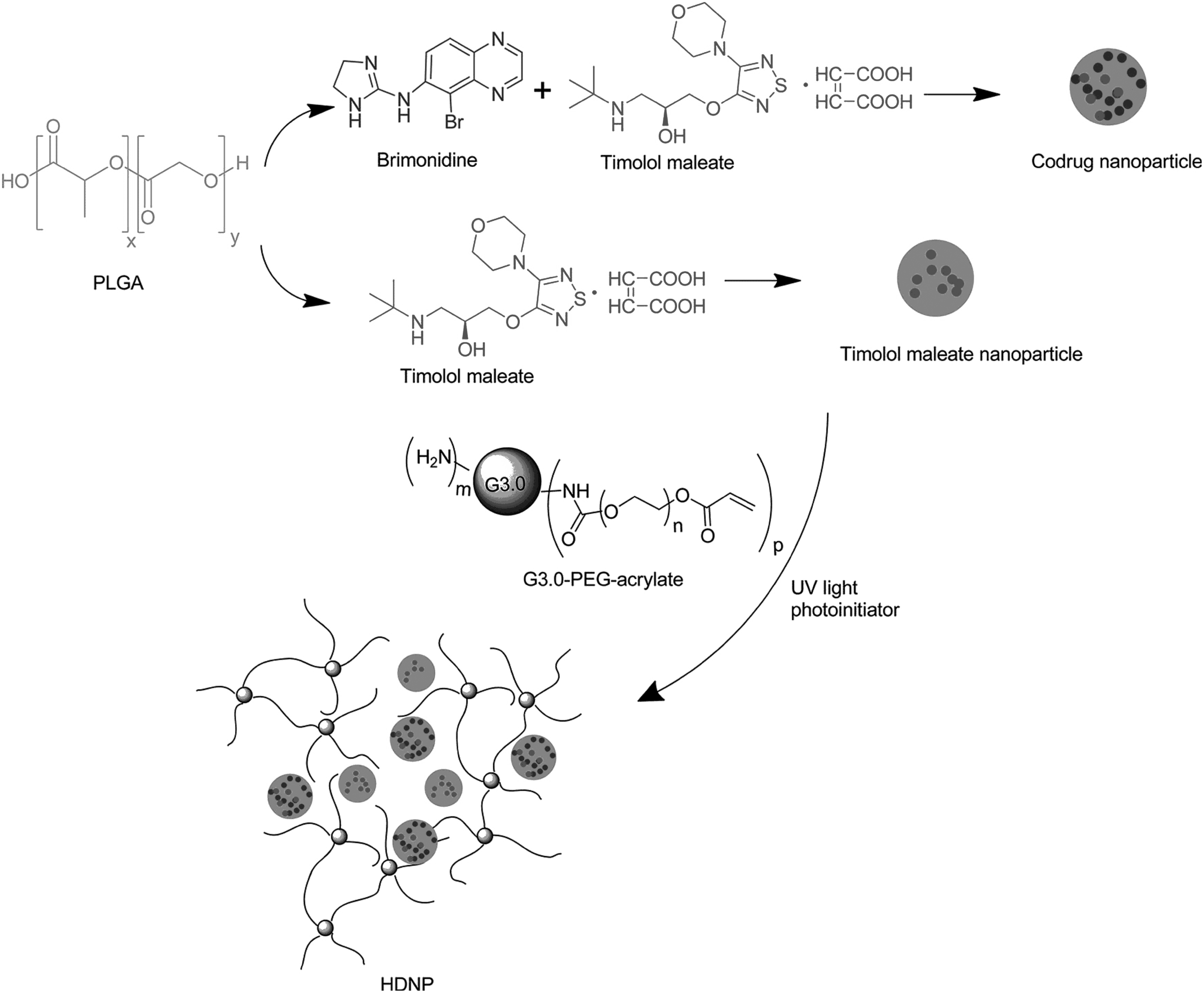
Hybrid dendrimer hydrogel/nanoparticle platform (HDNP). Nanoparticles loaded with brimonidine and timolol maleate were entrapped in the dendrimer hydrogel by subjecting the dendrimer–PEG acrylate to UV light in the presence of a photoinitiator. (Reprinted with permission from Yang et al. 8 Copyright 2012 American Chemical Society.)
The most intriguing property of this system is that one-time topical administration of brimonidine- and timolol maleate-carrying HDNP results in high drug absorption in ocular tissues and sustained control over intraocular pressure (IOP) for 4 days. This delivery platform is compatible with many of the glaucoma drugs that are currently available. Different from existing topical ocular delivery systems, this new platform allows for development of controlled-released long-acting formulations for delivery of single antiglaucoma drugs or drug combinations and fine-tuning of dose and dosage regimen for optimal and personalized treatment. As shown in Fig. 6, the HDNP codrug formulation reduced IOP by 29.5% in 3 h and maintained IOP at this level up to 6 h. Afterward, an effective IOP reduction (18% or higher) was maintained for 96 h. In contrast, sustained antiglaucoma effects for 48 h were achieved using either DH or PLGA nanoparticles. The saline control formulation was associated with apparent lowering of the IOP for <6 h.

HDNP sustains reduction in IOP in Dutch-belted rabbits. The IOP reduction observed after administration of brimonidine, and timolol maleate in
After 7 days, drug concentrations in ocular tissues were analyzed with HPLC-MS. Brimonidine delivered by HDNP achieved a 7.8-fold higher concentration in aqueous humor (P=0.009) and a 1.4-fold higher concentration in cornea (P=0.006) than obtained with the DH formulation (Fig. 7). Timolol concentration in aqueous humor was also significantly enhanced by the HDNP as compared to the other formulations. Therefore, the prolonged IOP-lowering effect most likely resulted from increased brimonidine and timolol concentrations in aqueous humor and a slower decline of drug concentrations enabled by HDNP.

At the end of 7 days postdosing, drug levels in eye tissues, including aqueous humor
Although the mechanism of action of HDNP has yet to be determined, the PAMAM dendrimer plays an important role. We examined particle retention on the eye surface using yellow–green fluorescent FluoSpheres® carboxylate-modified microspheres as a surrogate for PLGA particles. FluoSpheres dispersed in PAMAM DH sustained fluorescence signal until the end of observation (i.e., day 7) (Fig. 8). Despite a gradual decline in fluorescence intensity, FluoSpheres had a significantly prolonged residence time in contrast to those dispersed in the PBS solution. With the surface plasmon resonance technique, Bravo-Osuna et al. revealed permanent interfacial interactions at a molecular scale between the PAMAM dendrimer with transmembrane ocular mucins. 16 This work substantiated mucoadhesiveness of PAMAM DH as noted in our work. Taken together, sustained antiglaucoma effects were likely the combined results of enhanced uptake of drug-encapsulating PLGA particles by the PAMAM DH network and slow drug release from PLGA.

Representative fundus camera images of rabbits instilled with HDNP and NP formulations. FluoSpheres were entrapped in a dendrimer hydrogel or phosphate-buffered saline, pH 7.4, instead of drug-encapsulating poly(lactic-co-glycolic acid) nanoparticles. Images were taken at the end of days 1, 3, 5, and 7 of instillation of formulations. Left panel is the regular fundus camera image of the eyes, and right panel is a fluorescent fundus camera image. (Reprinted with permission from Yang et al. 8 Copyright 2012 American Chemical Society.)
Future Directions and Translational Efforts
Various classes of antiglaucoma agents in the market are being used to lower IOP. Most antiglaucoma drug formulations have to be taken once daily or even several times daily. Although there is one marketed gel form of glaucoma medication that has a form of slow release mechanism, namely, Timoptic XE, this formulation is still taken once a day by patients. Developing long-acting antiglaucoma drug dosage formulations represents an unmet clinical need for improving long-term patient compliance. This new delivery system has clear strengths in sustaining drug delivery and antiglaucoma effects longer than existing topical formulations. Treatment costs can be significantly reduced as a result of less frequent dosing and enhanced bioavailability. Thus, HNDP appears to be a competitive platform for commercialization. By virtue of the adaptable structure and modular nature of the platform, HDNP could be a valuable carrier to deliver drugs for other chronic ocular diseases such as dry eyes. The ease of application also makes this platform suitable for transdermal topical delivery or oral delivery to treat many other diseases. Exploration in those above-mentioned areas will generate a greater impact for this novel platform.
Prototype products that may be derived immediately from our work will be brimonidine and timolol maleate HDNP formulations. Because of the high incidence of insufficient IOP control after the application of single drugs,17,18 designing combination medications based on HDNP would be a preferred approach. This would also help reduce the frequency of using preservative in formulations, which is a potential source of toxicity. We would like to fully characterize pharmacokinetics (PK) and pharmacodynamics (PD) of single drugs delivered by HDNP, which will allow us to determine the optimal dosage of a single drug. It must be noted that the PD results were obtained in normotensive rabbits because of the short-term nature of the experiments (only 1 week) and reported IOP reductions by the 2 drugs in normotensive rabbits.19,20 A glaucoma animal model will be established and used to further validate HDNP formulations and establish a more clinically relevant PK/PD profile for HDNP, based upon which the appropriate dosage and observed effect will be estimated.
We did not observe ocular inflammation or discomfort in the rabbits receiving HDNP formulations during the 1-week experiment. Neither did we observe morphological or structural changes of the cornea and conjunctiva. However, patients rely on lifelong medication to manage glaucoma. It is paramount to examine the long-term safety of HDNP in future work and to study its systemic and local effects. The potential toxic effects of photoinitiator and free radicals generated during the UV-curing process must also be examined. The global market for glaucoma pharmaceuticals is predominantly led by prostaglandin analogs. Therefore, using HDNP to develop prostaglandin analog formulations will be an important strategy to broaden the applicability of the platform.
This technology would very likely offer a solution to improving patient compliance and adherence in glaucoma management. The versatility of the described ocular drug delivery platform ensures that products are capable of rapid evolution and transition as new antiglaucoma drugs are discovered. Demonstration of improved bioavailability and sustained release of timolol and brimonidine validate the potential of the HDNP for reducing the dosing frequency and improving long-term patient compliance. Responses from patients switching to long-acting medications are expected to be positive. Nonetheless, a shifting dosage regimen, for example, multiple instillations daily to preferably once weekly, might pose another challenge to compliance and adherence. Patients should be educated to appreciate the importance of dosage regimen. Another way to reduce patient nonadherence is to implement a reminder system and a dispenser for precise dosing and simplified self-administration.
Footnotes
Acknowledgment
This work was supported by the Wallace H. Coulter Foundation.
Author Disclosure Statement
No competing financial interests exist.