




Abstract
Abstract
Purpose:
Multiuse eye drops must maintain sterility and typically accomplish this by added preservatives. However, preservatives often cause harmful side effects. A gauze barrier dressing (“BIOGUARD®”) recently cleared by the FDA has an immobilized poly diallyldimethylammonium chloride (p-DADMAC) coating and is an effective antimicrobial with minimal compound release into solution. To implement use of this dressing as a replacement for preservatives in multidose eye drop bottles, its ability to maintain sterility without interacting with the active ingredient (AI) of the ophthalmic medication was tested.
Methods:
To determine immobilized p-DADMAC's microbicidal efficacy, it was added to eye drop bottles, then contaminated with Staphylococcus aureus (SA113) bacteria. To assess interference with AI in eye drops, high performance liquid chromatography was used to determine whether the AIs timolol and dorzolamide were affected after exposure to p-DADMAC. To further investigate effects on AI, the microbicidal activity of Vigamox® (moxifoxacin) was assessed after p-DADMAC gauze exposure.
Results:
S. aureus bacteria were eliminated by p-DADMAC-treated gauze for all samples. The concentrations of both timolol and dorzolamide increased after exposure to p-DADMAC-treated gauze, but spectrometric analysis showed that this did not occur when the p-DADMAC-coated material was presoaked in deionized water. The microbicidial activity of moxifloxacin was unaffected by exposure to p-DADMAC-treated gauze.
Conclusions:
Due to its lack of effect on eye drop AI and its microbicidal efficacy, p-DADMAC treatment would make an excellent candidate for replacing preservatives in eye drops.
Background
M
The incidence of dry-eye syndrome is significant, with several million people worldwide affected, with incidence increasing with age.4–8 There are estimated to be more than 3 million people in the United States with glaucoma; it is the leading cause of blindness with more than 120,000 affected in the United States.4,9 About 1 in every 10,000 infants are born with glaucoma. The elderly and African Americans are disproportionately affected by glaucoma.
The eye drops cost between $150 and $874 per year depending on the type of medication and use rate. 10 Insurance generally does not cover the cost of single use packaged eye drops and they are not as readily available, 11 so most sales are for multiuse containers. Customers also prefer multiuse containers due to convenience, particularly for the elderly or arthritic. There is sometimes concern by pharmacists about the safety and stability of preservative-free single use drops since they lack a preservative.
Here, we describe an approach that puts an immobilized microbicide into the bottle and maintains adequate activity (using standard tests) without microbicide being released into the eye from a multiuse bottle. This novel gauze technology, which has been cleared by the FDA for a different application, could find broader use for other stored liquids. The microbicidal insert uses localized microbicidal activity in a way that is unlikely to cause any toxic response to cells that do not directly contact the solid insert.
The microbicidal insert
Polyquartenary or monoquartenary ammonium compounds (“quats”) are common antimicrobials. The most common preservative in eye drops is currently BAK, a mono quat. There have been research publications describing polymer blends using quats as surface treatments, but very few have reached commercialization for any purpose. One of the major limitations of immobilized quats has been their inactivation over time due to adsorbed proteins covering the active layer. The immobilized poly quat used in this article, poly diallyldimethylammonium chloride (p-DADMAC) is currently the only immobilized antimicrobial cleared by the FDA for medical use. In a recent FDA panel meeting, the p-DADMAC-treated material (called “BIOGUARD®”) was found to be the only commercially available as an advanced and microbicidal wound dressing that did not release drug into the wound. 12
Some of the unique properties of devices incorporating this immobilized poly quat material are (1) highly effective killing of microorganisms on contact, (2) no zone of inhibition when tested in a petri dish, (3) inexpensive materials used, (4) the treatment is stable over long periods of time, and (5) retention of activity even in 20% serum. 13 We believe that the very high molecular weight and charge density of the poly quat lead to a very extended conformation of the polymer when exposed to solution, and that this gives the remarkable stability and novel killing power of p-DADMAC. 13 An important requirement for success in applying this technology to eye drops is whether the container can pass the U.S. Pharmacopeia Preservative Effectiveness Test designed for multiuse eye drop bottles. 14
The material used for this study was BIOGUARD Gauze Sponges (p-DADMAC gauze) and BIOGUARD Foam (p-DADMAC foam) available as a 4-inch by 4-inch USP Type VII Gauze (Dermasciences catalog no. 97412). The polymer immobilized on the surface is most commonly used in its soluble form to clarify drinking water by precipitating suspended clay particles. 15 Therefore, trace polymer remains in the water at a low level (up to 50 ppm) that is acceptable for drinking.
Microbicidal activity
To prove initial microbicidal efficacy, p-DADMAC-treated gauze was tested against a range of organisms. The USP 51 antimicrobial effectiveness testing was also used, which in this case refers to a “Category 1” protocol for “Injections, other parenteral, including, emulsions, optic products, sterile nasal products, and ophthalmic products made with aqueous bases or vehicles.” 14 The test protocols include a specific bacterium, mold, and yeast. The organisms involved are Aspergillus niger, Candida albicans, Escherichia coli, Pseudomonas aeruginosa, and Staphylococcus aureus. Each organism involved has specific AATCC testing protocols, the designations for which are found in Table 1. 16 In each case, inoculations of 10 5 to 10 6 organisms were used. 17 To pass, the testing requires a 1 log reduction in organism count and effectiveness against a subsequent similar challenge suspension of the organism at specified later times. In addition, the microbicidal effectiveness of just the p-DADMAC-treated gauze was tested against a range of organisms in 10% bovine serum and gave results similar to p-DADMAC-treated gauze in media without serum when tested using the same AATCC methods.
VRE, vancomycin-resistant enterococci.
There is no zone of inhibition for these coatings (Fig. 1), indicating the lack of release of the agent from the surface, and this will limit irritation to the eye by exposure to soluble microbicide. These results show the very high efficacy of the p-DADMAC treatment as a microbicide. 18 Further testing was completed to insure the antibacterial efficacy of p-DADMAC when placed in a multidose bottle and evaluated using USP 51 testing criteria.

No zone of inhibition for poly diallyldimethylammonium chloride (p-DADMAC)-treated gauze (right) and no bacterial growth (red areas) on the gauze itself. Bacterial growth (in red) is seen on the untreated gauze (left). 16
Interaction with eye drop active ingredient
For p-DADMAC to be used as a replacement for BAK and other preservatives in eye drops should not show any significant chemical interaction with the active ingredient (AI) in any ophthalmic medications. Significant changes in the concentration of the AI would cause the medication to be ineffective. In these experiments, dorzolamide/timolol a combined glaucoma medication was used. There was an observed increase in the concentrations of both timolol and dorzolamide after p-DADMAC exposure due to the possibility of the p-DADMAC gauze selectively absorbing water from the dorzolamide/timolol solution, further testing was done to determine whether this was causing the observed concentration increase.
A second method for determining whether p-DADMAC has a clinically relevant effect on AI in ophthalmic medications was performed. Moxifloxacin is an ophthalmic antibiotic that does not contain any preservative due to its inherently antimicrobial properties. A change in the efficacy of moxifloxacin would indicate an interaction occurring between the AI in moxifloxacin and the immobilized p-DADMAC.
Methods
Microbicidal activity
Commercially available 10 cc plastic eye drop bottles of artificial tears were emptied and thoroughly rinsed. The dropper tip was removed and p-DADMAC-impregnated gauze was cut into a circle the same size as the internal diameter of the bottle and placed at the bottom of the eye drop bottle, and empty bottles served as control. All bottles were filled with 10 cc of liquid nutrient agar (trypticase soy). The experiment was performed in triplicate. About 10 6 colony forming units (CFU) of S. aureus were placed into each of the bottles. To simulate clinical conditions, each bottle was left at room temperature for 24, 48, and 72 h. A sample was taken at each time point and plated on blood agar. This follows the USP method for sterility testing of multiuse eye drop bottles. 14
To determine whether p-DADMAC interferes with the bioactivity of moxifloxacin, 8 mm punch biopsies of p-DADMAC gauze were saturated with commercially available moxifloxacin (0.3 mg/cc) for 1 h. The material was placed in a petri dish that was previously inoculated with 10 6 CFU of S. aureus and allowed to incubate for 24 h.
Interaction with eye drop AI
Due to the chemical composition of p-DADMAC, timolol, and dorzolamide any chemical changes (reactions or ion-exchange) resulting from p-DADMAC would be expected to occur rapidly. Thus, for each repetition of the experiment p-DADMAC was only soaked in dorzolamide/timolol for 1 h. A Waters 2695 high performance liquid chromatography (HPLC) instrument with a photodiode array detector (Waters 2996) and a C18 column was run in reverse phase mode using samples before and after p-DADMAC exposure. The aqueous phase was deionized water (DIW) with 0.1% trifluoroacetic acid (TFA) while the organic phase was acetonitrile (ACN) with 0.1% TFA. The elution gradient used is shown in Table 2. The detector wavelength was set at 280 nm. The oven temperature and the sample temperatures were both held at 40°C for the duration of the elution period. Due to the very high concentrations of AI, all samples were first diluted down to 1/32 in mobile phase (95% DIW/5% ACN). To generate a standard curve of AI, a dilution series was prepared with 6 dilutions from 1/32 to 1/1,024 of neat Cosopt in mobile phase. The absorbance of the eluted materials was primarily monitored at 280 nm. These solutions were run, and their elution peaks were quantified using Chromeleon 7.2 software (Thermofisher).
To test whether p-DADMAC affects a commercial solution dorzolamide/timolol, 8 mm punch biopsies of p-DADMAC gauze were soaked in 500 μL of dorzolamide/timolol for ∼1 h. After they were soaked, the samples were then centrifuged for 2 min. The supernatant fluid was then diluted to 1/32 in mobile phase and run in the Waters HPLC under the same protocol as the standard curve samples. Due to an observed increase in the concentrations of timolol and dorzolamide after exposure to p-DADMAC gauze using HPLC, further tests were done to determine the source of this concentration increase. Eight millimeters punch biopsies of p-DADMAC gauze were taken and soaked in 500 μL of DIW for 15 min. The samples were then centrifuged for 2 min to remove all unabsorbed DIW and the supernatant fluid was pipetted out. The samples were then soaked in 500 μL of dorzolamide/timolol each for 1 h. The resulting solutions were then taken and diluted down to 1/7 in DIW. The solution was analyzed using a Nanodrop-1000 Photospectrometer. The result of this was then analyzed using a previously created dilution curve series of dorzolamide/timolol solution diluted in DIW, and the concentration of dorzolamide/timolol after exposure to p-DADMAC gauze was calculated.
To determine whether moxifloxacin's microbicidal properties were affected by contact with p-DADMAC-treated material, moxifloxacin was left in contact with p-DADMAC-treated gauze and then tested using a bioassay to determine whether it was still microbicidal. The method used to assess microbicidal efficacy was zone of inhibition. Petri dishes with P. aeruginosa (PA01), S. aureus (SA113), Staphylococcus epidermidis (S. epi., ATCC 35984), E. coli (ATCC 25922), and Acinetobacter baumannii bouvet (A. bama, ATCC19606) were prepared initially. The moxifloxacin eye drops were diluted 50 times in phosphate buffered saline (PBS) (49 mL of PBS with 1 mL moxifloxacin drop). Twenty-five milliliters of the resulting solution was pipetted into a 50 mL tube containing either cut p-DADMAC gauze or untreated gauze, which was used as a control. The saturated gauze samples were then placed in the petri dishes and treated for 0 min, 30 min, 1 h, and 6 h. For each time point the gauze was removed from the petri dish and at the specified time interval and the zone of inhibition was measured the next day.
Results
Microbicidal activity
There was complete microbicidal activity and full inhibition of growth in the bottles of SA113 bacteria, with both the p-DADMAC-treated foam and p-DADMAC gauze at 24, 48, and 72 h (“full kill”). In contrast, there was no inhibition of growth or killing of organisms in the control bottles.
The foam and gauze discs saturated with moxifloxacin retained complete antimicrobial activity with total eradication of the susceptible bacteria.
Interaction with eye drop AI
Figures 2 and 3, pictured below, show that the quantities of both the dorzolamide and timolol increase when exposed to p-DADMAC relative to the unexposed control. The p-DADMAC gauze also showed a more consistent increase in mass of timolol and dorzolamide when compared with the p-DADMAC foam. The p-DADMAC gauze showed a 68% increase in timolol mass and a 55% increase in dorzolamide mass when compared with the control mass. The p-DADMAC foam showed a 48% increase in timolol mass and a 29% increase in dorzolamide mass when compared with the control mass.
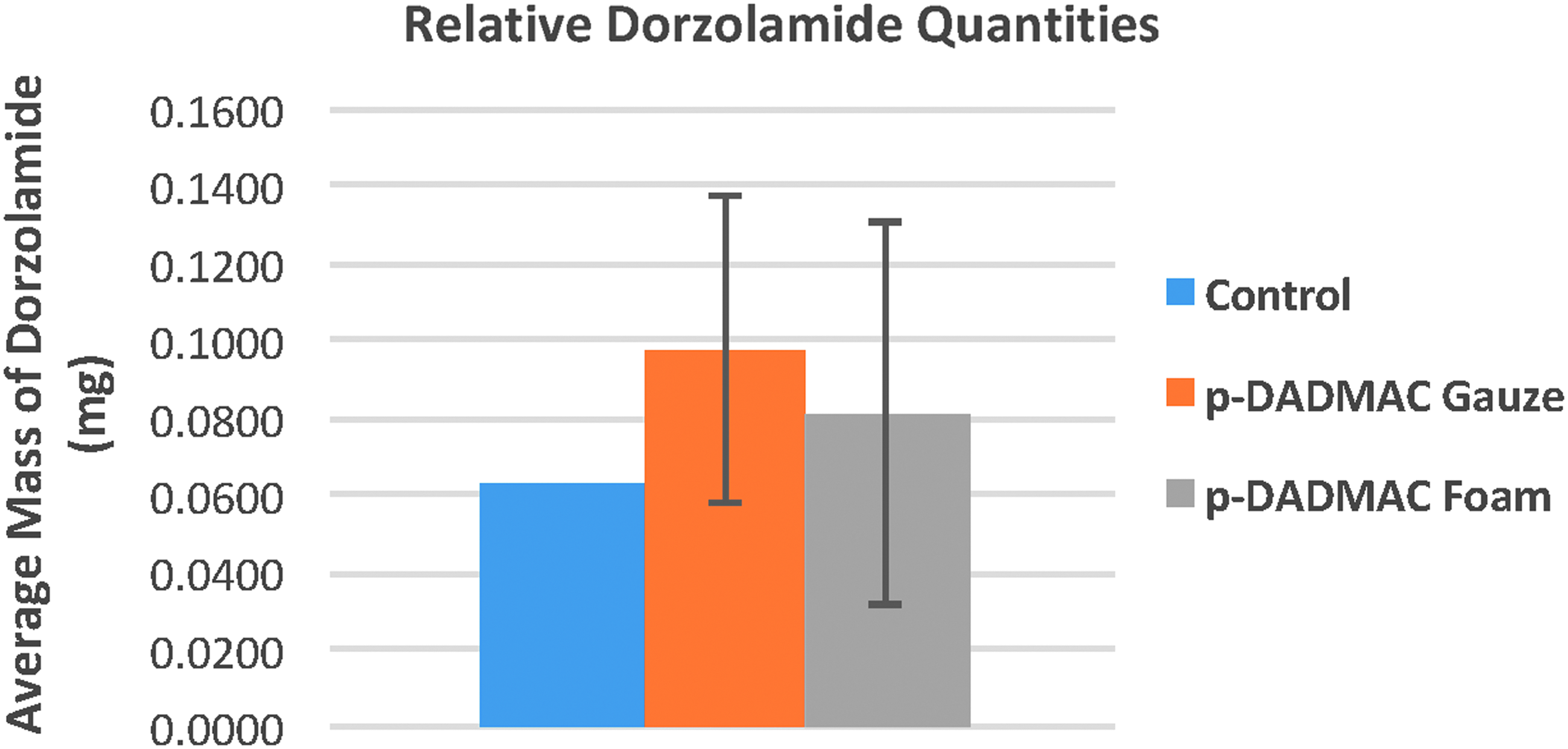
Quantification of dorzolamide concentration, with 1 standard deviation error bar (4 replicates).
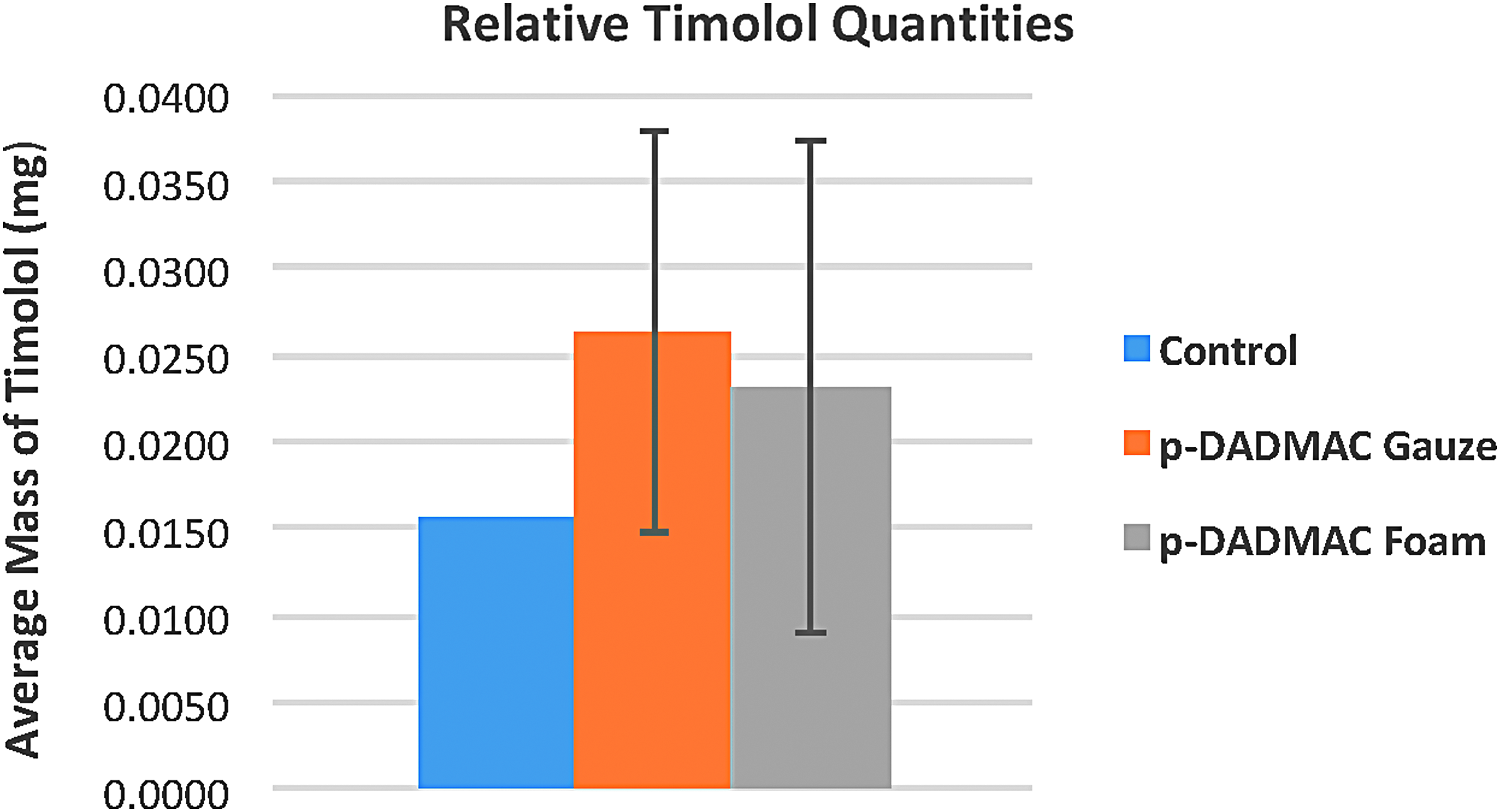
Quantification of timolol concentration, with 1 standard deviation error bar (4 replicates).
There was no observed increase in the concentration of dorzolamide/timolol after exposure to p-DADMAC gauze that had been presoaked with DIW (graph 3). The calculated difference between the theoretical dilution of dorzolamide/timolol and the experimentally observed concentration of dorzolamide/timolol is ∼18% for both the p-DADMAC foam and p-DADMAC gauze. This analysis was done for 280 nm wavelength, as indicated by the dotted line on Fig. 4. This is the same wavelength of interest that was used in the prior HPLC analysis.

Dorzolamide/timolol absorbance results from a Nanodrop spectrophotometer.
The zone of inhibition measurements for moxifloxacin show that moxifloxacin's effectiveness is unaffected by exposure to p-DADMAC gauze versus exposure to untreated gauze (Fig. 5).
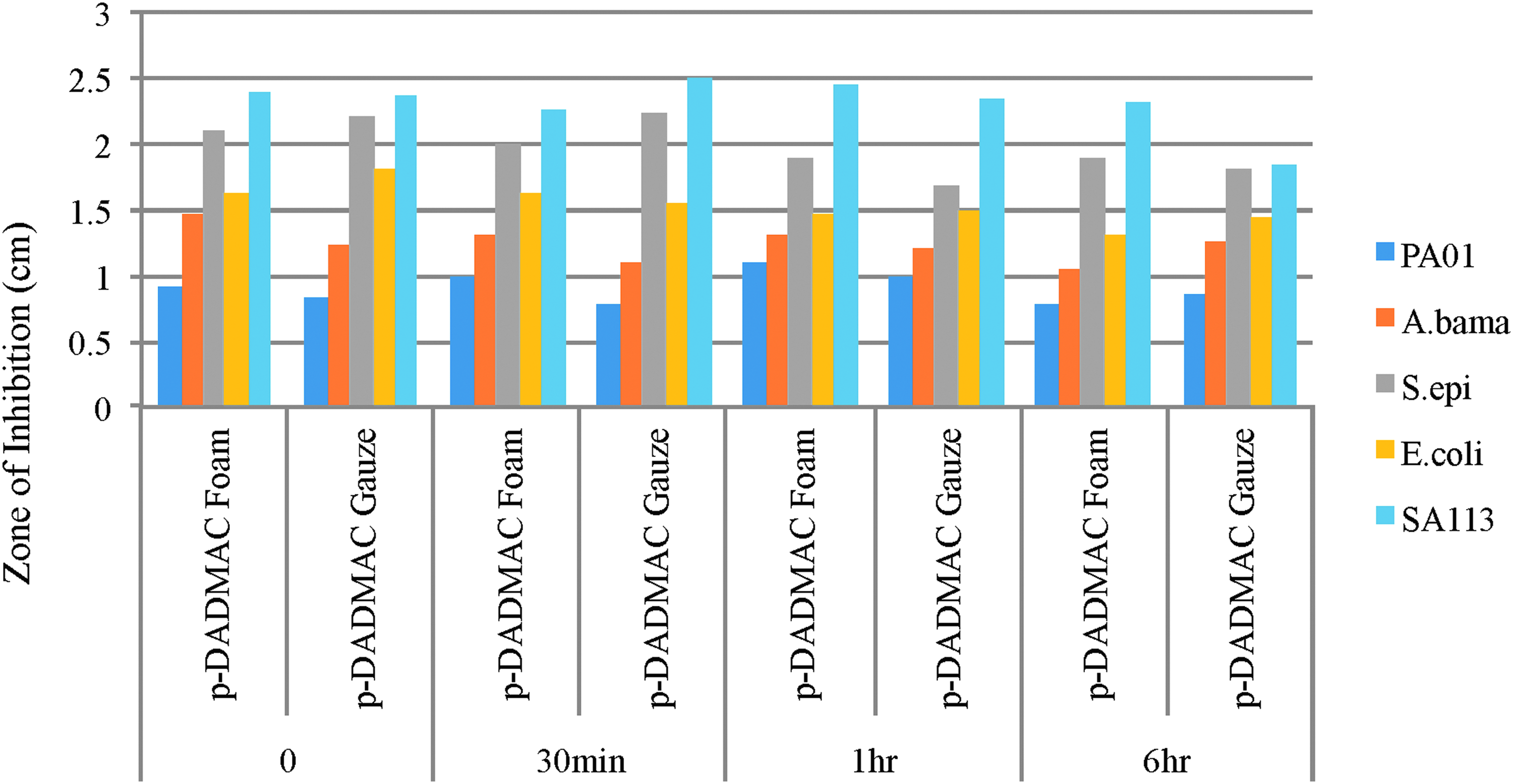
Zone of Inhibition bioassay performed on moxifloxacin.
Discussion
Microbicidal activity
Bound p-DADMAC is an excellent candidate for an ophthalmic preservative. The free, water soluble, polymer is commercially used for purification of drinking water. It is a nontoxic, large chain molecule with high charge density that can disrupt bacterial cell walls with a 50-ppm allowable limit in municipal drinking water supplies. It is rapidly acting and has a broad spectrum of activity against a wide variety of organisms including Methicillin-resistant Staphylococcus aureus (MRSA) and Vancomycin-resistant enterococci (VRE). There is little possibility for the development of resistance since its mechanism of action is membrane disruption, and it is not depleted with use. It is irreversibly bound to the substrate and therefore does not leach. It stays at full strength and never drops below the minimum inhibitory concentration of susceptible organisms. There is 99.9% kill within minutes for most pathogens. Dressings with bound p-DADMAC are FDA cleared and received de novo clearance because of their unique mechanism of action (in contrast to a 510(k) clearance). They are considered devices and not a drug.
Interaction with eye drop AI
P-DADMAC does not appear to decrease the amount of timolol or dorzolamide present in the commercial solution of dorzolamide/timolol; instead, the p-DADMAC ion appears to have a concentrating effect on the both of the AIs. However, this concentrating effect appears to be due to the selective absorption of the solvent, which is primarily water. There is no observed concentration increase when p-DADMAC-coated material is first soaked in DIW before dorzolamide/timolol exposure. Furthermore, the previously observed increases in timolol and dorzolamide after exposure to p-DADMAC are not clinically significant. Even after the increase, both drugs were still well within a safe dosage range.19,20
Testing of moxifloxacin's microbicidal efficacy with and without exposure to p-DADMAC-treated gauze showed that the p-DADMAC-treated gauze had no significant impact on moxifloxacin's antimicrobial properties. This would indicate that p-DADMAC does not have any form of significant interaction with the AI in moxifloxacin.
Conclusions
p-DADMAC treatment would be an excellent alternative to currently used preservatives in multidose ophthalmic medications. Following USP 51 guidelines and standards for antimicrobial efficacy, p-DADMAC-treated gauze was shown to be effectively microbicidal. p-DADMAC-treated gauze did not have a zone of inhibition when exposed to bacteria, a trait that would indicate p-DADMAC-resistant strains of bacteria would be unlikely to occur. This would allow p-DADMAC to be an effective microbicidal over an extended period and wide range of uses. Antimicrobial effectiveness testing completed using standard multidose bottles with p-DADMAC-containing inserts yielded similar results showing p-DADMAC's antimicrobial efficacy. Testing of immobilized p-DADMAC in 10% bovine serum showed its ability to retain its microbicidal properties when exposed to biological fluids. p-DADMAC treatment of gauze and foam does not appear to cause any reduction in the amount of dorzolamide or timolol present when exposed to a commercial solution of dorzolamide/timolol, nor does it affect the antimicrobial effectiveness of a commercial solution of moxifloxacin upon exposure.
This apparent lack of interaction with the AIs in 2 prominent glaucoma drugs and an antibiotic, combined with its microbicidal capacity, makes p-DADMAC gauze treatment an excellent alternative to preservatives in ophthalmic medications. This treatment has the potential to be a superior alternative to BAK and other preservatives in eye drops because it is an immobilized compound and thus does not release itself into the contained liquid. 15 Since there is no direct contact between p-DADMAC treatment and the eye when using p-DADMAC as microbicidal insert, there is no opportunity for p-DADMAC to cause irritation or side effects in patients. Poly-DADMAC-treated dressings, and the p-DADMAC gauze and foam, already have FDA clearance for use as a dressing. Having FDA clearance for use as a dressing significantly increases the likelihood of FDA clearance for use as a microbicidal multidose bottle ophthalmic medication insert, and reducing the expense and amount of time needed to gain FDA approval through use of the 510(k) FDA clearance route. 12 Exchanging BAK for a p-DADMAC-treated insert as the preservative used in multidose ophthalmic medication bottles could dramatically improve the quality of life for millions of patients who use multidose bottles for long-term use of ophthalmic medications. Patients who currently suffer from painful and severe side effects caused by BAK in their medications would find their pain alleviated with its removal from their medically necessary ophthalmic medications. The increased compliance with regular use would almost certainly decrease the progression of disease leading to blindness.
Footnotes
Author Disclosure Statement
C.B. and G.S. own stock in QuickMed, a small company that has licensed the p-DADMAC technology and they are listed on related patents assigned to the University of Florida.
The remaining authors have no financial conflict of interests.