




Abstract
Dear Editor:
Lung cancer is the most common source of brain metastases (BRM). 1 The median survival of those with untreated BRM is 1 month; the median survival becomes 2 months when corticosteroids are administered, and extends to between 3 and 4 months with the application of whole brain radiation therapy (WBRT). 2 In patients with advanced cancer, the ultimate outcome is not often in doubt. However, the prognostic uncertainty makes clinical decisions difficult for caregivers and may lead to inappropriate resource expenditure. 3 An individual with BRM who might possibly survive for longer than 6 months should not be enrolled in a hospice program because the requirement for admission into a Medicare-funded hospice care in the United States is a life expectancy of 180 days. 4 It was our impression that paralyzed patients with BRM do not live long and may not derive any benefit from WBRT. Thus, we undertook this retrospective study to confirm our suspicion.
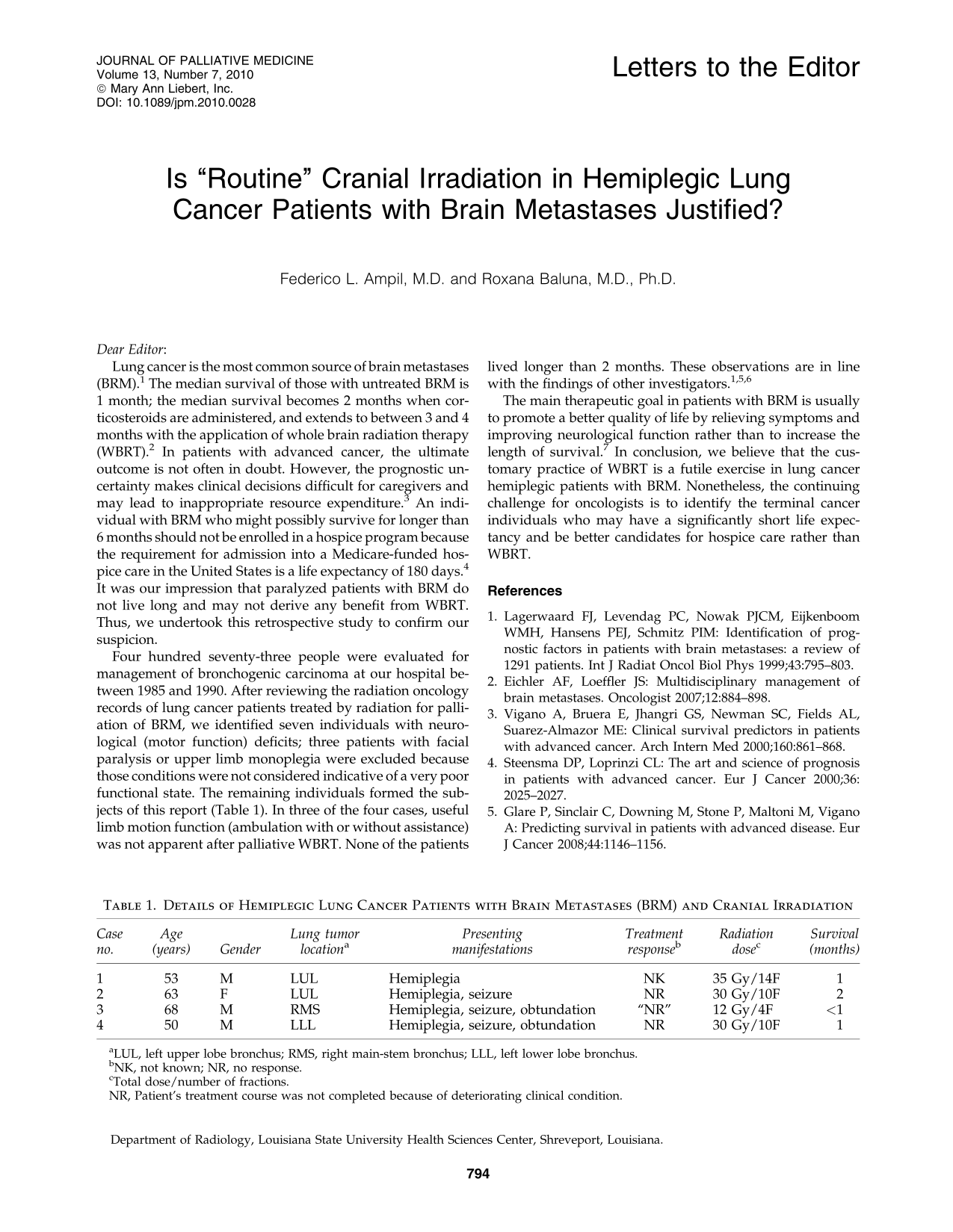
Four hundred seventy-three people were evaluated for management of bronchogenic carcinoma at our hospital between 1985 and 1990. After reviewing the radiation oncology records of lung cancer patients treated by radiation for palliation of BRM, we identified seven individuals with neurological (motor function) deficits; three patients with facial paralysis or upper limb monoplegia were excluded because those conditions were not considered indicative of a very poor functional state. The remaining individuals formed the subjects of this report (Table 1). In three of the four cases, useful limb motion function (ambulation with or without assistance) was not apparent after palliative WBRT. None of the patients lived longer than 2 months. These observations are in line with the findings of other investigators.1,5,6
LUL, left upper lobe bronchus; RMS, right main-stem bronchus; LLL, left lower lobe bronchus.
NK, not known; NR, no response.
Total dose/number of fractions.
NR, Patient's treatment course was not completed because of deteriorating clinical condition.
The main therapeutic goal in patients with BRM is usually to promote a better quality of life by relieving symptoms and improving neurological function rather than to increase the length of survival. 7 In conclusion, we believe that the customary practice of WBRT is a futile exercise in lung cancer hemiplegic patients with BRM. Nonetheless, the continuing challenge for oncologists is to identify the terminal cancer individuals who may have a significantly short life expectancy and be better candidates for hospice care rather than WBRT.