




Abstract
Abstract
Background:
Social and emotional challenges of migration and integration include managing memories and perceptions of country of birth, leaving loved relatives behind, and the challenges of maintaining traditions, such as cultural food and practices. For many migrants, the strong connection with their birth country is never completely severed, which may become pertinent at particular events and stages in life with inherent emotional impact. This may be particularly the case for end-of-life experience.
Objective:
We undertook a systematic review of published evidence of research to identify the lived experience of migrants dying in a country different from their country of birth.
Design:
The search terms [transnationals OR migran* OR immigran*] AND [emotions OR belonging OR acculturation OR national identity] AND [dying OR end-of-life OR contemplation of dying] AND [palliative care OR terminal care] were used on the following electronic databases: MEDLINE, Embase, CINAHL, EBSCO, Geobase, PsychINFO, and Scopus to the end date of January 2014. No date limit was imposed. All research methodologies were included. The search was restricted to human subjects and English language.
Results:
Seven qualitative studies met the criteria. Thematic analysis of these studies identified three main themes: sense of dual identity, importance of traditions from their country of origin, and dying preferences.
Conclusion:
Findings have implications for the provision of palliative end-of-life care for dying transnationals, particularly in relation to providing support for migrants who are dying to resolve social and emotional issues.
Introduction
T
In New Zealand, there is a steady increase in the numbers of international migrants, with the highest inflow in over 10 years recorded in September 2013. Similarly, researchers in the United States have estimated that immigrants will “account for one-half the growth of the total population” by the year 2030. 9 This calls for more understanding on migrants' experience of dying away from their country of birth.
Palliative care for ethnically diverse populations may be limited by inequity of access to care, lack of public knowledge about services and cultural needs not being addressed. 10 Enabling migrants to identify and address issues experienced when facing the end of life in their adopted country may assist in improving their care and experience. Our aim was to conduct a systematic review of research relating to migrants/transnationals experiencing an end-of-life illness to identify that “lived experience.” These findings may enhance understanding of specific approaches for their palliative care.
Methods
Our research question was, “What is the experience of migrants dying in a country different from their country of birth?’ The search used components of the Preferred Reporting Items for Systematic Reviews and Meta-Analyses (PRISMA) strategy 11 regarding the setting of eligibility criteria and search strategy, using the search terms [transnationals OR migran* OR immigran*] AND [emotions OR belonging OR acculturation OR national identity] AND [dying OR end-of-life OR contemplation of dying] AND [palliative care OR terminal care]. Studies were identified using a number of electronic databases: MEDLINE, Embase, CINAHL, EBSCO, Geobase, PsychINFO, and Scopus. The search was restricted to human subjects and English language. No start date limit was imposed; it was implemented in December 2012 and completed in January 2014. Hand-searching of reference lists supplemented the search. Duplicate articles were removed.
The review was carried out by the first and second authors. Articles were assessed against the review inclusion criteria, namely relating to the dying experience of migrants. All studies addressing migrants dying or contemplating their dying in their adopted countries were included with no exclusions by location, setting, research design, or sample size. Research on cultural care of the dying by practitioners in end-of-life was excluded if the patient's experience of dying was not described. Data extracted and tabulated were study methodology, location, setting, type and number of participants, aims, and findings of the study (Table 1).
EOL, end of life.
There was considerable heterogeneity. The studies varied with respect to participant numbers, research methodologies (all qualitative including ethnography and case story), locations, settings, and ethnicity of migrants. Given the relative paucity of available studies, none were excluded on the basis of methodological quality. All studies provided adequate narrative and patient perspectives to enable extraction of key themes.
Thematic analysis to identify, analyze, and report patterns and themed notions was used to categorize the participants' experiences, meanings, and reality. 12 Key themes were those that depicted important considerations in relation to the overall research question. Data were coded and independently assessed by two researchers and differences resolved by adjudication.
Results
The results of the literature search are shown in Figure 1. Seven qualitative studies met the inclusion criteria (Table 1). Countries in which the studies were conducted were the United States,6,13,14 United Kingdom, 15 Spain, 16 New Zealand, 17 and Ghana. 18 They involved transnationals from Cambodia, the Philippines, India, the Caribbean, European countries, Guatemala, and Ghana. Numbers ranged from a single case study 14 to over 120 participants 6 who came from health (primary, secondary, tertiary),6,14,15 community,16,17 and family settings.13,18 Most were elderly. Their health ranged from well retirees16,17 to those with chronic illness 6 to those at end-of-life.13,14 Thematic analysis of these studies identified three main themes.
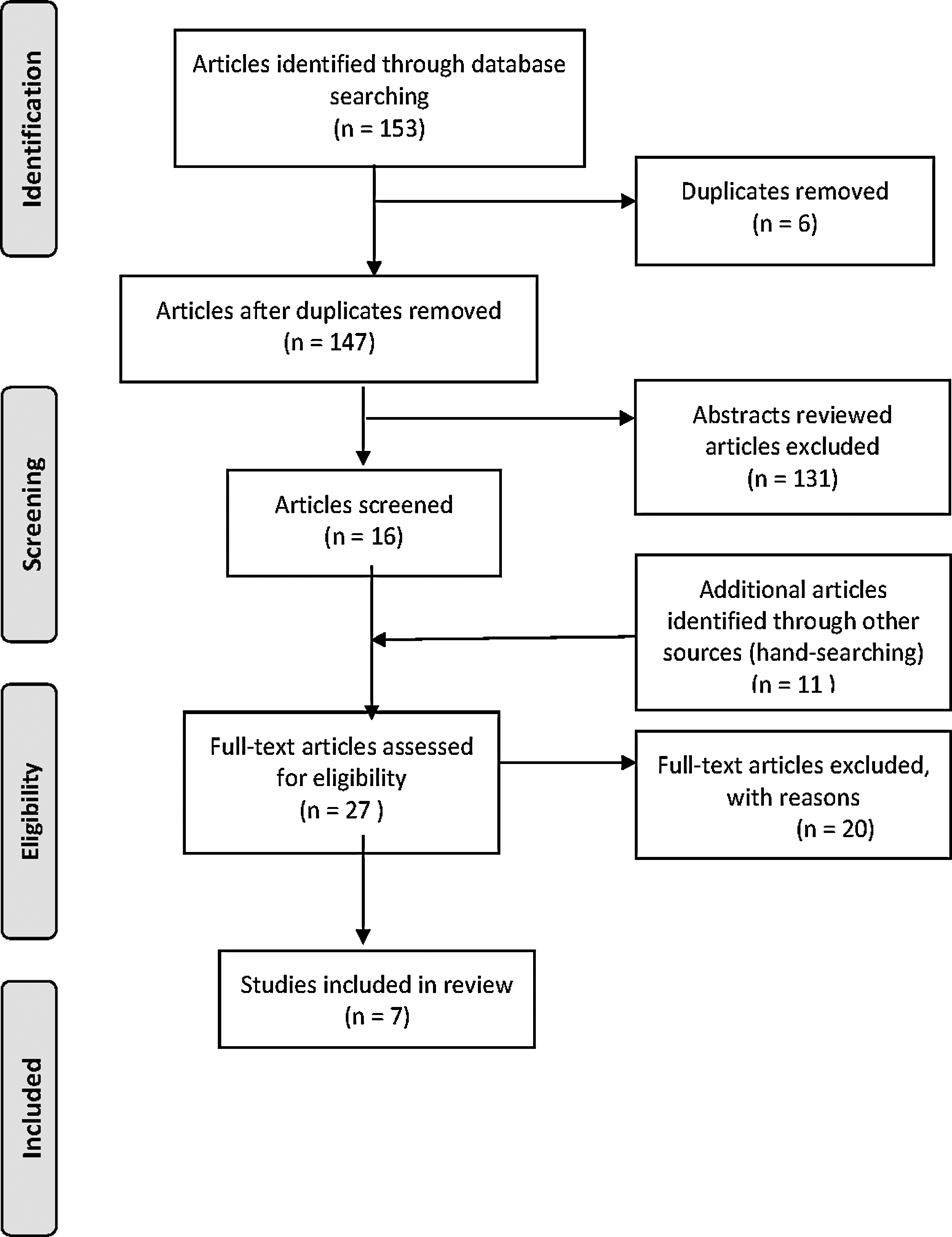
Flow chart of literature search results.
Dual identity
The first theme related to their dual identity with both their country of origin and their country of adoption. 17 This influenced where migrants wanted to spend their dying time, largely dependent on proximity to family and friends. In the Spanish study, dying northern European immigrants contemplated returning to their country of origin to be in familiar surroundings and have the care of relatives in their dying time. 16 Identity included a sense of belonging in the country of adoption. Belonging depended on the level of integration into the adopted country 15 and proximity of family. 6 Identity became a significant consideration in life-limiting illness, 6 exemplified in a case of a man dying in America, who chose to return to his home country of Guatemala to spend his last days with his daughter because he felt that was where he belonged. 14
Identity as perceived by individual transnationals is made up of their ethnic, cultural and spiritual selves. 6 The process of migration is subject to negotiation as they integrate into a different society, involving transformation and adjustment.2,17 Regardless of their country of origin and its close resemblance and similarity to their country of adoption in population appearance, migrants negotiate their “hybrid” identity to fit. 17 Contemplating the end of life brings their country of origin back into focus as they consider in which country they wish to spend their last days and/or be buried.6,14,16–18 At best the ability to replicate practices in their country of adoption can serve as solace at the end of life. 5
The sense of belonging as a bond with country of origin is part of identity.5,15 This sense of belonging varies with ethnicity and age of migrant and its inherent meaning directs global relationships, integration into adoptive country, end-of-life needs, and experience. Maintaining global relationships over distance by using technology such as video and phone contact with family and friends to preserve the sense of belonging abroad 1 is named “kin-work.” 7 This enables continuity and memorialization. Transnationals can use the word “home” to refer to either or both country of origin or adoption, linked with their new hybrid identities in the process of integration into a new society.16,17 Home often refers to where family members lived and engenders the sense of belonging.1,18 At the end of life, the country of origin 16 or adoption 6 may have increasing importance in connection with the presence of close family members, siblings, parents, or children. Death and dying, theirs or that of an elder or parent in the family, is a significant factor that draws migrants home, strengthening ties of belonging, and kin affiliation. For some, perceptions of home are profoundly affected when visiting their country of origin and perceiving changes that make it not “feel like home” anymore.5,17
Importance of traditions from their country of origin
The second theme related to transnationals' traditions from their country of origin. These presented as reminiscences and memories of people, places, and events, often coupled with stories of their history and roots in their country of origin. In one study, global ties between family members instigated the pooling of family resources from India to America in a crisis caused by life-threatening illness. 13 This theme was particularly apparent in Cambodian Americans whose narratives took them back to their lives in their country of origin, the relatives still living there and traumatic events of the time just before they left. 6 These migrants contemplated life-limiting illness with concern as they tried to reconcile their memories of the past.
This theme included continuity and efforts to mend the disruption of migration, as demonstrated by the Filipino Americans whose continued rituals and food practices helped create a life similar to one they had left. The practice of cultural and religious rituals was so important for some that it provoked the strong desire to go home to their country of origin before the end of life where there would be people who honored these mores. 6
Central to ties with country of origin is memory as transnationals create a new life and maintained ties with their country of origin.1,6,17 Memory mediates a tie with country of origin and all it stands for, with recollections and reminiscences of relationships, events, values, beliefs, rituals, food, and practices. 1 When it is not possible to visit the country of origin before the end of life, memory of people, places, and things may become “cravings,” with the birth country idealized. Memories are created to pass on to the next generation, to carry on the traditions. This allows families of transnationals to maintain links with their parents' country of origin, to learn the traditions, rituals, values, beliefs, specialty foods, and other aspects of that particular ethnic life. 15 The life journey of transnationals is created through the next generation, a foremost consideration for migrants at the end of their lives.
History and roots may be identified as important by some migrants, where their sense of self-identity and self-definition for the next generations stems from ancestry. For this reason they wish to return to their country of origin before the end of life.
Preferences for end of life
The last theme related to their preferences for end of life. Dying preferences included place of dying, final resting place, practice of religious rituals for the period of mourning, and remembrance in subsequent years by family wherever they permanently reside. The desire to return to their homeland was indicated by the aging northern Europeans in Spain, 16 the Filipino Americans, 6 the Guatemalan migrant living in America, 14 and in the Ghanaian study. 18 In some cases this ideal could not be achieved at the end of life due to financial, medical, and personal reasons, hence burial in ancestral soil and memorialization in the country of origin were planned as the next best option. 18
There are differences between voluntary and involuntary migration. Voluntary migration involves a choice to migrate and a personal decision made to enhance personal and family situations. Involuntary migration involves forced emigration from the country of origin for safety due to war and other calamities leaving other family members and homes behind. The effect of forced emigration intensifies the social and emotional impact of migration and integration into adopted country, migrants' perceptions of their identity and belonging in the new country, the need to maintain traditions from the country of origin and the reduced possibility of returning there in the event of an end-of-life illness.
Returning home to die may be a chosen preference when there is family to be with. Sometimes returning home is an after-death directive for burial or return of ashes so that family members can continue to visit and pray for the deceased. 18
The degree of memorialization is variable, contingent on ethnic, religious, and cultural backgrounds and determined by beliefs that underpin rituals and traditions of practice. 6 Dying preferences may be a way that some migrants resolve feelings of dissonance arising from dying away from their country of birth.6,16,18
Discussion
The three key themes identified relate to migrants' sense of dual identity (with both their country of origin and of adoption), the importance of their homeland traditions (both to reconnect with their roots and to pass these on to the next generation so that they are not lost) and their preferences around the end of life (including the place to die, their final resting place, practice of religious mourning rituals, and ways their family may later remember them). People's sense of identity and belonging, the importance of their cultural and religious traditions, and their specific preferences around end-of-life rituals and activities may all impinge on their choice of where they die.
The experience of migrants dying in a country different from that of their birth in the reviewed studies involved more than integrating cultural and religious practices into their end of life time. It engendered feelings with embedded and sometimes unspoken meanings, often particular to each ethnic group, as demonstrated by research by Becker 6 with two ethnicities: Filipino Americans and Cambodian Americans. Migrants needed to reconcile their sense of belonging to their original and to their adopted countries, to revisit their traditions and cultural values, and pass these on to the next generation now by growing up in a new land unenlightened of their traditional mores. Country of origin held significance in all three themes whether for a last visit before the end of life or to die. It afforded them the opportunity to explore their dying preferences, whether this meant dying in their country of origin or having their body or ashes taken back, ensuring that specific religious rituals or cultural traditions for remembrance would take place. There may be differences between people who have experienced voluntary versus involuntary migration, with return to their country of origin not being an option for the latter group. 6
Implications for practice
This study has implications for all health professionals, including those working in hospices, who deal with migrant patients at the end of life. There needs to be a conversation early on about a person's dying preferences. This might include whether they wish to return to their country of origin to die and whether this is feasible.
Migrants encounter feelings of dissonance around issues of dying between their countries of origin and adoption. Health professionals could assist these patients to come to terms with where they belong. These discussions may need to involve the whole family and include consideration of the cultural and religious practices the patient holds dear. Use of relevant community agencies may also assist. Contemplation, discussion and decisions for memorialization are a crucial part of end-of-life care. Emotional and spiritual distress can result when contemplation of continuity, memorialization, and connections with family separated by distance cannot be resolved easily before dying. The implications for end-of-life care include the need for facilitation and support to enable migrants to address these needs.
Educational resources for health professionals in this area are needed to enable practitioners to appreciate the wide range of issues that terminally ill migrant patients might face, and therefore be able to assist them to explore these issues and make decisions. This goes beyond a general awareness of cultural diversity to appreciation of how such patients may need to reconcile their dual identities, pass on their traditions to the next generation, and articulate their preferences for dying.
Strengths of this review
A comprehensive and systematic search was conducted. The findings from the identified and reviewed studies provide relevant evidence to assist with developing strategies to enable improvement of palliative and end-of-life care of migrants in a country of adoption.
Limitations of this review
The literature on the contemplation or actual dying experience of transnationals in a different country to their birth country is sparse. The seven studies in this review were of varying quality and ranged from single case studies to ethnographic research with over 120 participants. Variation in their location, settings, ethnicity, and other selection criteria of participants limited the ability to compare across studies. Data such as the length of time living in the adopted country and degree of acculturation were often missing.
Conclusion
Country of origin is acknowledged as important in the perception of migrants' identity and degree of belonging in country of adoption, whereas the perception of home is dually experienced in some cases. Personal identity encompasses memories and continuity of successive generations for the future, as well as the after-life for some, and so has a bearing on dying preferences. Dying in their country of origin may be preferable because it enables more complete observation of rituals and practices among family and friends in familiar surroundings.
More research is clearly needed. This review has informed the design of a phenomenological study of migrant end-of-life experiences when dying away from their country of origin, being conducted by the lead author.
Footnotes
Author Disclosure Statement
No competing financial interests exist.