




Abstract
Background
K
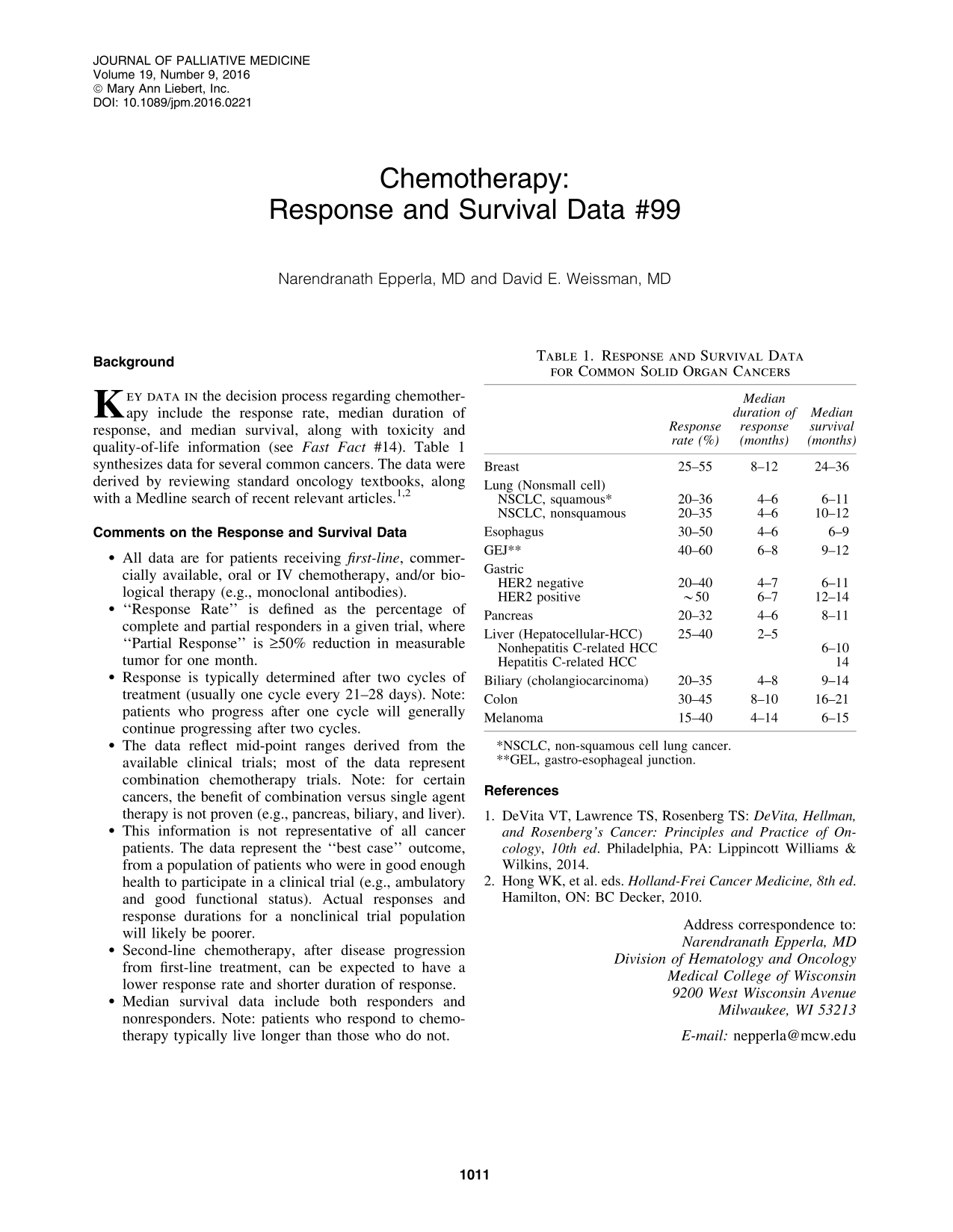
NSCLC, non-squamous cell lung cancer.
GEL, gastro-esophageal junction.
Comments on the Response and Survival Data
• All data are for patients receiving first-line, commercially available, oral or IV chemotherapy, and/or biological therapy (e.g., monoclonal antibodies).
• “Response Rate” is defined as the percentage of complete and partial responders in a given trial, where “Partial Response” is ≥50% reduction in measurable tumor for one month.
• Response is typically determined after two cycles of treatment (usually one cycle every 21–28 days). Note: patients who progress after one cycle will generally continue progressing after two cycles.
• The data reflect mid-point ranges derived from the available clinical trials; most of the data represent combination chemotherapy trials. Note: for certain cancers, the benefit of combination versus single agent therapy is not proven (e.g., pancreas, biliary, and liver).
• This information is not representative of all cancer patients. The data represent the “best case” outcome, from a population of patients who were in good enough health to participate in a clinical trial (e.g., ambulatory and good functional status). Actual responses and response durations for a nonclinical trial population will likely be poorer.
• Second-line chemotherapy, after disease progression from first-line treatment, can be expected to have a lower response rate and shorter duration of response.
• Median survival data include both responders and nonresponders. Note: patients who respond to chemotherapy typically live longer than those who do not.