




Abstract

Dear Editor:
With the number of patients requiring hospice and palliative care projected to rise in the upcoming years, the need to grow a workforce of clinicians to care for seriously ill patients is clear.1,2 But how can we begin to engage younger generations in conversations related to illness or end-of-life? Although personal experiences may draw some individuals to care for these patients, many young people have only negative connotations of hospice, and others have never heard of palliative care. How then, can we design activities to attract current college students (generally the “Millennials” born after 1982) 3 and increase their interest in becoming part of the solution to improve the lives of people with chronic life-threatening illnesses?
We surprisingly found one way to engage Millennials in palliative care—through sidewalk chalk art. The idea was born in a course where psychology seniors were formally trained as hospice volunteers and spent a semester personally caring for patients and families. At the end of the course, the students took part in a “Reflection Celebration,” where they identified at least one direct quote from their patients that evoked fond memories of their volunteer experience. Students wrote their patients' quotes in colorful sidewalk chalk in front of the main university library (Fig. 1). The students delighted in sharing their patients' words of wisdom and when finished, posted photos of themselves with their quotes on social media. The quotes remained on campus for one week, making them visible to other college students, and allowed public relations officers to photograph and even promote the event.
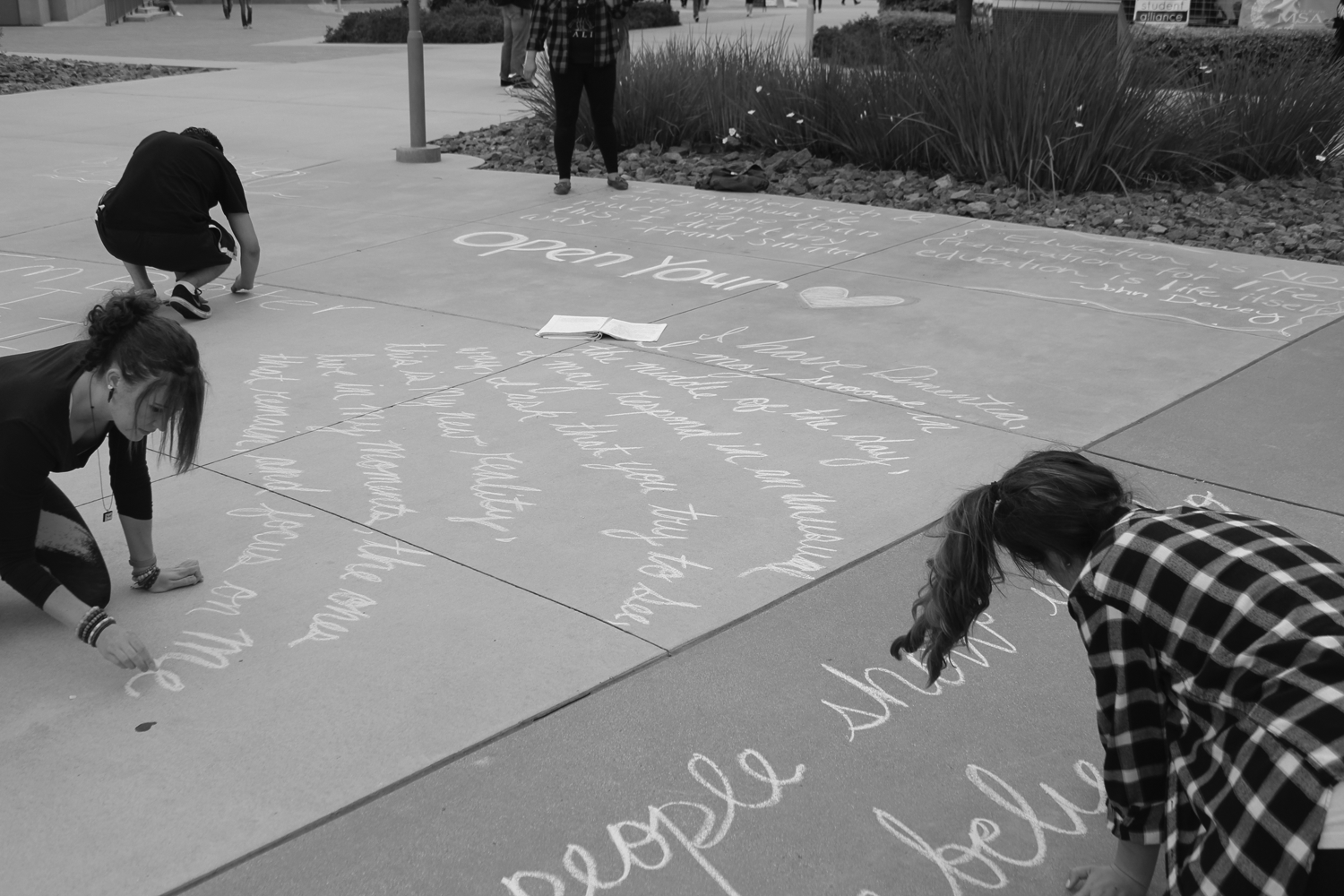
Students engaged in sidewalk chalk art.
Interestingly, we discovered that the sidewalk chalk art allowed students as well as other observers to engage in the topics of hospice and palliative care in an uplifting way. Furthermore, because it could be readily and appropriately shared on social media, the art was a perfect means for raising awareness, especially among a younger generation. It was also a very inexpensive and portable endeavor—making it ideal for community awareness events at cancer centers, hospice organizations, or even larger, more public gathering places in the future.
Perhaps one of the reasons why sidewalk chalk art is effective is because it reminds us, literally and metaphorically, of the beauty yet impermanent nature of life. The college students understood that their sidewalk chalk art would last for only a week, and we discussed in class how that mirrored our work in hospice and palliative care. We embark on our relationships with patients and families knowing they will not last forever, but we try to appreciate and honor the experiences in the moment. By accepting that impermanence, perhaps this imaginative exercise has much to teach us all about life, death, and the art we all strive to create in between.