




Abstract

Dear Editor:
[Thursday, 10:46 AM. A hospital ward: the lingering smell of attempts at sterility, the twittering of monitors attached to Mr. Jacobson, comatose. Laura Keplinger, two hours removed from her morning latte, knocks twice and opens the door to room 204.]
— — —
How can we advance advance directives? While news headlines focus on either generalized noncompletion 1 or extraordinary completion, 2 the need to modernize the advanced care planning process is pervasive. Having recently completed my own (while 30 years old and healthy I'm fortunate to say), I was left with an unexpected question: what am I supposed to do with this piece of paper? Wouldn't it be great if I could upload the document to a secure server accessible to authorized users and healthcare workers?
If I lived in one of 12 other states (Fig. 1), I could submit my advance directive to just this sort of registry! The Oregon POLST Registry system appears paragon with its electronic health record integration and availability to emergency medical services.3,4 As there is no federal registry, third parties (e.g., MyDirectives, U.S. Living Will Registry) have come to fill the void. And so as part of my professional duty to enable completion of an advance directive, I now have opportunities both to inform patients better and to advocate for public policy changes.
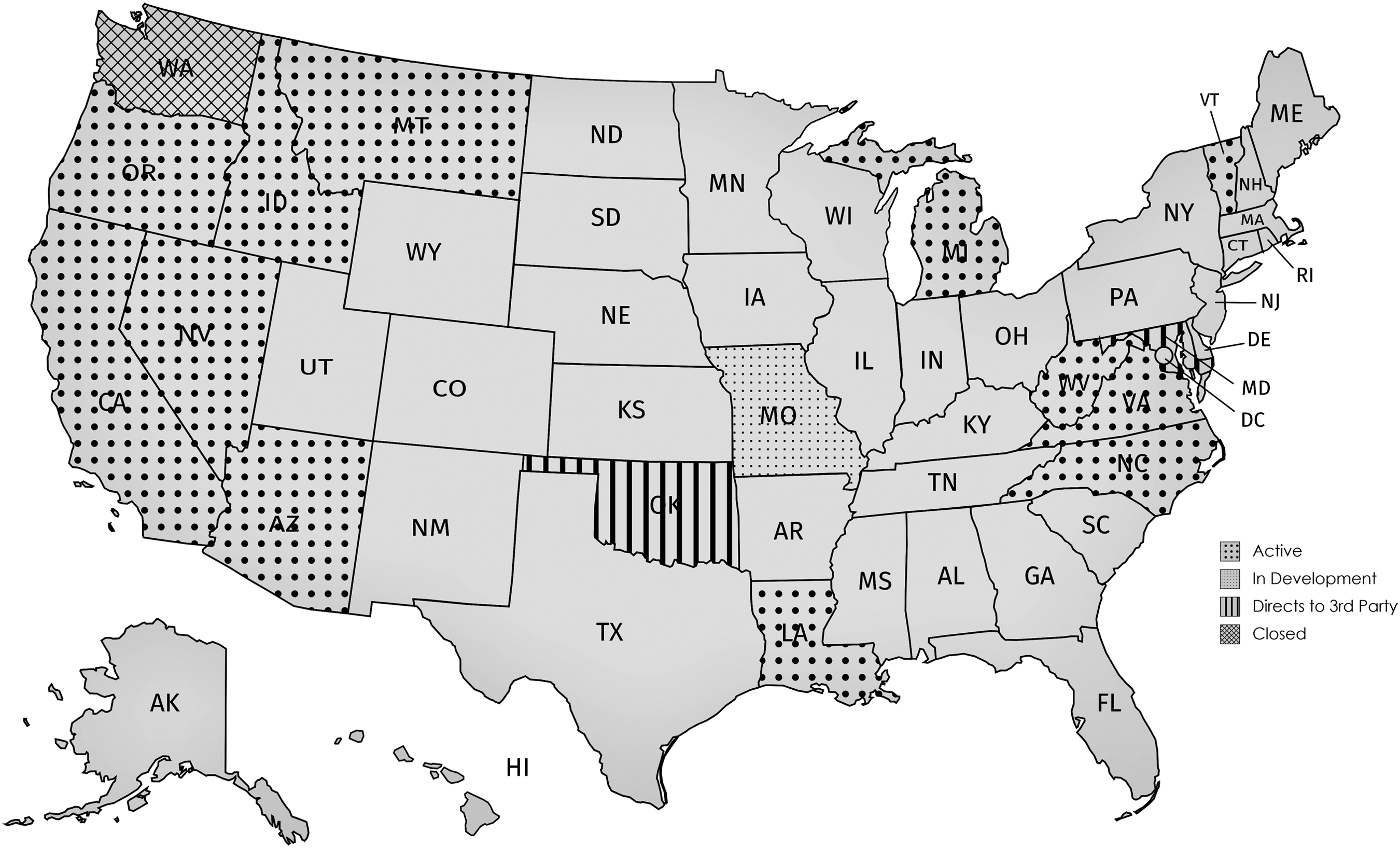
Status of advance directive registries in the United States.
After all, the only helpful advance directive is an available one.