




Abstract
Background:
Oxidative stress may play an important role in both initiation and progression of breast cancer. We conducted the first systematic epidemiologic review to summarize the published literature on oxidative stress biomarkers and breast cancer.
Materials and Methods:
We implemented systematic search strategies to identify published studies of oxidative stress biomarkers and (1) risk of developing breast cancer and (2) breast cancer prognosis using the PRISMA statement guidelines.
Results:
We identified eleven case–control studies of oxidative stress biomarkers and breast cancer. Biomarkers utilized varied and menopausal status was a key modifying factor. Across three nested case–control studies with biomarkers measured before diagnosis, one reported increased risk of postmenopausal breast cancer in association with 8-oxodG (DNA damage biomarker), while two (one of F2-isoprostanes and one of fluorescent oxidation products) reported inverse associations for premenopausal breast cancer only. We identified eight prognostic studies. Two reported associations for lipid peroxidation and breast cancer prognosis; results for other studies were null.
Conclusions:
DNA damage may increase risk of breast cancer among postmenopausal women, while lipid peroxidation may be inversely associated with premenopausal breast cancer. Lipid peroxidation may be associated with survival after breast cancer diagnosis; however, results require evaluation in large, prospective cohort studies.
Introduction
T
Oxidative stress mechanisms are also involved in the activation of cell signaling pathways, including tumor cell proliferation, increased tumor cell migration, and increased tumor cell proangiogenic factors, and play a key role in apoptosis, mechanisms that can impact both cancer progression and metastasis. 2,8 –10 Increased reactive oxygen species (ROS) and the resulting high oxidative stress are key characteristics of malignant tumors. 11 Many cancer treatments, such as radiotherapy and certain chemotherapy agents, act through oxidative stress pathways via the production of ROS to kill tumor cells. 12 –14
Several biomarkers of oxidative stress have been identified for use in epidemiologic studies and can be measured in various biological samples, including both blood and urine. 7,15 –21 Commonly used biomarkers include DNA damage biomarkers, such as 8-hydroxy-2′-deoxyguanosine (8-oxodG), 22 protein carbonyl groups as a marker of protein oxidation, 23 and malondialdehyde (MDA) and F2-isoprostanes as markers of lipid peroxidation. 21,24 –27 Studies have also evaluated the role of oxidative stress in cancer and other chronic diseases using plasma fluorescent oxidation products (FlOPs), which are considered a global biomarker of oxidative stress. 20,28
Biomarkers of oxidative stress have been investigated for their association with the development and progression of several cancer types, and in particular breast cancer, as oxidative stress mechanisms may be involved in several known breast cancer risk factors, including obesity and daily alcohol intake, and circulating estrogen levels. 29 –34 Breast cancer cells have been shown to be susceptible to oxidative damage and have high levels of oxidative stress, including protein damage, DNA damage, and lipid peroxidation. 9,35 Furthermore, several breast cancer risk factors may alter levels of endogenous oxidative stress. 36,37 To our knowledge, no review has synthesized the published epidemiologic literature on oxidative stress biomarkers and breast cancer risk and prognosis. Therefore, we conducted a systematic literature review to identify and summarize all published epidemiologic studies of oxidative stress biomarkers in association with (1) risk of developing breast cancer and (2) prognosis after breast cancer and identify areas for future research.
Materials and Methods
Search strategy and study selection
We followed the Preferred Reporting Items for Systematic Reviews and Meta-Analyses (PRISMA) statement guidelines for the present review. 38 We conducted two separate systematic searches to identify peer-reviewed original articles that evaluated one or more oxidative stress biomarkers and breast cancer in epidemiologic studies of case–control, nested case–control, or cohort study design. The first systematic search was to identify studies of oxidative stress biomarkers and risk of developing breast cancer and the second was for studies of oxidative stress biomarkers and breast cancer prognosis. To our knowledge, no other systematic reviews on biomarkers of oxidative stress and cancer have been conducted, with the exception of one study focused on prostate cancer. 39
The PubMed interface of the electronic database Medline was searched systematically for all articles published in peer-reviewed journals through August 2015. The search was updated in February 2016. The search strategy and algorithms were devised by two authors (J.D.L., S.J.N.). Both search strategies were limited to studies conducted in female humans and published in English.
The search algorithm for breast cancer risk studies (Search A, Fig. 1) included (“breast cancer” OR “breast neoplasms”) AND (risk or odds) AND (“oxidative stress” OR “DNA damage” OR “Lipid peroxidation”) NOT review[Publication Type] NOT comment[Publication Type] NOT editorial[Publication Type] NOT “breast cancer cells”[Title] NOT “breast epithelial cells”[Title] NOT “cell line”[Title]. For prognosis studies (Search B, Fig. 1), we replaced risk or odds in the search terms with the following terms in the search algorithm: (prognosis OR prognostic OR death OR mortality OR survival OR recurrence OR relapse OR “disease-free” OR progression OR survivorship OR survivor).
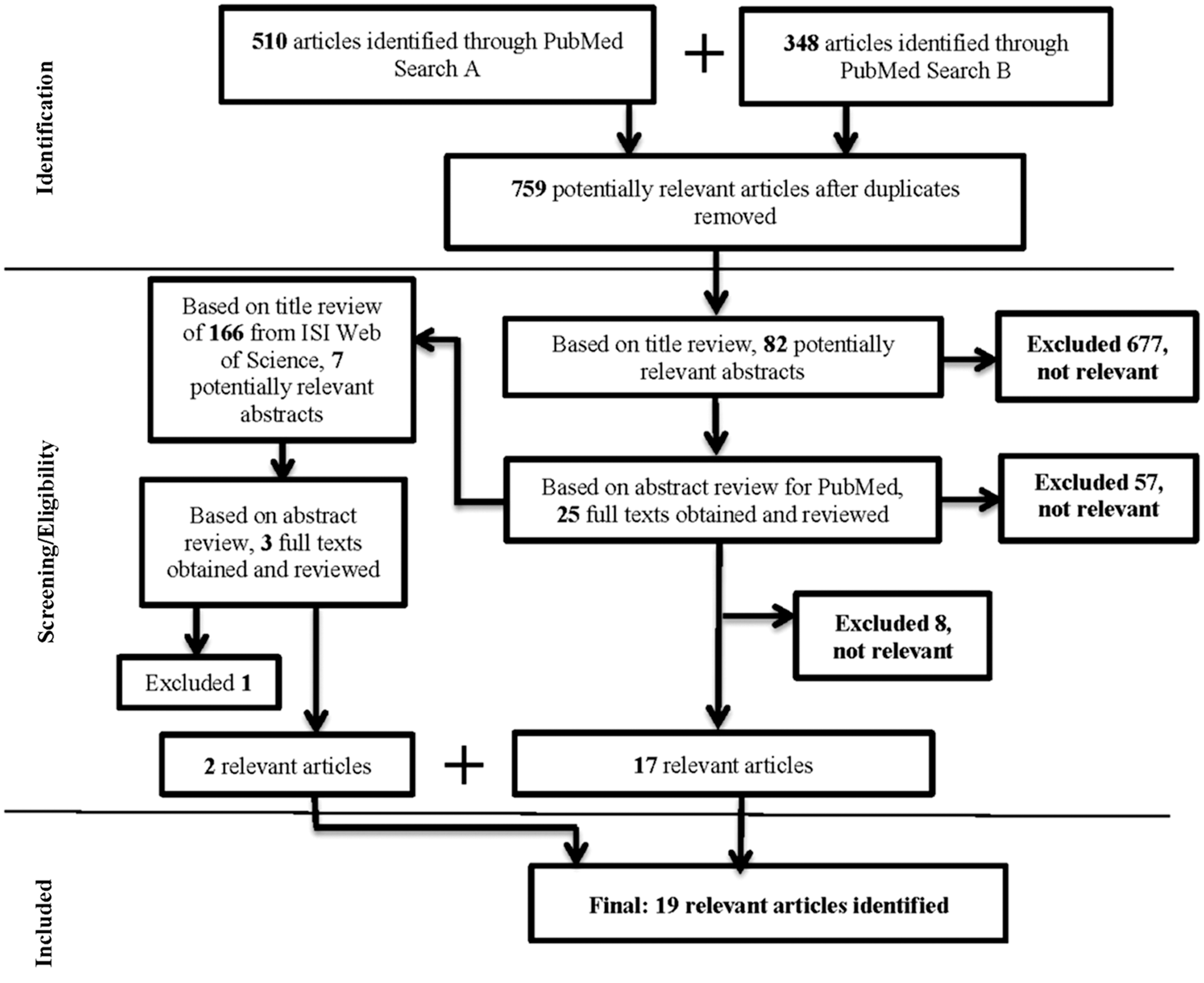
PRISMA study flow diagram.
The search strategy first included a title review followed by abstract review by one coauthor (S.J.N.). Potentially relevant full texts were reviewed by both coauthors (S.J.N. and J.D.L.). In addition to the PubMed search, (1) the reference lists for each study and relevant review articles were manually reviewed and (2) citation lists from Web of Science for each relevant article were manually reviewed to identify any additional relevant studies by two authors (J.D.L. and S.J.N.). Based on our study objective, relevant articles were those that evaluated one or more oxidative stress biomarkers and odds/risk of developing breast cancer or breast cancer prognosis in epidemiologic studies of case–control, nested case–control, or cohort study design. We did not exclude articles based on publication date or sample size.
Data synthesis
Data were extracted independently using duplicate Excel spreadsheets by two separate abstracters and reviewed by a third independent reviewer (S.J.N.) in the case of any discrepancies for each individual study. For the risk studies, major data items extracted (if available) included first author and study year, study location, study design, study period, study population (sample size, invasive/in situ status, data source), biomarkers of oxidative stress (type of biological sample, assay, units, timing of measurement in relation to diagnosis), results (odds ratios/relative risk (RRs)/hazard ratios and 95% confidence intervals [CIs] ([or other relevant effect estimate] for the association(s) of the biomarker and risk of breast cancer), and covariates. As menopausal status was a key effect modifier in several studies, if available, we show results by menopausal status. For the prognosis studies, similar data items were abstracted with additional information collected on age at diagnosis, stage of diagnosis (or grade if stage was not available), years of diagnosis, prognostic outcomes and data source, and length of follow-up. For prognosis studies, if a multivariable analysis was not performed, mean survival time was abstracted.
Results
As shown in Figure 1, 759 nonduplicate potentially relevant studies were identified based on the systematic PubMed searches using the search algorithms described above. After title review, 82 abstracts were identified as potentially relevant. After abstract review, 25 full texts were obtained as potentially relevant studies, with a total of 17 relevant articles that evaluated one or more biomarkers of oxidative stress and breast cancer identified. We identified two additional relevant studies via manual searching of citation reports from Web of Science for a total of 19 relevant articles identified via all search methods.
Oxidative stress biomarkers and risk of developing breast cancer
Study design and study population details are displayed in Table 1 and results are summarized in Table 2. A total of 12 case–control studies, including five nested case–control studies, were identified. Oxidative stress biomarkers varied across studies, with measures of damage/oxidation to lipids, DNA, and protein, as well as a global biomarker of oxidative stress, FlOP levels.
NR, not reported; RDD, random digit dialing.
Adjustment factors for overall models.
Reference group is low damage.
15-F2t-IsoP, 15-F2t-isoprostane; 15-F2t-IsoPM, 2,3-dinor-5,6-dihydro-15-F2t-IsoP; 8-oxodG, 8-oxo-7,8-dihyrdo-2′-deoxyguanosine; BBD, benign breast disease; BMI, body–mass index; CI, confidence interval; ELISA, enzyme-linked immunosorbent assay; FlOP, fluorescent oxidation products; GC/NICI MS, gas chromatography/negative ion chemical ionization mass spectrometry; HPLC, high-performance liquid chromatography; HRT, hormone replacement therapy; IRR, incidence rate ratio; MDA, malondialdehyde; NHS, Nurses' Health Study; NR, not reported; OC, oral contraceptive; OR, odds ratio; RR, relative risk.
Case–control studies with biomarkers measured after diagnosis
In a population-based case–control study of 400 cases and 401 controls from the Long Island Breast Cancer Study Project, a positive association was reported for urinary 15-F2t-IsoP measured via immunoassay and risk of breast cancer, but not urinary 8-oxodG measured by competitive enzyme-linked immunosorbent assay (ELISA). 40 All samples for the cases were collected within on average 3 months after diagnosis of breast cancer, with most before the initiation of chemotherapy. The positive association between 15-F2t-IsoP and increased risk of breast cancer was found among both pre- and postmenopausal women. Subsequently, investigators from the Long Island Breast Cancer Study Project conducted a larger study with 1061 breast cancer cases and 1108 controls (including the original cases/controls from the first study) and found no statistically significant associations between 15-F2t-IsoP or 8-oxodG and breast cancer. 41
In a separate report, investigators from this same study evaluated the association between plasma protein carbonyl levels and breast cancer among 1050 cases and 1107 controls. 31 They reported a trend for increasing odds of breast cancer risk in relation to increasing quartiles of plasma protein carbonyl levels measured via noncompetitive ELISA. The association was not modified by menopausal status.
In a population-based case–control study of 268 sister sets from the Breast Cancer Family Registry, where one sister was a case and the other was a control, plasma protein carbonyls measured via noncompetitive ELISA were associated with increased odds of breast cancer, adjusting for known breast cancer risk factors. All samples were taken months to years after diagnosis for the cases. 42 A small case–control study with 57 cases and 139 controls conducted in Malaysia reported that higher levels of plasma MDA were associated with increased odds of breast cancer, adjusting for type of education, type of occupation, relatives, lactation, and waist circumference. 43 A very small case–control study among 70 cases and 70 controls reported that higher DNA damage in lymphocytes measured via the comet assay was associated with increased odds of breast cancer. 44 None of these three small studies evaluated associations by menopausal status.
Nested case–control studies with biomarkers measured before diagnosis
Five prospective nested case–control studies were identified, all with samples for cases collected before diagnosis. In a nested case–control study in the Shanghai Women's Health Study with 436 cases/852 controls, urinary 15-F2t-IsoP and 2,3-dinor-5,6-dihydro-15-F2t-IsoP (15-F2t-IsoPM) measured via gas chromatography/negative ion chemical ionization mass spectrometry (GC/NICI MS) were not associated with breast cancer risk overall, adjusting for known breast cancer risk factors and lifestyle factors. 45 However, when stratified by menopausal status, an inverse association was observed for both biomarkers among premenopausal women only (e.g., 15-F2t-IsoP in the highest tertile [reference was the lowest] was associated with 42% reduced risk of premenopausal breast cancer).
In a second nested case–control study in the same cohort with a smaller sample size (354 breast cancer cases/654 controls), breast cancer was not associated with urinary levels of MDA or 8-oxodG, 46 with authors reporting that associations were not modified by menopausal status. A nested case–control study in the Nurses' Health Study of 377 cases/377 controls evaluated the associations of FlOPs and breast cancer risk. Biomarkers were classified as proximate exposure (≤6 years before diagnosis) and distant exposure (≥10 years before diagnosis). 28 For FlOP_360, proximate levels for the second quartile (207–251 FI/mL) only (RRs [95% CI]: 0.6 [0.4–0.9]) were inversely associated with breast cancer risk, associations were not observed for the second or third quartile, and associations for this biomarker measured distantly were null. For FlOP_320 and FlOP_400, no clear pattern of association with breast cancer overall was observed.
A fourth prospective nested case–control study of 336 cases/336 controls in Denmark evaluated urinary 8-oxodG levels measured via column-switching high-performance liquid chromatography in association with risk of postmenopausal breast cancer. Samples from cases were collected at cohort entry within 5 years of diagnosis. Overall, a positive association between 8-oxodG and risk of breast cancer was observed, 30 and when stratified by ER status, the positive association was limited to women with ER+ breast cancer. In 2015, a large nested case–control study focusing on premenopausal breast cancer in the Nurses' Health Study I and II studies reported some evidence for an inverse association for FlOPs and premenopausal breast cancer (e.g., FlOP_360 highest quartile levels [compared with lowest quartile levels] were associated with a 32% decreased risk of premenopausal breast cancer in adjusted models). 47
Subgroup analyses for lifestyle factors
Lifestyle factors may be associated with oxidative damage, and several studies considered body–mass index (BMI) and other lifestyle factors as potential effect modifiers/interaction variables, with results summarized (if available) in the comments section of Table 2. Briefly, three studies reported that results differed by BMI. In an early small case–control study, Smith et al. reported that the association between DNA damage and breast cancer was stronger among women with higher BMI, although no statistical test for interaction was provided. 44 Dai et al. reported a positive association for 15-F2t-IsoPM among women with higher BMI and inverse association among women with lower BMI. 45 In the Nurses' Health Study, one of the FlOP biomarkers was found to have a significant positive association only among women with low BMI; however, the p-value for interaction was not statistically significant (0.13). 28 One study reported that the positive association of 8-oxodG was only present in women with low dietary iron intake; p-value for interaction = 0.02. 30
Oxidative stress biomarkers and breast cancer prognosis
Study design and study population details are displayed in Table 3 and results are summarized in Table 4. We identified a total of eight studies that investigated biomarkers of oxidative stress in association with breast cancer prognosis with various oxidative stress biomarkers in blood, urine, and tissue utilized. The largest and earliest study identified, a prospective cohort of 363 breast cancer patients, reported that lipoperoxides measured in plasma before surgery were statistically significantly associated with increased risk of recurrence (>0.5 μmol/L = 2.13 [1.13–4.01]). However, lipoperoxides were not significantly associated with breast cancer-specific mortality (>0.5 μmol/L = 1.60 [0.73–3.51]). 48
AJCC, American Joint Committee on Cancer; BCSS, breast cancer-specific survival; DFS, disease-free survival; OS, overall survival.
This study only reported results that included both an oxidative stress biomarker and DNA repair biomarker combined, which is why the DNA repair biomarker is included in the study description.
DFS, disease-free survival; ER, estrogen receptor; HER-2, human epidermal growth factor receptor; hOGG1, human 8-oxoguanine glycosylase; IHC, immunohistochemistry; PR, progesterone receptor; TBARS, thiobarbituric acid-reactive substances.
In 2010, Sova et al. reported that negative 8-oxodG tumor status based on immunohistochemistry was associated with lower breast cancer-specific survival (BCSS). 49 This study also reported that serum 8-oxodG, from blood collected before surgery, was not associated with BCSS, but data were not shown. Two small Finnish cohort studies evaluated 8-oxodG tumor status in association with BCSS, with the first evaluating 8-oxodG alone 50 and the second evaluating 8-oxodG in combination with 8-oxoguanine glycosylase. 51 The authors reported that no statistically significant associations were observed in multivariable analyses (effect estimates were not reported; Table 4).
Vera-Ramirez et al. conducted two studies, the first among 70 breast cancer patients 52 and the second among 30 metastatic only patients. 53 In both studies, they investigated biomarkers of DNA damage, lipid peroxidation, and protein damage in association with disease-free survival and overall survival both before and after chemotherapy and found no evidence for an association between any of the studied biomarkers and prognosis. In a small nested case–control study of 160 breast cancer cases from the Shanghai Breast Cancer Survival Study, GC/NICI MS was used to measure 15-F2t-IsoP and 15-F2t-IsoPM in urine samples collected after completion of cancer treatment. 54 Adjusting for clinical and lifestyle factors, higher urinary levels of 15-F2t-IsoP were statistically significantly inversely associated with total mortality, while levels of 15-F2t-IsoPM were not significantly associated with survival.
Discussion
Biomarkers of oxidative stress and risk of developing breast cancer
Associations between oxidative stress biomarkers and breast cancer risk were inconsistent across studies, with evidence for both positive and inverse associations depending on the biomarkers evaluated and/or menopausal status. Three studies evaluated 8-oxodG, a valid marker of DNA damage, with two case–control studies reporting null results and one prospective cohort study reporting increased risk of postmenopausal breast cancer in association with higher levels of DNA damage. Two prospective cohort studies with measurement of oxidative stress biomarkers before breast cancer diagnosis reported inverse associations with breast cancer risk among premenopausal women only. Two case–control studies reported increased risk of breast cancer in association with protein oxidation measured after breast cancer diagnosis.
While some studies measured two oxidative stress biomarkers; none evaluated markers of DNA, lipid, and protein damage together and only one study measured biomarkers at more than one time point. Beyond menopausal status, results from subgroups analyses defined by BMI, dietary factors, and/or ER status suggested potential effect modification of the associations of oxidative stress and breast cancer risk by BMI and ER status in particular, which may contribute to differences across studies.
Some studies have reported that higher levels of oxidative stress are associated with obesity and adipose tissue. 37,55 –57 The finding of higher levels of oxidative stress and increased risk of postmenopausal breast cancer could reflect the known obesity and postmenopausal breast cancer association. 58 In fact, Dai et al. conducted analyses stratified by BMI and found a positive association among women with higher BMI, but not among women with lower BMI. 45
One key limitation that may contribute to the inconsistent results observed across studies is the timing of sample collection. Several studies collected samples after diagnosis of breast cancer, with some after surgery and/or during cancer treatment (such as chemotherapy). Levels of oxidative stress may change based on the presence and progression of the tumor itself and due to cancer treatments, including surgery, radiotherapy, and chemotherapy. 9,13 While nested case–control studies can help minimize this limitation, the concern that oxidative stress may be generated by the preclinical tumor remains. 32 This potential bias can be evaluated by stratifying associations by length of follow-up time, which was rarely done in the identified reports.
Another limitation is that breast cancer has been shown to be an etiologically heterogeneous disease, with studies showing modification of known associations by tumor subtype. 58,59 However, to date, only two studies examined associations of biomarkers of oxidative stress with breast cancer risk by tumor ER status, 30,47 and no studies have evaluated associations by molecular subtypes. Finally, differences in how menopausal status was defined across studies, a known methodological limitation in epidemiological studies considering menopausal status, 60 or lack of stratifying results by menopausal status could have contributed to inconsistencies in findings.
Many reviews have described the limitations and strengths of various noninvasive biomarkers of oxidative stress used in epidemiological studies, including measurement issues (e.g., see Refs. 7,15 –19,21,24,61 ). Herein, we highlight some key issues to demonstrate how measurement assays and type of biomarker can also contribute to inconsistencies and lack of replication of findings. MDA, a biomarker of lipid peroxidation, was used in several studies summarized in this review, but is known to have the key issue of nonspecificity.
The gold standard in lipid peroxidation measurement includes 15-F2t-IsoP and 15-F2t-IsoPM, valid biomarkers of systematic in vivo oxidative stress. Highly sensitive and specific assays have been developed to measure F2-isoprostanes using GC/NICI MS. 62 In our review, some studies used GC/NICI MS and others used immunoassays to measure F2-isoprostanes, which are less accurate. 26,62 8-OxodG is one of the most commonly used markers for assessing oxidative DNA damage as it is one of the most abundant DNA lesions caused by ROS. However, 8-oxodG is a function not only of oxidation of DNA but also of excision repair, 51 and studies that measure both DNA repair and oxidative DNA damage are needed to improve interpretation of findings. In summary, inconsistent results may be attributed to using unreliable assays and markers for the detection of systematic oxidative stress, lack of assaying biomarkers at more than one time point before diagnosis, and lack of careful consideration of the impact of preclinical cancer on oxidative stress biomarkers.
Biomarkers of oxidative stress and breast cancer prognosis
Oxidative stress plays a critical role in cancer treatment, with cytotoxic therapies increasing oxidative damage to potentially kill tumor cells. Beyond cancer treatment, oxidative stress from endogenous (e.g., metabolism, immune response) and exogenous sources (e.g., ionizing radiation, smoking, chemicals) may result in changes in the metabolic pathways in tumor cells, tumor vascular networks, and tumor macrophage infiltration. 8,33 These alterations can impact not only tumor progression but also cancer cell adaption to oxidative stress, potentially leading to increased resistance to therapy, angiogenesis, and increased risk of metastasis. 8,9 Due to the critical role of oxidative stress mechanisms in both cancer treatment and potentially cancer metastasis, it has been suggested that oxidative stress may be particularly important in cancer prognosis; however, as we found in this review, the epidemiologic literature in this area is very limited to date.
Overall, studies of oxidative stress biomarkers and breast cancer prognosis have been limited by small sample sizes (ranged from 30 to 363 cases) and/or lack of standardized analytic approaches (e.g., multivariable survival analyses) with consideration of key covariates/potential confounding factors. In addition, most were single-hospital studies and not population-based studies. Various biomarkers were used, with some studies measuring DNA damage, lipid peroxidation, and/or protein damage in various biological samples (blood, tissue, urine). Furthermore, the timing of biomarkers varied, with some studies measuring markers before surgery, after surgery and before/during chemotherapy, and after any cancer treatments. The largest and earliest study reported a positive association between a marker of lipid damage and prognosis 48 ; however, this study used a marker of lipid peroxidation known to be nonspecific. Other studies generally reported limited evidence for an association. In summary, the lack of sufficient statistical power, use of various biomarkers, variation in time at biomarker assessments, and inadequate adjustment for confounding factors across studies hinder our ability to make a clear conclusion regarding the role of the biomarkers of oxidative stress in breast cancer prognosis at this time.
Research needs summary and conclusions
A key limitation of the literature to date is lack of studies in minority populations, including African American and Hispanic women, who may have different risk factor profiles for breast cancer and altered levels of oxidative stress biomarkers. 63 Another key limitation is that no studies evaluated associations by breast cancer molecular subtype, which could be particularly informative for understanding mechanisms of oxidative stress both in the etiology and prognosis of breast cancer. Studies were further limited as most did not evaluate multiple valid biomarkers in multiple biological samples (e.g., urine and blood or blood and tumor tissue), which could help overcome limitations found in using a single biomarker. Finally, there were insufficient data to conduct a meta-analysis at this time; however, this may be possible after future research.
In conclusion, prospective studies provide inconsistent evidence that oxidative stress may increase risk of postmenopausal breast cancer (specifically DNA damage), but may be inversely associated with risk of premenopausal breast cancer (specifically F2-ispoprostanes and FlOPs). This association may be modified by ER status and/or BMI, but future studies with a larger sample size, applying standardized and multiple markers for measuring oxidative damage in prediagnostic biological samples, are needed to confirm these findings. Lipid peroxidation may play a role in breast cancer prognosis based on two small studies to date. Future large prospective studies that include multiple sample types (tissue, urine) using valid biomarkers measured at multiple time points after diagnosis (before and after cancer treatments) may be particularly informative and help to overcome methodological limitations of previous prognostic studies.
Footnotes
Acknowledgments and Funding
The authors thank Min Gao for helping with data abstraction. This work was partly supported by the National Cancer Institute at the National Institutes of Health (NIH) (grant number K07CA184257 to S.J.N.).
Author Disclosure Statement
No competing financial interests exist.