




Abstract
Background:
Recently appointed women faculty in academic medicine face many challenges during their careers and can become overwhelmed managing their multiple faculty roles as teacher, scholar, and clinician, in addition to their roles in personal life. Although a mentor can be invaluable in assisting a woman junior faculty member to adjust to faculty life and providing critical career guidance, not all medical institutions have faculty mentoring programs. We created a mentoring program specifically for our women junior faculty to address this issue at our own institution.
Materials and Methods
: To assess the value of this program, we conducted a novel mentor-mentee paired-data analysis of annual surveys collected from 2010 to 2015. Of the 470 responses received, 83 were from unique mentees and 61 from unique mentors.
Results:
Career development, research, and promotion were the top topics discussed among the mentoring pairs, followed by discussions of institutional resources and administration/service. There was high congruency among the mentoring pairs that they thought these discussions, as well as other conversations about mentee professional development and well-being, had been helpful. However in some instances, mentors felt they had not been helpful to their mentee, whereas their mentees felt otherwise; this finding speaks to the value and importance of mentees providing positive feedback to their mentors. Overall, both mentees and mentors thought that the mentees had significantly benefited from the mentorship. Unexpected outcomes of these relationships included promotion, grant applications/awards, articles, presentations, and professional memberships. The use of a Mentee Needs Assessment Form to individualize the mentoring relationship for each mentee may explain the high overall satisfaction and participant recommendations of the program.
Conclusions:
Our findings demonstrate the value in establishing mentoring programs specifically for women faculty, especially in environments in which other mentoring opportunities do not exist.
Introduction
W
Faculty in academic medicine and other avenues of higher education face many challenges during their ascent through their career. Recently appointed assistant professors in particular, have many hurdles to navigate as they adjust to the climate and culture of being a faculty member. Suddenly these individuals are thrust into a high power environment in which they are now the “go to” person for answers, decisions, and solutions. Many become overwhelmed with trying to manage multiple roles as teacher, mentor, scholar, committee and departmental member, and in academic medicine, clinician. These pressures of academic life lead to feelings of isolation and disconnection, uncertainty, frustration, decreased satisfaction, low self-confidence, and a sense of being undervalued, all of which can lead to thoughts and actions of leaving the institution, or academic medicine entirely. 6 –11
One approach to assist junior faculty in their adjustment to a different level of academic life is by providing mentoring. Mentoring can provide a sense of relatedness, engagement, and institutional support, factors found to be predictors of intention to leave by faculty. 8 Mentoring relationship formation has been shown to increase faculty productivity, career advancement, and career satisfaction. 12 –15 However, women faculty have reduced access to mentoring and remain disadvantaged to men when it comes to compensation, unconscious biases, and resources. 2,5,16 –22 These and other obstacles decrease the satisfaction and retention of women in academic medicine. 23 –25
Given the importance of mentoring for a successful career in academic medicine and the difficulty that women faculty often face in identifying mentors on their own, it is critical that more formal mentoring opportunities be available for women faculty. Not all academic medical centers have created institution-wide mentoring programs for all faculty, thus leaving many women faculty without mentoring opportunities. However, a few institutional Women in Medicine and Science Programs have created mentoring programs specifically for their women faculty (e.g., Kansas University School of Medicine, Pennsylvania State, and University of Wisconsin-Madison), including ourselves.
There was no general faculty mentoring program available within our institution in 2000. Thus, we created a Women Junior Faculty Mentoring Program to address the mentoring needs of our women faculty. This mentoring program was created by the Leadership Program of the Women's Health Center of Excellence for Leadership, Research, and Education (now known as the Office of Women in Medicine and Science [OWIMS]) to provide a mechanism that assists and promotes the advancement of women junior faculty in their professional career development, and for the recruitment and retention of women faculty.
This program is a formalized entity in which women at the junior faculty level (instructor and assistant professor) are linked with women and men senior faculty (associate and full professor) in one-on-one mentoring relationships, with additional resources and activities provided to enhance and support the mentoring relationships. Faculty were recruited by letters of introduction to the program and an invitation to join as a mentee (junior faculty) or mentor (senior faculty). In addition, we advertised the program at every opportunity in which we were involved (e.g., seminars, workshops, women faculty candidate interviews, and newsletter).
All faculty applying to the program were accepted. Potential mentoring pairs were suggested by a Mentoring Pairing Committee after reviewing forms filled out by the mentees, where they indicated the areas in which they desired mentoring, and matching forms filled out by the mentors, where they indicated areas in which they felt comfortable mentoring. The names of one or two senior faculty were provided to the mentee for consideration as a potential mentor and the mentee made the final choice. A Mentor of the Year award was created in 2006 to honor our mentors. The awarding of this title is through a nomination process by the mentees and a competitive nomination review by a specific Mentor of the Year Committee. The program has been supported from the beginning through funds provided by the Dean of the medical school to the Women's Health Center of Excellence (now known as OWIMS). Initial details of program structure and format have been published previously. 26
Throughout the years of our mentoring program, we were interested in determining its value by obtaining information from our program participants about their specific mentoring relationships, as well as their thoughts on the mentoring program in general. Our early versions of the annual surveys were much shorter than our current more in-depth instruments. 26 Over the years, we continued to refine our evaluation instrument by adding questions to probe for detailed information from our program participants.
In 2010, we totally redesigned our surveys so that the questions were parallel for both mentees and mentors, and henceforth were standardized across years. In our redesign, we were particularly interested in identifying the major topics of discussion among the mentors and mentees, determining the multiple ways in which the mentors had assisted their mentees, and detecting the degree to which the mentors' advice and assistance were perceived as helpful by the mentees. As a result of creating parallel surveys for our mentees and mentors, we were able to match the responses of our mentoring pairs to determine the extent of their agreement, or disagreement, regarding the assistance and degree of helpfulness the mentors afforded their mentees.
The purpose of this study was to assess the value of our women junior faculty mentoring program to our mentees. In this study, we report the program evaluation findings from annual surveys collected from 2010 to 2015. A unique feature of our study is that it focused on paired data, that is, information obtained from mentee-mentor pairs, which allowed us to also determine levels of agreement among the matched mentoring pairs.
Materials and Methods
Surveys were designed to assess the health, activities, and outcomes of each mentoring pair relationship. Similar surveys were designed for the mentees and mentors, with slight variations between them for inclusion of specific questions not relevant to both groups. Surveys began by asking the name of the respondent and a few demographic questions, including highest degree, length of mentoring relationship, effort allocation, and the mentoring partner's primary faculty role (clinical or nonclinical). One section of questions was included to determine if specific topics (e.g., promotion, teaching, and research) were discussed and if discussed, the degree to which the discussion was helpful.
Other questions were used to assess whether the mentors assisted the mentees in other facets of their career development (e.g., networking and integration of duties), and whether the assistance of the mentors was thought to be helpful in furthering the mentees' professional development and well-being (e.g., providing constructive feedback and providing emotional support). Collaborative outcomes related to the mentoring relationship also were evaluated, such as grant applications/awards, articles, presentations, or promotions. Additional queries assessed the manner of communications between the mentoring pairs, and the frequency and time commitment of their meetings. The final section of survey questions was designed to provide feedback about the mentoring program in general, rather than about the specific mentoring relationship.
Surveys were hard-copied and mailed during the first week of each January and requested to be returned by January 31. E-mail reminders, with the survey attached, were sent out 10 days before the deadline and again on the deadline day to those who had not responded. Data from annual surveys collected from 2010 to 2015 were analyzed.
Response rates were calculated by mentor/mentee and year. The surveys were labeled with the name of the respondent, and thus responses could be matched based on mentee-mentor pairing to create agreement frequencies. Survey responses were summarized using percentages. Data were analyzed across the 6 years of surveys collected. Agreement frequencies were constructed between mentors and mentees for (1) topics they discussed versus not discussed, (2) items they agreed or disagreed upon, and (3) areas in which it was felt that the mentors were helpful or not.
The associations between collaborative outcomes (e.g., grant application, grant award, article, presentation, and professional membership) and characteristics, including gender and mentoring relationship (1 to <2 years, 2 to <3 years, and ≥3 years), were examined using generalized estimating equation models with the logit link function and binomial distribution (proc genmod in SAS). Exchangeable correlation matrix was employed. A two-sided p-value less than or equal to 0.05 was considered to indicate statistical significance. Statistical analyses were performed in SAS (SAS Institute, Cary, NC), version 9.4. This study was approved by the institutional review board of Wake Forest School of Medicine.
Results
Figure 1 illustrates response rates for each of the years 2010–2015. The total number of responses was 470 with 83 unique mentees and 61 unique mentors responding. The survey response rates were higher for mentors than mentees for all years.
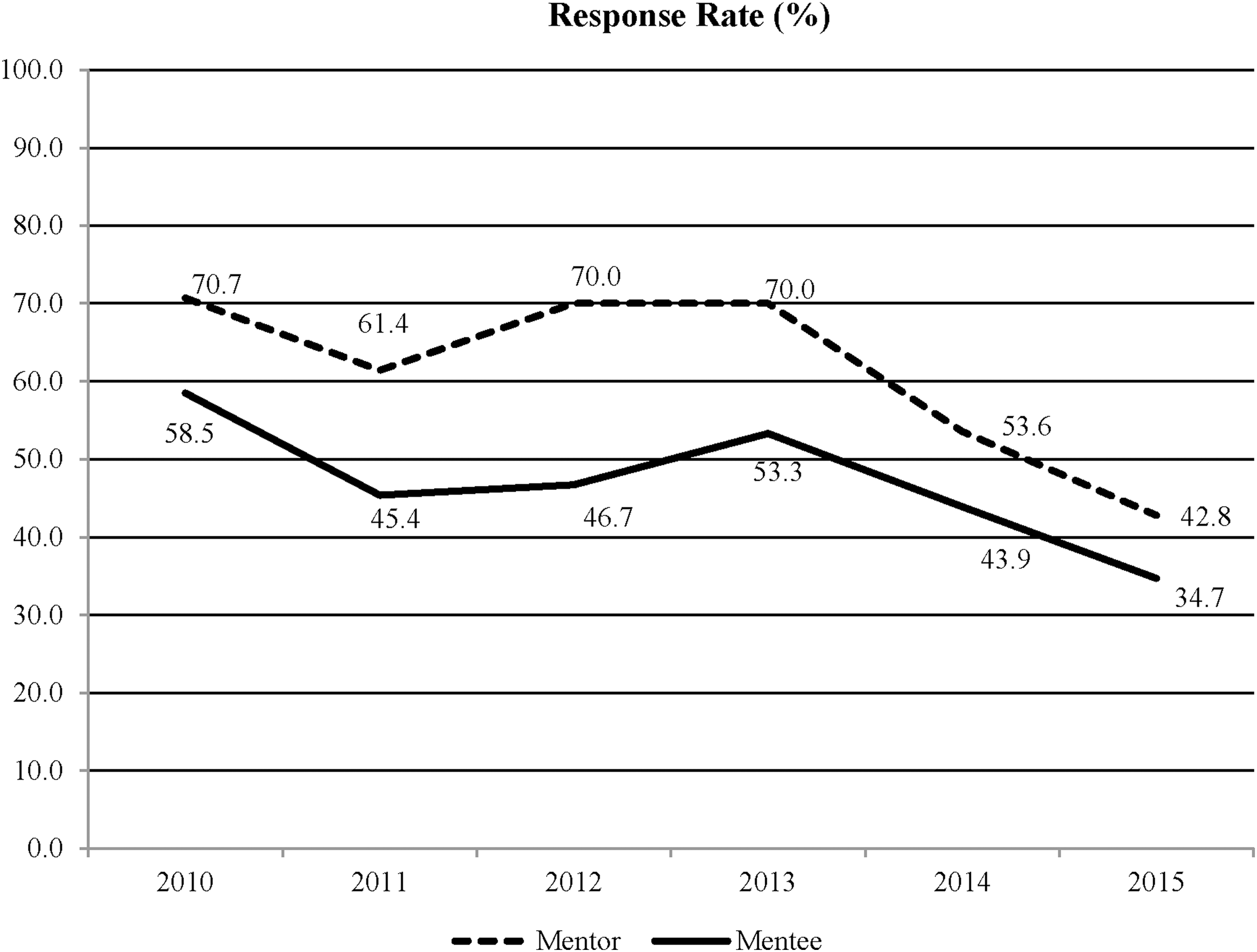
Mentoring survey return rate of response for 2010–2015. 41 pairs of surveys (82 total) were sent to mentors and mentees in 2010, 44 pairs of surveys (88 total) were sent in 2011, 30 pairs of surveys (60 total) were sent in 2012 and 2013, 41 pairs of surveys (82 total) were sent in 2014, and 49 pairs of surveys (98 total) were sent in 2015.
Career development, research, and promotion were the topics (>70% agreement) that both mentors and mentees most agreed that they had discussed (Table 1). Discussions regarding institutional resources and administration/service also were top themes, with ≥50% agreement among the pairs that these were discussed. The least discussed topics, agreed upon by both mentors and mentees, were conflict management, ethical issues, and conversations about supervision, communication, and presentation. For all possible discussion topics in the survey, there was a high level of congruency among the mentoring pairs in their feelings that they thought the discussion had been helpful to the mentees (data not shown).
Versus matched mentees responded topic was not discussed.
Versus matched mentors responded topic was not discussed.
All discussion topics had some degree of disagreement among the mentoring pairs regarding whether they had discussed a topic (Table 1). The top six discussion areas in this category included time management, communication, teaching, administration or service, personal issues, and conflict. Of these top areas of conversation, mentees had a greater feeling that they had discussed administration/service, time management, and communication skills, compared to their mentors. In general, mentors felt stronger that discussions with their mentees had occurred about personal issues, conflict, research, and career development. Remaining topics had similar, or close, levels of disagreement among the mentoring pairs.
We found a high level of agreement among mentoring pairs in their response as to the degree to which they felt that the mentors had been helpful in furthering the mentees' professional development and well-being (Table 2). Most cases of disagreement were because the mentors felt that they had not been particularly helpful to the mentees. High levels of agreement were found among the mentoring pairs regarding additional career benefits of the relationship for the mentees (Table 2). Both mentees and mentors agreed that the mentees have benefited from the mentoring relationship and that they were congruent on the goals of the mentees. Remaining areas of query in this category were also high in agreement response among the mentoring pairs. Where there was disagreement among the mentoring pairs, it was mainly the mentees who agreed that their mentors performed these actions, whereas their mentors did not.
Outcomes of the mentoring relationships included promotion, grant applications and awards, articles, presentations, and professional society involvements (Table 3). Outcomes were not significantly associated with the gender of the mentor or the length of the mentoring relationship (data not shown).
Mentor and mentee columns in each respective year do not represent matched pair data.
Question asked only of mentees.
The overall satisfaction with the mentoring program was very high among both mentors and mentees (Fig. 2), and a high percentage of mentoring program participants had recommended the program to other women junior faculty (Fig. 3). Mentors had recommended the program to other senior faculty with over 60% of them making recommendations in 2010–2012, with a drop-off in recommendations in 2013 and 2014, but an upswing again in 2015 (Fig. 4).
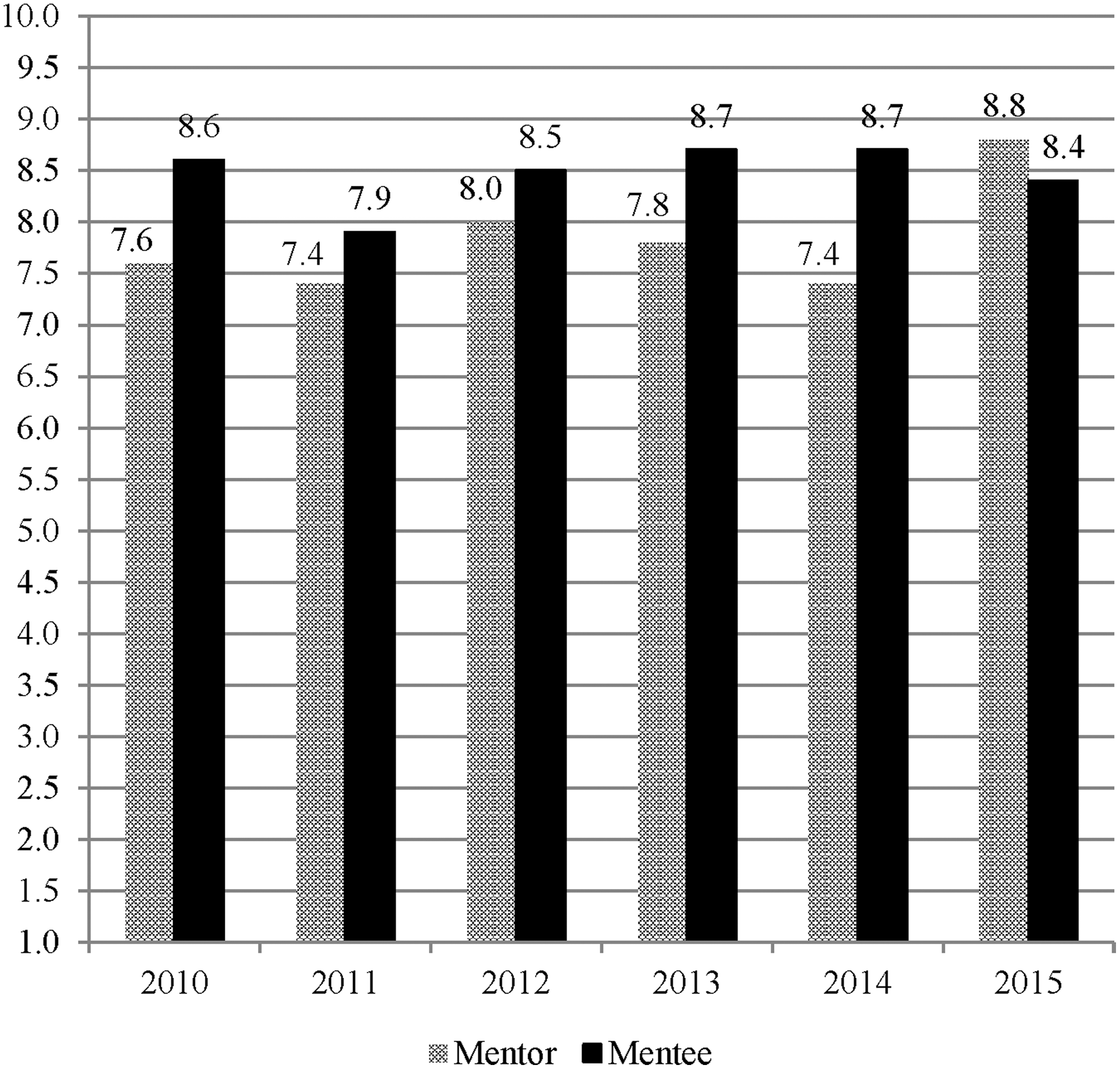
Mean satisfaction with the mentoring program by mentors and mentees. Mean satisfaction was on a scale of 1–10, with 10 being highest satisfaction.
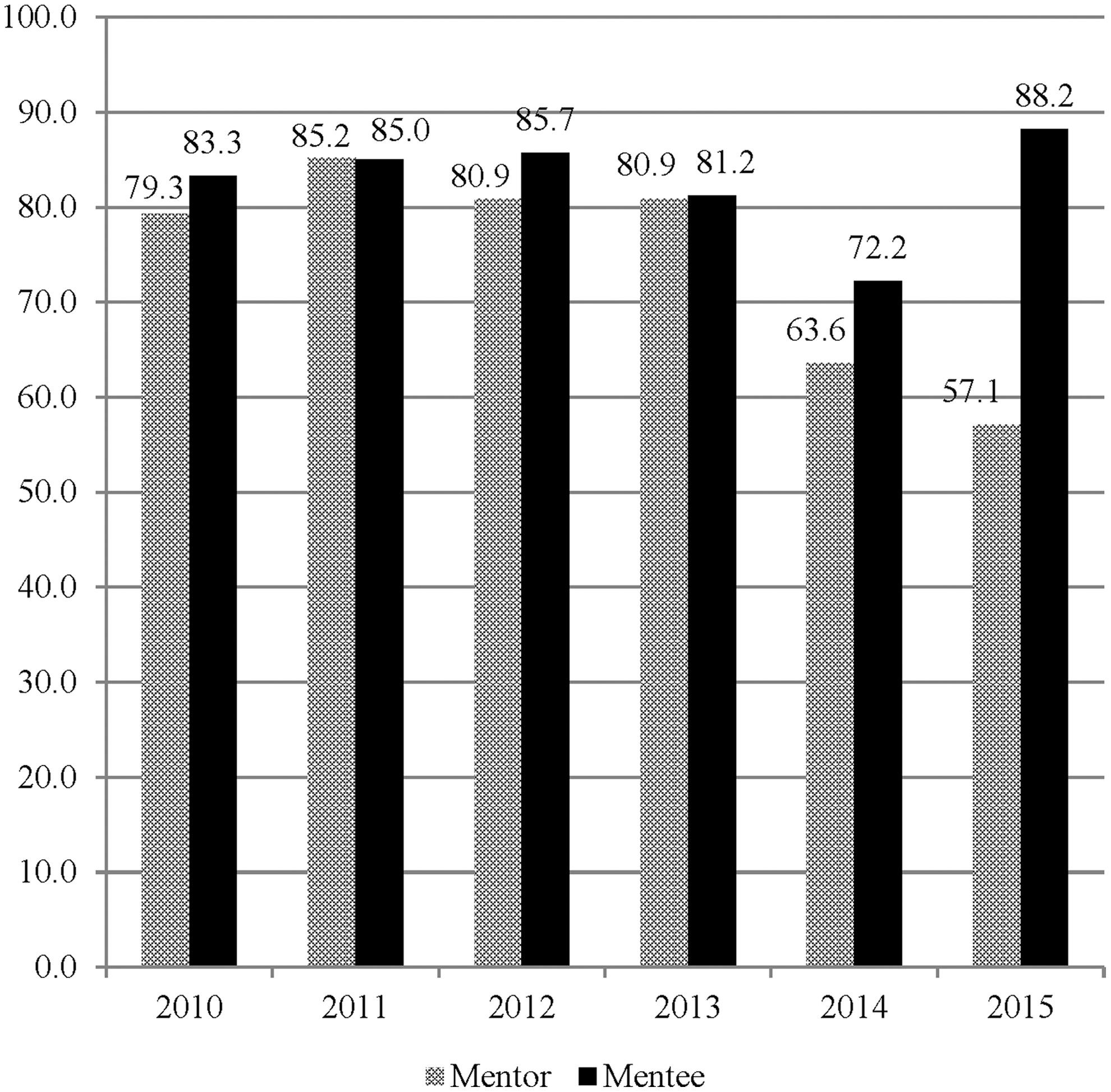
Percent of mentors and mentees recommending the mentoring program to other women junior faculty.
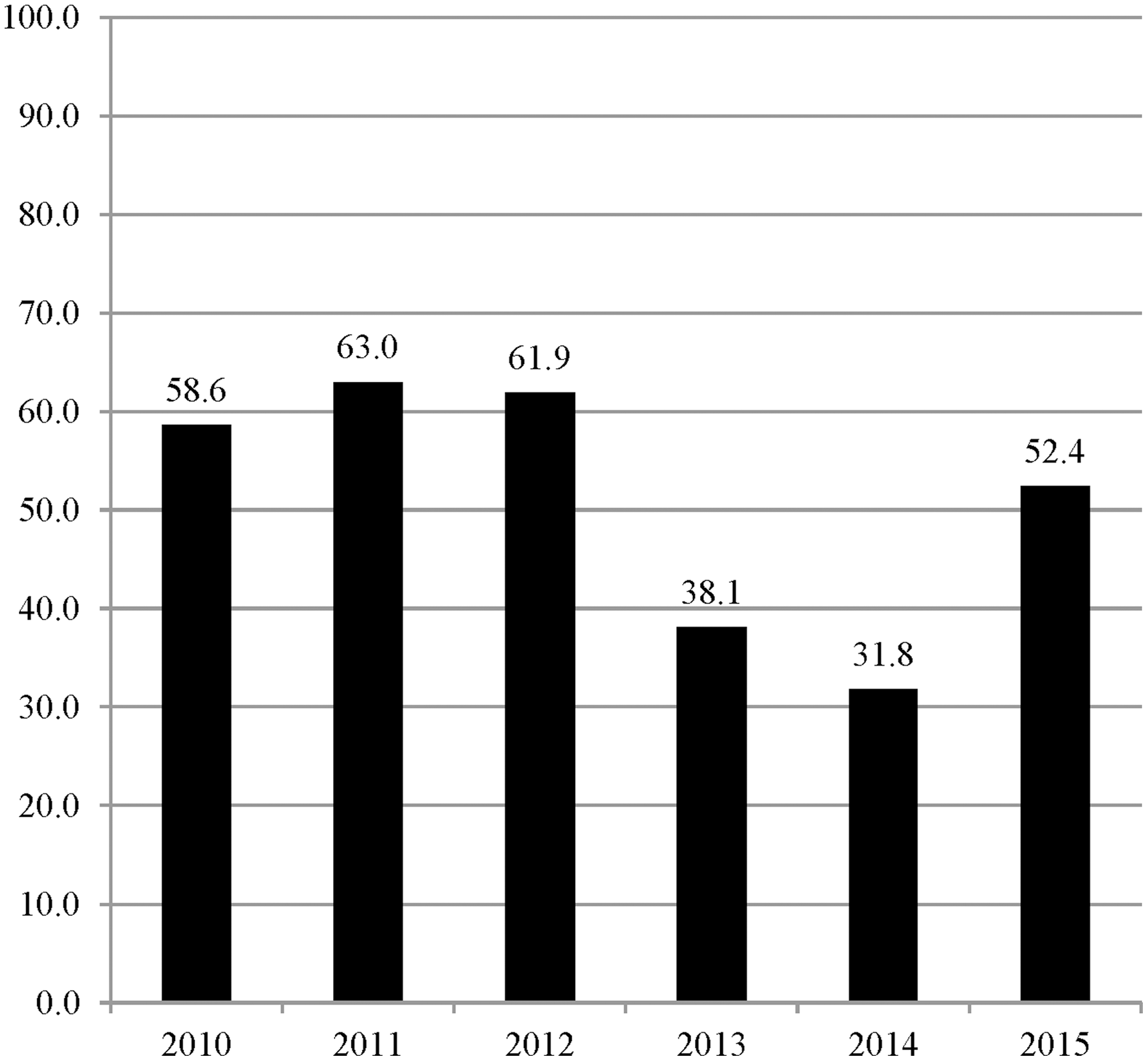
Percent of mentors recommending participation in the mentoring program to other senior faculty.
Table 4 contains data regarding other general aspects queried of the mentoring pairs. The primary means by which the mentoring pairs communicated with each other was through e-mail and face-to-face meetings, followed closely by impromptu encounters. Using the telephone to communicate was not nearly as common as these other means of communication. The majority of both mentors and mentees felt that the frequency and time commitment of their meetings were about on-target.
Discussion
The focus of our study was to determine the value of a long-standing institution-wide mentoring program for women at the junior faculty level at Wake Forest School of Medicine. A novel aspect of our study is that it was conducted on mentor-mentee paired-data that allowed assessment of the level of congruency in responses among the matched mentoring pairs. Evaluating the most recent 6 years of annual participant surveys, we found high regard and satisfaction with the mentoring program overall, with mentees expressing that the mentors had been extremely helpful in their advice and assistance in numerous ways. These results demonstrate the value in establishing a mentoring program specifically for women faculty.
We were pleased with the survey response rate over the years of analysis, especially given the overcommitted lives of academic faculty. We interpreted these return rates as a reflection of the well-thought-of level of interest and approval with our mentoring program by the participants, and thus a testament to the work and commitment of ourselves as directors and organizers of the program. Our assumption was corroborated by the high satisfaction ratings given to the program and the very high levels of recommendations made to women junior faculty not yet participating in the mentoring program. There is nothing more valuable than having participants be champions of a mentoring program; it speaks to their satisfaction with the program and the benefits that they have received by participating.
In addition, a good percentage of mentors had recommended the program to other senior faculty to participate as mentors across the years. The few years with decreased recommendations to senior faculty to serve as mentors in our program may reflect the major organizational changes that were occurring at the time that may have affected senior faculty's view of faculty life. Interestingly, survey response rates were consistently higher for our mentors than mentees. This finding is evidence of the high commitment of our mentors to the mentoring program and perhaps reflects that more time may be available in senior faculty schedules for ancillary work, that is, this mentoring program, compared to the junior faculty member who is trying to work through the relentless waves of academic medicine demands inherent in early career faculty careers.
A key feature of our mentoring program, which could explain the high overall satisfaction and participant recommendations of the program, is the use of a Mentee Needs Assessment Form to individualize the mentoring relationship for each of our mentees. 26 On this form, each mentee indicates the specific areas in which they would like to be mentored, their preferred characteristics of the mentor (male/female and MD/PhD/Other), and any other information related to their clinical or research interests. All this information is considered when the Mentoring Pairing Committee identifies senior faculty to serve as potential mentors for each mentee. The mentee then decides which potential senior faculty they would like to have as a mentor. This individualized approach to forming the mentoring pairs, by having the women mentees provide direct input into their preferences for mentoring, has been noted to be of importance in a recent large cross-sectional study of women faculty in medical schools. 27
Of the many possible topics of discussion that can occur between mentors and mentees, it was not surprising that the top three conversations for our program participants centered on career development, research, and promotion. Although most faculty are interested in their career development and promotion, junior faculty especially are focused on getting their careers started in the right direction early on to achieve their first promotion, especially those in the time-limited tenure academic track. The importance of mentoring relationships to provide career guidance has been cited in previous studies of mentoring for women faculty. 18,28,29
Discussions about institutional resources and administration/service also were common among our mentoring participants. Again, these would be topics about which junior faculty would naturally inquire as they are closely related to their career development and promotion interests. Knowing how and where to access institutional resources (e.g., research forms, promotion guidelines, institutional policies, faculty benefits, and data analysis resources) is vital for all faculty regardless of academic or clinical focus. Oftentimes, where information about these resources can be found is not readily apparent, even on institutional websites. Having a mentor show you how to access institutional resources is key to getting information that is important to your career.
Moreover, for better or worse, administrative opportunities often present themselves to junior faculty. Deciding whether to accept or reject such opportunities can often confuse these faculty who are still trying to get their career moving and are unsure of when to say yes or no to the many institutional offerings that come their way. Having the advice of a more senior mentor is invaluable in this regard, as they can point to the pros and cons of assuming an administrative role at that particular phase of the mentee's career, without inherent bias in their recommendations.
Two of the most interesting findings in our study were the least discussed topics and those topics for which there was disagreement among the mentoring pairs as to whether discussion had occurred around those issues. Greater than 40% of our program participants agreed that their least discussed topics were related to conflict management, ethical issues, and conversations about supervision, communication, and presentation.
We initially thought that conflict would be one of the areas of more frequent discussion among our mentoring pairs, given the difficulty of navigating the political terrain of academic medicine and starting a career for junior faculty. However, nearly 42% of the pairs agreed that conflict issues were not a topic of discussion. Not surprisingly, mentoring pairs did not always agree that they had discussed a particular topic, which may be related to differences among mentees and mentors in their interpretation, definition, or assumptions of what would fall into a particular categorization, such as a conflict episode. Senior faculty may more readily see a situation as one of conflict compared to a less seasoned faculty member who may not recognize the conflict that exists in a scenario.
It was very clear that the mentees thought that the mentors had been very helpful overall. For discussions about various topics, greater than 90% mentees and their mentors agreed that the discussions were very helpful. Similarly, in most cases both mentees and mentors agreed that the advice or assistance provided by the mentors was helpful to the general career/professional development and well-being of the mentees (e.g., referred to other faculty and helped determine career goals). However, there were a few instances in which the mentors perceived that they had not been very helpful, whereas their mentees felt otherwise. These findings speak to the importance of mentees providing positive feedback to their mentors regarding their advice or assistance, and highlight that positive feedback should be given by both mentees and mentors in a mentoring relationship to continue to nurture interest and motivation in the relationship.
Our mentoring program was established to provide a means of easing the assimilation into academic medicine culture and generally assisting the career of new women junior faculty. Productivity outcomes were not a specific goal or focus of our mentoring program as it has been for others. 15,30,31 Nevertheless, we were pleased to find that some of our program participants developed working relationships that resulted in final products of grant applications, articles, presentations, or memberships in professional societies. It is encouraging to see that collaborative productive efforts can naturally develop from mentoring relationships that were not officially established for that specific purpose.
In addition, some of our mentees felt that their mentoring relationship had contributed in some way to their promotion. While an ultimate success of a mentoring program may be measured by the promotion of its mentees, it is extremely difficult to determine the level of influence that participation in a mentoring program may have had on that process compared to the many other factors that also could play important roles in promotion of mentees. However, the fact that some of our mentees felt that their mentor's advice played an important role in their promotion highlights the value of our program to the promotion process for our mentees.
As fits today's primary communication vehicles, a high percentage of participants cited e-mail as their means of communication with their mentoring partners, followed closely by actual meetings. Impromptu communications (which we assumed were defined by taking advantage of seeing their partner at nonmentoring meetings and events) also proved to be a major means of communication among participants. Given the hectic schedule of faculty, it is not too surprising that mentoring participants would seize the chance to speak with their partners whenever the opportunity arose. Not surprisingly, using the telephone to speak with their partner was the least used means of communication, again pointing to the use of e-mail as a primary means of communication in this era. Although data were not matched by mentoring pairs, it nevertheless was nice to see that the frequency and time commitment of the face-to-face meetings were about on-target for both mentors and mentees in the program. This means that participants felt that they were getting what they needed in the time that they spent with their mentoring partners.
There are few negatives to report for our mentoring program, other than the amount of time commitment that is required to oversee and manage all aspects of the program. Program participant numbers are always in flux as some women junior faculty are promoted and choose not to serve as mentors (usually because they feel unprepared to mentor), or they leave the institution (for reasons beyond the influence of the mentoring program), or some choose to drop out of the program because they are too busy to participate. Our recruitment for both mentees and mentors is constant and we continually seek out ways to engage our participants.
Conclusion
Providing mentoring programs for women is one of the ways identified to continue to move women faculty forward by the AAMC State of Women in Academic Medicine report. 1 Our annual program surveys indicate the value that our mentoring program brings to our women junior faculty who are mentees and to our senior faculty who serve as their mentors. High satisfaction with the program, unanticipated collaborative outcomes realized, and the many benefits identified by both mentees and mentors demonstrate the significance that our program has had for our participants. Our findings demonstrate the value in establishing mentoring programs specifically for women faculty, especially in environments in which other mentoring opportunities do not exist.
Footnotes
Acknowledgments
The authors would like to thank Dr. Claudine Legault for early statistical assistance and Rita Groce for her contributions to the discussion of our results. Contact Natalie Barrett
Author Disclosure Statement
No competing financial interests exist