




Abstract
Background:
Although uterine leiomyoma causes many problems, including infertility, there are few studies that have investigated the epidemiologic characteristics of uterine leiomyoma in South Korea. The aim of this study is to estimate the prevalence and incidence of uterine leiomyoma in South Korea and analyze the treatment trends.
Materials and Methods:
Women of reproductive age (15–54 years) were selected from the Korean National Health Insurance Service (NHIS) sample cohort dataset, which was collected from 2002 to 2013. Patients with uterine leiomyoma were identified by ICD-10 (International Codes of Disease, 10th Edition) and intervention codes. Prevalence and incidence were calculated from the NHIS cohort dataset and the treatment trends were analyzed for diagnosed patients.
Results:
The prevalence in overall age groups increased from 0.96% in 2002 to 2.43% in 2013, and the 1-year incidences of all age groups increased. The 26–30 age group showed the highest rate of 1-year incidence increase (2.14-folds, 0.33% in 2003 to 0.70% in 2013). The proportion of myomectomy increased from 22% in 2002 to 49% in 2013, whereas the proportion of hysterectomy decreased from 78% to 45%.
Conclusions:
The prevalence and incidence of uterine leiomyoma are increasing in South Korea as time progresses, and the rate of incidence increase is higher in younger reproductive women. Overall trends in uterine leiomyoma treatment are shifting to the methods of the saving uterus.
Introduction
Uterine leiomyoma is known to be one of the most common benign gynecological diseases in reproductive women. The incidence tends to increase with age and decrease after menopause. 1 Uterine leiomyoma causes abnormal uterine bleeding, dysmenorrhea, and pelvic pain. In addition, it is associated with infertility and adverse pregnancy outcomes such as preterm delivery, premature rupture of membranes, fetal growth restriction, placenta previa, placenta abruption, postpartum hemorrhage, or retained placenta. 2
The decreasing birth rate (1.654 in 1993 to 0.977 in 2018) 3 and an increasing number of infertile couples have become a major issue in South Korea. 4 Therefore, it is important to preserve fertility through early detection and treatment of uterine leiomyoma. For this reason, fundamental knowledge in the epidemiology of uterine leiomyoma is imperative.
There are a few studies that have investigated the epidemiologic characteristics of uterine leiomyoma in South Korea. Prevalence was reported in a study that evaluated the relationship between thyroid nodules and uterine leiomyoma. Pelvic ultrasonography was performed to 925 women who attended health check-ups. The prevalence was 40.2% in premenopausal women and 33.8% in postmenopausal women. 5 Another study examined the association between weight change and uterine leiomyoma and included information about the number of uterine leiomyoma patients in the particular population; from a total of 5,062 South Korean nurses who had experienced pregnancy, 210 of them reported a diagnosis of uterine leiomyomas within the past 2 years. 6
There is another study that compares the prevalence of uterine leiomyoma in South Korea to that of other countries. A total of 2,524 South Korean women between the ages 15 and 49 had self-reported on their personal history of uterine leiomyoma. The prevalence was 9.0%, which was the second highest value among eight countries: UK, Italy, France, Germany, Brazil, Canada, USA, and South Korea. 7 Overall, the number of studies specifically designed to examine the epidemiologic characteristics of uterine leiomyoma and trends of treatment are limited not only in South Korea but also in Asia in general.
The aim of this study is to estimate the prevalence and incidence of uterine leiomyoma and analyze the trends of associated treatments in South Korea from 2002 to 2013. This could provide valuable data to establish accurate guidelines for screening and treatment.
Materials and Methods
Study data
We used the Korean National Health Insurance Service (NHIS) cohort data, which is based on health insurance claims. The number of people in the cohort is ∼1 million. They were randomly selected from 46,605,433 South Korean residents in January 1, 2002 and followed up until December 31, 2013.
This is a semidynamic cohort to which newborns are added to compensate for the deceased. The data include subject demographics; clinical information, such as disease diagnoses, drug prescriptions, interventions, and procedures; the beneficiary's socioeconomic level; and death records. The diagnoses were coded using the Korean version of the International Codes of Disease, 10th Edition (ICD-10). Age was grouped in 5-year intervals.
Calculation of incidence and prevalence
Diagnosis codes for selecting patients with uterine leiomyoma are D25, D25.0, D25.1, D25.2, and D25.9.
Prevalence
The prevalence of uterine leiomyoma was calculated each year. The numerator was the number of individuals who met the case definition criteria and the denominator was the number of all individuals 15–54 years of age, for each year. When multiple ICD codes were found in a patient in a year, the case was counted as one.
Incidence
The incidence case was defined as the first appearance of diagnostic codes of uterine leiomyoma in the health insurance claims, regardless of hospital admissions or outpatient visits. We selected 319,608 women 15–54 years of age in 2002 from the cohort and identified 40,486 uterine leiomyoma cases during the 2002–2013 period. After excluding women with uterine leiomyoma in 2002 with the application of a 1-year look-back period, we identified 37,431 patients with uterine leiomyoma (Fig. 1).
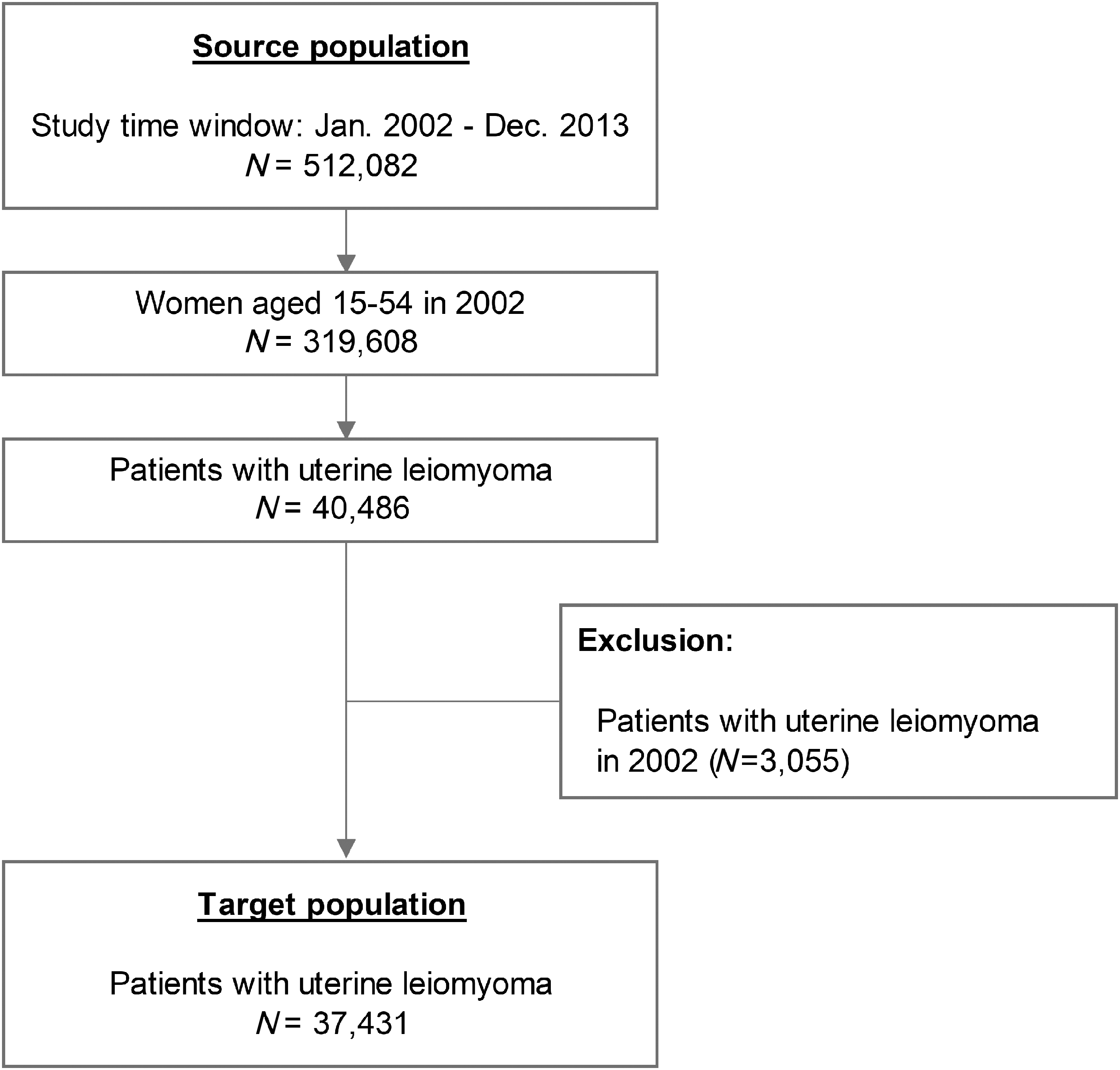
Patient selection for the estimate of the incidence case with 1 year look-back period.
We used an actuarial method to calculate the cumulative incidence. 8 The withdrawals were presumed to occur at the midpoint of the study period, hence W/2 was subtracted from the target population. The formula below was used for the calculation of cumulative incidence.
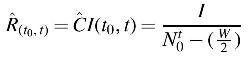
To estimate the risk for the accumulated period

The overall incidence rates and incidence rates by age group were calculated. Additional look-back adjusted incidence rates were also calculated and suggested.
One year of the look-back period as of 2003 was applied to calculate the annual incidence rate according to specialists' opinion that the patient would come to see a gynecologist within 1 year after the onset of the disease. We also considered the minimum loss of data. Since the look-back period increased every observation year and a short look-back period caused overestimation of the incidences by misclassifying prevalent cases to incident cases, we estimated the number of incidence cases of the 11th look-back period each year using an equation from multiple linear regression to predict misclassification rate by the look-back period, the number of patients, and the year of diagnosis, and used the estimates to get the adjusted incidence rate. 9,10

Treatments
The types and numbers of treatments received were identified using procedure codes on the fee schedule for the national health insurance. Since the Korean health insurance system has chosen fee-for-service as the reimbursement system, service providers submit health care service claims based on the procedure codes. Procedure codes include all services provided in the health care institution such as surgical treatment, hospitalization, medical care. Surgical treatments include hysterectomy (R4130, R4141, R4145, R4146) and myomectomy (R4120, R4121, R4122, R4123, R4125, R4126). Other interventions are myolysis (RZ564), uterine artery embolization (UAE) (M6644), and HIFU (high-intensity focused ultrasound ablation, RZ565, RZ566). We compared treatment trends over the 2002–2013 period with respect to the type of treatment received. Percent change was reported as change relative to the 2002 treatment rates.
Statistical analyses
A linear regression analysis was performed to determine the trends over time. All descriptive statistics were reported by number and percentage. Ninety-five percent binomial confidence intervals (95% CIs) were suggested for each prevalence and incidence. However, due to the nature of our study, which has a very large population size, the standard error number was very low, resulting in the 95% CIs converging on the value of all prevalence or incidence rates. Therefore, we have decided not to indicate the 95% CIs for prevalence and incidence values, and the text below states that the 95% CIs are omitted. SAS (version 9.2, Cary, NC) was used as the statistical analysis tool. Statistical significance was set at p < 0.05.
Details of ethics approval
The data were restricted to users who gained approval for access by the NHIS. We applied for the data access to the NHIS with the study protocol, which was approved by the Institutional Review Board of principal investigator's affiliation, and received an approval from the NHIS (NHIS-2016-2-243).
This study was approved by the Institutional Review Board of Seoul St. Mary's Hospital (KIRB-0E513-001). Informed consent was not obtained because the data were already anonymized and deidentified by the NHIS before the analysis.
Results
Prevalence of uterine leiomyoma
The annual number of women from the NHIS cohort database and the annual number of uterine leiomyoma patients are shown in Table 1. In 2013, the total number of women was 302,760 and out of that, the number of uterine leiomyoma patients was 7,367. The number of women decreased throughout the years while the number of diagnosed patients increased.
Annual Prevalence of Uterine Leiomyoma in Korea, 2002–2013
The average annual prevalence of uterine leiomyoma from 2002 to 2013 was 1.78%. The prevalence increased from 0.96% in 2002 to 2.43% in 2013. During the 12-year period, the 45–49 age group showed the highest prevalence (Fig. 2).
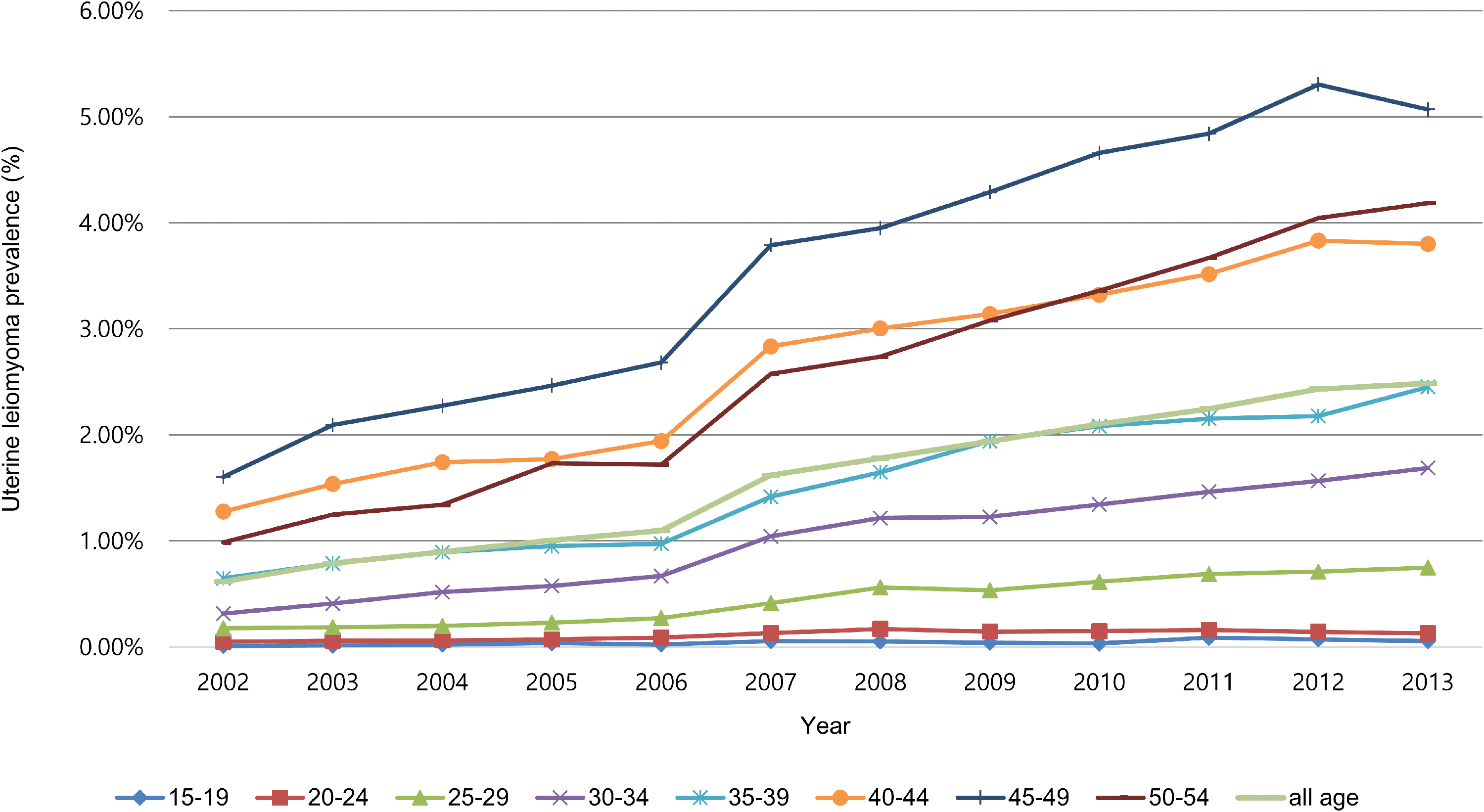
Prevalence of uterine leiomyoma in women in South Korea, 2002–2013, by age group. X-axis: Year. Y-axis: Uterine leiomyoma prevalence (%). Color images are available online.
Incidence of uterine leiomyoma
A total of 316,553 women 15–54 years of age were selected from the NHIS cohort database in 2003 and 268,267 women were analyzable in 2013. From 2003 to 2013, 37,431 new cases were identified. The crude and adjusted cumulative incidences were 12.2% and 10.5%, respectively. The age group 40–44 had the highest cumulative incidence of 21.5% and the age group 35–39 had the second highest of 20.4% for 11 years (Fig. 3).
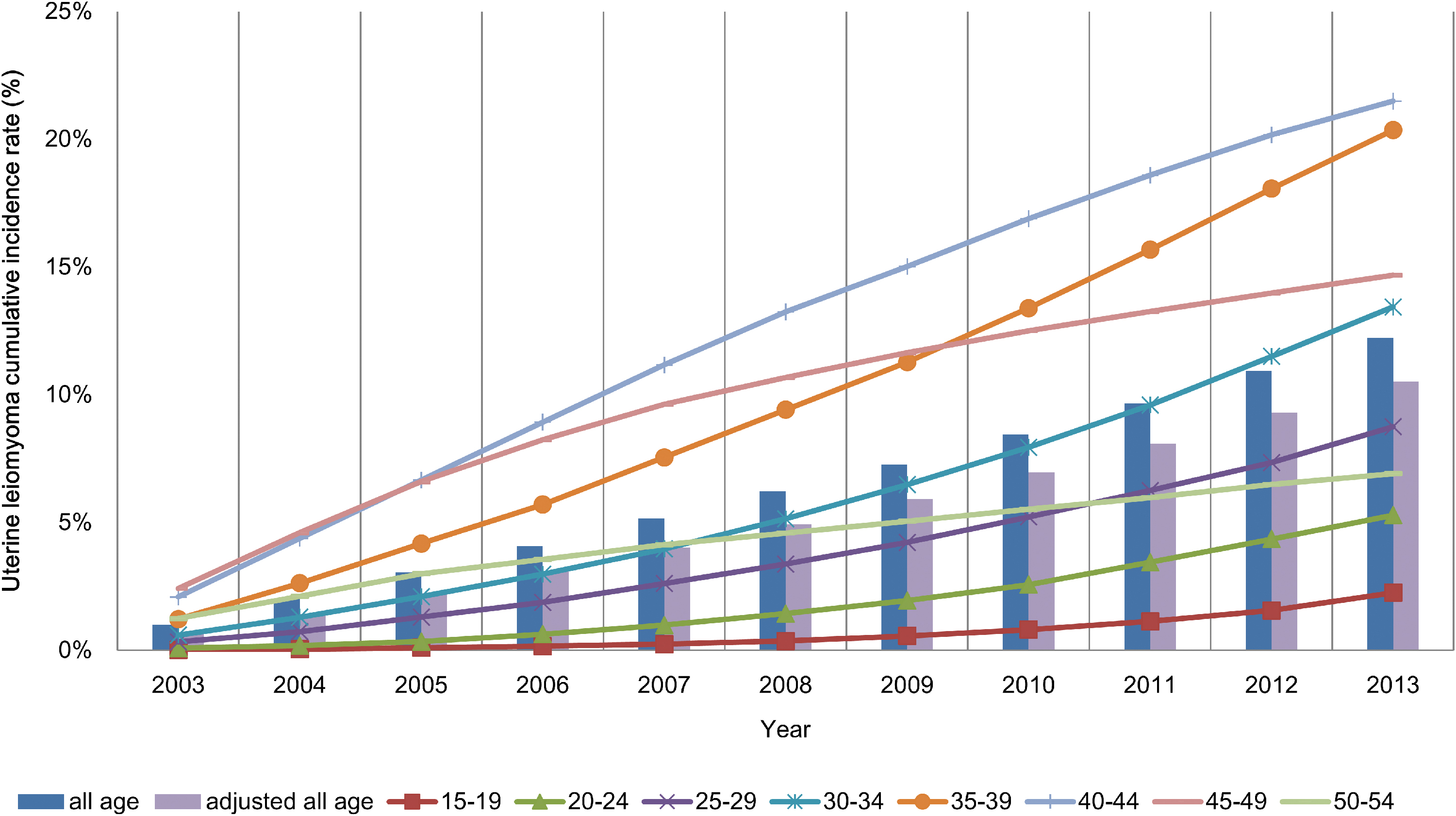
Cumulative incidence of uterine leiomyoma in women in South Korea, 2003–2013, by age group. X-axis: Year. Y-axis: Uterine leiomyoma cumulative incidence rate (%). Color images are available online.
We compared the 1-year incidence of uterine leiomyoma in 2003, 2008, and 2013 by each age group (Fig. 4). The 1-year incidence had increased all over the age groups. The age group 46–50 showed the highest incidence throughout the years, with 2.79% in 2013. The rates of 1-year incidence increase in each group were calculated, and the 26–30 age group showed the highest rate (2.14-folds, 0.33%–0.70%).

One-year incidence of uterine leiomyoma in women in South Korea, 2003, 2008, and 2013, by age group. X-axis: Age group. Y-axis: Uterine leiomyoma incidence rate (%). Z-axis: Year. Color images are available online.
Treatment trends of uterine leiomyoma
The total number of interventions increased from 692 in 2002 to 1199 in 2011. Between 2011 and 2013, the number decreased to 1112 (Table 2). The treatment percentage of all diagnosed patients decreased from 22.65% in 2002 to 15.09% in 2013.
The Number of Surgical and Intervention Treatment of Uterine Leiomyoma Patient in Korea, 2002–2013, by Age Group
Of all treatments, the proportion of myomectomy increased 2.24-folds (21% in 2002 to 47% in 2013), whereas the proportion of hysterectomy decreased 0.62-folds (79% in 2002 to 49% in 2013) (Fig. 5). The intervention treatment, including UAE, myolysis, and HIFU was first seen in 2 cases in 2002 and increased to 49 cases (4%) in 2013.
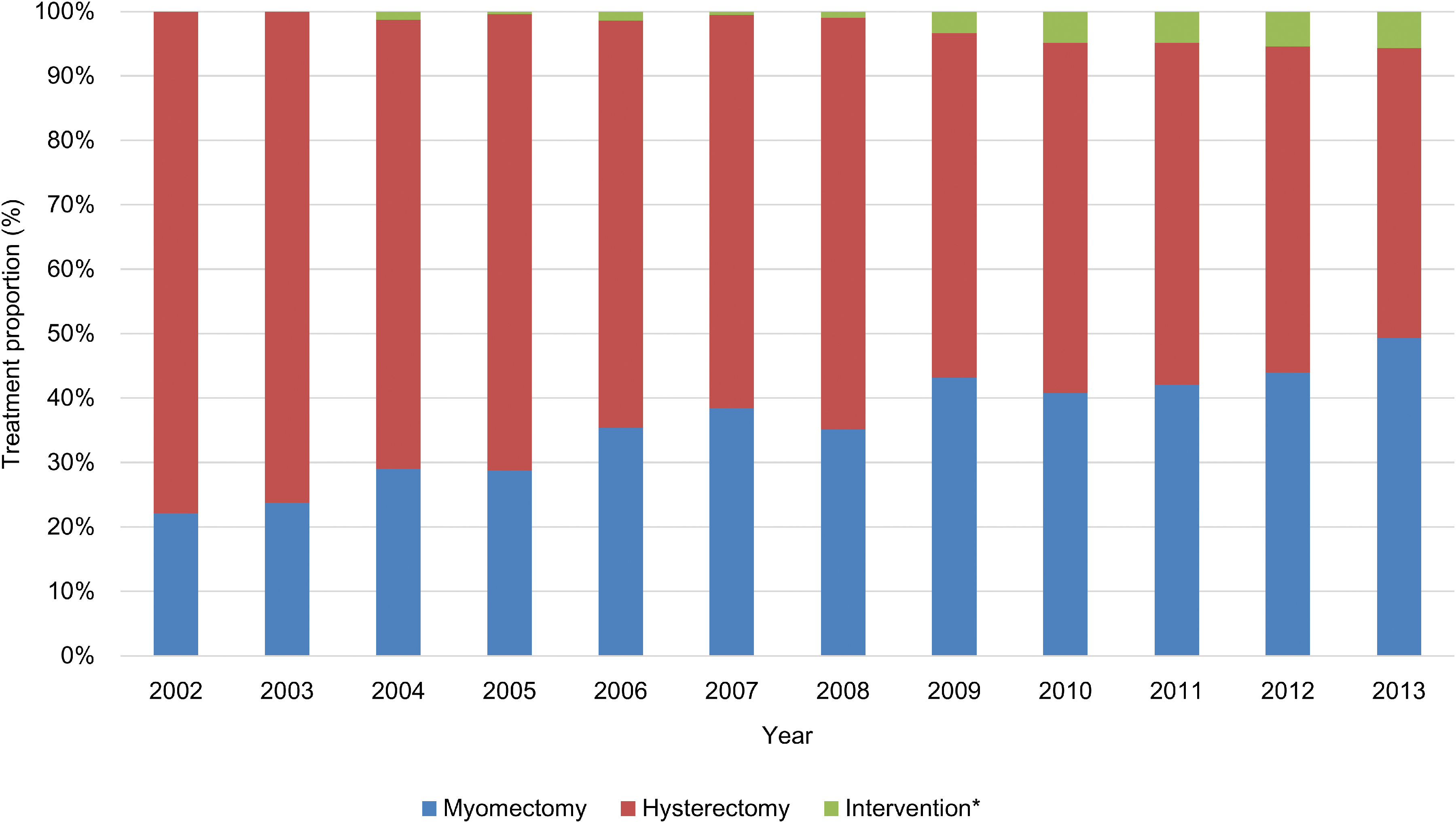
The proportion of myomectomy, hysterectomy, and intervention treatment of uterine leiomyoma patient in South Korea, 2002–2013. X-axis: Treatment proportion (%). Y-axis: Year. * Intervention; UAE, myolysis, and HIFU. HIFU, high-intensity focused ultrasound; UAE, uterine artery embolization. Color images are available online.
Treatments were analyzed by age group and compared with the years 2003, 2008, and 2013 (Fig. 6). The proportion of myomectomy and intervention treatment increased in all age groups, even in the 50–54 group.

The number of myomectomy, hysterectomy, and intervention treatment of uterine leiomyoma patient in South Korea, 2003, 2008, and 2013, by age group. X-axis: Number of treatment. Y-axis: Age groups of each year. * Intervention; UAE, myolysis, and HIFU. Color images are available online.
Discussion
Principal findings of our study and results of the other studies
In the present study, the prevalence of uterine leiomyoma in South Korean women was increased over time. But the numerical values are much lower compared with previously reported studies, which was 4.5%–66%. 5,7,11 –14
There are several ways to obtain the number of women who have uterine leiomyoma: self-reporting, clinical records, hospital care databases, and imaging screening. Regarding the asymptomatic uterine leiomyoma, the ideal tool is imaging screening such as ultrasound or magnetic resonance imaging. In Germany, 1,314 gynecological outpatients between the ages 30 and 55 were examined by ultrasonography and the total frequency of uterine leiomyoma was 48.6%. According to this study, 51.4% of diagnosed women did not have any gynecological symptoms. 14 Another study, which enrolled the randomly selected members of an urban health plan in the USA, identified through ultrasonography that 35% of women between 35 and 49 had uterine leiomyoma. Of the women who had uterine leiomyoma, 51% had not previously been diagnosed. 15
As mentioned before, we calculated the prevalence and incidence of the number of patients diagnosed by the clinicians among the general population. Therefore, we could not identify the asymptomatic undiagnosed uterine leiomyoma. This resulted in a lower value of the prevalence and incidence than in previous studies by imaging screening. In addition, some studies enrolled women who visited gynecologic clinics, but we used the number of women from the general population. 11,13,14
However, for verification of the disease trends in relation to time, it is useful to use the health care data. Over the 12 years, the uterine leiomyoma prevalence increased by 2.5-folds, and the overall 1-year incidences of all age groups increased by the years. The incidence increase was highest in the 26–30 age group.
According to Flynn et al., the number of inpatient care for uterine leiomyoma increased by 38% from 1996 to 2000 in the United States. 16 Wechter et al. predicts the uterine leiomyoma-related hospitalizations to increase by 23% between 2007 and 2050 in the United States. 17 The two studies demonstrated that the number of treatments and treatment costs for uterine leiomyoma are increasing in the United States. In accordance with these studies, our results may indicate that the burden of uterine leiomyoma is increasing globally.
But recently, in the United States, a study evaluated the 10-year secular incidence trend. They reported that overall age-adjusted estimated incidence rates declined during the study interval among White, Hispanic, and Asian but not among Black and Native American women. 18 This is contrary to the results of our study even in Asian women. Further studies on the differences in the social environment between two countries will be needed for the explanation.
There are several factors that could explain the increase of uterine leiomyoma in South Korean women. First, changes in the demographic pattern may have been an influence. Recently the Korean Institute for Health and Social Affairs reported earlier menarche (13.4 years in 2001 to 12.4 years in 2011), increased average delivery age (30.3 years in 2006 to 32.2 years in 2015), and decreased birth rates (2.8 in 1980 to 1.18 in 2013). 4 All these factors are associated with a higher estrogen exposure in reproductive women, which could affect the occurrence and growth of uterine leiomyoma. This could further explain the higher increasing rate of incidence in younger ages. According to the study of Stewart et al., some reproductive factors can affect the development of uterine leiomyoma, parity, menopausal status, time since last birth, oral contraceptive use, and depot medroxyprogesterone acetate use. 19
With the improved socioeconomic status of South Korea, the regular health examination has become more frequent. In 2015, the number of women over 19 years of age who underwent regular health checkups increased 1.37-folds since 2001. 20 Private insurance systems may be considered as a factor that could have caused the increased number of visits to the clinic. For example, fee-for-service health insurance has been pointed out as the factor that increased medical consumption in South Korea. 21 A Korean study reported that short-term medical consumption between 2008 and 2011 had increased due to fee-for-service health insurance. 22
As the number of patients diagnosed with uterine leiomyoma increased, the total number of surgical and intervention treatments increased as well. However, the proportion of the treatments among all diagnosed patients had decreased. This can be explained in several ways. First, many diagnosed patients would not have needed treatment. Now we have more developed tools and technique than before, which allows us to find very small asymptomatic myoma nodules. Second, as mentioned earlier, the average age of Korean women giving birth has increased, and prebirth women may have avoided treatment.
We also evaluated changing trends in surgical and intervention treatments. The proportion of uterus-saving procedures, which included myomectomy and intervention treatments has increased, while the proportion of hysterectomy has decreased. A study conducted by Taiwanese researchers indicated that the rate of hysterectomy had decreased between 1997 and 2010. According to this study, in total, the number of hysterectomies performed to treat uterine leiomyoma decreased by 13.1%. 23
This may be a reflection of social trends of late marriage and increased first delivery age, which indicates that more women are interested in conserving fertility. 4 Furthermore, with new intervention technologies and new drugs such as oral gonadotropin-releasing hormone antagonist being introduced, many patients are choosing these treatments over hysterectomy. 24,25 The current recommendations of other countries are that the interventions and new medical treatments could be options for patients who do not want to conserve their fertilities. 26,27
Strengths and limitations
One limitation of the study is that, we used a random cohort dataset that corresponds to 1 million individuals from the NHIS. The dataset represents the actual population of South Korea and contains information regarding local clinics, outpatients, and hospital care data. However, because we used the administrative data, we could not control the potential effects of the risk factors such as parity, menarche, menopause, body mass index, etc. Furthermore, the dataset had already fixed the age group by 5 years and thus made it impossible to make more detailed analyses by age. Also, the dataset finished in 2013, we could not evaluate the trends after that.
Additionally, we were unable to include many patients who had no symptoms and had not visited the hospital because we had no choice but to count only the number of patients who had been diagnosed by a clinician. As a result, it is possible that the prevalence and incidence rates of our research have been underestimated.
Another limitation is that we could not analyze the medical treatment in uterine leiomyoma patients. Therefore, we cannot demonstrate the whole treatment data but only in surgical treatments and other intervention treatments.
Still, to our knowledge, this is the largest published study that estimates the prevalence and incidence of uterine leiomyoma in South Korean women. We have identified changes in data throughout the 12 years of NHIS data analysis and this is the longest period of all studies.
Conclusions
Prevalence and incidence of uterine leiomyoma are increasing in South Korea over time and the rate of incidence increase is higher in younger reproductive women. Overall trends in uterine leiomyoma treatment are changing into the methods of saving the uterus. This phenomenon can be understood by diverse angles such as the improved socioeconomic status, the tendency of late marriage and childbirth, and the development of medical technologies.
Research Implications
We used a large administrative dataset and it facilitated this research to verify accurate results. However, it hindered us in analyzing more in detail. To confirm the abovementioned possible reasons for these trends, further research studies that analyze characteristics of research participants are strongly suggested.
Footnotes
Author Disclosure Statement
No competing financial interests exist.
Funding Information
This research was supported by the Korea Health Industry Development Institute Research Program, Healthcare Big data R&D Support (Contracts No. HI16C1107), and Basic Science Research Program through the National Research Foundation of Korea (NRF) funded by the Ministry of Education (2017R1D1A1B03028045).