




Abstract
The Specialized Center of Research Excellence (SCORE) on sex differences at University of California, Los Angeles (UCLA) has a long track record studying bidirectional interactions between different organs and the brain in health and disease with a strong focus on sex as a biological variable (SABV). While the initial focus was on brain-gut interactions in irritable bowel syndrome (IBS), one of the most common disorders of gut-brain interaction, the scope of our Center's research has expanded to a range of different diseases, including inflammatory bowel disease, alcohol use disorder, obesity, urological chronic pelvic pain syndrome, and vulvodynia. This expansion of research focused on the role of brain-body and brain-gut microbiome interactions in these various disorders, aligning well with the increasing importance of multidisciplinary and interdisciplinary team science. The SCORE's Career Enhancement Core (CEC) has modeled team science as applied to SABV research, with educational and training opportunities, a mentoring program, seed grant funding, and other career development experiences that enable mentees to work across the disciplines involved in brain body research. The CEC goals are: (1) To provide seed grant funds for innovative research relevant to the overall SCORE mission and research program; (2) to recruit and foster the career development of students, trainees, and junior investigators who conduct research focused on sex differences or women's health in IBS and chronic constipation and other brain-gut disorders; (3) to facilitate and promote collaboration between the UCLA SCORE and other academic programs involved in women's health education and research; and (4) to promote the importance of SABV through community outreach using collaborative and innovative approaches. These goals focus on establishing the leading research center in sex differences in basic, translational, and clinical aspects of brain-body interactions and on providing women and underrepresented individuals with research opportunities needed to become independent investigators.
Overarching Theme of Sex as a Biologic Variable in Brain-Body Research
Investigators at the University of California, Los Angeles (UCLA) Specialized Center of Research Excellence (SCORE) on Brain-Gut Microbiome interactions (UCLA BGM SCORE) have a 30-year-long track record studying the bidirectional interactions between different organs and the brain in health and disease, with uninterrupted funding from the National Institutes of Health (NIH), Department of Defense, industry, foundations, and philanthropists.
Our Center grant has been funded since 2002, originally as an SCOR that included two 5-year renewals, and then as a next-iteration SCORE in 2020. From the beginning, our studies included a strong focus on sex as a biological variable (SABV) in these bidirectional interactions. While the initial focus had been on brain-gut interactions in the pathophysiology of irritable bowel syndrome (IBS), one of the most common functional gastrointestinal (GI) disorders, the scope of research has considerably expanded since then.
Training and mentoring of students, post-doctoral fellows, and gastroenterology fellows during the first 10 years have resulted in a group of national opinion leaders in this field of gastroenterology. International dissemination of UCLA generated research publications and lectures has created a plausible, testable biological model of IBS and laid the foundation for the recent renaming of “functional” GI disorders as disorders of gut-brain interactions.
While the Career Enhancement Core (CEC) is a new core in the current SCORE, our prior SCOR programs also focused on the training and recruitment of investigators in studying SABV. Our CEC goals are: (1) To provide seed grant funds for innovative research relevant to the overall SCORE mission and UCLA SCORE research program; (2) to recruit and foster the career development of students, trainees, and junior investigators who conduct research focused on sex differences or women's health in IBS and chronic constipation and other brain-gut disorders; (3) to facilitate and promote collaboration between the UCLA SCORE and other academic programs involved in women's health education and research; and (4) to promote the importance of SABV through community outreach using collaborative and innovative approaches. Figure 1 shows the integral role and responsibilities of the CEC within the SCORE program.
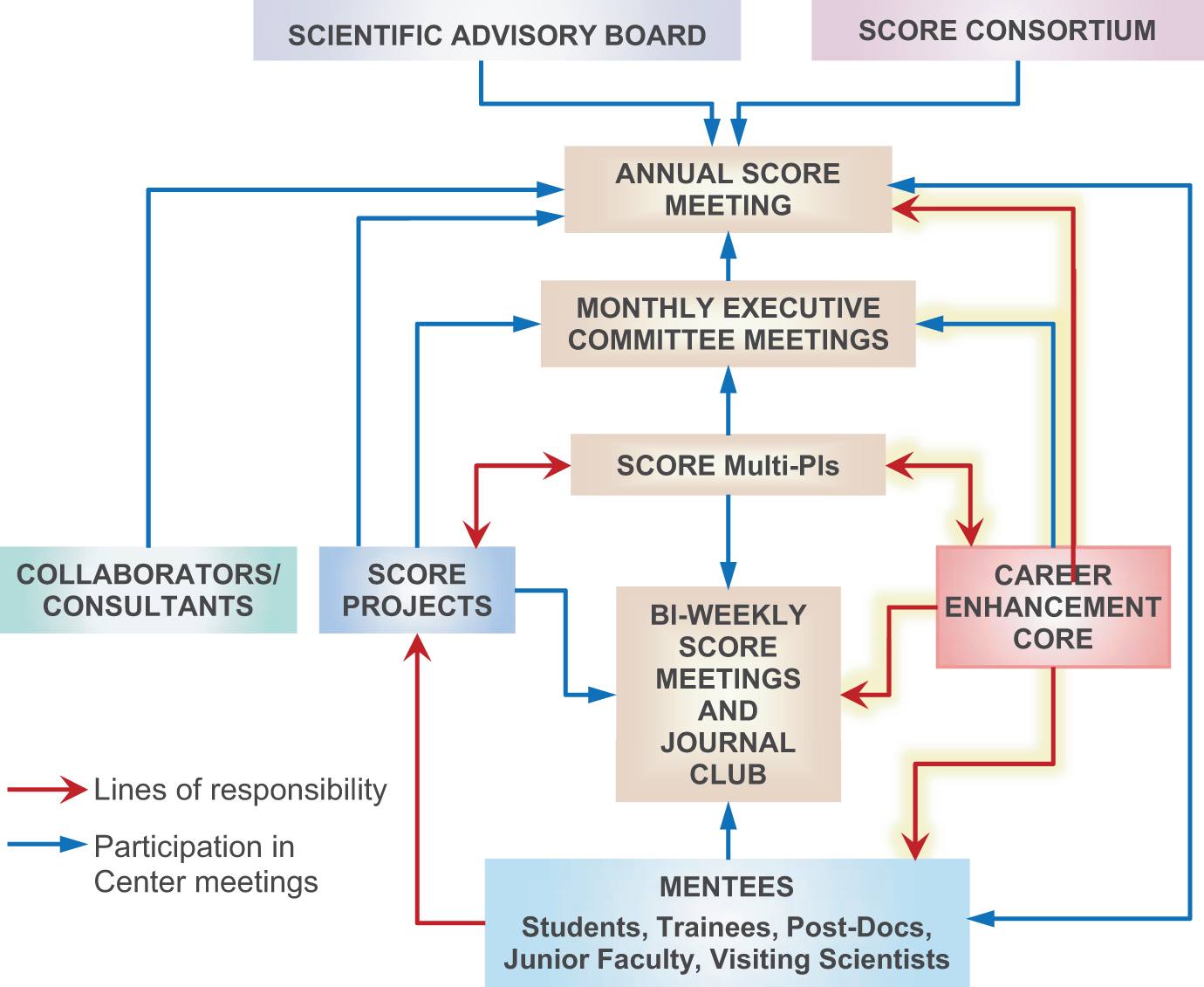
The integral role of the CEC within the UCLA BGM SCORE. BGM, brain-gut microbiome; CEC, Career Enhancement Core; SCORE, Specialized Center of Research Excellence; UCLA, University of California, Los Angeles.
Provide Seed Grant Funds for Innovative Research Relevant to the Overall SCORE Mission and UCLA SCORE Research Program
The UCLA BGM SCORE CEC has funded pilot and feasibility grants focused on SABV in different areas of research. Our seed grants have been awarded to junior investigators, who were not previously studying SABV but are now studying this in their seed grant projects and have become more integral members of our SCORE. For example, one recipient is a recent graduate of UCLA's GI fellowship program and the Specialty Training and Advanced Research (STAR) program, which is a unique curriculum designed for optimal training of physician-scientists. 1
This investigator obtained his PhD supported by the training and mentorship of both the GI fellowship and STAR programs, and he currently studies the interplay between the gut microbiome and chronic liver disease. His SCORE CEC seed grant project was to conduct a randomized placebo-controlled, double-blind study to examine how the microbiome can affect alcohol use disorder in a sex-dependent manner. He has also become the director of our biorepository, which stores, tracks, and annotates participant biosamples from our SCORE projects.
In addition, he is now a co-investigator with one of the SCORE Core and Project Leads on NIH- and industry-funded projects examining sex differences and health disparities in brain-gut microbiome interactions in obesity. Another CEC awardee is a basic scientist in molecular and medical pharmacology; his seed grant was focused on developing novel methods to measure estrogen and androgen metabolites in plasma and stool samples from our SCORE study participants.
This project has the potential to address an unmet need in SABV research and can be applicable to a range of preclinical and clinical SABV research areas. He was recently awarded a K01 grant and has become an active member of our SCORE team. He is also overseeing our journal club seminar, in which relevant publications on SABV are presented and discussed among students, trainees, and SCORE investigators.
Recruit and Foster the Career Development of Students, Trainees, and Junior Investigators Who Conduct Research Focused on Sex Differences or Women's Health in IBS and Chronic Constipation and Other Brain-Gut Disorders
Both the SCOR and SCORE programs have instituted research and training efforts in the area of SABV and have attracted a large number of students, post-doctoral fellows, trainees, and visiting early career scientists from UCLA and from other academic institutions in the United States, Canada, Europe, and Asia to work in the Center, and take advantage of educational and training programs, such as journal club, individual mentoring, pilot and feasibility grant applications, and manuscript preparation.
Through the CEC program, the Center has expanded training opportunities in SABV, ranging from clinical data collection, physiologic testing (brain imaging, somatic and visceral pain, autonomic nervous system, microbiome analysis), multiomics integrative analyses, literature reviews (systematic reviews and meta-analyses), manuscript preparation, lecture presentations, and grant preparations.
Multidisciplinary training and mentorship within the CEC
Previous and ongoing research efforts and epidemiological data about frequent IBS comorbidities with other chronic pain conditions in the musculoskeletal system and in the urogenital system have led to a realization that an analogous model of brain-gut interactions could be applied to brain-body interactions. We believe that, in large part due to our multidisciplinary and translational focus, Center investigators were able to obtain NIH funding to study brain-body interactions in patients with IBS and/or fibromyalgia to assess shared pathophysiologic mechanisms in somatic and visceral pain. 2
Center investigators have also played a crucial role in the longstanding NIDDK Multidisciplinary Approach to the Study of Chronic Pelvic Pain Research Network to study brain-bladder interactions, 3,4 which further expanded our pool of interested trainees from both UCLA and the University of Southern California. In addition, we have initiated NIH-funded research programs in the role of the brain and microbiome in the pathophysiology of vulvodynia (chronic pain condition of the vulvar vestibule). 5 –7
Our multidisciplinary approach, with a focus on women's health and sex differences and brain-body interactions, has therefore led to successful expansion of our research into a wide range of different diseases, 8 including GI and liver disorders (e.g., IBS, 5,9 inflammatory bowel disease [IBD], 10,11 alcohol use disorder), ingestive behaviors (obesity, eating disorders 12,13 ), neurodegenerative disorders (e.g., Alzheimer's and Parkinson's diseases, autism spectrum disorders), 14 urogynecologic disorders (e.g., vulvodynia, urological chronic pelvic pain syndrome), 3,4,15 rheumatologic disorders (e.g., scleroderma), 16 and immunologic diseases (e.g., HIV).
To be successful in multidisciplinary team science, it is not enough to simply be multidisciplinary; it is also critical to be interdisciplinary, that is, to be able to appreciate, interact, and work synergistically with colleagues from very different backgrounds, expertise, and approaches. 17 From its inception, the UCLA Center's, and now the current UCLA BGM SCORE's, approach is based on a core interdisciplinary team (e.g., gastroenterologists, PhD scientists, psychologists, urologists, gynecologists, biostatisticians, GI dietitians) who have successfully worked together for almost 30 years.
Therefore, in the SCORE's CEC, we can model this form of team science as applied to SABV research and set up experiences for students, trainees, and junior faculty that will enable them to work within and across disciplines involved in brain-gut microbiome research.
Most of our mentees are new to multidisciplinary SABV research, so our CEC provides training and education on issues specific to SABV and team science. For example, the understanding and appreciation of SABV vary greatly in the background and educational experiences of our mentees from multiple disciplines. While SABV has become a core construct in medicine and psychology, it is much less familiar to those in engineering or even areas of neuroscience. 18
Frank and open discussions of issues of sex and gender identity, bias in traditional research findings, study designs incorporating sex differences, and issues of how to interpret sex differences in outcomes are incorporated into all our small-group discussions and individual teaching. Young scientists, and even undergraduate students, often worry about individual credit for work when working in groups.
Therefore, we model and teach how to address these concerns, emphasizing the importance of transparent, open communication early in projects regarding roles, and promoting how diversity is a strength and necessary component of our work. 19 A related issue is that some students come with a hierarchical model of disciplines or backgrounds that are most important or valued.
While we are sensitive to and directly address this when it surfaces in discussions, we once again believe that positive modeling of successful interdisciplinary interactions among the various faculty, departments, and staff is the most powerful way for mentees to understand the power of multidisciplinary partnering.
These foundational issues are critical for the development of productive and collaborative young scientists, especially when working in complex areas of medicine, and are therefore a priority of the didactic and interactive content for our CEC, as described in the following sections.
Elevating the quality of scientific discovery requires that the pool of talented scientists be representative of the diverse backgrounds being studied, including those from underrepresented groups. Data from the National Science Foundation show that individuals from racial and ethnic groups remain underrepresented in biomedical research. 20,21
In addition, women face additional challenges in scientific fields, especially at the graduate level and beyond. 22 To meet these goals, underrepresented communities and groups need to be “appropriately” targeted. However, this is only a small part of the solution. We need to go beyond recruitment, and investigators need to be first and foremost trained and instructed on how to appropriately develop research questions, design experiments, analyze data, and report results according to the guidelines outlined by the NIH Office of Research on Women's Health (ORWH). 23
Mentoring and training are the key cornerstones of personal and professional development, where the mentee is provided guidance through the mentor's expertise, sponsorship, and institutional knowledge. Areas of mentoring include professional competency in career planning, communication skills, research and scholarship skills, managerial and leadership skills, negotiating and networking skills, and navigating the institutional culture. 24
All of these skills are needed to maximize the potential of long-term career success, from student to trainee to junior faculty to independent investigator and leader. These skills can be taught via structured courses or one-on-one with the mentor. Mentoring is considered to be “the single most important factor” in the transition from an NIH K to R research grant. 25
The UCLA BGM SCORE's mentorship model is to have a primary research mentor who is the primary investigator (PI) of a selected research project or topic area and a project team that comprises content experts and biostatisticians with relevant interdisciplinary perspectives. When a project is initially conceived, a data project form is completed by the PI and mentee that includes background, specific aims, hypotheses, data analysis plan, and the project datasets (if applicable) that will be used in the analysis.
Other team science members are content experts (e.g., clinical expert, brain imaging, dietitian, psychologist) and those skilled in the required analytic approaches (e.g., microbiome researchers, integrated statistical analysts). This approach emphasizes team science with different disciplines, expertise, and perspectives, providing a model for mentees.
If the study will utilize data from the Center database, the PIs of the research studies from which the data were collected are members of the project team. For over 25 years, our Center has created a database of clinical and biologic data from SCORE and other research studies. We have employed a core set of validated questionnaires that all study participants complete, as well as other questionnaires relevant to the particular research project.
The Center's database also includes biologic data, such as cortisol levels, autonomic nervous system tone measurements, fecal microbiome 16sRNA and metabolite profiles, cytokine levels, and brain imaging. Research projects are presented to Center members at the beginning of the study to allow for input from all team members in the conceptualization, data analysis plan, and applicability to clinical practice. The research results are again presented at the completion of the project (and sometimes during an interim analysis). This approach fosters interdisciplinary collaboration among Center members.
The different components of mentorship are shown in Figure 2. This framework was modified from the logic mentorship model, which provides inputs, outputs, and outcomes related to the independent investigator incubator (I3) program. 24 Inputs include resources such as Center grants, pilot and feasibility grants, NIH training grants, junior and senior faculty mentors, biostatistical support, grant specialists, and support to attend scientific meetings.
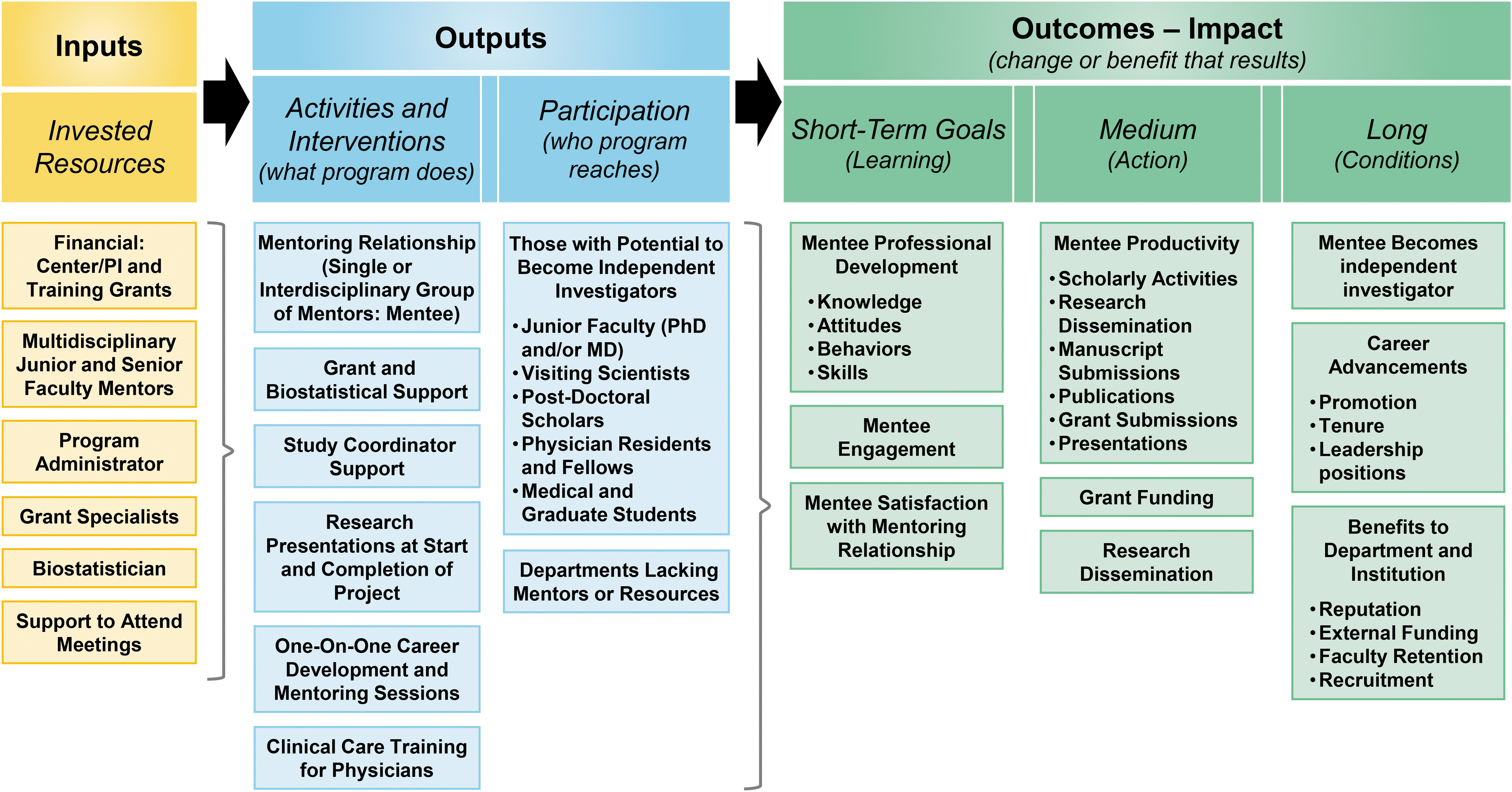
Multidisciplinary mentorship framework utilized by the UCLA BGM SCORE on sex differences in brain-gut interactions in irritable bowel syndrome, which provides the inputs, outputs, and outcomes. This framework was modified from the logic mentorship model. 24
Outputs comprised activities and interventions (i.e., what the mentoring program does) and participation (who the program reaches). Activities and interventions include the mentoring relationship (one-on-one and group), research presentations, career development and mentoring sessions, and clinical care training for physicians.
Outcomes range from short- to medium- and long-term goals. Short-term goals aim at mentee engagement, establishment of an effective mentor-mentee relationship, and professional development (knowledge, attitudes, behaviors, and skills). Medium-term goals include the mentee's productivity, which is measured by scholarly activities, publications, grant submissions and funding, and research presentations. Long-term goals include the transition of a mentee to an independent investigator, career advancements, faculty recruitment, and leadership positions.
Regular interactions with mentees, such as through journal club meetings, help spark interest in and knowledge of including sex and gender as important variables in research. Seminar-series type workshops with coursework (e.g., Fiat-Lux series 26 ) provide valuable opportunities to teach young investigators and students topics important for conducting research, such as on “Sex Differences in Disorders Related to the Brain Gut Interactions.”
We have based these teaching workshops on the rigorous principles and guidelines specified by NIH ORWH regarding the methods and techniques for integrating SABV into research. 23 The results of these efforts are significant, because they go beyond increasing the enrollment of women and diverse populations in research by enhancing knowledge regarding appropriate research techniques, study design, recruitment efforts, and analyses.
Another aim of these workshops was to provide unique opportunities for early stage investigators and students with hands-on opportunities to conduct research through research assistant positions and pilot and feasibility study projects. As a result, opportunities are provided that enhance the skills of talented young scientists from a wide variety of backgrounds to conduct research that focuses on SABV research in various disorders of the GI tract.
These workshops are also ideal opportunities to train junior faculty investigators (who were involved in organizing and teaching the seminar courses) to enhance their teaching and mentoring skills, enhance their visibility and ability to obtain extramural funding to support their own research focused on sex differences, and learn the supervisory skills required to mentor students in their own laboratories.
An example of a 10-week seminar series workshop that focuses on women's health issues, the importance of SABV in research and treatment, and the role of sex differences in brain-gut microbiome interactions in the pathophysiology of various disorders is shown in Table 1. The course is a series of presentations by faculty members on the neurobiology and microbiome mechanisms underlying brain-gut interactions and the use of non-pharmacological interventions.
Seminar on Brain-Gut Interactions and Sex as a Biological Variable Research
IBS, irritable bowel syndrome.
Topics include stress effects on brain-gut interactions, chronic pain mechanisms, obesity, diet, sex differences, mathematical approaches to studying brain-gut interactions, and neurobiological and microbiome mechanisms underlying non-pharmacological treatments. A review of the literature on related topics is required from participants.
The course aims at educating interested students, post-doctoral scholars, and junior faculty members about these topics with an emphasis on the importance of sex, race, and cultural diversity in understanding the current literature and developing better research questions and study designs.
The goals of these educational efforts have always been to not only establish the leading research center in sex differences in basic, translational, and clinical aspects of brain-gut interactions but also provide women and underrepresented individuals with research opportunities needed to become independent investigators. The long-term goals are to nurture interest in the science underlying alterations in brain-body interactions and to create a more diverse pool of researchers in the future. 22
Recruitment of researchers in SABV in brain-body medicine
Importantly, it is also helpful to take advantage of the university's undergraduate and graduate research portals on campus, designed to connect faculty and students to targeted research projects. These portals provide an opportunity to target students across multiple disciplines and introduce them to the importance of SABV as well as interdisciplinary collaborations.
UCLA BGM SCORE faculty also engage in research presentations across several programs and departments on campus, including graduate programs in biosciences, psychology, and public health. These presentations provide a means to showcase ongoing SCORE research projects and make students aware of interdisciplinary research training in SABV. Finally, presentations and networking by investigators at national and international scientific conferences provide an opportunity to collaborate and recruit diverse intercontinental researchers with unique perspectives.
Facilitate and Promote Collaboration Between the UCLA SCORE and Other Academic Programs Involved in Women's Health Education and Research
The UCLA BGM SCORE has focused on education as one of the cornerstones of advancing science. We have approached education using multi-pronged techniques such as various types of teaching, instruction, and dissemination of information taking place at the individual and group levels. At the most basic levels, investigators, mentors, and mentees are active in presenting lectures locally, nationally, and internationally through presentations and conferences.
The UCLA BGM SCORE has held an annual meeting at our institution, where research presentations from SCORE studies and invited key thought leaders who are propelling the field of investigating SABV are given. For the past 3 years, the UCLA BGM SCORE has jointly organized this annual meeting with the UCLA SCORE on sex differences in metabolism. Invited speakers include NIH ORWH leaders and other SCORE investigators.
A combined virtual and in-person meeting has allowed greater access and attendance outside of UCLA (about 200 attendees) while providing in-person collaborative discussions during the meeting and, particularly, at the poster session. This joint SCORE symposium has helped highlight research and progress in the field and has brought increased innovation and expansion to SCORE-related research.
The two UCLA SCORE Centers have also collaborated on a joint pilot and feasibility grant program, which funds innovative research relevant to the overall SCORE mission and UCLA SCORE research programs. UCLA SCORE CEC programs also have regular bimonthly meetings with the Cedars-Sinai Medical Center SCORE CEC for Microvascular Aging and Eicosanoids–Women's Evaluation of Systemic Aging Tenacity to explore ways to collaborate and share educational and training resources.
Promotion of the Importance of SABV Through Community Outreach Using Collaborative and Innovative Approaches
The key to promoting the importance of SABV, as well as the successful recruitment of researchers in SABV, is founded on strategies that are designed to increase program visibility. This visibility has been achieved through several mechanisms that are widely advertised throughout the university and beyond, and that include the annual UCLA SCORE symposium; SCORE and research program websites; other research presentations at local, national, and international meetings; social media; and publications that are easily accessible to undergraduate, graduate, and medical students, and the trainee community.
A key tool for the recruitment of research trainees has been the UCLA BGM SCORE website, which contains concise descriptions of the mission of the SCORE, its research projects, and its cores (
The site also includes a section that advertises research training opportunities. Inquiries are regularly forwarded to SCORE PIs, who provide prompt and expedient responses. We also use social media accounts, such as Twitter, to advertise our ongoing research, publications, and accomplishments of our research team.
Other educational platforms include social media outreach and a video library. The Center has relatively large social media outreach, which is used to highlight and educate the public about important findings regarding sex differences in various brain-gut disorders. There is also a growing archive of videos on various topics involving sex differences in health and disease and SABV in research.
Implications and Lessons Learned
Over the past 20 years, the UCLA SCOR/SCORE program has focused on brain-gut interactions in IBS using a multidisciplinary and multifaceted approach that examines sex and gender differences at biological, psychosocial, and societal levels. There is no doubt, that to capture sex, gender identity, and race disparities in various disorders of the brain-gut axis, special effort is required not only in recruiting a study sample that is representative of at-risk individuals and addressing issues of treatment retention and adherence but also for training and collaboration among various disciplines, centers, and institutions, and among investigators at various stages of their career.
A review of the literature indicates that sex and gender are underrepresented in studies investigating disorders related to brain-gut interactions. However, we have been able to demonstrate our success in accomplishing the goal of investigating sex and gender differences across various disciplines and disorders. For example, Figure 3 shows an institution co-citation analysis of publications in the field of sex differences of the brain-gut microbiome axis up to May 2023 in the Web of Science Core Collection.
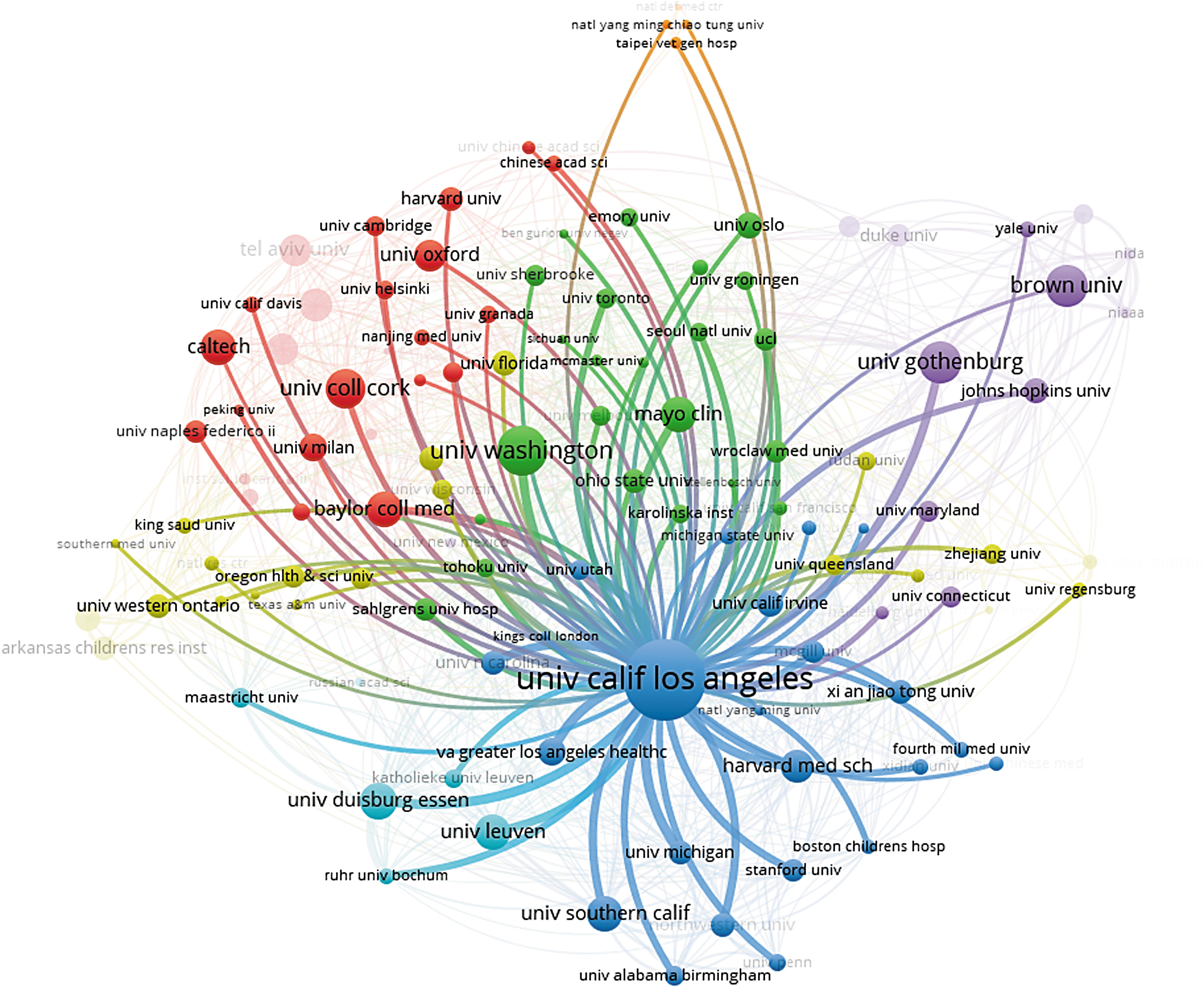
Institute co-citation analysis. Analysis of publications in the Web of Science database (up to May 29, 2023) was conducted using the following search parameters: “brain” (Topic) and “microbiota” or microbiome or “gut” (Topic) and “sex differences or gender differences” (Title, Abstract, or Author Keywords). Review articles, editorials, case reports, and book chapters were excluded. To highlight collaborations, an institute co-citation analysis was performed and plotted in VosViewer (version 1.6.18;
This analysis was conducted to highlight collaborations between institutes on the topic of sex/gender differences in the brain-gut microbiome axis. As shown, UCLA was near the center of the network, indicating a wide range of collaborations within the network, and had an extensive number of citations, as indicated by the size of the circle.
Our CEC emphasizes education and training for scientists from a broad spectrum of disciplines and academic levels and targets the development of individual excellence within a team science model. Similarly, we aim at providing the more general academic and public community a better understanding of how the science of SABV can advance the understanding and treatment of complex disorders such as IBS and related pain conditions and the importance of brain microbiome interactions in health.
Our Center has strived to model how to work synergistically with investigators and clinicians with different training backgrounds, expertise, and approaches and importantly how to design fundable projects that utilize this approach. We have utilized multiple pathways within the CEC as well as using the CEC as a foundation to martial other resources to promote these training goals through mentoring, seminars, pilot funding, and leadership opportunities targeted at scientists who will be the future of this research.
The successes and challenges in these efforts have taught us several important lessons: (1) the critical role of mentoring from a multidisciplinary perspective; (2) the benefit of understanding the broad impact of SABV, in addition to the specific mechanisms under study; (3) the need to provide hands-on experiences, including tasks such as leading groups and organizing symposia; and (4) the importance of including trainees in collaborative, interdisciplinary projects, and the benefit of training in both technical and scholarly skills of integrating research findings, writing proposals, and collaborating across disciplines. These lessons have implications for both the future efforts of our CEC and may also be of interest to other CECs and training endeavors.
Footnotes
Acknowledgments
The authors acknowledge Cathy Liu for her assistance in preparing the tables and figures.
Author Disclosure Statement
All authors are supported by NIH/NIDDK/ORWH U54 DK123755.
Funding Information
The study was funded by National Institute Diabetes and Kidney Disease/Office of Research in Women's Health U54 DK123755.