




Abstract
Abstract
Introduction:
Single-incision pediatric endosurgery (SIPES) has gained popularity for ablative procedures such as appendectomy in many pediatric surgical centers. This study evaluates the outcome of SIPES for treatment of appendicitis in our institution.
Patients and Methods:
After Institutional Review Board approval was obtained, data were prospectively collected on all patients undergoing SIPES appendectomy in our hospital from March 2009 through October 2011. The surgical techniques, operative times, complications, conversion rates, and outcomes were recorded.
Results:
SIPES appendectomy was attempted in 415 children (mean age, 10.9 years; age range, 1.4–17.9 years; 266 males, 149 females; median weight, 43 kg; weight range, 9.8–146 kg). Intraoperatively, acute appendicitis was found in 298 cases and perforated appendicitis in 79 cases. Thirty-eight patients underwent interval appendectomy. Appendectomy was carried out solely as SIPES in 397 cases (96%). Median operative time was 40±16 minutes (37±16 minutes for fellows [n=284] and 46±15 minutes for residents [n=131]). There were three intraoperative complications, which could be handled during the procedure. Pathologic reports revealed inflammatory changes of the appendix (n=386), other pathology (n=11), and no pathologic change (n=18). Overall, 24 patients (5.8%) were readmitted for intra-abdominal abscess (n=14), umbilical wound infection (n=3), and other reasons (n=7). Twelve patients (2.9%) underwent reoperation: drainage of intra-abdominal abscess (n=8) (3 by the surgeon, 5 by the interventional radiologist), wound drainage (n=3), and right hemicolectomy for carcinoid (n=1). In perforated appendicitis the postoperative intra-abdominal abscess rate was 10 of 79 cases (12.7%), which is similar to the previous report with conventional laparoscopic appendectomy from our institution (13.6%). The wound infection rate (5 of 79 cases [6.3%]) was also similar to the previously report (6.8%) with conventional laparoscopic appendectomy for perforated appendicitis.
Conclusions:
Appendectomy can be accomplished successfully and safely using single-incision endosurgery in children with acceptable operative times without leaving any appreciable scar. Additional trocars are infrequently necessary. So far, the intraoperative and postoperative complication rates are comparable to those of triangulated laparoscopic appendectomy.
Introduction
In recent years several centers have published their preliminary experience with this new technique in acute appendicitis. However, patient numbers were below 100 patients and mostly excluded children with perforated appendicitis. To our knowledge the largest series so far is a prospective randomized trial including 360 patients with acute appendicitis in which 180 children underwent SIPES appendectomy. However, in this trial, children with perforated appendicitis were again excluded. 3 Therefore the aim of the current study was to present our experience with SIPES appendectomy in a large cohort of over 400 children at a single institution. Also, having established the safety of SIPES appendectomy in nonperforated appendicitis, our interest was to assess feasibility and outcome in perforated appendicitis as well as children undergoing interval appendectomy.
Patients and Methods
Data acquisition
After Institutional Review Board approval was obtained, data were collected on all patients undergoing SIPES appendectomy performed in our hospital from March 2009 through October 2011, including 75 children previously reported. 4 Data were obtained on age, weight, gender, indication, operative time, type of SIPES port used, intraoperative complications, introduction of additional trocars, postoperative hospitalization time, and histology. Postoperative complications were assessed upon follow-up in our outpatient clinic. Children were subgrouped into three categories: acute (nonperforated) appendicitis, perforated appendicitis, and children undergoing interval appendectomy.
Management of patients with preoperatively suspected perforated appendicitis
If early ruptured appendicitis was suspected preoperatively on radiologic imaging, those patients with a lack of abscess and presence of an appendicolith were operated early on. 5 If a clear abscess was appreciated preoperatively and there was no appendicolith, antibiotic treatment was initiated, and an interval appendectomy was scheduled 6 weeks later. For the retrospective analysis three criteria had to be fulfilled to use the term “perforation”: macroscopic perforation seen intraoperatively, documentation of this finding in the operation report, and corresponding postoperative antibiotic treatment for perforated appendicitis.
Surgical technique
As seven attending surgeons performed the procedures with different fellows and residents, there was a certain degree of variability in the technique. Moreover, early in our experience and because of the novelty of the operation, different single-incision endosurgical ports from a variety of companies were used. SIPES appendectomies were performed using an intracorporeal approach with the dissection and stapling at the base of the appendix being carried out inside the abdomen as previously reported. 4 Additional trocars were added if the surgeon felt that this was necessary to perform a safe operation.
Statistical analysis
Statistical analysis was performed using SPSS version 11.5 software (SPSS Inc., Chicago, IL). To detect differences in operative time the Mann–Whitney rank sum test was used.
Results
In a period of 32 months, in total, 415 SIPES appendectomies were attempted. Median age was 10.9 years (range, 1.4–17.9 years), and median weight was 43 kg (range, 9.8–146 kg) (Table 1). Ninety-three patients (22.4%) were obese (weight >97th percentile). Two hundred ninety-eight children (71.8%) were operated on for suspected acute (nonperforated) appendicitis, 79 children (19.0%) received surgery for perforated appendicitis, and 38 children (9.1%) underwent interval appendectomy after previous antibiotic treatment for perforated appendicitis.
Including 18 patients with macroscopically normal appendix.
1AT, one additional trocar; 2AT, two additional trocars; open, appendix pulled out of umbilicus and stapled extracorporally.
One cecal thermal injury, which was impricated via single-incision pediatric endosurgery, one cecal serosal injury, which was sutured, and one stapler malfunction, which required imbricating the stapler line.
The following surgical technique was used: A ≤2-cm vertical incision was made in the umbilicus, and the underlying midline fascia was opened over a variable length ranging from 1.5 to 2.5 cm to enter the peritoneal cavity. Four different SIPES devices were used in descending frequency: (1) TriPort™ (Olympus, Center Valley, PA) (2) SILS™ port (Covidien, Mansfield, MA), (3) staggered conventional trocars with a 5-mm expandable sheath cannula (STEP™; Covidien) in addition to a 3-mm reusable trocar and another 3-mm instrument placed directly through the fascia, and (4) GelPOINT™ Access Platform (Applied Medical Resources Corp., Rancho Santa Margarita, CA). A 5-mm, 45°, 45-cm scope (Stryker Endoscopy, San Jose, CA) was introduced into the SIPES port, and the patient was placed in a moderate Trendelenburg position to obtain maximum exposure of the right lower quadrant. With standard reusable 5-mm straight laparoscopic instruments the appendix was identified, and using a straight hook electocautery instrument the mesoappendix was divided. The appendix was then stapled and divided at its base using a 12-mm endosurgical stapler (Endo GIA™ Universal stapler; Covidien) and typically removed through the TriPort trocar or the GelPOINT without the need for a specimen retrieval endobag. The capnoperitoneum was deflated, and the fascial incision was approximated with a running 2-0 or 0 polyglactin suture. Finally, the skin incision was closed using interrupted subcuticular 4-0 poliglecaprone sutures, with the central stitches anchored to the fascia in order to invert the umbilicus.
In 5 cases a 2.3-mm MiniLap™ alligator grasper (Stryker Endoscopy) forceps was used through a separate suprapubic stab incision to facilitate retraction and dissection. In an attempt to lower the number of wound infections, we devised and often used a low-cost vacuum dressing to cover the umbilical incision. 6
Appendectomy was carried out solely as SIPES in 397 cases (96%). Additional (unplanned) trocars were introduced in 18 patients (4%) (one additional trocar in 12 children and two additional trocars in 5 patients) (Table 1). In one patient, the appendix was exteriorized through the umbilical incision and stapled extracorporeally. On average, total median operative time was 40±16 minutes (37±16 minutes for fellows [n=284] and 46±15 minutes for residents [n=131]) (Table 1). Median operative time was significantly longer in obese children (42±16 minutes) compared with nonobese individuals (39±17 minutes) (P=.019). There were three intraoperative complications: one coagulation injury to the cecum, which was stapled, and one cecal serosal tear, which was caused during trocar placement and sutured after conversion to conventional triangulated three-trocar laparoscopy; finally one possible defective staple line was imbricated by a 3-0 Vicryl® (Ethicon) suture using intracorporeal knot tying (Table 1).
The postoperative length of stay was 1.3 days for acute appendicitis, 1.6 days for interval appendectomy and 6.9 days for perforated appendicitis (Table 2). Pathologic reports revealed acute or perforated appendicitis (n=356), post-inflammatory changes after interval appendectomy (n=30), a carcinoid tumor (n=2), no pathologic change (n=18), and other pathology such as luminal obliteration, enterobius vermicularis, neuroma, and granuloma (n=9). A fecalith was present in 93 patients (22.4%). Mean follow-up was 38 days (median, 25 days). Overall, 24 patients (5.8%) were readmitted (intra-abdominal abscess (n=14), umbilical wound infection (n=3), and other reasons (n=8; fever, pain, bleeding from umbilical incision, suspected incisional hernia [not confirmed], and Clostridium difficile colitis) (Table 2). Twelve patients (2.9%) underwent invasive procedures: drainage of intra-abominal abscess (n=8) (3 by surgeons with intraoperative ultrasound guidance, 5 by an interventional radiology), wound drainage in the operating room (n=3), and right hemicolectomy for carcinoid (n=1). For perforated appendicitis the postoperative intra-abdominal abscess rate was 10 of 79 cases (12.7%), which is similar to our previous reported postoperative intra-abdominal abscess incidence after conventional three-trocar laparoscopic appendectomy for perforated appendicitis (13.6%). 7 Likewise, the wound infection rate (5 of 79 cases [6.3%]) was similar to our previously reported wound infection rate (6.8%) after conventional laparoscopic appendectomy for perforated appendicitis.
Including 18 patients with macroscopically normal appendix.
Drained by the interventional radiologist.
One patient was admitted for fever, and another was admitted for pain; both had no pathology found on imaging. One was admitted for bleeding from the wound and had no further surgery. One required relaparoscopy for suspected hernia at the port site, and no pathology was found.
One patient was admitted for pain, and another one was admitted with fever; investigations were negative. One patient developed C. difficile colitis, and another was treated conservatively for partial small bowel obstruction.
Discussion
This report on the feasibility of SIPES appendectomy represents the largest pediatric cohort reported (n=415) using the SIPES technique. The median age of the children studied was 10.9 years and therefore younger but comparable to the larger reports by others.3,8–10 To display the feasibility of SIPES appendectomy in detail we provide an age-dependant stratification of patients showing that 72 (17%) of our patients were between 17 months and 6 years of age, and therefore this method is applicable even in very young patients (Table 1).
Single-incision laparoscopic appendectomy is performed either as an intra- or extra-abdominal procedure. In our center, all SIPES appendectomies but one were performed using an intra-abdominal approach. Although St. Peter et al. 3 have suggested that the extra-abdominal procedure is quicker and easy and thus may lower overall costs, we believe that especially in cases of extensive inflammation or even perforation, in which the appendix may rupture during an attempt of transumbilical externalization, the intra-abdominal procedure is safe and may have fewer wound infections. With proprietary ports such as the TriPort or the GelPOINT Access Platform, sleeves provide wound protection and allow specimen removal without the need for an endoscopic retrieval bag. However, when using the SILS port or staggered conventional trocars, an endoscopic retrieval bag is recommended to avoid contamination of the wound edges as the inflamed appendix is extracted.
In general, SIPES appendectomy does not require special laparoscopic instruments. Although roticulating graspers may facilitate the operative dissection by creating a different angle of approach, we found that for this indication straight instruments are sufficient in most cases principally because of the angled telescope.
On average, the overall operative time was 40 minutes, with 37 minutes for fellows and 46 minutes for residents (Table 1). Others report a short operating time as well with 33 minutes 9 and 35 minutes. 3 However, the reports by Chandler and Danielson 9 and St. Peter et al. 3 were for nonperforated appendicitis in 96% and 100% of cases, respectively. Our data show similar operative times in the subgroup of nonperforated appendicitis (37 minutes) (Table 1). In our cohort 111 patients (28.2%) either had perforated appendicitis or underwent interval appendectomy, which adds an extra challenge and time to the procedure. Therefore we believe that our overall SIPES appendectomy operating time is reasonable and even shorter compared with a historical control group from our own teaching institution using the traditional three-trocar approach, with 44 minutes for acute appendicitis, 48 minutes for perforated appendicitis, and 52 minutes for interval appendectomy. 4 However, others have reported shorter operation times (30 minutes) for three-port appendectomy and have drawn different conclusions. 3
At the beginning of our SIPES experience, our pediatric surgical fellows chose to take on the new challenging appendectomy; however, with time and experience SIPES appendectomy is now commonly considered a good laparoscopic training case for our surgical residents.
Unplanned additional trocars were placed in 18 cases (4.3%), which is less frequent than reported by others3,11 and may be attributed to the higher case load in our study and therefore increased experience with SIPES appendectomy (Table 1). This is supported by the fact that in our previous publication on our first 75 SIPES appendectomies, 4 additional trocars were placed in 12 of 75 (16%). During the following appendectomies in only 6 of 340 (1.8%) children the placement of an additional trocar was necessary, thus showing a classic learning curve. As our group also regularly performs more advanced SIPES procedures, including splenectomy, bowel resection, endorectal pullthrough, and fundoplications, we speculate that the overall increasing SIPES expertise influenced our success over time regarding extra port placement for appendectomy.
Overall, 24 patients (5.8%) were readmitted for postoperative complications. The wound infection rate in perforated appendicitis (5 of 79 cases [6.3%]) was similar to our previously reported value for three-trocar appendectomy (6.8%) (Table 2). 7 In contrast, the wound infection rate for acute (nonperforated) appendicitis SIPES appendectomy was 5 of 298 (1.7%) and therefore lower than other reports on SIPES appendectomy.3,9 To a certain extent this may be attributed to not extracting the appendix through the unprotected umbilical wound and the use of our low-cost vacuum dressing to cover the umbilical incision. 4
One of the 298 cases (0.3%) of acute appendicitis developed an intra-abdominal abscess, which compares well with current literature values (3%–6%) (Table 2).12,13 In perforated appendicitis the postoperative intra-abdominal abscess rate was 10 of 79 (12.7%), which is similar to the previous report on conventional three-trocar laparoscopic appendectomy from our own institution (13.6%) 7 and also compares with current data on three-trocar appendectomy from other centers that reported the incidence to be as high 4%–24%.12,13
SIPES in obese patients can be cumbersome, especially getting access to the abdomen and closing the umbilical incision. Correspondingly, a subset analysis by others 3 revealed that in obesity, the SIPES approach is technically more difficult as reflected by a longer mean operative time. In the current study we could confirm the latter finding as the median operative time was longer (3 minutes) in obese patients compared with individuals with a weight <97th percentile. However, even though this difference was statistically significant the procedure was still feasible. Therefore, we agree with the conclusion by others that obese patients, although challenging and sometimes cumbersome, are equally suitable for SIPES appendectomy. 10
It has also been suggested that one of the advantages of SIPES is a shortened time to full physical recovery. 14 However, looking at our data the mean postoperative hospitalization of the current study was 1.3 days for nonperforated acute appendicitis, 6.9 days for perforated appendicitis, and 1.6 days for interval appendectomy, which is equivalent for acute appendicitis compared with our historical three-trocar appendectomy group 4 and a little longer for both perforated appendicitis and interval appendectomy.
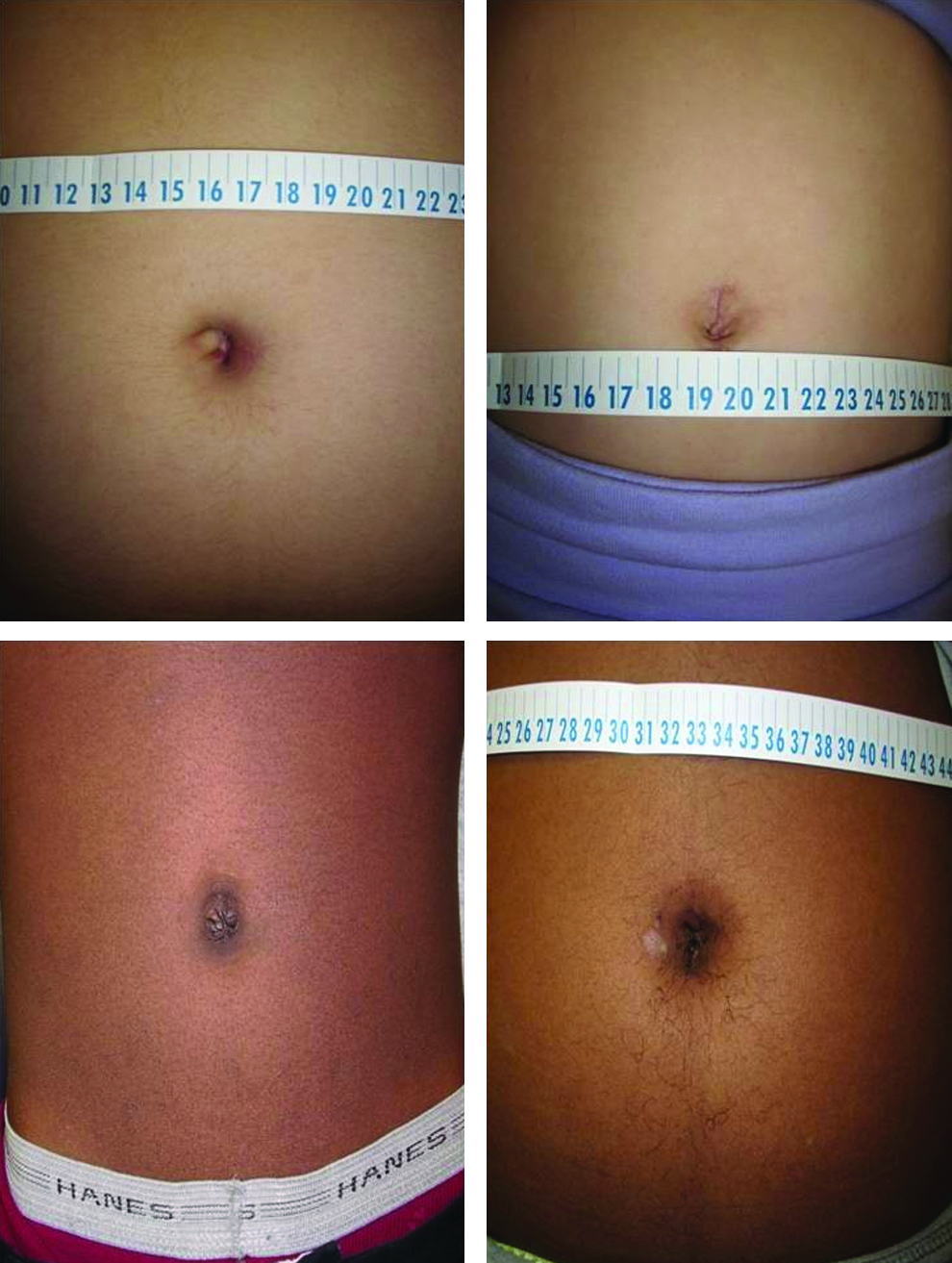
The primary motivation for considering SIPES is superior cosmetic results. The only patient group where one might see a postoperative scar is the very lean, small patient, where the umbilicus might look slightly different than it did before. Although we did not use any validated scar assessment tool, our impression was that a virtually scarless appendectomy became true for the majority of patients (Fig. 1).
The primary limitation of the current study is the lack of a control group. However, because of our observation of a small but real cosmetic benefit, SIPES appendectomy has become the standard procedure for any appendiceal pathology in our institution. Therefore, performing three-trocar appendectomy has been almost abandoned as the primary approach and can therefore not easily serve as a comparison group any more. Although randomized controlled trials are a better scientific way to prove the value of any novel surgical technique, prospective studies in large patient cohorts with reasonable power as with the study reported here can still provide evidence for both the efficacy and safety for this advanced technique.
In summary, appendectomy can be accomplished successfully and safely in any kind of appendiceal pathology and any age group using single-incision endosurgery in children. For both fellows and residents operating time is acceptable, without leaving any appreciable scar. The necessity for placement of additional trocars is rare. So far, the intraoperative and postoperative complication rate is not higher than that in conventional laparoscopic appendectomy, and outcome is equivalent if not better cosmetically.
Disclosure Statement
No competing financial interests exist.