




Abstract
Abstract
Background:
Repositioning sedated or anesthetized patients between colonoscopy and further surgical procedures is potentially unsafe and time consuming. We aim to show that colonoscopy performed in the modified lithotomy position offers surgical, anesthetic, and patient advantage.
Methods:
Patients presenting for colonoscopy and a synchronous surgical procedure between May 2013 and August 2014 were prospectively included. Colonoscopy duration, cecal intubation rate (CIR), terminal ileum intubation rate, and patient characteristics were recorded.
Results:
Sixty-eight patients were included in this study. Of them, 24 (35%) were women and mean age was 42.3 years. Mean colonoscopy duration was 7 minutes (2–24 minutes). CIR was 100%. Terminal ileum intubation rate was 92%. Utilization of ancillary colonoscopic maneuvers was easier for the operator/assistant. Overall theatre time was reduced and there was no increase in length of stay.
Conclusion:
The modified lithotomy position offers multiple surgical, anesthetic, theatre, and patient advantage in those undergoing a colonoscopy followed by a further proctological or surgical procedure.
Background
C
In the day surgery unit, many patients undergo a colonoscopy and other general surgical or proctological procedures (e.g., hemorrhoidectomy, fistula repair, and hernia repair) under the same anesthesia. There is very little literature looking at optimum patient position for colonoscopy when a further surgical procedure is to follow. Very few studies have looked at the effect of patient position on colonoscopy duration and cecal intubation rates (CIRs). Furthermore, we could not find data recommending an optimum or average time in which colonoscopy should be completed. This will reflect the highly variable nature of the population group presenting for colonoscopy, and that completion of colonoscopy as confirmed by cecal intubation is considered the gold standard, rather than how quickly the procedure is performed. Different groups including the United Kingdom-based Joint Advisory Group on GI Endoscopy (JAG) have set a CIR target of 90% to signify colonoscopy competence in trainees.3,4
The few groups that have addressed patient position on colonoscopy time and CIR have focused specifically on obese patients and have demonstrated that the prone position is preferable to the left lateral position for such patients in terms of both colonoscopy duration and CIR.5–7 These studies found average colonoscopy time for patients in the prone position as 9 minutes with a higher CIR than those patients placed in the left lateral position.
Patients undergoing a further surgical procedure postcolonoscopy necessitate being repositioned to a supine or lithotomy position. At this point, if not already anesthetized, sedated patients necessitate intubation via endotracheal tube or laryngeal mask. Movement of sedated patients is more difficult, requiring additional nursing and allied health staff to assist. Further anesthetic intervention increases the duration of the operation and is an added risk to the patient's airway.
We considered the benefits of placing patients undergoing colonoscopy and subsequent procedure in a supine position for both procedures. Our aim was to show that colonoscopy in the supine position was of a similar and acceptable duration and safety to the traditional lateral position. Furthermore, we aimed to demonstrate enhanced anesthetic practice.
Methods
Ethics
Ethical approval for this study was granted by the Human Research and Ethics Committee of St. Vincent's Hospital, Sydney.
Setting and patients
All procedures were performed in the Day Surgery Unit of St. Vincent's Hospital, Sydney, by a single consultant colorectal surgeon.
The prospective study was conducted between May 2013 and August 2014. All patients presenting for elective colonoscopy followed by an additional surgical procedure were eligible for inclusion. Exclusion criteria included a history of colonic resection and current stoma.
Consent
Informed consent for all surgical procedures was obtained from each participant in the study.
Study design
Patient data including age, gender, American Society of Anesthesiologists Classification System (ASA), body mass index (BMI), and surgical/proctological procedure were recorded. All patients received bowel preparation with two sachets of Fleet phospho-soda©. Adult or pediatric Olympus EXERA II CV-180 high-definition colonoscopies were used as standard.
Procedures were performed with patients in a modified lithotomy position (otherwise known as the Lloyd-Davies position; Figs. 1 and 2). Patients were initially anesthetized on the operating table and the airway was secured with either endotracheal tube or laryngeal mask, at the anesthetist's discretion. Patients' legs were then placed in Allen Yellowfins® Elite Stirrups and angled at table height. We recorded the time between insertion of the colonoscope into the rectum and identification of the ileocecal valve to the nearest whole minute, considered to be cecal intubation. Successful intubation of the terminal ileum through the ileocecal valve was also recorded. Identified polyps or lesions were snared or biopsied during removal of the colonoscope and, therefore, did not contribute to overall cecal intubation time. After completion of colonoscopy, patients' legs were raised to the standard lithotomy position for the subsequent procedure. This was completed by staff who were already present and did not require the presence of auxillary staff members in the operating theatre.
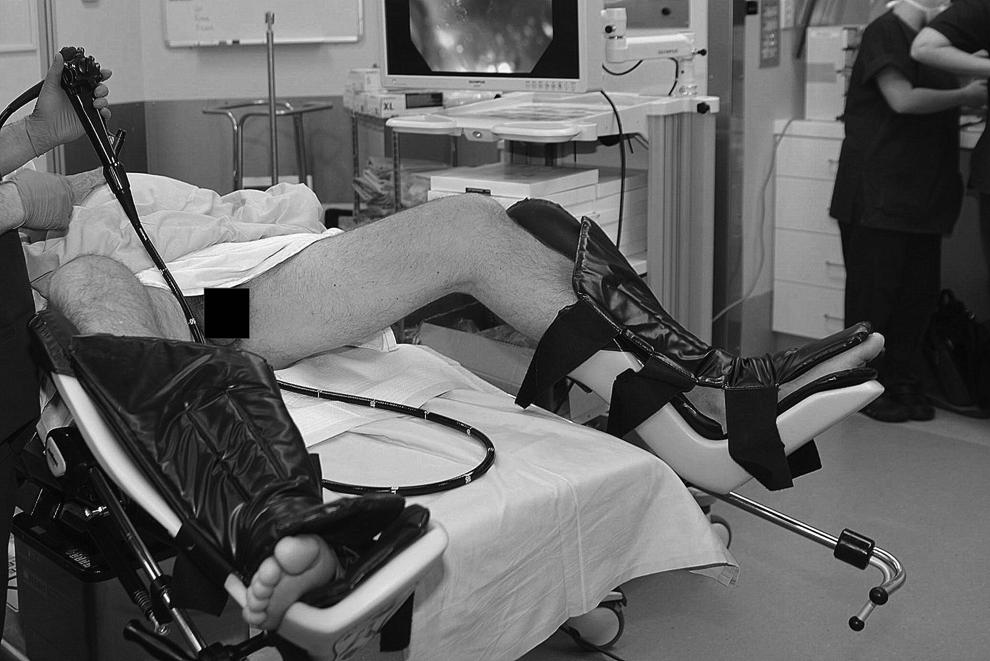
Note how the colonoscope is supported by the bed.
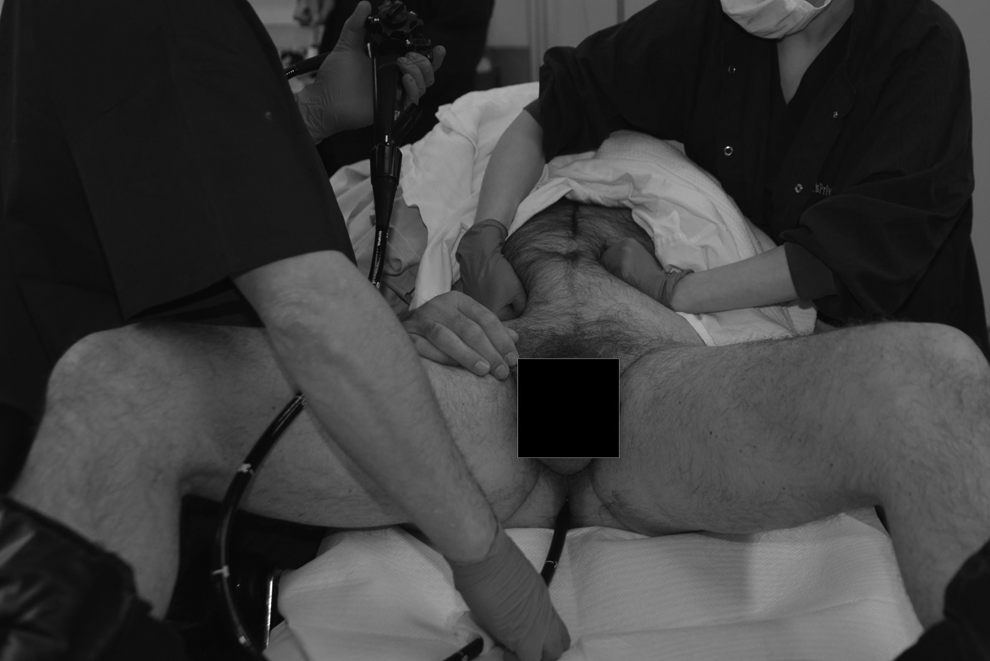
The modified lithotomy provides improved access for the assistant.
Results
Patient characteristics
A total of 68 patients were included in this study. There were 24 females and 44 males with an average age of 41.2 years (range 21–74 years). The mean ASA was 1. The mean patient weight was 76 kg, height 1.72 m, and BMI 25 (Table 1). One patient was excluded as the procedure was abandoned secondary to inadequate bowel preparation.
ASA, American Society of Anesthesiologists Classification System, BMI, body mass index.
The mean cecal intubation time was 7 minutes (range 2–24 minutes). CIR was 100%. Terminal ileum intubation was not attempted in 5 patients (Table 2). Of the remaining 63 patients, successful terminal ileum intubation was achieved in 58 patients (92%).
We did not identify a relationship between ASA, BMI, gender, and cecal intubation time or terminal ileum intubation rate.
There were no recorded complications and no delayed discharges for any of the patients involved in this study.
Discussion
This study demonstrates multiple advantages for the modified lithotomy position (Lloyd-Davies) for patients undergoing colonoscopy followed by a further surgical procedure. Colonoscopy was of an acceptable duration compared to the traditional left lateral position. This finding is independent of gender, BMI, and ASA. CIRs were favorably comparable to those in the left lateral position and in our cohort CIRs exceeded the accepted rate of 90%. The overall operation time was reduced as patients did not need to be repositioned between colonoscopy and the subsequent procedure. In addition, the employment of ancillary maneuvers was easier for assistants as they can approach the patient from either the left or the right side.
Operating theatre efficiency was improved in several ways. After completion of colonoscopy, there was no requirement to summon additional nursing and allied health staff to assist in patient repositioning. This saved both time and manpower, and in the case of obese patients, it reduced risk of injury to staff. This is advantageous in a busy day surgery unit with a high turnover of cases. Most importantly, overall patient safety was enhanced. As an endotracheal tube or laryngeal mask was inserted before the commencement of colonoscopy, there was no requirement to move a patient with an unsecured airway between the two procedures.
Conclusions
Overall, this study has demonstrated multiple surgical, anesthetic, and theatre efficiency advantages to the modified lithotomy position in patients undergoing colonoscopy and a further surgical procedure. Ultimately, this conveys improved patient and staff safety and it is our recommendation that it be the preferred technique.
Footnotes
Authors' Contributions
D.M.G. performed all colonoscopies. D.M.G. and H.W. performed all subsequent procedures. D.M.G. conceived of the study concept. H.W. designed the study, sought ethics approval, collected and analyzed all data, and prepared the article. All authors read and approved the final article.
Disclosure Statement
No competing financial interests exist.