




Abstract
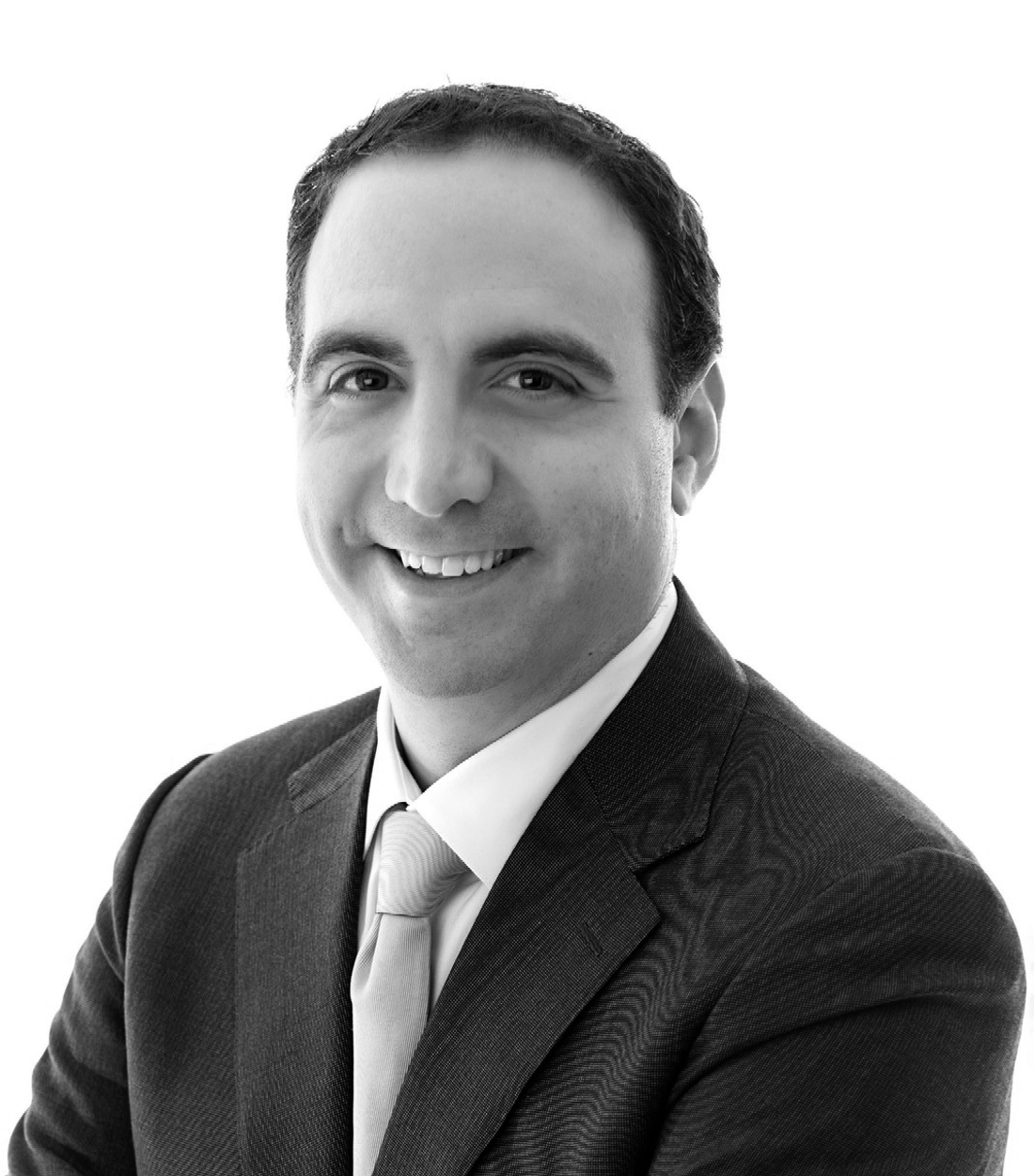
Dr. Todd A. Ponsky is currently Associate Professor of Surgery and Pediatrics at Northeast Ohio Medical University and a Pediatric Surgeon at Akron Children's Hospital. He attended medical school at Case Western Reserve University in Cleveland, OH, from 1995 to 1999, Residency in General Surgery at The George Washington University in Washington, DC, from 1999 to 2005, Pediatric Surgery Fellowship at Children's National Medical Center in Washington, DC, from 2005 to 2007, and an Advanced Minimally Invasive Pediatric Surgery Fellowship at The Rocky Mountain Hospital for Children in Denver, CO, from 2007 to 2008. Dr. Ponsky has a particular interest in minimally invasive pediatric surgery. He has trained over 200 surgeons in single-port and needlescopic surgery. He has written over 60 manuscripts and almost 20 book chapters. He has a strong focus on surgical education and virtual education and has directed over 20 national/international courses. He has won numerous teaching awards, including “The Faculty Teaching Award” at Case Western Reserve University's Department of Surgery in his first year as a faculty member. He is a reviewer for over 15 medical journals and is on four editorial boards. He is on the leadership of four national societies and has been Program Chair and is currently serving as Secretary on the Executive Committee of The International Pediatric Endosurgery Group (IPEG). He is involved in both outcomes and animal research with a focus on inguinal hernia physiology, foregut motility, and gastric stimulation, as well as endoscopic repair techniques for pure esophageal atresia. He has a wife, Diana, and three daughters, Sasha, Josie, and Ella.
Probably within a year or two of being in practice, maybe 2008 or 2009. I had been following the development and seen presentations at different meetings where people had talked about the repair and the advancements. Eventually, the concept sounded intriguing to me.
Well, once I decided that I was going to pursue the laparoscopic approach, I called Craig Albanese and asked if I could come observe him. He invited me to come and spend a day with him at Stanford. He did 5 cases using the subcutaneous endoscopically assisted ligation (SEAL) approach, and I was immediately turned onto how easy it was to perform, and what a nice repair it was.
I started doing about 50/50 in the beginning. I guess I was using it sporadically. But over time, I have modified the technique that I had learned from Craig. It has gradually become more and more pretty much the only way that I do hernia repairs, unless a parent prefers to have it done open, or if the patient had previous abdominal surgery.
There were articles by Masao Endo and Dariusz Patkowski, who described threading the suture through a needle, and it seemed to me that that technique was more precise. It only enclosed the peritoneum and did not capture all of the tissue above the internal ring. I was finding that my patients were having some discomfort after surgery, and I felt like I was either grabbing too much tissue or including the ilioinguinal nerve. So for that reason, the Endo/Patkowski technique seemed appealing to me. It was definitely more time-consuming than the SEAL approach, but I think that it gave a better result.
It is. We have modified it in some ways as of the results of some of our experiments in the lab to try to figure out ways to make the technique even better.
The concern I had was twofold. Number 1: Some of the early reports of the laparoscopic hernia repair showed higher recurrence rates than the open repair. Technically, the operation was really nice, and I was looking for ways that it could be improved.
The second point is that this entire repair relies on an intact suture for the entire life of the patient. This fact did not sit well with me, that you put a stitch in, you tie it down, and if that knot ever broke, that is going to just open right back up again. That was the biggest disadvantage of the laparoscopic repair compared to the open repair, in my opinion.
Yes. Mac Harmon told me at an IPEG meeting that the New Zealand white rabbit has what is analogous to, or very similar to, an inguinal hernia in a human.
The model of the rabbit was not exactly the same as a human because of one big difference—the rabbit testicle and vas deferens run intraperitoneal. They are not retroperitoneal structures. So, in order to create a realistic model, we divided the gubernaculum and internalized the testicles in these rabbits. We essentially created the equivalent of a female inguinal ring. Our first experiment was focused on determining if the addition of injury or a scar to the peritoneum helps with the repair. I had heard an argument surrounding gastric surgery that reminded me of my concern. If you just staple the stomach together, the tendency is for it to come apart, because you are putting two mucosal surfaces together.
The same is true with the peritoneum of the internal ring: the act of suturing it together will just hold it together, unless you cause some sort of injury, which, in theory, would cause a scar. That was the hypothesis.
So we designed a study where each rabbit served as its own internal control. We repaired one side using only a stitch, and on the contralateral side we first created an injury away from the cord structure. Basically, from 9 o'clock to 3 o'clock on the anterior surface, we cut the surface of the peritoneum, and then we placed the circumferential stitch using the SEAL approach.
We let the rabbits survive several months, and then went and repeated the laparoscopy and cut the stitch out on both sides. What we found was that when we cut the stitch out on the noninjured side, after we insufflated the abdomen, almost 80% of them opened back up. This is what you would expect: that the stitch probably worked great, but if the stitch failed, the hernia will recur. So if, for whatever reason, during the child's lifetime the stitch erodes away, it would potentially recur.
However, on the injured side, at the first time interval, 2 weeks postsurgery, at laparoscopy, when we cut out the stitch, 75% of them remained closed.
Even more compelling, in the second cohort, when we waited 4 weeks to repeat the laparoscopy and cut the stitch out, 100% of them were completely reperitonealized, as if there was never even a hole there. When we compared the traumatized side to the nontraumatized side, the nontraumatized side had recurred. It was at that point that we realized that the addition of injury had a pretty substantial impact on the repair.
Yes, we have done two more animal studies, and we are working on a human trial. In the second animal study we wanted to figure out which suture type worked best. We compared three types of sutures: a monofilament, such as Prolene® [polypropylene; Ethicon, Cincinnati, OH], an absorbable suture, and a braided nonabsorbable suture.
In these rabbits, we did not cause any injury. We just did a repair without injury, and then went back and removed the stitches. What we found was the braided nonabsorbable suture, something analogous to a silk, Ethibond® [poly(ethylene terephthalate); Ethicon] or a Ti-Cron™ [braided polyester; Covidien, Mansfield, MA], stitches resulted in a more durable repair. The nonabsorbable braided suture caused reperitonealization more than the monofilaments. It's my theory that this probably due to the fact that the braided stitch causes irritation and causes some sort of scarring.
Then the last study, which we are doing right now, is evaluating if all we really need is the scar. We are doing this study using only anterior injury and Vicryl® [polyglactin 910; Ethicon], an absorbable suture. The study is ongoing, but so a little sneak peek into what we found is that when you put the scope in and insufflate, the hernia defects are all closed. However, a lot of surrounding tissue was stuck to the hernia. Interestingly, if you pull it away to try to get a better look at the hernia, the canal pops right open. So right now, I probably would not be confident enough to just use an absorbable suture at this point.
Right, because we have caused a scar, and on the other side, we used a nonabsorbable suture and cut it out. But what we found was that with the Vicryl suture, it holds it shut, but if you mess with it too much it will reopen, that was after 2 months.
So the way I see it is, you do either a circumferential trauma and no stitch, or a stitch and only an anterior trauma, staying away from the cord structures. Those give equivalent results.
You know, a lot of other research that I have done has not led to the results that I anticipated. But this project was really exciting for me. Within the next week [post-research] I started adding injury to the anterior inguinal canal in my patients, and I felt very safe doing that, because there is minimal risk and it has a potential huge benefit.
So, I immediately changed my practice, and when we presented these data, we found that of those doing pediatric laparoscopic hernias, most of them have started adding injury. I mean, why not, if this is really showing such a radical difference in rabbits, it cannot hurt.
I do not know about you, Dan, because I think you are doing it a similar way, but we have not had a recurrence since we have done this. And it has been about 3 years that we have been using the anterior cautery technique. I have not had any recurrence actually present back to me since starting this new technique.
It is amazing. When I do this repair in the babies, they will sometimes spit the stitch, because their skin is so thin. Another modification I made in infants is that I only do a single ligation, not a double. What we have found is that when I have cut those stitches out, they still do not recur.
Yes. I have had 2 patients with postoperative hydroceles. One was a female who developed a canal of Nuck hydrocele, and one was a male who developed a large hydrocele shortly afterward repair, I think a month after surgery. At that time I reached out to Craig Albanese to ask if he had ever seen these. He said, “Just watch them. They go away.” And, sure enough, after about a month or two, they both resolved.
I do not know why it goes away, but it does.
That is a great question, and it has changed for me. When I first started, I was nervous that I was trying something new, so I gave them a very long dissertation that the open approach is the tried-and-true method. I can absolutely do that approach. I told them that although there is no cosmetic benefit, I thought the laparoscopic approach probably has less pain, and we do not touch the cord structures at all, so I think that it is a good repair. I also explain that if there is a recurrence, then we would just go back and do the open approach.
Presently, I do not really go into that much detail, because the recent literature really does show that recurrence rates are about the same. So, I mention that some people do it open, that I am willing to do it open if they want. But I think the two operations are equivalent.
Great question and interesting problem. We have a model where we show them how to do it, plus they watch the movie that is on YouTube. If it is a resident, I have them watch one with me, and I let them start trying to do it. If it seems like they are having trouble, then I take over. But it is actually a pretty easy thing to learn right away, so, in general, they have not had much of a problem.
For me, the learning curve was not that long. Although, if I watch my videos now compared to when I first started, I definitely have learned little tricks that make it a lot easier. I am now used to turning the corner, getting over the vas and vessels. Those little things have definitely come with time. But to feel comfortable with the operation, the learning curve was not huge.
Dan, do you put in that other instrument?
And do you put it through the left abdomen or through the umbilicus?
You use the same one for both sides, if it is a bilateral?
There are very progressive ideas about nonsurgical repairs of hernias. There are researchers who are using ultrasound and injecting the internal ring with a sclerotic agent or with some sort of glue. I think that is risky, and I do not think we are anywhere near that yet.
I do think that there are changes that we will see in the immediate future. The biggest impact this is going to have is around the indirect hernia. I believe the indirect hernia in a child is the same as an adult, and currently adult surgeons are using mesh for an indirect inguinal hernia when mesh was meant for direct hernias, which require a muscle repair. Currently, we have embarked on a prospective trial in adults of any age, with any size indirect hernia defect, of doing a laparoscopic high ligation.
So I think that is going to be where we are going to see a huge impact. What it is going to do is put the adult laparoscopic hernia repair into the hands of anyone, because it is a lot easier than the mesh repair, the TEP [totally extraperitoneal], or the TAPP [transabdominal preperitoneal].
So I have a question for you: if you have trouble getting the needle over the vas, do you just skip over it, or do you keep going until you get over the vas?
Yes, I do the same.
Right. Another technical consideration is the addition of hydrodissection. I find that hydrodissection lifts the peritoneum off the cord structures. Some people do not like it, because they say then they cannot see the cord structures. However, that is okay with me, because I pass my needle and I see my needle directly under the peritoneum; I know that there is nothing above it. So I think that dissection is really a nice trick to get the cord structures down.
Dan, do you use an 18-gauge spinal needle?
I use an 18-gauge and a 3-0 Prolene, and then I exchange that with a 2-0 Ethibond.
That is an interesting question. It might be interesting for me to try a bigger needle. To avoid the problem you just described, I keep the loop at the end of the needle; I keep it just at the tip of the needle. I never pull it back. But if it gets pulled back, you cannot push it back forward again.
Interesting. I will try that.
I hope so, and thank you.