




Abstract
Abstract
Purpose:
There remains a critical need for the provision for pediatric humanitarian aid worldwide. Historically, the emphasis of global pediatric health needs has been focused on infectious diseases. Today, we are witnessing a shift in this paradigm, with growing attention being paid toward the surgical needs of children. The use and deployment of minimally invasive surgery (MIS) in these austere environments with its concomitant reduction in length of hospitalization, pain, and morbidity is logical. The goal of this study was to report our deployment strategy and review our experience with pediatric MIS during humanitarian missions to determine if it is safe, feasible, and efficacious.
Methods:
As part of the World Pediatric Project (WPP), data were collected retrospectively from the general pediatric surgery (GPS) team missions from January 2007 to January 2017. All cases were performed at a single medical center in the Eastern Caribbean Island Nation of St. Vincent and the Grenadines (SVG). Data included patient demographics, diagnosis, procedure, conversion to open procedure, complications, and postoperative course. The teams utilized a dedicated WPP operating theater, prepositioned and deployed GPS supplies, and MIS resources. All anesthesia, surgical, and nursing personal were board certified and trained professionals functioning as part of the WPP team.
Results:
One hundred thirty-four children underwent general and thoracic pediatric surgical procedures during the study period. Mean age 9.2 years (2–19 years). Thirty-seven children underwent MIS procedures (27%). There were no conversions to open procedures. There were only two postoperative complications, cellulitis following laparoscopic appendicostomies, which required intravenous antibiotics and were discharged on a course of oral antibiotics. The postoperative course for all children was uneventful and no child required readmission. There were no technical failures in the MIS systems or instrumentation.
Conclusions:
Our retrospective review supports the use of MIS techniques as part of GPS humanitarian missions. We have found it to be a safe, feasible, and effective modality that may reduce length of stay, pain, and morbidity compared with open procedures in these remote environments. Although our MIS systems and instrumentations functioned effectively, concerns regarding the storage and sustainability for future missions are significant. Onsite health care partners, redundant systems, and remote technical support access could potentially alleviate these concerns.
Introduction
T
This article reports an initial experience implementing minimally invasive surgery (MIS) techniques as part of a bilateral international partnership program between the WPP and St. Vincent and the Grenadines (SVG) to address the pediatric surgical needs of children in this area of the world. The goal was to determine if MIS in this capacity is safe, feasible, and efficacious.
Methods
A general pediatric surgery (GPS) care and training partnership were developed by the WPP in SVG in conjunction with the local government leadership and the onsite Ministry of Health. GPS missions are deployed to SVG one to two times per year for 1 week duration. The full-time pediatric surgeon in St. Vincent (J.E.D.) had little MIS experience before starting the program and was performing all cases in an open manner. The teams comprise a pediatric surgeon (J.L. or D.L.), pediatric anesthesiologist, 1 pediatric operating room nurse with MIS expertise, and 1 pediatric ambulatory care nurse. The GPS team work in full collaboration with local medical and surgical staff at the Milton Cato Memorial Hospital in SVG (Fig. 1), which include a pediatrician and pediatric surgeon as well as local housestaff, nurses, medical students, and ancillary support staff. General surgical residents from the United States have also attended some of the trips.

Milton Cato Memorial Hospital. St. Vincent's and the Grenadines, West Indies.
In addition to the local pediatric surgeon and residents receiving training on the MIS cases, the surgical technician trains the local surgical technicians and operating nurses (setting up equipment, troubleshooting common issues, and sterilization process for the laparoscopic equipment). Also, pediatric surgeons or general surgeons who operate on children from neighboring islands, such as St. Lucia, Jamaica, and Barbados, have been in attendance.
Administrative staff for the WPP, both locally and at the WPP headquarters in the United States, coordinate case referral through the use of local and regional media, Internet, and a comprehensive networking system among pediatricians and health care providers throughout the Eastern Caribbean. The database for all children is encountered, and care is administered and maintained by WPP administrative personnel.
The database was queried for all GPS cases performed from January 2007 to January 2017. During this time period, all cases were performed at a single medical center in SVG. Data included patient demographics, diagnosis, procedure, complications, and postoperative course, and long-term follow-up. The teams utilized a dedicated WPP operating theater onsite (Fig. 2) and prepositioned and deployed GPS supplies and MIS resources. For MIS cases, we utilized a WPP owned and maintained Stryker component tower (Fig. 3), camera, and telescopes (Stryker; Stryker Corp., Kalamazoo, MI). The component tower is secured onsite when not in use by the WPP mission teams.
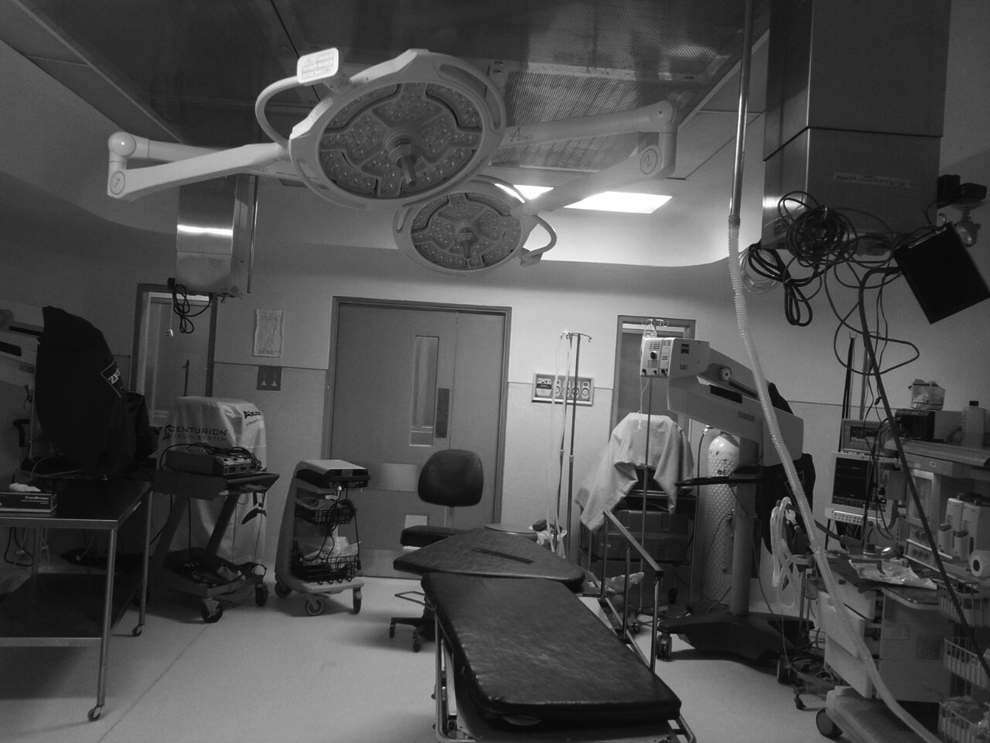
WPP operating theater at Milton Cato Memorial Hospital. WPP, World Pediatric Project.

Stryker component tower at Milton Cato Memorial Hospital.
Results
One hundred thirty-four children underwent general and thoracic pediatric surgical procedures from January 2007 to January 2017 (10 years). The mean age for the study population was 9.2 years (range of 2–19 years). Thirty-seven of these children underwent a MIS procedure, representing 27% of the cases in the study. The MIS cases (with corresponding frequencies) included the following: laparoscopic cholecystectomy (n = 14), laparoscopic pull-through procedure for Hirschsprung's disease (n = 3), laparoscopic appendectomy (n = 3), diagnostic laparoscopy (n = 3), laparoscopic inguinal hernia repair (n = 3), laparoscopic orchiopexy (n = 3), laparoscopic appendicostomy for antegrade colonic enemas (LACE) (n = 2), laparoscopic colon biopsy (n = 2), laparoscopic oophorectomy (n = 1), laparoscopic splenectomy (n = 1), laparoscopic Nissen fundoplication (n = 1), and thoracoscopic thymectomy (n = 1). There were no conversions to open procedures. Both of the LACE procedures developed cellulitis at the appendicostomy site. They required intravenous antibiotics and were discharged on a course of oral antibiotics. They did not require reoperative surgery or drainage procedures, and both children initiated antegrade enemas on postoperative day 4. There were no other complications in the MIS group. Interestingly, two of the inguinal hernias were recurrent after failed open herniorraphy from previous missions. They underwent uneventful laparoscopic hernia repairs and are without recurrence (1- and 2-year follow-up, respectively). The postoperative course for all children was uneventful, and no child required readmission. There were no technical failures in the MIS systems or instrumentation.
Discussion
Calisti et al. states that the development of an adequate pediatric surgical standard of care cannot be granted only by surgical volunteerism but requires long-term programs of partnership and cooperation with the local health authorities. Therefore, enthusiasm in transferring knowledge and experiences must always be tempered by a realistic view of local conditions, customs, and long-term support personnel. Surgical solutions offered by the visiting pediatric surgical team must be sustainable. 4 Historically, remote global surgery in austere environments has been carried out with standard open surgical techniques. 5 The consideration of offering a MIS approach to pediatric surgical conditions in these environments has traditionally been thought to be impractical and unrealistic. However, the use and deployment of MIS with its concomitant reduction in length of hospitalization, pain, and morbidity is logical, especially in LMIC. 6
Having a local team of care providers who are dedicated to the team's mission trip is essential to ensuring good outcomes, especially with the added complexity of performing MIS cases. While having a general surgeon who is capable and willing to provide surgical care to children can be acceptable, having a local pediatric surgeon is ideal. This local provider has important ties to both the patients and community. They also continue to provide the day to day care and long-term follow-up care of the patients. We are in frequent communication with this surgeon and the medical team about previous, current, and future cases. The local surgeon now performs basic MIS cases on occasion. We will continue to monitor for adoption of the MIS technology and patient outcomes. Creating a partnership with this surgeon will also allow for further educational opportunities such as visiting observerships to the United States and providing MIS box trainers (collapsible Train Anywhere Skill Kit [TASKit]; Ethicon Endo-Surgery, Cincinnati, OH). Also, utilizing teleconferencing technology with desktop telemedicine units and mobile integrated telemedicine tablets (Dictum Health IDM100) for telementoring can allow for the development of a MIS program that can ultimately lead to the local surgeon performing these cases in an independent manner.7,8 Having more than 1 visiting surgeon committed to the program allows for ongoing support for development of the program and the local pediatric surgeon's MIS skills, as well as, more timely completion of staged procedures. Finally, we are developing a method to assess MIS skill acquisition for the regional surgeons who participate in this program.
Another key factor in the development of any successful pediatric surgical mission program is being supported by an effective nonprofit organization such as WPP. This allows for the handling of the myriad of logistical details necessary to have a successful pediatric surgical mission trip that are only compounded by the special equipment and technology needs necessary when performing MIS cases in a LMIC. In addition, it allows for these patients to be followed after being entered into a database and ensures that they receive the appropriate short- and long-term postoperative care that they need. These databases also provide a way for future quality improvement evaluations and research integration, much similar to the United States. 9
The same logic that allowed the rapid adoption and utilization of MIS techniques in HIC is applicable in LMIC. However, there are a number of challenges in providing and servicing the necessary equipment, instruments, and storage of these items that exist, all of which can be overcome through support from an effective not-for-profit and by HIC company partnerships. Cost is an additional concern when performing MIS cases, and helping establish a MIS program, not only for the equipment but also maintenance and technical support availability, can be a challenge. Our program was fortunate to obtain philanthropic support for the enhancement of one of the operating rooms as well as purchasing MIS towers and instruments that can be kept locally, and this obviates the need to transport much of these supplies. Additional cost-saving measures include obtaining donations from medical supply companies for items such as staplers, clip appliers, and trocars, many of which can be processed and reused multiple times. Furthermore, we were routinely able to have several endoscopes loaned to the teams at no cost from companies such as Stryker before WPP obtained their own. Finally, funds are raised by WPP to support the teams' travel and housing during the trip, and all of the medical volunteers donate their time. Efforts to analyze the specific costs and benefits are underway.
Some limitations to our study include its retrospective nature and possible limitations to follow-up, medical services, and data collection in a LMIC.
Conclusion
This report may represent the first description of the deployment and utilization of MIS as part of pediatric surgery humanitarian missions. It is clear that the long-term partnership between all members of the local and U.S.-based care teams as well with the program staff at WPP has allowed for this MIS evolution in this remote environment. We have been able to demonstrate that a wide variety of MIS cases can be performed safely on our mission trips in SVG. The use of MIS has led to optimal parent and patient satisfaction, which is consistent with our findings of the use of MIS in HIC. This has been achieved with minimal cost to the local health system and has led to the further development of an MIS program to help train the local pediatric surgeon. Ongoing efforts to strengthen the educational component will serve to enhance the quality and safety of this program, enhance patient and family satisfaction, and mitigate some of the morbidity and mortality of open procedures for many children in SVG. How best to translate these efforts into the creation of an independent pediatric surgical MIS program in a remote area of the world needs further investigation.
Footnotes
Disclosure Statement
No competing financial interests exist.