




Abstract
Background:
The purpose of this study was to investigate the relationship between malnutrition assessed by the Global Leadership Initiative on Malnutrition (GLIM) criteria and the occurrence of severe postoperative complications (SPCs) after gastrectomy in patients with gastric cancer.
Methods:
A total of 220 patients with gastric cancer were included in this retrospective study. According to the GLIM criteria, the first step was to use the Nutrition Risk Screening Score 2002 to conduct nutritional risk screening for patients and the second step was to diagnose and grade the severity of malnutrition in patients at risk of malnutrition. According to the Clavien-Dindo classification system, SPCs were defined as C-D Grade IIIa or higher.
Results:
Overall, 66 (30.0%) patients were diagnosed with malnutrition, including 32 (14.5%) with moderate malnutrition and 34 (15.5%) with severe malnutrition. The incidence of SPCs was 14.5%, and the most frequent postoperative event was anastomotic leakage. In the multivariate regression analysis, malnutrition was considered an independent risk factor for SPCs (P < .001). After adjusting for various factors, the grading association remained statistically significant. Compared with patients with normal nutrition, patients with moderate and severe malnutrition have a nearly 15-fold (OR = 15.682, 95% CI: 4.481–54.877, P < .001) and 20-fold (OR = 20.554, 95% CI: 5.771–73.202, P < .001) increased risk of developing SPCs, respectively.
Conclusions:
Malnutrition assessed by GLIM was an independent risk factor for SPCs in gastric cancer patients. Therefore, early identification of malnourished patients is crucial for timely implementation of nutritional treatment and reducing the occurrence of postoperative complications.
Introduction
Gastric cancer, a malignant tumor that originates from the epithelium of the gastric mucosa, is the fifth most common type of cancer and the third most common cause of cancer death worldwide. 1 Due to inadequate dietary intake, most patients with advanced gastric cancer suffer from malnutrition. 2 Even in early gastric cancer, surgery can reduce the digestive capacity of the stomach, reducing food intake and leading to significant weight loss. 3
Therefore, the prevalence of malnutrition in gastric cancer patients can range from 41.6% to 86.1%, ranking first among all types of cancers. 4 Malnutrition is a poor prognostic factor for gastric cancer patients, increasing surgical complications, length of hospital stay, and mortality. 5 However, there have been few reports on the association between malnutrition in gastric cancer patients and severe postoperative complications (SPCs).
Obviously, screening for malnourished patients is the first step in preoperative nutrition management and plays an important role in perioperative management of patients. In 2011, the American Society for Nutrition proposed to conduct nutritional risk screening for newly admitted patients and to provide nutritional treatment for patients at risk of malnutrition, which would improve their nutritional status, surgical risk, and adverse prognosis. 6
Due to numerous methods for assessment of malnutrition and the lack of authoritative standards, the Global Leadership Initiative on Malnutrition (GLIM) criteria, initiated by global nutrition leaders in 2019, were considered to address this issue. 7 Although several studies have confirmed the validity of GLIM criteria in head and neck cancer, esophageal cancer, and colorectal cancer,8–10 there was little application of the criteria in gastric cancer.
To our knowledge, there have been no reports on the application of GLIM criteria to SPCs in patients undergoing gastric cancer surgery. Furthermore, malnutrition assessed by GLIM can be classified into moderate and severe malnutrition, 7 and the differences in clinical indicators and postoperative complications between moderate and severe malnutrition in gastric cancer patients remain unclear.
Based on the above findings, we performed a retrospective review of a prospectively collected database, aiming to evaluate the correlation between malnutrition based on the GLIM criteria and SPCs in gastric cancer patients. We expected our findings to provide a reference for the nutrition assessment of gastric cancer patients during the perioperative period, thus improving the nutrition assessment plan for perioperative nutrition management and providing an objective basis for selecting appropriate nutrition treatment plans.
Methods
IRB approval and written consent
This study was approved by the medical ethics committee of our hospital, and the approval number was MRCTA, ECFAH of FMU [2015] 084. Written informed consent was obtained from all participants.
Study design and population
A total of 220 patients with gastric cancer who underwent gastrectomy at a single center between December 2017 and January 2020 were identified from a prospective electronic database. All operations were performed by the same team of experienced surgeons who determined the gastrointestinal reconstruction technique. All patients were managed according to the same enhanced recovery after surgery (ERAS) protocol, which was established at our institution in 2015. The details of the protocol have been described in our previous research. 11
Inclusion criteria were as follows: (1) age over 18 years; (2) diagnosis of gastric cancer by preoperative gastroscopic pathological biopsy; (3) complete preoperative abdominal computed tomography (CT) scan; and (4) willing to participate in this study. Exclusion criteria were as follows: (1) unavailability of a preoperative abdominal CT scan (within 30 days before surgery); (2) nonmalignant type of postoperative pathology; (3) history of preoperative chemotherapy or radiotherapy; and (4) history of gastric surgery.
Assessment of malnutrition
According to the GLIM criteria, the first step in assessing nutritional status was malnutrition risk screening to identify the risk status using any validated screening tool and the second step was malnutrition diagnosis and severity assessment. 7 In this study, the Nutrition Risk Screening 2002 (NRS 2002) tool was used for assessment of nutritional risk on the day of admission. 12 Patients were scored according to nutritional status (0–3), disease severity (0–3), and age (0–1). If the NRS 2002 score was ≥3, the patient was considered to be at risk of malnutrition, and then the diagnosis of malnutrition was made.
A combination of at least one phenotypic criterion and one etiologic criterion is required to diagnose malnutrition. 7 Phenotypic criteria included (1) low body–mass index (BMI): BMI <18.5 kg/m2 (<70 years) or BMI <20 kg/m2 (>70 years); (2) weight loss: weight loss >5% within 6 months or weight loss >10% over 6 months; and (3) reduced muscle mass: measured by validated body composition techniques.
Etiologic criteria included (1) reduced food intake or assimilation: ≤50% of energy intake for >1 week, any reduction for >2 weeks, or any chronic gastrointestinal condition that adversely impacted food assimilation or absorption; and (2) disease burden/inflammation: acute disease/injury or chronic disease-related inflammation.
The criteria indicate that chronic or mild-to-moderate recurrent inflammation can be simply identified through clinical diagnoses such as chronic kidney or liver disease, congestive heart failure, rheumatoid arthritis, and cancer.
Next, the severity of malnutrition is classified. Moderate malnutrition can be classified when at least one of the following indicators is met: (1) weight loss of 5% to 10% within 6 months or weight loss of 10% to 20% over 6 months; (2) BMI <20.0 kg/m2 (<70 years) or BMI <22.0 kg/m2 (>70 years); and (3) mild or moderate reduction in muscle mass.
Severe malnutrition can be classified when at least one of the following indicators is met: (1) weight loss >10% within 6 months or weight loss >20% over 6 months; (2) BMI <18.5 kg/m2 (<70 years) or BMI <20.0 kg/m2 (>70 years); and (3) severe reduction in muscle mass. Reduction in muscle mass can be measured using body composition analysis methods such as bioelectrical impedance analysis, CT or magnetic resonance imaging, and related standards. 13
In this study, preoperative abdominal CT images were evaluated by two experienced radiologists using the sliceOmatic, version 5.0, software (TomoVision, Quebec, Canada) to estimate reduction in muscle mass (Fig. 1). The standard of muscle mass reduction was based on the results of a previous study in China. 14
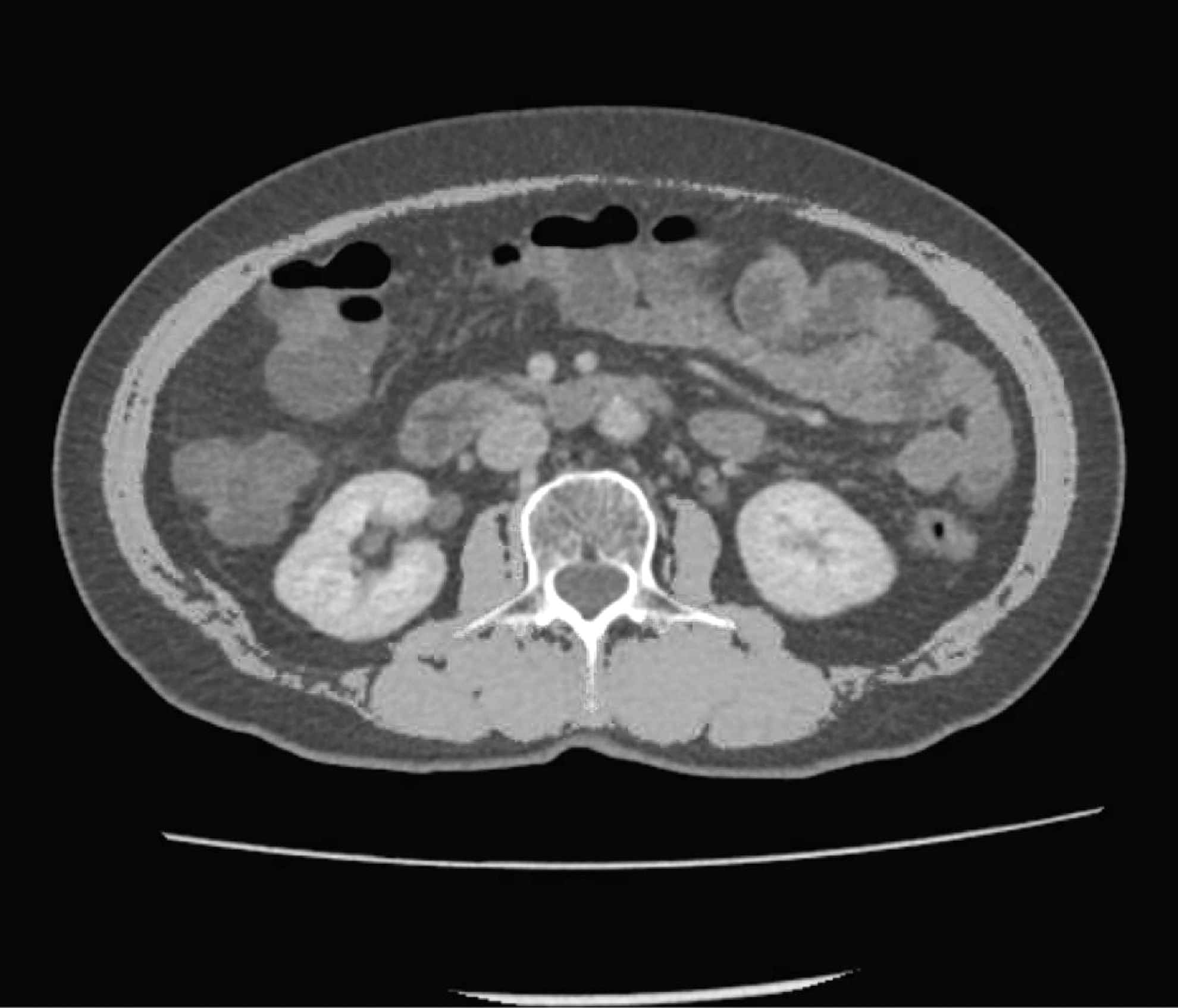
Evaluation of muscle mass on CT imaging. The total cross-sectional SMA (light gray) at the third lumbar level was evaluated. SMA, skeletal muscle area.
Definition of SPCs
The international consensus on a list of complications after gastrectomy for cancer was used to define and classify postoperative complications. 15 According to the Clavien-Dindo classification system, the severity of complications was graded from I to V. 16 When the classification is >III, surgery, endoscopy, and interventional intervention are required to prevent organ failure or even death. 16
Therefore, referring to previous studies,17,18 complications of Clavien-Dindo grade ≥ III were defined as SPCs in this study. If multiple complications were combined, they were classified according to the most severe complication.
Data collection
The following patient data were collected: age, sex, BMI, American Society of Anesthesiologists (ASA) classification, 19 preoperative albumin, preoperative hemoglobin, laparoscopic surgery, surgical procedures, operative duration and intraoperative blood loss, pathological staging, postoperative hospital stay, postoperative complications, and hospital costs.
Statistical analyses
Continuous variables with a normal distribution are presented as the mean ± standard deviation, while categorical variables are presented as frequencies (%). Data with a non-normal distribution are expressed as median (interquartile range). The univariate analysis was performed using Student's t-test for normally distributed continuous variables, the Wilcoxon–Mann–Whitney test for non-normally distributed continuous variables, and the chi-squared test or Fisher's exact test for categorical variables.
A multivariate logistic regression analysis was performed on the results of the univariate analysis to calculate odds ratios (ORs) and 95% confidence intervals (CIs) for the independent variables. In these analyses, all statistical tests were two-sided, and P < .05 was considered to be statistically significant. The analyses were performed using SPSS, version 22.0 (Armonk, NY).
Results
Study population and baseline characteristics
During the study period, a total of 271 patients underwent gastrectomy at our institution, of which 220 were included in this study and 51 were excluded. The reasons for exclusion were the following: 33 cases had nonmalignant type of postoperative pathology (25 cases with stromal tumors, 5 cases with benign tumors, and 3 cases with neuroendocrine tumors), 12 cases had previous history of gastric surgery, and 6 cases had missing preoperative abdominal CT images.
Among the 220 patients, the mean age was 61.79 ± 9.23 years and mean BMI was 22.15 ± 2.92 kg/m2. The prevalence of malnutrition and SPCs was 30% and 14.5%, respectively. Although the aim was to include surgical patients who were treated with the intention to cure, a small proportion of patients were subsequently found to have stage IV disease. The clinical characteristics of patients are shown in Table 1.
Clinical Characteristics of Included Patients
ASA, American Society of Anesthesiologists; BMI, body–mass index; SPCs, severe postoperative complications.
Clinical characteristics of patients with different nutritional status
As presented in Table 2, 66 (30.0%) patients had a diagnosis of malnutrition, including 32 (14.5%) with moderate malnutrition and 34 (15.5%) with severe malnutrition. Compared with patients with normal nutrition, malnourished patients were older (P = .001) and had a lower BMI (P < .001) and lower hemoglobin level (P < .001), while there were no significant differences in gender, ASA grade, and albumin level (all P > .05). Nonetheless, malnourished patients showed a trend toward lower albumin.
Clinical Characteristics According to Nutritional Status
ASA, American Society of Anesthesiologists; BMI, body–mass index; LOS, length of stay; SPC, severe postoperative complication.
In terms of intraoperative indicators, GLIM-defined malnutrition was significantly associated with operative time (P = .001), blood loss (P = .038), and proportion of laparoscopic surgery (P < .001), but not with surgical approach (P = .086). Apparently, malnourished patients had higher TNM stages (P = .004), more SPCs (P < .001), longer postoperative hospital stay (P < .001), and higher hospital costs (P < .001).
Postoperative complications and SPCs
As some patients developed more than one postoperative complication, the total number of complications was counted, which was actually higher than the number of patients with complications. There were 65 (29.5%) postoperative events, including 32 (14.5%) SPCs (Table 3). The most frequent postoperative events were pneumonia, gastroparesis, and anastomotic leakage, while anastomotic leakage and pleural effusion accounted for the majority of SPCs.
Postoperative Complications and Severe Postoperative Complications
As some patients developed more than one type of postoperative complication, we counted the total number of complications, which was actually greater than the number of patients who suffered complications.
Univariate and multivariate analyses associated with SPCs
The chi-square test was performed to examine the relationship between clinical characteristics and SPCs. In the univariate analysis, occurrence of SPCs was significantly associated with malnutrition (P < .001) and laparoscopic surgery (P < .001) (Table 4), but not with sex, age, ASA grade, preoperative albumin, preoperative hemoglobin, surgical duration, intraoperative blood loss, surgical approach, or pathological staging (all P > .05).
Univariate Logistic Regression Analysis of the Risk of Severe Postoperative Complications
ASA, American Society of Anesthesiologists; BMI, body–mass index; COPD, chronic obstructive pulmonary disease; NACT neoadjuvant chemotherapy; TNM, tumor–node–metastasis.
A multivariate logistic regression analysis was used to determine the independent risk factors for SPCs. In the multivariate regression analysis, malnutrition was considered an independent risk factor for SPCs (P < .001).
There was an increased risk of SPCs in patients with severe malnutrition compared with patients with normal nutrition (Table 5). The grading association remained statistically significant after adjustment for sex, age, ASA grade, preoperative albumin, preoperative hemoglobin, laparoscopic surgery, surgical duration, intraoperative blood loss, surgical approach, and pathologic staging.
Odd Ratios of the Nutritional Status for Severe Postoperative Complications in Univariate and Multivariate Logistic Regression Analyses
Univariate analysis: not adjusted.
Multivariate logistic regression analysis: adjusted for gender, age, ASA grade, preoperative albumin, preoperative hemoglobin, laparoscopic surgery, surgical duration, intraoperative bleeding loss, surgical procedure, and pathological staging.
Compared with patients with normal nutrition, patients with moderate and severe malnutrition have an almost 15-fold (OR = 15.682, 95% CI: 4.481–54.877, P < .001) and 20-fold (OR = 20.554, 95% CI: 5.771–73.202, P < .001) increased risk of developing SPCs, respectively.
Discussion
To our knowledge, this was the first study to evaluate the association between GLIM-defined malnutrition and SPCs in gastric cancer patients. According to the GLIM criteria, the first step was to identify patients at risk of malnutrition using validated screening tools. 7 NRS2002, which has been validated by many studies,20–22 was applied in this study and it was found that 30% of gastric cancer patients were at risk of malnutrition, lower than previous studies.23,24
We believed that this was due to the higher proportion of patients with pathological stage I and II disease in this study; compared with stage I and II gastric cancer, stage III and IV gastric cancer patients were more likely to be at risk of malnutrition. The second step of the GLIM evaluation was the diagnosis and severity assessment of malnutrition, requiring at least one phenotypic indicator and at least one etiological indicator. 7
All gastric cancer patients in this study could be diagnosed with malnutrition as long as they met a phenotypic indicator, as they all had a chronic disease-related inflammatory response consistent with an etiological indicator.
Although muscle mass reduction ranked third in the GLIM-recommended phenotypic indicators, 7 and a previous study had also used phenotypic measures excluding muscle mass reduction for the diagnosis of undernutrition, 8 we used CT for the diagnosis of muscle mass reduction and ultimately malnutrition. Although several methods, including dual-energy X-ray absorptiometry, bioelectrical impedance analysis, CT, and magnetic resonance, can be used to evaluate muscle mass, CT has been considered as the gold standard as it is the simplest and most promising method. 13 To evaluate the location and size of the tumor and to look for abdominal metastases, a CT scan of the abdomen is routinely used in gastric cancer patients.
In addition, the CT analysis avoids an increase in the time spent by patients in the screening process and takes less time than a face-to-face assessment by the clinician. As a routine postoperative follow-up method for patients, CT could dynamically assess their nutritional status, suggesting that the GLIM criteria may not only be applicable to the preoperative assessment of malnutrition in tumor patients but also have certain prospects for postoperative application.
In our study, SPCs were defined as complications with C-D Grade IIIa or higher, similar to two studies17,18 of patients with gastric cancer undergoing gastrectomy and two other studies25,26 of obese patients undergoing bariatric surgery. Due to the lack of authoritative guidelines, in two studies reporting patients undergoing pancreaticoduodenectomy, one defined SPCs as C-D Grade IIIb or higher complications, 27 while the other defined SPCs as C-D Grade IVa or higher complications. 28
Compared with patients with complications of C-D grades <III, we believed that patients with complications of C-D grades ≥III deserve more attention and further study as their complications posed a greater threat to postoperative recovery.
Statistical data on postoperative complications were not entirely consistent across centers. In a retrospective analysis of a large sample in South Korea, postoperative complications of gastric cancer surgery mainly included bowel obstruction, abdominal hemorrhage, duodenal stump fistulas, and anastomotic fistulas, etc. 29
In our study, the main postoperative complications in this study were pneumonia, gastroparesis, and anastomotic leakage, consistent with our previous research. 11 The prevalence of SPCs in this study was 14.5%, consistent with the study by You et al., 18 but higher than the prevalence of 10.2% in the study by Zhang et al. 17 Since some patients developed more than one postoperative complication, we counted the total number of complications rather than the total number of patients, contributing to the high prevalence of SPCs. Therefore, this prevalence was acceptable, which may be related to our ERAS protocol since 2015.
The ERAS protocol has been widely used after gastric surgery and has been found to be safer and more effective in reducing complication rates and postoperative hospital stay than traditional perioperative care.30,31 As a result, GLIM-defined malnutrition was an independent risk factor for SPCs of gastric cancer, indicating that the GLIM criteria were applicable to gastric cancer patients managed by ERAS, enriching preoperative nutrition management.
In the univariate analysis, there was a significant association between laparoscopic surgery and SPCs, whereas in the multivariate analysis, there was no association, which was consistent with some studies indicating that there was no significant difference between laparoscopic surgery and open surgery.32–34 Nevertheless, laparoscopic surgery is generally considered to have the advantages of less blood loss, fewer postoperative complications, and faster recovery compared with open surgery.35,36
In this study, we found that GLIM-defined malnutrition was an independent risk factor for SPCs in gastric cancer. Previously, Skeie et al. indicated that preoperative GLIM-defined malnutrition was associated with an increased risk of SPCs after gastrointestinal resection. 37 As these studies were conducted in the European population and data on Asian patients were lacking, our findings provided a new understanding of the validity of the GLIM criteria in Chinese hospitalized patients with gastric cancer.
Among numerous studies on independent risk factors for SPCs in gastric cancer, some studies found that imaging indicators were independent risk factors, such as sarcopenia, 38 visceral adipose tissue index, 39 and sarcopenic obesity, 17 while You et al. pointed out that the ratio of albumin to fibrinogen was an independent risk factor. 18
In our study, GLIM-defined malnutrition was an independent risk factor for SPCs, which played an important complementary role in preoperative nutritional assessment of gastric cancer patients. Therefore, surgeons should conduct nutritional risk assessments combined with the GLIM criteria for gastric cancer patients after admission to screen for malnutrition in patients at an early stage and provide nutritional prerehabilitation treatment at an early stage to promote patient recovery.
This study had several limitations. First, we only focused on short-term outcomes, and further follow-up is needed to investigate the prognosis of gastric cancer in the long term. Second, because there is no consensus on the diagnosis of sarcopenia based on the L3 skeletal muscle index calculated from CT measurements, the diagnosis we used was based on a previous retrospective study and may have led to erroneous conclusions. Third, this study was a single-center retrospective study with a relatively small number of patients included, requiring multicenter, larger sample size, and prospective studies to validate the conclusions of this study.
Conclusions
In conclusion, malnutrition diagnosed using the GLIM criteria was an independent risk factor for SPCs in gastric cancer patients. Therefore, it is important to identify patients with malnutrition early to provide timely nutritional treatment and reduce the occurrence of postoperative events.
Footnotes
Acknowledgments
The authors would like to thank Professor Hu from the Public Health School of Fujian Medical University for statistical advice and two radiologists from The First Affiliated Hospital of Fujian Medical University for their assistance with imaging in this study.
Authors' Contributions
Study conception and design and drafting of the manuscript were performed by S.S., J.Z., and Q.H. Acquisition of data and analysis and interpretation of data were performed by S.S., W.H., Z.W., and W.X. Critical revision of the manuscript was performed by Q.H.
Disclosure Statement
No competing financial interests exist.
Funding Information
This study was supported by the Startup Fund for Scientific Research of Fujian Medical University (No. 2022QH1065).