




Abstract
Dextran as anti-nutritional factor is usually a result of bacteria activity and has associated serial problems during the process stream in the sugar industry and in medical therapy. A sensitive method is expected to detect dextran quantitatively. Here we generated four monoclonal antibodies (MAbs) against dextran using dextran T40 conjugated with bovine serum albumin (BSA) as immunogen in our lab following hybridoma protocol. Through pairwise, an MAb named D24 was determined to be conjugated with horseradish peroxidase (HRP) and was used in the establishment of a sensitive sandwich enzyme-linked immunosorbent assay (ELISA) method for determination of dextran, in which MAb D9 was chosen as a capture antibody. The detection limit and working scope of the developed sandwich ELISA method were 3.9 ng/mL and 7.8–500 ng/mL with a correlation coefficient of 0.9909. In addition, the cross-reaction assay demonstrated that the method possessed high specificity with no significant cross-reaction with dextran-related substances, and the recovery rate ranged from 96.35 to 102.00%, with coefficient of variation ranging from 1.58 to 6.94%. These results indicated that we developed a detection system of MAb-based sandwich ELISA to measure dextran and this system should be a potential tool to determine dextran levels.
Introduction
S
Various methods to detect the content of dextran in sugar and sugar by-product have been developed.(6,7) Antibody-dependent Midland Sucro Test™,(8) which is based on linear increase of turbidity with dextran concentration over a designated time, has limited routine application due to its requirement of specialized equipment and procedure. Alcohol haze method(9) detects the content of dextran based on the haze developed in 50% (v/v) alcohol solution after removal of starch and salt along with precipitation of proteins contained in dextran. The shortcoming of the alcohol haze method is its lack of sensitivity to dextran with low molecular weight (<105 kDa) and low content (<200 ppm on solids).(7,10) Roberts' copper method, which determines the content of dextran through calculating the resulting glucose after decomposing by H2SO4 followed by phenol color reaction, can detect dextran in excess of ∼200 ppm on solids, but the test is not specific to dextran and also is a complicated procedure to achieve a greater sensitivity.(11) Enzyme-high performance liquid chromatography (enzyme-HPLC method),(12) a combination of enzymic hydrolysis and reverse-phase HPLC to improve accuracy and specificity, requires special enzymes and expensive HPLC equipment. Optical activity polarimetric method (the DASA method)(13) determines the concentration of dextran according to the change of the optical rotation following treatment with dextranase. The DASA method has been recognized as a rapid and specific way to detect dextran, but it is an expensive detecting system, making it difficult to be widely applied in regular testing in sugar factories.
Because of the difficulties with the currently available methods, an endeavor has been made to develop a method to quantitatively detect the dextran rapidly in raw sugar with higher specificity and sensitivity. In our previous study, we successfully developed an immunonephelometric assay based on monoclonal antibody for quantitative detection of dextran ranging from 7.8 to 500 μg/mL.(14) Here we developed a sandwich ELISA method through HRP labeling of MAbs, which detected substances with a lower concentration of dextran.
Materials and Methods
Reagents and instruments
Dextran (T40, T2000, analytical pure) was purchased from Amersham Pharmacia Biotech AB (Uppsala, Sweden). Freund's adjuvant (complete and incomplete), polyethylene glycol (PEG4000), HT (hypoxanthine, thymidine), HAT (hypoxanthine, aminopterin, thymidine), O-phenylenediamine (OPD), bovine serum albumin (BSA), ovalbumin (OVA), goat anti-mouse horseradish peroxidase (HRP)-conjugated secondary antibody, and mouse MAb isotyping kit were all obtained from Sigma Chemical Company (St. Louis, MO). RPMI 1640, Dulbecco's Modified Eagle Medium (DMEM), and fetal bovine serum (FBS) were purchased from Gibco BRL (Grand Island, NY). rProtein A Sepharose column was purchased from GE Healthcare (Uppsala, Sweden). Sodium periodate (NaIO4) and sodium borohydride (NaBH) was purchase from Sangon (Shanghai, China). The SP2/0 cell line was from Cancer Research Center of Xiamen University (Xiamen, China). BALB/C mice were obtained from Experimental Animal Center of Xiamen University. All experimental procedures and protocols conformed to the National Institutes of Health Guide for the Care and Use of Laboratory Animals (publication no. 85-23, revised 1985).
Production and characterization of anti-dextran monoclonal antibodies for sandwich ELISA
Firstly, we produced conjugates of dextran T40-BSA and dextran T40-OVA using the technical method described by Kato and colleagues.(15) In order to ovoid the antibodies against BSA and improve the specificity of antibodies produced, dextran 40-BSA was used as the immunogen to immunize mice and dextran 40-OVA was used as plate-coating antigen. Following Köhler-Milstein's protocol,(16) we established hybridoma cell lines producing MAbs against dextran.(14) After intraperitoneal injection of hybridoma cells into mice, ascites were produced and harvested. Then the ascites were further purified by rProtein A Sepharose column according to the manufacturer's protocol to acquire purified MAbs.
The class and subclass of the isotype of the MAbs were determined by a mouse MAb isotyping kit. The obtained MAbs were subjected to sodium salt-polyacrylamide gel electrophoresis (SDS-PAGE) to identify the purity, and indirect ELISA, as described below, was performed to test the titer of the MAbs.
Indirect ELISA
The dextran T40-OVA conjugates were dissolved in coating buffer (0.05 M bicarbonate, pH 9.6) with final concentration of 5 μg/mL and incubated in 96-well plates (100 μL/well) overnight at 4°C. After washing by 0.01 M PBS with 0.05% Tween-20 (PBST, pH 7.4) three times, the plates were blocked with 2% BSA (200 μL/well) at 37°C for 2 h and washed with PBST. MAb diluted with PBS was added to each well (100 μL/well) followed by incubation at 37°C for 1 h and washed. The goat anti-mouse IgG-HRP secondary antibody diluted at 1:10,000 with PBS was added into each well (100 μL/well) and incubated at 37°C for 1 h and washed. Then OPD substrate solution was added (50 μL/well) and incubated at 37°C for 10 min. The reaction was terminated by 2 M sulfuric acid solution (50 μL/well), and the optical density (OD) was measured at 492 nm by Micro-plate Reader (Model 680, Bio-Rad, Hercules, CA).
Development of sandwich ELISA method—HRP labeling of MAbs and pairwise antibody selection
HRP labeling of the MAbs was carried out according to the manufacturer's procedure. The titer of HRP-conjugated MAbs was tested by direct ELISA with dextran T40-OVA of 5 μg/mL as plate-coating antigen and kept at −20°C until used.
The MAbs and those conjugated with HRP were used as the capture and detection antibody respectively to determine the optimal combination by carrying out a checkerboard titration. Briefly, the MAbs were added into wells of microtiter (100 μL/well) with the final concentration of 10, 5, 2.5, 1.25, 0.625, and 0.3125 μg/mL and incubated overnight at 4°C. Following washes, PBS with 2% BSA was added (200 μL/well) and incubated for 2 h at 37°C. After washing, 1 μg/mL of dextran T2000 standard was added (100 μL/well) and incubated for 1 h at 37°C. Then 2-fold serial diluted HRP-conjugated MAbs (initial dilution 1:2000) were added (100 μL/well) and incubated for 45 min. After a final wash, OPD solution was added to develop color in the dark for 10 min. Then 2 M sulfuric acid was added to stop the reaction and optical density was measured at 492 nm by Micro-plate Reader (Bio-Rad, Model 680). According to the reaction curve and the positive to negative (P/N) absorbance ratio, the best combination of MAbs along with the optimal working concentration was established. At the same time, the coating condition, blocking solution, and reaction time were also optimized.
Monoclonal antibody-based sandwich ELISA for detection of dextran
Sandwich ELISA was performed using microtiter plates; the procedure was performed as follows. The wells were coated with 100 μL of the optimal dilution of the capture antibody in coating buffer (0.05 M bicarbonate, pH 9.6) and incubated overnight at 4°C. After rinsing with PBST five times, the well surface were blocked with PBS containing 2% BSA (200 μL/well) for 2 h at 37°C and rinsed with PBST. Two-fold serially diluted dextran T2000 (initial concentration of 1000 ng/mL) were added (100 μL/well) followed by incubation at 37°C for 45 min. Following washes, the HRP-conjugated MAb with optimal dilution was added (100 μL/well), and the plate was incubated at 37°C for 40 min. After a final washing step, color development was performed using OPD solution at room temperature for 10 min in the dark. Reaction was stopped by 2 M sulfuric acid (50 μL/well). The OD was measured at 492 nm by Micro-plate Reader (Bio-Rad).
Determination of developed sandwich ELISA method
Cross-reactivity assay
The capture MAb of optimal concentration was used to coat the well and after blockage, dextran T2000, β-glucan, starch, sucrose, and glucose 2-fold serially diluted (initial concentration 1000 ng/mL) were added (50 μL/well) respectively and incubated for 45 min at 37°C. Following washing, detection MAb conjugated with HRP of optimal concentration was added and incubated for 45 min at 37°C. The subsequent procedures were performed following sandwich ELISA.
Spiked recovery test
Spiked recovery test was conducted to determine the accuracy of sandwich ELISA using PBS and three samples from the sugar factory—raw cane sugar, syrup, and sugar, the concentration of which was 228.1 ng/mL, 82.4 ng/mL, and 12.0 ng/mL, respectively. PBS and three samples were spiked with standard dextran T2000 of 50 ng/mL, 100 ng/mL, and 200 ng/mL. After this, PBS and three samples spiked with standard dextran were subjected to established sandwich ELISA.
Statistical analysis
All data were presented as the mean and standard deviation (mean±SD) and the calibration curve of sandwich ELISA for dextran was analyzed by OriginPro 8.1 software (OriginLab, Northampton, MA).
Results
Preparation and characterization of MAbs
We successfully obtained four hybridoma cell lines stably secreting MAbs (D9, D24, D27, D29) against dextran through hybridoma technology. The hybridomas were massively cultured and intraperitoneally injected into mice; then the MAbs were harvested, purified, and characterized.
The isotype of the MAbs D9, D24, D27, and D29 were identified as IgG2b, IgG2a, IgG1, and IgG2b, respectively. The purified MAbs were subjected to SDS-PAGE and results showed two bands with molecular mass of approximate 55 kDa and 25 kDa, respectively, which represented heavy chain and light chain of antibody (Fig. 1). The purified MAbs were also measured to have titers of 1.28×10⁶, 2.56×10⁶, 5.12×10⁵, and 1.28×10⁶ respectively by indirect ELISA.
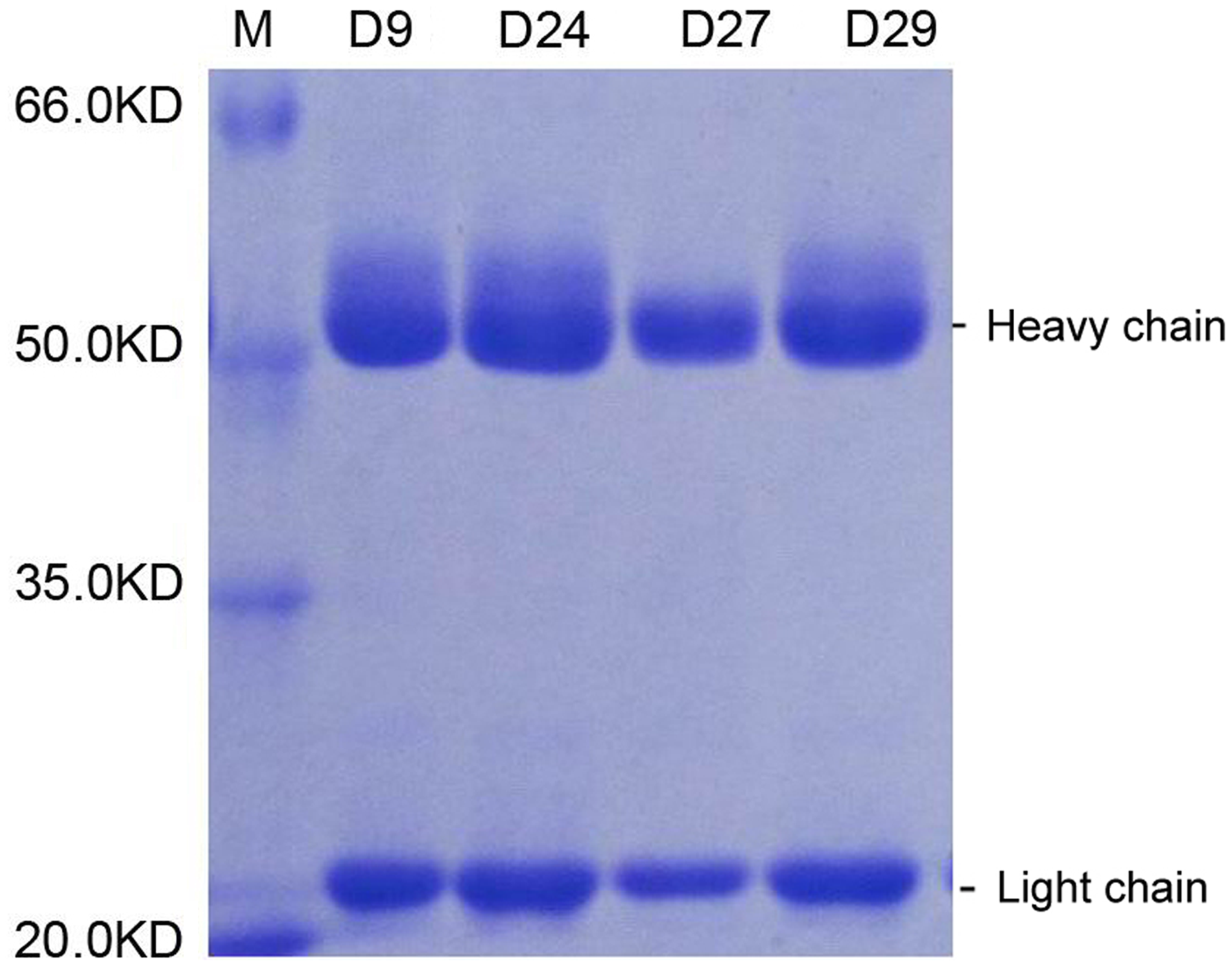
SDS-PAGE analysis of four purified anti-dextran MAbs.
HRP labeling of MAbs and optimal pairwise antibodies
The four MAbs were successfully conjugated with HRP at a ratio of 1:2 (HRP/MAb). Checkerboard titration was carried out to determine the optimal pairwise antibodies. The results indicated that MAb D24 conjugated with HRP and MAb D9 were paired best. In addition, the result of direct ELISA showed that D24 conjugated with HRP had a titer of 1.6×10⁴ (P/N=11.02, P=1.268, N=0.115), which indicated that D24-HRP possessed the activity of enzyme and the ability to bind with antigen (Fig. 2).
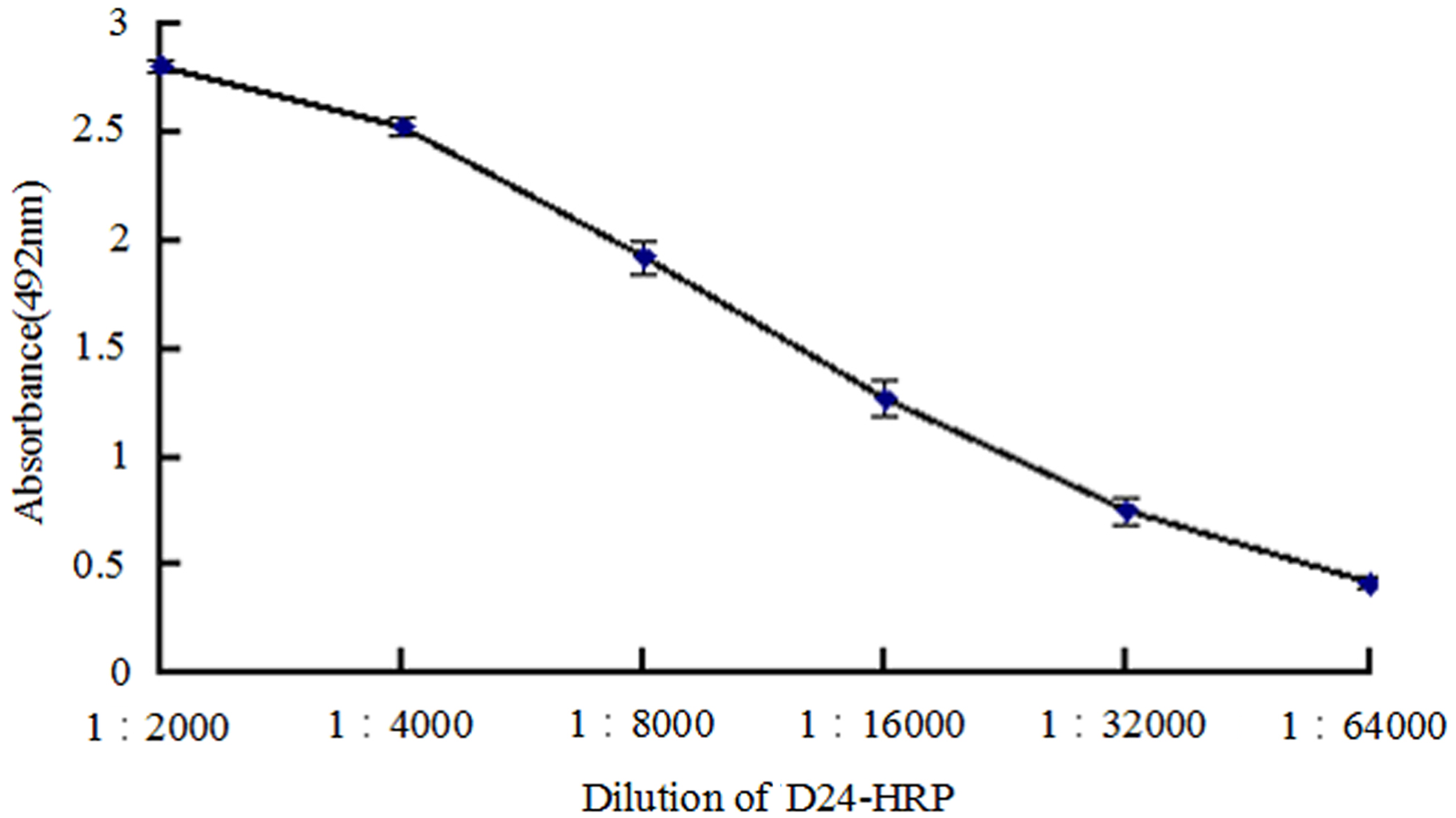
Titer of MAb D24 conjugated with HRP. Coating concentration of dextran T40-OVA was 5 μg/mL. Each point represents the OD value with the mean±standard deviation from four determinations (n=4).
The optimal working concentration of capture and detection antibodies was also established with checkerboard titration. The results showed that OD value tended to be stable when the coating concentration of capture MAb was 2.5 μg/mL or higher, while P/N reached the peak (P/N=15.6, P=1.608, N=0.103) when the dilution of detection MAb was 1:8000 (Fig. 3). Considering sensitivity and specificity in practical application, we determined that the optimal concentration of capture MAb was 2.5 μg/mL and the optimal dilution of detector MAb was 1:8000 in diluent buffer.
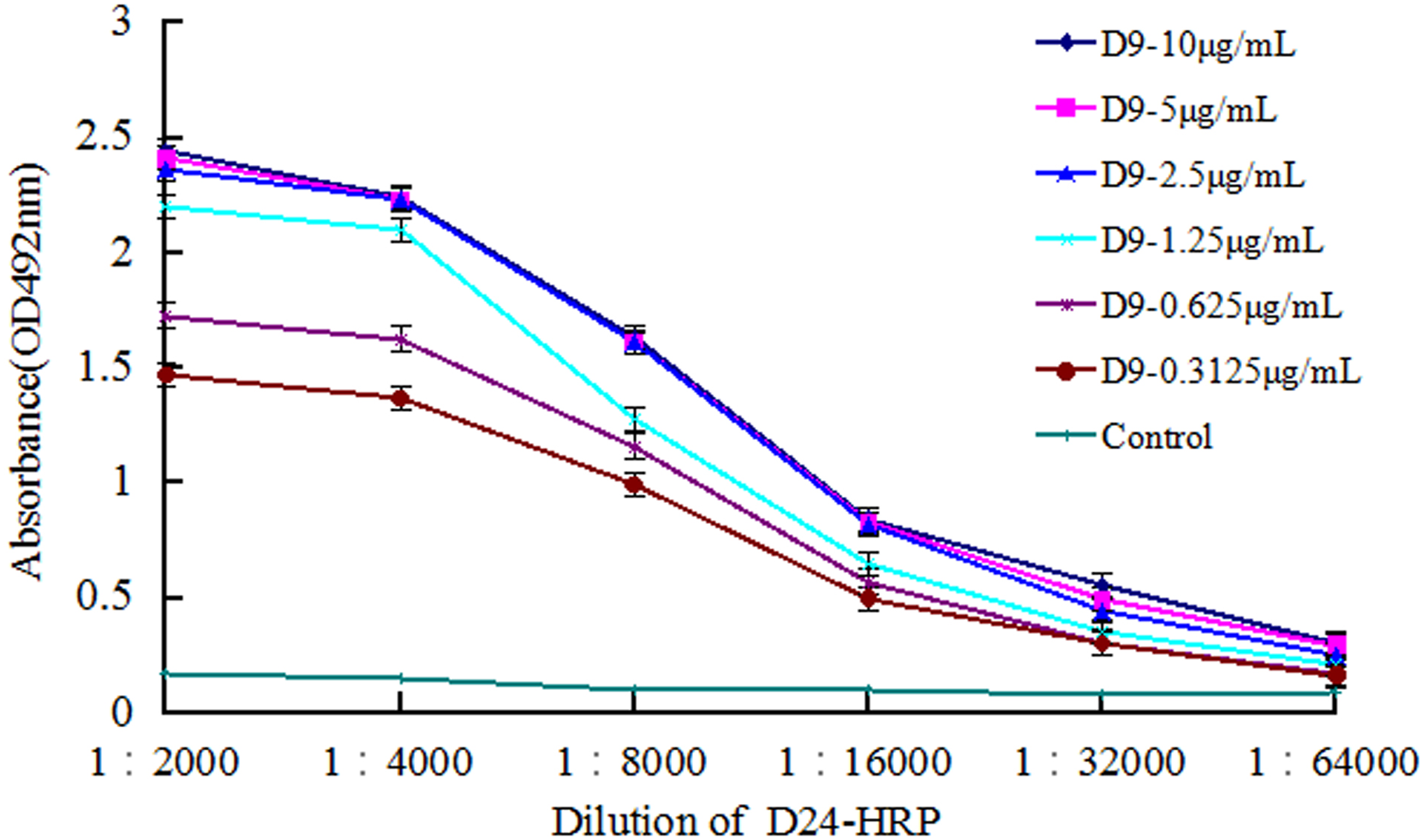
Optimization of concentration of capture antibody and detector antibody. Each point represents the OD value with the mean±standard deviation from four determinations (n=4).
Development of sandwich ELISA
The prepared MAbs were picked, paired, and used to develop a sandwich ELISA to detect dextran in sugar and sugar by-products. P/N was calculated and the minimum concentration of standard dextran T2000 was identified as the detection limit when P/N was above 2.1, and the value was determined to be 3.9 ng/mL. The result showed that the method had a typical calibration curve with a correlation coefficient of 0.9909 and working scope ranges from 7.8 ng/mL to 500 ng/mL (Fig. 4).
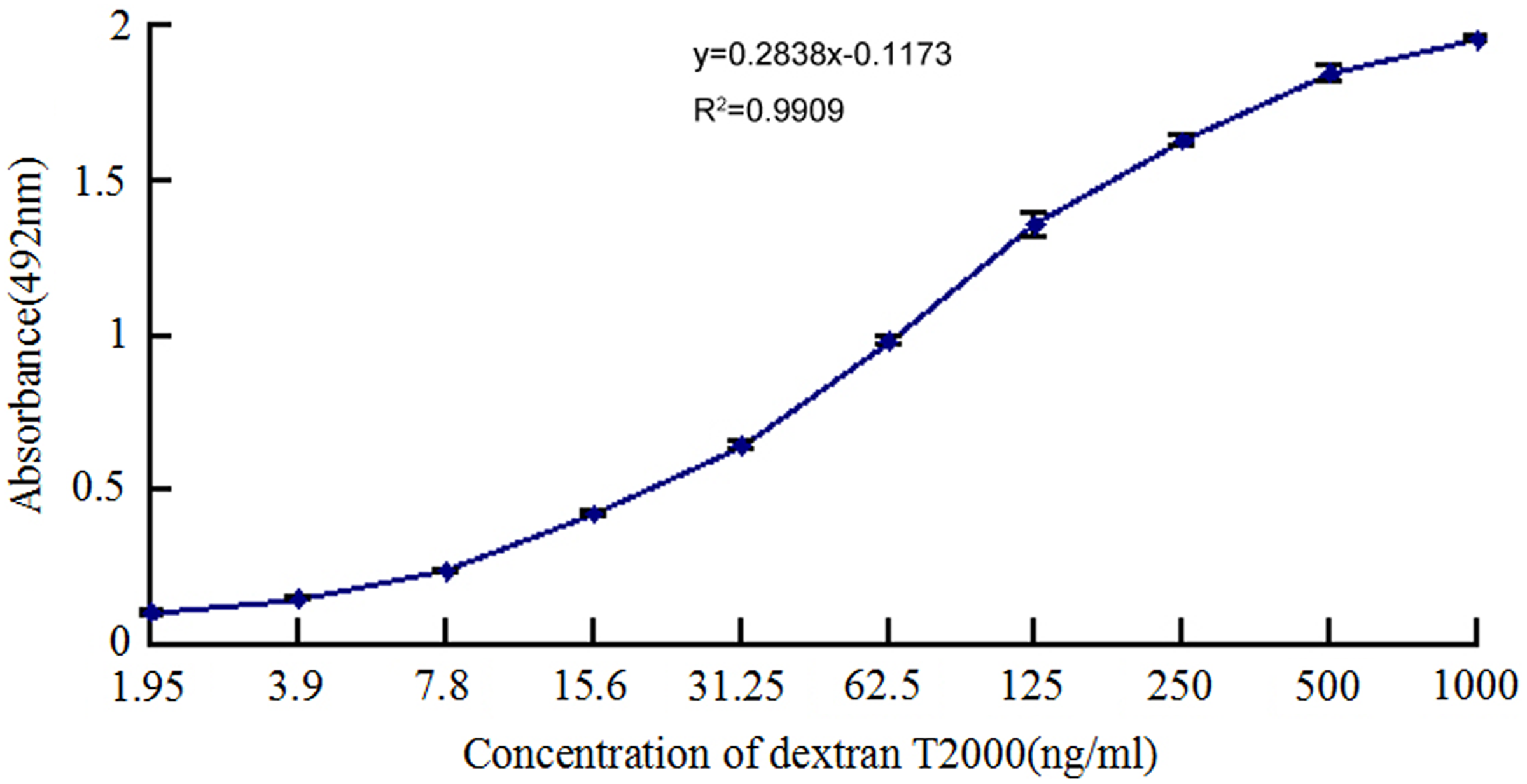
Calibration curve for dextran with MAb D9 as capture antibody and MAb D24 conjugated with HRP as detector antibody. Each point represents the OD value with the mean±standard deviation from eight determinations (n=8) in sandwich ELISA. The concentration of MAb D9 was 2.5 μg/mL.
Determination of developed sandwich ELISA
Cross-reactivity assay was conducted to determine the specificity of the developed sandwich ELISA method. The ELISA cut-off value was calculated as the mean OD value of control plus three-fold standard deviations (SD), which was 0.1389. The OD values equal to or less than the cut-off value were considered negative and those above this value were positive. Results showed that the OD value of dextran T2000 varied in a concentration-dependent manner and was above the cut-off value; meanwhile the OD values of β-glucan, starch, sucrose, and glucoses were below the value, indicating the MAb has no significant cross-reactivity with β-glucan, starch, sucrose, and glucoses (Fig. 5). These results indicated that the method had a high specificity.
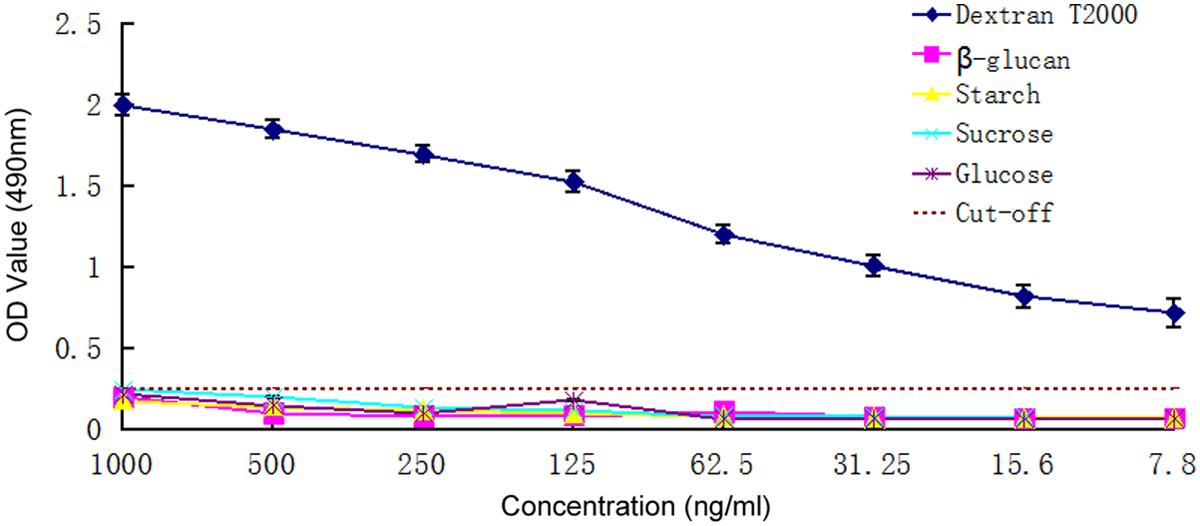
Result of cross-reactivity test determined by sandwich ELISA method. Each point represents the OD value with the mean±standard deviation from four determinations (n=4).
Spike recovery tests were conducted in the developed sandwich to determine the accuracy of the method (Table 1). It was indicated that the recovery rate of the developed sandwich ELISA method varied from 96.35 to 102% with coefficient of variation of 1.58–6.94%, which indicates that the method possesses high sensitivity and provides a reliable recovery rate.
n, number of determinations; SD, standard deviation; CV, co-efficient of variation.
Discussion
In the sugar industry, dextran has been identified as a troublesome substance during the sugar process; the existence of dextran will lead to extra cost.(17) In addition, in medical fields, elaborate surveillance and timely elimination of dextran are required during therapy to avoid the harmful consequences of inappropriate use of dextran. To measure the content of dextran, we developed an immunonephelometric assay based on monoclonal antibodies.(14) In this study, a more sensitive sandwich ELISA method was established to detect dextran of low concentration.
We developed a sandwich ELISA method based on a pair of MAbs (D9 and D24), which were used as the capture antibody and detection antibody, respectively. MAb D24 conjugated with HRP was used as the detection antibody; the result of direct ELISA indicated that the D24-HRP retained the activity of enzyme and ability to bind with antigen at the same time. These characteristics made the MAb-HRP conjugate a good candidate for the detection antibody.
The developed sandwich ELISA exhibited high sensitivity with a working scope of 7.8–500 ng/mL, thereby providing an effective measurement of dextran. In addition, cross-reactivity assay demonstrated that the sandwich ELISA method had no significant cross-reactivity with dextran-related substance, and recovery test indicated that the sandwich ELISA gave sensitive and reliable reproductivity.
In conclusion, we successfully obtained anti-dextran MAbs with high affinity and high specificity by hybridoma technology with dextran T40-BSA as immunogen and developed the sandwich ELISA method based on the produced monoclonal antibodies. This method provides an alternative tool to detect dextran in the sugar industry, especially in samples with low concentration of dextran. In addition, the developed sandwich ELISA method could be a potential tool to detect dextran.
Footnotes
Acknowledgments
This study was financially supported by the Science and Technology Foundation of Fujian Province, China (nos. 2013Y0080 and 2013J01384), Science Research and Technology Development Project of Guangxi Province 2014 (nos. 14122003-2), and the Science and Technology Foundation of Xiamen, Fujian Province, China (no. 3502Z20123006).
Author Disclosure Statement
The authors have no financial interests to disclose.