




Abstract
Dendrimers are unimolecular architectural nano- or microparticle entities that can accommodate various nutraceuticals and pharmaceuticals between their branches (dendrons) and provide targeted delivery of biomimetics into different tissues upon addition of functionalized groups to the dendrimer's surface. Covalent binding, hydrogen bonds, and electrostatic interactions between dendrimer-composing molecules are known to form and stabilize dendrimer structure. Carotenoids have recently been shown to form dendrimer-like structures and promote targeted delivery of “cargo” molecules into organs characterized by high-carotenoid uptake (adrenal glands, prostate, liver, and brain). The use of carotenoid dendrimers, in particular lycosome particles loaded with various xenobiotics (resveratrol, cocoa flavanols, and HMG-CoA reductase inhibitors), reportedly has a beneficial effect in diabetic foot syndrome, prehypertension, and cardiovascular disease. New applications for carotenoid dendrimers may arise from the use of complexes formed by carotenoid dendrimers and monoclonal antibodies (mAbs). The internalization of carotenoid dendrimer–mAb complexes through receptor-mediated mechanisms may prevent interactions of dendrimer-incorporated xenobiotics with membrane-associated P-glycoprotein, a major factor of drug resistance in tumor cells. The incorporation of mAb fragments with higher binding capacity to the membrane receptors and higher affinity to the target molecule may further increase the bioavailability of “cargo” molecules transported by the carotenoid dendrimer–mAb complexes and open new doors in nanodelivery technologies.
Introduction
D
Hyperbranching of dendrimer arms, usually described as dendrons, tends to confer a more globular shape on the dendrimers.(3) The ends of the branches whether functionalized or not can reach the outer surface and predetermine binding capabilities of dendrimers. Alternatively, the end parts of the branches can be modified by chemical transformations and/or by addition of specific ligands, leading to the formation of programmable dendrimers with specific binding capacities.(4) Dendron hyperbranching results in exponential multiplication of end groups at the surface of the dendrimers. Unlike linear polymers, which contain only two end groups, the hyperbranched dendrimer surface becomes extremely rich in end groups.(5) This makes dendrimer use highly attractive for mimicking ligand–receptor interactions in biomedical and pharmaceutical applications.
Despite the compact molecular structure, dendrimers can accommodate certain cargo molecules and chaperones between the branches.(6,7) Cargo molecules and chaperones, whose main function is stabilization of dendrimer structure, can be introduced into dendrimer structure during controlled and/or spontaneous dendrimer assembly.(8) Hyperbranching promotes the capacity of dendrimers to accommodate cargo molecules and chaperones.(6,9) As a result, there have been multiple attempts to incorporate dendrimers in drug delivery technology.(3,9)
Dendrimer Structure
Dendrimer structure should be viewed and described from the platforms of both macromolecular chemistry and polymer science. The central part of the dendrimer, described as the core, is usually represented in dendrimer structure by an atom, groups of atoms, or molecule(s), which have the ability to initiate symmetrical branching through electrostatic interaction between polar branches and electrostatically charged core molecule(s) and/or by covalent binding of a multivalent core structure and peripheral branches. Each branch of a dendrimer can be represented by linearly aligned molecules or dichotomically built tree-like extensions.(10) Crosslinking of the individual linear branches may also take place.(11) Chaperones located between branches promote folding of dendron molecules into dendron arms and help to maintain the linearity of branches as well as to stabilize dichotomic structure in hyperbranched arms.(12) It is assumed that dendrons may extend radially from the core zone to the surface of the dendrimer and may fold back to the internal zone of the dendrimer, forming thereby a dense dendrimer shell.(13) “Cargo” molecules of various nutraceuticals and pharmaceuticals, shown in Figure 2 as black dots, can be incorporated between dendrons (Figs. 1 and 2).
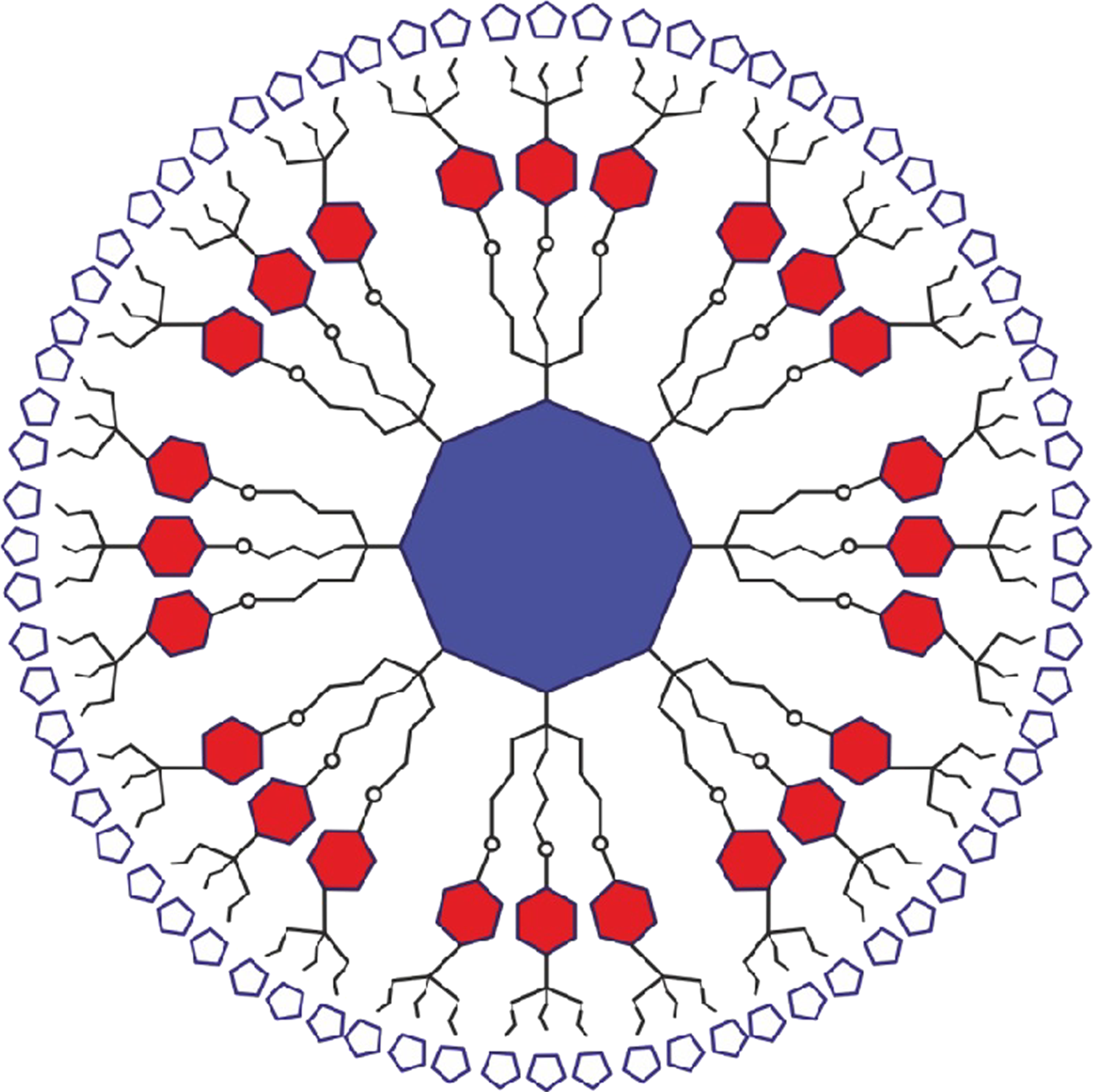
Typical dendrimer structure. Image displays typical dendrimer structure including the central part traditionally defined as the dendrimer core, as well as radially expanding peripheral chains with aromatic rings, defined as dendrons. As shown in the scheme, dendrons may end up with functional groups predetermining binding capacity of dendrimers.

Dendrimer loaded with “Cargo” molecules. Figure shows typical dendrimer structure including the central part, usually defined as the dendrimer core, as well as radially expanding peripheral chains with aromatic rings, widely described as dendrons. As shown in the scheme, dendrons may end up with functional groups predetermining binding capacity of dendrimers. “Cargo” molecules, depicted in Figure 2 as black dots, may be incorporated between dendrons.
Molecular assembly of dendrimers takes place in a step-wise manner. First, the active groups of core molecule(s) interact with functional or quiescent groups of monomer molecules, which results in the formation of the first-generation dendrimer.(14) Next, terminal molecules of the branches engage in electrostatic or covalent association with free monomer molecules, leading to progressive dendron extension and the formation of higher generation dendrimers.(12,14) Overall, the dendron extension process resembles to some degree a cascade reaction taking place during “in vitro” peptide synthesis.
It was long disputed whether noncovalent binding among dendrimer-forming molecules could result in the formation of dendrimers with stable configuration and structure.(3) Our results suggest(15–17) that polar carotenoids (astaxanthin, lutein) as well as chaperone-assisted nonpolar carotenoids (lycopene, beta-carotene) may form highly branched dendrimer structures with the participation of phospholipids (phosphatidylcholine). These carotenoid-based dendrimers can incorporate “cargo” molecules of pharmaceutical and nutraceutical compounds, enhancing thereby their bioavailability rate and can be effectively used for optimized delivery of biologically active compounds in the human body. There are multiple challenges in explaining the precise molecular mechanism of dendrimer self-assembly. However, recent mathematical analysis provides a deeper insight and partially explains the mechanisms of dendrimer self-assembly by the Shannon entropy-based measures.(18) Moreover, it was recently shown that hydrogen bonds, despite their relative weakness, play an important role in spontaneous dendrimer assembly and stabilization of dendron structure.(19,20)
Dendrimer Synthesis
The main architectonic principle of dendrimer composition is based on three types of dendrons: longitudinal (linear), crosslinked, and branched.(21,22) Therefore, dendrimer synthesis protocols have to account for the desired type of dendrons. The wide variety of dendrimer synthesis can be boiled down to two types of synthetic strategy representing classical models of convergent and divergent synthesis.(23) The convergent type of reaction originates from a playbook of organic syntheses, wherein final product of the reaction is assembled from preassembled compounds. The convergent type of reaction is often opposed by a linear type of synthetic reaction, wherein the final product of reaction originates from stepwise additions of new molecules to an exponentially growing oligopolymer.(24) The divergent type, or diversity oriented type, of synthetic reaction takes place when the final reaction product is made out of several compounds originating from a common intermediate. In reality, each particular protocol of dendrimer synthesis may involve multiple features including elements of divergent, convergent, and linear strategy of organic synthesis. Hydrogenation and carbon–carbon coupling reactions in water, organic, or biphasic solvents, and supercritical CO2 are often used in dendrimer synthesis.(25)
Dendrimer Properties
Solubility, bioorganic, and biochemical reactivity as well as viscosity and chemical identity of the end groups are the most important physicochemical properties of dendrimers in biomedical applications.(26) Each of these features is highly dependent on the chemical nature and length of the dendrons as well as the density and chemical nature of the dendron end groups. In general, regardless of the characteristics of the end groups, dendron extension leads to increased solubility of dendrimers.(3) Hydrophilicity of the end groups and the presence of hydroxyl groups in the distal areas of dendrons lead to even greater solubility of dendrimers.(27) In general, it is believed that formation of each new generation of dendrimers leads to cubical increase in dendritic volume, whereas the number of end groups and dendritic molecular weight grow exponentially with each new generation of the dendrimer.(28,29) Dendrimer viscosity depends on the folding patterns of the dendrons. Folding back of the terminal parts of the dendrons promotes formation of hard shells and increases the rigidity of the dendrimers. Incorporation of cargo molecules as well as incorporation of chaperones can have a dual effect on dendrimer viscosity and rigidity, both of which are highly influenced by the chemical nature of the cargo/chaperone molecules. Our results(15,16) suggest that introduction of phospholipids (phosphatidylcholine) into the internal volume of carotenoid-based dendrimers may decrease the viscosity of dendrimers.
There are some essential requirements for dendrimer properties in biomedical applications. Among these are the ability to integrate drug/biologically active compounds, biodegradability, absence of toxic effects, absence of immunogenic properties, as well as the ability to pass through intestinal walls, blood–tissue barriers, and biological membranes.(30) Finally, the ability of the dendrimer to remain in the systemic circulation for delivery to specific organs and tissues is foremost among the important features of dendrimers.(31)
Carotenoid Dendrimers
In general, the ability of carotenoids to form dendrimer complexes reflects their chemical nature as organic compounds. Most of the carotenoids are tetraterpenes containing 40 carbon atoms originating from four condensed terpene units and contain multiple double hydrogen bonds.(32) The majority of carotenoids are hydrophobic substances with a low level of polarity. Astaxanthin, cryptoxanthin, and lutein, belonging to the xanthophyll group, have a considerable level of polarity, whereas beta-carotene and lycopene are highly nonpolar molecules.(33,34) Exposure to heat, acidic pH, and some physical factors, including supercritical CO2, causes reisomerization of lycopene and formation of cis-lycopene isomers.(35,36) In contrast, xanthophylls, representing a polar carotenoid group, acquire their intrinsic polarity due to the presence of oxygen in their molecular structure, either in the form of hydroxyl or epoxide groups.(34,36)
The first indication of carotenoid dendrimer formation was proclaimed in 2010 by Háda et al. in their pioneering publication entitled “Towards Carotenoid Dendrimers,” wherein the authors showed that carotenoid diesters and triesters with an aromatic core can form dendrimer structures.(37) The same authors reported formation of “propeller-shaped” carotenoid molecules that can serve as a prototype for dendrimer complexes (Fig. 3). In particular, the propeller 13 molecule contains a benzene ring hub and three C30-carotenoid molecules as blades.
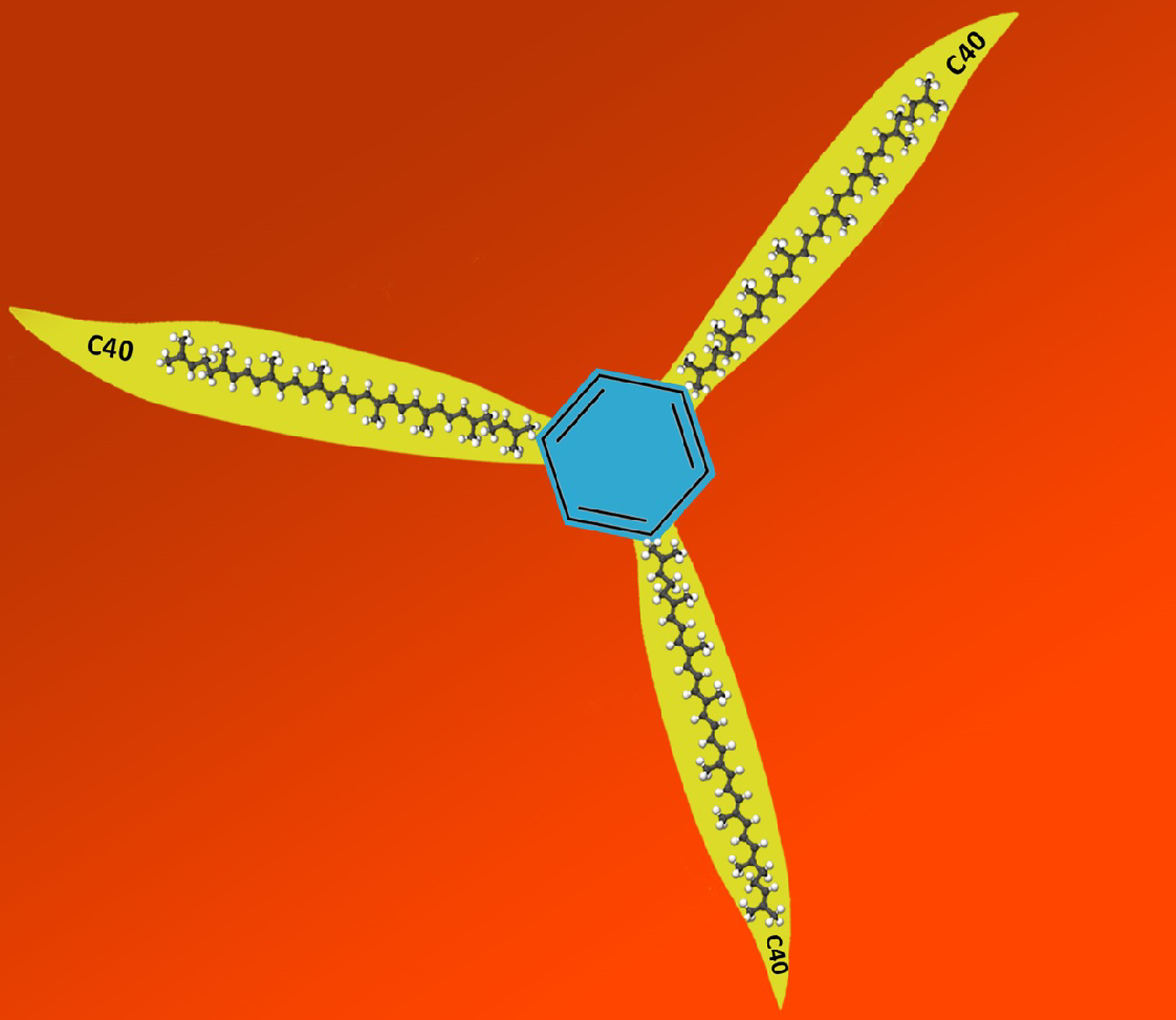
Propeller-shaped carotenoid molecule. The figure shows three carotenoid molecules attached to the centrally located aromatic ring, forming a “propeller-shaped” carotenoid complex.
Lycosome Dendrimers
However, covalent binding is not the only possible mechanism of carotenoid dendrimer formation. According to our results,(17) carotenoid dendrimer formation can take place on the basis of sterically induced stoichiometric principles and interaction of carotenoids with phospholipids, in particular phosphatidylcholine. All carotenoids have a unique ability to interact with phospholipids and form stable carotenoid–phospholipid complexes,(39) schematically represented in Figure 4.
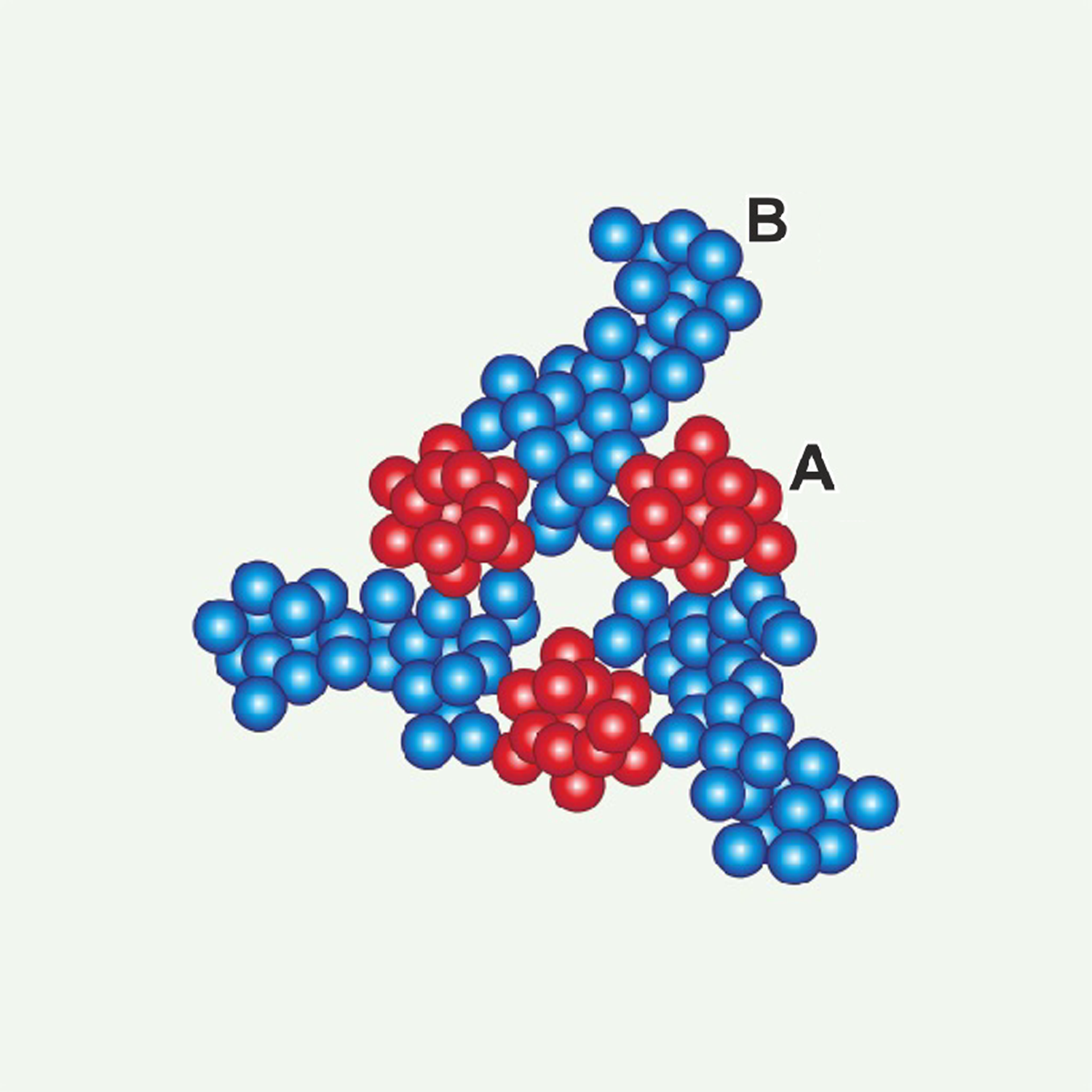
Phospholipid–carotenoid complexes. (
This ability is crucial for the formation of carotenoid dendrimers according to sterically induced stoichiometric principles. It can be stated(40) that molecules of carotenoids (lycopene, lutein, astaxanthin) have two parts. One is nucleophilic and has the ability to interact with phospholipids, the other is electrophilic and can engage in head-to-tail electrostatic interaction with another molecule of carotenoid to form dendrons. These dendrimers, defined in our previous publications(17) as “lycosomes,” also have the ability to incorporate “cargo” molecules of nutraceuticals and pharmaceuticals such as HMG CoA reductase inhibitors (simvastatin), resveratrol, cocoa polyphenols, whey protein peptides, and docosahexaenoic acid.(17,41–44) The presence of these amphiphilic compounds helps to stabilize dendrons and decreases the viscosity of lycosomic dendrimers.
Carotenoid dendrimers represent a class of functionalized microparticles capable of targeted delivery of cargo molecules. Upon ingestion, carotenoid dendrimers (defined in our previous publications as lycosomes) can penetrate the gastrointestinal barrier and enter the systemic circulation. The presence of carotenoids in the dendrimers may promote carotenoid-specific tissue distribution of the bioactive molecules associated with the dendrimers.(17,41–44) In particular, lycopene-containing dendrimers may have a tendency to accumulate in the hepatic cells, adrenal gland cells, and prostate, where the expression of carotenoid-binding receptors is highest.(35) Such a pattern of potential tissue distribution for lycosome dendrimers allows us to assume that carotenoid dendrimers could be successfully used for organ-specific delivery of pharmaceuticals in patients with pathologies affecting liver, prostate, and adrenal glands.
Door to the Future: Dendrimer–Antibody Complexes
Conjugation of nanoparticles and antibodies is a new biotechnological approach, which may lead to the creation of outstanding new hybrid products with enhanced biomimetic properties combining the versatility and unique properties of immunoglobulins and microparticles for in vivo and in vitro biomedical applications. In general, hybridization of antibodies and nanoparticles may lead to enhanced cellular uptake and better stability of nanoparticles in cells, tissues, and even in the gastrointestinal lumen.(45) Wise selection of antibody type as well as a smartly designed nanoparticle surface may result in multifold enhancement of particle cellular uptake and selective delivery.(46) Despite the short period of time since antibody–nanoparticle technology was introduced, there have been some successful reports describing biomedical applications of the technology. In particular, enhanced delivery of doxorubicin by nanoparticles conjugated with monoclonal antibodies (mAbs) has been reported in different experimental models of cancer.(47) Conjugation of nanoparticles with mAbs has also shown significant promise in the treatment of neurological disorders.(48) It is extremely important that complexes of antibody–nanoparticle are known to be internalized through a receptor-mediated mechanism that bypasses interaction on the cell surface with P-glycoprotein, a major “gate keeper” that limits drug penetration of cells causing multidrug resistance.(49)
Similar results have been obtained with dendrimer–antibody complexes. Enhanced dendrimer capture was recently reported in colon cancer cells incubated with antibody (aSlex)-conjugated polyamidoamine (PAMAM) dendrimers.(50) Antibody–dendrimer complexes have also been shown to have superior activity in targeted prostate cancer therapy.(51)
Recently we have reported generation of mAb against lycopene, a powerful antioxidant—carotenoid.(52) We decided to take this opportunity to create a lycopene dendrimer–mAb complex and check its biological activity in cultured cells. Lycopene has been shown in our previous work to inhibit propagation of Chlamydia trachomatis infection in cultured cells. Our supposition was that lycopene dendrimers associated with mAbs would have a greater inhibitory effect on C. trachomatis infection under in vitro conditions. As proof of principle, a small scale experiment using McCoy cells was designed and performed. As can be seen from the immunofluorescent images in Figure 5, incubation of C. trachomatis-infected cells with lycopene dendrimers associated with lycopene-specific antibody led to more significant inhibition of bacterial growth than incubation with either regular lycopene or lycopene dendrimer.
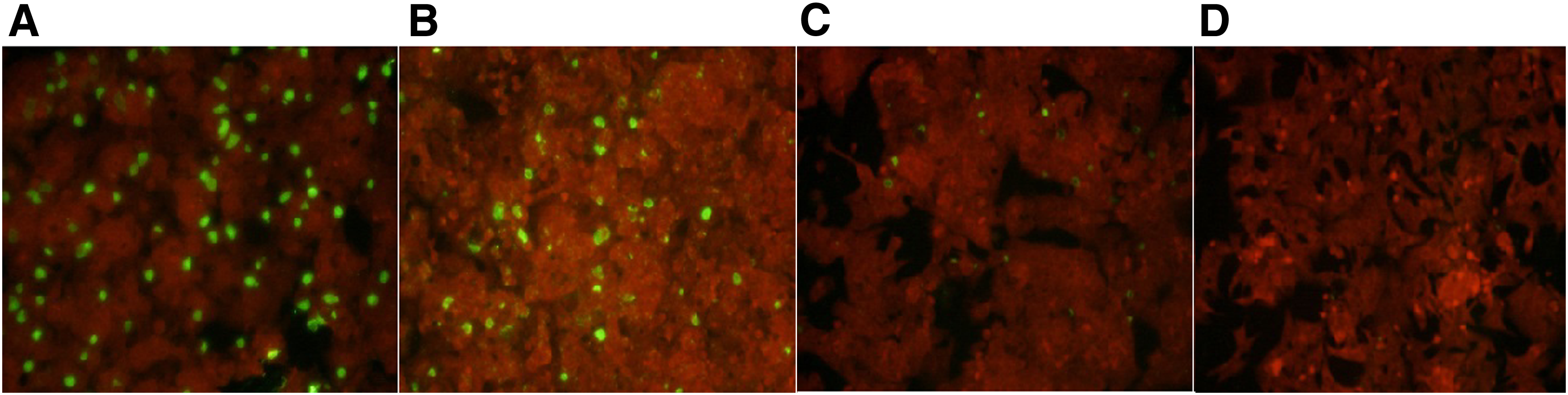
Effect of carotenoid dendrimers of Chlamydia trachomatis infection (×1200). Immunofluorescent staining of McCoy cells infected with C. trachomatis
The results obtained reveal better bioavailability of lycopene and hence its enhanced antichlamydial effect when cells were treated with lycopene dendrimer associated with mAb. Bioavailability of lycopene seems to increase in the following order: Regular lycopene < lycopene dendrimer < lycopene dendrimer + mAb.
The incorporation of antibody fragments with a higher binding capacity to membrane receptors and/or transporters and a higher affinity for the target molecule may further increase the bioavailability of “cargo” molecules transported by dendrimer–antibody complexes, opening a new door in drug delivery technology.
Footnotes
Author Disclosure Statement
No competing financial interests exist.