




Abstract
Aliphatic di- and polyisocyanates are crucial chemical ingredients in many industrial processes and are a well-recognized cause of occupational asthma. Serologic detection of “chemical epitopes” in biological samples could serve as an exposure surveillance approach toward disease prevention, and thus we sought to generate aliphatic isocyanate-specific monoclonal antibodies (mAbs). Three hybridomas were generated from Balb/c mice immunized with a commercial product containing a combination of uretdione, homopolymer, and monomeric forms of hexamethylene diisocyanate (HDI). Three stable hybridomas were subcloned by limiting dilution, two secreting IgG1κ and one secreting IgMκ mAb that bind aliphatic di- and polyisocyanates (conjugated to albumin), but not aromatic toluene or methylene diphenyl diisocyanate (TDI or MDI). Each mAb demonstrates slight differences in epitope specificity, for example, recognition of hydrogenated MDI (HMDI) or different carrier proteins (transferrin, actin) reacted with vapor phase HDI, and is encoded by unique recombination of different germline antibody genes, with distinct complementary determining regions. By western blot, all three mAbs detect a molecule with characteristics of an albumin adduct uniquely in urine from mice skin exposed to a mixture of aliphatic di- and polyisocyanate. Together, the data define molecular determinants of humoral immune recognition of aliphatic di- and polyisocyanates through new mAbs, which will serve as useful research reagents and may be applicable to future exposure surveillance efforts.
Introduction
Diisocyanates are critical chemicals for many industrial processes, especially the manufacture of polyurethane coatings, foams and elastomers; for example, automobile and aircraft coatings.(1) Aliphatic (vs. aromatic) diisocyanates, shown in Figure 1, are generally used for exterior coatings, as they lack aromatic rings sensitive to oxidation from ultraviolet light and color changes.(2) The most commonly used aliphatic diisocyanate is hexamethylene diisocyanate (HDI), however, hydrogenated methylene diphenyl diisocyanate (HMDI) and isophorone diisocyanate (IPDI) are also used in some products.(3–6)
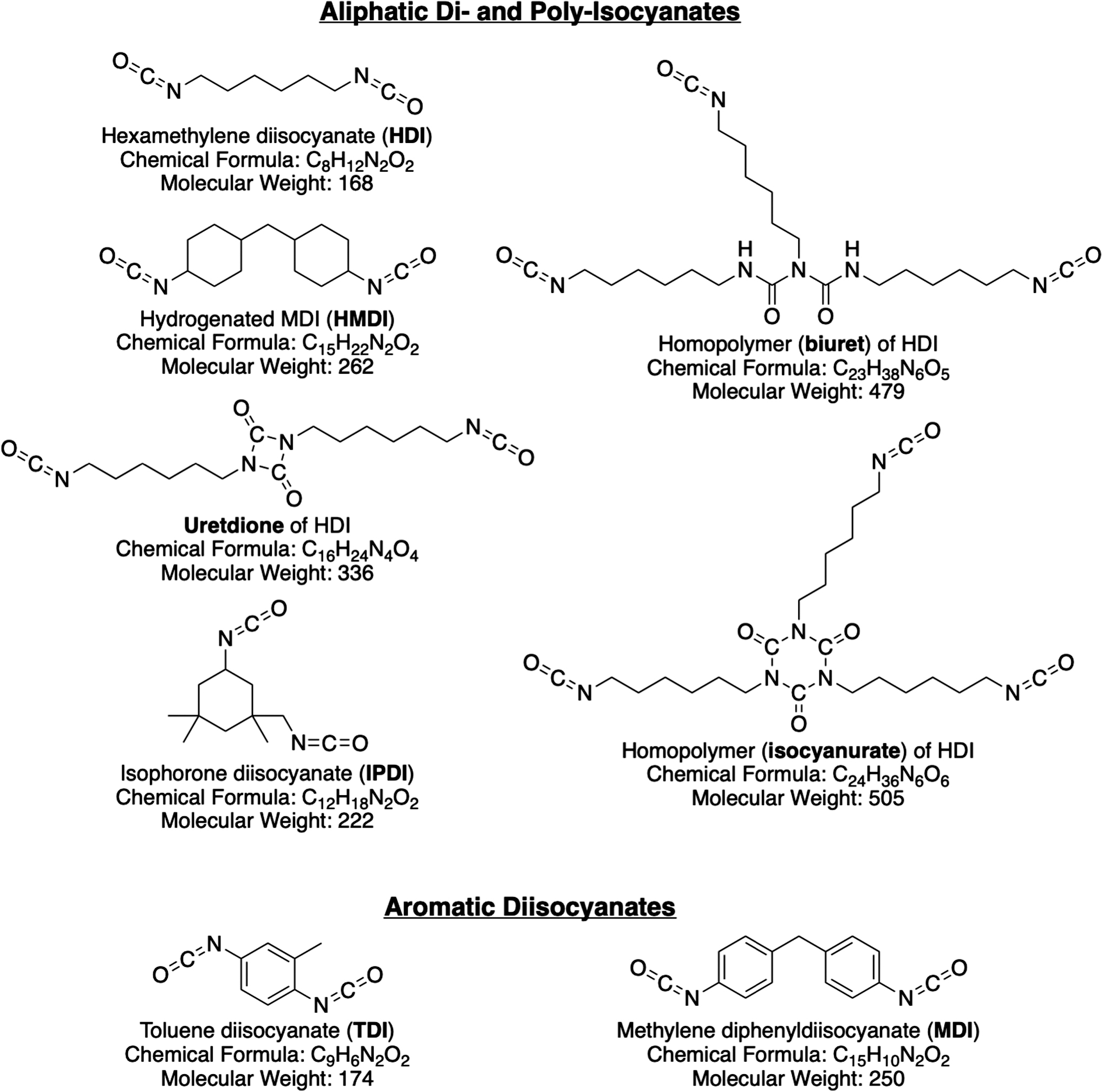
Aliphatic di- and polyisocyanates and aromatic diisocyanates. Structures, formulas, and molecular weights for chemicals commonly used in a variety of different industrial settings.
HDI, like certain other low molecular weight diisocyanates, is volatile at room temperature and present a respiratory health hazard when used occupationally.(7) Chemical vapors may spread long distances and inhalation can trigger pulmonary symptoms (asthma and hypersensitivity pneumonitis) in sensitized workers.(8) To limit HDI's health risk, manufacturers have developed polymeric formulations with reduced vapor pressures.(9) These include an HDI “dimer” (uretdione) and two HDI “trimers” or homopolymers, in biuret and isocyanurate configurations as shown in Figure 1.(10,11)
The role of humoral antibodies in the natural response to occupational exposure from aliphatic di- and polyisocyanate exposure is unclear.(12–15) Antigen (e.g., chemical)-specific antibodies of the IgE isotype, which are commonly used clinically to diagnose allergy, are often absent from symptomatic workers.(15,16) Specific IgG isotypes in workers sensitized to aliphatic isocyanates recognize chemical conjugated to (self protein) albumin, but are also found in workers without symptoms in association with exposure. Uncertainty regarding the humoral response to diisocyanate exposure has limited its clinical utility.
Without definitive diagnostic tests, exposure prevention has assumed a primary role in combating diisocyanate asthma. Surveillance is a key component to exposure prevention and to ensuring effective industrial hygiene.(17) Current methods of exposure surveillance for aliphatic di- and polyisocyanates typically involve measuring airborne levels through well-validated LC or GC-MS/MS approaches.(18,19) However, the timing/placement of sampling devices, the physical fractions (vapor/aerosol) collected, and the methods used for quantitation may effect the data collected.(20) Furthermore, measurements of “external” air levels provide limited information regarding “internal” uptake of chemical, which may differ substantially depending upon personal protective equipment, genetics, lifestyle/diet (e.g., smoking, metabolic), or other unrecognized factors.(21) In many countries, aliphatic di- and polyisocyanates are rarely monitored as regulatory agencies (e.g., the United States' Occupational Safety and Health and Administration) have yet to establish limits to permissible exposure levels.(22)
Biomonitoring of exposure to aliphatic isocyanates, based on the presence of unique “chemical epitopes” in biological samples (urine, blood), may provide another approach to exposure surveillance. Biomonitoring may complement current approaches involving measurements of “external” air borne levels and help effectively guide and validate industrial hygiene efforts.(21) The use of serologic methods to detect exposure biomarkers based on unique chemical epitopes may provide an economical, high-throughput approach to exposure surveillance. The development of monoclonal antibodies (mAbs) that specifically recognize aliphatic di- and polyisocyanates would represent an important advance toward the development of a serology-based approach for biomonitoring.
This article describes the production of mAbs that specifically bind aliphatic di- and polyisocyanates in a hapten-like manner, when conjugated to a larger carrier protein. The novel mAbs are the first we are aware of that demonstrate specificity for aliphatic, but not aromatic isocyanates. The molecular determinants of antigen specificity are defined by unique rearrangement of germline antibody genes, which gives rise to slightly different epitope specificities. The DNA sequences of the aliphatic-specific mAbs are distinct from previously described mAbs that bind aromatic (MDI) but not aliphatic diisocyanates.(23) The potential utility of the aliphatic di- and polyisocyanate specific mAbs toward exposure surveillance are explored with biological samples (urine) from limited in vivo animal studies.
Materials and Methods
Generation immunogens, test antigens
The studies used a commercial product Desmodur® N 3400 (Covestro, LLC; Pittsburgh, PA), which contains primarily not only the uretdione but also homopolymer and residual monomeric forms of HDI. Total reaction products of Desmodur N 3400 (0.1% v/v) with Balb/c mouse serum (2 hours at 37°C) were used as an immunogen. For hybridoma screening and specificity studies, protein conjugates with aliphatic di- and polyisocyanates were prepared through vapor or liquid phase exposure as previously described.(14,24–27) Chemicals included HDI, TDI, MDI, HMDI, IPDI, and HDI biuret were from Sigma-Aldrich, St. Louis, MO). Desmodur N 100 (primarily biuret homopolymer) and Desmodur N 3300 (primarily isocyanurate homopolymer) were from Covestro. Proteins included human albumin, actin, and transferrin, and turkey ovalbumin from Sigma-Aldrich.
Immunization/generation of hybridomas
Balb/c mice were immunized with autologous serum protein reaction products with Desmodur N 3400 emulsified 1:1 in complete Freund's adjuvant from Sigma. Two hundred μL were injected subcutaneously. An equivalent booster dose was administered 21 days later in incomplete Freund's adjuvant. Splenocytes were harvested 3 days after a final tail vein injection of 100 μL of immunogen in PBS and fused with SP2/0 cells as previously described using polyethylene glycol from Sigma.(23) Growth and maintenance of resulting hybridomas was performed as previously described with recombinant murine IL-6 (BioLegend; San Diego, CA) supplemented culture medium.(23)
Screening, subcloning
Culture supernatants from original 96-well plating of three different fusions were screened by ELISA with HRP-conjugated goat anti-mouse IgG (H + L chain) from ThermoFisher Scientific (Waltham, MA). Supernatants were screened against Desmodur N 3400-human albumin and “mock exposed” control albumin. Hybridomas from wells selectively positive against Desmodur N 3400-human albumin were transferred to 24-well plates and subsequently subcloned by limiting dilution. A single subclone (1/10) from each of three parent hybridomas was selected for propagation and purification of mAb from culture supernatant.
Dot and western blots
Dot and western blots were performed as previously described.(28,29) One microliter of protein-chemical conjugates (5 mg/mL) was directly applied to nitrocellulose and developed with culture supernatant followed by enhanced chemiluminescence detection using peroxidase conjugated secondary antibody and 3,3′,5,5′-tetramethylbenzidine substrate from ThermoFisher Scientific. Urine samples were buffer exchanged with sodium phosphate buffer pH 8.0 using a 10 kDa molecular weight cutoff spin column and depleted of endogenous immunoglobulin through overnight incubation with protein A-agarose beads. Twenty microliters/lane of Ig depleted urine was separated by reducing sodium dodecyl sulfate-platelet-derived growth factor (SDS-PAGE), transferred to nitrocellulose membrane, and blotted as described above.
Isotyping
Isotyping of culture supernatants was performed using Pierce's Rapid ELISA Mouse mAb Isotyping Kit, from ThermoFisher Scientific as previously described.(23)
Antibody gene sequencing and analysis
Antibody gene amplification and sequencing were performed as previously described with an anchored (touchdown)-PCR approach.(23) In addition to previously published primers for murine IgG1 and kappa amplification and sequencing,(23) this study used additional primers for amplifying (5′-TCT TAT CAG ACA GGG GGC TCT CGC AGG-3′ or 5′-AGG AAG TCC CGG GCC AGG CAG CCC AT-3′) and sequencing (5′-CAC CAG ATT CTT ATC AGA CAG G-3′) Balb/c mouse IgM heavy chain. All antibody gene sequences were analyzed using IMGT/V-QUEST software from IMGT®, the international ImMunoGeneTics information system®.(30,31)
In vivo animal studies
Male Balb/c mice were shaved on the back on day 1 and 50 μL of acetone, 1% Desmodur N 3400 in acetone, or 1% MDI in acetone was applied once per day on days 2–5. On day 5 mice were transferred to metabolic cages for 24 hours to collect urine. All animal studies were approved by our Institutional Animal Care and Use Committee (IACUC).
Results
Generation of aliphatic isocyanate-specific hybridomas. Hybridomas generated from the spleens of multiple mice immunized with a polymeric aliphatic (HDI-based) formulation were differentially screened for binding to polymeric HDI conjugated to albumin versus “mock” exposed (unconjugated) albumin. Three microtiter wells (from a total of 1200 screened) contained hybridomas secreting antibodies that specifically bound polymeric HDI-albumin conjugates and were subsequently subcloned by limiting dilution. A single subclone from each original hybridoma was propagated and characterized along with the corresponding mAb it secreted into culture supernatant (Fig. 2). Two of the mAbs were determined to be IgG1-kappa, while one of the mAbs was an IgM-kappa, consistent with the molecular weights of purified antibody under reducing and nonreducing SDS-PAGE (Fig. 3).

Mouse mAbs demonstrate specificity for aliphatic versus aromatic diisocyanate. ELISA data (y axis optical density reflects mouse Ig binding) for three new mAbs binding to negative control human albumin (white/open), albumin reacted with a commercial product containing primarily aliphatic HDI uretdione (gray/filled), or albumin reacted with aromatic MDI (striped). mAbs, monoclonal antibodies; MDI, methylene diphenyl diisocyanate; HDI, hexamethylene diisocyanate.
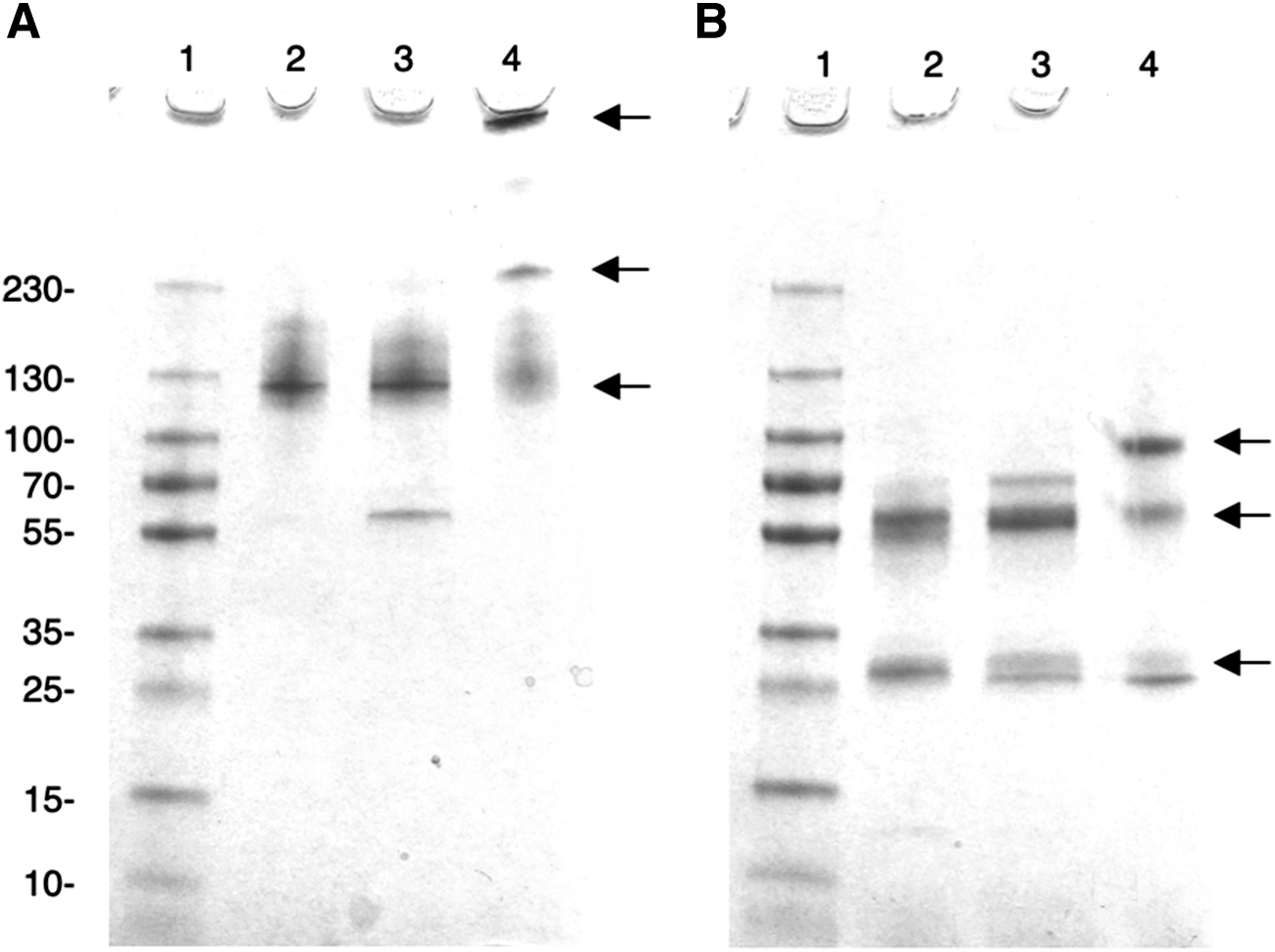
Electrophoretic analysis of purified mAbs. Monoclonal antibody purified from hybridoma culture supernatant was subject to SDS-PAGE gel electrophoresis and coomassie stain under nonproducing
Epitope specificity aliphatic di- and polyisocyanates versus aromatic diisocyanates
The specificity of the newly developed mAbs was further characterized through a combination of ELISA (not shown) and dot blot studies (Fig. 4). The mAbs were first tested for their ability to bind human albumin conjugated with different commercial formulations of aliphatic HDI versus aromatic diisocyanates (TDI and MDI). As shown (Fig. 4), all three new mAbs bound polymeric HDI, but not TDI or MDI-conjugated albumin. None of the mAbs demonstrated specificity for IPDI-albumin, but one mAb (EG6) bound to albumin conjugated with HMDI.
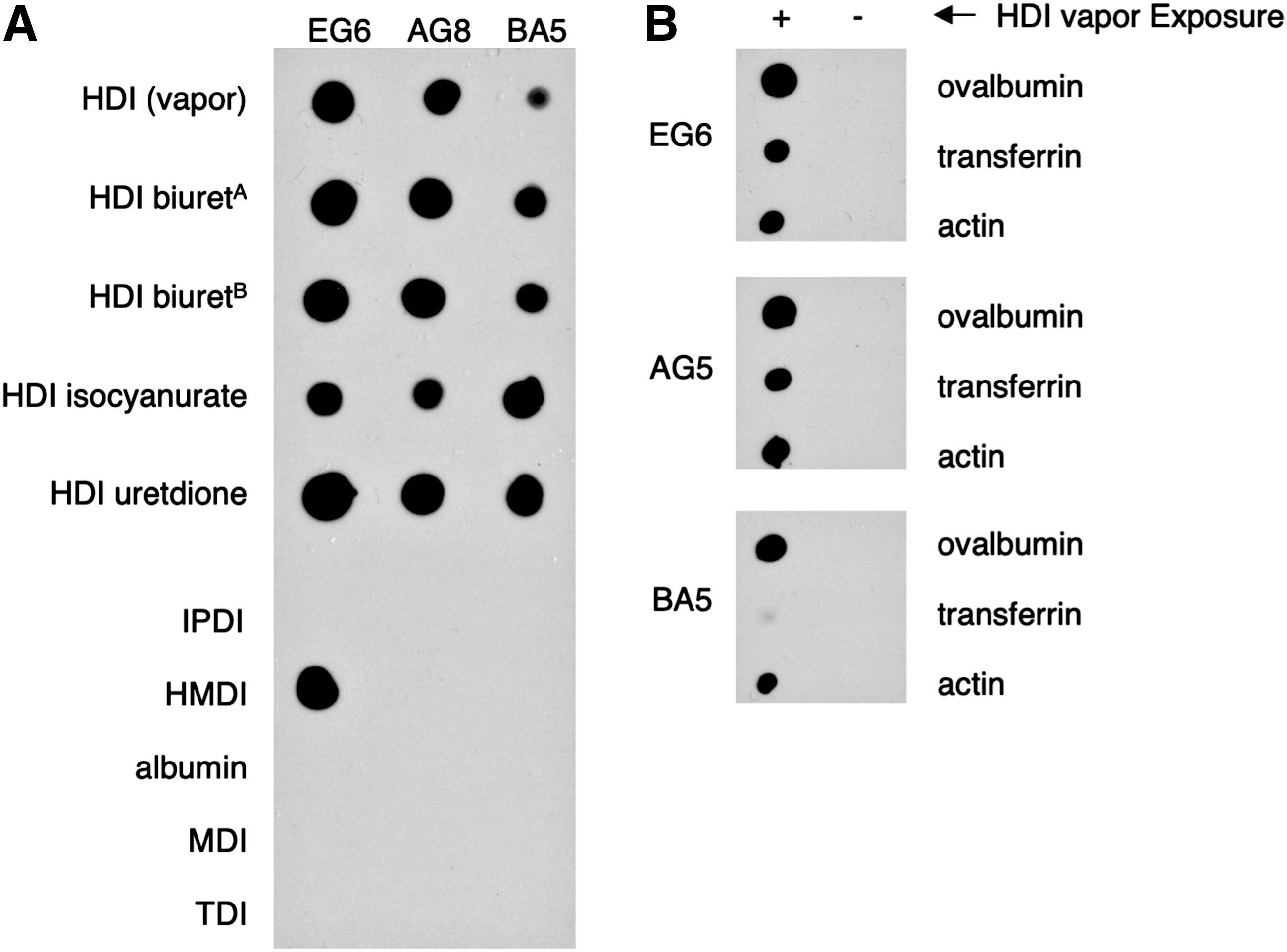
Dot blot of mAbs specificity. Control antigen (mock reacted human albumin) or albumin conjugated with different products containing primarily aliphatic di- or polyisocyanates, or aromatic diisocyanates shown in Figure 1, were dot blotted with different mAbs as labeled
Epitope specificity with different phases (vapor) of exposure and carrier proteins
Additional tests of epitope specificity were performed to determine if the new mAbs recognized HDI conjugated proteins resulting from exposure to the chemical in vapor phase, and to further explore the influence of the “carrier” protein. As demonstrated by ELISA (not shown) and dot blot (Fig. 4), all three mAbs bound human albumin exposed to monomeric HDI in vapor phase. Two of the mAbs exhibited qualitatively similar binding to vapor phase HDI, regardless of the carrier protein to which it was attached (ovalbumin, actin, and transferrin), while one of the mAbs specificity was strongly influenced by the carrier, binding HDI vapor conjugated albumin, ovalbumin, and actin, but not transferrin.
Genes encoding aliphatic di- and polyisocyanate-specific mAbs
To define the molecular determinants of specificity for aliphatic di- and polyisocyanates, the genes encoding our new mAbs were sequenced. As shown in Table 1, each mAb was derived from a unique recombination of different germline heavy chain genes.(30,31) The mRNA sequences of the V through J region for each mAb have been deposited to GenBank under the accession numbers listed in Table 1. All three of the mAbs light chains used IGKJ1, and the two IgG1 mAbs used the same germline variable region (IGKV1–117). However, each mAb's heavy and light chains possess distinct amino acid sequences in their complementary determining region 3 (CDR3), which typically dictates specificity (Fig. 5). Slight differences in the rearranged mAb genes compared with their known germline counterparts are consistent with antigen-driven somatic mutation. The CDR3 regions of the new aliphatic isocyanate-specific mAbs are distinct from recently described MDI-specific mAbs, and possess limited similarity with previously cloned antibodies in either the Kabat or IMTG databases.(30,31) One of the mAbs uses the same germline heavy chain variable region (IGVH6–6) of a previously described MDI-specific mAb.(23) The connection between IGHV6–6 and diisocyanate recognition remains unclear (other mAbs with differing specificity also utilize IGHV6–6 aka J606), but has important implication for purification as the IGHV6–6 variable region gene possesses a binding site for protein A, independent of the constant region.(32,33)

Gene and amino acid sequences corresponding to CDR3 junction regions of aliphatic di/polyisocyanate-specific mAbs.
Germline Gene Sequences Used by Aliphatic Isocyanate Specific Monoclonal Antibodies
Potential utility of aliphatic di- and polyisocyanate specific in exposure surveillance
To begin assessing the potential utility of the new mAbs for biomonitoring (i.e., detecting chemical epitopes in biological samples), we performed preliminary studies with 24-hour urine samples from animals exposed in vivo. Western blots with each of the three new mAbs detected a single band in urine from mice repeatedly exposed to a commercial preparation of di- and polymeric HDI via the skin, but not control (solvent) or aromatic MDI (Fig. 6). The apparent molecular weight of the biomarker recognized by the new mAbs is consistent with that of an albumin-HDI adduct and mirrors recently published studies of mice exposed to aromatic MDI.(34) Together, the data demonstrate the potential utility of the new mAbs for biomonitoring exposure to HDI and its oligomers.
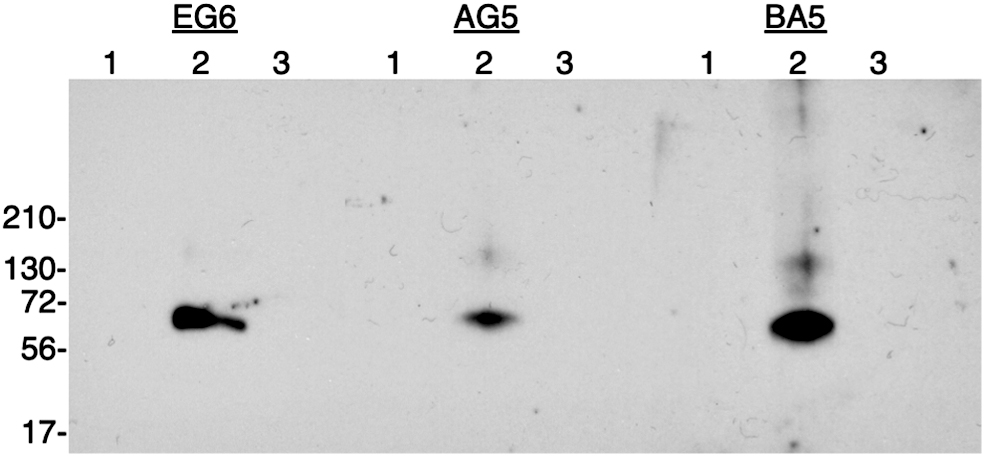
Western blots of urine from mice exposed to aliphatic diisocyanate. Different mAbs (as labeled) were used in western blots of urine from Balb/c mice exposed daily on the skin to 50 μL of (1) acetone (2) 1% aliphatic Desmodur® N 3400 containing primarily HDI uretdione, or (3) 1% aromatic MDI. Each lane contained 20 μL of urine dialyzed against phosphate buffer and depleted of endogenous mouse Ig using protein A. Note that major band ∼68 kDa is consistent with an albumin adduct as recently published in analogous studies with MDI.(34)
Discussion
This report describes mouse mAbs with hapten-like specificity for aliphatic di- and polyisocyanates. The mAbs (two IgG1 and one IgM) were shown to exhibit slight differences in epitope specificity, including reactivity with HMDI, and dependence upon carrier protein. Each mAb is encoded by a different recombination of germline genes and possesses CDR3s distinct from each other. Importantly, the new mAbs recognize chemical epitopes on proteins conjugated with aliphatic diisocyanate in biological samples from animal exposed in vivo. Together, the data describe new reagents that will be useful for future research and may be applicable to occupational health and safety.
One potential application of the newly described mAbs is toward exposure surveillance of human workers via the identification of chemical epitopes in biological samples. This study's findings in a rodent exposure model support this concept. Western blots with our new α-aliphatic isocyanate mAbs identify a unique molecule in the urine of mice that were exposed to aliphatic isocyanate, but not control samples. The biomarker identified by the mAbs possesses an apparent mw consistent with that expected for an albumin adduct, as recently described in mouse studies with MDI.(34) Thus, the presently described urine western blot technique with the new α-aliphatic di/polyisocyanate mAbs, or a further developed high-throughput detection methodology (e.g., sandwich ELISA), could provide the foundation for a biomonitoring approach toward occupational exposure surveillance.
Sequencing of the newly developed mAbs cDNA defines molecular determinants for aliphatic di- and polyisocyanate recognition, generated via recombination of germline antibody genes. The data may be relevant to humans, who also develop aliphatic isocyanate-specific antibodies (IgG isotype) in response to occupational exposure, and share homologous antibody genes.(14) In humans, IgG responses to diisocyanate rarely occur outside of occupational settings, as the chemical does not exist naturally in the environment. Additional research, beyond the scope of the present study, will be necessary to translate the present findings on antibody gene usage across species and determine its relevance to occupational exposure
An important characteristic of the new α-aliphatic di/polyisocyanate mAbs is their ability to recognize human proteins conjugated with HDI via vapor phase exposure. Prior studies suggest the biophysics of vapor exposure results in protein (albumin) conjugates more like those that occur during “real-life” occupational exposure.(24,35,36) Published human serology studies also support the clinical relevance of vapor HDI-albumin conjugates and demonstrate associations with exposure and asthma.(13,26) Further epitope mapping of the newly described α-aliphatic di/polyisocyanate mAbs may help understand structural changes in diisocyanate exposed human proteins that trigger immunologic reactions.
In summary, we generated and characterized three mAbs that specifically recognize aliphatic di- and polyisocyanate and not aromatic diisocyanates. The mAbs bind aliphatic isocyanate protein conjugates in ELISA assays and identify a unique molecule specifically in the urine of exposed mice. Sequencing of the monoclonal antibody genes reveal unique germline gene recombinations that result in humoral specificity for aliphatic di- and polyisocyanates. Together, the data demonstrate the utility of the new α-aliphatic di/polyisocyanate mAbs as reagents for research and their potential to serve the basis for serologic tests of occupational exposure.
Footnotes
Author Disclosure Statement
No competing financial interests exist.
Funding Information
The study was supported, in part, by a grant from the National Institute for Occupational Safety and Health (OH010941).