




Abstract
The antibiotic resistance profiles of 150 heterotrophic bacterial isolates recovered from two lakes in Southern Siberia was determined to examine the effect of anthropogenic disturbance on aquatic ecosystems. Resistance was detected in at least one strain for seven of the eight antibiotics tested, the exception being amikacin. Resistance to antibiotics predominated in the areas of the lakes likely to be under highest anthropogenic disturbance. Resistance was more frequently observed among isolates recovered from within the proximity to a tourist resort (Lake Shira; 63% of bacteria with multiple antibiotic resistance (MAR) in the resort part), or the shore line (Lake Shunet; 100% of bacteria with MAR) than among isolates from the center of each lake; 42.5% of bacteria with MAR from Lake Shira and 25%/75% of bacteria are resistant to three/four antibiotics consequently from Lake Shunet. Plasmid profiles were determined from a sample of 37 multiply resistant bacteria, and between one and four plasmids were isolated from each isolate; the plasmids ranged in size from 2.3 to 23.1 kb. These observations are consistent with anthropogenic disturbance playing one of the key roles in the dissemination of antibiotic resistance in the aquatic ecosystems.
Introduction
Some of the samples of ecosystems subjected to anthropogenic impact are two Southern Siberian lakes; Lake Shira and Lake Shunet (Russia). The water of these lakes has long been held as possessing curative medicinal properties. For example, the water of Lake Shira is used to treat diseases of the gastrointestinal tract, locomotorium, cardiovascular system, and various skin diseases. Health resorts for children and adults are situated on the shores of this lake, and they are very popular among both locals and visitors from other regions. Although there are no resorts at Lake Shunet, this lake is similarly visited by thousands of tourists each year who are attracted by the high concentration of mineral salts in the mud and water that are considered very effective for the treatment of different skin diseases. 27 However, since there are no resorts at Lake Shunet, this lake is probably under lower levels of anthropogenic disturbance than Lake Shira.
In an earlier report, we noted a high level of anthropogenic impact on Lake Shira in the summer (June–August) period. Allochthonous bacteria introduced into the lake via resort effluents exhibited MAR, and the majority of these bacteria harbored plasmids of varying size. In the winter (February) and in the spring (March) periods, when tourist numbers and, hence, anthropogenic impact on the ecosystem is much reduced, then isolated bacteria tended to be sensitive to antibiotics. 19 We concluded that MAR may be a useful marker to monitor the levels of allochthonous bacteria in Lake Shira.
The aim of this work was to compare antibiotic resistance of heterotrophic bacteria isolated from the central and from the resort/shore-line parts of lakes Shira/Shunet at the height of the tourist season and to evaluate the percentage of plasmid-bearing bacteria with MAR in each studied lake.
Materials and Methods
Sampling sites
Lake Shira is a brackish lake in the south of the Khakasia Republic (Russia) (54 30′38″N, 90 12′9″E). The lake has no outflow. The River Son flows into the lake from the east and contributes 42% of the lake water resource. The lake is 9 km long and 5 km wide, 22–24 m deep, and has no outflow. The Shira lake water is of sulfate-chloride-hydrocarbonate sodium-magnesium composition (pH=8.3). It is alkaline and contains up to 22 g/L of dissolved salts. Lake Shira is meromictic. Lake Shunet (54°25′7″N, 90 13′41″E) is 10 km south-west of Lake Shira. Lake Shunet has no outflow and spring inflows into the lake from the south. The maximum depth is 6.2 m, length: 1 km, width: 0.7 km. The water is of chloride-sulfate sodium-magnesium hydrochemical type (pH=8.4). The mineral content of the water is 61.3 g/L. 27 Lake Shunet as well as Lake Shira is meromictic. 27 Samples of Lake Shira and of Lake Shunet water were taken from the central and from the resort/shore-line parts of the lakes in July 2005 from a depth of 0.1 m. The temperature of water in the central and resort/shore-line parts of the lakes was 23°C±2°C.
Media
Water samples were plated on mineral medium (M9) with peptone that contained per liter of distilled water: 6 g Na2HPO4, 3 g KH2PO4, 0.5 g NaCl, 1 g NH4Cl, 5 g peptone, and 20 g agar. After autoclaving, 1 ml of 20% MgSO4 and 1 ml of 0.5% CaCl2 sterile were added. 23
Isolation of bacterial cells
To isolate heterotrophic bacteria, water samples were plated on agar medium M9 containing peptone and thermostatically cultivated at 23°C±2°C for up to 7 days.
Antibacterial susceptibility testing
Resistance of the isolated bacteria to antibiotics was determined by the replica plating in triplicate. 23 The antibiotic resistance of bacteria was tested on solid media amended with eight antibiotics, widely used in medicine and veterinary practice, at clinically significant concentrations and belonging to different classes: aminoglycosides [amikacin (30 μg/ml), gentamicin (10 μg/ml), kanamycin (30 μg/ml), and streptomycin (30 μg/ml)]; beta-lactam antibiotics [ampicillin (50 μg/ml), benzylpenicillin (penicillin G) (10 μg/ml)]; tetracyclines (doxycycline (30 μg/ml)); and third-generation cephalosporins [cefotaxime (25 μg/ml)]. The level of resistance of each isolate was determined for each of these antibiotics. Bacterial isolates showing resistance to two or more classes of antibiotics were defined as multiply antibiotic resistant.
Plasmid isolation
Plasmids DNA were isolated from bacterial strains that were resistant to two and more antibiotics. The cells were grown for 18 hours at 25°C in 5 ml of LB broth 22 with vigorous shaking. One thousand five hundred microliters of the culture was transferred into an Eppendorf tube and cells were harvested by centrifugation for 3 minutes at 12,000 rpm. The pellet was resuspended in 100 μl of lysis solution I (50 mM glucose, 10 mM EDTA, 25 mM Tris-HCl; pH 8.0) containing 5 mg/ml lysozyme and incubated for 15 minutes on ice. Two hundred microliters of freshly prepared lysis solution II (0.2 N NaOH, 1% SDS) were added and gently mixed. The mixture was incubated for 15 minutes at room temperature. After addition of 150 μl of ice-cold 3M NaAc (pH 5.0), the solution was incubated for 30 minutes on ice and subsequently centrifuged for 5 minutes at 12,000 rpm. The DNA in the supernatant was precipitated with 1 ml of 75% of ethanol for 20 minutes at −20°C. After centrifugation for 3 minutes at 12,000 rpm at 4°C, the supernatant was removed, and the pellet was dried and dissolved in 100 μl of TE buffer. 22 One hundred microliters of 5M LiCl were added and gently mixed. This solution was incubated for 15 minutes on ice. After centrifugation for 15 minutes at 12,000 rpm at 4°C, the supernatant was transferred to a fresh tube, and the DNA was precipitated with 1 ml of 96% of ethanol for 30 minutes at −20°C. The supernatant was removed after centrifugation for 5 minutes at 12,000 rpm at 4°C, and the pellet was dried and dissolved in 100 μl of TE buffer. 22 The DNA plasmids were analyzed in 0.8% agarose gel electrophoresis in a Tris-acetate buffer. 22 The electrophoregrams were scanned on an UV transilluminator. The molecular size of the plasmid bands were evaluated by comparison with reference plasmids Lambda HindIII (MP Biomedicals) and 1 kb DNA marker (Promega).
Statistical procedures
Statistical procedures were carried out by using nonparametric criteria of Mann-Whitney U and 2×2 contingency table of the Chi-square test.
Results
Antibiotic resistance of heterotrophic bacteria isolated from the central and from the resort or shore-line parts of Lake Shira and Lake Shunet
Antibiotic resistance profiles of heterotrophic bacteria taken from the central and from the resort or shore-line parts of Lake Shira and of Lake Shunet are given in Figure 1. Resistant bacteria were far more numerous than sensitive bacteria; in Lake Shunet, 100% of the isolates were resistant to at least one antibiotic, the corresponding figure for isolates from Lake Shira is ∼90%.

Percentage of antibiotic-resistant and antibiotic-sensitive heterotrophic bacteria isolated from the central and from the resort/shore-line parts of lakes:
Forty bacterial isolates recovered from the central part of Lake Shira and twenty seven isolates from the resort part of the ecosystem were analyzed. Bacteria resistant to benzylpenicillin predominated in Lake Shira (Fig. 1A), and more than 57.6% (18) bacteria resistant to this antibiotic were isolated from the center of this lake than from the resort 35.5% (8). The level of resistance to cefotaxime among bacterial isolates collected from the center was similar to the level noted for bacteria recovered from the resort (∼10% (4) and 8% (3) respectively), and the level of resistance to kanamycin also showed little difference between these sites: 3% (2) of isolates from the central part and 4.8% (4) of isolates from the resort part of the ecosystem (Fig. 1A). However, differences were evident for ampicillin, gentamicin, and streptomycin with greater levels of resistance noted in the isolates recovered from the resort site compared with the center of the lake. Approximately 11% (3) of bacterial isolates collected from the resort part of the lake were resistant to ampicillin, compared with only about 2% (1) of heterotrophic bacteria isolated from the center. The corresponding figures (resort first) for the other two antibiotics were 10% (4) and 5% (2) for gentamicin and 26% (3) and 12% (6) for streptomycin (Fig. 1A).
Finally, levels of resistance to doxycycline were very low, being noted in only 3.3% (2) of the isolates from the center of the lake and in 0% of isolates from the resort part. No resistance to amikacin was noted.
In Lake Shunet, due to very low sample size in the central part of the ecosystems, we did not have power to detect differences in antibiotic resistance in bacteria between central and shore-line parts. Among thirty and three bacterial stains recovered from the shore-line part of Lake Shunet, resistance to ampicillin was found in 16.5%, and benzylpenicillin resistance was found in 20.4% of the bacterial isolates. Resistance to cefotaxime, streptomycin, gentamicin, and kanamycin was seen in 14%, 17.8%, 14.8%, and 16.5% of the isolates, respectively (Fig. 1B). No resistance to amikacin or doxycycline was found, and no isolates were sensitive to all antibiotics.
MAR of heterotrophic bacteria isolated from Lake Shira and from Lake Shunet
The isolated bacterial strains were analyzed for MAR, defined as resistance to two and more different classes of antibiotics (Fig. 2A). Of the isolates recovered from the center of Lake Shira, 47.5% (19) exhibited resistance to only one antibiotic; predominantly 45% (18) of them were resistant to benzylpenicillin, and 2.5% (one strain) were resistant to doxycycline. Twenty seven and half percentage (11) of the isolates was resistant to two antibiotics belonging to the β-lactam (benzylpenicillin) and the aminoglycoside groups of antimicrobials drugs (predominantly to streptomycin). Fifteen percentages (6) of the isolates were resistant to three antibiotics, of which 7.5% (3) were resistant to three different classes of antibiotics such as β-lactam antibiotics (benzylpenicillin), third generation of cephalosporins (cefotaxime), and aminoglycosides (streptomycin); 2.5% (1) of the strains appeared resistant to the same classes of antibiotics, but with phenotype of resistance to benzylpenicillin, cefotaxime, and gentamicin; and 2.5% (1) of the isolates were resistant to β-lactam antibiotics (benzylpenicillin), aminoglycosides (kanamycin), and tetracyclines (doxycycline). Only one isolate (2.5%) of those 15% of bacteria appeared resistant to three antibiotics belonging to two different classes of antimicrobials, which were β-lactam antibiotics (benzylpenicillin) and aminoglycosides (gentamicin and streptomycin). No isolate in the central part of Lake Shira was resistant to more than three classes of antibiotics.
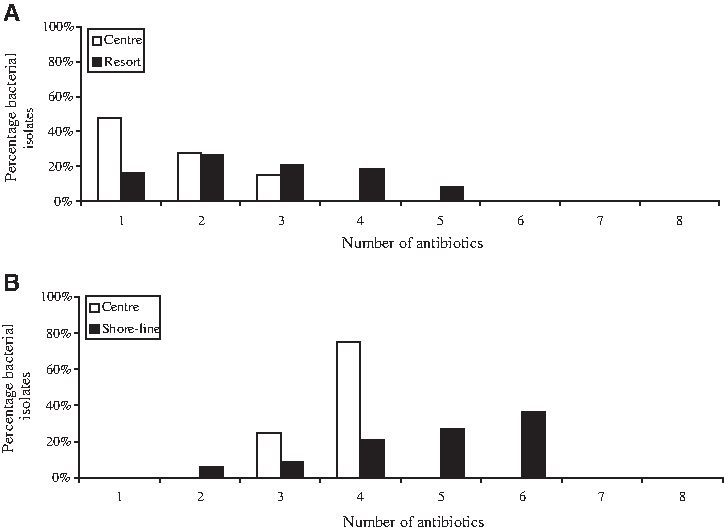
Percentage of heterotrophic bacteria exhibiting single antibiotic resistance (1) and multiple antibiotic resistance (i.e., resistance to 2 and more antibiotics) isolated from the central and from the resort/shore-line parts of lakes:
In the resort part of Lake Shira, 22% (6) isolates were resistant to one antibiotic belonging to the beta-lactam group of antibiotics (benzylpenicillin); 14.8% (4) of the isolates were resistant to two antibiotics belonging to β-lactam antibiotics (benzylpenicillin) and to aminoglycosides (streptomycin); 29.6% (8) of the strains were resistant to three antibiotics but belonging to two classes—to the beta-lactam group of antibiotics (benzylpenicillin) and cefalosporins; 14.8% (4) of the strains were resistant to four antibiotics; and 3.7% (1) of the strains were resistant to five antibiotics belonging predominantly to two classes of antibiotics—to the beta-lactam group of antibiotics (benzylpenicillin) and aminoglycosides (gentamicin, kanamycin, and streptomycin).
Isolates from the resort were on average resistant to 2.4 antibiotics, whereas isolates from the center were resistant to 1.5. This difference in the number of antibiotics to which each isolate was resistant is significant by using a Mann–Whitney U test (p<0.001), and there were significantly more multiply resistant isolates (resistant to >2 antibiotics) at the resort site (2×2 chi-square p<0.05).
A total of 36 isolates (40%) from Lake Shira were either sensitive to all antibiotics or resistant to only one. However, no such isolates were recovered from Lake Shunet; all were multiply antibiotic resistant (p<0.0001; Fig. 2). Differences were also noted when isolates from the central part of Lake Shunet were compared with those from the shore line. Twenty-five percent (4/16) of heterotrophic bacteria isolated from the central part of Lake Shunet were resistant to three antibiotics belonging to two different classes—to aminoglycosides (gentamicin) and beta-lactam antibiotics (benzylpenicillin), and 75% (12/16) were resistant to four antibiotics from aminoglycosides (gentamicin and streptomycin) and beta-lactam antibiotics (benzylpenicillin), but no isolates were recovered that were resistant to more than four antibiotics. In contrast, 27.3% (9/33) of isolates from the shore line were resistant to five antibiotics, and also 36.4% (12/33) were resistant to six antibiotics belonging predominantly to three different classes—to aminoglycosides (gentamicin, kanamycin, and streptomycin), to beta-lactam antibiotics (ampicillin and benzylpenicillin), and to cephalosporins (cefotaxime). No bacteria resistant to only one antibiotic, or to seven or eight antibiotics, were found in the shore-line sample from Lake Shunet (Fig. 2B). The differences between the sites were significant by using the Mann–Whitney U test (p<0.001). In sum, the level of MAR was higher in Lake Shunet than in Lake Shira, and for each lake was higher for the resort/shore-line samples than isolates from the center.
Plasmid profiles of isolated heterotrophic bacteria with MAR
Antibiotic resistance can spread rapidly through a bacterial population by the lateral transfer of mobile elements, in particular, plasmids. We, therefore, carried out an analysis of a plasmid profile of thirty-seven bacterial strains exhibiting MAR (Table 1). The results for the isolates recovered from Lake Shira are shown in Figure 3, and these results suggest a wide diversity of different plasmids that are present in the lake. Plasmids isolated from nine bacterial strains from the center of Lake Shira ranged from less than 2.3 kb to more than 23.1 kb (Table 1, Fig. 3). One strain contained two plasmids, where one plasmid was <2.3 kb, and the other plasmid was ∼23.1 kb (Table 1, strain #2, Fig. 3, lane 2). Other strains had four small plasmids (Table 1, strain #7, Fig. 3, lane 7) or contained three plasmids of varying size (Table 1, strain #8, Fig. 3, lane 8). Two strains (Table 1, strains # 6 and 9) contained one plasmid with size ∼10 kb (Fig. 3, lanes 6 and 9).
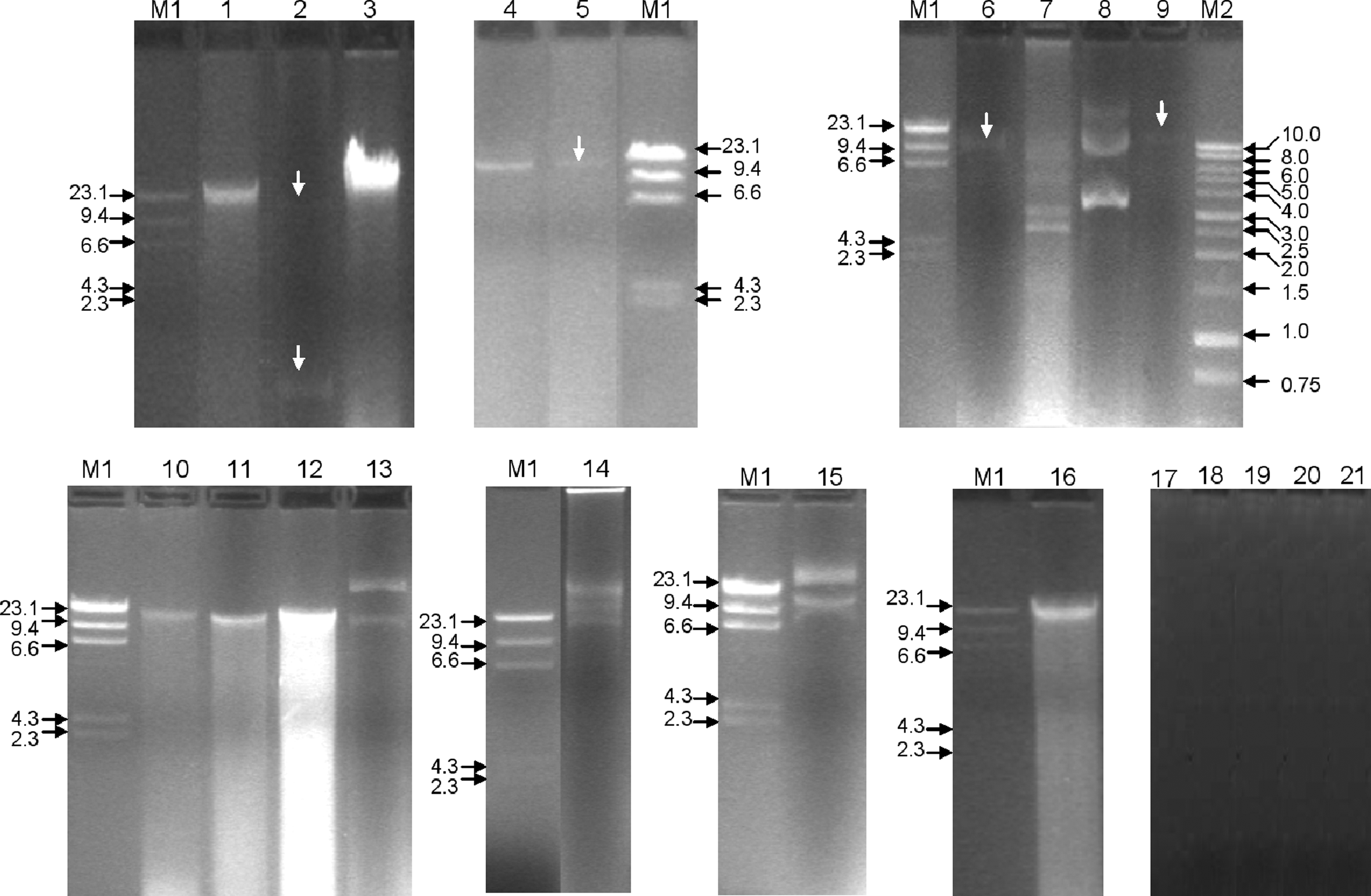
Plasmid profile of heterotrophic bacteria exhibiting multiple antibiotic resistance isolated from the central (1–9) and from the resort (10–21) parts of Lake Shira. M1–Lambda DNA/Hind III marker (kb), M2–1 kb DNA marker. White arrows indicate the plasmid DNA.
Ami, amikacin; Amp, ampicillin; Ben, benzylpenicillin; Cef, cefotaxime; Dox, doxycycline; Gen, gentamicin; Kan, kanamycin; Str, streptomycin.
In the resort part of Lake Shira, antibiotic-resistant bacteria carried from one to three plasmids ranging from 9.4 to 23.1 kb, (Table 1, Fig. 3). Five strains exhibiting resistance to 2–4 antibiotics did not posses any plasmids (Table 1, strains # 17–21, Fig. 3, lanes 17–21). The results showed that similar-sized plasmids were isolated from bacteria from the center and the resort part of Lake Shira, which are consistent with the same plasmids being present in the two sites.
The plasmid profiles of sixteen multiple antibiotic-resistant strains from Lake Shunet were also determined. These strains also showed varying profiles, although some of them had identical plasmid profiles (Fig. 4, lanes 25–28 and 30–32). In contrast to the strains from Lake Shira, no strains from Lake Shunet were found to be plasmid free (Table 1, Fig. 4). One bacterial strain isolated from the central part of the lake, which exhibits resistance to five antibiotics, contained a large (>23.1 kb) plasmid (Table 1, strain #22, Fig. 4, lane 22). In the shore-line part of Lake Shunet, six strains contained one plasmid (Table 1, strains #25–28, 33, 34, Fig. 4, lines 25–28, 33, 34), eight contained two (Table 1, strains #24, 29–32, 34–36, Fig. 4, lines 24, 29–32, 34–36), one strain contained three plasmids (Table 1, strain #23, Fig. 4, line 23), and most of them were between 9.4 and 23.1 kb.

Plasmid profile of heterotrophic bacteria exhibiting multiple antibiotic resistance isolated from the central part (22) and from the shore line (23–37) of Lake Shunet. M1–Lambda DNA/Hind III marker (kb), M2–1 kb DNA marker. White arrows indicate the plasmid DNA.
Some bacterial strains isolated from both lakes Shira and Shunet exhibiting the resistance to five (Table 1, strains #12, 22, 28, 33, Fig. 3, line 12, Fig. 4, lines 22, 28, 33) and to four (Table 1, strains #10, 25–27, Fig. 3, line 10, Fig. 4, lines 25–27) antibiotics had a single plasmid, whereas strains resistant to two (Table 1, strain #7, Fig. 3, line 7) and to three (Table 1, strains #8, 14/2, 15, 29, 34, Fig. 3, lines 2, 8, 14, 15, Fig. 4, lines 29, 34) antibiotics contained four and three/two plasmids.
Discussion
Sampling of antibiotic resistance of heterotrophic bacteria isolated from lakes Shira and Shunet was carried out in July when these lakes were visited by many tourists. As shown in Figure 1, heterotrophic bacteria resistant to antibiotics predominated during this period. In Lake Shunet, no bacteria sensitive to antibiotics were found, and in Lake Shira, only 10% of isolates were sensitive to all antibiotics. In the central part of Lake Shira, bacteria resistant to benzylpenicillin predominated. We have previously reported that the resistance to β-lactam antibiotics is a characteristic property of the autochthonous bacteria of this lake. 19 However, the level of ampicillin-resistance was lower than previously recorded, probably because in the current study, bacteria were isolated from the surface water layer of lakes rather than from water 10 m deep. It has previously been noted that the frequency of ampicillin-resistant heterotrophic bacteria at depths of ∼10 m may be associated with seasonal changes in the populations of green algae and cyanobacteria. 20
It should be noted that a high level of resistance to β-lactam antibiotics in aquatic bacteria is not surprising. It has been well documented,2,32 and different genetic sequences encoding resistance to this group of antibiotics are known.14,30,35
Heterotrophic bacteria isolated from the central part of Lake Shira exhibited resistance to all antibiotics used in the current study, except for amikacin. In this regard, our data are consistent with those of Lima-Bittencourt et al., 18 who noted a low level of resistance to amikacin in bacteria isolated from the Indaiá Stream and Peixe River, Brazil.
A higher level of bacterial resistance to β-lactam and aminoglycoside antibiotics including ampicillin, benzylpenicillin, gentamicin, and streptomycin was noted in the resort part of Lake Shira compared with the central part. These data are consistent with our earlier reports suggesting that multiply antibiotic resistant bacteria predominate in this part of the lake.19,21
Unlike Lake Shira, all isolates recovered from Lake Shunet were multiply antibiotic resistant; they were resistant to predominately three different classes of antimicrobials. Since this is the first study of antibiotic resistance of the heterotrophic bacteria of this lake, it is not possible to compare our data with earlier results, but it is clear that the overall level of resistance is surprisingly high at Lake Shunet.
In addition to high levels of resistance in both lakes, and higher levels of resistance in Lake Shunet compared with Lake Shira, there was also some evidence for differences between the central and resort sites of each lake. In each case, the bacteria from the resort sites appeared to be resistant to a larger range of antibiotics; for Lake Shira, ampicillin resistance was higher in bacteria from the resort site, and for Lake Shunet, gentamicin and kanamycin resistance was much higher in bacteria from the resort site. Our data are consistent with those of Heuer et al., 15 Huys et al., 16 and Mukherjee et al., 25 who also noted a high level resistance to gentamicin and kanamycin consequently of bacteria recovered from antropized aquatic environments.
In both lakes, the level of MAR was lower in the samples from the central part. For Lake Shira, a likely of source of MAR genes is the effluent from the septic tanks of the resorts complexes, 21 but the source of antibiotic-resistant bacteria in Lake Shunet is less clear. The source of the antibiotic resistance in Lake Shunet is unlikely to be agricultural run-off, as there are a few crops or cattle in the area. Tourists and wild animals remain a possible source, although given the relative isolation of Lake Shunet the observation of a higher level of resistance compared with the more frequently visited Lake Shira remains a puzzle. According to the latest statistic data carried out in 2008, the percent of aminoglycosides usage in Russia was rather high (5%) and in comparison with European countries, it was higher, and the level of cephalosporins usage was lower. 28 Thus, a question as to what was a reason for the high level of antibiotic resistance of bacteria isolated from Lake Shunet is still opened, but the predomination of bacteria with MAR in the shore-line part of the ecosystem and, in particular, to the aminoglycoside group of antibiotics, allows making a supposition that allochthonous bacteria entering into the lake are possible sources of antibiotic resistance genes.
Several reports have noted the introduction of antibiotic-resistant bacteria from different effluents. For example, Boon and Cattanach 6 found a high percentage of bacteria exhibiting MAR in different sites of Yarra River (Australia), and noted that native Pseudomonas bacteria showed even greater antibiotic resistance than fecal bacteria isolated from the same water. Similarly, Gallert et al. 12 found that pseudomonades taken from groundwater wells in Rastat/Germany were resistant to 4–7 antibiotics. These authors argued that this antibiotic resistance resulted as a consequence of contamination of groundwater by sewage of waste water treatment plants. Dib et al. 11 also noted a high level of multiple antibiotic resistant bacteria isolated from high-altitude Andean lakes in Puna that are the habitat of numerous populations of flamingo.
In all the reports just mentioned and similar to the current study, a wide range of plasmids were isolated from the antibiotic resistant bacteria. Analysis of the plasmid profiles of multiply antibiotic resistant heterotrophic bacteria isolated from Lakes Shira and Shunet showed that the majority of isolates harbored plasmids ranging in size from 2.3 to >23.1 kb. This result is consistent to the work of Ash et al., 3 who noted plasmids ranging from 2 to <23 kb in antibiotic resistance bacteria isolated from sixteen rivers in the United States.
Although bacteria from the resort site of Lake Shira showed different resistance profiles to isolates from the center of the lake, the similarity of the sizes of the plasmids recovered from isolates from these two sites is consistent with the notion that the two sites share a common plasmid pool. Once introduced into the lake, resistance plasmids might subsequently disseminate quite rapidly throughout the ecosystem. A report by Costanzo et al. 10 provided evidence for the transmission of resistance genes into the aquatic ecosystem from fecal bacteria introduced from a sewage treatment plant. Mukherjee et al. 25 also show that waste water entering the Mahananda River, Bangladesh, contains Gram-negative bacteria as a source of resistance plasmids.
Some multiply resistant bacteria taken from the resort part of Lake Shira did not posses any plasmids. This suggests that antibiotic resistance is conferred on these bacteria by genes incorporated into the chromosome rather than “free” mobile elements such as plasmids. The same suggestion has been made by Neela et al. 26 when the authors found multiple antibiotic resistant strains of Vibrio without plasmids isolated from coastal aquacultures sites in Seto Inland Sea, Japan. It is possible that integrons may be playing a role in these cases, as many reports testify to the importance of these elements in distributing resistance genes in the environment.24,34 In Lake Shunet, no plasmid-free bacteria were found. Finally, Chang and Bolton 9 noted a correlation between the number of antibiotic resistance markers and the number plasmids isolated in aeromonads, but there is no strong evidence for such an effect in our data. Similarly, Goñi-Urriza et al. 13 found no correlation between the number of ARM and number of the plasmid bands when the authors investigated aeromonads and enterobacteria from the Arga River, Spain.
In conclusion, the predomination of bacteria that appear MAR and contain plasmids in their cells is most probably as a result of anthropogenic impact on lakes Shira and Shunet. Although our results implicate the role of plasmids in the spreading of antibiotic resistance through the aquatic ecosystems under investigation, this has yet to be confirmed at the molecular level and is the subject of our ongoing research.
In this work, the data concerning both the antibiotic resistance and the plasmid profile of bacteria isolated from Lake Shunet were presented for the first time. Data on change of both the MAR level and the plasmid composition of bacteria may be used in ecological monitoring on the lakes.
Footnotes
Acknowledgments
This work was supported by the Agency of Russian Federation on Science and Innovation, Research Work No. 0.2.444.11.7254 and the Federal Targeted Programme “Academic and Teaching Staff of Innovative Russia” in 2009–2013 # NK-550P/2.
Disclosure Statement
No competing financial interests exist.